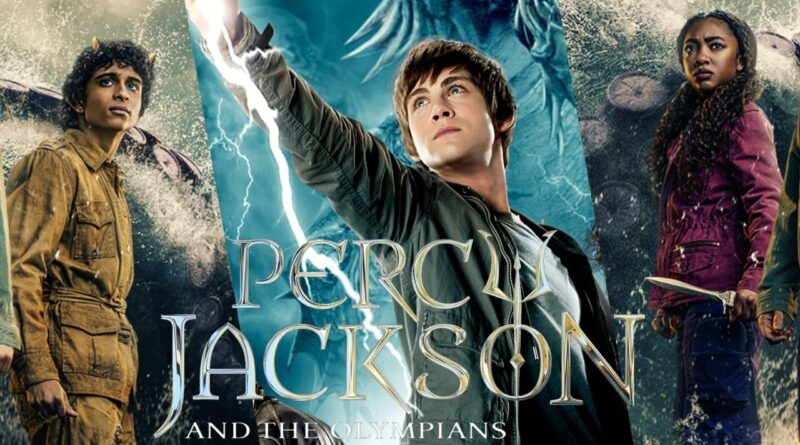
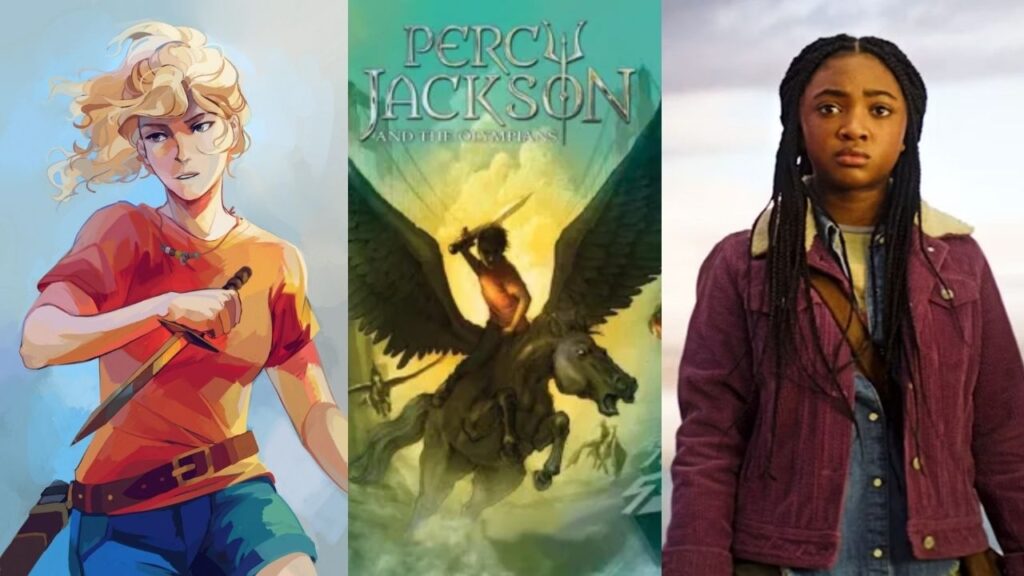
The narrative terrain that Rick Riordan lays out is a tremendous shift in modern mythic storytelling particularly in its portrayal of the “Hero’s Journey” as an experiential, unfolding psychological journey. As opposed to classical mythology where heroes are often static and embody a single pillar of virtue, Riordanverse characters such as Perseus Jackson, Annabeth Chase, and Nico di Angelo are the quintessential definition of “upgradation.”
This evolution is more than just a tit for tat accumulation of supernatural talents, but instead engulfs a radical transfiguration of their psychic constructs, social stations, and metaphysical essences. Venturing from the foundational Percy Jackson and the Olympians (PJO) saga to the Heroes of Olympus (HoO) cycle and then the “Senior Year Adventures,” we detect a systematic shift in reflections of what it means to be a hero, how traumatization impacts this, and moving into “adulthood.”
The Escalation of Perseus Jackson
The power scaling in this universe is based on the main character Perseus Jackson. He evolves from unthinking, and frequently uncontrollable, bursts of power into a sophisticated, telekinetic control of the hydrosphere. Originally portrayed as a 12-year-old with ADHD and dyslexia — qualities that were later reframed as “battle reflexes” and a natural inclination toward the Ancient Greek language — Jackson performed early feats that were localized and reactive.
The Kinematics of Power
A thorough check on both Jackson’s physical feats and metaphysical ones show a consistent growth. In the earliest (PJO) books he used his hydrokinesis mainly for he and his friends’ protection. By the end of the PJO series, he had reached ”Building Level” power.
A notable “buff” to his baseline power occurred in the transition to the Heroes of Olympus series. His battle with the storm goddess Kymopoleia, which involved the formation of watery fists 150 meters tall— towering among current day skyscrapers.
Developmental Phase
Notable Feat
Scale Measurement
Early PJO
Summoning a wave from 0.5 miles away
Sub-Building
Late PJO
Williamsburg Bridge Destruction
Building Level (8-C)
Early HoO
Shaking Hubbard Glacier (75×7 miles)
Mountain/Island Level
Late HoO
Skyscraper-sized watery fists (150m)
City Block (8-B)
Senior Year
Controlling millions of tons of river water
Continental/High-Scale
The escalation has caused “Westernization Theory,” which means that demigod powers in the Riordanverse are simply a product of today’s culture obsessed with superheroes. The theory suggests that as humanity’s view of what constitutes a “hero” has changed to incorporate the “super-person” mythos, the gods have given their children increasingly elaborate and destructive powers to reflect this cultural evolution.
The Restructuring of Annabeth Chase
Annabeth Chase is a conceptual shift that tips more toward intellectual and psychological terms rather than pure kinetic ones. Her “upgrades” are determined by how she navigates and ultimately balances her fatal flaw: hubris.
From Architect to “Administrative” Wisdom
Over the course of the PJO series, Chase’s growth is focused on her conviction that she’s capable of “doing things better than anyone else.” Yet the Battle of the Labyrinth was a crucial developmental choke point. She couldn’t solve the Labyrinth with Raw Logic, and she had to face the boundaries of her divine nature.
In the most recent installments – including The Chalice of the Gods – Chase’s character has become controversial. Though she is still the “wise strategist,” her character has been recast as a more homebound, “administrative” figure. Some say it’s “one-dimensionalised” her, but psychologically, this is the “Shadow of Athena” taking shape as a yearning for order and stability in the aftermath of two world wars.
The Growth of Nico di Angelo
Nico Di Angelo’s story arc is the most incisive trauma and identity in the Riordanverse. It progresses from “Mythomagic-obsessed” child to grim necromancer and then to a hero who has embraced his “shadow.”
The Integration of the Cacodemon
A significant upgrade takes place as Nico descends into Tartarus. On this quest, he must face the “cacodemons” — physical representations of his worst fears and guilt. Instead of trying to kill these demons, di Angelo makes the radical move to “embrace and release them” — in other words, to live with his past trauma. It’s a “power-up” for the mind, and superior to any new necromantic talent.
The “Senior Year” Metamorphosis: Themes of Aging
The current stage of the Riordanverse, colloquially referred to as the “Senior Year Adventures,” is a thematic evolution from “Cosmic Conflict” to “Existential Maturation.” The central conflict has ceased with Titans war —-now a mortal world.
The Denial of Mortality
Immortality is explicitly turned down as a motif that is revisited. Jackson, now eighteen, is challenged by gods, such as Ganymede and Hebe, who are “disgusted by the idea of growing old.” The growth of Jackson’s character is solidified on his understanding that ”living one full complete life is better than an eternity stuck in one place.”
The narrative shift in these new titles is that mundane objectives — such as securing letters of rec for New Rome U. act as the basis for mythic adventures.
Ganymede’s Chalice: The burden of eternal youth.
Hecate’s Pets: The “haunted” quality of history.
Letters of Recommendation: Institutional validation vs. individual value.
To be sure, there is a unique and necessary “upgradation” in the series, which is the explicit naming of mental health problems. Although earlier books alluded to trauma in demigod existence, the newest series names particular mental health disorders.
The Diagnosis of the Seven: The impact of the “Great Prophecy” on mental health is a significant motif. These ”involuntary dreams” that demigods have are now interpreted as a form of intrusion, one of the symptom clusters of PTSD.
For those such as Nico di Angelo, trauma generates empathy. This “psychological upgrade” moves the hero archetype away from brute strength and toward resiliency and the power of choice.
Conclusion
The development of these personas is indicative of myth’s continual evolution in relation to the human situation. From the early 2000s “Building Level” combatants to the 2025 “Trauma-Informed” adults, the shifts undergone by these characters are overwhelmingly centered on emotional intelligence in place of divine invulnerability.
Jackson’s decision to embrace the god of old age, and di Angelo’s accepting his inner demons, mark a final “upgradation”: the understanding that a hero’s greatest strength is his or her ability to evolve, transform, and, ultimately, grow old. This keeps the Riordanverse as a “living mythology,” and role models a generation that values empathy and the bravery to confront the mundane in a chaotic world.
Fandomfansis a platform where you can find details on deep theories behind the legendary characters.
Alpana
Articles Published :
156
Alpana is Fandomfans Senior Editor across all genres of entertainment. She evolved in the media industry since a very long time, she manages the content strategy and editing of all the blogs. Her focus on story development, review analysis, and research is well-equipped that ensures every article meets the standards of accuracy and depth.
The 10 Must-Watch Movies That Will Fundamentally Change How You View Life
Discover 10 movies that motivate you to never stop trying, loving and praying. Watch them and you’ll see your path from a new, uplifting angle. Learn more..!
Written by:EmmaLast Updated: January 24, 2026, 7:58 am
Published: February 23, 2025, 11:56 am
Movies have the ability to inspire and can change your life. They take us to other places and make us question our beliefs. Films allow us to perceive the multi-dimensionality of the human life.
These 10 iconic films that will alter your perception of life. These are not just entertaining movies but also educating and giving you lesson to life with some good take away.
1. The Shawshank Redemption (1994)
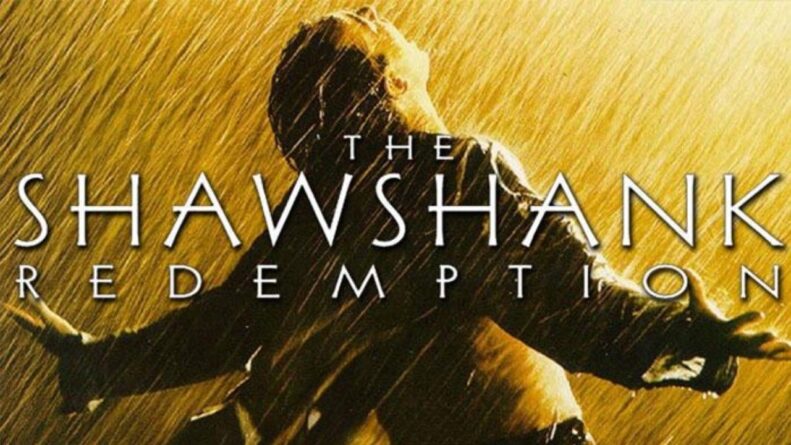
The Shawshank Redemptionis regarded as one of the best films of all time. It tracks the story of Andy Dufresne, a banker who is falsely accused of his wife’s murder. Andy also remains hopeful and dignified in the brutal environment of Shawshank prison.
Image Credit: Tribune Style
The message is “The power of perseverance and hope.” Its iconic phrase, “Get busy living or get busy dying,” resonates with the audience.It motivates people to confront life’s obstacles directly and not to give up, whatever the difficulties.
2. Forrest Gump (1994)
Forrest Gump is the story of a retarded man who ends up influencing the course of history twice. His straightforward, poignant perspective on life teaches us about love, friendship and the surprises life has in store.
Image Credit: TV Insider
Forrest’s memorable line, “Life is like a box of chocolates – you never know what you’re going to get,” encourages us to greet life’s mysteries with an open mind and take pleasure in surprises. The film invites us to walk through life, one step at a time.
3. A Beautiful Mind
A Beautiful Mind is the true story of the great mathematician John Nash. The movie portrays his battle with schizophrenia. It chronicles his path to coming to terms with his illness and gaining insight. The film stresses the one thing people need for love to stick: a little help from the people around them.
Image Credit: themarckoguy
It underscores the fact that it’s these relationships that help us overcome ourselves. The film is a call for people to put mental health stigma behind them. The movie teaches a lot more than just relationships and love, it teaches us to learn the value of the richness of every person’s narrative.
4. The Pursuit of Happyness (2006)
The title gives the meaning of life to a single father named Chris Gardner to chase a dream of a happy little family. He struggles to keep his son out of poverty while working as a salesman in a brokerage firm.
Image Credit: Eyra
Will Smith delivers a powerful, uplifting portrayal of Gardner. The film conveys that you achieve success by working hard and not giving up.
5. Good Will Hunting (1997)
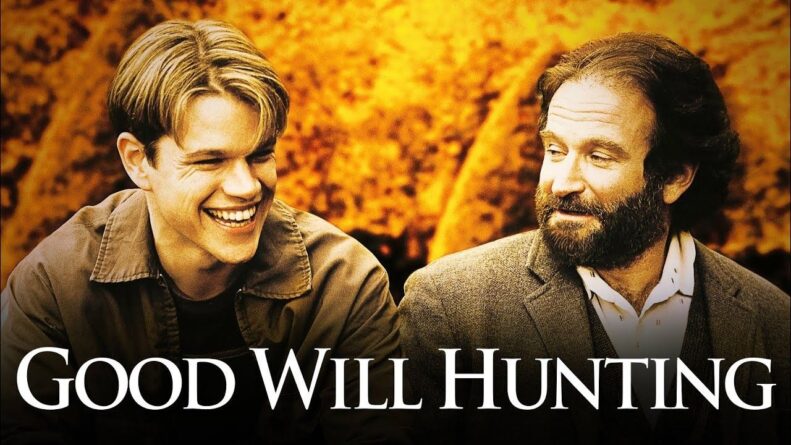
Good Will Hunting is the story of a young janitor at MIT who has a gift for mathematics but is emotionally stifled by past trauma. He also receives assistance from a counselor, portrayed by Robin Williams.
Image Credit: MiraMax
With therapy, Will learns to confront his demons and achieve his potential. The film illustrates the power of mentorship, self-discovery and emotional healing. It’s an excellent watch if you’re someone who struggles with your identity or just your stuff.
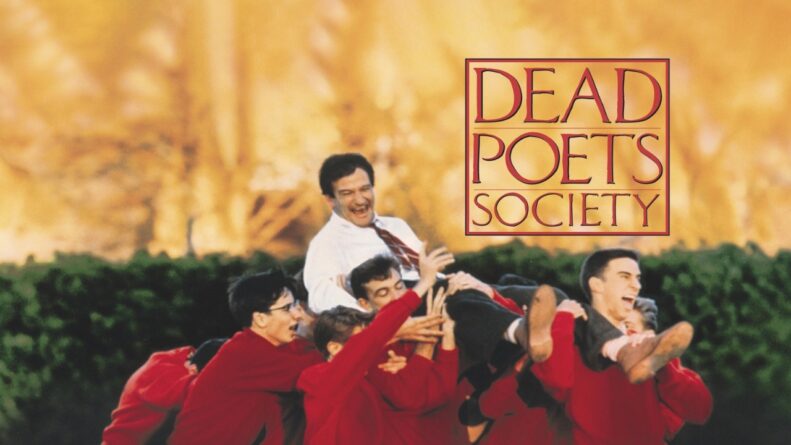
In “Dead Poets Society”, an English teacher inspires his students to live by “carpe diem,” instilling in them the need to make the most of every day and follow their dreams. He emphasizes the use of poetry for personal expression and individuality, encouraging them to confront adversity and find peace and meaning through creative work.
Image Credit: Prime Video
Robin Williams’ character: Life is too short. He encourages the audience to live passionately and truly, to defy societal norms and conformity.
7. Life Is Beautiful (1997)
Life Is Beautiful is an italian motion picture that recounts the experiences of the Jewish Guido Orefice during World War II. He relies on humor and nothing more than imagination to shield his child in a concentration camp. The film demonstrates that even in the darkest times love shines through.
Image Credit: Ashley Manning
It imparts courage, optimism, and the strength that comes from thinking positively. This tale is profoundly moving and it teaches us the value of love and hope no matter how difficult the circumstances.
8. Everything Everywhere All At Once (2022)
The new film Everything Everywhere All At Once examines issues of identity, family and existentialism. It is multiverse storytelling.
Image Credit: Book My Show
It’s a film that urges us to reconsider some of our decisions and connections. It’s a method of how to get through life’s storm. The distinctive narrative format redefines conventional storylines. It makes you think about where you fit in a big, growing universe.”
9. Slumdog Millionaire (2008)
SlumdogMillionaire is the story of Jamal Malik, an underprivileged young man from the slums of India’s bustling financial capital, Mumbai. He’s on a game show competing for his future. As he plays, he flashes back to moments in his past that brought him here.
Image Credit: The Hollywood Reporter
Themes of destiny, love and survival are prevalent throughout the film. It gives hope to those who are going through difficult time to hold on to their dreams.
10. Pan’s Labyrinth (2006)
Pan’s Labyrinth takes place in the aftermath of the Spanish Civil War. It’s about a young girl called Ofelia, who comes across a mythical labyrinth. The tale combines fantasy and brutal reality.
Image Credit: IMDB
It teaches them how to appreciate the world, how to value life, and how to understand the beauty of a cruel world. The movie celebrates imagination as a refuge from pain. It compels one to confront harsh realities while feeling solace and upliftment via the medium of creativity.
Conclusion
These amazing movies are not only entertaining and enjoyable, but they make us stop and think about our lives! They offer profound life lessons for personal growth. If you are struggling or just want to see things differently, these are the movies for you. They’re a better way to know yourself and a better way for you to see the world.
Life becomes truly difficult, and these movies remind us we are not isolated. They motivate us to cling to hope, be strong, and open our hearts to beauty and imagination. So, grab your popcorn, sit back and prepare yourself for an unforgettable ride. These movies change you in ways you can’t even conceive.
Fandomfansis giving every entertainment news as fast as the speed of Flash, keep following to get latest updates.
Emma
Articles Published :
36
Emma Miller is an entertainment enthusiast who is focusing on crafting storytelling blogs across all genres. Her special focus is build up around superheroes, thrillers, & historical dramas and movies. Her experience of delivering sharp review analysis and interview podcasts is helping fans to get transparency about their favorite cinema.
Psychological thriller The Housemaid, to be released late in 2025, is already set to define the theatrical look. Directed by Paul Feig from the 2022 literary phenomenon by Freida McFadden, the movie is a significant moment of convergence for digital-age literary culture and traditional Hollywood production values. Originating from the “BookTok” culture, where McFadden’s writing thrilled millions, the movie had to find a way to visualise internal psychological conflict.
The resulting film, produced by Hidden Pictures and released by Lionsgate, grossed an astonishing $247 million worldwide on a modest $35 million production budget, making it one of the rare R-rated thrillers to achieve major commercial success.
The Housemaid Movie Overview
Feature
Details
Director
Paul Feig
Lead Cast
Sydney Sweeney as Millie, Amanda Seyfried as Nina, & Brandon Sklenar (Andrew)
Based On
2022 Novel by Freida McFadden
Genre
Erotic Psychological Thriller
Production Budget
$35 Million (Filming cost approx. $46M)
Box Office Collection
$247 Million Worldwide
Release Date
19/December/2025
Key Themes
Class Warfare, Psychological Manipulation, Domesticity
Primary Location
Great Neck, Long Island (Filmed in New Jersey)
Production Houses
Hidden Pictures & Lionsgate
The Housemaid is an American erotic psychological thriller that doubles as a layered examination of class, power, and the performative suburban domesticity. With her eyes on the prize her daughter, Millie Calloway (Sydney Sweeney), a girl with a criminal record trying to keep her life together under the threat of parole conditions, is at the center of the story. Her path to the orbit of the extravagant Winchester family in Great Neck, Long Island, prompts a tale that methodically tears down the front of the “perfect” American home.
Director Paul Feig, best known for comedies such as Bridesmaids, gave the film a different tone, calling it a “Nancy Meyers movie that goes horribly wrong.” The treatment was influenced by luxury home imagery — a spotless, “all-Pantone-white” house followed by a turn into psychological horror.
Release Date & Availability
Release Milestone
Date
Platform/Location
World Premiere
2/December/2025
Axa Equitable Center, NYC
U.S. Theatrical Release
19/December/2025
Nationwide
Digital/PVOD Release
Jan 13 – 20, 2026
Apple TV, Prime Video, YouTube
Physical Media
17/March/2026
Blu-ray / 4K Retail
Subscription Streaming
April/2026
STARZ
Genre, Theme & Setting: The Gothic Subverted
The movie sits at an unusual crux of suburban horror and mystery. Located in Great Neck–a region known for historical American wealth–the film establishes a contemporary “Gothic” space where upper class seclusion permits the unrestrained wielding of power.
Class Warfare: Parolee Millie’s very existence makes her rare prey, and the Winchesters prey on this by way of psychological manipulation.
The Attic Symbolism: The room Millie occupies turns out to have a door that locks from the outside, she is a hidden trauma behind the “all-white” interior of the house.
The “Nancy Meyers” Look: Production designer Elizabeth Jones turned a New Jersey mansion into a “perfect white place,” which the movie gradually tarnishes, tracking the moral decay of the characters.
The Creative Powerhouse
Paul Feig’s move from comedy to thriller tapped into a “darker, mind-bending type of story telling.” He was joined by screenwriter Rebecca Sonnenshine who made the book even more shocking for the screen.
Key Creative Impact:
Paul Feig (Director) brought “wicked fun” and camp to the thriller.
Freida McFadden (author/executive producer) – A global bestseller, the novel gets a true-to-source adaptation.
John Schwartzman (Cinematography) Employing much of “90s movie lighting,” he achieved a dark, glossy effect.
Theodore Shapiro (Music) Composed a score that mixes suspenseful music with contemporary motifs of psychology.
Plot Overview: A Masterclass in the Twist
The storyline is built around a series of reversals. It opens with Millie finding live-in maid work for Nina (Amanda Seyfried) and Andrew Winchester (Brandon Sklenar).
The Descent and the Revelation
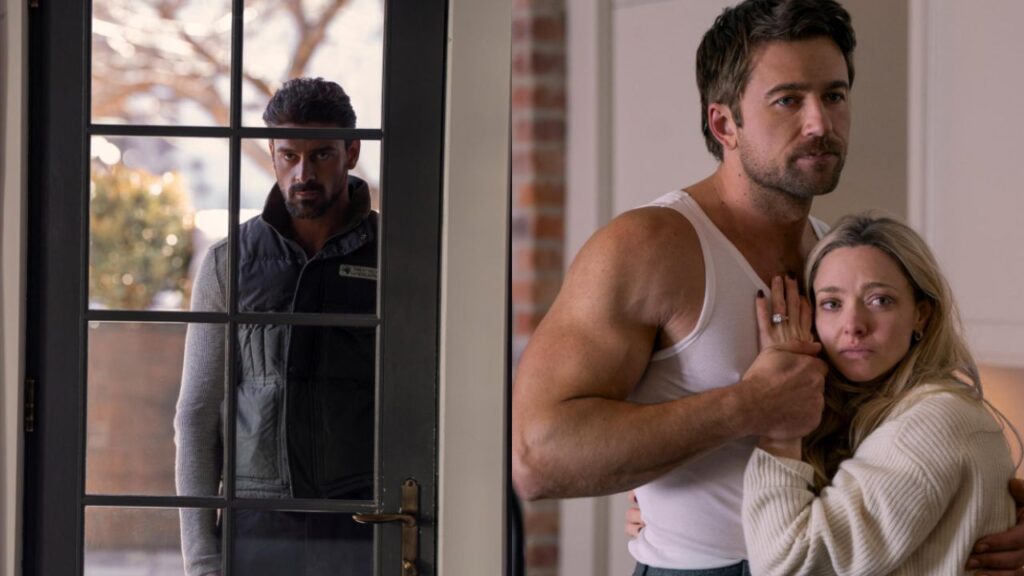
Millie, witnessing Nina become more unhinged, starts seeing the apparently perpetually put-upon Andrew. But the midpoint reveal flips the script: Andrew is the real predator. The attic suite had been built to hold women captive, and Nina wielded her “madness” as a kind of psychological armor.
In a chilling climax, Andrew tries to coerce Millie into self-mutilation. Nina comes home to save her, and eventually Millie knocks Andrew over a spiral staircase. The film closes on a cynical but uplifting note: Millie takes on yet another maid gig, this time as a silent protector for other abused wives.
The film works because its leads are playing characters whose real selves are concealed until the last act.
Sydney Sweeney (Millie): Instills a “panic and fear” into Millie as she transforms from a brittle survivor into a dynamic, vengeful powerhouse.
Amanda Seyfried (Nina) : This is the most positive critical reception to the film for her ‘unhinged’ turn, perfecting a “mean girl smile” to conceal her tactical mind.
Brandon Sklenar (Andrew): Tap into his imposing physical stature to genuinely make you fear this Mr. Rochester–type antagonist.
Production & Budget of The Housemaid
The series filmed around $46 million in New Jersey and used locations including the Madison Mansion and Rutt’s Hut to anchor the film in a familiar suburban reality.
Market Performance
The film’s opening weekend was $19 million via Lionsgate, however it demonstrated surprising “legs,” with a second weekend drop of just 19%. With a 7.0x return on investment (ROI), it became one of the most profitable releases of the year.
Platform
Rating/Score
Rotten Tomatoes (Audience)
92%
Rotten Tomatoes (Critics)
75%
CinemaScore
B
PostTrak
84% Positive
Conclusion
The Housemaid (2025) is a victorious updating of the erotic thriller. It was a cross between TikTok-inspired literary successes and “lurid” 90s cinematic style. With a follow-up, The Housemaid’s Secret, in the works, the home-front deception formula continues to prove a fruitful cinematic arena.
Fandomfans is a platform where you can find every detail from the blockbuster hits of your favorite stars.
Babita
Articles Published :
25
Babita is Fandomfans Editor, experience in managing content. Her focus in general movies and web series. She is having a deep interest in TV shows and 90s movies - particularly Lord of the Rings, Harry Potter, & Rom-Com. Babita also covers psychological thrillers and major releases in current time and concern with deep interest in them.