Best TV Shows of 2025: Must-Watch Series You Shouldn’t Miss
Check out the best TV shows of 2025, including the must-watch dramas, sci-fi, thrillers, and streaming hits you must watch this year.
Published: December 25, 2025, 5:06 am

Check out the best TV shows of 2025, including the must-watch dramas, sci-fi, thrillers, and streaming hits you must watch this year.

2025 has been a surreal, wonderful, and completely hectic year in television. The breathless breath-holding of 2024 was behind us in 2025, and everyone could exhale—and wow did they have a lot to say. Let’s look into the list of Best TV shows of 2025 to binge watch on weekends.
There are: everything from the revival of the traditional hospital drama (hello, Noah Wyle) to sci-fi prequels that actually, somehow, lived up to the hype. There were hockey players falling in love, Seth Rogen mocking his own industry, and Vince Gilligan showing, yet again, that he views the world through lenses unlike the rest of us.
If your head is spinning from all the “Must-Watch” lists, just breathe. I’ve spent more hours on my couch this year than I care to admit, all of which went towards crafting this: a human, honest, spoiler-light guide to the absolute best TV shows of 2025.
Let’s be honest: none of us were getting enough 1990s ER adrenaline rush. We just didn’t realize how much until The Pit came crashing down. Noah Wyle back in medical scrubs was like a warm embrace from an old pal, but don’t let the nostalgia baiting fool this isn’t Dr. Carter 2.0.
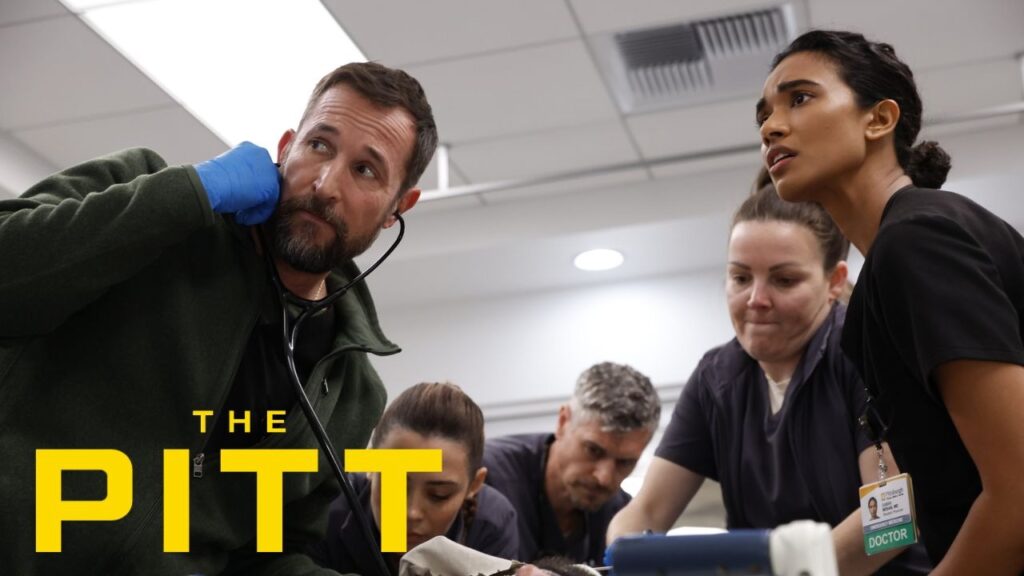
Wyle stars as Dr. Michael Robinavitch and there’s a more grimy, frantic and weary feel to the series than that of its spiritual predecessor. It expresses post-pandemic exhaustion of those in the medical field in a way that is almost tactile. The camera work is frantic, the dialogue is overlapping all the time, and you can feel the tension in your chest. It’s not just “good TV,” it’s, like, necessary TV. It’s a love letter to the people who keep us alive, written in blood, sweat and hospital cafeteria coffee.
Vince Gilligan, of course, is the architect of such dazzling and trailblazing series as If “Pluribus” was a surprise, it probably means that he is doing something completely new and different, which is exciting. Leading the superb Rhea Seehorn (at last she’s getting her due!), the series centers on a cynical romance novelist, Carol, who is attempting to navigate a world altered by a bizarre alien virus.

It’s insane sci-fi-sounding, but in typical Gilligan style it’s really about people. “It’s about loneliness, artificial intelligence and what it means to be ‘human’ when humanity is facing its own demise.’’ Seehorn is magnetic—she can do more with a silent stare than most actors can do with a monologue. It’s strange, it’s silent, and it will be lingering in your mind for DAYS. If you enjoyed the character-driven suspense of Better Call Saul, this is your newest obsession.
I was skeptical. We all were. Another Alien movie, do we really need it? Noah Hawley (Fargo, Legion) saw our doubts and pulverized them with a xenomorph tail.
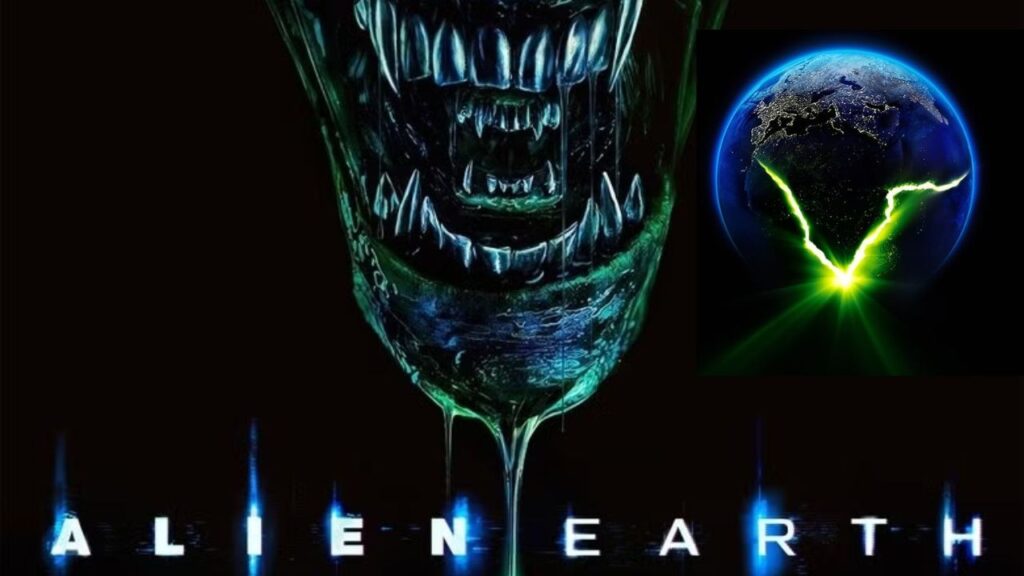
Obviously set on Earth, and years before Ripley ever boarded the Nostromo, this series takes the horror home — literally. It combines the Weyland-Yutani corporate greed with the visceral terror of a creature that simply should not be on this planet. The special effects are Hollywood quality, but what makes it work is the patience. Hawley allows the dread to build slowly to the point that you’re yelling at your TV. It’s the first time in decades the franchise has been scary rather than just gross.
Black Rabbit does none of that — though, to be clear, that’s not a criticism — but what it does deliver is a darkly funny, taut little drama in which two of Hollywood’s most magnetic stars go head to head in two-hander theatre. Jason Bateman and Jude Law star as siblings – one a responsible restaurant owner, the other a chaotic agent of destruction – caught up in the New York criminal underworld.

It’s classic noir territory, made perfect. Bateman plays against type as the “screwup” brother (Vince), and Law is the straight man (Jake) trying to keep it all together. The best way to describe the tension is to say that it’s suffocating. It’s a slow burn that explodes in the final episodes, reminding us that family is often the most dangerous thing of all.
IT: Welcome to Derry is one of the 2025’s best horror series, bringing Stephen King’s terrifying universe to new horizons full of scares and lore. Set in 1962 Derry, Maine, the HBO Max prequel exploresPennywise’s origins and the town’s cursed history through a new group that stops aside the original Losers’ Club.
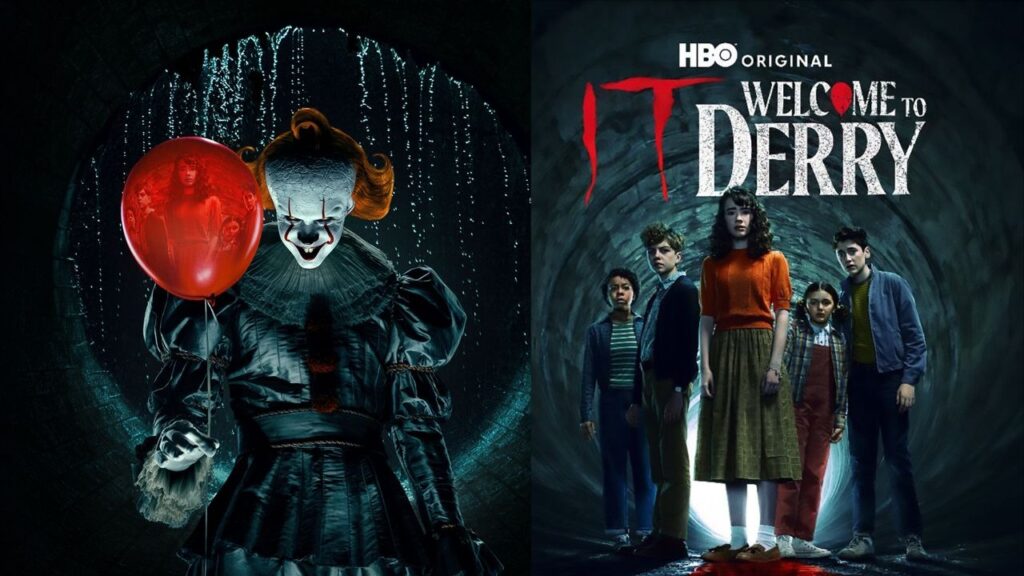
The series centers on a group of new kids—Teddy, Phil, Lilly and Ronnie—probes into missing children and strange occurrences four months after one of their classmates goes missing. Military tension is added with Major Leroy Hanlon arriving at Derry Air Force Base amid icy treatment and top-secret missions. Episodes lurk in dread through psychological horror and social undercurrents of small-town America — and with glimpses of Pennywise’s influence — and slow-burn suspense with shocking reveals.
“Adolescence,” a heartbreaking miniseries on teen violence, family breakdown, and social abandonment, had its world premiere on Netflix in 2025. Following 13-year-old Jamie Miller who is arrested for stabbing a classmate, the four-part drama from Jack Thorne and Stephen Graham is told through raw, single-take episodes that are uncomfortably real.
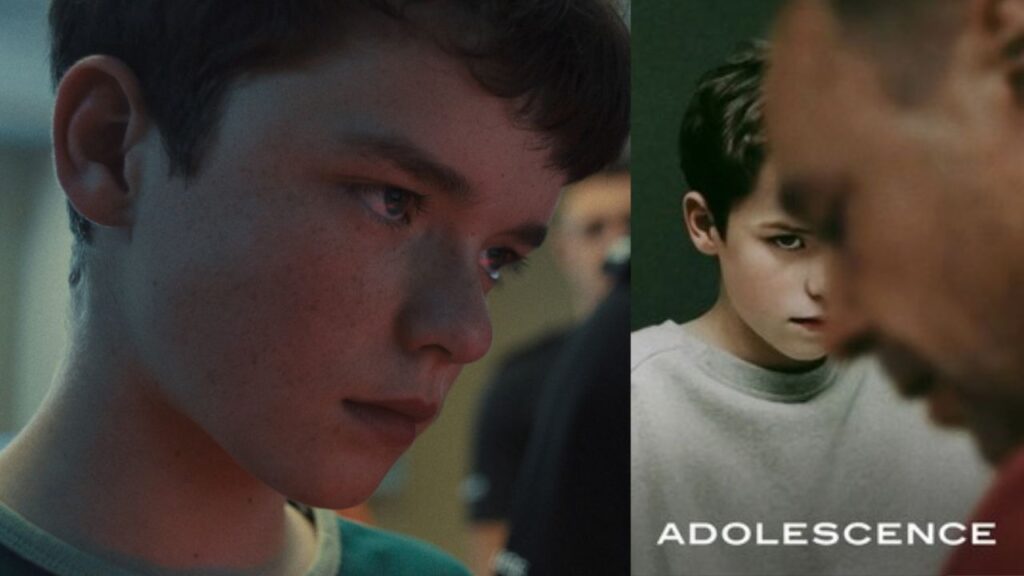
With each hour-long episode taking place over a single uninterrupted day in real time – like a stage play on steroids – the perspective shifts to various other consequences: the mayhem at the police station, the family disintegration, psychological tests, and courtroom brinkmanship. Stephen Graham commands as dad Eddie, a policeman whose world crumbles; rising star Owen Cooper (actually 15) as Jamie seizes scenes with his explosive cocktail of charm, rage, and lost-child fragility. It’s called “TV perfection” for its emotional economy and refusal of easy answers.

The Studio Apple TV+ show centers on neurotic Hollywood executive Matt Remick (Rogen), who is suddenly tasked with running Continental Studios, balancing money-making IP like a Kool-Aid Man movie with his dreams of art-house treasures with filmmakers like Scorsese.
Andor Season 2 definitely set a new standard for Star Wars storytelling, turning in a finale that thrilled from beginning to end. The White Lotus season 3 blasted off its typical mayhem from Thailand and didn’t disappoint with how unpredictable and dramatic it would be. Meanwhile, Dexter: Resurrection takes a half-decent stab at righting a few of the show’s past missteps, and in doing so redeeming itself somewhat.
Read More 👉 Mystery TV Shows Get Cancelled After Season 4 — Westworld, Manifest & The Sinner Explained
Whether it was aliens, doctors, or hockey players, the finest programming this year centered on relationships. They made us remember the reasons we watch: to be comforted in our solitude, to laugh at the absurdity of existence, and to see our own faces in the maelstrom. So get your remote, order some takeout and dive in.The golden age of TV isn’t over — it just evolved
Dive into the cinematic world where you can enjoy movies and TV shows updates with Fandomfans, our goal is to deliver a top shows list to end your long search.

Discover where to watch Dancing With the Stars 2026 live, check DWTS cast, premiere times, voting info, and streaming options. Don’t miss any dance action!

Catch Dancing With the Stars season 34 live, this new season created a buzz among the dance lovers with its premiere on September 16, 2025. This 20th-anniversary season will air at 8 pm on ABC and later available on Disney+ and new episodes drop every Tuesday at 8 p.m. ET. Pacific viewers can watch at 8 pm and Central viewers catch it at 7 pm local time. Its premier performances are featuring classic dances including tango, salsa and cha-cha while all the 28 contestants compete for the Mirrorball Trophy.

There are several platforms to catch Dancing With the Stars 2025. You can watch it on official channel ABC at 8 pm and 7 pm Central. You can stream this show on Disney+ as it airs concurrently on it. For a live streaming, use ABC app, Hulu Live TV, Fubo TV to watch your favorite dance show.
All the episodes are available of the entire season on Disney+ and Hulu to catch it later. But if you are interested in a live show then watch it right away on Disney+ and catch the premiere of 16th September on Hulu to watch your favorite celebrities in their dance forms. It means the premiere is available on 17th September on Hulu.
Dancing With The Stars season 34 cast announced on Good Morning America September 3, 2025. There are 14 couples – celebrities with professional partners including Hilaria Baldwin author and business owner, teamed up with Gleb Savchenko & actor and musician Corey Feldman dances with Jenna Johnson. There are more celebrity-dancer pairs listed below noted by the ABC.
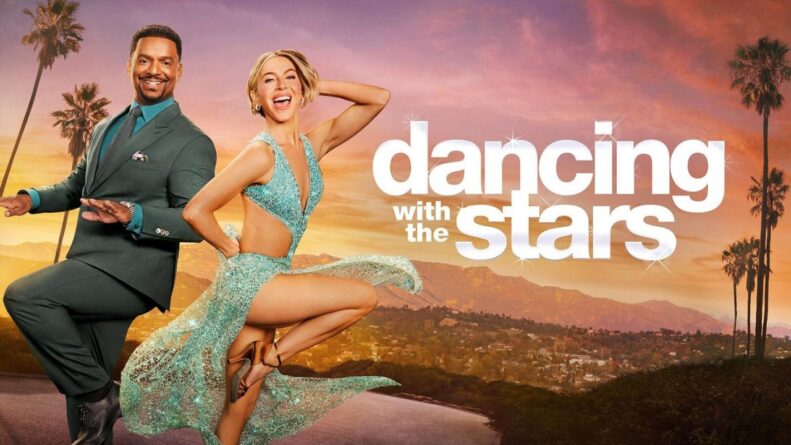
The DWTS season 34 is back with the familiar faces including Carrie Ann Inaba, Bruno Tonioli, and Derek Hough will judge again. Performances are scored by these judges every week and the show co-host by Julianne Hough and Alfonso Ribeiro again. The competition will also get tricky because viewers can vote for their favorite couple.
| Celebrity | Professional Partner | Celebrity background |
| Jen Affleck | Jan Ravnik | Influencer and reality star (star of The Secret Lives of Mormon Wives) |
| Hilaria Baldwin | Gleb Savchenko | Wellness entrepreneur and author (host of TLC’s The Baldwins and lifestyle author) |
| Jordan Chiles | Ezra Sosa | Olympic gymnast (silver & gold medalist) |
| Baron Davis | Britt Stewart | NBA All-Star and entrepreneur. |
| Alix Earle | Val Chmerkovskiy | Leading social media personality (lifestyle/fashion content) |
| Dylan Efron | Daniella Karagach | Producer and content creator (co-star/producer of Netflix’s Down to Earth with Zac Efron) |
| Corey Feldman | Jenna Johnson | Child-actor turned musician (star of The Goonies, Gremlins; celebrating 50-year career) |
| Danielle Fishel | Pasha Pashkov | Actress (best known as Topanga on Boy Meets World) and TV director |
| Elaine Hendrix | Alan Bersten | Actress (The Parent Trap, Dynasty), model, and singer |
| Scott Hoying | Rylee Arnold | Grammy-winning singer (member of Pentatonix, win more than one Grammy Awards) |
| Robert Irwin | Witney Carson | Wildlife conservationist and TV presenter (son of Steve Irwin) |
| Lauren Jauregui | Brandon Armstrong | Singer-songwriter |
| Whitney Leavitt | Mark Ballas | Reality star (Secret Lives of Mormon Wives) and social media personality |
| Andy Richter | Emma Slater | Comedian/actor (longtime sidekick on Conan) |
The new addition to this season is Jan Ravnik who danced with Taylor Swift in her tour era. This season’s backup dancers are Carter Williams, Onye Stevenson, Jaxon Willard, Hailey Bills.
Read More 👉 Most Beautiful Hollywood Actresses: See Who Tops the List in 2025!
It’s the 20th anniversary of Dancing With The Stars but there is nothing new or surprising. It returns as in its usual format, judges will score weekly on the dancer’s performance and elimination by audience vote. So, it’ll be the DWTS you know and love.
The Dancing With The Stars dancing show is returning with new faces and talent, fans will be excited to see their favorite stars on a live show. This dance show will air on ABC and Disney+ and you can also catch it later on the ABC, Disney+, Hulu app. Viewers can vote during the live broadcast via online on the ABC site or SMS with the celebrity’s first name to 21523 ( U.S., U.S. territories, or Canada).

Explore the Targaryen family and key characters in HBO's A Knight of the Seven Kingdoms, the thrilling Game of Thrones prequel. Learn more visit website...!

HBO’s new prequel of Dunk & Egg after the House of Dragon set to release soon with a good storyline of Aegon Targaryen “Egg” the price belongs to the lineage of Rhaenyra. A Knight Of The Seven Kingdoms is set in the era 90 years before Game of Thrones, in the time of King Daeron II. Actually, young Egg is the great-great-great-grandson of Rhaenyra by way of her son Viserys II.
So the A Knight Of The Seven Kingdoms directly connected to people from GoT and House of the Dragon. Daeron II – Egg’s grand-uncle and the series’ ruling king – would gain the epithet “Daeron the Good”.
Dexter Sol Ansell is cast as Aegon V Targaryen, “Egg”, the young prince in the trailer. Egg is introduced as a boy prince of House Targaryen, the fourth son of Prince Maekar. He is a brave, compassionate, and intelligent young man in Martin’s novels.
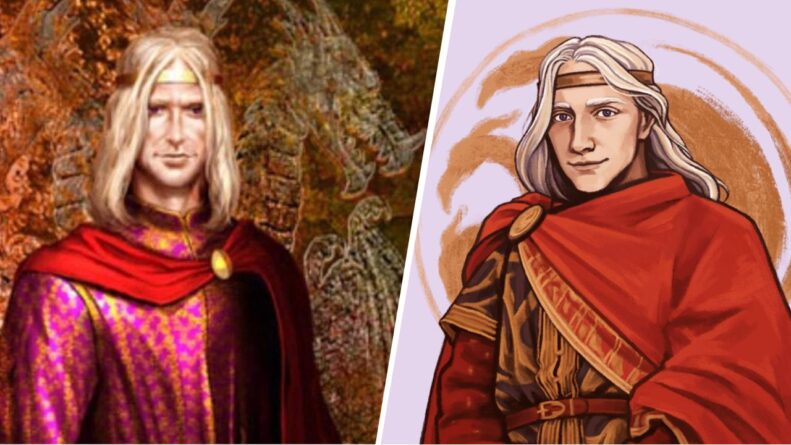
He shaves his head and wears a loose cap to conceal his silver-gold hair, so as not to be recognized by common men. For those of you who can’t imagine him, imagine Iggy Pop with silver gold hair. People say of him that even as a grown man he was warm and easy to approach, and loved by the smallfolk.
The trailer shows Egg with large, pure eyes and a fast smile, just as the kind and clever boy from the novels.
Finn Bennett as Aerion “Brightflame” Targaryen, Egg’s older brother with platinum hair. In the books, Aerion is pure evil. He was portrayed as The Monstrous Aerion due to his cruel and arrogant nature. He actually believes he’s a dragon trapped in a man’s body, according to Westeros, One synopsis tags him as ‘a classic case of Targaryen family madness’, In the Dunk & Egg stories, he dabbles in evil magic and bullies Egg—such as by throwing Egg’s pet cat in a well.
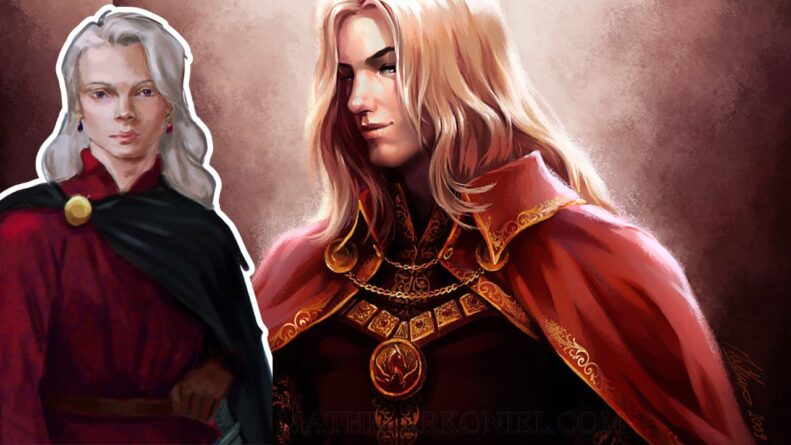
Bennett’s version has a helmet clad in metal flames inspired by his fire-loving ego. Aerion is, at the end of the day, the show’s crazy prince. The trailer nails his wild, sneering vibe that suits his brutal, flame-loving nature.
Henry Ashton plays Prince Daeron Targaryen, the elder brother of Egg and Aerion. Daeron is Maekar’s eldest – in fact, the official notes describe him as “the eldest son of Maekar, I… the prince of Westeros”
The following Maekar he would have been next in line to sit on the throne. His sobriquet “the Drunken” reflects his method of dealing with two prophetic visions: in the novels Daeron drinks wine to numb family tension in the Targaryen brood is a family secret. The Direct also confirms Daeron’s identity: he “is the son of Maekar I, and is… the prince of Westeros, and the crown’s next-in-line after Maekar”
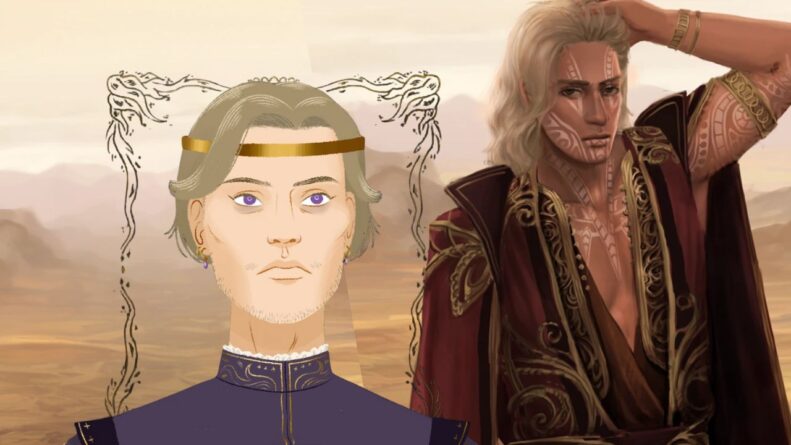
From Ashton’s Daeron grin and swagger it is immediately clear that this Daeron is a roguish and charismatic man of mystery. We only see him for a moment in the trailer, but the “Drunken” prince has a lot more going on than you’d think.
Aemon Targaryen is Egg’s eldest brother. He appears later in life as Maester Aemon in Game of Thrones. He is not going to show up in the Dunk & Egg series. At this stage, young Aemon already is in the Citadel. Still, he waits in the wings. Aemon was the elder brother of Egg. He became a maester and then joined the Night’s Watch. In the Dunk & Egg tales, Aemon dubs his brother the nickname “Egg.”
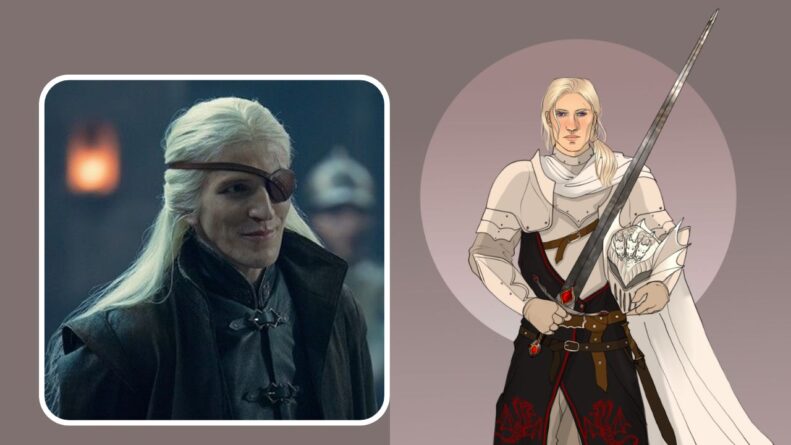
He really looks up to him. In the Game of Thrones deathbed, Maester Aemon has visions of Egg. Martin’s background says young Aemon saw Egg’s “sweetness and innocence.” So, while scholar Aemon never takes the stage, he is family. He quietly shaped Egg’s beginnings, if never announced himself to modern readers.
Sam Spruell is cast as Prince Maekar, the father of Aerion, Daeron, Aemon, and Egg. Take a look at him. The trailer shows him as a no-nonsense military leader. Soap Central mentioned Maekar fought terribly hard in the Blackfyre Rebellions. He was dubbed “the Anvil” because he held his ground in the midst of chaos. Maekar is a strong and grumpy in the attitude. The books say he is irritable and impatience, difficult man with a sharp tongue and who was too quick to find fault or to punish. After killing his brother Baelor by accident in a tourney, he becomes even more severe. But he loved his children in his rugged way. In The Hedge Knight, he allows Egg to be squire to Ser Duncan. He lays down the laws: keep out of sight and look meek. No locking Egg up instead. So Spruell’s Maekar should be strict, but with a heart. A proud Targaryen dad worries about his wild boys.
Read More 👉 The Surprising Cancellation of Peacemaker Season 3: What’s Next for the DC Universe?
Bertie Carvel is cast as Prince Baelor Targaryen. He is the uncle of Egg and the eldest son of Daeron II. In the stories, Baelor is the quintessential heroic prince. His moniker is well-earned – he gave Daemon Blackfyre’s spear a good snapping in a tournament. Then he was Hand of the King. His mercy and Knightly life was beloved of the people. An ancient writing says it all: “It is beyond question that Baelor Breakspear would make an excellent king. He was chivalrous and had a good mind.”
King Daeron II never appears on screen, but he sired a lot of these characters. Known as “Daeron the Good,” he reigned with wisdom and prudence in negotiations. He married Princess Myriah Martell and had four sons: Baelor, Aerys, Rhaegel, and Maekar. Baelor, Maekar, and even Egg, all come back to Daeron’s Targaryen line. This line goes from Viserys II to Rhaenyra’s line, and connects the princes to the Targaryens of House of the Dragon. Daenerys from “Game of Thrones?” She’s just formed one part of one side line from Egg’s great-great- granddaughter.
Princes such as the brave Baelor and the volatile Aerion share blood with the Dragon Queen. Their stories contribute to the larger Targaryen narrative.
HBO A Knight of the Seven Kingdoms: The Hedge Knight “traces the exploits of Ser Duncan the Tall and a youthful Aegon V Targaryen”. The cast announcement solidifies a near 50/50 split between knights and Targaryens.Peter Claffey is cast as Ser Duncan the Tall, and Dexter Ansell as Egg.

For the Targaryens, the announced cast includes Finn Bennett (Aerion), Henry Ashton (Daeron), Sam Spruell (Maekar) and Bertie Carvel (Baelor). Note that not every face on the show is a dragonborn. However, the royal family does get most of the spotlight.
fans are at last getting a peek in person at these Targaryen princes and kings. Aegon the Unlikely (Egg) is the kindhearted protagonist, Aerion is the prideful “Brightflame” fiend, Daeron is the clandestine malcontent, Maekar is the hard line father-king, Baelor is the knightly heir, and far off Aemon is even shadowing at the brink of the tale.
But the show So by laying out this family tree and the traits of the princes, you can keep track of who’s who in the Dragon family. So when the hedges darken with mystery and the dragons rattle beneath the surface, we can see exactly how these young royals slot into the grand tapestry of Westeros history.