‘Rings of Power’ Season 2 : New Era, New Legends in Middle-earth
Grab our Rings of Power Season 2 Guide with viewing schedules, Easter eggs, and predictions. Never miss key moments. Read up and watch!
Published: November 26, 2025, 12:55 pm

Grab our Rings of Power Season 2 Guide with viewing schedules, Easter eggs, and predictions. Never miss key moments. Read up and watch!
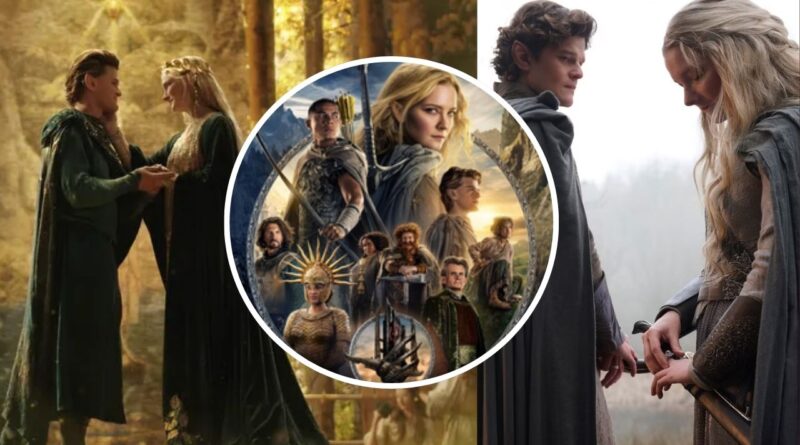
Rings of Power season 2 marks a turning point in the evolution of big-budget streaming TV.As the premier property for Amazon MGM Studios, the series bears a weight of expectation that is exponentially greater than narrative satisfaction. The season 2 narrative approach is a clear progression from its predecessor’s “mystery box” storytelling. Season 1 was built around the concealment of identity, particularly the identity of Halbrand as Sauron. Season 2 becomes a psychological thriller and a sweeping war drama.
The dramatic tension no longer comes from the question of who the characters are, but how the now thoroughly familiar antagonist, in plain sight under the identity of Annatar, leverages the desires and fears of the free peoples of Middle-earth.
Last season, he was the enigmatic drifter. This season Sauron is all stop pretending.
His transformation into Annatar, the “Lord of Gifts”, is not merely a disguise, but a tactical feint. In place of roaring armies, he offers compliments. In place of threats, he brings promises. And the one who falls hardest for this gentle poison is Celebrimbor, an artist who craves for immortal fame.
Their partnership turns the forge into something like a psychological trap. As Celebrimbor makes beauty, Annatar makes his ruin. By the time the truth is revealed, the Rings are not just forged— they are consequences.
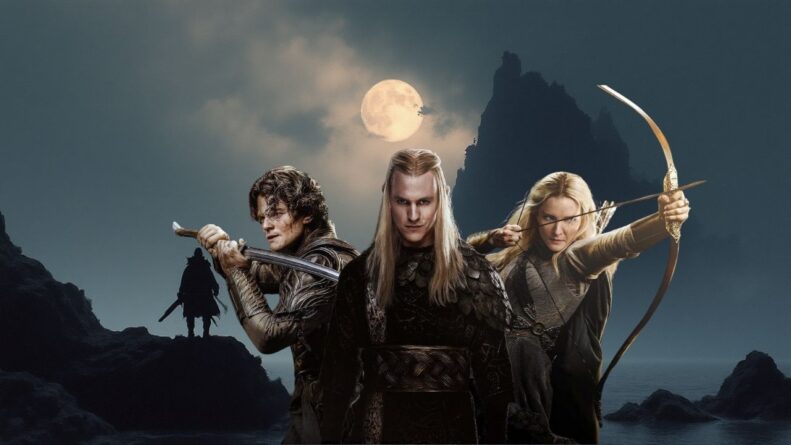
Galadriel starts this season as the one deceived. And Middle-earth treats her accordingly.
She bears Nenya now, a ring that heals while it isolates. Visions pull her in ways she can’t completely communicate, and each warning she gives only widens the gap between her and the people she fought for. Even Elrond, her closest friend, doubts whether rings forged in shadow can be wielded in the light.
Their dispute doesn’t erupt—it corrodes. A slow and agonizing separation between two characters who were once unbreakable.
If this season includes a tragic core, it’s him.
Celebrimbor does not hunger for power, he hunger for perfection. He wants them preserved, uncleaned, and permanent. Annatar just brushes up against this need, enough to corrupt it. As Celebrimbor creates more and more, he becomes more and more blind to real—until the city around him is as delicate as the metals he shapes.
He is, by the time the siege commences, the man who sees – but sees too late – that he has given his enemy the means to his own destruction.
Season 2 takes on the art of reinterpreting Tolkien’s world through a new lens, combining known elements with new discoveries. It ventures into the Unseen World, investigating the origins of wraiths and the transformative impact of the rings. Classic figures such as Círdan, whose ancient wisdom is in his very being, and the secretive Tom Bombadil (now roaming the deserts of Rhûn) come alive with an intensity unavailable to them earlier.
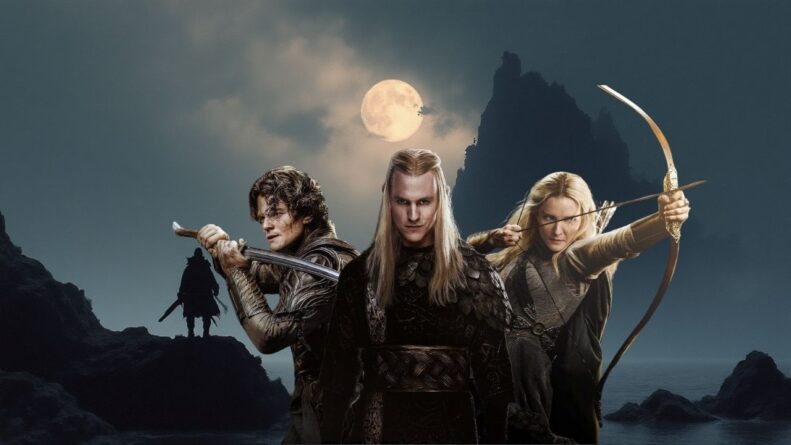
As night falls, the old powers are stirring—Barrow-wights and Ents are awakened, and an inviting voice calls the reluctant servant into a new and deadly adventure. The show takes the risk of reimagining Tolkien’s legendarium, and results in some interrogating and splitting fans at best, but its epic scale and love for the material is evident at every turn.
High-fantasy series need long post production periods for vfx rendering. Given the 20-month gap between Seasons 1 and 2, industry watchers are predicting a Season 3 release in late 2026 or early 2027.
If Season 2 was the flint that struck the fire, Season 3 is that fire burning Middle-earth to new shapes and forms. Following the trajectory of the Second Age and the momentum that’s been built up, the new chapter looks like it’s going to be the most dramatic one yet.
Now the minor rings are either already made or falling into the world, all that is left is one moment: Sauron’s return to Mordor. Season 3 will almost certainly take us to the heart of Orodruin, where he creates the Ring that governs every other ambition, alliance, and lie. This will undoubtedly be the visual and emotional centerpiece of the season.
Season 2 sows the seeds of corruption in the leadership of Men. Season 3 sees those seeds potentially sprout into something terrifying. As the Nine Ring holders succumb to shadow and become the Nazgûl, their conversion could be one of the show’s most chilling narratives—part tragedy, part horror.

The history of the Elves turning back the Dark Lord isn’t a story in which they do so alone. The end result is then that Númenor comes raining down on Middle-earth with such force – but not because it is merciful. Season 3 might show Ar-Pharazôn bringing together the great fleet, not to save the Westlands, but to challenge Sauron. The fact that his “victory” leads to Sauron being taken and a far greater doom beginning— the corruption and eventual destruction of Númenor in seasons to come.
With the destruction of Eregion, Elrond has no ground to stand on. Season 3 is where he rounds up the survivors and hides away in a secret valley, which will become the heart of Elvish memory for generations to come. The establishment of Rivendell isn’t just a plot device, it’s the emotional reboot the Elves so desperately require.
Read More :- Pluribus Episode 5 Review: “Got Milk” Isolates Carol Sturka for a Rhea Seehorn Masterclass
The Lord of the Rings: The Rings of Power, Season 2 a definitive “correction” of where the series was heading. They gave up the mystery-box approach for some dramatic irony and inevitable tragedy, and in doing so the show now finds itself more in line with the spirit of Tolkien’s moodier writings. It still invites criticism for the quality of its dialogue and pacing, but its scale of ambition and its bringing to screen key lore events such as the Siege of Eregion and the forging of the Rings — has ensured it a place in the pantheon of modern fantasy television.
The season acts as a manual for how the powerful corrupt, demonstrating how good motives (Celebrimbor’s art, Galadriel’s vigilance, Durin’s duty) can be perverted by a dark mind. As the series advances toward the forging of the One Ring, the stakes will only elevate, promising a finale where the Shadow not only assumes a new form, but shrouds all the lands in darkness.
Fandomfans is a platform to provide a clear breakdown of the series Lord of the Rings season 2 to season 3 guide. Here, we analyse every detail of the series to the nearly speculation of the new season.

A Knight of the Seven Kingdoms Episode 5 review: Trial of Seven, Baelor’s tragic death, Dunk’s past & why this HBO episode changes Westeros forever. Read more!
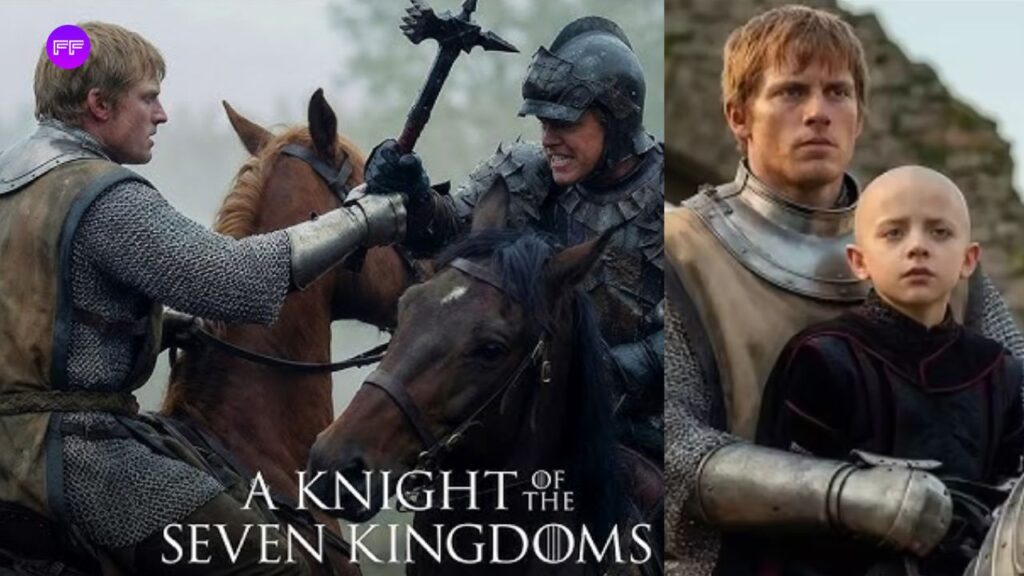
A Knight of the Seven Kingdoms Episode 5 Review makes you overwhelmed because not only did A Knight of the Seven Kingdoms offer us the episode before the last one, it ensured our heads would be lobbed off narratively. Episode 5, “In the Name of the Mother”, is already a perfect 9.8/10 on IMDb, for good reason. It successfully juxtaposed the high-stakes pageantry of the “Trial of Seven” with a dangerous, soul-crushing journey into Dunk’s history that upends everything we believed we knew about our “Lunk” of a protagonist. This is the split of why this episode is being credited for the return of the Westeros favourite series to peak TV form.
Typically, the penultimate episode of a season is a nothing but adrenaline shot. Owen Harris, the director, however went very much off track. Just as dunk is hit by a morningstar on the trial, the screen doesn’t go black – it goes back.
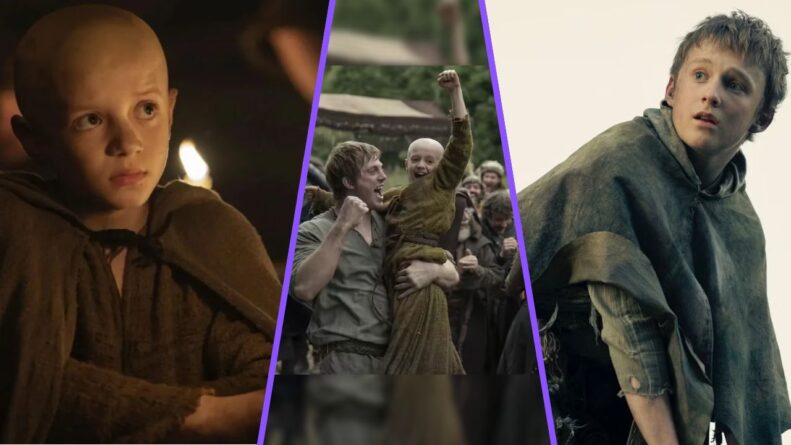
We were in a pretty big flashback to the Battle of the Redgrass Field (yes, that’s what it was), watching a youthful, “wide-eyed” Dunk (Bamber Todd) scavenging corpses. This was more than world-building, it was a psychological autopsy. The reason is to show us Dunk in the “shadowy wynds” of Flea Bottom, and so the show tells us why he fights the way he does. He’s not a knight of the books but he’s a survivor from the gutters.
The greatest deviation was the addition of Rafe (Chloe Lea), who is Dunk’s childhood companion. Rafe is the cynicism within the smallfolk. Her philosophy is the episode “thesis statement”:
“Repayment for previous misdeeds is always repaid with compound interest… Everybody remembers shit.”
It’s the kind of classic fridging moment that Rafe’s savage murder at the hands of a city watchman is, but—executed with such raw, unglamorous violence that it feels earned. It humanizes Dunk’s fierce protectiveness over Egg. He’s not just being a good knight—he’s constantly thinking about saving the ghost of the girl he failed to protect in King’s Landing.
As we return to the present day and Ashford Meadow, the “Trial of Seven” is a far cry from a chivalric minuet. The game took on a “fog of war” approach to the 14-man melee, making it a nightmarish, claustrophobic experience.
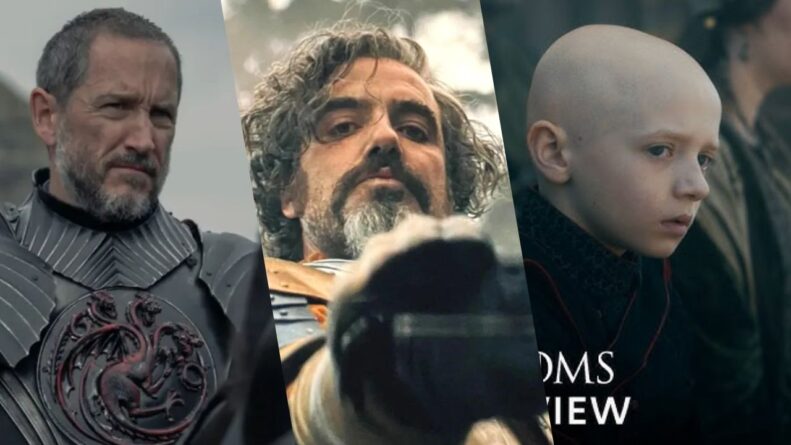
The season climax is the heartbreaking departure of Prince Baelor Breakspear (Bertie Carvel). Baelor was the Platonic ideal of a Targaryen – fair, compassionate, and intelligent. His death is a “meta-tragedy” for the franchise, he was the first domino to fall in a set that culminates in the Mad King.
The stripping away of his helm is one of the most graphic and unforgettable images in the show. When the back of his head comes off with the steel, we find out that he was slain not by an enemy but by his brother Maekar, accidentally. It reaffirms the nihilistic fact of Westeros, even if you are the “best of them” you don’t get plot armor.
| The Champions | Outcome |
| Ser Duncan the Tall | Survived. Forced Aerion to retract his accusation. |
| Prince Baelor Breakspear | Deceased. Killed by an accidental mace blow from Maekar. |
| Prince Aerion Targaryen | Humiliated. Yielded in the mud, losing his “dragon” persona. |
| The Humfreys | Deceased. Both Beesbury and Hardyng succumbed to wounds. |
Whereas House of the Dragon is concerned with the scope of dragons, A Knight of the Seven Kingdoms is concerned with the texture of the world.
Read More :- DC Film Zatanna Lost: Emerald Fennell’s Psychological Superhero Tragedy
In the Name of the Mother shows you can do high-stakes drama without breathing lizards or a gigantic budget. It confirmed with A Knight of the Seven Kingdoms Episode 5 that the show has produced a masterpiece by concentrating on class, memory and the “compound interest” of violence.
As Rafe warned, “NOBODY forgets.” Maekar will not forget he has killed his brother. Dunk won’t forget Rafe. And the audience won’t forget Baelor.
Keep getting updates, plot details and reviews from the latest episodes of the shows and movies on Fandomfans.

Eva Green is set to portray Aunt Ophelia Frump in Wednesday Season 3, bringing dark psychology and mystery to the award-winning series series in 2027.

The fact that Eva Green has been cast as Aunt Ophelia Frump in season three of Netflix’s Wednesday is a huge win in the streaming giant’s content strategy and the growing creative evolution of the Addams Family franchise. The announcement was made official on 25 November 2025 through The Hollywood Reporter, putting an end to months of rampant speculation following the Season 2 cliffhanger.
Green’s addition isn’t just a casting coup, it is a clear shift towards high-stakes psychological horror given her natural and proven working relationship with executive producer Tim Burton and his gothic storytelling roots. It’s about how the popular “Lady Gaga” fan theories are being debunked, the production logistics that indicate a Summer 2027 release, and the deep lore of “Raven” psychics that implies Series 3 will be the franchise’s most intellectually daring outing yet.
The decision to cast Green was accompanied by strong endorsements from the show’s creative leadership. Al Gough and Miles Millar, the creators and showrunners, issued a statement to Tudum that focused on what it is that Green brings to the role — attributes that fit with the show’s developing look and feel.
“Eva Green has always brought an exhilarating, singular presence to the screen — elegant, haunting and beautifully unpredictable, making her the perfect choice for Aunt Ophelia.”
—Al Gough and Miles Millar stated
This is the key quote for understanding what Ophelia is supposed to do. The adjectives “haunting” and “unpredictable” suggest that the character will generate real narrative tension and perhaps menace rather than simply being a quirky relative.
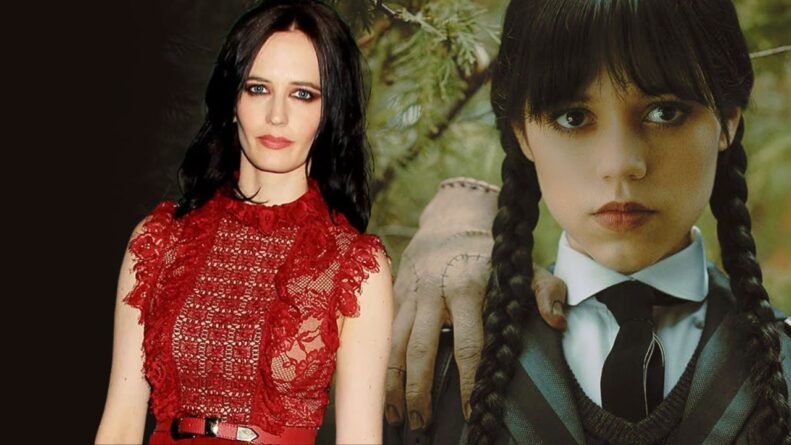
The collaboration marks a reunion between Green and executive producer Tim Burton.Their earlier collaborations on Dark Shadows (2012), Miss Peregrine’s Home for Peculiar Children (2016) and Dumbo (2019) made Green the definitive “Burton Muse,” who could capture the director’s unique juxtaposition of the macabre and the sympathetic.
Green’s statement on being cast in the role showed a great understanding of the particular tone of the Wednesday universe—a mix of horror and satire.
“I’m excited to be a part of the haplessly warped world of ”Wednesday” as Aunt Ophelia. This is such a wonderfully dark and funny world, I am so excited to add my particular brand of cuckooness to the Addams family.”
—Eva Green said
It suggests a performance that will oscillate between the comedic eccentricity traditional to the Addams Family and the “dark and twisty” depth Green is famous for.
The Wednesday series has dramatically reframed Ophelia, removing all the sitcom levity for gothic tragedy.
The show draws a line between the types of psychic powers: “Doves” (such as Morticia) are gifted with positive, helpful visions, while “Davens” (such as Wednesday) are plagued by violent, bleak and isolating ones.
Ophelia is a confirmed Raven, just like her niece. And this designation is key, meaning that Ophelia’s “madness” is caused by the very same burden that Wednesday is carrying. She is a “Ghost of Christmas Future” for Wednesday—a cautionary tale of what occurs when a Raven goes “to the limit and beyond” with her gifts.
Unlike the 1964 version, Netflix’s Ophelia endured a traumatic past in and out of institutions. The story discloses that she was lobotomized at Willow Hill Psychiatric Hospital by her mother, Hester Frump (Joanna Lumley).
The trigger of Ophelia’s return is her journal, in possession of Wednesday, whom Morticia entrusts with it as a sign of trust. That object acts as a device, and the two women, aunt and niece (Wednesday) across time while having a vision.
According to Movieweb, The need to cast Green is so urgent because of the explosive final moments of Season 2, Ophelia (back view) in a red dress, committing “Wednesday must die” in her own blood on the cell wall. The iconic image of the finale—and the teaser for Season 3.
Read More:- Rings of Power Season 2 : New Era, New Legends in Middle-earth
According to Collider, Ophelia’s statement that “Wednesday must die” makes her an immediate danger. However, given the “Raven” aspect of her abilities, she could be seeing a future in which Wednesday turns into a means to an end for potential global destruction, and her trying to kill him is a very warped form of heroism. Or, she could be affected by the madness brought on by her captivity.
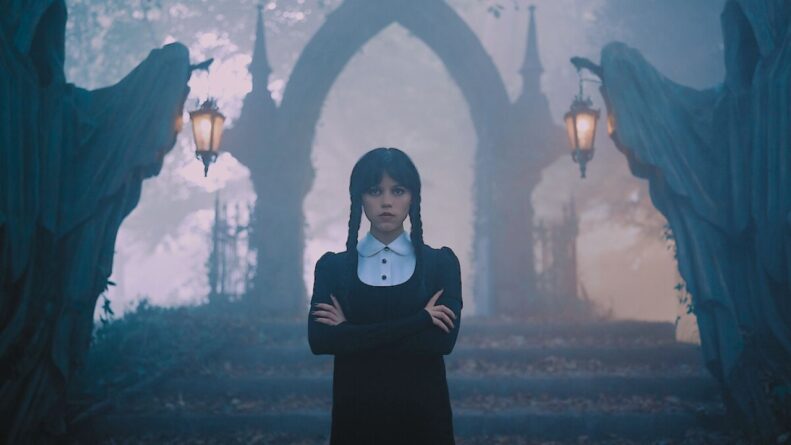
Ophelia is more than a psychic threat, “blood on the wall” evokes a bodily threat and Wednesday has never been confronted by a relative in such a fashion.
The typical post-production schedule of 12 to 14 months for a show that relies heavily on VFX (with werewolves, hydes, and disembodied hands), Season 3’s estimated release is Summer 2027.
Hester (Joanna Lumley) is unmasked as a cold-blooded pragmatist who locked up her own child. In Season 3, Morticia (Catherine Zeta-Jones) and Wednesday face off with Hester, contesting the family pecking order.

Morticia is the “Dove” that survived by assimilating (somewhat), Ophelia is the “Raven” that was shattered. Green and Zeta-Jones together on screen is one hell of a clash of acting titans as they interrogate the guilt Morticia feels over her sister’s fate.
The choice of Eva Green to play Wednesday op indicates a clear rise in Wednesday’s franchise potential. In signing an actress of Green’s calibre – who is very much a face for the ‘gothic prestige’ genre – Netflix is making sure that season three has the dramatic heft to match the global phenomenon that the first two seasons have become.
Find your favorite celebrity news on Fandomfans as we are here providing breakdown of every story and casting characters with deep analysis.