If you’re still recovering from the religious upheaval of Thailand in Season 3, why don’t you just pour yourself a glass of Pinot Noir and get comfortable. The information regarding The White Lotus Season 4 leaks slowly and a lot is pointing to the fact, this will be more than just another vacation gone wrong.
HBO announced the blockbuster series had been renewed for the second season in January 2025, but showrunner Mike White isn’t simply delivering more of the same. He is breaking the mold. With a confirmed Parisian location and a heavyweight behind-the-scenes change, Season 4 seems to be a radical makeover of the series.
The Vibe Shift: From Tropical Isolation to “Cultural Sublime”
We watch rich people fall apart in three seasons of tropical quarantine—Hawaii, Sicily, Thailand. Season 4 is abandoning the beach for the avenue. Production will be set in Paris and the French Riviera – swapping the “natural sublime” of the ocean with the “cultural sublime” of art and history.
Image credit: IMDb
The theme is shifting too. In the event Season 1 was about Money, Season 2 was about Sex, Season 3 was about Death/Spirituality, and Season 4 is very much about Fame, Cinema, and the Arts. Rumors are circulating that the setting may be a film festival or some other major cultural occasion. Watch for the satire to move away from tech bros and heiresses and onto an aspirational cadre of actors, pretentiously intellectual directors, and the critics who eviscerate them. And it’s a meta move for Mike White, zooming the lens back on the very industry that salutes him.
The “Four Seasons” Breakup and Sonic Risks
Probably the biggest shock to the system is the production design. The series has reportedly ended its relationship with the hotel chain Four Seasons. What this means is that the uniform, corporate luxury we’d grown used to is no longer there. Instead the show is seeking out independent, historic icons such as Le Lutetia or The Ritz. The look is going be older, grittier and more menacing.
Image credit: IMDb
If you want to know what’s even more jarring? Cristóbal Tapia de Veer, the composer of the show’s plucky, nerves-rattling “ooh-loo-loo” theme, is no longer involved, having parted ways over creative differences. The show is losing its sonic heartbeat. The score will need to spin a new wheel — maybe that includes French Yé-yé pop, baroque strings — without turning off fans who cling to that signature whiff of impending doom.
The Casting Rumors: A New Dynasty?
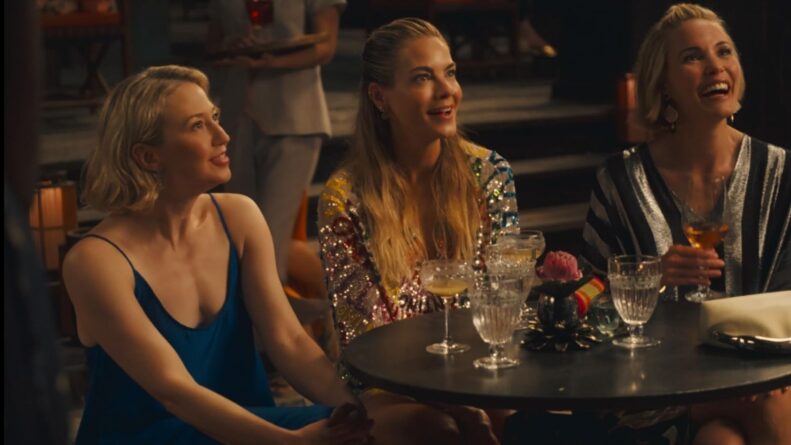
There was no way to discuss The White Lotus without discussing the guests. The Biggest Whisper In Hollywood Is Laura Dern. She previously voiced Dominic’s furious wife in Season 2, and is the perfect avatar for a season about fame – possibly as a fading star or a power-broker agent.
Image credit: IMDb
But the real narrative jolt is the arrival of Belinda (Natasha Rothwell). Having survived Tanya in Season 1 and the chaos of Season 3, word is that Belinda has “become Tanya.” She’s rich now. A once-fan-favorite employee now guest stars as an entitled snob in Paris — watching her navigate this particular first-class hypocrisy as a rich guest adds a delicious, tragicomic layer to the trip. Will the money corrupt her? Probably.
And let’s not forget Greg. The man behind Tanya’s death is still out there. The French Riviera is a natural hunting ground for a con of his caliber. A showdown between a wealthy Belinda and a lurking Greg is exactly the kind of justice we’re waiting for.
And here is the bad news— You have to be patient. Because of the complicated European shooting and the writers wanting to perfect this new “meta” direction, it seems that cameras won’t roll before mid to late 2026.
Broadcast premiere is currently scheduled for the Spring of 2027. It’s a long gap, but if this strategic pivot pays off, White Lotus won’t just be a show about a vacation anymore — it’ll be a show about the art of spectacle itself.
Conclusion
The White Lotus Season 4 is shaping up to be the most daring rewrite of the series yet— a stylized jump from tropical mayhem to the cultural inferno of Paris and the French Riviera. With a new artistic theme, a darker, grittier visual style, an entirely reimagined score, and a cast comprised of homegrown favorites and Hollywood power players, this season seems poised to shake up its own formula in the very best way.
From Belinda’s dramatic return to a possible Greg clash to whispered Laura Dern casting to the turn toward fame and film, everything indicates that Mike White is guiding the series into riskier, more self-aware terrain.
Yes, the wait will be long — all the way to Spring 2027 — but if Season 4 is indeed a delivery on this ambitious creative reset, The White Lotus won’t just be critiquing luxury vacations anymore. It’ll tear down the spectacle, ego and artistry that build the entertainment industry.
Everything you need to know about The White Lotus is here, Fandomfanswill get you all the updates regarding the series.
Babita
Articles Published :
25
Babita is Fandomfans Editor, experience in managing content. Her focus in general movies and web series. She is having a deep interest in TV shows and 90s movies - particularly Lord of the Rings, Harry Potter, & Rom-Com. Babita also covers psychological thrillers and major releases in current time and concern with deep interest in them.
Rings of Power season 2 marks a turning point in the evolution of big-budget streaming TV.As the premier property for Amazon MGM Studios, the series bears a weight of expectation that is exponentially greater than narrative satisfaction. The season 2 narrative approach is a clear progression from its predecessor’s “mystery box” storytelling. Season 1 was built around the concealment of identity, particularly the identity of Halbrand as Sauron. Season 2 becomes a psychological thriller and a sweeping war drama.
The dramatic tension no longer comes from the question of who the characters are, but how the now thoroughly familiar antagonist, in plain sight under the identity of Annatar, leverages the desires and fears of the free peoples of Middle-earth.
Narrative Architecture and Character Dynamics
When Halbrand Became the Monster in the Room
Last season, he was the enigmatic drifter. This season Sauron is all stop pretending.
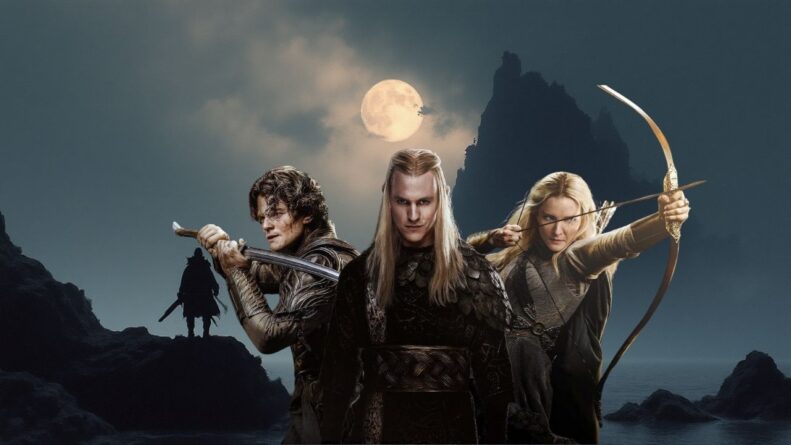
His transformation into Annatar, the “Lord of Gifts”, is not merely a disguise, but a tactical feint. In place of roaring armies, he offers compliments. In place of threats, he brings promises. And the one who falls hardest for this gentle poison is Celebrimbor, an artist who craves for immortal fame.
Their partnership turns the forge into something like a psychological trap. As Celebrimbor makes beauty, Annatar makes his ruin. By the time the truth is revealed, the Rings are not just forged— they are consequences.
Image Credit: Fandomfans
Galadriel Walks Alone
Galadriel starts this season as the one deceived. And Middle-earth treats her accordingly.
She bears Nenya now, a ring that heals while it isolates. Visions pull her in ways she can’t completely communicate, and each warning she gives only widens the gap between her and the people she fought for. Even Elrond, her closest friend, doubts whether rings forged in shadow can be wielded in the light.
Their dispute doesn’t erupt—it corrodes. A slow and agonizing separation between two characters who were once unbreakable.
Celebrimbor: The Artist Who Reached Too Far
If this season includes a tragic core, it’s him.
Celebrimbor does not hunger for power, he hunger for perfection. He wants them preserved, uncleaned, and permanent. Annatar just brushes up against this need, enough to corrupt it. As Celebrimbor creates more and more, he becomes more and more blind to real—until the city around him is as delicate as the metals he shapes.
He is, by the time the siege commences, the man who sees – but sees too late – that he has given his enemy the means to his own destruction.
Rings of Power season 2 Embracing the Characters
Season 2 takes on the art of reinterpreting Tolkien’s world through a new lens, combining known elements with new discoveries. It ventures into the Unseen World, investigating the origins of wraiths and the transformative impact of the rings. Classic figures such as Círdan, whose ancient wisdom is in his very being, and the secretive Tom Bombadil (now roaming the deserts of Rhûn) come alive with an intensity unavailable to them earlier.
Image Credit: Fandomfans
As night falls, the old powers are stirring—Barrow-wights and Ents are awakened, and an inviting voice calls the reluctant servant into a new and deadly adventure. The show takes the risk of reimagining Tolkien’s legendarium, and results in some interrogating and splitting fans at best, but its epic scale and love for the material is evident at every turn.
The Franchise Looks Ahead to Season 3
High-fantasy series need long post production periods for vfx rendering. Given the 20-month gap between Seasons 1 and 2, industry watchers are predicting a Season 3 release in late 2026 or early 2027.
If Season 2 was the flint that struck the fire, Season 3 is that fire burning Middle-earth to new shapes and forms. Following the trajectory of the Second Age and the momentum that’s been built up, the new chapter looks like it’s going to be the most dramatic one yet.
The Birth of the Master Ring
Now the minor rings are either already made or falling into the world, all that is left is one moment: Sauron’s return to Mordor. Season 3 will almost certainly take us to the heart of Orodruin, where he creates the Ring that governs every other ambition, alliance, and lie. This will undoubtedly be the visual and emotional centerpiece of the season.
Men Begin to Fade and Something Darker Rises
Season 2 sows the seeds of corruption in the leadership of Men. Season 3 sees those seeds potentially sprout into something terrifying. As the Nine Ring holders succumb to shadow and become the Nazgûl, their conversion could be one of the show’s most chilling narratives—part tragedy, part horror.
Image Credit: Fandomfans
Númenor Enters the War — but Not as Saviors
The history of the Elves turning back the Dark Lord isn’t a story in which they do so alone. The end result is then that Númenor comes raining down on Middle-earth with such force – but not because it is merciful. Season 3 might show Ar-Pharazôn bringing together the great fleet, not to save the Westlands, but to challenge Sauron. The fact that his “victory” leads to Sauron being taken and a far greater doom beginning— the corruption and eventual destruction of Númenor in seasons to come.
The First Stones of Rivendell
With the destruction of Eregion, Elrond has no ground to stand on. Season 3 is where he rounds up the survivors and hides away in a secret valley, which will become the heart of Elvish memory for generations to come. The establishment of Rivendell isn’t just a plot device, it’s the emotional reboot the Elves so desperately require.
The Lord of the Rings: The Rings of Power, Season 2 a definitive “correction” of where the series was heading. They gave up the mystery-box approach for some dramatic irony and inevitable tragedy, and in doing so the show now finds itself more in line with the spirit of Tolkien’s moodier writings. It still invites criticism for the quality of its dialogue and pacing, but its scale of ambition and its bringing to screen key lore events such as the Siege of Eregion and the forging of the Rings — has ensured it a place in the pantheon of modern fantasy television.
The season acts as a manual for how the powerful corrupt, demonstrating how good motives (Celebrimbor’s art, Galadriel’s vigilance, Durin’s duty) can be perverted by a dark mind. As the series advances toward the forging of the One Ring, the stakes will only elevate, promising a finale where the Shadow not only assumes a new form, but shrouds all the lands in darkness.
Fandomfansis a platform to provide a clear breakdown of the series Lord of the Rings season 2 to season 3 guide. Here, we analyse every detail of the series to the nearly speculation of the new season.
Babita
Articles Published :
25
Babita is Fandomfans Editor, experience in managing content. Her focus in general movies and web series. She is having a deep interest in TV shows and 90s movies - particularly Lord of the Rings, Harry Potter, & Rom-Com. Babita also covers psychological thrillers and major releases in current time and concern with deep interest in them.
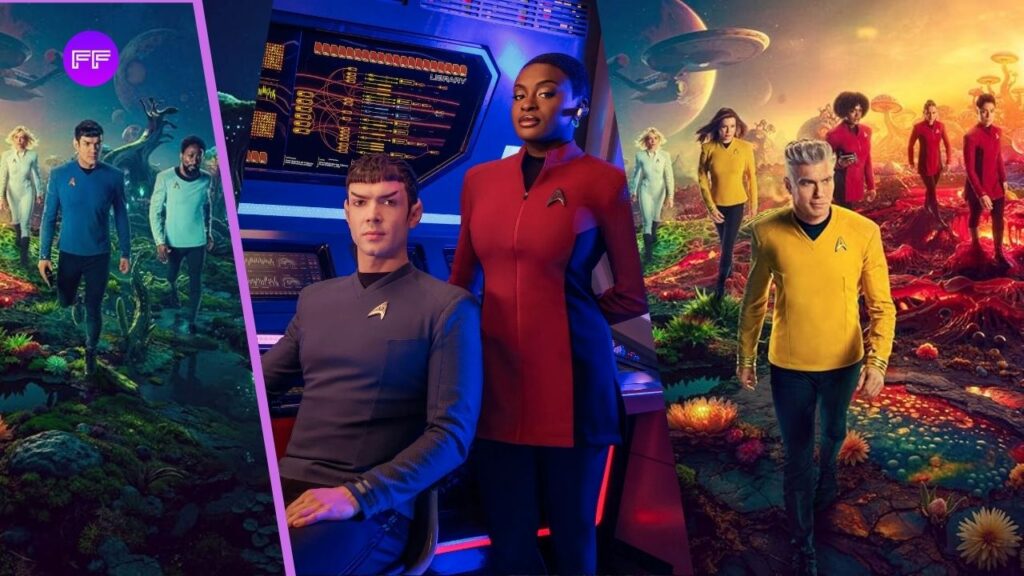
Star Trek Strange New Worlds: Jess Bush Breaks Down the End of Spock & Chapel
Star Trek Strange New Worlds : explores the emotional breakup of Spock and Chapel, revealing how their split reshapes relationships and future storylines.
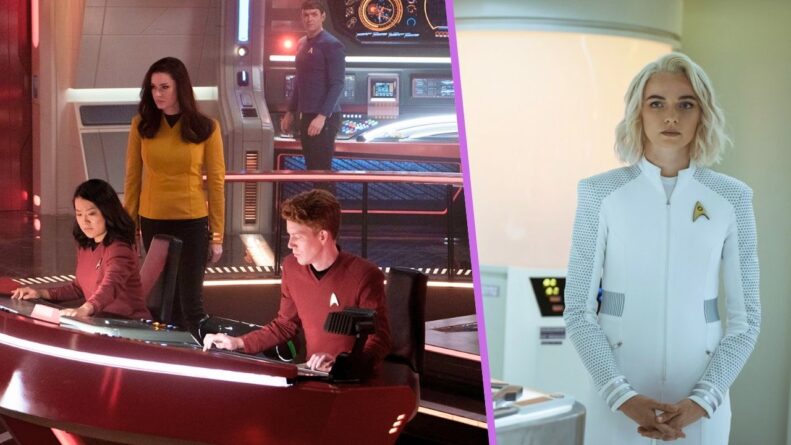
If you have been watching the bridge of the USS Enterprise of late, then you are well aware that the halls of Star Trek Strange New Worlds have been a bit more “emotional” than your typical starship. Nurse Christine Chapel and Lieutenant Spock—the couple that fans cheered for, sobbed over, and then witnessed come apart in a way that is only describable as “peak awkward” was at the center of that cyclone.
At Farpoint 2026, however, Brock had to finally come to terms with the elephant in the room: that musical breakup. And her impression is just as brutally honest as the character she portrays.
The Musical Breakup That Shook the Enterprise
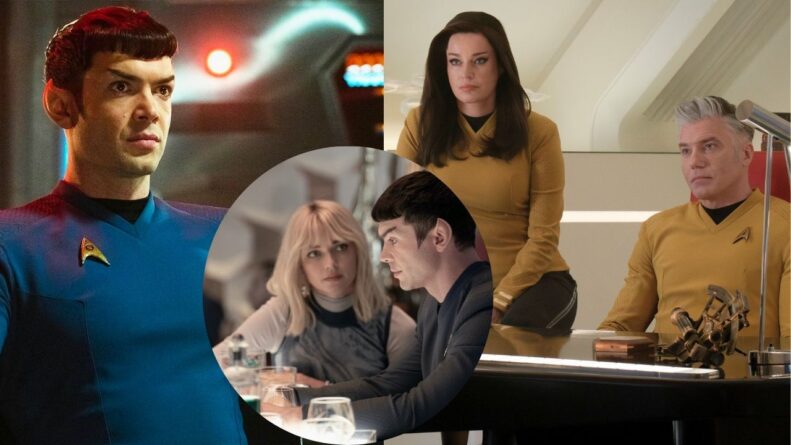
We all know the scene. This season in the K/S musical “Subspace Rhapsody,” Christine Chapel not only ended it with Spock, she did so in a choreographed song-and-dance routine at work with their colleagues as backup dancers. It was tactile, it was rhythmical, and Spock was crushed by it.
When it came to the scene at Farpoint, Bush had no qualms, laughing and telling the audience:
“Look, I didn’t write it. I’ve gotta be honest, when I read the script for the musical, I was like, ‘Bill [Wolkoff], this is brutal. Like, what?”
This feeling is prevalent within a majority of the Trek fanbase. Watching Spock, a man who exemplifies the struggle of balancing logic and emotion receive his heart on a silver platter in an electrifying musical extravaganza is definitely a “a moment too agonizing to look at, too overwhelming to dismiss” moment of the ages. Bush said she was just as surprised as the fans when she initially viewed where the writers were going.
The Reality of Modern Trek Storytelling
One of the greatest obstacles to the Spock–Chapel romance (often referred to as “Spapel” by fans) was the reality of modern television production. Strange New Worlds, on the other hand, has a slimmed down 10-episode schedule compared to the 26-episode seasons that were packaged in the 90s.
Image Credit: Fandomfans
Due to this shortened format, their dating had to move from “will-they-won’t-they” to “full-blown romance” to “heartbreaking breakup” faster than the speed of light. Although Bush and Ethan Peck had undeniable chemistry, the narrative weight of the musical episode drove a wedge between them that seemed sudden to many.
Where They Stand Now
Star Trek Strange New Worlds on Season 3 finds the dust settled but the terrain different:
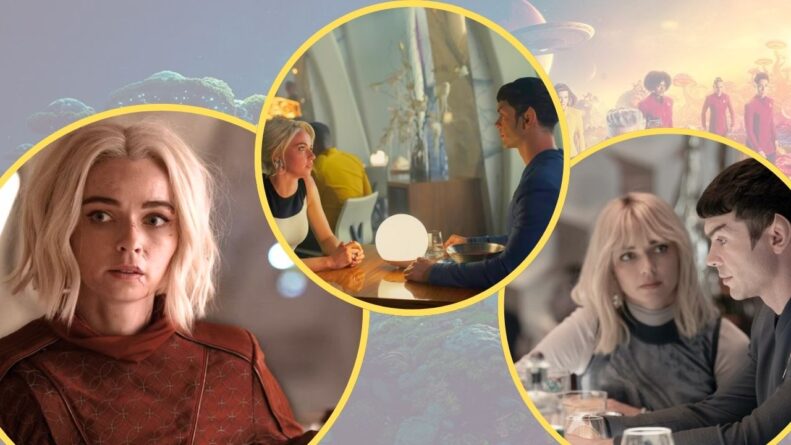
Dr. Roger Korby: Chapel has progressed to her canonical future with the arrival of Dr. Korby (Cillian O’Sullivan).
La’an Noonien-Singh: Spock has uncovered a surprising new link with the Enterprise’s security chief.
Image Credit: Fandomfans
Cherry on the cake: chaos in ‘Wedding Bell Blues’ with the impish Trelane.
Closure: The pair eventually received some much-needed closure at the end of the (infamous) ‘Wedding Bell Blues’ episode featuring the now-Trelane (Kirk’s nemesis as Starfleet Junkie) – but perversely tied up and almost undone in the process.
Is This Really the End for Spock & Chapel?
Jess Bush at the pity party her commentary on the breakup really wasn’t the most exciting part of her appearance at the con was that it turned to what’s to come.
The series ended shooting its fifth and final series in December 2025, but Bush teased there could be more to the story.
Bush alluded to the thought, “I think it was a very bad end, but maybe it is not the end.”
With Season 4 and 5 yet to premiere on Paramount+, the question remains for fans of what “not the end” truly means. We know where these characters end up, eventually, in The Original Series—they’re still close colleagues, but the romantic flame seems to have waned into a mutual, if occasionally painful, respect.
Can these last 16 episodes close the gap, or is there one more twist in the stars for the nurse and the Vulcan?
Jess Bush has been a standout in the Star Trek Strange New Worlds, making a character that was routinely sidelined in the 60s into a juggernaut of ambition, wit, and vulnerability. Even if she believes the split was “brutal,” the fact that she could sell that pain is precisely why we’re all still talking about it years later.
If you are Team Chapel, Team La’an, or just Team “Let Spock Have a Nap,” there’s one thing we can all agree on is this: Strange New World’s final two seasons are shaping up to be a real tearjerker.
Alpana
Articles Published :
156
Alpana is Fandomfans Senior Editor across all genres of entertainment. She evolved in the media industry since a very long time, she manages the content strategy and editing of all the blogs. Her focus on story development, review analysis, and research is well-equipped that ensures every article meets the standards of accuracy and depth.