James Bond Movies: Legendary Fight Scenes of All Time
Explore all James Bond movies in order, iconic fight scenes, unforgettable villains, and how 007 evolved across six decades of cinema.
Published: December 16, 2025, 12:26 pm

Explore all James Bond movies in order, iconic fight scenes, unforgettable villains, and how 007 evolved across six decades of cinema.
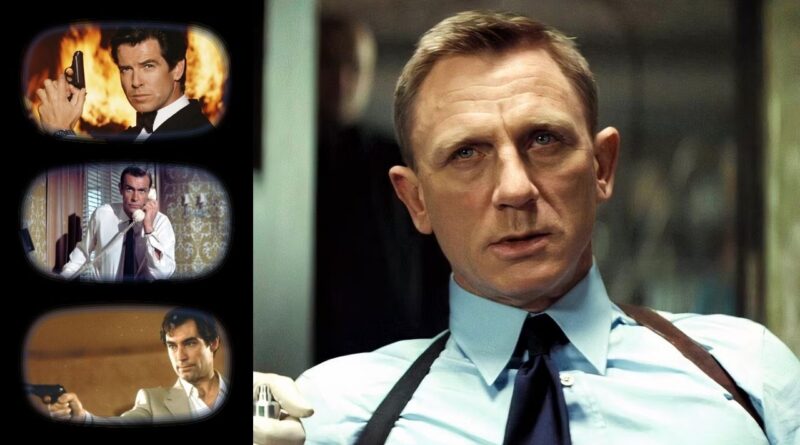
James Bond fighting is so much more than flashy action sequences. It is a six-decade journey through the evolution of fight choreography on film, changing global attitudes toward violence and the increasing complexity and artifice of stunt choreography in the movies. Ian Fleming once described Bond as a “blunt instrument” of the state—a man made to achieve results, not to be elegant while doing so.
It prefers its action to be muscled, aggressive, and violently blunt rather than graceful or theatrical. While Bond in Fleming’s novels was taught boxing and judo to mirror commando skills of the Second World War, cinematic 007 has evolved into more of a living painting, adapting to the martial philosophies, political climates and cultural sensibilities of the era.
The best fight scene in No Time to Die is the punishing stairwell brawl in Safin’s lair, where Bond is up against three armed adversaries in a narrow slab of concrete. Filmed in long, fluid shots, the scene is relentless and tiring, highlighting Craig’s older, injured Bond relying on instinct on the battlefield.
There’s a weight behind each punch, every gunshot is earned, and being in a tight space doesn’t bring with it any glitz. It’s Bond the hardened survivor, not the dazzling hero—pragmatic, efficient, and potently human. This moment perfectly embodies the movie’s themes of sacrifice, perseverance and the physical toll of being 007.
Spectre contains a loving nod to the From Russia With Love train fight, with Bond facing off against Mr. Hinx (Dave Bautista). It’s destructive, shattering several train cars. Bautista was starting to be “gentle,” but Craig told him to be more brutal.
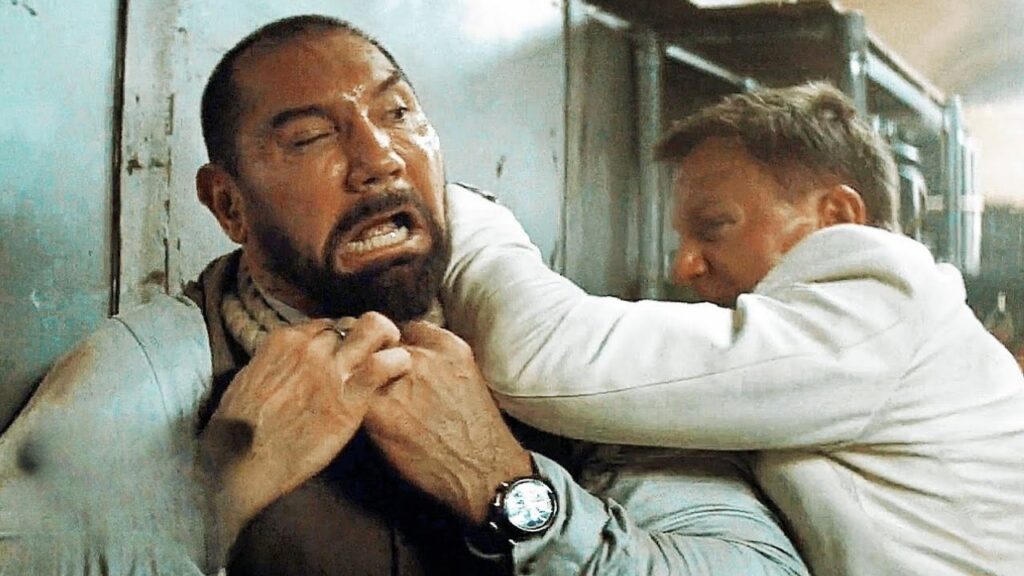
Bautista complied, hurling Craig so violently that he left the actor with a serious knee injury (meniscus tear), forcing him to wear a brace for the rest of the shoot and ultimately having surgery. This fight, then, features real pain and injury from both players.
“Casino Royale” jolted the audience with its unsentimental brutality right from the start of the film. Shot in high-contrast grainy black & white the fight isn’t clean, it is chaotic and crude and Bond ends the fight bleeding. Bond attempts to drown his quarry, Fisher, in a sink, the quarry fights back. There is no elegance here.
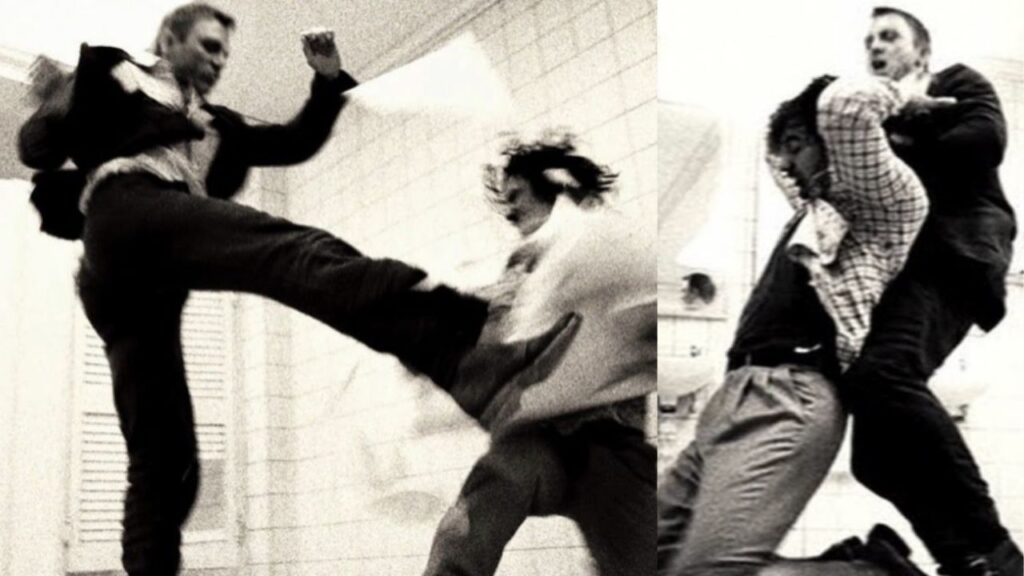
The cinematography is in keeping with Cold War noir and spy fare such as The Ipcress File while confirming that this Bond is a “blunt instrument” and implying that he’s still coming to terms with the emotional cost of killing. The scene was intentionally to feel unchoreographed, to ball the struggle and the fatigue of taking a life.
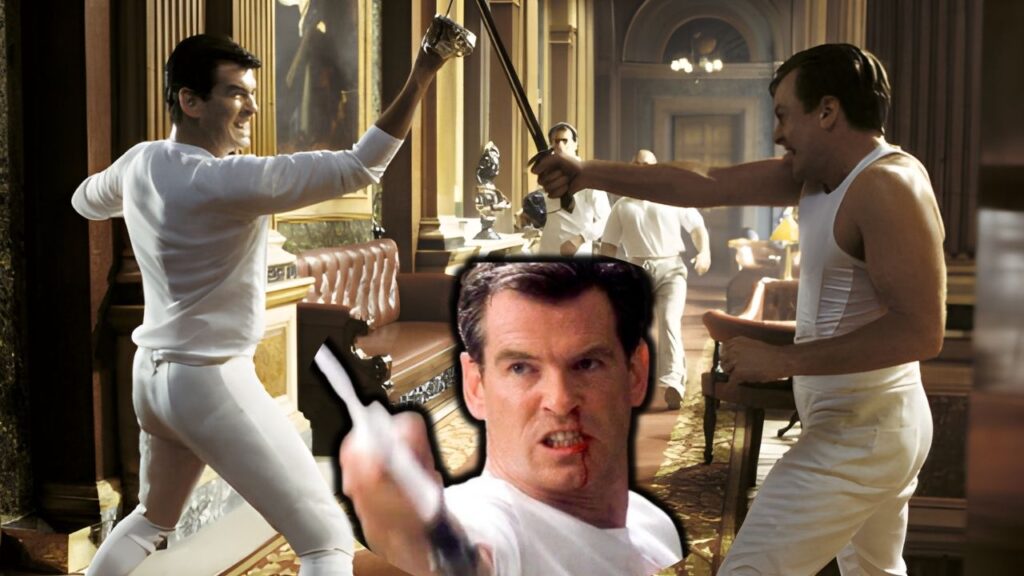
Die Another Day is widely derided for its use of terrible CGI (the invisible car, the tsunami surfing, etc.), but the fencing match between Bond and Gustav Graves (Toby Stephens) at the Blades Club is a rare moment of hands-on stunt work. It begins as a civilized fencing bout and ends with a full-on broadsword brawl, wrecking the club set.
Trevelyan is Bond’s equal—a fellow “00” agent with the same training. The battle is a mirror match. Most importantly, the sequence mutes out the bombastic score and all we can hear is the metallic thuds, the heavy breaths and the wind. This sound design decision highlights the brutal intimacy of two friends attempting to kill each other.
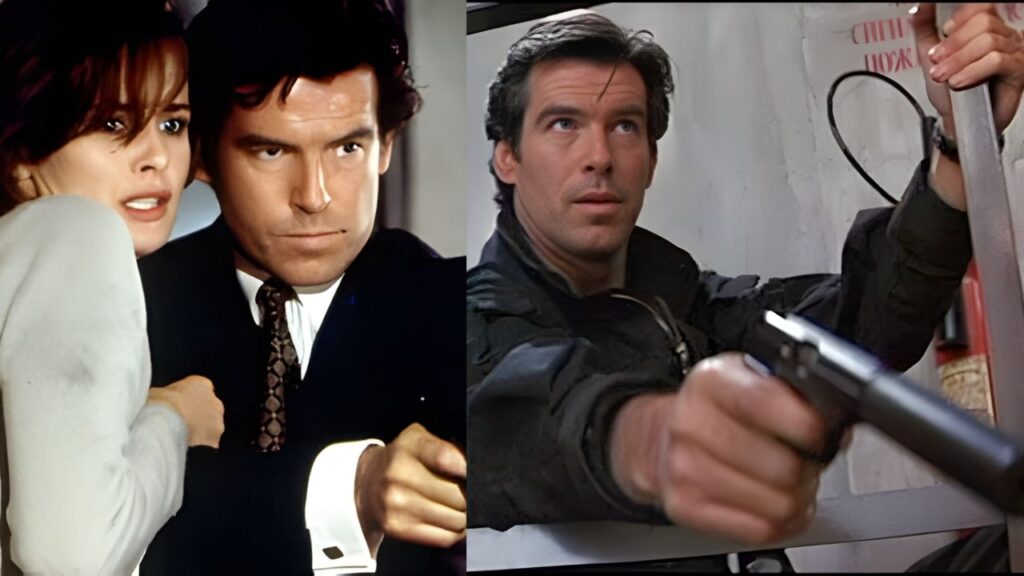
The fight is a combination of technical grappling and dirty fighting (headbutts, biting), Bond finally throwing Trevelyan to his death. The classic line “For me” in response to Bond’s “For England, James?” that he answers shortly after meeting Trevelyan, signals a personal change in Bond’s motivation.
In The Living Daylights, the tussle between Bond and Necros clinging to the outside of a cargo plane is a marvel of aerial stunt work. Withstood the strain Unlike the green-screen-laden sequences of later times, this was shot with stuntmen (BJ Worth and others) actually hanging from a plane over the Mojave Desert.
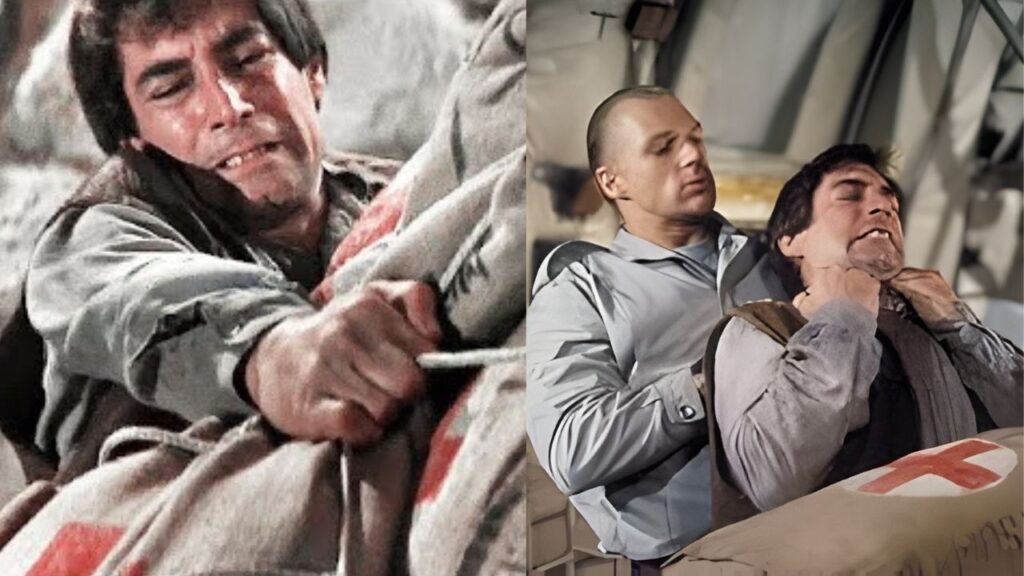
The physical struggle, as well as the roaring wind (sound design has a significant role in that), make it all very disorienting and high-risk. It’s a battle dominated by gravity, not martial arts moves.
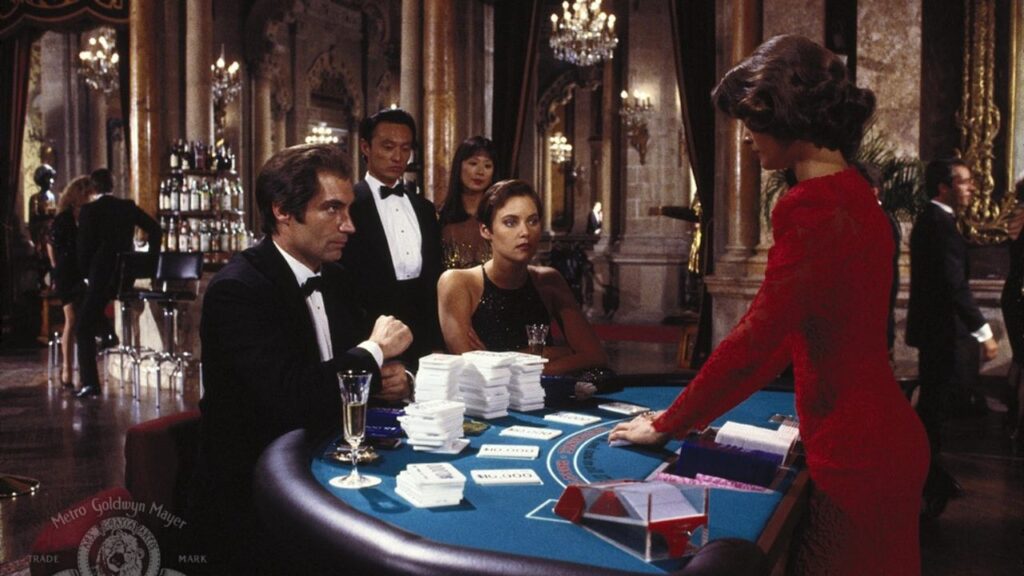
Licence to Kill is the bloodiest of the pre-Craig Bond films, and was the first to be given a 15 rating in the United Kingdom. The Bimini barrelhouse brawl is a highlight for its raw brutality. Bond isn’t trying to get away as he fights; He’s trying to do as much damage as possible. They refer to pool cues, broken bottles and a brawl that seems more at home in a western saloon than a spy movie.
The scene is staged and lit to highlight the fearsome Jaws, playing with shadows (the train closet) and jump scares. Bond is completely physically impotent; he punches Jaws in the jaw and breaks his hand — a world away from Connery’s crushing blows to Grant’s neckline. This makes Jaws a supernatural entity.
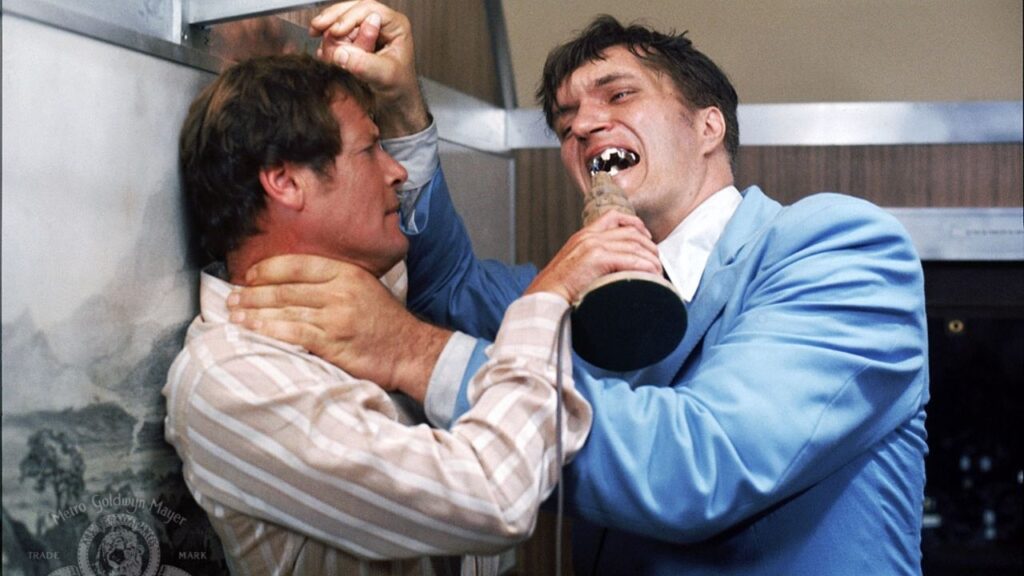
The resolution Bond stabs Jaws with a jagged lamp, delivering an electric shock is a variation on the Oddjob demise that includes a comic bounce, as Jaws endures and then departs. The sequence was choreographed by Bob Simmons, maintaining the trilogy of train fight masterpieces.
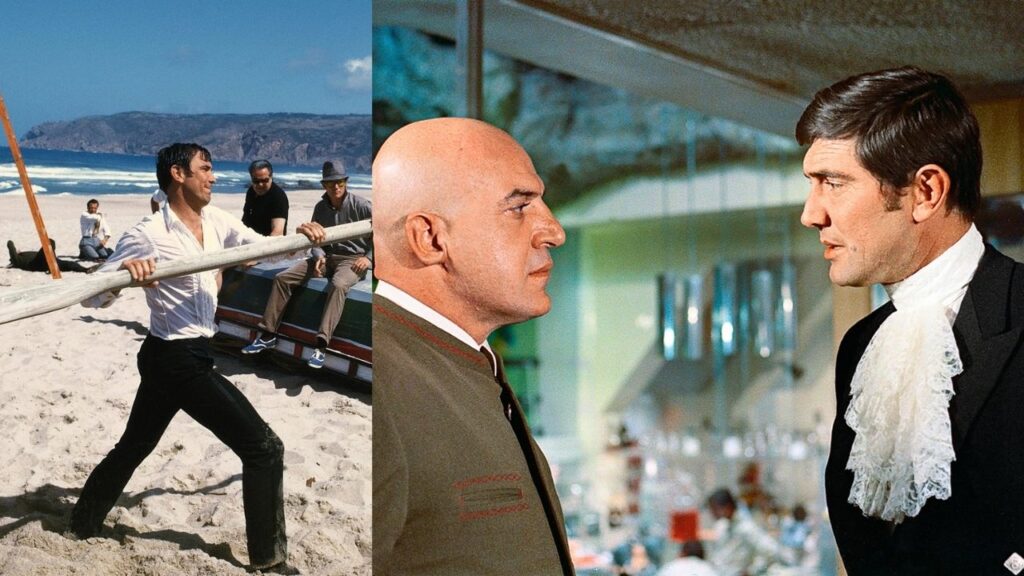
The beach fight and the hotel room brawl with Draco’s men reveal a new editing philosophy employed by director Peter Hunt. Hunt used quick cuts, jump cuts and a little bit of speeded up footage to make the fights more energetic. This gave the film a visceral, almost frenzied feel that anticipated the “shaky cam” mode of the Jason Bourne series by several decades.
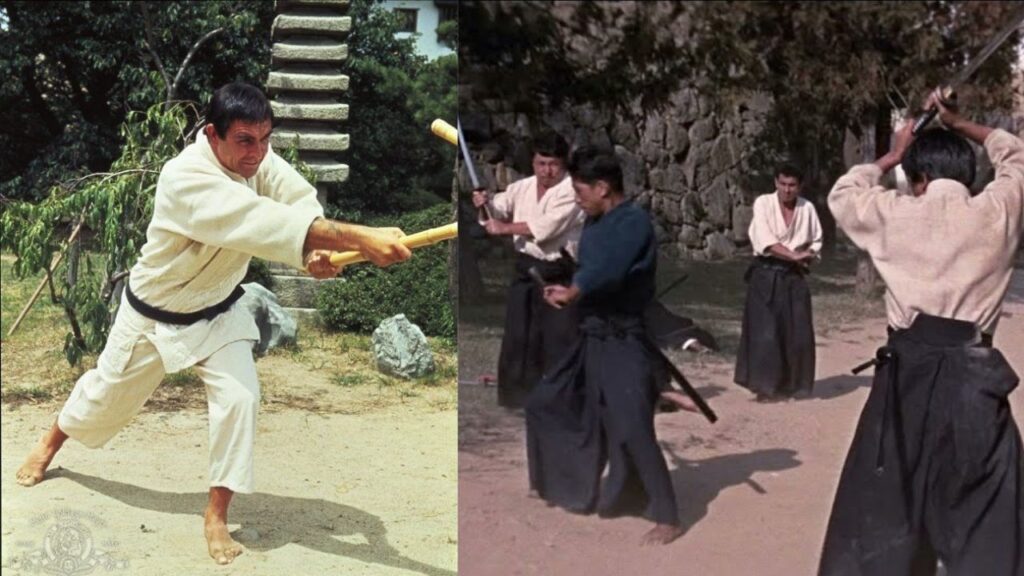
The brawling judo fight is a demonstration of this transition from the chaotic to the slightly more stylized fighting in Dr. No. Bond uses the environment, a sofa, and a large statue to fend off the sumo’s size, continuing the message that Bond has to change his fighting style to whatever culture he’s invading.
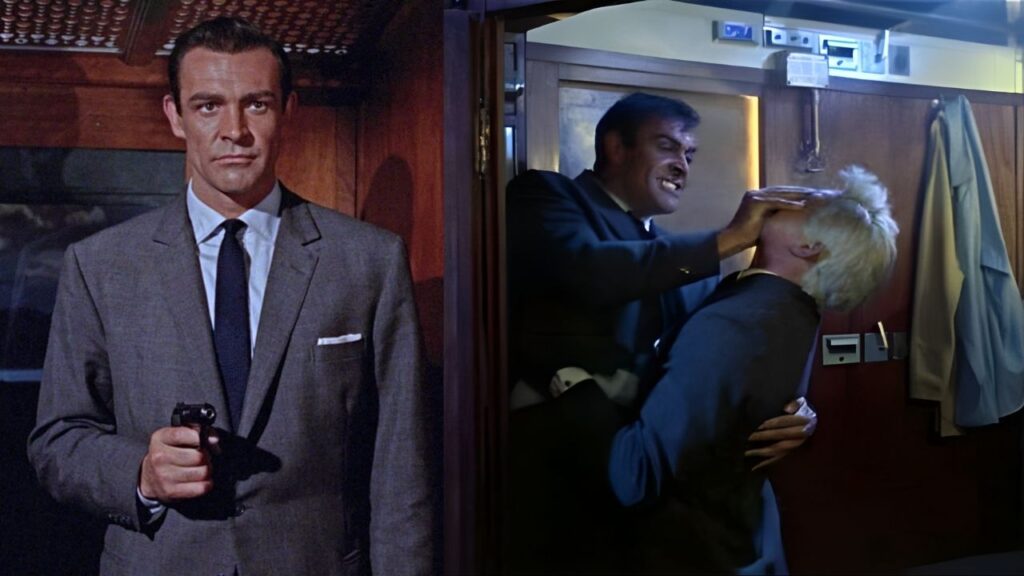
When you ask people who know what they are talking about when it comes to the Bond movie library what the best is, it’s almost always From Russia With Love that is named, the duel between Bond and Donald “Red” Grant (Robert Shaw) on the Orient Express stands as a cornerstone moment in action movie history. It took the genre away from the bloodless fisticuffs that defined 1950s action films to a more visceral, claustrophobic reality.
The development of James Bond’s style of fighting is indicative of a narrative that’s about more than just choreography or spectacle. Every punch, wrestle, and fight for life is a product of the time it was made, informed by global politics, shifting definitions of masculinity and what audiences want to see in it. From Connery’s primal, rough-and-tumble fights to Craig’s brutal, Krav Maga–inflected efficiency, Bond’s battles have always stripped away the suave disguise of the gentleman spy to expose the lethal truth beneath.
Fandomfans is focusing on delivering movie details from old to new, stay connected for more updates.

Maxton Hall Season 2 stars Ruby and James as new secrets, romances and conflicts unfold at the elite academy. Emotional, dramatic and compelling.

The nerves, the devastation, and the magnetic chemistry of Maxton Hall, The World Between Us is officially back to steal your heart all over again. With three episodes now out, the highly anticipated Episode 4, “Secrets,” is scheduled to release on 14 November, 2025, on Prime Video.
Adapted from Mona Kasten’s “Save Me” trilogy, German hit drama continues to follow Ruby Bell, a determined scholarship student at the prestigious Maxton Hall and James Beaufort, the affluent heir burdened by his family’s demands. Their lives conflict in all manner of ways. Yet fate and unforeseen perils keep bringing them together.
Prime Video will be releasing Episode 4 this Friday. It is following the show’s pattern on a weekly basis. New episodes are released every Friday until November 28. That’s the end of Season 2. The first three episodes are available to stream already worldwide, so if you’re not up to date yet, now’s the time.
Season 2 began with an emotional reset. Following the events of season one, Ruby is starting over working toward an Oxford dream, grappling with new academic challenges, and trying to offer up a little personal growth. James, by contrast, is at last dealing with his demons.
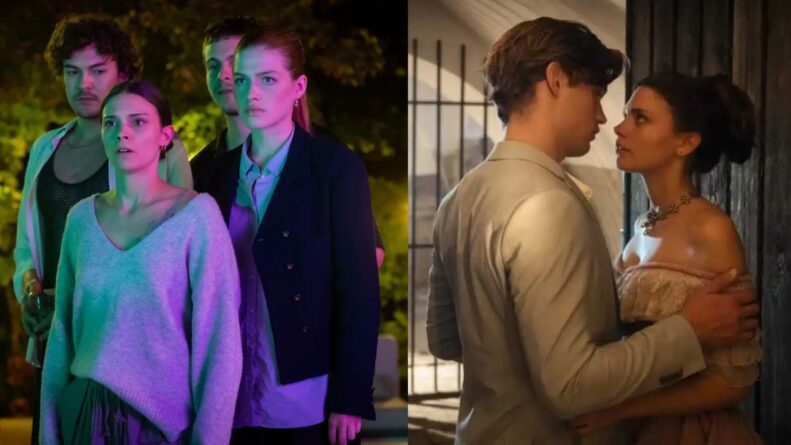
His therapy sessions have stripped away the guilt and grief caused by his family’s tragedy.
Meanwhile, Lydia’s surprise pregnancy has added a whole new dimension to the drama and Ophelia’s secret link to the Beauforts is emerging. Ember, Ruby’s sister, seems to be getting more focus. This could mean her storyline may get bigger this season.
Episode 4, appropriately named “Secrets,” is set to evoke some feelings and maybe even fan the flames of a once-again rumored romance. After their emotional exchanges in Episode 3, Ruby and James could be beginning to really move forward again. However, that’s far easier said than done in Maxton Hall, we know.
The next episode will also investigate further into Cordelia Beaufort’s will, a storyline that is expected to reveal some secrets pertaining to the Beaufort family wealth. Fans should brace for more Lydia/Professor Sutton drama, since the pregnant woman can’t decide whether or tell her pregnancy.
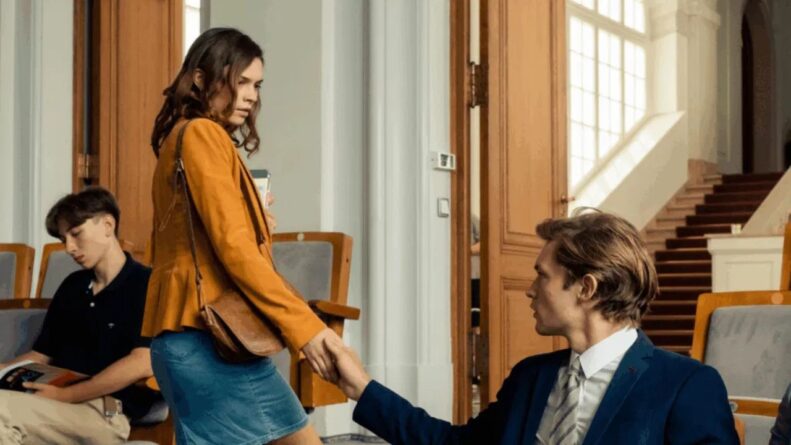
Another open question is the simmering animosity between Alistair and Kesh that has been bubbling since Season 1. Fans have been dying for closure on their arc and episode 4 just might give us some answers as to where their friendship or perhaps something more is headed.
Read More 👉 Michael B. Jordan and Ryan Coogler’s ‘Sinners’ Lands Historic Grammy Nods
If Season 1 was about discovery and heartbreak, Season 2 is about vindication. The writing is quicker, the emotions stronger and the chemistry between Harriet Herbig-Matten (Ruby) and Damian Hardung (James) is still electric. Directors Martin Schreier and Tarek Roehlinger add a cinematic flair to the narrative, infusing the lavish with the heartfelt.
And the new season delves into even bigger issues ambition, privilege and emotional restoration all set against the drama-ridden halls of Maxton Hall’s upper echelons.”
Maxton Hall continues to demonstrate that teen drama can be both genuinely moving and intelligent. Featuring a blend of romance, tension, and moral ambiguity, it’s no wonder this series has turned out to be one of Prime Video’s top European originals.
The fourth episode is shaping up to be a turning point, one with the potential to alter Ruby and James’s relationship forever. If love conquers guilt or secrets tear them apart, this is going to be a wild ride for the fans.
So, get the popcorn, sign into Prime Video, and prepare for another week at the scandalous Maxton Hall. Installment 4 releases 14 November 2025 and you won’t want to miss a second.
At FandomFans, we bring you the latest buzz from Hollywood’s creative underworld exploring how visionary directors, designers, and actors craft the worlds we love to escape into. Today, we dive deep into the drama and anticipation surrounding the next episode of Maxton Hall Season 2, keeping fans connected to every twist and turn.

Explore why Mystery TV Shows hook audiences early but struggle long-term. Learn how complex plots, high costs, and viewer fatigue lead to cancellations.

There is a particular kind of heartbreak unique to the viewer of television in the 21st century. It’s that feeling, typically experienced somewhere around the start of a show’s fourth season, when you begin to realize that the Mystery TV Shows you used to be a rabid fan of—one that spawned a million fan theories—is starting to feel like work.
Insiders in the industry refer to this as the “Fourth Season Curse.” In a contracting “Peak TV” era, with streaming behemoths slashing their libraries, the four-season mark is becoming a brutal natural selection point. This is especially true for “mystery box” shows: the high-concept series that trade in secrets and puzzles and delayed gratification.
But what is it that makes the fourth season the breaking point? And what can the rise and fall of hits like Westworld, Manifest and The Sinner tell us about the future of how we watch TV?
The “mystery box” format, made popular by J.J. Abrams, is an interesting narrative tool that involves curiosity and waiting. It hooks us with a “hook” (the mystery) and then gets us addicted to a “fix” (the answers). Still, creators often rack up what critics call “complexity debt”. Each time a writer reveals a new mystery without answering an old one, they are taking out a loan on the audience’s patience. By Season 4, the debt is usually too high. If the answers don’t live up to decades of fan speculation, the audience doesn’t just get bored—they get angry.
| Feature of Mystery Box | The Risk Factor |
| Information Withholding | Speculative fatigue; the “IQ test” feeling |
| Non-linear Storytelling | Narrative opacity and total viewer confusion |
| The “Gotcha” Twist | Prioritizing shock over character growth |
To understand how this curse manifests, we have to look at three very different shows that hit the same wall.
Westworld was scripted to be the next Game of Thrones. Instead it turned into a cautionary tale. The showrunners got so obsessed with, I would say, “outsmarting” the internet that the plot evolved into a dense forest of timelines and philosophical gobbledygook.
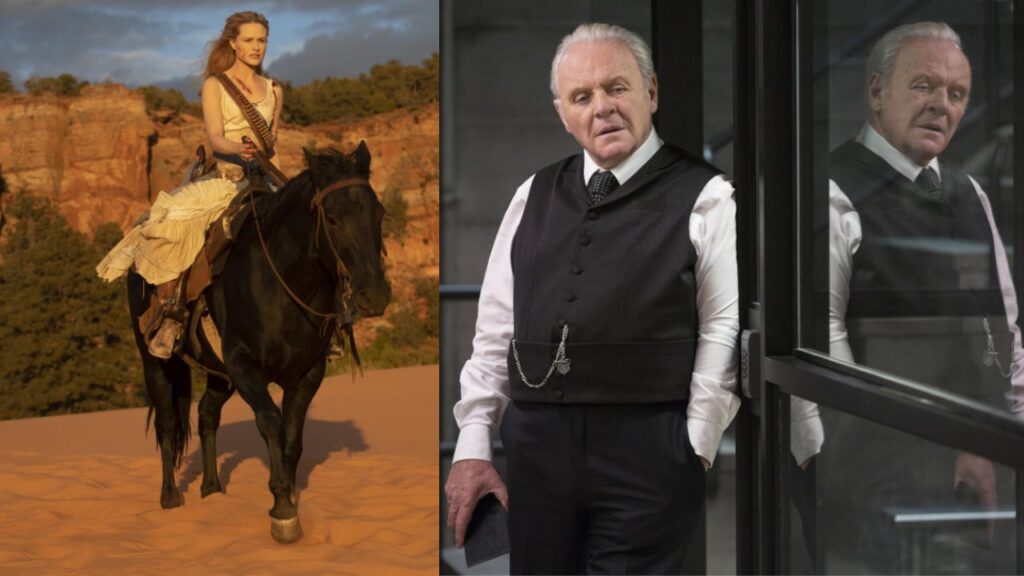
By season 4, it lost 81% of its viewers. It wasn’t just that it was confusing; it had lost its heart. When a show treats its characters like chess pieces in a logic puzzle, audiences eventually stop cheering for the players.
Manifest is the exception on both counts. The scripted series was canceled by NBC after three seasons when live ratings dropped but then got a second life on Netflix. Why? Because mystery boxes are wonderful to binge-watch, even when they don’t work as appointment viewing.
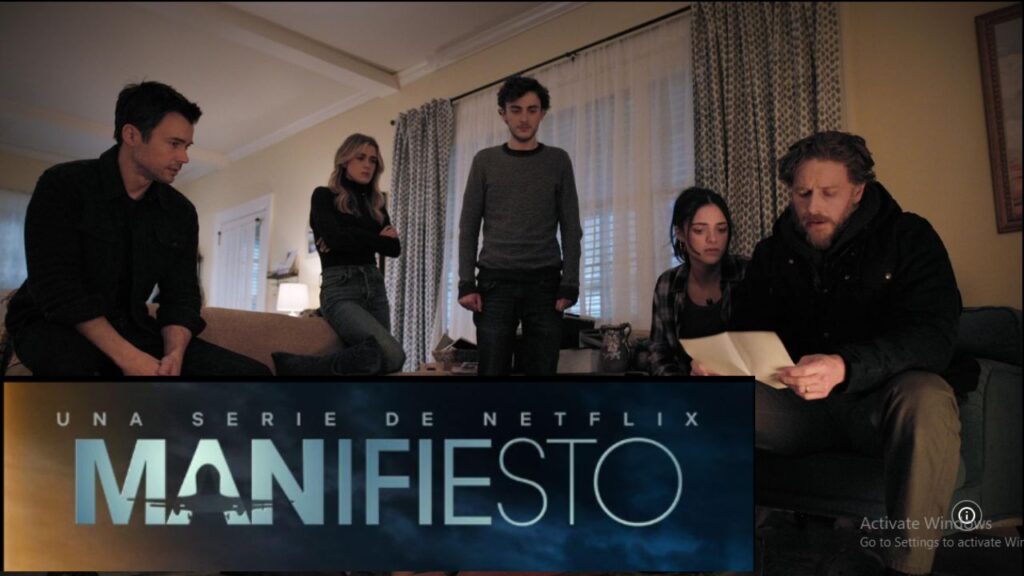
By compressing a planned six-season arc into a final, 20-episode fourth season, the showrunners had to cut all the fat and actually ratify. It demonstrated that a “forced ending” is in fact the best antidote to a narrative slump
In contrast to the rest, The Sinner was an anthology. Each season was a new “why-dunnit.” Yet, it still fell victim to the curse. This time the “curse” was financial.
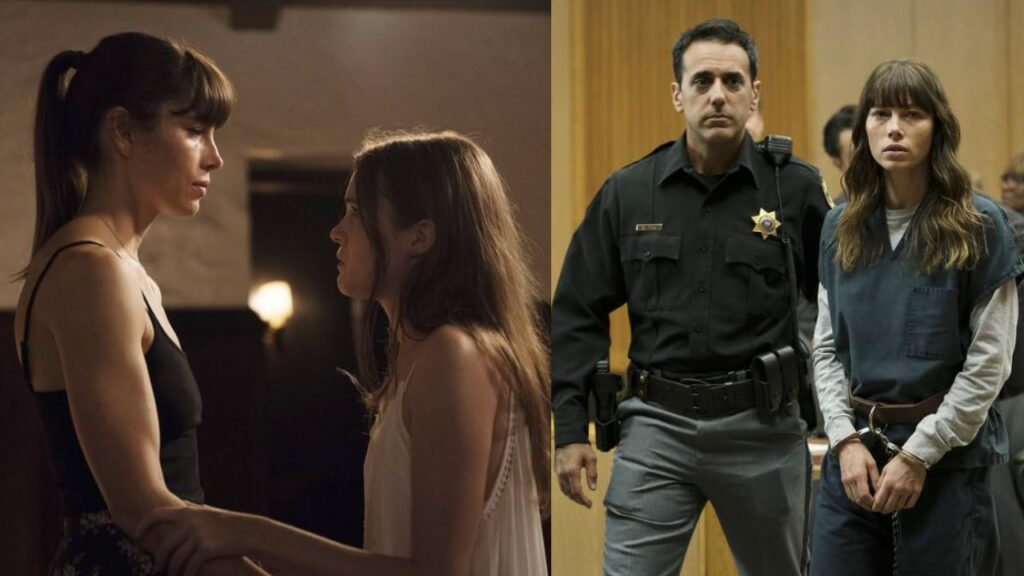
As networks such as USA move away from scripted dramas and toward less expensive reality TV, mid-budget series—no matter how prestige they seem are the first to be cut.
The Fourth Season Curse isn’t simply the result of shoddy writing; it has to do with the profit motive. In 2025, a mid-tier drama is priced at $4 million to $6 million per episode.
Contract raises: By Season 4 the cast and crew are pricier.
Viewer Attrition: Audiences traditionally, well, went down every year.
The “New” Factor: What streamers are willing to pay for and find value in — is $50 million for a brand-new “hit,” not for continuing an aging series with a niche viewership.
Read More 👉 Percy Jackson Characters Upgradation Explained: Power, Trauma & Growth
If we want better TV, the creators need to alter how they make their boxes. The most durable shows – for example Breaking Bad or Succession are all character-centric. The “mystery” is just the backdrop; the “show” is the people.
Critics are now claiming “Magic Show” storytelling is superior. Rather than hide certain pieces of information (the Mystery Box), creators should disclose information and allow us to observe as characters react to the consequences. This makes for a sustainable emotional hook as opposed to a maddening intellectual one.
The age of the “ever-show” is ever-show is over. As budgets tighten and our attention spans splinter, the most successful shows of tomorrow will be those with a defined, limited scope. Ending is just as – it’s just as important to know when to end as it is to know how to begin.
Dive into the world of entertainment with Fandomfans, our goal is to deliver updates from movies, shows, and interviews.