Sidelined 2: Intercepted hits you out of nowhere before you even know what’s going on. What seems like a bumpy, dumb college kid romance on the surface quietly morphs into a sharper, more self-conscious follow-up — one that knows exactly what it wants to do with Noah Beck, with Tubi’s brand, with its Gen Z audience. This isn’t a movie aspiring to be high-brow; it’s a movie knowing what kind of movie it is and playing to those strengths.
From the willfully chaotic emotions to its influencer-driven star power, Sidelined 2 straddles the line between melodrama and digital-era escapism, establishing a larger, more audacious universe that could (please!) continue on in Sidelined 3. It’s loud, it’s flawed, it’s melodramatic—and for some reason, that’s exactly what makes it work. The ambiguous ending of Sidelined 2 is a blatant strategic set up for a third movie. By keeping Dallas in New York and Drayton in L.A., this franchise provides a “reunion” hook for Sidelined 3.
Image credit: IMDb
The performance of Sidelined 2, is also a good way to Tubi’s brand enhancement. It shows the platform can grow a franchise, hold onto talent (like Van Der Beek and Beck), and create original buzz on social media. This begins to separate Tubi from the blight of the “digital discount bin” and towards being a destination for certain demographic groups.
A Deep Dive into Sidelined 2
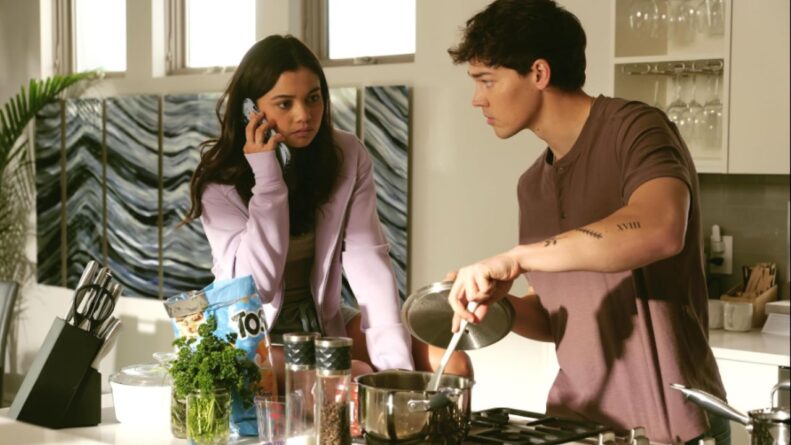
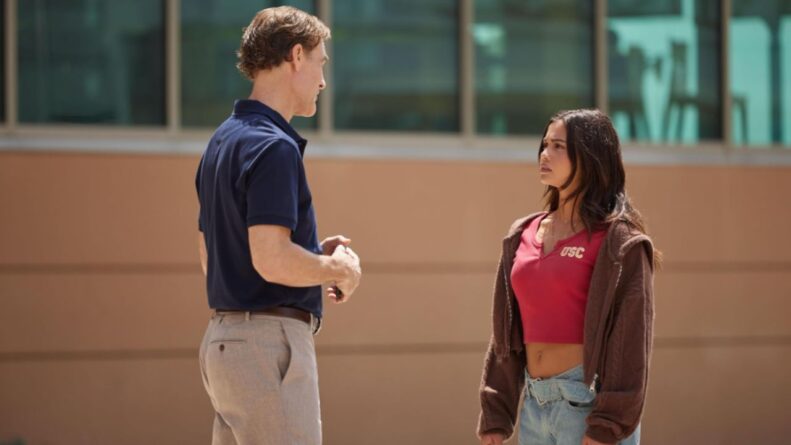
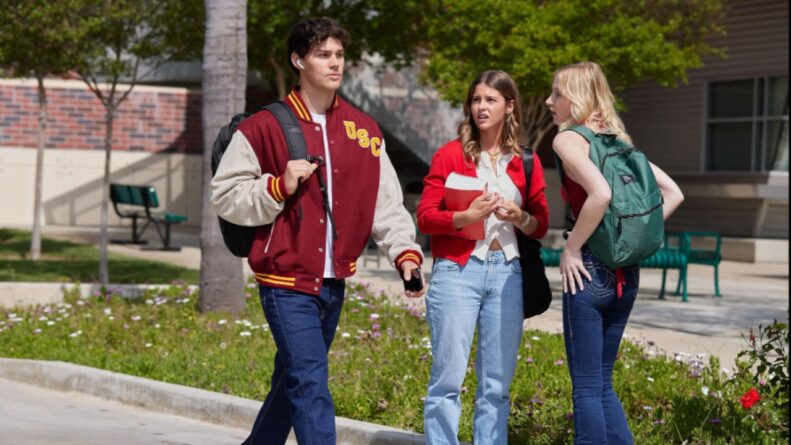
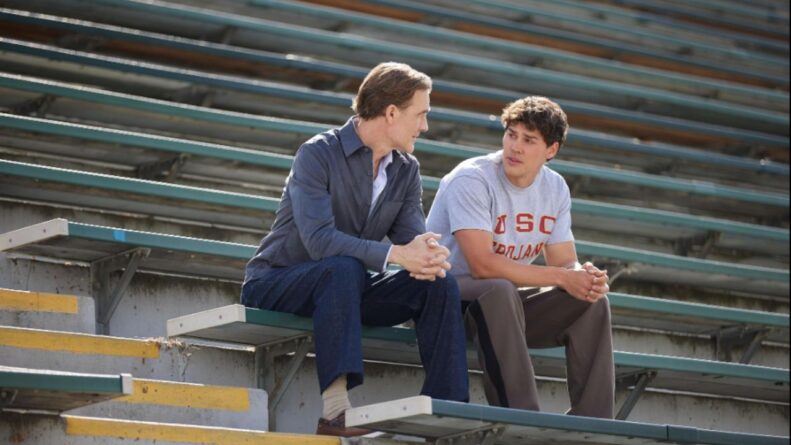
Life After High School is what the film opens with. Dallas and Drayton are now three different men, in two different places, physically and emotionally. Dallas, a third-generation navy dancer, is attending dance school on a partial scholarship at CalArts and dealing with hard classes, self-doubt and financial woes. Drayton, on the other hand, is at USC as a highly recruited freshman quarterback, cloaked in anonymity as he prepares for the NFL.
Image credit: IMDb
The physical separation of their campuses in Los Angeles becomes a metaphor for the emotional rift between them. With busy college schedules, their biggest hurdle is just making time to meet up. This sets up a believable and relatable conflict, moving the story beyond high school angst to a realistic exploration of how young adults juggle priorities, responsibility, and relationships.
The final act is the biggest departure from the standard rom-com template, in which reality—not romance—wins. Dallas comes to Drayton’s first game post-injury to root for him one last time, and voilà, the audience gets the emotional sports moment they’ve been waiting for. But after the match, instead of rekindling their relationship or committing to making a long-distance relationship work, they just share one last kiss and decide to go their separate ways — Dallas is headed to New York with her career, while Drayton intends to stay put in L.A.
Image credit: IMDb
Their conversation about being “the right person at the wrong time” is what holds the film, and Drayton’s line about fate leaves the door slightly ajar for what comes next without obligating a false happy ending.
This down-to-earth ending have generated a lot of chatter and both Noah Beck and Siena Agudong have commended it for being authentic to their characters. The movie aligns with the “realistic romance” trend of late a la La La Land, where personal growth and career aspiration come before staying together, a message that strongly resonates with Gen Z.
Noah Beck— Influencer-Actor Paradigm
Noah Beck’s spin on the world Sidelined is built around is, obviously, its biggest draw, with 33 million TikTok followers making him one of the biggest names in the creator world and his transition into acting indicative of the industry trend of casting stars with established online audiences. His reviews were mixed but getting better – some reviewers think he looks “too nice” to be the bad boy, while others say his natural TikTok charm translates well to screen, particularly in the lighter moments. The film also taps into his real-life persona by including footage of him exercising, shirtless and acting flirty in a way that mimics TikTok thirst traps. It’s a kind of fan service – and the film never pretends its audiences aren’t as interested in watching Noah Beck as they are in watching Drayton.
Image credit: IMDb
Meanwhile, Siena Agudong is the “working actor” type. Coming from Nickelodeon and Disney, she has the technical ability to handle the emotional weight of the film. It is her performance that grounds Beck’s more raw presence. Their chemistry is part acting technique, part influencer collaboration—it seems engineered to be clipped, shared and memed by fans.
Sidelined 2 takes place somewhere between the wholesomeness of Prom Pact and dramatic chaos of After. It doesn’t have the graphic nature of After or the budget of The Kissing Booth, but it makes space for itself by being, arguably, more “realistic” about the jump from high school to college than either.
Conclusion
Sidelined 2: Intercepted is a victory of utility over polish. It is a “mindless dose of Tubi entertainment,” much like a Big Mac is a “mindless meal” – it has been designed, is predictable, and resembles what the customer expects. That tells us that the movie of the future is going to be not just about the art on the screen but about the ecosystem surrounding it: ads, apps, influencers and the holiday weekends when we all want something to watch that doesn’t require us to think too much.
It ends with Dallas and Drayton walking away from each other, their futures unwritten. But for Tubi, the future is written in code, and looks a lot like this: bright, loud, free, and endless.
Mariyam
Articles Published :
77
Mariyam Khan is Fandomfans Content Writer and providing reports and reviews on Movie Celebrities, and Superheroes particularly Marvel & DC. She is covering across multiple genres from more than 4+ years, experience in delivering the timely updates.
The Green Lantern’s Guy Gardner Became the Heart of James Gunn’s New DC Universe
Find out how Guy Gardner emerges as the emotional heart of James Gunn’s new DC Universe and redefines the Green Lantern mythos in Superman 2025. Read more...!!
The availability of James Gunn’s Superman in 2025 did more than just give us a new Man of Steel, it flung wide the door to a sprawling, “lived-in” universe. Eschewing the slow-burn origin narratives of yore, this new era dubbed Chapter 1: Gods and Monsters slaps us unmistakably into a reality where superheroes aren’t simply myths, but elements of the geopolitical and corporate realm.
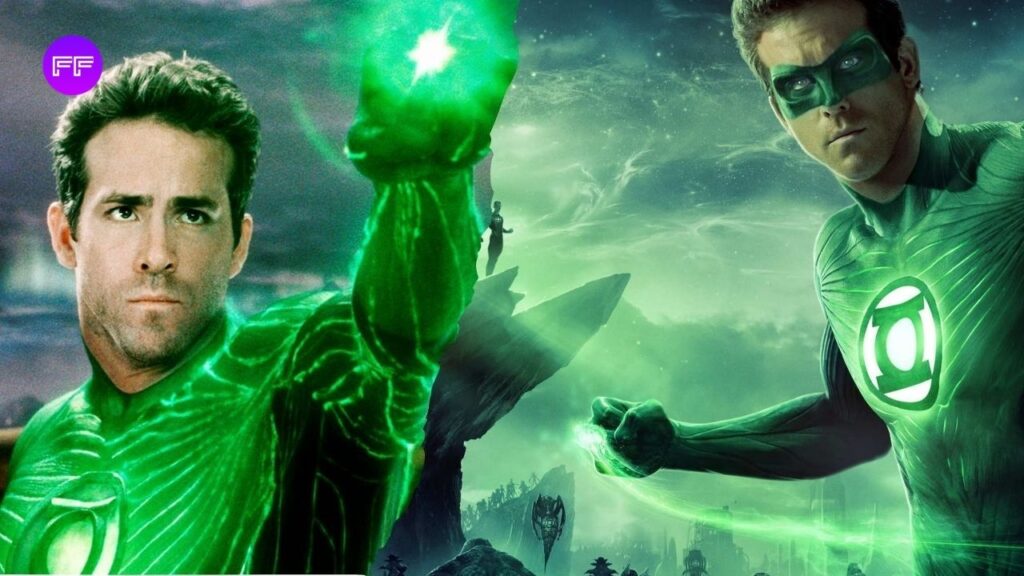
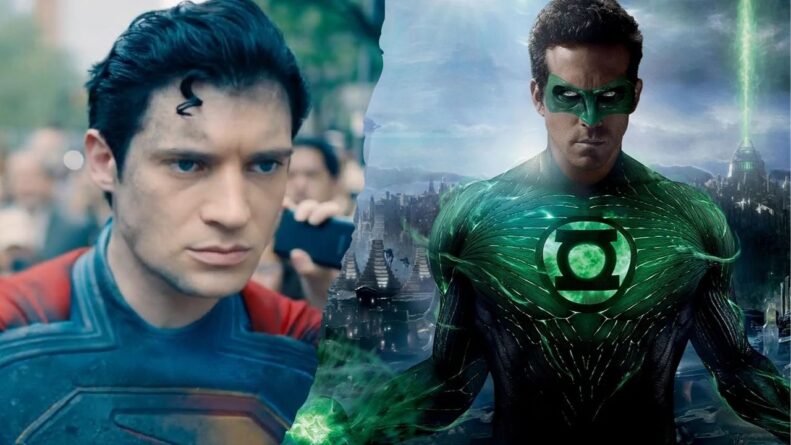
Making that interface between galactic and Earth-bound politics is a character who is the ideal entree into both: Guy Gardner, the Green Lantern. Played with a combination of arrogant charm and neurological instability by Nathan Fillion, Gardner’s inclusion in the film is transmedia genius. He’s not only a cameo, he is the ideological counterpoint to Superman and the connective tissue for the future of the DCU.
The Death of the Traditional Superhero Origin Story
Superhero movies have eaten the same sorts of roles for years: the hero gets powers, the hero learns a lesson, and the hero puts on a suit in the last ten minutes. This is something with which Gunn’s Superman takes a particularly robust swing. David Corenswet’s Superman is already an established figure, and more crucially, he’s not the only one.
A World Where the Green Lanterns Already Exist
Instead of an exposition sequence explaining how these rings work, the movie establishes (through vet Guy Gardner) that “ring-slinging” Lantern is already up and running on Earth.
Equally, it’s allowed Green Lantern Corps to function as a kind of back-up law enforcement without becoming comic busy bodies.
Why Guy Gardner Was the Perfect Choice
Selecting Gardner instead of popular choices such as Hal Jordan or John Stewart was a strategic move. It keeps the “prestige” Lanterns available for the gritty, detective Lanterns series on HBO, and gives Superman a hero who can also stand as a powerful combatant and a source of friction. Gardner is the guy who has the most powerful weapon in the universe, but doesn’t have the social filter required to use it gracefully.
When Heroism Meets Corporate Branding
One of the most provocative topics of Gods and Monsters is the convergence of heroism and capitalism. In this dimension, there is no traditional Justice League, but rather the Justice Gang — a team financed and organized by billionaire industrialist Maxwell Lord through his company, LordTech.
The Justice Gang Line-Up
Unlike Superman, who flies on the wings of altruism, the Justice Gang is a carefully curated PR machine. Their roster is as much about “brand alignment” as tactical superiority:
Hero Identity
Corporate/Thematic Function
Green Lantern (Guy Gardner)
The Volatile Enforcer; provides “alien” legitimacy to a human corporation.
Mister Michael Terrific
The Genius; aligns with LordTech’s cutting-edge scientific branding.
Hawkgirl (Kendra Saunders)
The Aerial Combatant; provides tactical versatility and mythological ties.
Metamorpho—Rex
The Elemental; represents the boundaries of corporate-sponsored science.
The Meaning Behind Gardner’s Costume
Guy Gardner’s cinematic appearance is a story in oppression. His suit prominently displays the “JL/I” logo which is a reference to the Justice League International comics but in this case it also symbolizes corporate ownership. Most notably, Gardner is seen wearing a jetpack or exoskeleton.
Why a Green Lantern Needs a Jetpack
For a character whose ring lets him fly faster than the speed of light, this is a pretty glaring omission. It could be that LordTech requires the use of their hardware for “branding” purposes, or that Gardner’s use of the ring is being closely tracked and limited by his corporate masters.
Guy Gardner’s Traumatic Brain Injury that Shaped His Personality
To give Gardner some depth beyond just being a loudmouth, the DCU has drawn on a tragic part of his comic history: Traumatic Brain Injury (TBI).
Nathan Fillion has said that his version of Guy Gardner was “flipped” after being hit by a metropolitan bus and falling into a coma. This brain damage removed his social filters and impulse control. It makes his arrogance not just a personality quirk but a clinical feature of his illness.
The Perfect Opposite of Superman
This makes him the ultimate contrast to Superman. While Clark Kent is the ideal of biological and moral perfection, Gardner is the gritty, broken human reality. A “Sophia Petrillo-esque” inclination to say what he’s really thinking means Lex is a potential PR catastrophe in heels — and a perfect pawn for Lex Luthor.
Luthor is tapping into Gardner’s abrasive, “local boy from Cincinnati” narrative to stoke xenophobia. Guy Gardner is, in Luthor’s telling, the “safe, human” face of the “alien, unpredictable” Superman.
Geopolitics Conflict in Superman 2025
The conflict of the 2025 Superman movie isn’t an alien invasion — it’s a territorial dispute between two fictional countries, Boravia and Jarhanpur. When Superman takes it upon himself to stop the killing, he breaks international law.
The Moment Guy Gardner Finally Chooses a Side
Gardner answers to two masters: the Guardians of the Universe (who preach neutrality) and LordTech (who fear liability). However, the cynical Guy Gardner’s shell is eventually broken when he witnesses Superman risk global condemnation to save lives. For him to disobey his corporate overlords and come join Superman in the mud is the heart of his emotional arc.
Bridging the Gap: The “Lanterns” HBO Series
The DCU employs an “asynchronous timeline” much like Star Wars. So this is why in the new Lanterns title, Hal Jordan (Kyle Chandler) calls himself the “only human Lantern.”
The Evolution of the Green Lantern Legacy
The Lanterns series is a prequel of sorts to Superman. It’s gritty, ‘True Detective’ style procedural where a younger Hal Jordan and rookie John Stewart team up to crack a terrestrial murder mystery that suggests a larger cosmic conspiracy.
Lanterns (Past/Present) Hal and John uncover the dark side of Earth’s place in the cosmos.
Superman (Future): The world is now flooded with heroes such as Guy Gardner, who have achieved celebrity status as.
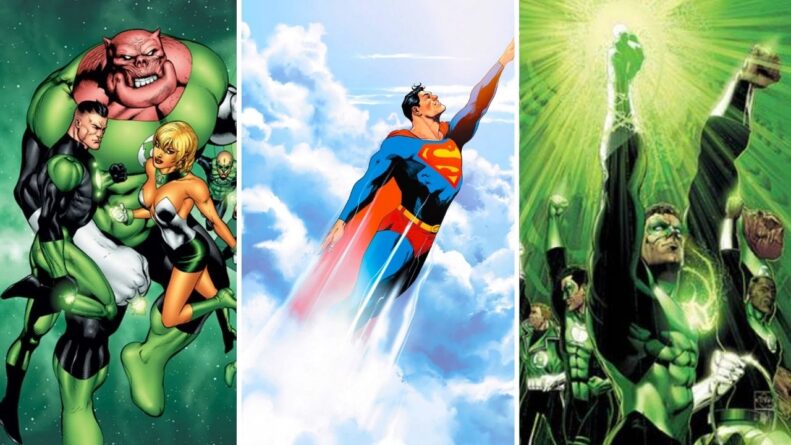
This way, viewers can watch the development of the Green Lantern mythos — from Jordan and Stewart’s listen-to-your-color roots to the manic corporatized gamified era of Gardner.
Guy Gardner is the “powder keg” of the new DC Universe. He is a personification of the doubt, couldn’t-care-less attitude damage and crass commercialism of today’s world. By lining up Superman with a figure like Greer, Gunn is able to underscore why the Man of Steel is even necessary because it’s not just about nabbing the bruisers, but about encouraging the most fallen among us to remember their earliest vows.
Guy Gardner starts out as a corporate mascot with a short fuse but evolves through his interaction with Superman into a real hero. This integration means the Green Lantern mythos no longer sits as some space-only concept, but rather it has become a face that tells the human story in the DCU.
Fandomfans delivers entertainment updates from blockbusters movies, series, and amazing characters to you directly.
Mariyam
Articles Published :
77
Mariyam Khan is Fandomfans Content Writer and providing reports and reviews on Movie Celebrities, and Superheroes particularly Marvel & DC. She is covering across multiple genres from more than 4+ years, experience in delivering the timely updates.
Keira Knightley new dark comedy movie ‘The Worst’ with Jamie Dornan and Alicia Vikander
Keira Knightley leads the dark comedy THE WORST with Jamie Dornan and Alicia Vikander. Cast, plot information, release hype and more. Read more visit website!
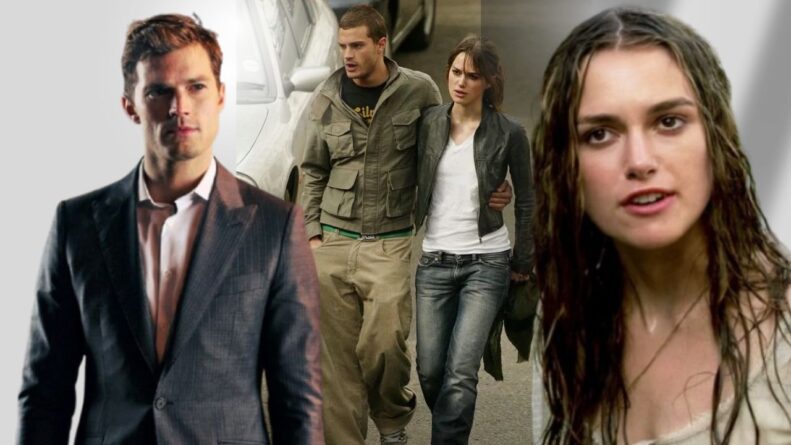
The recently announced film The Worst is already shaping up to be one of the most interesting films this year. Variety have also confirmed that Keira Knightley, Alicia Vikander, Jamie Dornan, and Erin Kellyman will all appear in this upcoming dark comedy The Worst that is a powerhouse cast if I’ve ever seen one. It’s very rare to have such esteemed actors all come together for one project this early in a career and it says that the production is going to be something ambitious creatively.
This is not just a collection of over-exposed actors, but a group who can portray characters with layers of intensity and complexity psychologically. Combined, these actors’ collective strengths hint at a movie that will play to an emotional core and perhaps a bit of controlled chaos, right in line with the tone suggested by the genre.
If the early storyline summaries are any indication, The Worst seems primed to offer a daring, out-of-the-box cinematic ride that could potentially be one of the more distinctive films in today’s market.
The Plot: A Dinner Party from Hell (But Make It Fashion)
There’s nothing quite as tasty as a satire of “rich people behaving badly.” From Succession to The Menu, we as a society are fascinated with watching the privileged class collapse. The Worst appears to be tailor-made to deliver that, albeit with a sun-kissed, French edge.
Image Credit: Fandomfans
Here’s the scoop: the movie takes place in a beautiful new chateau in France. Alicia Vikander is Emily Fisher, a high society socialite who, after her husband Max, hosts a group of friends at night. Apparently this is one of these groups of homies who all secretly (or not so secretly) loathe each other.
Cast and Characters
Keira Knightley is taking on the role of Holly, a “struggling diversity consultant” who has conflicts with everyone until she gets a migraine. Anyone that has watched Knightley in Begin Again or the more easy-going, cheerful bits of Pride and Prejudice will know just how much comedic timing she has and yet is never fully utilised. Prejudice knows how to make use of her effortless charm while throwing out razor-sharp wit. But to see her playing an abrasive, “deliberately flawed” character is definitely going to be a treat.
And then there’s Jamie Dornan as Danny, a fast-talking talent agent who can’t stop dropping the names of his clients. If you saw Dornan in Barb and Star Go to Vista Del Mar, you know he’s actually a comedic genius. He’s got that charm that can so easily curdle into something hilariously insufferable, which sounds absolutely right for this role.
Image Credit: Fandomfans
And who’s caught in the middle of this hurricane of narcissism? The brilliant Erin Kellyman (which if you’ve seen Willow or The Falcon and the Winter Soldier you’ll remember her) is Niamh, the waitress.
There’s something so comforting about the “average Joe stuck with insanely wealthy people” trope. Kellyman’s screen presence is so grounded and powerful; at the end of a night of collapsing secrets and madness will be the anchor this tale needs.
The Director: A Reunion We Didn’t See Coming
Simon Woods is making his directorial debut with the film. If you know that name, that’s because he was once an actor before he became a playwright. Here’s a fun fact, though: Woods and Keira Knightley were also in the 2005 Pride & Prejudice! He acted as Mr. Bingley.
Image Credit: Fandomfans
It’s always interesting when actors direct because they view performance from a different angle. Woods has penned the screenplay himself, calling it a bid to “seduce audiences into identifying with characters who are intentionally flawed, abrasive and frequently enraging.”
He just wants us to be on the verge of sympathizing with these awful people before yanking the rug out from under us. It’s a daring move. It’s dangerous. And it sounds just like the kind of uncomfortable, “make-you-want-to-rip-the-armrest-off-the-seat” cinema that people end up talking about.
Key Highlights and Collaboration: Why We Are Already Obsessed
Other than the cast, what sets The Worst apart is the timing. We live in a golden age of class satire. We live to pick apart privilege, particularly when it’s served up with “wickedly entertaining” humor, as the producers promise.
But it’s also a particular configuration of these actors.
Alicia Vikander primarily does heavy drama work (The Danish Girl, Ex Machina). Seeing her as a domestic diva suggests a level of performativity that she will no doubt obliterate.
Jamie Dornan has managed to break free from the shadow of Fifty Shades and has reinvented himself as a a versatile, and quite frequently funny, character actor.
Keira Knightley is the queen of period dramas, but she’s been making some really interesting contemporary choices recently (like Silent Night).
When Can We See Keira Knightley New Dark Comedy Movie ?
That is the hard part. The project is now available to buyers at the European Film Market (EFM) in Berlin, running now. So production and release dates are still to be decided.
But for a cast this stacked, it’s almost certain to be scooped up quickly. I wouldn’t be shocked if a streaming giant or major studio is in a bidding war for the rights by the end of the week.
So we wait, for now. But let’s be real — the group chat has already been ignited. We’re already casting our predictions on who cracks first at this dinner party. My money’s on Jamie Dornan’s character Machiavellian-networking his way out of a disaster while Keira Knightley’s character silently judges him from across the room.
Conclusion
The Worst is not a typical film announcement, it’s more like the start of a cultural talk. With a keenly focused premise, a brazen creative vision, and a cast full of actors who excel in psychological nuance, this doesn’t seem like the run-of-the-mill dark comedy, it’s an event. Keira Knightley new dark comedy movie with Jamie Dornan is the kind of film that intelligently dissects privilege, power, and hypocrisy with humor and just enough chaos to make audiences a little uncomfortable in the best way.
If it lives up to even half of what it’s promising, The Worst won’t just entertain, it will linger. It will provoke debates, think-pieces, memes, and 4 AM conversations about characters and moral failures. And in a world flooded with safe, formulaic releases, that’s precisely what makes this film exciting: it’s allowed to be messy, provocative, and unforgettable.
Dive into the world of stars with Fandomfans where you can get every detail from celebrities.
Mariyam
Articles Published :
77
Mariyam Khan is Fandomfans Content Writer and providing reports and reviews on Movie Celebrities, and Superheroes particularly Marvel & DC. She is covering across multiple genres from more than 4+ years, experience in delivering the timely updates.