Robin Hood Season 1: Every Major Twist That Changed Sherwood Forever
Explore Robin Hood Season 1 biggest twists, from Marian’s vigilante secret to political conspiracies that reshaped Sherwood forever.
Published: December 30, 2025, 6:40 am

Explore Robin Hood Season 1 biggest twists, from Marian’s vigilante secret to political conspiracies that reshaped Sherwood forever.

Folklore is seldom static. It lives, molds, and transforms to reflect the worries of the time that is telling it. Although the middle of the 20th century produced a Robin Hood Season 1 that was more pastoral idealist, green tights and all, the 2006 BBC version – and its 2025 MGM+ follow-up – broke the mold. These versions are not simply stories; they are “revisionist mythmaking,” in which stabilizing plot twists deconstruct the hero’s journey through the lens of contemporary socio-political realities.
The fundamental transformation of the 2006 series is based in the mind of its lead character. When Robin of Locksley comes home to England in 1192, he is no hero. Played by Jonas Armstrong, he and his manservant Much are traumatised veterans of the Third Crusade.

This incarnation of Robin is characterized by a renunciation of his aristocratic roots after learning that the “Holy War” he fought was less about divine justice and more about mindless killing. Adult disillusionment is set up straight away in the pilot, “Will You Tolerate This?” when Robin finds his home ruled by the “iron-fisted” Sheriff Vaisey. His decision to hit the road was an instinctive repudiation of the very systems he once worked within.
The 12th-century struggle is clearly enmeshed with 21st-century concerns in the script. Robin’s debate about whether the war is “ours” or “the Pope’s” reflected contemporary discussions about the invasion of Iraq, casting the outlaw as the tired warrior come home to a land he doesn’t know.
Maybe the biggest deviation from tradition is the character of Lady Marian. Not the “Maid” of folklore, but now a “Lady” playing a dangerous game of vigilante. The revelation in episode three that Marian moonlights as the “Night Watchman” makes her pretty much the all of the very first worldwide and medieval Batman, guarding the impoverished much prior to Robin ever rejoined with Sherwood.

In this twist, Marian has an autonomy and martial capacity to match that of Robin’s. It also leads to an interesting interpersonal conflict: she resents Robin at first because his “loud” heroics risk blowing her cover.
Socio-Political Intrigue: Marian employs her position to spy, serving as the outlaws’ chief informant.
Physical Defiance: The fact that she has a ”knuckle-buster” ring and a dagger hidden in a hair-clip denotes a move to the “Action Girl” stereotype.
The Humbling of Nobility: When the Sheriff shaves Marian’s head on the gallows, it functions as a major turning point.It was an infringement on noble privilege, meant to demonstrate that no one was beyond Vaisey’s reach.
A continuing Spy arc of season 1 is that the corruption in Nottingham is not just local — it’s a conspiracy against King Richard himself. This climax of the arc culminates with a flashback that Robin once saved the King from a Saracen assassin with a wolf’s head tattoo in “Tattoo? What Tattoo?”. The twist? Guy of Gisborne has the same tattoo.
This revelation elevates the enmity between Robin and Gisborne from a petty disagreement over territory and a woman, to one of national ideology. The “Pact of Nottingham” — signed by the “Black Knights” — winds up functioning as the series’ recurring McGuffin, which symbolizes a concerted move to place Prince John on the throne.
One of the more subtle twists is the slow-burn betrayal of Allan A Dale. As their “average joe,” Allan has his loyalty chipped away by the Sheriff’s mind games. This “Judas” arc begins when the Sheriff ruthless jumps the execution date, ensuring Robin shows up too late to save Allan’s brother.

For the audience, Allan’s eventual “Face Heel Turn” in the season finale is a heartbreak. It breaks the illusion of the “Merry Men” as a perfect brotherhood, and underscores the human toll of Robin’s unbending ideological line.
Whereas the 2006 series was concerned with the ”Crusader Sickness,” the 2025 MGM+ reimagining brings even grimmer twists, with familial betrayal taking center stage. In this odd-version the character of Huntingdon is not a mentor, but rather the main antagonist—Robin’s own father.
| Theme | 2006 BBC Twist | 2025 MGM+ Twist |
| Paternal Role | Robin’s father is a legacy/hermit. | Huntingdon is the “Big Bad.” |
| Marian’s Agency | The Night Watchman (Vigilante). | Ally/Blackmailed by Queen Eleanor. |
| The Sheriff | Mercurial monster (Vaisey). | Played by Sean Bean; a survivor. |
Read More 👉 Stranger Things Spin-Off Expanding the Horror With New Cast & Story
The inaugural seasons of these contemporary versions show that the “Major Twist” is the large mooring modern folklore spins upon. In taking the emphasis away from archery tournaments and introducing systemic corruption rather than damsels in distress versus vigilantes, these shows make Sherwood Forest a continuing site for power and reform.
By the end of Season 1, the status quo is shattered. The outlaws have become a political party, and the forest is not a refuge but a revolution headquarters. These twists remind us that the legend is made out of blood and grit — that is the real cost of defiance.
Dive into the big cinematic industry with Fandomfans for deeper details from your favorite movies, series, and celebrities.

Liam Hemsworth took over the role of Geralt in The Witcher season 4, bringing a new interpretation after Henry Cavill. Fans are divided, but story continues.
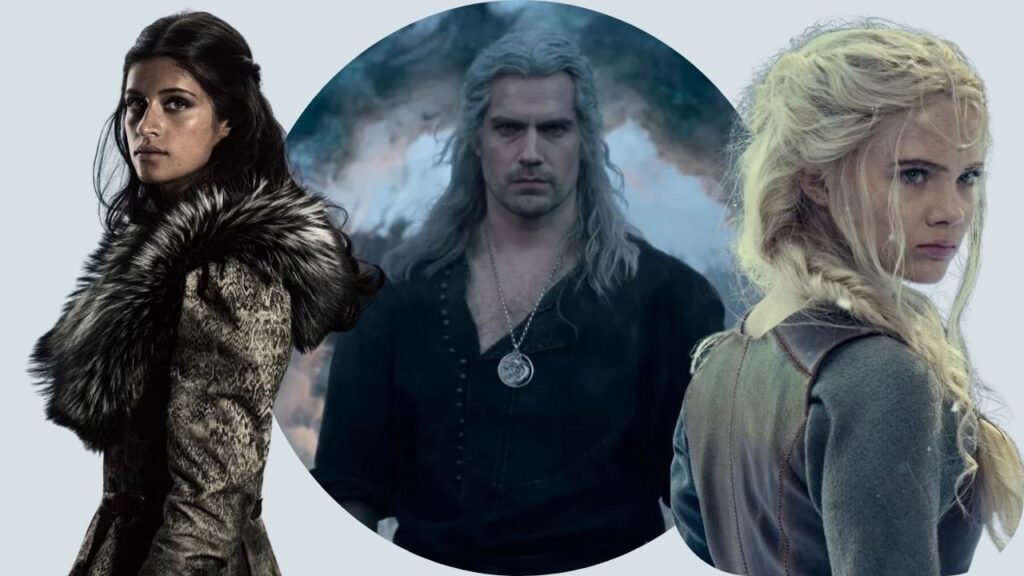
The first episode of The Witcher Season 4 came with one of the most controversial recastings in recent TV history, Liam Hemsworth taking on the legendary role of Geralt of Rivia, in place of Henry Cavill. For three seasons, Cavill was the series’ gravel-voiced, brooding centerpiece, turning the White Wolf into a towering physical symbol tied to his own performance. Unsurprisingly, the change was met with a seismic shift among fans, with numerous posting a craziest hate load well before episode one aired.
Now even the season is far more complicated than the verdict. Is the new Geralt doomed to be boring, cringing under the shadow of his ancestor, or is he buckling up for a great new road? It depends on how you define the character itself.
Many reviews and fans alike agree that Hemsworth’s Geralt pales in comparison, not having the same gravitational charm that Cavill had as the character. So far, opinions are divided, some critics blistering, with new rendition dismissed as painfully one-note, less kindly, a bollard in a wig.
While Cavill’s cold exterior seemed to belay a simmering fury beneath the surface that was just waiting to explode, to some, Hemsworth’s take amounts to nothing more than a listless impersonation.
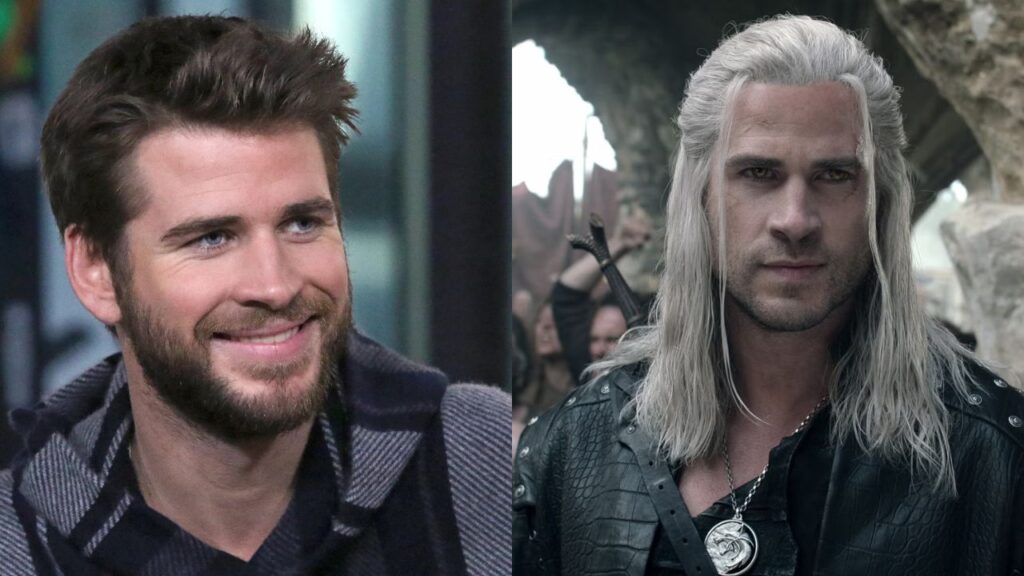
Also the looks don’t make sense to ignore. Critics said that Hemsworth looks too young or too pretty, as if he’s a sad emo boy who got muscles rather than looking like a grizzled, hardened veteran. For fans who fell in love with the growl and tension of the first three seasons, not having that unmistakable superhero shape leaves a hole that all the mumbling and grunting can’t really fill. To them, this new Geralt is just plain boring – a pale imitation of the White Wolf they had.
But on closer inspection any dullness could actually be a conscious change and arguably one that follows the books more closely. Henry Cavill’s Geralt was very much the silent, grunting monster slayer. The Geralt of Season 4, adapted from the novel Baptism of Fire, is a different man.
He’s both physically and emotionally broken after what happened last season, and he’s desperate for revenge. Members of the show’s creative team and Hemsworth himself have suggested this will be a more vulnerable, heart-driven version of the Witcher.
According to Forbes, Hemsworth has discussed his excitement to play a Geralt who is at a crossroads, where he is motivated by love for his found family, Ciri and Yennefer, rather than his old mantra of neutrality. His arc is largely about his emotional evolution, as he reunites with a new traveling party that includes new characters like Regis.
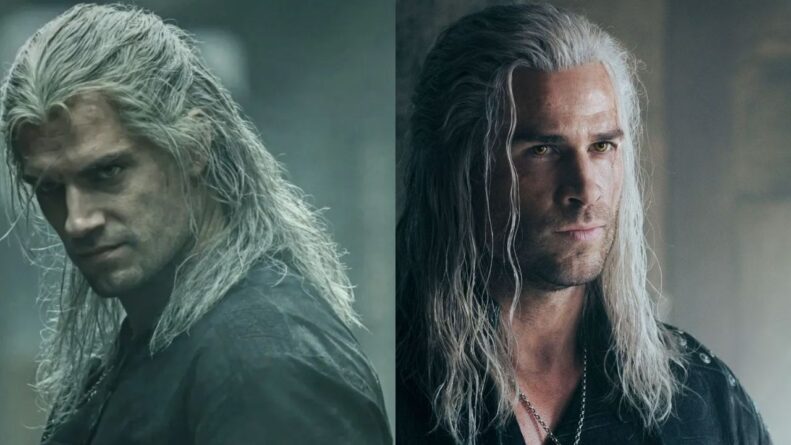
Certain diehard readers even make the case that Hemsworth’s physical appearance and the way he plays a slightly more loquacious, a bit less invincible, wounded warrior version of the character is a more accurate representation of the character found in the novels by Andrzej Sapkowski. For these viewers, this fresh interpretation is a fantastic chance to take the show in the direction of a more loyal, complicated representation.
In the end, the new Geralt is not a spot-on copy nor is he a complete trainwreck. He’s a work-in-progress and the show has become a full ensemble. Yennefer and Ciri play leading roles in major, action-packed story arcs, taking the emphasis away from Geralt’s mountainous shoulders, softening the blow of the actor swap.
Read More:- The Batman: Part II – Matt Reeves Brings Emmy-Winning Designer Luke Hull to Rebuild Gotham
While fan consensus is still largely split at great disappointment and pleasantly surprised, Hemsworth should probably be commended for taking a nearly impossible task and running with it. If he is invisible to some, it is because he is now the quieter, transitional Geralt the story demands — a grounded figure who is his friends and adopted family on the way to their own journeys.
Whether his run ultimately ends up being amazing or boring will be decided by his ability to take a break and let a quieter, more emotional Geralt step back into the spotlight for season five, and the final season.
Welcome to FandomFans — your source for the latest buzz from Hollywood’s creative underworld. Here, we explore the art of filmmaking, knowing about how visionary directors, designers, and actors shape the worlds we escape into. Today we break down the difference between Old & New Geralt ov Rivia. Why Hemsworth receive negative review from the audience on the first episode of The Witcher.
Netflix has already ordered The Lincoln Lawyer Season 5 before the Season 4 premiere, a big vote of confidence in the future of Mickey Haller’s legal drama.
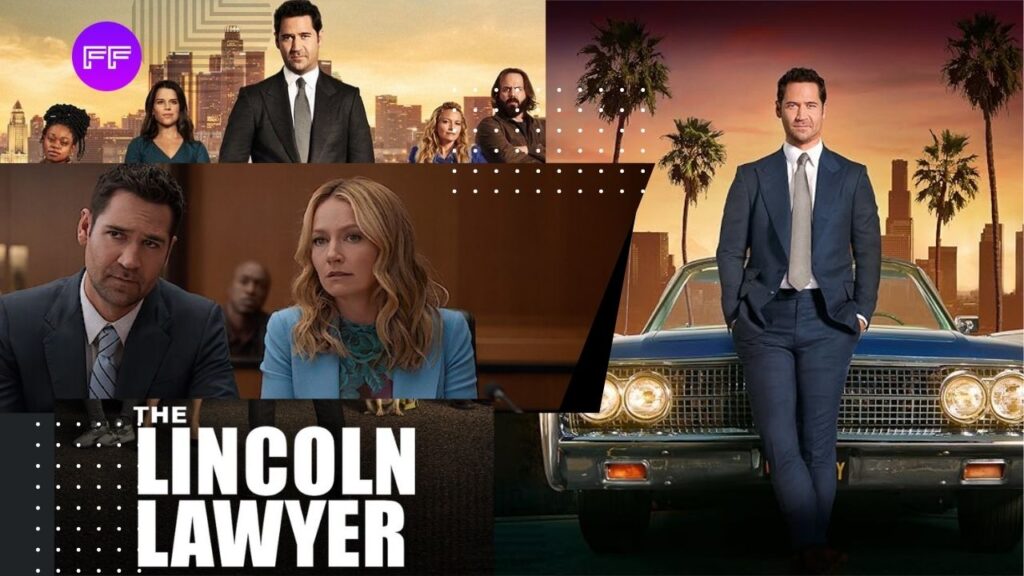
The Lincoln Lawyer Season 5 : In the accelerating pace of streaming, a week can be a lifetime. But on January 28 2026, Netflix did something that spoke volumes to the industry: they renewed The Lincoln Lawyer for a fifth season a mind-boggling eight days prior to the fourth season even premiering.
For a platform that has been criticized for its ”wait and see” approach towards data, this is an enormous vote of confidence. It means Mickey Haller’s silver Lincoln isn’t just gliding along; it’s putting the pedal to the metal in a new breed of “prestige procedural.”
Netflix is known for keeping its cards close to its chest, taking months to analyze “completion rates” before ordering more episodes. They’ve avoided a few risks by bypassing that window:
Creative momentum: Showrunners Ted Humphrey and Dailyn Rodriguez can keep the writers’ room white hot, moving directly from Season 4 fallout into The Lincoln Lawyer Season 5.
Sending the Market a Signal: It signals to the market that Season 4 (releasing February 5, 2026) is not the series finale. It’s a bridge to a much larger story.
Having been viewed more than 171 million times and sprawling across a staggering 26 weeks in the global Top 10, the “institutional logic” is clear: when you have a hit that straddles the line between high-brow drama and comfort-viewing procedurals, you don’t let the engine go cold.
Mickey Haller (Manuel García-Rulfo) was the defendant’s underdog defense lawyer in the first three seasons, Season 4 changes the narrative. Adapted from Michael Connelly’s The Law of the Innocence, the stakes have never been closer to home—because this time, it’s Mickey who is wearing the orange jumpsuit.
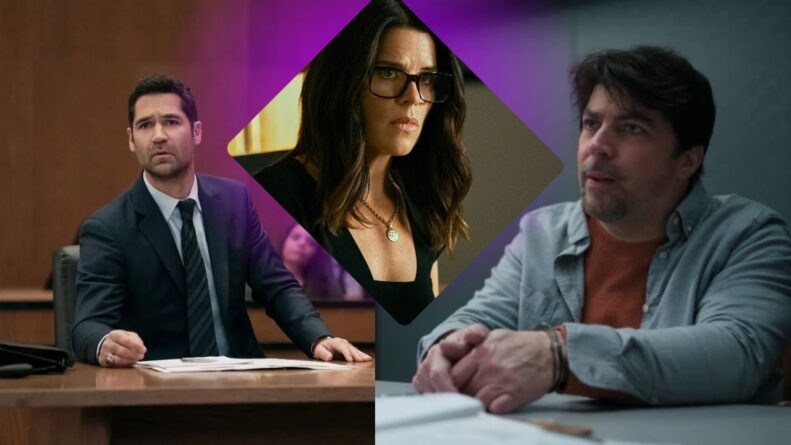
The inciting incident is a classic Connelly hook: a routine traffic stop leads to the “finding of a body in Mickey’s trunk.” The victim? Sam Scales, the repeat grifter who hounded Mickey for three seasons over legal fees.
The Prisoned Main Character: For much of the season, Mickey is on the run inside prison walls, having to fend for himself in a whole new way.
The Serialized Shift: It’s no longer working with a ”case-of-the-week” feel, with the entire 10-episode story arc revolving around this one, exhausting trial.
The “Shark” Antagonist: Constance Zimmer (natch) is the newly introduced lethal prosecutor Dana Berg who comes to take Haller down.
One of the most intriguing challenges for the franchise becomes the “Bosch-shaped hole” in the narrative. Harry Bosch, Mickey’s half-brother in the books, is ever-present. But with Bosch now based at Amazon MGM Studios, Netflix has had to think outside the box.

For the forthcoming Lincoln Lawyer Season 5 (adapting Resurrection Walk), we anticipate more of this “narrative redistribution”. Even characters like Cisco and Lorna — who have grown from sidekicks to powerhouse investigators (and attorneys) will likely carry the brunt of the investigative heavy lifting that Bosch does in the novels.
Read More 👉 Henry Cavill Plays Guy Ritchie’s ‘In The Grey’ Delivers the Ultimate Action Fix
The Lincoln Lawyer has carved out a distinct space in the “Procedural Hierarchy.” It lacks the cold, emotionally detached atmosphere of Law & Order, but it also shuns the “super lawyer” gimmickry found on Suits.
| Feature | The Lincoln Lawyer | Suits | Law & Order |
| Legal Accuracy | High (Trial focus) | Low (Drama focus) | Moderate |
| Moral Tone | Ambiguous/Gritty | Stylish/Corporate | Rigid/Idealistic |
| Character Depth | Deeply Serialized | Relationship-driven | Procedural/Objective |
Aside from the legal jargon, it really works because we care about the “Lincoln family.” Seeing Lorna (Becki Newton) go from law school dropout to attorney, or Izzy (Jazz Raycole) go from driver to office manager, offers an emotional anchor.
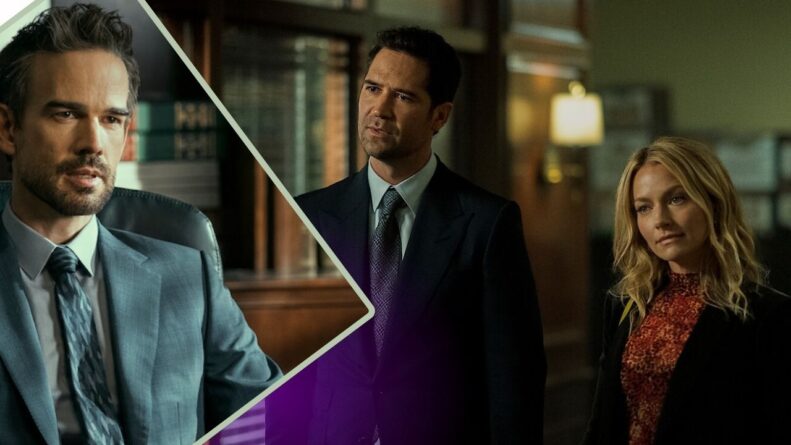
Mickey Haller himself — played with a soulful, layered depth by García-Rulfo — is a scoundrel with a heart of gold.
“He’s a guy who would lie to a judge to win, but he’s lying to protect people the system would crush.”
So with The Lincoln Lawyer Season 5 set to air in February, the outlook is pretty bright for the Haller firm. Boasting a perfect critical score for Season 3 and a confirmed fifth season on the way, The Lincoln Lawyer has demonstrated that the legal procedural isn’t an artifact of days gone by—it’s the future of prestige television.
Dive into the world of entertainment with Fandomfans and get latest news.