Home > Web Series > The Vampire Diaries Cast Struggle and Pain That..
The Vampire Diaries Cast Struggle and Pain That Shared Later
Discover the hidden struggles of The Vampire Diaries cast—from casting battles and on-set tension to pay gaps and physical pain that shaped the iconic series.
If we were to look back at the late 2000s television was dominated by a particular thirsty appetite. It was the era of supernatural frenzy, when vampires stop being terrifying monsters and become tragic, romantic anti-heroes. But cut through the barrage of genre hits and there was The Vampire Diaries (TVD), a rarity, a high-concept mythology that felt understated and more like a character-driven drama.
To the audience, the magic of Mystic Falls was seamless. We observed the fierce, magnetic tension between Elena Gilbert and the Salvatore brothers and took it as fate caught on film. But when you view the series as a business – considering the cost-cutting, the negotiating, and the personality power plays – a different tale emerges. The indestructibility of The Vampire Diaries was not magic, it was the result of an exhausting, frenetic, and sometimes painful process of architecture by three young actors on the brink.
How Nina Dobrev, Paul Wesley, and Ian Somerhalder Nearly Lost Their Roles
The series simply wouldn’t be the same without the core three — Nina Dobrev, Paul Wesley and Ian Somerhalder. The makeup of this cast, though, was almost conceived on an entirely different plane.
Back then, the network prioritizing immediate marketability was aggressively pushing for big-name pop stars. There were major discussions about casting Ashlee Simpson or Ashley Tisdale as Elena Gilbert. The studio wanted to follow the source material’s description of a “blonde-haired, blue-eyed” protagonist, a demographic type that was considered key to success then.
Nobody Can Replace These Iconic Characters
Technically, Nina Dobrev’s entry into this equation was a failure. Battling a rare disease during her initial audition, she turned in what co-creator Julie Plec harshly called an “unmemorable” performance. It was only by dint of Dobrev’s sheer professional determination – sending in a self-taped audition from home afterwards, that she made the studio change its mind. She didn’t just win the role, she recalibrated the character entirely.
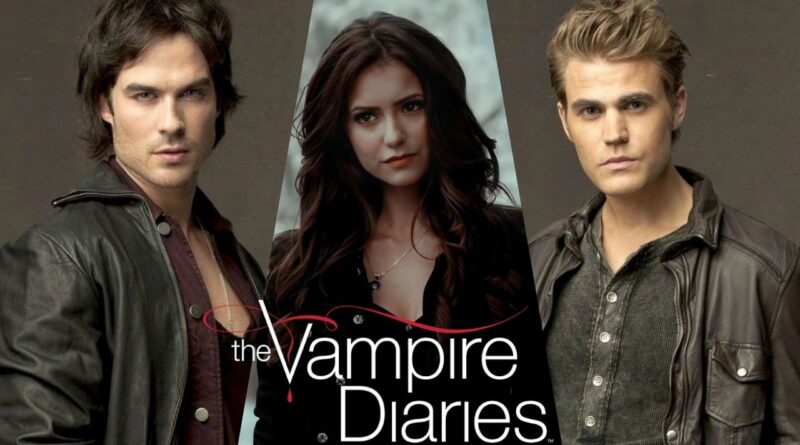
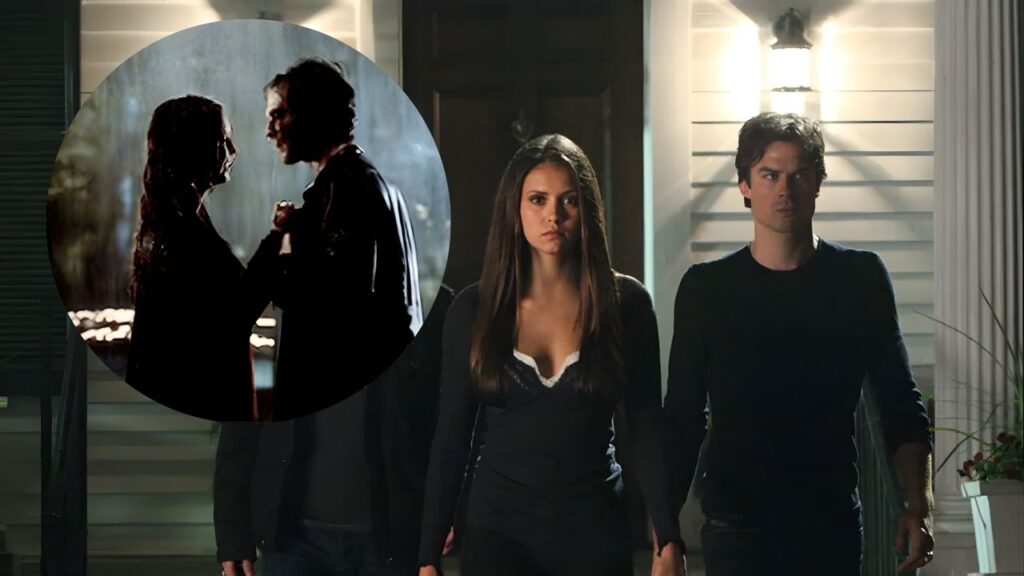
Best Trio of The Vampire Diaries | Image Credit: Fandomfans
Paul Wesley had to endure almost fifteen auditions before he was told no, the reason was literally that he was “too old.” He landed the part of Stefan after his chemistry test with Nina Dobrev won over the creators. Ian Somerhalder was also iffy – he was so nervous during the network test that he nearly lost the role of Damon.
Nailing this trio had an immediate effect. The series finale drew in 4.9 million viewers, the most ever for The CW. But under this success, everything was not so calm.
When Tension Created Chemistry Between Nina Dobrev and Paul Wesley
There’s a pervasive myth within TV Fandom that romantic chemistry on screen can only be achieved through romantic affection behind the scenes. The first season of TVD is the ultimate rebuttal to this.
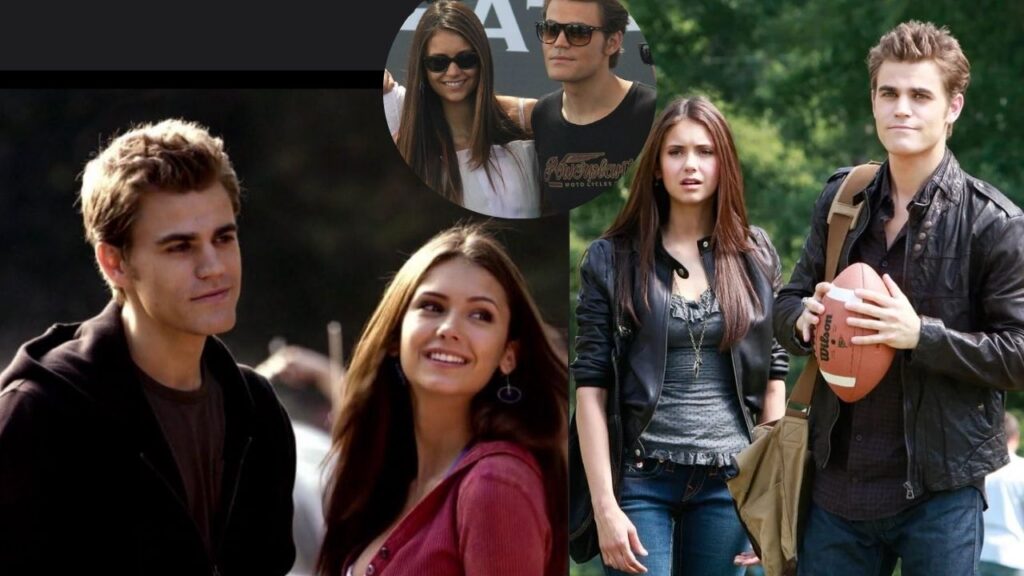
Nina Dobrev and Paul Wesley, the anchors of the show’s central love story, antagonized each other during the first five months of shooting. Dobrev has admitted that they ”despised each other” at times. This wasn’t simply a personality clash, this was the tension of eighteen-hour days and the burden of carrying a franchise.
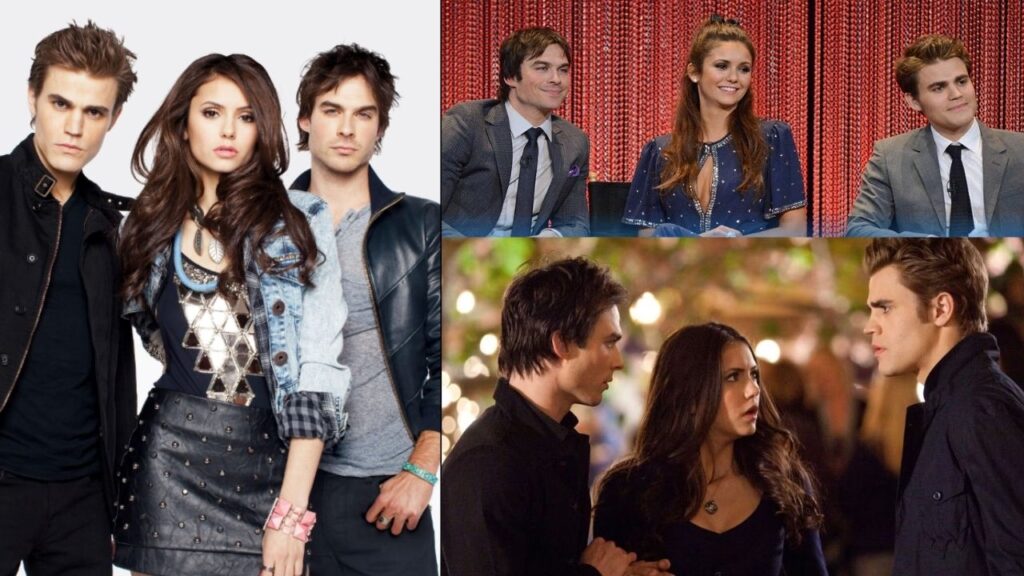
Stefan and Elena epic love builds by their real life chemistry of hate & love | Image Credit: Fandomfans
Yet, from the professional side, this disdain became a motivator. They had a lot of technical discipline, so they were able to direct their frustration into what Dobrev referred to as “a very thin line between love and hate.” The crowd interpreted this tension as deep passion. It is a credit to their acting that they can make love while playing against the absence of a personal connection.
Ironically, Wesly had foreseen the result of this tension. During the pilot, he told Dobrev that they would be best friends in ten years. He was right: the two have since forged a “marriage-like” professional relationship, demonstrating that the most powerful partnerships in Hollywood are sometimes formed in the heat of initial discord.
As the actors battled with one another, they also battled the writers. Ian Somerhalder fought an interesting creative battle for the soul of Damon Salvatore.
Somerhalder guarded Damon’s volatility. During Season three when the writers started “softening” Damon to make him a potential love interest for Elena, Somerhalder was so unhappy he considered quitting the series. He was concerned that the character was turning into a “one-trick pony” of love rather than the scary thing the audience adored.
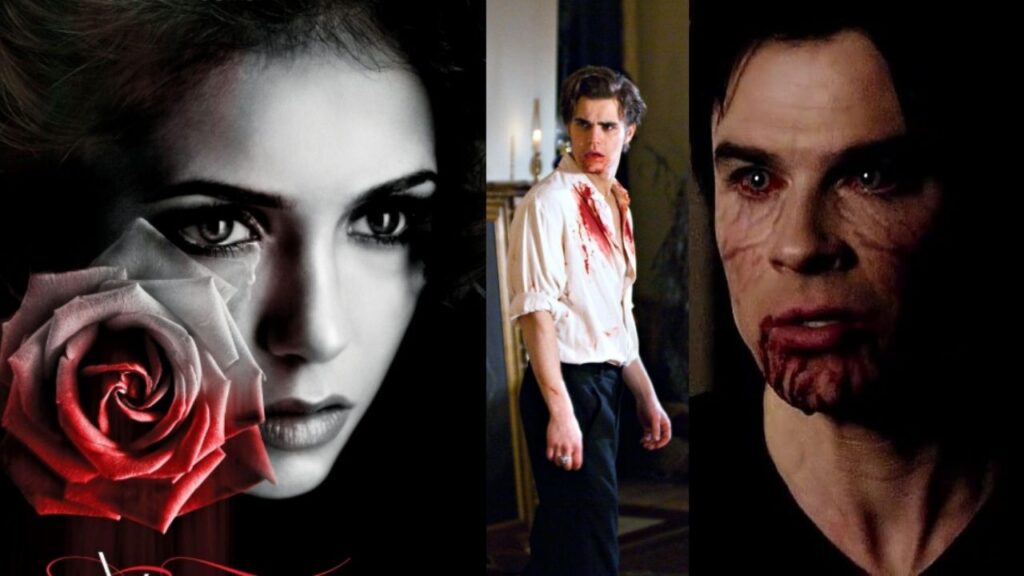
Salvatore Brothers with their Humanity off | Image Credit: Fandomfans
That all came to a head during the shooting of the death of the character Rose. Somerhalder battled “tooth and nail” with showing Damon’s humanity because he felt it would diminish the character’s edge. Yet that sequence — when Damon offers Rose a tranquil, manipulated dream as she dies — was one of the actor’s favorite moments.
It demonstrated the kind of character development (necessary for a show to last eight seasons) that represents the balance an actor must find between their own urge to protect the character, and the show runner’s vision for that character on a longer arc.
The Brutal Physical Reality Behind TVD’s Most Romantic Scenes
Among the most overlooked aspects of The Vampire Diaries is how uncomfortable filming really was, even when the scenes looked magical on screen. The iconic ”Delena Rain Kiss,” one of the series’ most romantic moments, is a prime example of this dichotomy.
The scene was shot in Georgia, in freezing temperatures. The rain machines were basically spraying icy water. Ian Somerhalder later shared that his jaw muscles froze so tightly he could barely speak and Nina Dobrev got sick right after the shoot.
Delena Rain Kiss in The Vampire Diaries | Image Credit: Fandomfans
Then there’s the weather, and the actors are really out there. Wesley shot in a medical boot for a twisted ankle, necessitating stunt doubles for simple carrying scenes. Dobrev, who had to play both Elena and her doppelganger Katherine Pierce, created the “Binder Method” – carrying different heavy binders to maintain the psychological consistency of two separate characters at the same time.
Nina Dobrev Pay Gap Nobody Talks About
And that brings us to the most crucial professional realization: the economics of stardom. Although she has the strain of two workloads and is the main protagonist, Dobrev received lower pay than her male co-stars for most of her tenure. The studio declined to match her salary “on principle.” This systemic nonrecognition of her work was one of the motivations for her leaving after Season 6.
She didn’t get pay parity until the series ended, and even then she had to turn down the first low-ball offer to get it. It was a fitting, if sobering reminder that in the Hollywood system, value is often something that has to be grabbed, hard.
After Elena Left: The Show Rebuilt Itself Around Brotherhood
Nina Dobrev’s exit necessitated the show to transform itself structurally. The original plan, according to Julie Plec, was for both Salvatore brothers to die saving Elena, seeing her live a human life as ghosts.
However, reality intervened. With Dobrev’s departure, the narrative center of gravity moved away from the romantic triangle and toward the fraternal bond shared by Stefan and Damon. The change saved the show. By the time the finale, “I Was Feeling Epic,” was broadcast, the actors had become less adversarial and more cooperative. Paul Wesley advocated for Stefan’s death in order to have his redemption arc completed, and Somerhalder campaigned not to have the last romantic reunion over the brothers.
Conclusion
The Vampire Diaries isn’t a legacy just because of its plot twists or its shipping wars. It’s a case study in how to keep working professionally. It is the tale of three actors who survived physical hypothermia, creative infighting and systemic pay inequity to create a pop culture juggernaut.
When we watch old episodes today, we can see that chemistry and glamour. Yet the real blueprint for its immortality is in the muck, in the negotiations, and the onerous, all-too-human labor that went down off camera. They didn’t just play vampires who lived forever, they built a legacy that will.
Dive deeper into your favorite TV shows character with Fandomfans. Our goal is to provide simple conclusions on series & movies.
Mariyam
Articles Published :
77
Mariyam Khan is Fandomfans Content Writer and providing reports and reviews on Movie Celebrities, and Superheroes particularly Marvel & DC. She is covering across multiple genres from more than 4+ years, experience in delivering the timely updates.
Duffer Brothers Emotional Tribute to ‘Stranger Things’ Season 5
Stranger Things Season 5 is said to be an epic Hawkins finale. Cast details, a plot synopsis, release information and a heartfelt Duffer tribute. Learn more!
For more than eight years, Stranger Things Season 5 has been our shared time machine. It whisked us back to the warm flicker of neon arcade machines, the static on walkie-talkies and the spine-tingling excitement of ’80s horror. We’ve been picking apart the Duffer Brothers’ homages to Spielberg, King and Carpenter for years. But as we prepare to bid the series farewell in its fifth and final season of Stranger Things, the showrunners won’t be paying any more tributes to the pop culture that brought them up. They’re honoring the woman who actually raised them.
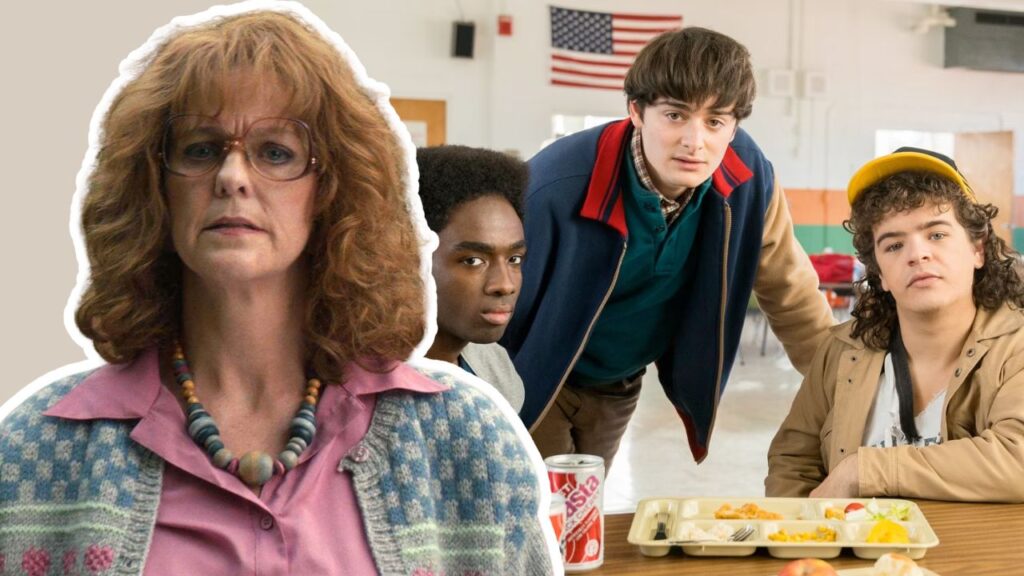
In a move that has melted hearts across the internet, Ross Duffer recently revealed that the role of “Miss Harris” in Season 5 will be played by none other than Hope Hynes Love—the Duffer Brothers’ real-life high school drama teacher.
From High School Outcasts to Visionary Storytellers
In order to get a sense of why this casting is so powerful, we need to travel back in time to Durham, North Carolina, in the year 2000. Before they were Netflix royalty, Matt and Ross Duffer were just a couple of self-described “outcasts” scurrying the halls of Jordan High. They weren’t athletes, and by their own accounts, they were “awful actors.”
In the high school world where status is everything, the twins were outliers. Their obsession with film made them “weird.” They needed a sanctuary, and they found it in the drama department.
Hope Hynes Love Became the Duffer Brothers’ Creative Anchor
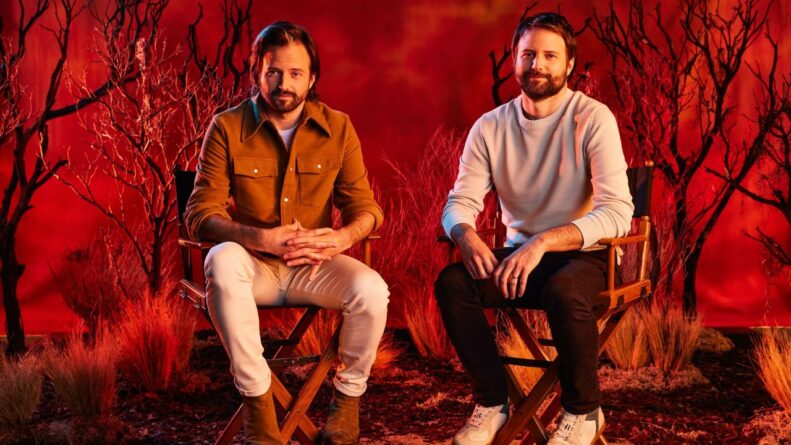
Duffer Brothers: Producer of Stranger Things | Image credit: Stranger Things Wiki,
Enter Hope Hynes Love. She didn’t require them to be star performers. She operated on a philosophy of inclusivity, valuing enthusiasm over raw acting talent. As Ross shared in a vulnerable Instagram post,
“High school was rough for me and my brother. But Hope saw something in us we didn’t see in ourselves.”
The “Tractor” Philosophy That Built the Stranger Things Creators
Hope didn’t just give them a safe space, she gave them a career blueprint. She famously told her students that to make it in the arts, they needed to be a “tractor”—a versatile machine capable of doing the heavy lifting, regardless of the terrain. She taught them that a creator must be able to write, direct, edit, and understand every angle of production.
“Let’s give it up for all the teachers who are just crushing it. And for the love of God, let’s put the arts back in schools.” —Ross said
She also indulged in what educators term “benevolent neglect.” When the brothers desired to make a documentary about the school musical, she released them. When that documentary was turned down by a film festival, she let them fail and that failure taught them how to cut, how to pace a story and how to have heart. She didn’t only instruct them in drama, she instructed them on how to survive the business.
In Season 5, life will imitate art in the most poetic way possible. Duffer brother shared on Instagramas Deadline mentioned, Hope Hynes Love will portray Miss Harris, a teacher at Hawkins Elementary. But this is no walk-on cameo. The storyline drops her at the epicenter of the end of the world, shielding the most young and naïve characters (Mike and Nancy’s little sister, Holly) from the series’ biggest villain, Vecna.
Image credit: Fandomfans
There’s a whole profound metaphor to be had here. Two decades ago, Hope Hynes Love was the one who shielded Matt and Ross from the “monsters” that comprise adolescence – insecurity, doubt, and isolation.
Now, the brothers have written her into their world as a guardian against the monsters of the Upside Down. She is the thematic linchpin of the finale: the teacher as the ultimate guardian.
The Real Superpower of Stranger Things
While the casting is a sweet gesture, it carries a serious message. The Duffer Brothers are using the massive platform of Stranger Things to scream one thing from the rooftops: Prioritize the arts in schools.
Image credit: Fandomfans
The multi-billion-dollar franchise we love today wouldn’t exist without a high school drama program in Durham. It wouldn’t exist without a teacher who saw potential in two quiet kids with a camcorder.
Conclusion
As we witness the last stand for Hawkins come to a head in 2025, look for Miss Harris. She is a reminder, though, that even though telekinesis is rad, the biggest superpower in the Stranger Things universe—and in real life—is a teacher who believes in you when you don’t believe in yourself.
Fandomfansis delivering every update on Stranger Things, its cast and producer/director Duffer Brothers’ decision to the fans of the amazing thriller series.
Alpana
Articles Published :
163
Alpana is Fandomfans Senior Editor across all genres of entertainment. She evolved in the media industry since a very long time, she manages the content strategy and editing of all the blogs. Her focus on story development, review analysis, and research is well-equipped that ensures every article meets the standards of accuracy and depth.
Jennifer Aniston’s Transformation: From Rachel Green to The Morning Show Success
Jennifer Aniston's stunning transformation from Rachel to The Morning Show has fans amazed. Check out her fitness, fashion and fearless role selections to date.
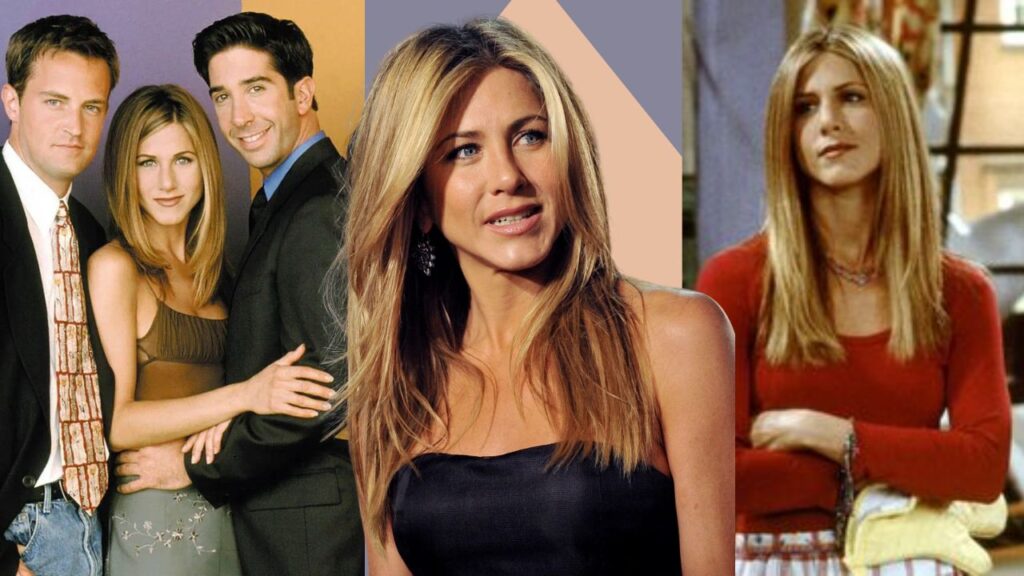
Aniston played Rachel Green on ‘Friends’ for ten seasons from 1994 to 2004, a character whose mannerisms, hairstyle, and love interests defined what it meant to be a 20-something woman around the world. The actress could not be disentangled from the character, it’s hard for everyone to recognize Aniston in other characters. Rachel Green was everywhere, on lunch boxes, in syndication, and in the cultural lexicon.
Aniston noted that she — “Couldn’t get over from the shadow of Rachel Green ever in my life”
describing the experience as “exhausting”. The character was a “poor little rich daddy’s girl”, a specific archetype that afforded little room for the darkness or grit required of dramatic acting. Aniston admitted to fighting with herself and her identity in the industry “forever,” constantly trying to prove
She was “more than that person”. —Aniston said
FRIENDS Could have Lost Jennifer Anniston at First
Jennifer Aniston’s whole Friends run nearly never happened because she was at that time already committed to a CBS sitcom titled Muddling Through back in 1994. Because she was “only in second position” for Friends, NBC was worried that they might have to recast Rachel if the CBS show was a hit, and speculated about shooting multiple episodes, only for CBS to pick it up and they’d have to do reshoots.
Courteney Cox & Jennifer Anniston in FRIENDS | Image credit: IMDb
Aniston got her big break when Muddling Through was cancelled, and that led to her being cast on Friends – which just goes to show how precarious a career in Hollywood can be, and how one cancellation can make way for the series that takes an actor global and defines their stardom.
Aniston’s The Good Girl, Horrible Bosses, & Cake break the FRIENDS curse
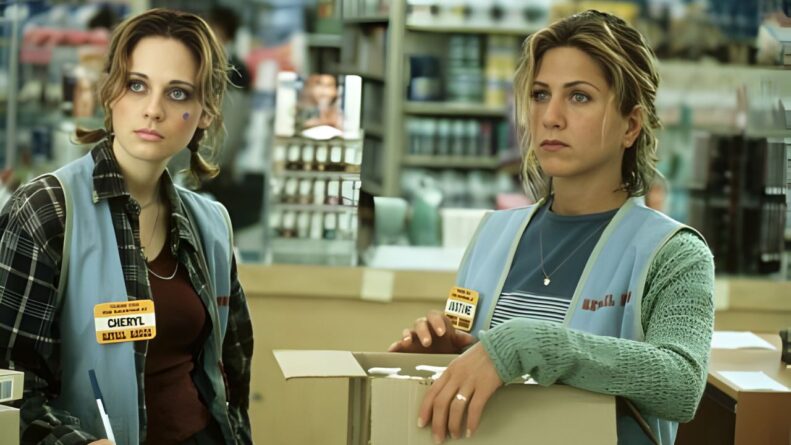
Helmed by Miguel Arteta, the film stars Aniston as Justine Last, a dour employee at a mall shoe store who has a clandestine relationship with a younger coworker (Jake Gyllenhaal). The choice to accept the part was nerve-racking.
“Panic that set over me,” thinking, “Oh God, I don’t know if I can do this? Maybe they’re right”. —Aniston recalls
The film was an independent production, lacking the safety net of a major studio marketing budget or a laugh track. It required Aniston to perform “without a net” in front of the world. The success of The Good Girl and the critical acclaim she received—provided the “relief” necessary to continue pursuing dramatic work. It was the proof of concept that she could exist outside the “purple walls” of the sitcom apartment.
Jennifer Anniston in The Good Girl | Image credit: IMDb
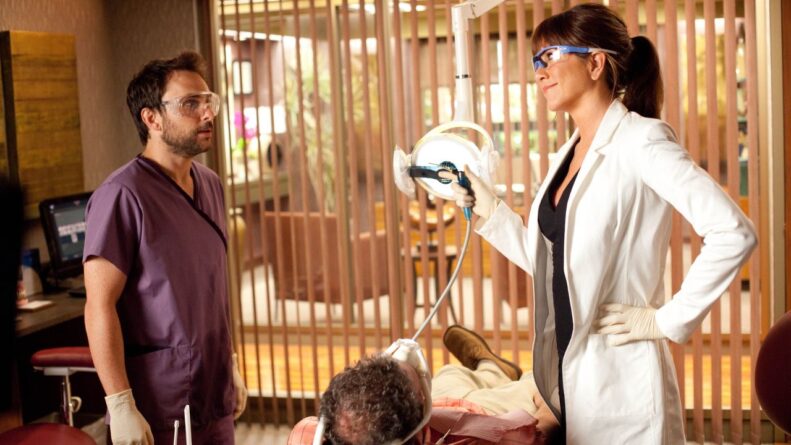
If The Good Girl proved she could be sad, Horrible Bosses proved she could be predatory. The appeal lay in the “black comedy” element. Aniston argued that “Comedy is a necessity,” but she expressed a preference for the “craziness” of the Horrible Bosses universe over the gentler comedy of Friends.
“Maybe everybody else is seeing something I’m not seeing, which is you are only that girl in the New York apartment with the purple walls”.
This quote speaks to the psychological complexity of the curse—it wasn’t only that she believed producers wouldn’t hire her but she was afraid she wasn’t capable of doing the work.
Breaking the curse required exposure therapy. By performing in independent films like The Good Girl and Cake, where the safety nets of budget and ensemble were removed, Aniston forced the industry to recalibrate its perception of her utility.
Image credit: IMDb
Cake is the ultimate punishment to shatter the curse. In this film, Aniston portrays Claire Bennett, a woman struggling with crippling chronic pain and addiction. Aniston quit exercising and wearing makeup. She studied friends with chronic pain to get a sense of what the condition felt like physically.
She allowed the role to “hurt” her, noting that during physical scenes, she “didn’t prepare” in the traditional sense but rather let the physical discomfort generate a real reaction.
The Morning Show – The Strong New Chapter For Jennifer Aniston
The morning show era (TMS), Executive produced and co-created by Reese Witherspoon is the shift from Aniston the Actress to Aniston the Mogul. The show is more than just an acting vehicle, it’s a platform for industry commentary and power play.
The partnership with Witherspoon’s Hello Sunshine production company created an environment of “understanding, compassion and consideration” that Aniston notes
“Doesn’t always exist amongst the dudes”.
Alex Levy is the culmination of Aniston’s post-Friends evolution. She is a morning news anchor, but she shares no DNA with Rachel Green. Alex is “complex, vulnerable, controlled, lonely, enraged, self-serving”.
Image credit: Fandomfans
In Season 4 (2025), Alex has transcended the anchor desk to become a corporate executive. She is no longer fighting for a contract; she is fighting for the soul of the network. Critics have praised Aniston’s performance in this era as
“It is the best of her performances and able to perform mature characters”
noting her ability to portray moral conflict without the melodrama that sometimes plagued her earlier dramatic attempts. The role gives Aniston a chance to examine issues of power, complicity and growing older in a way Friends never did.
Conclusion
By 2025, she’s at a place very few could have predicted back in 2004: she’s the boss. On The Morning Show, she plays a character who runs the network, much like in real life, where she’s a producer on the show. She swapped the “purple walls” of the Friends apartment for the glass walls of the UBN executive suite. Jennifer Aniston has now shown beyond a shadow of a doubt that she is, in fact, “more than that person.”
Find out celebrities, movies, and web series updates on Fandomfanswhich is delivering every entertainment buzz to you.
Alpana
Articles Published :
163
Alpana is Fandomfans Senior Editor across all genres of entertainment. She evolved in the media industry since a very long time, she manages the content strategy and editing of all the blogs. Her focus on story development, review analysis, and research is well-equipped that ensures every article meets the standards of accuracy and depth.