Home > Movies > Once Upon a Time in Hollywood: A Love..
Once Upon a Time in Hollywood: A Love Letter to a Bygone Era (and What Comes Next!)
Discover the the story, cast, themes and awards of Once Upon a Time in Hollywood and find out how the Cliff Booth sequel widens Tarantino’s nostalgic world.
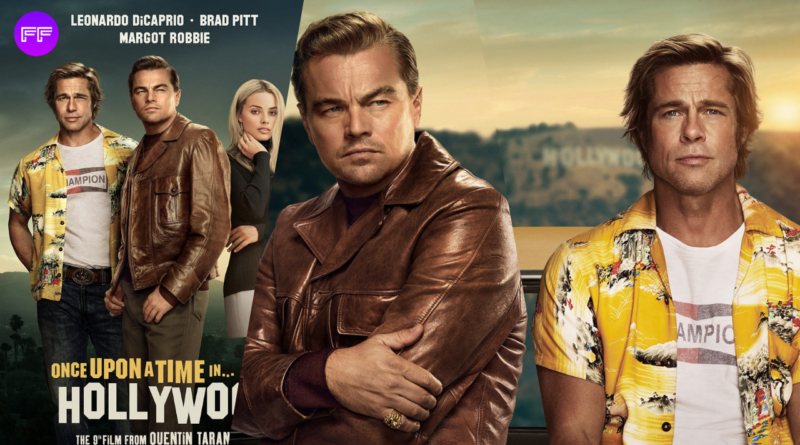
Once Upon a Time in Hollywood is a masterpiece of Quentin Tarantino which wraps up with a warm, sun-kissed love letter to the end of Hollywood’s Golden Age. Mixing true history with invention, the 2019 movie about friendship, waning fame and a shifting business is set against the backdrop of 1969 and the Tate murders. With its razor-sharp dialogue, iconic soundtrack and Tarantino’s most personal storytelling, it’s nostalgic and hypnotic — and with Cliff Booth making a comeback on Netflix in 2026, this cinematic universe is just expanding.
Genre, Theme and Setting
At its core “Once Upon a Time in Hollywood” is a dramedy with historical elements and a dash of Tarantino’s style of revisionist history. The relative core tensions are the bittersweet decline of stardom, the allure (and dangers) of the counter-culture movement, and the power of camaraderie.
The setting is unmistakably Los Angeles, 1969, and that cataclysmic moment in culture is brilliantly conveyed ultimately not just through detailed period detail. From the classic cars to the classic clothes to the iconic Hollywood Hills — it’s a visual feast.
Director, Writer & Creative Team
There was only one name that could be leading this offbeat vision: Quentin Tarantino. He wrote and directed the original screenplay and is an extraordinary storyteller.
Robert Richardson, a long-time Tarantino collaborator, shot the film’s gorgeous cinematography which perfectly captured the golden-hued era.
Barbara Ling’s production design and Arianne Phillips’ costume design transport us further into the world of the late 60s.
Once Upon a Time in Hollywood Plot Overview
The story focuses on Rick’s destructive life and his struggles, in the year 1969 Los Angeles. There’s also his longtime pal and stunt double Cliff Booth (Brad Pitt) — a disarming yet enigmatic war vet and the bangers and bangettes, among them his crony Max Cherry (Willem Dafoe). Two intersections in their lives are the shadow of the Manson Family and Rick’s neighbour, Sharon Tate (Margot Robbie).
The film soars in its weaving of their three tales, building to a cathartic and unforeseeable final act that re-imagines a historical tragedy. The slow burn lets us take in the atmosphere and character dynamics before a relentless finish.
Cast & Characters
Popular cast that played wonderful characters in the film:
Leonardo DiCaprio stars as Rick Dalton
Brad Pitt as Cliff Booth, Rick’s Friend
Sharon Tate (Margot Robbie), a radiant optimist and up-and-coming actress, is thriving in Hollywood Hills life.
Among the plethora of famous names, there are Al Pacino, Kurt Russell, Dakota Fanning, Bruce Dern, Emile Hirsch, Timothy Olyphant, Luke Perry, Margaret Qualley and many, many more actors of renown to be found in roles of significance, and it is not even close to just the primary three.
Film Highlights & Collaborations
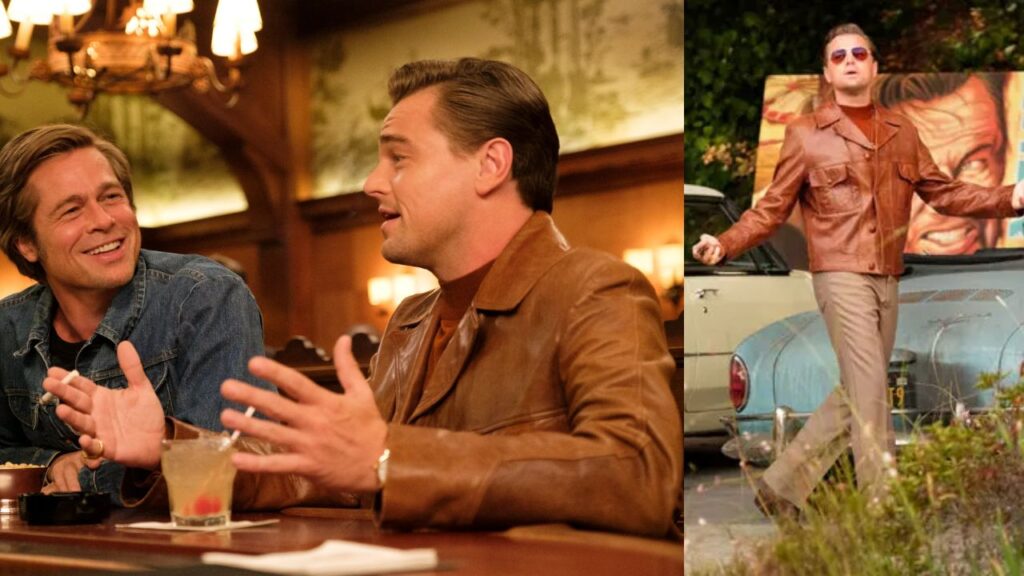
Watching both wonderful actors DiCaprio and Pitt together on their best performances is amazing. That’s what this movie is – their chemistry. Tarantino’s unique, nonlinear form of storytelling (with a few pop culture references), is a great, entertaining journey.
The soundtrack is tightly curated to evoke the feel of nostalgia that the film has at the center of it, and is overflowing with 60’s music, and practically narrates the story of one of the characters.
Production Information
Production was mostly day for night, and indoor for outdoor in situ among the urban sprawls of Los Angeles, with several famous sites redressed or employed. From the outside of the Hollywood Boulevard stores to the classic cars and trucks twenty-six block Hollywood re-creation of 1969 is mesmerizing. The producers genuinely did go all out to make the viewers feel as though they were seeing something that was truly from the past.
The 2026 follow-up (The Adventures of Cliff Booth) keeps this pedigree intact but with a twist. Though it is written by Tarantino and produced by his long-time partners at Heyday Films, it is directed by David Fincher. News is a hefty $200 million budget, much of that used to recreate the gritty, neon-drenched aesthetic of ’70s L.A.
Film Rating & Certification Details
Due to its violence, language and drug use, Once Upon a Time in Hollywood received an R rating in the US. It was rated R (18+) by the Commission. This fits right into the pattern of Tarantino’s filmography which is always populated by films which bend the rules.
Audience Expectations
Film’s authenticity to the period, direction, and performances get critical acclaim. While its slow burn is felt by some viewers but still captivated by the unique combination of humor, drama and suspense.
It was well-reviewed, successful at the box office, and won a number of awards, among them the Academy Awards for Best Production Design and Best Supporting Actor (Brad Pitt).
For the sequel, the hype is at an all-time high due to the Fincher-Tarantino-Pitt “holy trinity” of talent.
Once Upon a Time in Hollywood’ Sequel Trailer
The initial teaser for The Adventures of Cliff Booth made an unexpected appearance at Super Bowl LX Once Upon a Time in Hollywood (February 2026).
The Vibe: Cut to Henry Mancini’s “Peter Gunn” and the footage is textured with thick film grain and 70s attitude.
The Tease: You get a little Cliff Booth working the 1970s as a “Hollywood fixer,” delivering dry one-liners and wearing a long blond wig and a vintage yellow floral shirt.
Notable Absences: There’s a glaring omission: Rick Dalton ( DiCaprio), who has been absent from all the teasers so far, confirming this is a solo trip for Cliff.
Once Upon a Time in Hollywood is more than a film — it’s an experience. It’s nostalgia, reinvention, friendship, loss and love of cinema, all wrapped up in the unmistakable style of Tarantino. With its iconic performances, its hazy 1969 backdrop and its daring rewriting of history, it remains one of the most emotionally visceral chapters in Tarantino’s career. And with The Adventures of Cliff Booth on the horizon, this universe isn’t ending — it’s evolving.
Dive deeper into the world of cinema with Fandomfans and get every detail from movies and series.
Alpana
Articles Published :
99
Alpana is Fandomfans Senior Editor across all genres of entertainment. She evolved in the media industry since a very long time, she manages the content strategy and editing of all the blogs. Her focus on story development, review analysis, and research is well-equipped that ensures every article meets the standards of accuracy and depth.
Avatar Trilogy Changed Cinema: Each Avatar Film Redefined Modern Blockbusters
Learn how James Cameron's Avatar trilogy transformed blockbuster cinema through groundbreaking technology, emotional storytelling, and franchise evolution.
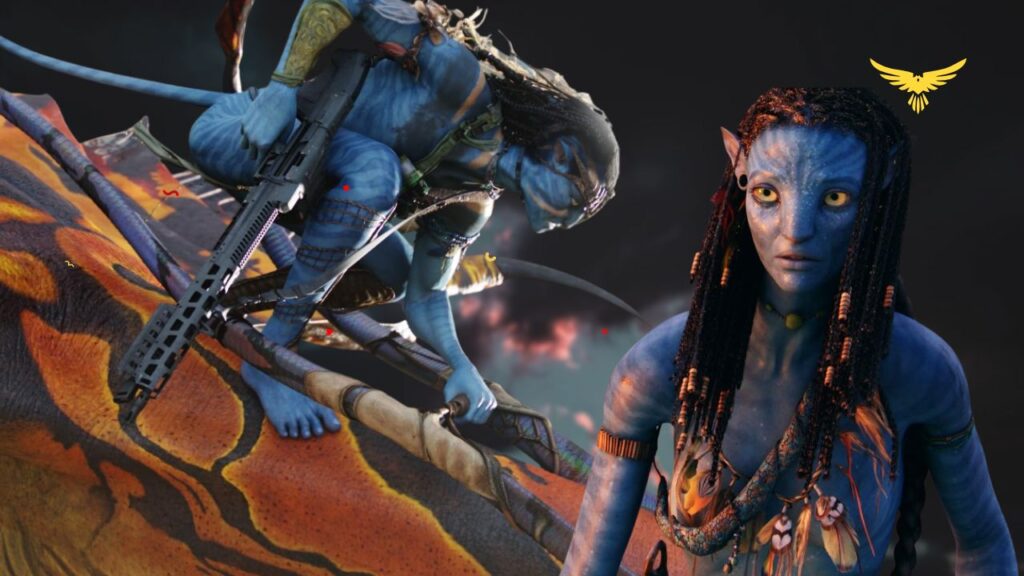
There are few film franchises that work on the kind of timescale James Cameron likes to work on. Hollywood rushes to quickly churn out sequels, spin-offs and streaming extensions, the Avatar saga moves at a geological pace — slow, meditative, technologically transformative every time it arrives. With Avatar (2009), Avatar: The Way of Water (2022) and the newly released Avatar: Fire and Ash (2025), Cameron hasn’t simply made movies; he’s built cinematic milestones that push the boundaries of what is possible with each return.
What makes these films so interesting to assess is that none of the entry is “just” a sequel — they’re landmarks —- technical, narrative, commercial and even cultural. And while the first Avatar transformed global exhibition forever and the second perfected underwater storytelling, early indications are that Fire and Ash may well be the most aesthetically complete and emotionally resilient installment yet.
Let’s analyze how this legendary trilogy has progressed.
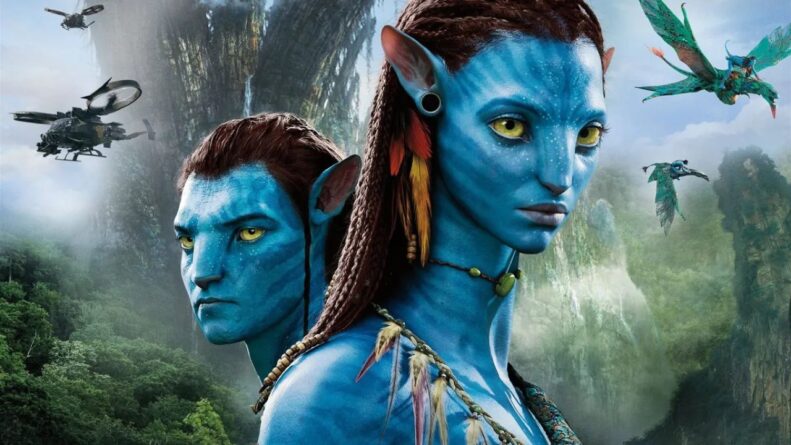
Avatar (2009): First Movie of The Different World
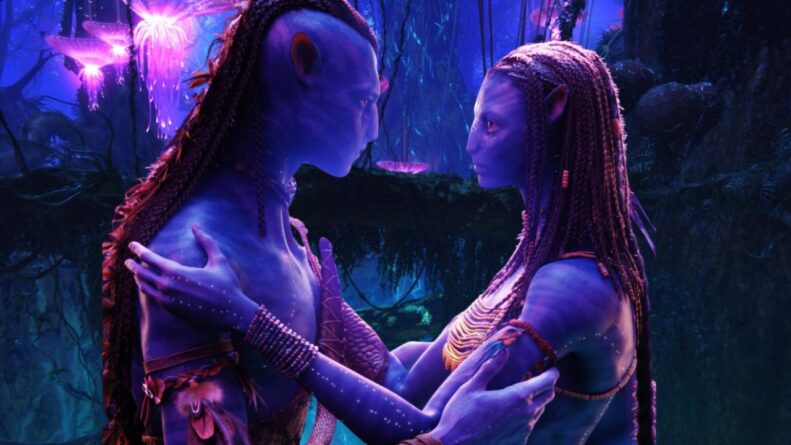
Avatar came out when cinema was about a different planet. 3D showings were scarce, digital projection was erratic, and a troupe of performance-captured aliens conveying real emotion seemed like far-off sci-fi. Cameron sat on the idea for more than a decade while waiting for technology to catch up and then invented the technology.
Image Credit: IMDb
A Technological Shockwave
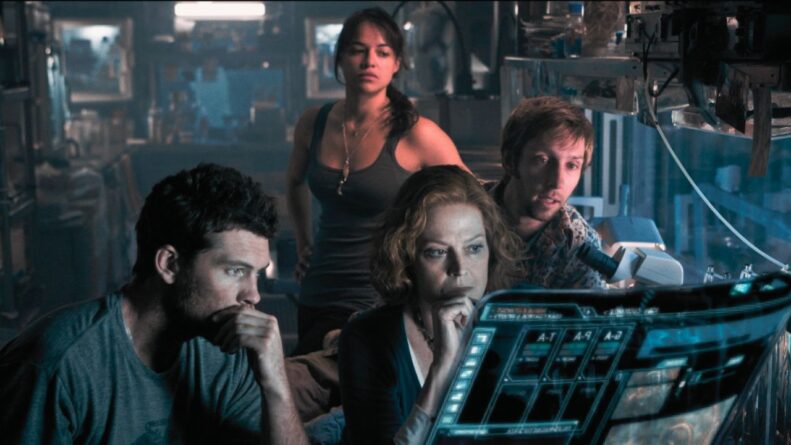
The Fusion Camera System, full CGI real-time environments, and microexpression capture were not merely improvements, they were revolutions. Critics weren’t just reviewing the movie, they were reviewing the experience. Audiences were going to be able to walk into theaters and walk on to Pandora.
$2.92 billion worldwide, making it the highest-grossing film of all time.
An international release of 3D screens will follow.
A cultural phenomenon so powerful it caused the actual Earth to experience “Post-Avatar Depression” because Pandora seemed more alive than.
Image Credit: Fandomfans
Perfectly Executed Simple Storyline
Cameron deliberately employed a classical story structure, with clear stakes, emotional accessibility and mythic hero’s journey elements. It’s been criticized the screenplay for being predictable or pandering to “white savior” clichés, but it maintains that the film’s brilliance resides in its simplicity. You learn Pandora the way Jake learns it, which causes a rare emotional convergence between audience and protagonist.
Surprisingly, no cinematic “first contact” sequence has matched the wonder of that inaugural flight over the floating mountains.
Avatar: The Way of Water : Flowing With Reinvention
Now, 13 years on and many were asking if Avatar still mattered. Marvel was dominating the box office, streaming was messing with everything, and 3D was just a gimmick. Cameron defied every skepticism the way he always does: by reinventing cinema again.
Underwater Performance Capture: A New Frontier
From authentic underwater motion capture to sophisticated fluid dynamics, Cameron cracked one of the toughest problems in CGI: actual water. The visual result was stunning—critics described it as “hyper-real,” and audiences loved the immersion.
Image Credit: Fandomfans
A More Mature, Family-Driven Story
While the first movie was about discovery, the sequel was about consequence. Jake and Neytiri were no longer warriors—they were parents. Their children’s story arcs, particularly Lo’ak’s connection to Payakan, infused the narrative with emotional resonance that was absent from the first chapter.
Reviews were divided over the film’s running time and repetitive capture-rescue formula, but it was received with far greater enthusiasm by audiences, who bestowed a 90% audience score, even higher than the original.
Financially, the film made $2.32 billion, cementing its position as the third highest-grossing movie of all time.
Avatar: Fire and Ash (2025): The Beginning of the Saga’s Dark Age
Initial impressions of Fire and Ash indicate something that rarely occurs in franchise filmmaking: the third movie may be the best one.
A Bold Narrative Shift
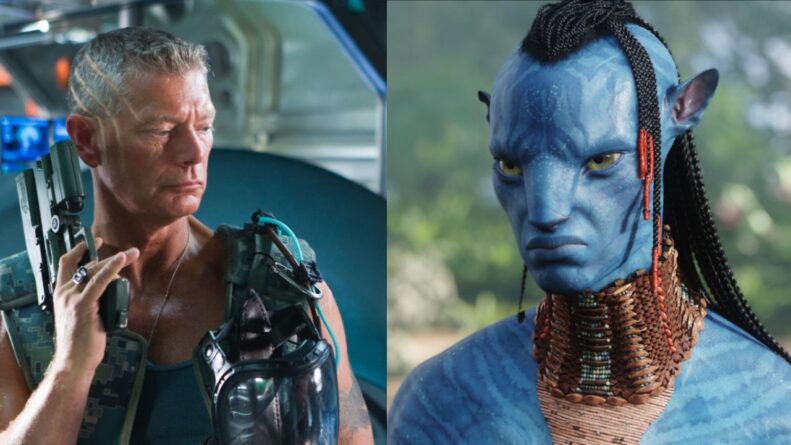
The advent of the Ash People, a Na’vi clan forged by disaster and spiritually disconnected from Eywa, represents the largest transformation the franchise has ever undergone. Their leader, Varang, portrayed by Oona Chaplin, comes into alignment with the RDA not for avarice but for grief and fury.
For the first time, Cameron’ s realm has a crisis of conscience within the Na’vi, which responds to a nagging criticism that Pandora’s politics were too clear-cut. Echoing comparisons include this tonal turn being similar to The Empire Strikes Back — darker, more complex and emotionally heavier.
Image Credit: Fandomfans
Aesthetic and Technical Leap
If The Way of Water achieved fluidity on rendering, then Fire and Ash is certainly on its way to mastering volatility are fire, smoke, ash, and ruin. New fire simulations and improved HFR transitions deliver a more atmospheric, perilous Pandora as never before.
For the innovations: Avatar (2009) still stands alone.
For technical perfection, the crown is the Way of Water (2022).
For story and emotional depth: Fire and Ash (2025) looks poised to take the top spot.
Should Fire and Ash live up to its promise, it could be the movie that at last brings critics and fans together — delivering not only beauty and spectacle, but moral intricacy and a shattering emotional pay-off befitting a saga this ambitious.
The Avatar saga isn’t merely a franchise—it’s a cinematic era that extends with each generation of technology and storytelling. Avatar (2009) revolutionised the way the world watches movies and The Way of Water pushed emotion and technical refinement to new heights, Avatar: Fire and Ash is set to become the most ambitious chapter in the trilogy.
Featuring darker themes, complex Na’vi politics, and revolutionary fire simulation, the third may be the one that finally brings critics, fans, and industry analysts into lockstep agreement — Cameron’s slow-burn storytelling was always driving here. If early reviews are anything to go by, Fire and Ash will not only reshape Pandora, but also redefine blockbuster filmmaking itself.
The aim of fandomfansis to help readers make sense of not only the movies they watch but the shifting power structures in strategies that will dictate the future of the movie industry.
Babita
Articles Published :
17
Babita is Fandomfans Editor, experience in managing content. Her focus in general movies and web series. She is having a deep interest in TV shows and 90s movies - particularly Lord of the Rings, Harry Potter, & Rom-Com. Babita also covers psychological thrillers and major releases in current time and concern with deep interest in them.
Galactus and Lady Death: The Collision That Could Redefine the MCU Forever
Learn how Galactus and Lady Death could reshape the MCU with a cosmic Gothic era leading to Secret Wars, redefining Marvel's future beyond traditional villains.
If you feel the Marvel Cinematic Universe (MCU) was a bit all over the place lately, well, you’re not alone. With multiverse shenanigans, quantum realms and whatnot, things have become a bit messy. But there’s a pattern if you look at the Phase Six schedule along with Fantastic Four: First Steps and the latest spoilers in Agatha All Along. Marvel is turning its back on political thrillers and sci-fi brawls to focus on high-concept metaphysics and passion plays.
The two players at the center of this shift? Galactus, the Devourer of Worlds, and Mistress Death, now unveiled as the fierce and compelling Rio Vidal.
Casual fans might view them as two separate “Big Bads” (the first a sci-fi giant, the second a supernatural weird witch), but comic history and deep lore reports tell us they are really the “parents” of the next cosmic saga. If you want to know why their eventual encounter is going to change everything, read on!
Galactus & Death is More Than Just Villains
In order to understand why this matters, we need to examine the source material. Comics-wise, particularly the legendary Fantastic Four — the relationship of Galactus and Death is described in terms that boggle the mind.
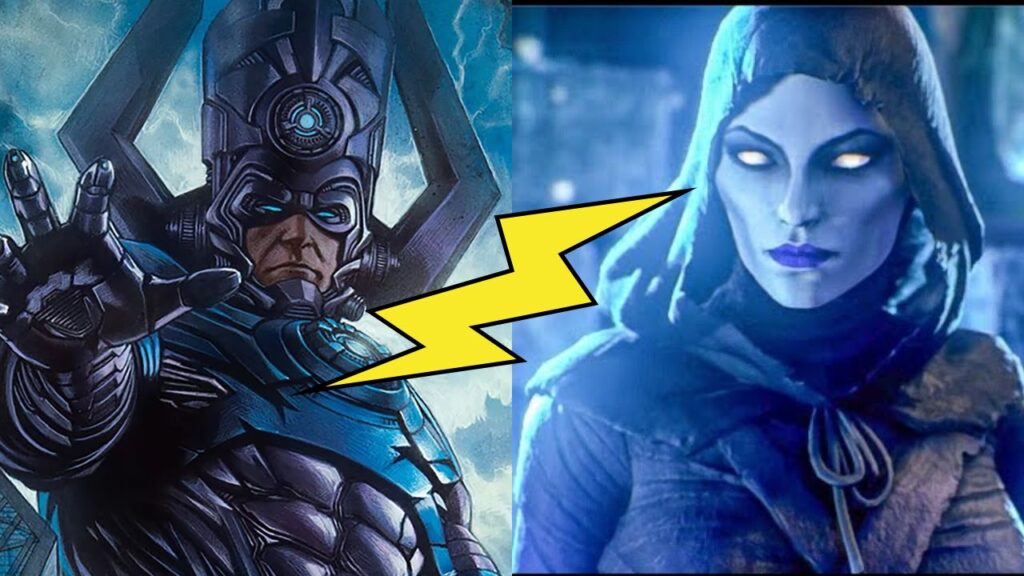
Death refers to Galactus as her “husband and father, brother and son.”
It seems like a contradiction, but it’s a statement of cosmic truth. They’re not enemies; they’re symbiotic. Galactus is the “Great Filter” of the universe. He isn’t randomly demolishing worlds because he’s malevolent; he’s doing it to tend the cosmic garden, so that life does not turn into a cancer on the face of existence.
Image credit: Fandomfans
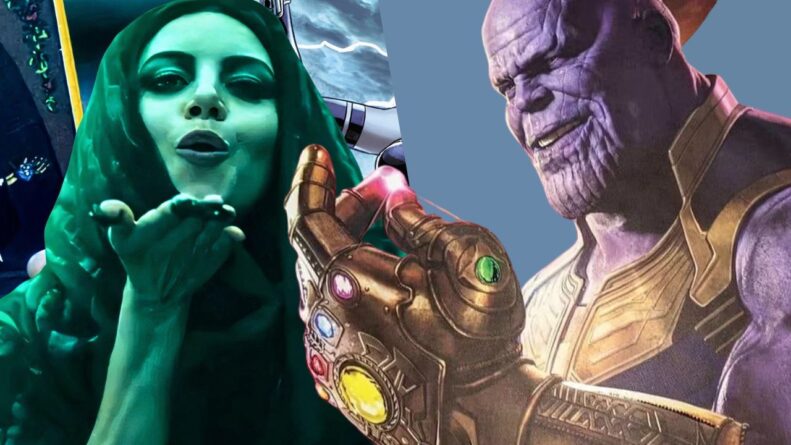
He makes the nutrition that feeds Death’s being. In an eternal, symbiotic dance, his job is to create and hers is to eat. They form a deep, quasi-sacred union, vastly more complex and profound than Thanos’s adolescent crush on Death that can best be described as a momentary juvenile fantasy.
The “Cosmic Gothic” Aesthetic
The MCU seems to be aiming for a particular aesthetic in this union: “Cosmic Gothic.” For one, we’ve got Ralph Ineson cast as Galactus. Known for his bone-chilling, folk horror work in The Witch, Ineson lends a weight that implies that Galactus will be more of an Old Testament god than a mechanical antagonist.
Image credit: Fandomfans
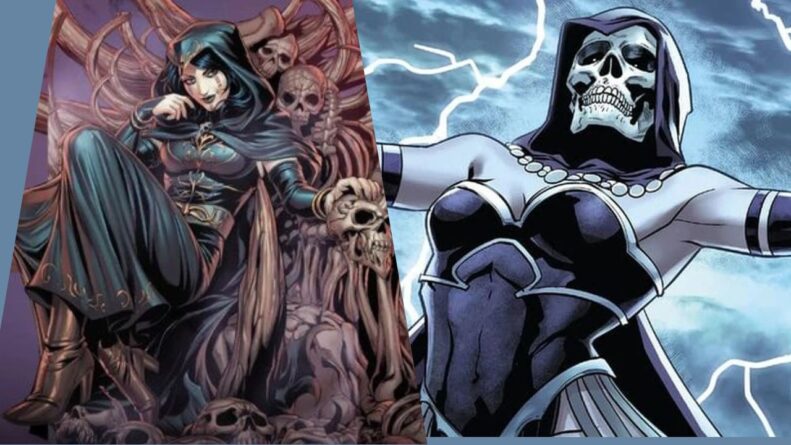
Then there’s Aubrey Plaza’s Rio Vidal. Rather than being the quiet skeleton featured in the comics, Plaza’s Death is loquacious, possessive, and chaotic. She is rooted in “Green Witch” tradition, seeing death as a natural return to the earth. When you combine Ineson’s golden, high-tech horror and Plaza’s rotting, totemic witchcraft, you end up with a cinematic mood we’ve never seen in Marvel.
The Franklin Richards Sparks This Theory
So how do they come together? The latest rumors about The Fantastic Four: First Steps suggest a particular catalyst: Franklin Richards.
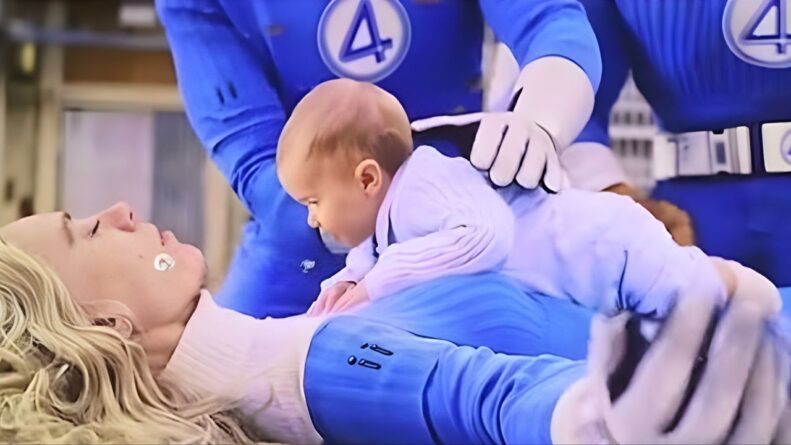
Galactus is arriving on Earth not for a bite but to enslave the reality-warping son of Reed and Sue Richards as a long-term power source, according to leaks. The speculation is that Sue Storm dies to stop Galactus and then that Franklin uses his god-like powers to bring her back to life.
Image credit: Youtube
This is where Rio Vidal enters the chat. As established in Agatha All Along, Rio hates when people cheat death. If Franklin tears a soul back from her domain, he is an enemy of nature. So you’ve got a really interesting three-way battle forming here: Galactus wants the boy for energy, Death wants the boy stopped for violating her rules, and the Fantastic Four are in the middle.
From Fantastic Four To Secret Wars
In the end, the union of Galactus and Death is what leads to Avengers: Secret Wars. As the multiverse shatters through “incursions,” the universe requires a means by which to cull expiring timelines in order to preserve others. Galactus and Death are more than villains to beat up, they’re the cosmic immune system.
We’re beyond the age when heroes battled to save a city. We are now living in a time of modern mythmaking where the basic drivers of reality, Hunger and Entropy have faces, names and story lines. When Ralph Ineson’s Galactus and Aubrey Plaza’s Death at last share the screen, it won’t just be a crossover, it will be the pulse of the new Marvel Universe.
Lady Death and Galactus are far from just two scary forces – they are the core of what Marvel’s next cosmic era is going to be. Their clash lays the groundwork for a deeper, darker and more mythic MCU, one in which the fabric of reality bends, souls are traded, and the heroes we know go toe-to-toe with adversaries older than time itself. If Marvel honestly commits to this “Cosmic Gothic” era, the MCU could finally begin telling the ambitious, cohesive stories fans have been clamoring for.
Fandomfanskeep your energy exciting with your favorite movie characters’ breakdowns of the biggest moments in movies, TV, and pop culture.
Mariyam
Articles Published :
57
Mariyam Khan is Fandomfans Content Writer and providing reports and reviews on Movie Celebrities, and Superheroes particularly Marvel & DC. She is covering across multiple genres from more than 4+ years, experience in delivering the timely updates.