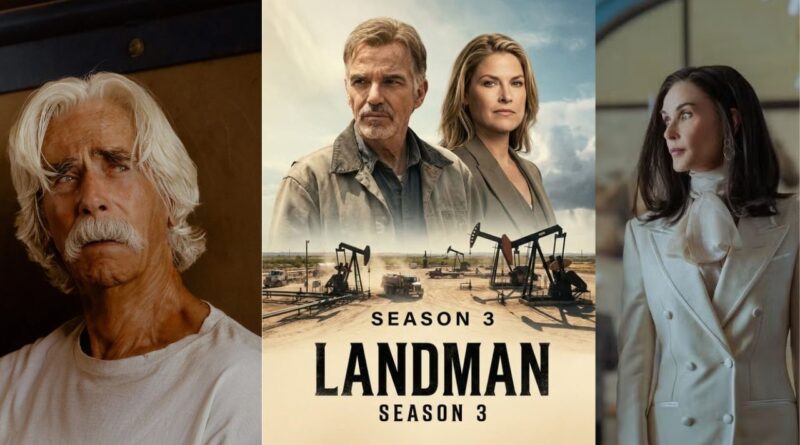
Landman has quickly become a can’t-miss series, capturing the tension of Yellowstone but focused on oil, dollars, and ever-growing boomtowns. The show has been a huge hit for Paramount+, ranking among its most watched series. Now, with all this success, we are wondering when we will be going to watch Landman Season 3.
There’s no official release date for Landman season 3 but it will eventually return in the late 2026 as official confirmation of its making.
Is Landman Season 3 Happening?
Yes, Landman has been officially renewed for a Landman Season 3.
After the Landman Season 2 launch was a smash hit, racking up 9.2 million streaming views in the past two days, Paramount+ didn’t wait around. The choice was obvious. The series has been able to “strike gold,” and the network is looking to capitalize on this momentum.
And while we wait for the next chapter, it’s worth noting: The show has continuously broken viewership records, perhaps making it the hottest ticket on the platform right now.
Landman Season 3 Release Date
Currently, April 2026, there’s no official release date for Landman Season 3. While Taylor Sheridan has a reputation for being an incredibly hard worker.
Season 1 aired November 2024.
Season 2 aired November 2025.
Production had settled into a comfortable fall-new-season rhythm. There’s nothing concrete yet, but the general feeling is a Fall 2026 release date for Season 3. Sheridan loves to keep fans waiting for years, and while the show is doing at least so far with this season’s success it means the cog wheels in the writers’ room are no doubt turning.
What Could the Plot of Landman Season 3 Look Like?
If you’ve been keeping up with the mayhem, you know that mute Tommy Norris and his M-Tex gang aren’t really options. The pressure had been cranked up to an almost unbearable volume by the end of Season 2.
The Rise of CTT Oil Exploration and Cattle
The biggest change for next season is the formation of CTT Oil Exploration and Cattle—the new corporation created by Tommy for his family and friends. This is not just a business decision, it is an act of declaring independence. But in West Texas oil, independence is expensive, very expensive.
The Cartel Shadow
Recall the deal with the cartel boss Gallino (Andy Garcia, coldly perfect)? While Tommy may have raised the money to get his job up and running, he’s still very much on the hook. Gallino, though, doesn’t seem like the kind of guy who lets a debt or a slight go uncollected. The big tension for Season 3 will likely be that the cartel is lurking, fingers poised to snatch if CTT so much as stumbles.
Personal Stakes
Outside the oil rigs, there’s the changing family layout. With Cami Miller taking the wheel at M-Tex and Tommy’s relationship with his father, T.L. (the iconic Sam Elliott), continuing to evolve, the family drama is shaping up to be as volatile as the boardroom battles. We’re also watching Cooper and his blossoming relationship with Ariana, which looks like it’s leading to marriage more personal complications for one of the most chaotic lives.
Landman Season 2 Plot That Powers the Stakes High
The Fall of M-Tex and Rise of a Rival
After the abrupt passing of its owner, Monty Miller, the season opens with a power vacuum at M-Tex. His wife, Cami (Demi Moore), is the new CEO. Cami and Tommy Norris (Billy Bob Thornton) clash right off the bat about the company’s financial disaster in particular, Monty’s embezzlement of money meant for gas wells in the Gulf of Mexico.
Cami fires Tommy from the company he helped build before turning around and asking him for help when he protests her reckless choices.
Rather than taking the comfortable road and working for Chevron, Tommy decides to start his own business. He lands a staggering $44 million deal with Danny ”Gallino” Morrell (Andy Garcia) an international drug cartel boss masquerading as an investor. Behind these cartel funds Tommy establishes CTT Oil Exploration and Cattle, LLC after he, his son Cooper, and his father T.L. named it.
Cooper’s Legal Battle
At the beginning of the season, the fiancée of Cooper’s, Ariana, is savagely attacked right outside a café. Cooper comes to her rescue, pounding the assailant in a now-viral video. When the assailant dies in the hospital, Cooper is charged with murder.
The Norris family enlists their formidable attorney, Rebecca Falcone, to take on the relentless detectives. In the end, Cooper is released after an autopsy shows that the assailant had died of an unconnected heart attack, but the close call with jail time alters and hardens Cooper. He moves up to become president of his father’s new firm, CTT.
Norris Family Dynamics Adds Emotional Narrative
Tommy’s elderly father, T.L. (Sam Elliott), escapes from his care home to come and stay with the family. Although T.L. and Tommy have a tense past, T.L. provides valuable, hard-learned oil field knowledge and starts to mend his relationship with his son and grandchildren.
Ainsley, Tommy’s daughter, goes to Texas Christian University (TCU) and wants to be a cheerleader. But nothing goes right as she can’t make the squad and she clashes with her stogy roommate, Paigyn. Over time, things change when Ainsley defends Paigyn from bullies, and they form an uneasy friendship. That shows Ainsley more confident, more independent.
Angela, Tommy’s ex-wife, remains a significant presence in his life. She is struggling with Ainsley leaving for college and with her complex feelings for Tommy, as she still has feelings for him.
Season 2 ends by laying the groundwork for an epic corporate and personal battle Cami’s M-Tex and Tommy’s fledgling CTT, both under the lethal gaze of cartel supervision.
Expected Cast Returning for Landman Season 3
While Paramount has not released an official Landman Season 3 cast list, its narrative format suggests that most of our favorites will return. As there have been no huge character “departures” to prevent them from coming back, you can certainly expect the main characters to be back:
Billy Bob Thornton as Tommy Norris: The guy who keeps everything running (just). He is the heart and soul of the show, and we can’t imagine Landman without that grizzled, cynical charisma.
Demi Moore as Cami Miller: Filling the power vacuum at M-Tex, her arc is probably one of the most fun to watch.
Sam Elliott as T.L.: Because a show about Texas, oil, and grit isn’t complete without Sam Elliott.
Jacob Lofland as Cooper Norris: We love cheering for him as he makes his way out of the oil patch and into the realm of running a business.
Paulina Chávez as Ariana: Her future with Cooper and where she fits in the family dynamic is certainly going to be a highlight.
Andy Garcia as Gallino: The ever-present menace that keeps us rattled.
There are definitely small characters who drift into the background — like Ainsley’s boyfriend on the show but the principal cast is feel like it’s here for the long haul.
Why Is Landman So Compelling?
If you’re attempting to explain to a friend why they need to binge before Season 3 releases, it truly comes down to the “Sheridan Factor.”
Taylor Sheridan has a gift for taking industries, the average person has no background in ranching, prisons, and now, the oil patch and turning them into adrenaline-filled soap operas. It’s not just a matter of the money or the politics, it’s about the people who live on the edges of these gigantic, earth-shaking industries.
Setting: West Texas is more than just the setting, it almost functions as a character. It’s hard, cruel, but still kind in a way.
Realism: Landman is a series that touches real problems like climate change, economic and global energy politics. That is what makes it feel real and believable.
Performances: Billy Bob Thornton’s solid acting is taking up the series so high, he earned that character.
Conclusion
Landman has established that this isn’t just a flash in the pan. It’s found its own place among the crowded field of streamers that offer prestige drama. With Landman Season 3 on the way, we know we’re getting more of the High-Stakes, Dusty Action that we’ve Come to Love.
As we await that still-to-be-confirmed official premiere date, the most important thing to keep in mind is that in the world of Landman, the status quo never remains quite long. Tommy Norris – still out there, still running a squeaky-tight racket while owing a dangerous debt, is gonna need all the help he can get next season rolls around
Dive deeper with Fandomfans for updates from movies, series, and celebrities to get ahead in the entertainment world.
Mariyam
Articles Published :
76
Mariyam Khan is Fandomfans Content Writer and providing reports and reviews on Movie Celebrities, and Superheroes particularly Marvel & DC. She is covering across multiple genres from more than 4+ years, experience in delivering the timely updates.
Bridgerton Season 4 Take a Top Place on Streaming Charts
The premier of Bridgerton Season 4 Part 1 on Netflix escalated to top of global streaming charts, over-performing thriller His & Hers but with mixed reactions.
A compelling change of the guard in the streaming world happened in January 2026. Bridgerton Season 4 fell below the grim and surreal drama His & Hers, featuring Jon Bernthal and Tessa Thompson, in January 2026. The launch of Netflix’s romance juggernaut proved that old franchise loyalty games and a bit of getting away can still trump a high stakes killer thriller even if His & Hers had everyone talking.
Bridgerton Season 4 Streaming Schedule
You can watch Bridgerton season 4 Part 1 (episode 1–4) on Netflix as it was released on 29/January/2026, but the second part of this season will be released in Feb.
Following this two-part season release is a typical Netflix strategy to extend its buzz and keep subscribers a little longer at the beginning of the year, before days of bingeing off this entire season, quickly.
For contrast, His & Hers, which debuted as a full six-episode miniseries on January 8. It delivered a shadowy “slice-of-life” whodunit that felt like a complete meal, while Bridgerton is dishing out a two-course banquet.
Netflix’s Take us From Thrills to Ballrooms
Now the tone is completely different. His & Hers went inside the stifling air of Dahlonega, Ga., a town where everyone has secrets and crumbled sanity is the norm. By comparison, Bridgerton transports us to the lavish grandeur of Regency London.
Bridgerton Cinderella’s Theme
This season is the classic Cinderella fairy tale with a masquerade ball, a mysterious Lady in Silver, and the strict class divisions of British upper society. It’s comfort viewing at its best, a stark departure from the morally ambiguous murder mystery that preceded it.
Director, Writer & Creative Team
Showrunner Jess Brownell is the leader for Bridgerton Season 4, the fourth season of the Netflix series based on Julia Quinn’s book An Offer From a Gentleman. The season centers on Benedict Bridgerton (Luke Thompson) and turns its focus away from previous leads.
His & Hers was directed by William Oldroyd, who also wrote the screenplay adaptation of Alice Feeney’s 2020 best-seller and took several liberties from the source material, most notably with its polarising ending.
Plot Overview
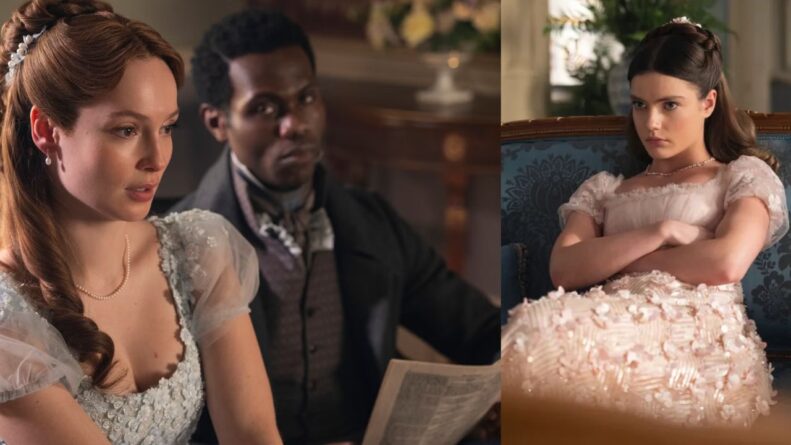
Bridgerton Season 4 focuses largely on Benedict — the Bridgerton family’s artist and its darling black sheep as he finds his life turned upside down after meeting Sophie Baek (Yerin Ha) at a dazzling masquerade ball.
Sophie is magical that night, but behind the mask she’s living a much darker life, masquerading as a servant in the home of her icy and merciless stepmother, Lady Araminta Gun (Katie Leung).
At the stroke of midnight, Sophie disappears – leaving Benedict with nothing, but a fleeting memory, a single memento, and the gut-wrenching sense that he’s just lost his soul mate. Then what unfolded was the tired but tearful image of these two spirits being brought together and torn apart by the feudal culture, class barriers and strict dictates of their country.
Luke Thompson and Yrin Ha top the season with what they call poetic chemistry.
The ensemble boasts several returning favorite Jonathan Bailey (Anthony), Simone Ashley (Kate), Nicola Coughlan (Penelope) and Luke Newton (Colin) – though their screen time is very limited.
Newcomers include Katie Leung as the evil stepmother, Michelle Mao as the plotting Rosamund Li, and Isabella Wei as the sweetest stepsister Posy Li.
Casting of Korean-Australian actress Yerin Ha lent cultural authenticity to Sophie’s reimagined as Sophie Baek rather than the book’s Sophie Beckett.
Bridgerton Season 4 Capturing Scene
Masquerade ball of this season becomes the most capturing scene for everyone where Sophie and Benedict meet for the first time. The season, however, has caused a stir because of how it looks. Entertainment Weekly’s Darren Franich and almost every critic and viewer could tell there was a strangeness to the production – perfect lighting, flawless makeup, and sets that were compared to Saturday Night Live sketches.
Fascinated “AI slop” is a surprising topic of discussion, as some argue the show’s high-gloss perfection has ventured too far into uncanny valley.
Production Details
Bridgerton Season 4 was scripted and produced as a complete eight-episode arc prior to Netflix’s decision to split the batch. The production keeps the show’s trademark hyper-saturated color palette and opulent costume design, although this season’s preoccupation with class distinctions shines a brighter light on the world than earlier seasons did.
How Bridgerton Season 4 Take Over the Platform
Bridgerton Season 4 ranked on the streaming charts right after its first part was released on Netflix this January. It has taken over 70 countries with a great achievement of 901 points compared to 676 of His & Hers. The chart dominance proves that established IP still reigns supreme in streaming even when critical and audience reception differ greatly.
Bridgerton Season 4 Receives Reaction From Critics
Bridgerton Season 4 is currently moving back and forth with mixed reviews. Although it received a decent 80% score from critics on Rotten Tomatoes, audience reception is a different matter. The season is currently sitting at just 52% for its audience score – the lowest in the franchise’s history, and a breathtaking 28 points below that of the critics.
Several complained that the Benedict–Sophie romance didn’t feel as fiery as previous seasons, while others attacked the plot as too formulaic and the visuals as needlessly lavish.
Audience Expectations
Fans are split. Seasoned viewers are nostalgic for the electric chemistry of former couples, Anthony and Kate in particular from Season 2. The instant chemistry of Benedict and Sophie seems to have moved too fast for some, and there is not enough of the slow-burn tension that has characterised previous seasons.
but despite the criticism, the viewing figures demonstrate that audiences continue to eat up the escapism which Bridgerton delivers – particularly in a world in need of comforting viewing.
The rise of streaming from His & Hers to Bridgerton Season 4 reveals a key reality about entertainment today: franchise power outperforms critical acclaim on pretty much the same level every time. Jon Bernthal’s thriller generated talk with its divisive ending, Bridgerton arrived with familiar faces, sumptuous gowns, and the promise of a fairy tale romance. It’s the classic battle between shadowy complexity and dependable prettiness in January 2026, prettiness won. How the franchise will continue to fare with such fractured audience reception is yet to be seen when Part 2 drops in late February.
Fandomfansis delivering a latest overview on new series and reboots of successful dramas.
Alpana
Articles Published :
156
Alpana is Fandomfans Senior Editor across all genres of entertainment. She evolved in the media industry since a very long time, she manages the content strategy and editing of all the blogs. Her focus on story development, review analysis, and research is well-equipped that ensures every article meets the standards of accuracy and depth.
Jennifer Aniston’s Transformation: From Rachel Green to The Morning Show Success
Jennifer Aniston's stunning transformation from Rachel to The Morning Show has fans amazed. Check out her fitness, fashion and fearless role selections to date.
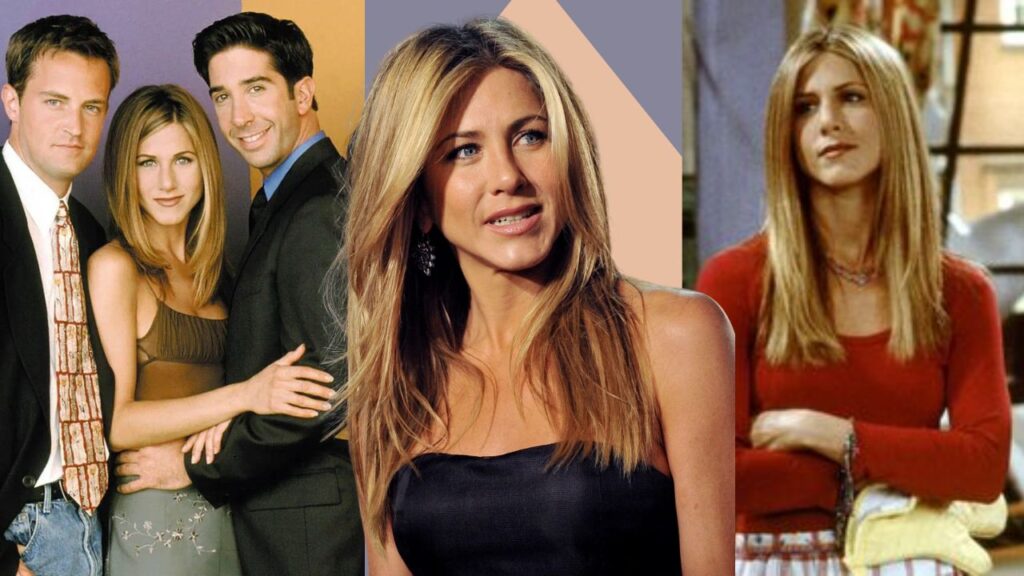
Aniston played Rachel Green on ‘Friends’ for ten seasons from 1994 to 2004, a character whose mannerisms, hairstyle, and love interests defined what it meant to be a 20-something woman around the world. The actress could not be disentangled from the character, it’s hard for everyone to recognize Aniston in other characters. Rachel Green was everywhere, on lunch boxes, in syndication, and in the cultural lexicon.
Aniston noted that she — “Couldn’t get over from the shadow of Rachel Green ever in my life”
describing the experience as “exhausting”. The character was a “poor little rich daddy’s girl”, a specific archetype that afforded little room for the darkness or grit required of dramatic acting. Aniston admitted to fighting with herself and her identity in the industry “forever,” constantly trying to prove
She was “more than that person”. —Aniston said
FRIENDS Could have Lost Jennifer Anniston at First
Jennifer Aniston’s whole Friends run nearly never happened because she was at that time already committed to a CBS sitcom titled Muddling Through back in 1994. Because she was “only in second position” for Friends, NBC was worried that they might have to recast Rachel if the CBS show was a hit, and speculated about shooting multiple episodes, only for CBS to pick it up and they’d have to do reshoots.
Courteney Cox & Jennifer Anniston in FRIENDS | Image credit: IMDb
Aniston got her big break when Muddling Through was cancelled, and that led to her being cast on Friends – which just goes to show how precarious a career in Hollywood can be, and how one cancellation can make way for the series that takes an actor global and defines their stardom.
Aniston’s The Good Girl, Horrible Bosses, & Cake break the FRIENDS curse
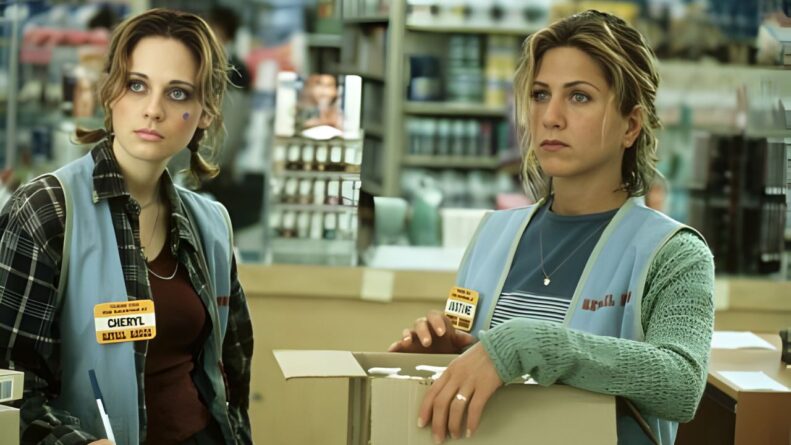
Helmed by Miguel Arteta, the film stars Aniston as Justine Last, a dour employee at a mall shoe store who has a clandestine relationship with a younger coworker (Jake Gyllenhaal). The choice to accept the part was nerve-racking.
“Panic that set over me,” thinking, “Oh God, I don’t know if I can do this? Maybe they’re right”. —Aniston recalls
The film was an independent production, lacking the safety net of a major studio marketing budget or a laugh track. It required Aniston to perform “without a net” in front of the world. The success of The Good Girl and the critical acclaim she received—provided the “relief” necessary to continue pursuing dramatic work. It was the proof of concept that she could exist outside the “purple walls” of the sitcom apartment.
Jennifer Anniston in The Good Girl | Image credit: IMDb
If The Good Girl proved she could be sad, Horrible Bosses proved she could be predatory. The appeal lay in the “black comedy” element. Aniston argued that “Comedy is a necessity,” but she expressed a preference for the “craziness” of the Horrible Bosses universe over the gentler comedy of Friends.
“Maybe everybody else is seeing something I’m not seeing, which is you are only that girl in the New York apartment with the purple walls”.
This quote speaks to the psychological complexity of the curse—it wasn’t only that she believed producers wouldn’t hire her but she was afraid she wasn’t capable of doing the work.
Breaking the curse required exposure therapy. By performing in independent films like The Good Girl and Cake, where the safety nets of budget and ensemble were removed, Aniston forced the industry to recalibrate its perception of her utility.
Image credit: IMDb
Cake is the ultimate punishment to shatter the curse. In this film, Aniston portrays Claire Bennett, a woman struggling with crippling chronic pain and addiction. Aniston quit exercising and wearing makeup. She studied friends with chronic pain to get a sense of what the condition felt like physically.
She allowed the role to “hurt” her, noting that during physical scenes, she “didn’t prepare” in the traditional sense but rather let the physical discomfort generate a real reaction.
The Morning Show – The Strong New Chapter For Jennifer Aniston
The morning show era (TMS), Executive produced and co-created by Reese Witherspoon is the shift from Aniston the Actress to Aniston the Mogul. The show is more than just an acting vehicle, it’s a platform for industry commentary and power play.
The partnership with Witherspoon’s Hello Sunshine production company created an environment of “understanding, compassion and consideration” that Aniston notes
“Doesn’t always exist amongst the dudes”.
Alex Levy is the culmination of Aniston’s post-Friends evolution. She is a morning news anchor, but she shares no DNA with Rachel Green. Alex is “complex, vulnerable, controlled, lonely, enraged, self-serving”.
Image credit: Fandomfans
In Season 4 (2025), Alex has transcended the anchor desk to become a corporate executive. She is no longer fighting for a contract; she is fighting for the soul of the network. Critics have praised Aniston’s performance in this era as
“It is the best of her performances and able to perform mature characters”
noting her ability to portray moral conflict without the melodrama that sometimes plagued her earlier dramatic attempts. The role gives Aniston a chance to examine issues of power, complicity and growing older in a way Friends never did.
Conclusion
By 2025, she’s at a place very few could have predicted back in 2004: she’s the boss. On The Morning Show, she plays a character who runs the network, much like in real life, where she’s a producer on the show. She swapped the “purple walls” of the Friends apartment for the glass walls of the UBN executive suite. Jennifer Aniston has now shown beyond a shadow of a doubt that she is, in fact, “more than that person.”
Find out celebrities, movies, and web series updates on Fandomfanswhich is delivering every entertainment buzz to you.
Alpana
Articles Published :
156
Alpana is Fandomfans Senior Editor across all genres of entertainment. She evolved in the media industry since a very long time, she manages the content strategy and editing of all the blogs. Her focus on story development, review analysis, and research is well-equipped that ensures every article meets the standards of accuracy and depth.