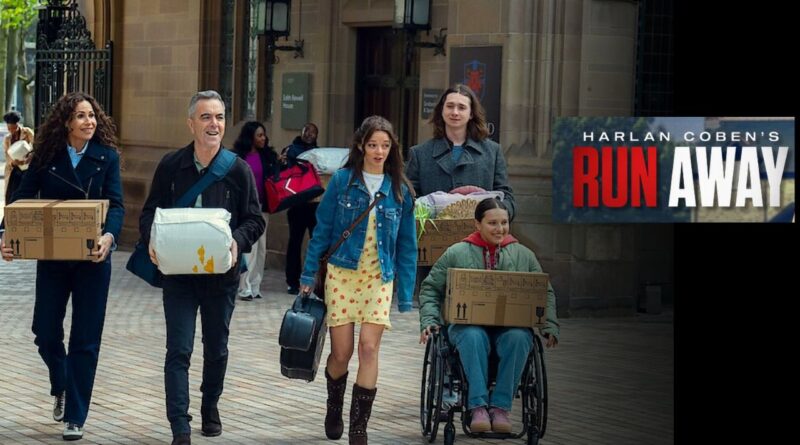
Harlan Coben is back with a new thriller series on Netflix, and this time he’s leading you into the secret, distorted world of Run Away. ‘Run Away’ is adapted from the 2019 novel of the specified name, with a stellar cast bringing its complex characters to life. Limited to one season of eight episodes, the series has held the attention of viewers by way of compelling storytelling and performances. If you’ve already watched the show or are about to watch the show, the cast and their characters will definitely make an impact.
The Core Cast
James Nesbitt is at the forefront as Simon Greene, whose life appears perfect until his oldest daughter Paige disappears. Nesbitt, who has played winning roles in other Coben adaptations like Missing You and Stay Close, lends a remarkable depth to a desperate father. Coben also commented on Nesbitt’s versatility, saying:
“There’s a naturalness to him that comes with an ease and warmth, so that you find yourself rooting for Simon — even when you know he’s making all the wrong choices.”
Minnie Driver is Ingrid Greene, Simon’s wife, who keeps the family stable as her husband descends in peril. Driver (The Serpent Queen, the iconic Good Will Hunting) brings emotional heft to the home front chaos at the core of this thriller.
Ellie de Lange is the daughter who had runaway, now a character with addiction issues and secrets, Paige Greene. Coben personally chose de Lange from a multitude of audition tapes, and lauded her strength and vulnerability as an actress – a fine balance key to Paige’s character arc.
Ruth Jones stars as Elena Ravenscroft, an ex-cop-turned-private-eye. Her new case, a missing person, intersects with Simon’s own desperate mission and sends them both hurtling into a labyrinth of mystery and intrigue.
Alfred Enoch (Dean Thomas in Harry Potter) stars as Detective Isaac Fagbenle, who is looking into the murder of a drug dealer, Aaron Corval. When a viral video puts Simon at the center of the crime, Isaac’s pursuit gains momentum—especially as secrets from his past threaten to compromise the case.
Lucian Msamati (Conclave, Gangs of London) is Cornelius Faber, a former soldier now residing in the Marinduque Estate. Cornelius ends up becoming Simon’s friend and confidante, but the unpredictable nature of the former makes for some nervous moments. Msamati describes the character as “a storm waiting to happen.”
The Darkest Elements of ‘Run Away’ on Netflix
The show manages to bring genuinely unsettling characters to life, thanks to Jon Pointing as Ash and Maeve Courtier-Lilley as Dee Dee — two assassins who were raised in foster care and now run around the country wreaking havoc together. Coben characterizes them as
Like a couple plucked from True Romance or Bonnie and Clyde, they’re clearly off the rails — but the way they make their getaway is completely spellbinding.”
Conclusion
The ensemble is further bolstered by Tracy-Ann Oberman as Simon’s barrister Jessica Kinberg, Annette Badland as Lou, and Amy Gledhill as Detective Ruby Todd. Each character in this elaborate web of secrets and lies is needed to bring the story together in ‘Run Away’ on Netflix.
Run Away, the latest from Netflix based on the novels of Harlan Coben, shows us once again why he’s the king. With this all-star cast riveting performances, viewers are taken on an unforgettable journey into darkness and despair. The series is now available to stream on Netflix, which is ready to you keep you busy on your next binge-fest.
Dive deeper into the details of movies and series with Fandomfans. Keep connected to get the latest updates.
Alpana
Articles Published :
93
Alpana is Fandomfans Senior Editor across all genres of entertainment. She evolved in the media industry since a very long time, she manages the content strategy and editing of all the blogs. Her focus on story development, review analysis, and research is well-equipped that ensures every article meets the standards of accuracy and depth.
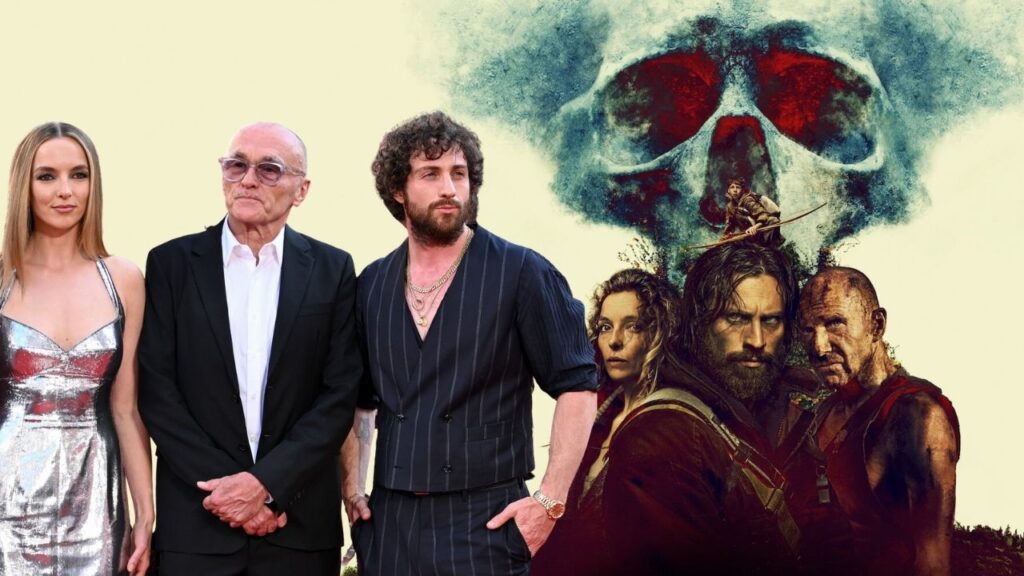
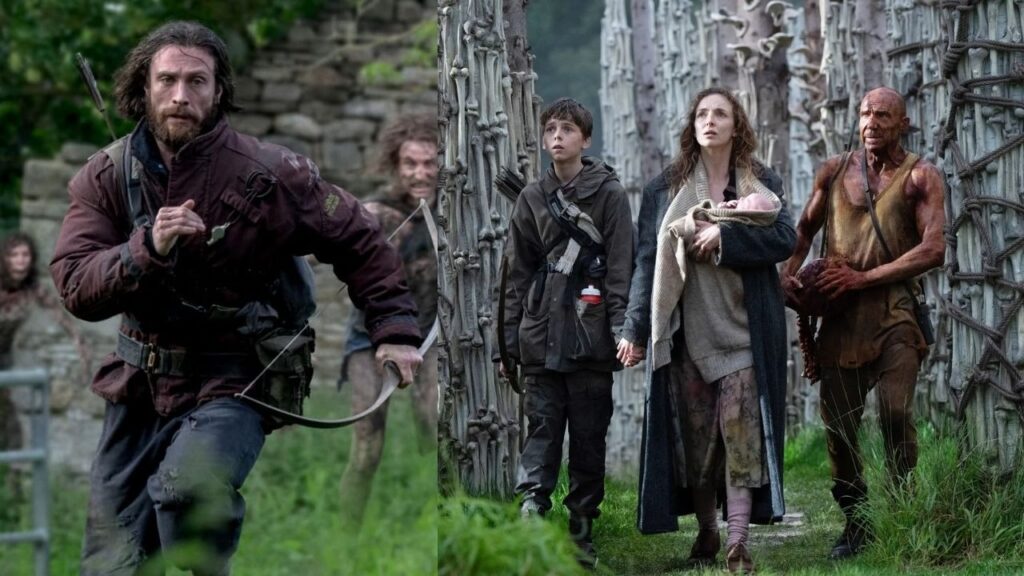
The overall cinematic output for 2026 seems an entirely new prospect. Ender’s game trailer We have gone beyond the generation of the predictable jump-scare and established ourselves in a more cerebral place of “high horror,” a change led by the long overdue revival of the 28 Days Later universe. With 28 Years Later releasing in June 2025, and its direct sequel, 28 Years Later: The Bone Temple, releasing in January 2026, the creative team of Danny Boyle and Alex Garland has not merely brought a franchise back to life – they have redefined how horror can speak to what it means to be human.
A Legacy Born from “Development Hell”
For almost 20 years, fans speculated about 28 Months Later. It turned into a development hell myth, held up by rights issues and creative changes. The wait, though, served a purpose.
Skipping ahead almost three decades, the filmmakers leave behind the panic of a viral outbreak and delve into “post-progressive” societal decay. In this new world, the end of the world isn’t a tragic event—it’s the only reality the current generation has ever known.
The Technical Radicalism of the iPhone 15 Pro Max
Perhaps what has most people talking about the 2026 comeback is the technical decision to shoot mostly on the iPhone 15 Pro Max. This wasn’t a gimmick. Boyle took the Canon XL1 and turned it into a grainy, digital realism. In 2026, he adapted this “guerrilla” style on a new scale with multi-camera megasuites.
By placing iPhones into “Beastgrip” cages with professional-grade cinema lenses, the team captured a high-shutter-speed energy. This technical decision removed the infected from ‘cinematic motion blur’ and as a consequence their movements look staccato, hyperactive, and terrifyingly real.
Evolutionary Biology: The Mutations of Rage
The “high horror” tag derives from the trilogy’s immersion in evolutionary biology. Rage Virus is not a static disease; it took biological forms:
The Slow-Lows: Fat and bloated dead, in this case terminal stage creatures that are aftermath survivors of the original outbreak.
The Alphas: They are intelligent, sentient hunters on a higher plane of thinking and do possess some form of strategic thought albeit intermittent and social hierarchy.
This change re-centers the horror from the mindless zombies to a more understanding-if-distorted on the human experience of pain and suffering. The infected are depicted as martyrs to an “unthinkable fate,” rendering the films to “tone poems” that are profane yet emotionally stirring.
Socio-Political Echoes and “The Bone Temple”
While the 2025 film was set among the isolationist society of Holy Island (Lindisfarne), the 2026 sequel, The Bone Temple, directed by Nia DaCosta, turns its gaze to human cruelty. The addition of “The Jimmies” — a cult based on the more shadowy recesses of British cultural history conjures a society sliding back into nostalgic myth and “strategic derangement.”
Ralph Fiennes turns in a career-defining performance as Dr. Ian Kelson, a man running a mausoleum to the fallen human. His viral “death-metal dance” to Iron Maiden is already the defining meme of early 2026, embodying the trilogy’s mash-up of high art and visceral madness.
As 2026 begins to approach, the 28 Years Later trilogy is the narrative equivalent of looking up in awe. It has demonstrated that horror can be a serious instrument for social commentary, addressing anxieties of the Brexit era and the “denial of death” through the prism of the Rage Virus.
Conclusion
The arrival of 28 universe is more than just nostalgic it’s a cultural recalibration of what modern horror could be. With 28 Years Later and The Bone Temple, Danny Boyle and Alex Garland have re-imagined the once–genre-defining zombie blast as a philosophical rumination on survival, memory, and generation trauma.
The trilogy, which can be seen as a response to fulfilling and confronting socio-political anxieties brewing in a crumbling Britain, alongside utter terror grounded in evolutionary biology and filmmaking radicalism, transforms horror into something far more intimate and unsettlingly human.
If 2026 is any indication, these films are testimony to the fact that fear doesn’t need to resort to cheap shocks to survive, but can instead find nourishment in ideas, mood, and the quiet recognition that the real horror isn’t the end of the world — it’s learning to live after it.
Dive deeper into the world of cinema with Fandomfans to get the latest update from your favorite movie, shows, and celebrity.
Babita
Articles Published :
16
Babita is Fandomfans Editor, experience in managing content. Her focus in general movies and web series. She is having a deep interest in TV shows and 90s movies - particularly Lord of the Rings, Harry Potter, & Rom-Com. Babita also covers psychological thrillers and major releases in current time and concern with deep interest in them.
HBO Hard Launches 2026: Euphoria S3, House of the Dragon S3, Dune: Prophecy & More
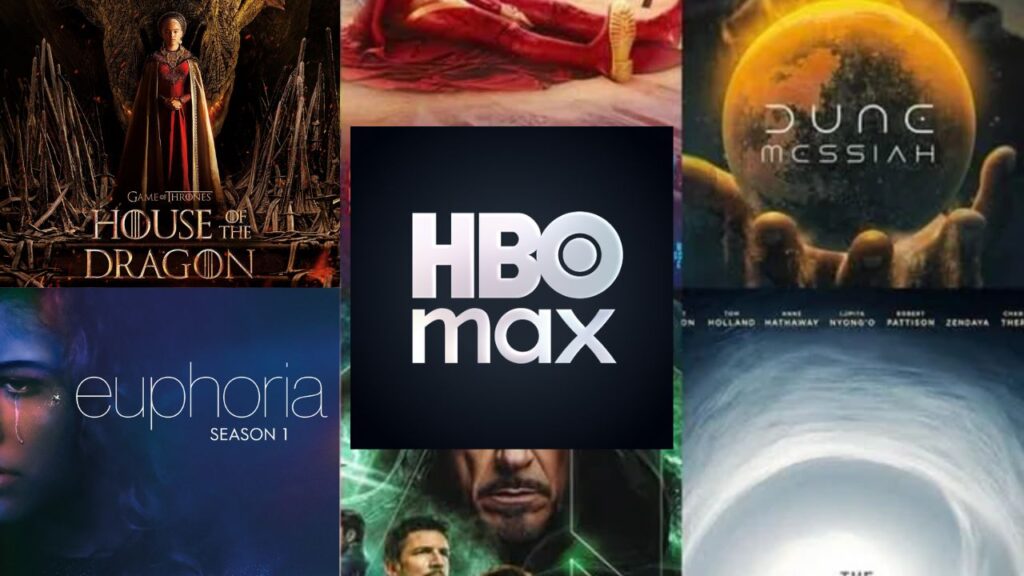
HBO Max Hard Launch 2026 with a hard launch featuring Euphoria Season 3, House of the Dragon S3, Dune: Prophecy and more event TV redefining streaming.
The worldwide streaming market is beginning to experience its most pronounced realignment since the emergence of direct-to-consumer services. The late 2025 acquisition of Warner Bros. Discovery for a mind-boggling $82.7 billion by Netflix practically brought an end to the so-called “Streaming Wars.” Amidst this wave of mergers and acquisitions, HBO Max—downgrading to the less intuitive “Max” branding stages a come-back in 2026 with its content slate. And this isn’t just a programming note. It’s a statement of who they are.
Image Credit: Fandomfans
Instead of pursuing scale, HBO Max is focusing on what it’s done best all along: event television series that rule cultural conversations, spark debate, and seem impossible to skip watching. Led by the return of Euphoria and House of the Dragon, and bolstered by ambitious franchises Lanterns and Dune, the 2026 slate aims to make HBO Max a must-have.
Consolidation Without Homogenization
Netflix–Warner Bros. Discovery combination raised immediate worries about creative dilution. Could HBO’s prestige DNA survive within the world’s largest algorithm-driven streamer? Early signals suggest yes.
Netflix executives have already committed to a federated platform model, so that HBO Max will exist as an independent, curated, prestige destination within the broader Netflix ecosystem. The logic is clear: Netflix delivers on scale and breadth, HBO Max is the home for high-value subscribers who seek auteur-driven storytelling. Rather than a battle with each other inside a siloed business, the two platforms are now a strategic “barbell” — mass appeal on one side, cultural authority on the other.
Restoring the HBO name in 2025 was not simply a cosmetic choice, but a corrective one. The previous “Max” branding watered down a name that is synonymous around the world with quality, trust and ambition. Senior executives were clear that audiences do not want more content, but better content.
Image Credit: Fandomfans
Formerly Warner Communications, it showed a similar myopia in 1984 in its bullying marketing for The Cotton Club. In a similar vein, HBO Max also took a more tongue-in-cheek approach on social media, emphasizing the confusion around its name and inviting viewers to laugh along with it. Instead of undermining trust, this openness eventually boosted it.
The 2026 Slate: Event Television by Design
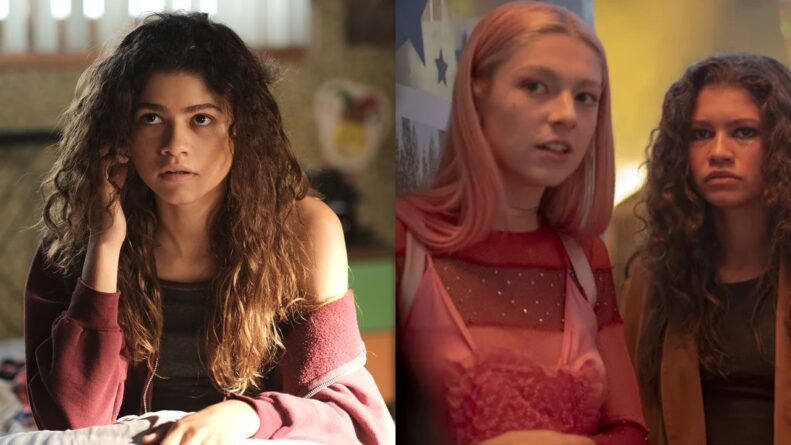
All the signs indicate a strong 2026 for HBO Max. New content will also create considerable disruption. The biggest attraction is Euphoria’s third season, returning after a long hiatus. It leaps forward five years, and dark noir style and twisty, grim plots are still very much in evidence. The show ditches teen drama roots for psych thriller vibes — and it’s a daring change. HBO is at its best when it bets big.
Image Credit: Fandomfans
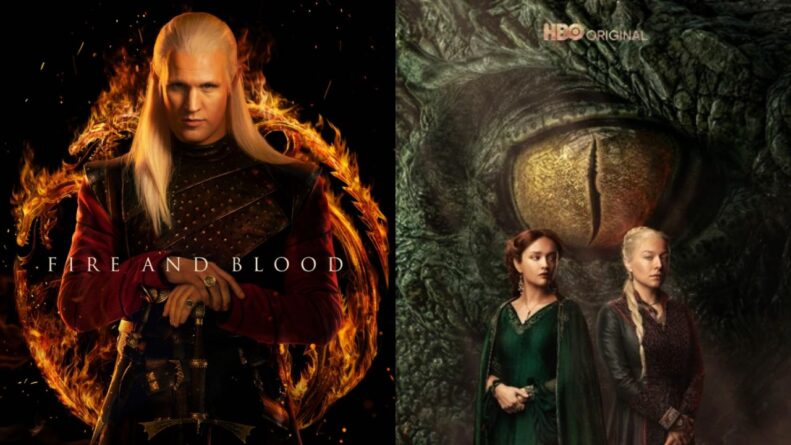
House of the Dragon Season 3 embraces full-scale war. Season 2 was criticized for being too slow, this one will include non-stop fighting, culminating in the technically gargantuan Battle of the Gullet. Every two years may feel like a long wait, but the scale does require it.
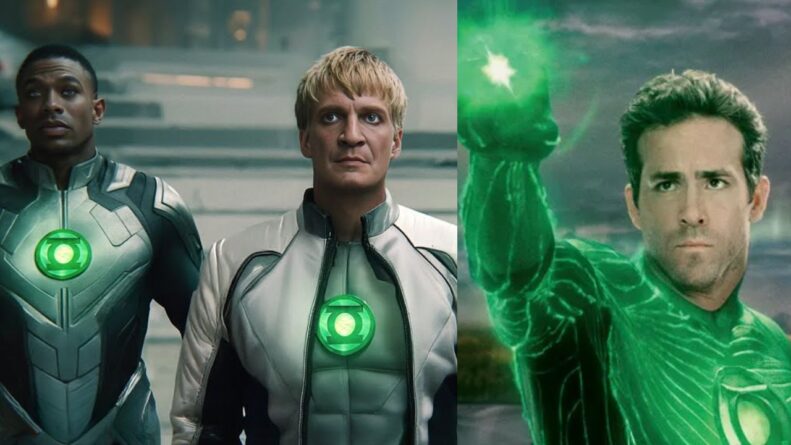
Lanternsmarks a DC television genre shift. Designed after True Detective, the series roots cosmic mythology in a gritty rural murder case. It’s less about spectacle and more about tone, character, and atmosphere — an intentional break from superhero excess.
Image Credit: Fandomfans
Dune: Prophecy Season 2 is perfectly timed to coordinate with the theatrical release of Dune: Part Three, offering a consolidated “Year of Dune.” This synergy allows HBO Max to ride the cultural momentum of the big screen while deepening franchise lore.
Retention, Rhythm, and Churn Control
Outside of prestige dramas, the 2026 lineup is wisely packed with comedies and procedurals to give subs a reason to keep watching all year. Revivals such as The Comeback, star-powered projects from Bill Lawrence and Larry David, and reliable procedurals like The Pit and Industry mean there are no “dead zones” in the release schedule.
That exact scheduling is a manifestation of what churn psychology—give the viewer a reason to be subscribed every month for your service.
Conclusion
HBO Max’s 2026 plan isn’t “to pour more and more stuff into the market.” It’s about owning attention.
Through its commitment to high-risk reinvention, cinematic scale and high concept/genre-bending storytelling — while also reinforcing the power and prestige of the HBO brand — the service is carving a space for itself as the best-b-value in the entertainment world, at a time when the business world has been consolidated. With competitors presenting their own massive suites of content, HBO Max is making a different promise: Not more. Better. And in the post-consolidation era, that distinction may matter more than ever.
Fandomfansis a platform where you can learn about the next movie and series seasons. Our goal is to deliver cinema reinvention fast and in an understanding way.
Mariyam
Articles Published :
50
Mariyam Khan is Fandomfans Content Writer and providing reports and reviews on Movie Celebrities, and Superheroes particularly Marvel & DC. She is covering across multiple genres from more than 4+ years, experience in delivering the timely updates.