Home > Web Series > Is Liam Hemsworth’s Geralt a Dull Copy or..
Is Liam Hemsworth’s Geralt a Dull Copy or an Amazing New Start?
Liam Hemsworth took over the role of Geralt in The Witcher season 4, bringing a new interpretation after Henry Cavill. Fans are divided, but story continues.
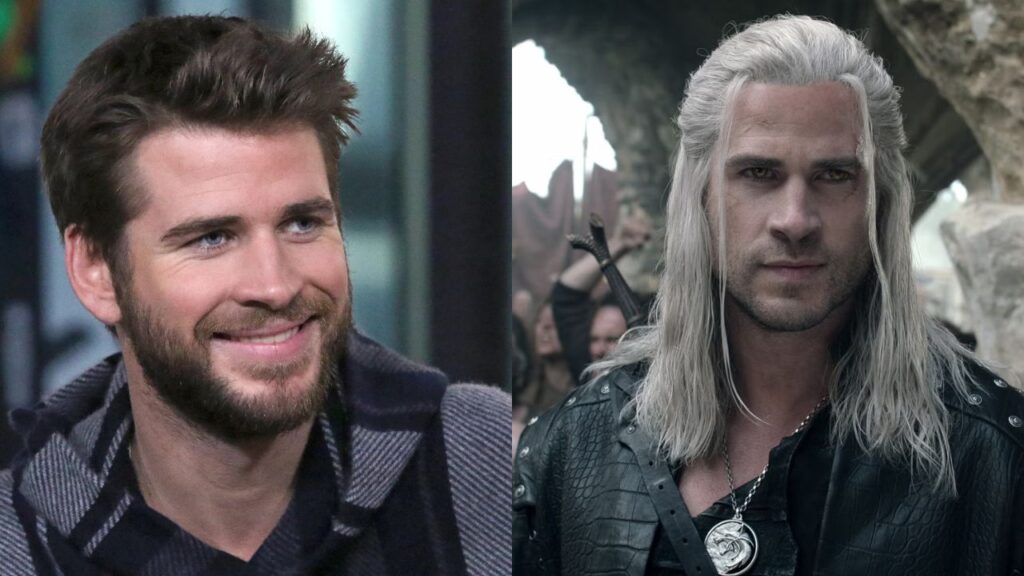
The first episode of The Witcher Season 4 came with one of the most controversial recastings in recent TV history, Liam Hemsworth taking on the legendary role of Geralt of Rivia, in place of Henry Cavill. For three seasons, Cavill was the series’ gravel-voiced, brooding centerpiece, turning the White Wolf into a towering physical symbol tied to his own performance. Unsurprisingly, the change was met with a seismic shift among fans, with numerous posting a craziest hate load well before episode one aired.
Now even the season is far more complicated than the verdict. Is the new Geralt doomed to be boring, cringing under the shadow of his ancestor, or is he buckling up for a great new road? It depends on how you define the character itself.
A Controversial Recasting That Shook The Witcher Fandom
Many reviews and fans alike agree that Hemsworth’s Geralt pales in comparison, not having the same gravitational charm that Cavill had as the character. So far, opinions are divided, some critics blistering, with new rendition dismissed as painfully one-note, less kindly, a bollard in a wig.
Why Fans Miss Cavill’s Geralt
While Cavill’s cold exterior seemed to belay a simmering fury beneath the surface that was just waiting to explode, to some, Hemsworth’s take amounts to nothing more than a listless impersonation.
Also the looks don’t make sense to ignore. Critics said that Hemsworth looks too young or too pretty, as if he’s a sad emo boy who got muscles rather than looking like a grizzled, hardened veteran. For fans who fell in love with the growl and tension of the first three seasons, not having that unmistakable superhero shape leaves a hole that all the mumbling and grunting can’t really fill. To them, this new Geralt is just plain boring – a pale imitation of the White Wolf they had.
But on closer inspection any dullness could actually be a conscious change and arguably one that follows the books more closely. Henry Cavill’s Geralt was very much the silent, grunting monster slayer. The Geralt of Season 4, adapted from the novel Baptism of Fire, is a different man.
He’s both physically and emotionally broken after what happened last season, and he’s desperate for revenge. Members of the show’s creative team and Hemsworth himself have suggested this will be a more vulnerable, heart-driven version of the Witcher.
According to Forbes, Hemsworth has discussed his excitement to play a Geralt who is at a crossroads, where he is motivated by love for his found family, Ciri and Yennefer, rather than his old mantra of neutrality. His arc is largely about his emotional evolution, as he reunites with a new traveling party that includes new characters like Regis.
Certain diehard readers even make the case that Hemsworth’s physical appearance and the way he plays a slightly more loquacious, a bit less invincible, wounded warrior version of the character is a more accurate representation of the character found in the novels by Andrzej Sapkowski. For these viewers, this fresh interpretation is a fantastic chance to take the show in the direction of a more loyal, complicated representation.
The Transition and The Show’s Evolving Focus
In the end, the new Geralt is not a spot-on copy nor is he a complete trainwreck. He’s a work-in-progress and the show has become a full ensemble. Yennefer and Ciri play leading roles in major, action-packed story arcs, taking the emphasis away from Geralt’s mountainous shoulders, softening the blow of the actor swap.
While fan consensus is still largely split at great disappointment and pleasantly surprised, Hemsworth should probably be commended for taking a nearly impossible task and running with it. If he is invisible to some, it is because he is now the quieter, transitional Geralt the story demands — a grounded figure who is his friends and adopted family on the way to their own journeys.
Whether his run ultimately ends up being amazing or boring will be decided by his ability to take a break and let a quieter, more emotional Geralt step back into the spotlight for season five, and the final season.
About Us
Welcome to FandomFans— your source for the latest buzz from Hollywood’s creative underworld. Here, we explore the art of filmmaking, knowing about how visionary directors, designers, and actors shape the worlds we escape into. Today we break down the difference between Old & New Geralt ov Rivia. Why Hemsworth receive negative review from the audience on the first episode of The Witcher.
Alpana
Articles Published :
156
Alpana is Fandomfans Senior Editor across all genres of entertainment. She evolved in the media industry since a very long time, she manages the content strategy and editing of all the blogs. Her focus on story development, review analysis, and research is well-equipped that ensures every article meets the standards of accuracy and depth.
Lambert Wilson Steps Into the Magical World as Nicolas Flamel in HBO’s Harry Potter Series
HBO expands the Harry Potter universe with Lambert Wilson as Nicolas Flamel. Learn how this new casting brings new depth and magic to the magical world.
The Harry Potter universe is growing in exciting new directions, and the most recent casting information for HBO’s very hot Harry Potter series is exciting fans. The French actor Lambert Wilson, known for his iconic role as The Merovingian in The Matrix dystopian films, will play the legendary alchemist Nicolas Flamel. This news is a huge change from the original film series, which never actually had Flamel on screen, even though he was very important to the plot of the first book.
Collider reported, Wilson was recently seen shooting at the breathtaking Kynance Cove, Cornwall, England, with long white hair and a beard that captures the look of the ancient wizard in that cove of ageless looking black and white images. Also joining him is the renowned Swiss actress Marthe Keller as Flamel’s wife Perenelle, a role previously not seen from screen adaptations. The two were shot with John Lithgow (who portrays Hogwarts headmaster Albus Dumbledore) in what looks to be a powerful beach scene not included in J.K. Rowling’s original novel.
Why Wilson Is the Perfect Nicolas Flamel
Reports say Wilson, 67, has very impressive international credentials for the role. In addition to iconic Matrix performances, he’s known in French film for, among other acclaimed work, the award-winning Of Gods And Men. His casting is a testament to HBO’s dedication to authenticity — the real-life Nicolas Flamel was a French alchemist who lived from 1330 to 1418, and so Wilson’s native French roots make him a natural fit for the role.
What makes this casting especially exciting is the expanded arc for the Flamels that HBO is developing. Instead of the original movies, where Flamel was only referenced as the maker of the Philosopher’s Stone, the new show will delve into his wider ties to the wizarding world, such as his close friendship with Dumbledore and the bond he shared with Perenelle.Fans have speculated that the scenes at Cornwall may show Dumbledore telling the two about the choice to obliterate the Philosopher’s Stone, which would lend some emotional heft to the story’s ending.
The only earlier depiction of Flamel was by Brontis Jodorowsky in Fantastic Beasts: The Crimes of Grindelwald where he appeared as a frail elderly man. Jodorowsky kindly shared his thoughts on casting Wilson, comparing it to a baton race where you pass characters from one actor to another. He did say, however, that Harry Potter will always be Daniel Radcliffe to him.
HBO’s Bold New Take on the Wizarding World
HBO is now adapting Harry Potter into a series, suggesting the thought that it will be more than just a faithful retelling of the beloved books. Co-creators and showrunners Francesca Gardiner and successor director Mark Mylod both Emmy-winning powerhouse talent from Succession, helming the creative direction, the series is said to explore the lush mythology that the films could never fully realize in limited time.
Conclusion
With Lambert Wilson as Nicolas Flamel, HBO’s Harry Potter series is shaping up to combine the magic of nostalgia with new storytelling depth. The fans of the franchise can expect a more in-depth look into lost knowledge, nuanced characters, and the emotional core that made the series timeless. If the rumors are true, this series may not just return to the wizarding world — it may redefine it for a brand new era of viewers.
Alpana
Articles Published :
156
Alpana is Fandomfans Senior Editor across all genres of entertainment. She evolved in the media industry since a very long time, she manages the content strategy and editing of all the blogs. Her focus on story development, review analysis, and research is well-equipped that ensures every article meets the standards of accuracy and depth.
Netflix’s ‘The Sinner’ Remains the Ultimate Binge for Existential Dread
Dive into Netflix's The Sinner– a gripping psychological thriller where the mystery is not who committed the crime, but why. A must-watch binge-watching series.
For those viewers eager for a mystery series that goes well beyond the usual forensic evidence checklist and red herring distractions, The Sinner offers four seasons of unique, unremitting psychological suspense. This show, which was a four solid season run at global Network before landing its full run on Netflix, got its ever-gripping tension by way of a key narrative inversion: it is not a “whodunit” — but a “whydunit.”
The Genius of the ‘Whydunit’ Blueprint
The suspense in The Sinner is not in the question of Who, as the culprits are usually known from the beginning. Everything else in the story machine, from beginning to end, revolves around the internal crisis of the villain and the frighteningly deep wells of motivation concealed beneath the surface.
This radical construction was gallantly carried off – in season one’s very case of Cora Tannetti (Jessica Biel), a deceptively placid mother who, provoked by a song on a beach, violently stabs a stranger. The crime itself is just the finish line. That mystery itself and the source of the show’s “darkly compelling” atmosphere comes down to what Cora buried for so long in her mind.
Image Credit: Fandomfans
In intensifying its depiction of the excruciatingly disjointed process by which recollections return, the show moves the focus of the investigation out of simply a criminal case and into an increasingly fraught psychological excavation. Taken together, elements of this approach eschew most traditional genre clichés and instead immerse the viewer into a highly sympathetic and, at times, disturbing engagement with the alleged “sinner.”
Detective Harry Ambrose: The Troubled Anchor
Detective Harry Ambrose (Bill Pullman) is the only constant role across all four seasons. Ambrose is instantly identifiable as the psychologically wounded detective wrestling with his own personal demons, anxiety, and taboo instincts. Yet this disturbed mindset are not intended to confuse the readers, it represents the condition for his triumph.
Image Credit: Fandomfans
Ambrose’s own profound personal trauma gives him a unique empathy with the duality he sees within the perpetrators, not simply as criminals, but as wounded individuals who want to be “found out” and understood.
“The relationship of [Detective Harry] Ambrose and Cora … I had this design of two people who are suffering from their own traumas finding this unlikely intimacy with each other and the opportunity to heal.” —Derek Simonds said
His style of investigation is highly personal, creating deep (and often morally questionable) psychological relationships that pull lines of conversation which a procedural case couldn’t. This dynamic, means that when he’s pursuing the ‘why’, he’s really pursuing himself, so every case is an act of self-therapy for him.
It is this psychology-in-perpetual-engagement – the detective trying to be saved by the subject – that drives the show’s explosive, character-centric energy throughout its entire run.
An Anthology of Existential Guilt
So The Sinner toes its momentum line fine and dandy in its use of anthology series format to consider a revolving door of high-concept philosophical/psychological dilemmas, never allowing it premise to stale up.
Image Credit: Fandomfans
The series turned its attention away from repressed childhood trauma in Season 1 to the toxic power of a cult in Season 2 (Julian Walker). This culminated in Season 3, only ever going further, into existential crisis and nihilism with Jamie Burns (Matt Bomer).
“It asked more of me, psychologically. It asked more of me, emotionally. … I was more often thinking about Jamie’s life and Jamie’s world than I was thinking about my own.” —Matt Bomer
Jamie’s destructive journey was fuelled by a philosophical wager to find meaning in confronting the meaninglessness of death – an existential challenge that put Ambrose to the test and ends with the detective facing his own potential for violence. Finally Season 4 took on issues of inherited guilt and spiritual crisis through Percy Muldoon and the exploration of perverted spirituality and human weakness.
“He’s sent down a dark rabbit hole after a missing woman.” —-Bill Pullman said
Such thematic aspiration helps to ensure that the audience’s view of the characters is always in flux, swinging them around the four corners of the victim-executioner matrix. Such intentional moral ambiguity, and the capacity to suddenly veer from psychological scarring to metaphysical terror, cements the series’ legacy as “fearless, fearless and atmospheric” and one which perpetually provides something disturbingly novel.
With all 32 episodes of The Sinner now on Netflix it makes for a perfect binge recommendation. The series was known for having superb acting and edge of your seat scripts, telling unforgettable stories that guarantee a rollercoaster of emotion that stays well beyond the end credits. For that rare mystery which plumbs the depths of the human soul—where the question of “who” is far less important than the dark, complicated answer to “why”—The Sinner delivers both immediate and deep gratification.
Fandomfansis a platform to provide quick updates on entertainment, anime, reviews & celebrity news. Our goal is to bring you valuable and accurate information on your favorite entertainment buster.
Babita
Articles Published :
25
Babita is Fandomfans Editor, experience in managing content. Her focus in general movies and web series. She is having a deep interest in TV shows and 90s movies - particularly Lord of the Rings, Harry Potter, & Rom-Com. Babita also covers psychological thrillers and major releases in current time and concern with deep interest in them.