Maxton Hall Season 2 Episode 4: Release Date, Plot Hints & What’s Next for Ruby and James
Maxton Hall Season 2 stars Ruby and James as new secrets, romances and conflicts unfold at the elite academy. Emotional, dramatic and compelling.
The nerves, the devastation, and the magnetic chemistry of Maxton Hall, The World Between Us is officially back to steal your heart all over again. With three episodes now out, the highly anticipated Episode 4, “Secrets,” is scheduled to release on 14 November, 2025, on Prime Video.
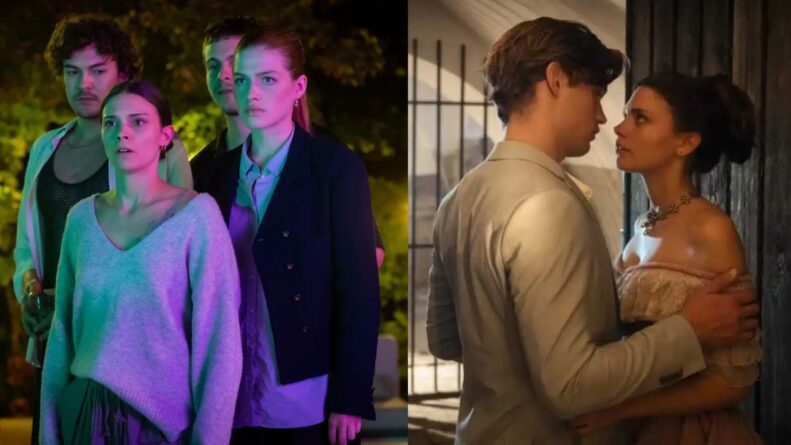
Adapted from Mona Kasten’s “Save Me” trilogy, German hit drama continues to follow Ruby Bell, a determined scholarship student at the prestigious Maxton Hall and James Beaufort, the affluent heir burdened by his family’s demands. Their lives conflict in all manner of ways. Yet fate and unforeseen perils keep bringing them together.
Prime Video will be releasing Episode 4 this Friday. It is following the show’s pattern on a weekly basis. New episodes are released every Friday until November 28. That’s the end of Season 2. The first three episodes are available to stream already worldwide, so if you’re not up to date yet, now’s the time.
Season 2 began with an emotional reset. Following the events of season one, Ruby is starting over working toward an Oxford dream, grappling with new academic challenges, and trying to offer up a little personal growth. James, by contrast, is at last dealing with his demons.

His therapy sessions have stripped away the guilt and grief caused by his family’s tragedy.
Meanwhile, Lydia’s surprise pregnancy has added a whole new dimension to the drama and Ophelia’s secret link to the Beauforts is emerging. Ember, Ruby’s sister, seems to be getting more focus. This could mean her storyline may get bigger this season.
Episode 4, appropriately named “Secrets,” is set to evoke some feelings and maybe even fan the flames of a once-again rumored romance. After their emotional exchanges in Episode 3, Ruby and James could be beginning to really move forward again. However, that’s far easier said than done in Maxton Hall, we know.
The next episode will also investigate further into Cordelia Beaufort’s will, a storyline that is expected to reveal some secrets pertaining to the Beaufort family wealth. Fans should brace for more Lydia/Professor Sutton drama, since the pregnant woman can’t decide whether or tell her pregnancy.

Another open question is the simmering animosity between Alistair and Kesh that has been bubbling since Season 1. Fans have been dying for closure on their arc and episode 4 just might give us some answers as to where their friendship or perhaps something more is headed.
Read More 👉 Michael B. Jordan and Ryan Coogler’s ‘Sinners’ Lands Historic Grammy Nods
If Season 1 was about discovery and heartbreak, Season 2 is about vindication. The writing is quicker, the emotions stronger and the chemistry between Harriet Herbig-Matten (Ruby) and Damian Hardung (James) is still electric. Directors Martin Schreier and Tarek Roehlinger add a cinematic flair to the narrative, infusing the lavish with the heartfelt.
And the new season delves into even bigger issues ambition, privilege and emotional restoration all set against the drama-ridden halls of Maxton Hall’s upper echelons.”
Maxton Hall continues to demonstrate that teen drama can be both genuinely moving and intelligent. Featuring a blend of romance, tension, and moral ambiguity, it’s no wonder this series has turned out to be one of Prime Video’s top European originals.
The fourth episode is shaping up to be a turning point, one with the potential to alter Ruby and James’s relationship forever. If love conquers guilt or secrets tear them apart, this is going to be a wild ride for the fans.
So, get the popcorn, sign into Prime Video, and prepare for another week at the scandalous Maxton Hall. Installment 4 releases 14 November 2025 and you won’t want to miss a second.
At FandomFans, we bring you the latest buzz from Hollywood’s creative underworld exploring how visionary directors, designers, and actors craft the worlds we love to escape into. Today, we dive deep into the drama and anticipation surrounding the next episode of Maxton Hall Season 2, keeping fans connected to every twist and turn.
Explore why Mystery TV Shows hook audiences early but struggle long-term. Learn how complex plots, high costs, and viewer fatigue lead to cancellations.

There is a particular kind of heartbreak unique to the viewer of television in the 21st century. It’s that feeling, typically experienced somewhere around the start of a show’s fourth season, when you begin to realize that the Mystery TV Shows you used to be a rabid fan of—one that spawned a million fan theories—is starting to feel like work.
Insiders in the industry refer to this as the “Fourth Season Curse.” In a contracting “Peak TV” era, with streaming behemoths slashing their libraries, the four-season mark is becoming a brutal natural selection point. This is especially true for “mystery box” shows: the high-concept series that trade in secrets and puzzles and delayed gratification.
But what is it that makes the fourth season the breaking point? And what can the rise and fall of hits like Westworld, Manifest and The Sinner tell us about the future of how we watch TV?
The “mystery box” format, made popular by J.J. Abrams, is an interesting narrative tool that involves curiosity and waiting. It hooks us with a “hook” (the mystery) and then gets us addicted to a “fix” (the answers). Still, creators often rack up what critics call “complexity debt”. Each time a writer reveals a new mystery without answering an old one, they are taking out a loan on the audience’s patience. By Season 4, the debt is usually too high. If the answers don’t live up to decades of fan speculation, the audience doesn’t just get bored—they get angry.
| Feature of Mystery Box | The Risk Factor |
| Information Withholding | Speculative fatigue; the “IQ test” feeling |
| Non-linear Storytelling | Narrative opacity and total viewer confusion |
| The “Gotcha” Twist | Prioritizing shock over character growth |
To understand how this curse manifests, we have to look at three very different shows that hit the same wall.
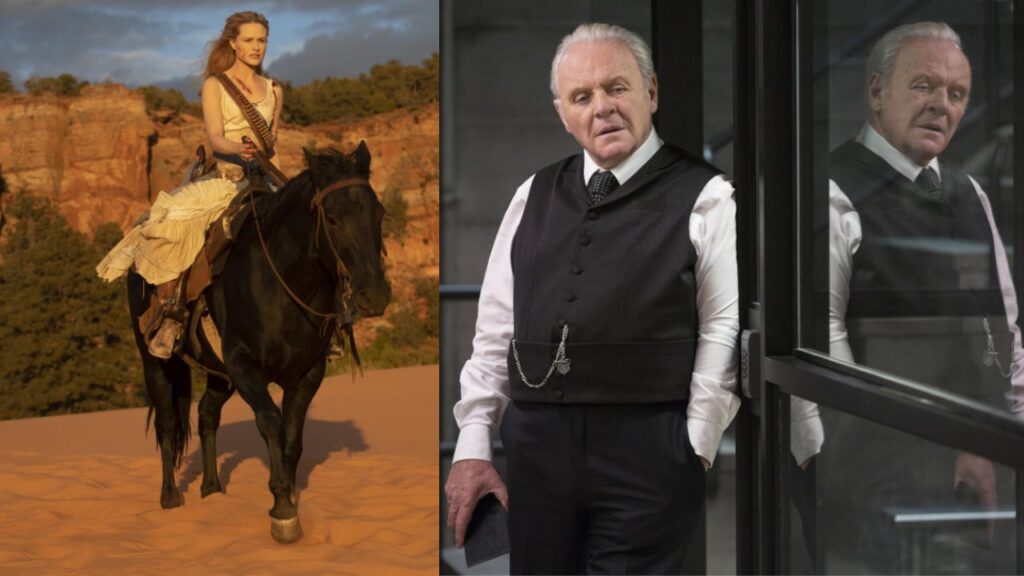
Westworld was scripted to be the next Game of Thrones. Instead it turned into a cautionary tale. The showrunners got so obsessed with, I would say, “outsmarting” the internet that the plot evolved into a dense forest of timelines and philosophical gobbledygook.

By season 4, it lost 81% of its viewers. It wasn’t just that it was confusing; it had lost its heart. When a show treats its characters like chess pieces in a logic puzzle, audiences eventually stop cheering for the players.
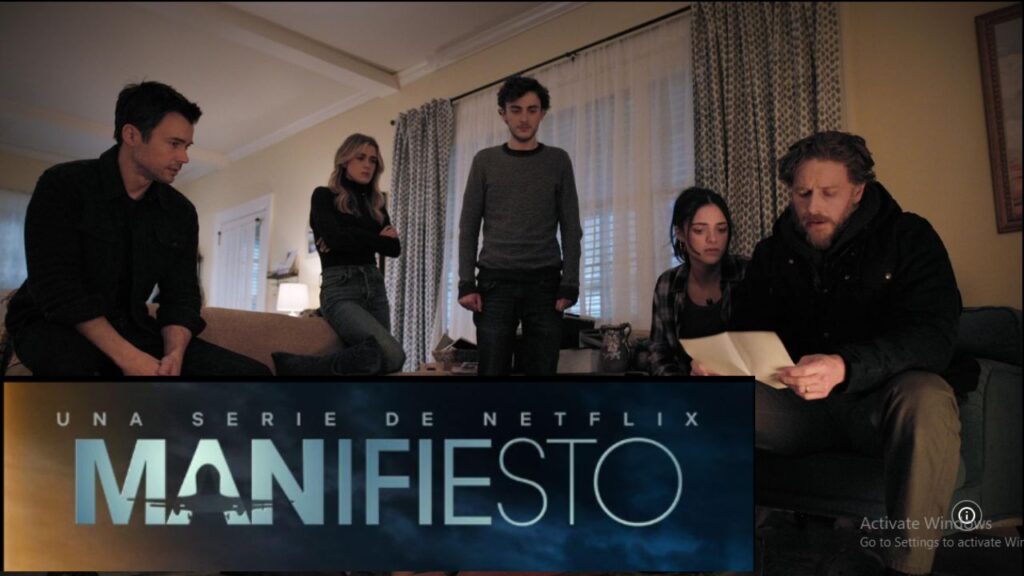
Manifest is the exception on both counts. The scripted series was canceled by NBC after three seasons when live ratings dropped but then got a second life on Netflix. Why? Because mystery boxes are wonderful to binge-watch, even when they don’t work as appointment viewing.

By compressing a planned six-season arc into a final, 20-episode fourth season, the showrunners had to cut all the fat and actually ratify. It demonstrated that a “forced ending” is in fact the best antidote to a narrative slump
In contrast to the rest, The Sinner was an anthology. Each season was a new “why-dunnit.” Yet, it still fell victim to the curse. This time the “curse” was financial.

As networks such as USA move away from scripted dramas and toward less expensive reality TV, mid-budget series—no matter how prestige they seem are the first to be cut.
The Fourth Season Curse isn’t simply the result of shoddy writing; it has to do with the profit motive. In 2025, a mid-tier drama is priced at $4 million to $6 million per episode.
Contract raises: By Season 4 the cast and crew are pricier.
Viewer Attrition: Audiences traditionally, well, went down every year.
The “New” Factor: What streamers are willing to pay for and find value in — is $50 million for a brand-new “hit,” not for continuing an aging series with a niche viewership.
Read More 👉 Percy Jackson Characters Upgradation Explained: Power, Trauma & Growth
If we want better TV, the creators need to alter how they make their boxes. The most durable shows – for example Breaking Bad or Succession are all character-centric. The “mystery” is just the backdrop; the “show” is the people.
Critics are now claiming “Magic Show” storytelling is superior. Rather than hide certain pieces of information (the Mystery Box), creators should disclose information and allow us to observe as characters react to the consequences. This makes for a sustainable emotional hook as opposed to a maddening intellectual one.
The age of the “ever-show” is ever-show is over. As budgets tighten and our attention spans splinter, the most successful shows of tomorrow will be those with a defined, limited scope. Ending is just as – it’s just as important to know when to end as it is to know how to begin.
Dive into the world of entertainment with Fandomfans, our goal is to deliver updates from movies, shows, and interviews.
Find out how Guy Gardner emerges as the emotional heart of James Gunn’s new DC Universe and redefines the Green Lantern mythos in Superman 2025. Read more...!!

The availability of James Gunn’s Superman in 2025 did more than just give us a new Man of Steel, it flung wide the door to a sprawling, “lived-in” universe. Eschewing the slow-burn origin narratives of yore, this new era dubbed Chapter 1: Gods and Monsters slaps us unmistakably into a reality where superheroes aren’t simply myths, but elements of the geopolitical and corporate realm.
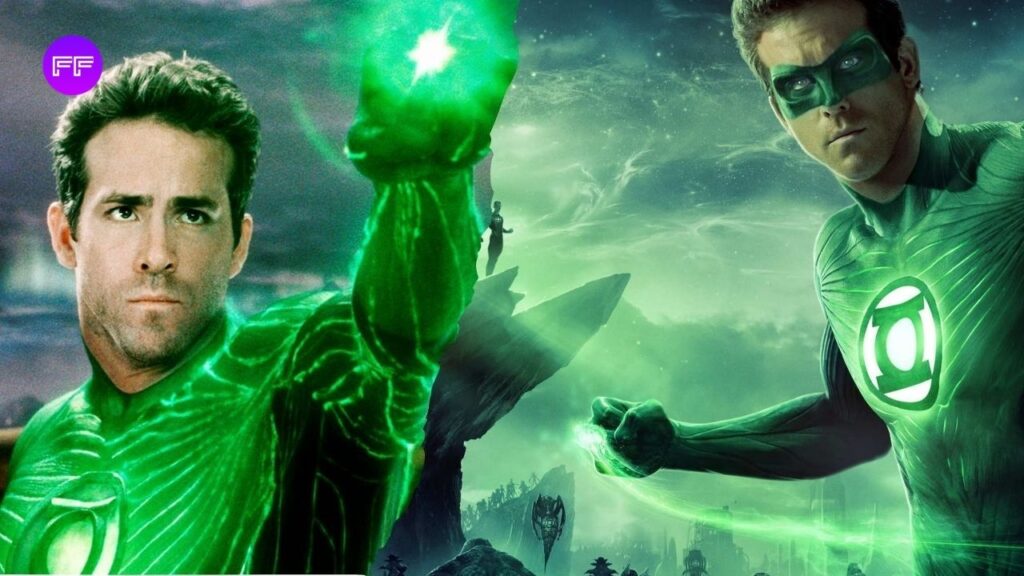
Making that interface between galactic and Earth-bound politics is a character who is the ideal entree into both: Guy Gardner, the Green Lantern. Played with a combination of arrogant charm and neurological instability by Nathan Fillion, Gardner’s inclusion in the film is transmedia genius. He’s not only a cameo, he is the ideological counterpoint to Superman and the connective tissue for the future of the DCU.
Superhero movies have eaten the same sorts of roles for years: the hero gets powers, the hero learns a lesson, and the hero puts on a suit in the last ten minutes. This is something with which Gunn’s Superman takes a particularly robust swing. David Corenswet’s Superman is already an established figure, and more crucially, he’s not the only one.
Instead of an exposition sequence explaining how these rings work, the movie establishes (through vet Guy Gardner) that “ring-slinging” Lantern is already up and running on Earth.
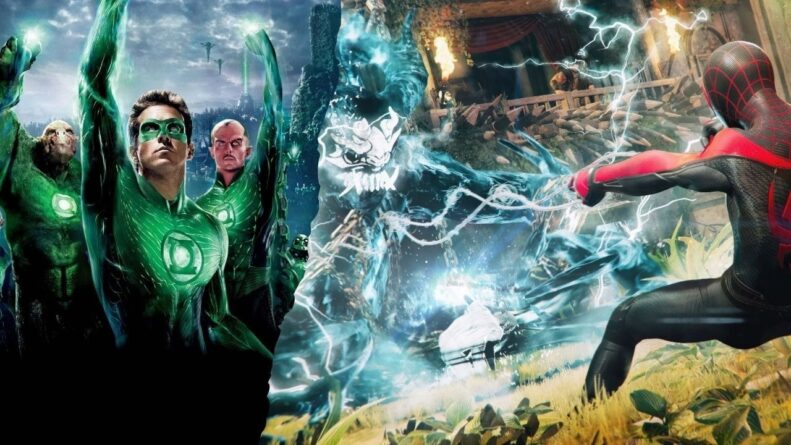
Equally, it’s allowed Green Lantern Corps to function as a kind of back-up law enforcement without becoming comic busy bodies.
Selecting Gardner instead of popular choices such as Hal Jordan or John Stewart was a strategic move. It keeps the “prestige” Lanterns available for the gritty, detective Lanterns series on HBO, and gives Superman a hero who can also stand as a powerful combatant and a source of friction. Gardner is the guy who has the most powerful weapon in the universe, but doesn’t have the social filter required to use it gracefully.
One of the most provocative topics of Gods and Monsters is the convergence of heroism and capitalism. In this dimension, there is no traditional Justice League, but rather the Justice Gang — a team financed and organized by billionaire industrialist Maxwell Lord through his company, LordTech.
Unlike Superman, who flies on the wings of altruism, the Justice Gang is a carefully curated PR machine. Their roster is as much about “brand alignment” as tactical superiority:
| Hero Identity | Corporate/Thematic Function |
| Green Lantern (Guy Gardner) | The Volatile Enforcer; provides “alien” legitimacy to a human corporation. |
| Mister Michael Terrific | The Genius; aligns with LordTech’s cutting-edge scientific branding. |
| Hawkgirl (Kendra Saunders) | The Aerial Combatant; provides tactical versatility and mythological ties. |
| Metamorpho—Rex | The Elemental; represents the boundaries of corporate-sponsored science. |
Guy Gardner’s cinematic appearance is a story in oppression. His suit prominently displays the “JL/I” logo which is a reference to the Justice League International comics but in this case it also symbolizes corporate ownership. Most notably, Gardner is seen wearing a jetpack or exoskeleton.
For a character whose ring lets him fly faster than the speed of light, this is a pretty glaring omission. It could be that LordTech requires the use of their hardware for “branding” purposes, or that Gardner’s use of the ring is being closely tracked and limited by his corporate masters.
To give Gardner some depth beyond just being a loudmouth, the DCU has drawn on a tragic part of his comic history: Traumatic Brain Injury (TBI).
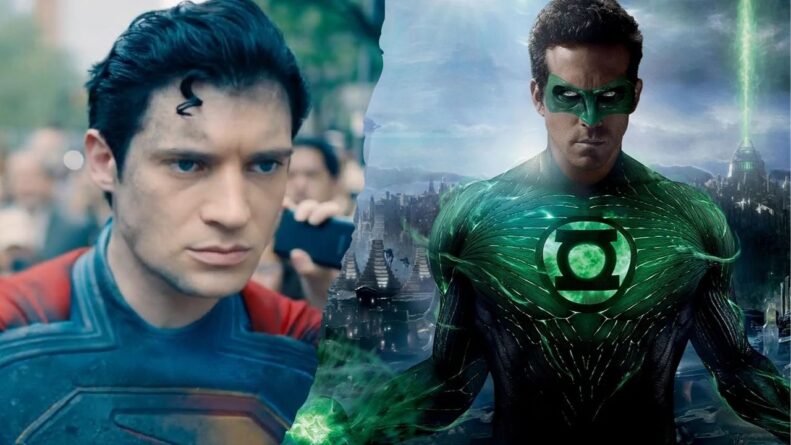
Nathan Fillion has said that his version of Guy Gardner was “flipped” after being hit by a metropolitan bus and falling into a coma. This brain damage removed his social filters and impulse control. It makes his arrogance not just a personality quirk but a clinical feature of his illness.
This makes him the ultimate contrast to Superman. While Clark Kent is the ideal of biological and moral perfection, Gardner is the gritty, broken human reality. A “Sophia Petrillo-esque” inclination to say what he’s really thinking means Lex is a potential PR catastrophe in heels — and a perfect pawn for Lex Luthor.
Luthor is tapping into Gardner’s abrasive, “local boy from Cincinnati” narrative to stoke xenophobia. Guy Gardner is, in Luthor’s telling, the “safe, human” face of the “alien, unpredictable” Superman.
The conflict of the 2025 Superman movie isn’t an alien invasion — it’s a territorial dispute between two fictional countries, Boravia and Jarhanpur. When Superman takes it upon himself to stop the killing, he breaks international law.
Gardner answers to two masters: the Guardians of the Universe (who preach neutrality) and LordTech (who fear liability). However, the cynical Guy Gardner’s shell is eventually broken when he witnesses Superman risk global condemnation to save lives. For him to disobey his corporate overlords and come join Superman in the mud is the heart of his emotional arc.
The DCU employs an “asynchronous timeline” much like Star Wars. So this is why in the new Lanterns title, Hal Jordan (Kyle Chandler) calls himself the “only human Lantern.”
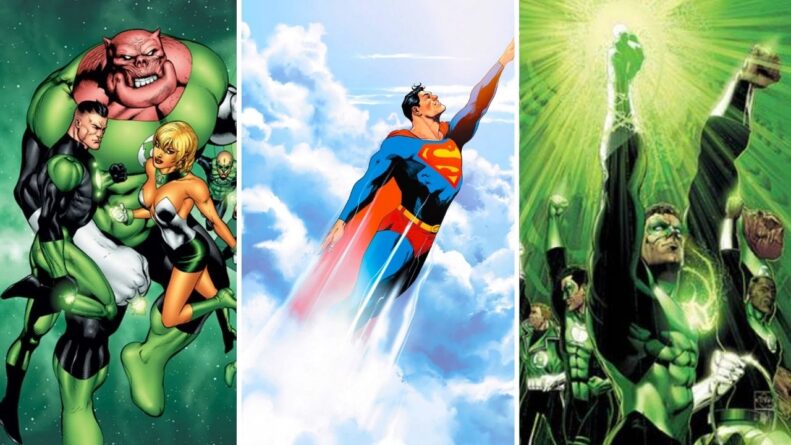
The Lanterns series is a prequel of sorts to Superman. It’s gritty, ‘True Detective’ style procedural where a younger Hal Jordan and rookie John Stewart team up to crack a terrestrial murder mystery that suggests a larger cosmic conspiracy.
This way, viewers can watch the development of the Green Lantern mythos — from Jordan and Stewart’s listen-to-your-color roots to the manic corporatized gamified era of Gardner.
Read More:- The Gosling Effect in Star Wars Starfighter – A New Era for Space Opera
Guy Gardner is the “powder keg” of the new DC Universe. He is a personification of the doubt, couldn’t-care-less attitude damage and crass commercialism of today’s world. By lining up Superman with a figure like Greer, Gunn is able to underscore why the Man of Steel is even necessary because it’s not just about nabbing the bruisers, but about encouraging the most fallen among us to remember their earliest vows.
Guy Gardner starts out as a corporate mascot with a short fuse but evolves through his interaction with Superman into a real hero. This integration means the Green Lantern mythos no longer sits as some space-only concept, but rather it has become a face that tells the human story in the DCU.
Fandomfans delivers entertainment updates from blockbusters movies, series, and amazing characters to you directly.