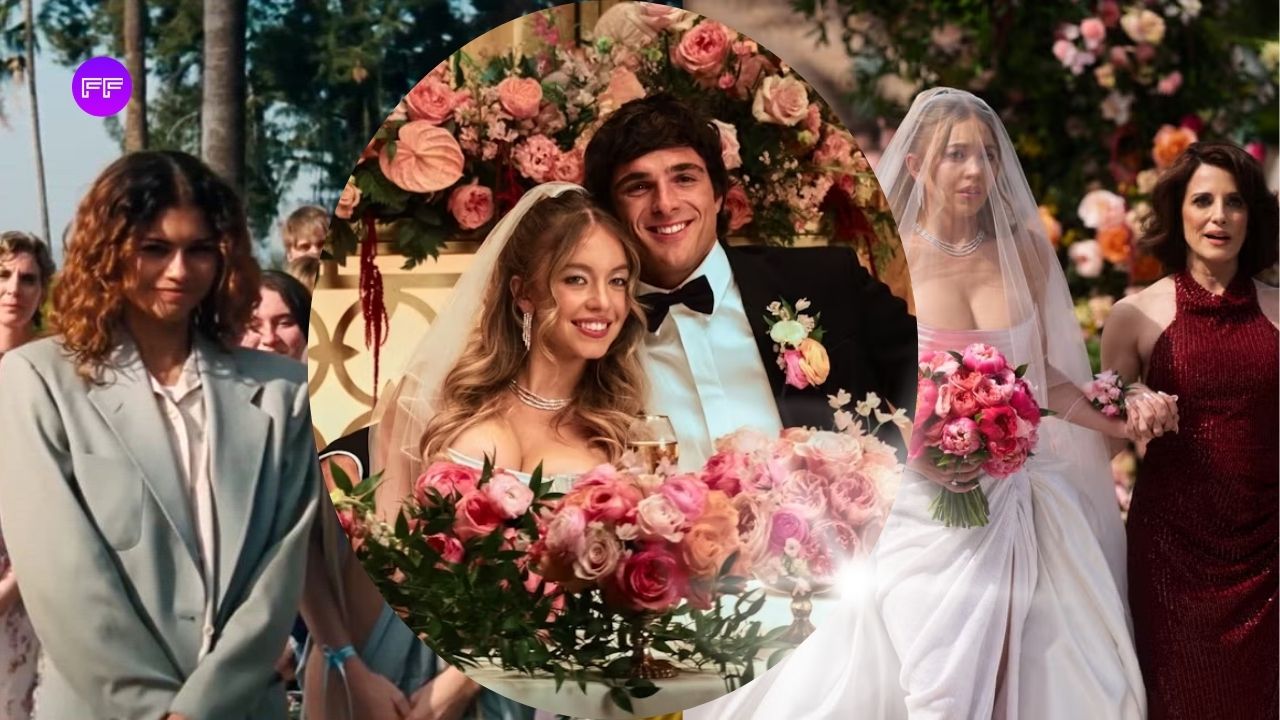
Euphoria Season 3 Episode 3 recap: Explore shocking turns, Rue’s peril, and Nate’s cruel destiny. Read the turning point of the episode “The Ballad of Paladin”.
Euphoria Season 3 Episode 3 “The Ballad of Paladin” is the type of episode where it feels like nothing is stable from the start and keeps getting worse. It’s a wedding episode, to be sure, but very quickly it gets a lot messier as it mixes the romantic with the tense and the violent, like only Euphoria can.
The series skip between timelines and story arcs, Jules’ past, Rue’s perilous detour, and a wedding that might as well have a giant “doomed” sign hanging above it, not only building tension, but flipping expectations at every turn. Rather than one big dramatic explosion, the episode has several smaller shocks that hit just as hard.
The ending is defined as just Euphoria type once again, even in moments like celebration are settled with brutality imagery which reaffirms that joy-filled moments aren’t without a price.
Cold Opening of Euphoria Season 3 Episode 3
Euphoria Season 3 Episode 3 starts not at the wedding location, not with Rue’s voiceover, but with Jules. Specifically, Jules of old in the four-year lapse between seasons two and three that the show keeps going back to with flashbacks.
We meet her at art school, sharing a cramped apartment that looks like it was made to house starving students. Enter her roommate, obviously more experienced in the ways of the world who introduces her to the concept of being a sugar baby. “It’s like dating, but you get paid.” And just like that, Jules is off.
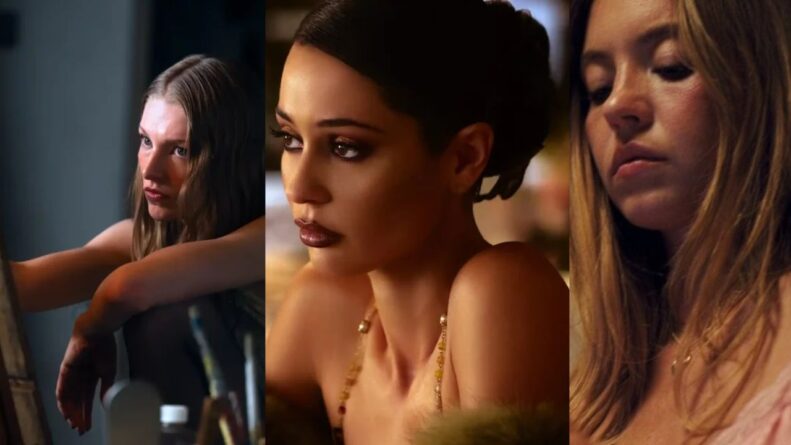
What follows is a series of first dates, and it’s classic Euphoria: beautifully strange, slightly unsettling, and shot like a fashion spread from an alternate dimension where everyone’s got very particular kinks. One man, a 48-year-old lawyer named Rick, simply wants to see Jules in nylons. That’s it. That’s the entire date. Euphoria definitely will not let you eat in peace.
But the most crucial figure Jules encounters in all this is Ellis — a plastic surgeon who treats her not as a companion but as a case study. The dynamic is disarming in a slow, creeping way. He at one point pulls out some Saran Wrap and honestly, you almost don’t want to know. On their first date, he tells her that his wife knows about his extracurricular activities.
“You take the best parts of a person and marry them. Hopefully, you can tolerate the worst,” he says.
The Wedding Day—And It’s Already Falling Apart
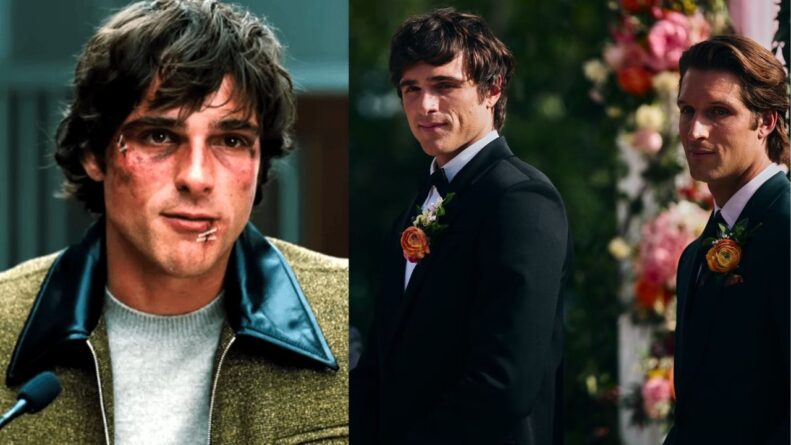
For the first time, we’re given a glimpse of Nate ahead of Cassie in her dress and it’s not a good look. He’s in the bathroom, crouched on the toilet, vomiting, attempting to calm himself with a paper bag. Just a bad hangover, a panic attack, or his body punishing him for the decisions he’s made?
But the message is clear: this is no mere nerves. Nate is coming apart at the seams, and there’s something about this day that just seems very, very off.
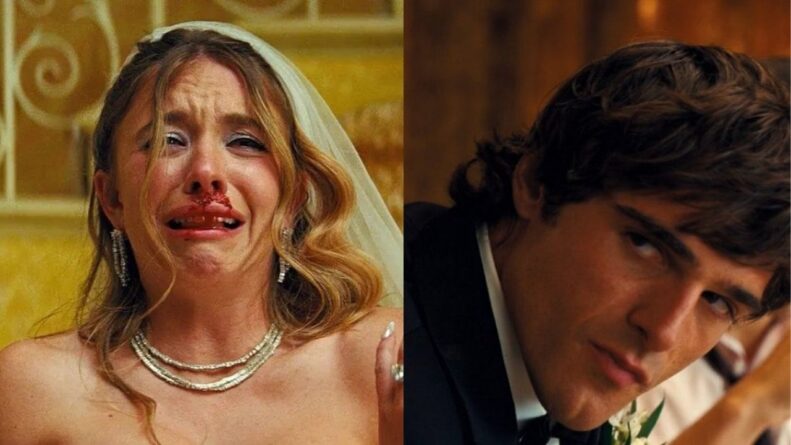
And then there’s Cassie, who manages to be dazzling and a few seconds from total emotional collapse simultaneously. She’s in a Wiederhoeft corset that is working overtime, and she’s telling Lexi — sweet, anxious Lexi in her Nana Jacqueline pink bridesmaid gown — that Nate didn’t come home the night before. Cassie’s eyes are already red. Her voice has that particular tremor that signals things are going to get really, really bad. But she smiles through it. Obviously.
The venue alone was stunning. Nate apparently dropped $50,000 on flowers — which, given that he’s currently being circled by a loan shark, is an insanely foolish financial decision, but also very on brand. There is an ice sculpture of the couple.
The flowers are everywhere. Natasha Newman-Thomas, the new costume designer, definitely went all out, as the costumes in this episode are absolutely amazing in that over-the-top Euphoria style that made the show so iconic in the first place.
Jules makes an appearance on Rue’s arm as her date in, maybe, the most see-through dress ever created, a frosty blue Acne Studios number from its spring 2023 collection. Her blonde wig is more than the cloth is covering. Nate’s mom looks at it, and says,
“I just can’t believe she had the nerve to show her face.”
Old Faces, New Tensions And a Bar Conversation That Hits Too Close
Euphoria Season 3 Episode 3 is basically a reunion of a high school group. The tension rises when they are all together in the same room with uncomfortable exchanges rather than huge conflict among them. While you keep thinking something will explode but when it finally does, it’s in the least expected place.
Then BB walks in pregnant and the energy immediately shifts. Her first step is to ask Maddy if she changed her number. It’s blunt, charged, and profoundly unsettling. “Awkward” is not even close to describing the silence that ensues.
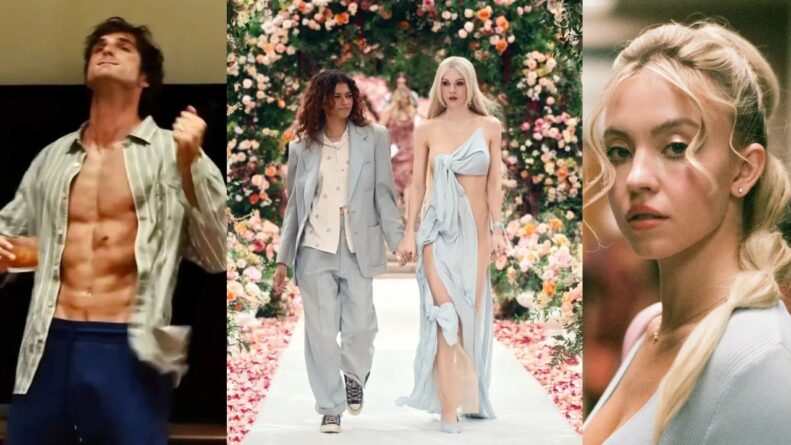
Now, Maddy is dressed in a way that violates the laws of physics and fabric adhesive and she’s doing that thing where she’s obviously in pain but she’s holding it together wonderfully. Lexi is silently observing the whole thing, as Lexi always is.
The most interesting moment in Euphoria Season 3 Episode 3 is between Jules and Cal—Nate’s father, who is still reeling from the fallout of last season. Following a sex crime perverted with someone right under 18, he took a plea deal and wound up on the sex offender registry. Now, he refers to it as a “modern scarlet letter,” which is saying a pretty heavy thing but Euphoria has never really pulled punches.
He also apologizes to Jules for taping their sex scene. His rationale? “I just wanted to jerk off to it.” Which is, in some odd way, both a confession and a non-apology. Classic Cal.
But here’s the fun part: from what Cal says, Jules figures out that the tape was never turned over to the police. So Nate must have gotten rid of it. It’s a long-standing frayed end from earlier seasons, and it is tied up here — perhaps a bit too neatly, sandwiched between champagne toasts and a loan shark yelling at someone at a wedding.
Naz Shows Up and Chaos Crashes the Party
Naz, a Russian loan shark, is the real disruptor of the Euphoria Season 3 Episode 3 who most certainly wasn’t invited, but comes anyway, because that’s exactly what people like him do. Middle of the reception, he finds Nate and loudly confronts him about the debt so that everyone knows how far in debt he is. And I mean it’s not small. A portion of that money, as we now know, was spent on a wedding — lobster on the tables and nearly $50,000 worth of flowers on show.
Events quickly get out of hand when the couple that Nate wiped out their children’s college fund overhears the confrontation. The wife doesn’t hold back, she faces Cassie and in a blunt manner tells Nate that he used her. It’s dirty, public and you can’t look away.
“Is everything okay?” Lexi asks, trying to cut through the chaos.
“Of course!” Cassie says, a tearful expression on her face that she doesn’t bother to hide. “It’s our wedding day.” “What a strange question to ask on the best day of my life.”
And it’s worth saying Sydney Sweeney has been fantastic this season. The strain of holding it together while she is so obviously breaking down, Cassie is really difficult to watch. She owns the character who wanted something so intensely that nothing can stop her now. On her wedding day, the world crawled in front of all who knew her as it meant to be the best day ever for her life.
Rue, Fez, and a Detour That Feels Like Trouble
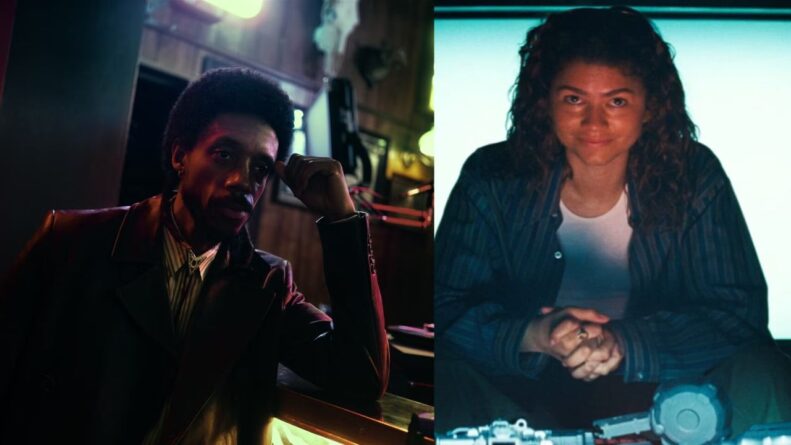
Just as the wedding gets into full throwback mode, Rue is whisked off on a completely different adventure. Bishop, one of Alamo’s boys hauls her off mid-function for a jaunt to Laurie’s. It’s a pickup, technically, but with Laurie, nothing is ever that straightforward. Rue has to leave Jules at the wedding to go, which adds yet another subtle source of tension to a day that is already on shaky ground.
Rue receives a phone call from Fez while he’s in jail on the road. We only get her side but that’s enough. Amid all the chaos, the pause feels somehow unexpectedly warm. Fez jokes about busting out using parkour, and Rue can’t help but smile, obviously just glad to hear his voice. It’s fast, almost ephemeral, but it hits and it reminds you what actually matters to her under all the noise.
The Laurie subplot Euphoria Season 3 Episode 3 is pulling some clever stuff. There’s an earlier scene with Laurie and some family members that strongly suggests they’re plotting to grab Rue when she makes an appearance. You’re watching the whole scene at Laurie’s with that threat hanging over you. And then, it doesn’t happen. Bishop poisons Laurie’s parrot — the titular Paladin as revenge for Laurie releasing a pig in one of Alamo’s strip clubs (yes, this is the show we’re watching).
A deal gets struck: Laurie’s product will be tested to ensure it does not have a lethal fentanyl amount. Everyone leaves. Paladin dies quietly, off camera, while Laurie falls asleep in front of the TV.
The subversion is effective. Levinson has this way of ratcheting up tension toward a certain explosion, and then he redirects it and here it somehow really works. But then Rue is stopped by the DEA as she’s coming home. So.
Finale Fallout: A Homecoming That Turns Horrific
After the wedding, after all the tears and the popping of champagne bottles and the public threats, Nate carries Cassie across the threshold of their new home. It’s sort of romantic for about three seconds. Then they see Naz and one of his cohorts waiting inside.
What happens next is brutal, and primarily seen through Cassie’s eyes. Nate is pummeled down the stairs, his head smashing against the cold iron hand rail. Cassie is pushed away, her nose broken. And this is where everyone is going to be talking about Nate having his pinky toe removed.
There’s an element that makes a film adaptation scene ridiculous, which is a weird thing to say about a man having part of his toe lopped off. But Cassie occupies the foreground of the frame the whole time as she complains about her day being ruined, and there’s something about the way that’s visually composed, the violence taking place behind her, her sorrow right up front that strays towards the ridiculous. Not that kind of way. In a very conscious Euphoria style.
It’s a beautiful scene. Genuinely so. And it ends with Cassie crying her eyes out, Nate bleeding, Maddy driving home on her own, and the Euphoria Season 3 Episode 3 abruptly cuts to Laurie’s deceased parrot.
Read More:- Star Wars: Maul – Shadow Lord Breakdown: The Betrayal That Will Destroy Maul’s Empire
Conclusion: Euphoria Season 3
“The Ballad of Paladin” is a far superior that has no business being what it is, among all its many plates spinning at once. That the Wedding. Jules’ backstory. Rue fetching drugs. The gang war. The parrot. It’s a continual divided focus, yet the show brilliantly holds your interest the whole time.
The cleverest thing it does is to upend expectations without playing dirty. You wait for the wedding to be disaster, the old patterns to explode right there on the banquet hall and now, the real trouble brews away from it all. Which seems more honest for some reason than if it had been a public scene.
Cassie and Nate are damaged human beings and never going to complete each other, and Euphoria Season 3 Episode 3 lets that be known. The flowers were beautiful, though. Let’s give credit where credit is due.
Now we only have to wait and see what happens when Laurie wakes up and discovers Paladin is dead. I’ve a feeling the DEA pulling Rue over is going to be the least of everybody’s problems.
Fandomfans deliver updates from series, movies, and tv shows, stay connected to get more updates.