Home > Movies > Leonardo DiCaprio and Christian Bale in ‘Heat 2’..
Leonardo DiCaprio and Christian Bale in ‘Heat 2’ is the Must-See Crime Epic of the Decade
Leonardo DiCaprio and Christian Bale reunite for Michael Mann's Heat 2, a $150 million crime epic that blends nostalgia, global plot, and powerhouse. Learn more
There has just been a seismic shift in the world of film — Michael Mann, the grandmaster of tightly orchestrated cinematic criminality, is finalizing the cast for his decades-in-the-making prequel Heat 2. And who more suited to inherit the cinematic obsession and cool criminal mantle than Leonardo DiCaprio and Christian Bale?
For cinephiles, this isn’t just A-list casting, it’s a monumental collision. After months of highly charged speculation, reports confirmed that the two Oscar-winning titans are circling the lead roles in Mann’s massive $150 million follow-up. With production known to start in 2026 and a confirmed theatrical release in 2027, the flame that Mann first ignited in 1995 is about to blaze once more, larger and more daring than ever.
The Ultimate Professional Collision
It’s a lovely bit of Meta-narrative tension to be informed of this pairing. The fans have waited eagerly for Bale and DiCaprio to join forces on the big screen, and this is the first time they will be doing so. Bale has frequently swapped parts with his nemesis, and rather than intersect their orbits have run famously parallel.
Bale himself once acknowledged this professional shadow with his signature humility, stating that he owes much of his career to DiCaprio’s selectivity.
“Look, to this day, everyone that gets a role only gets it because he’s ready for it,”
— Bale confessed.
He expressed this grateful feeling towards DiCaprio for these opportunities that gives him a chance to breakout his career, he appreciates openly by saying
“I mean, I can’t do what he does. He’s the best disguise in the business. I wouldn’t want the exposure that he has either. And he does it magnificently.”
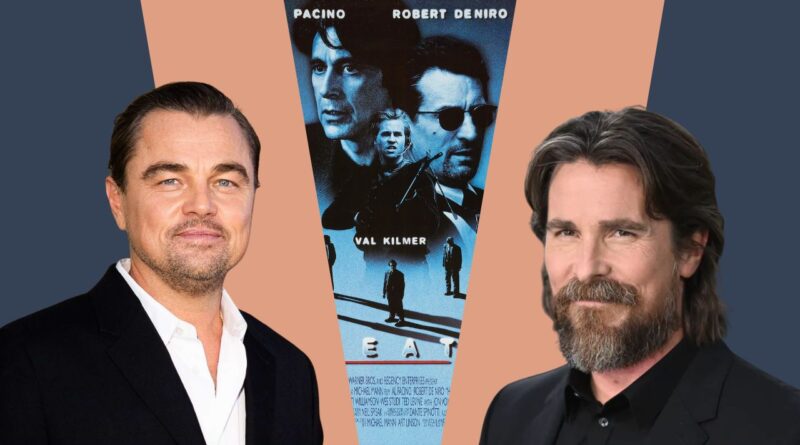
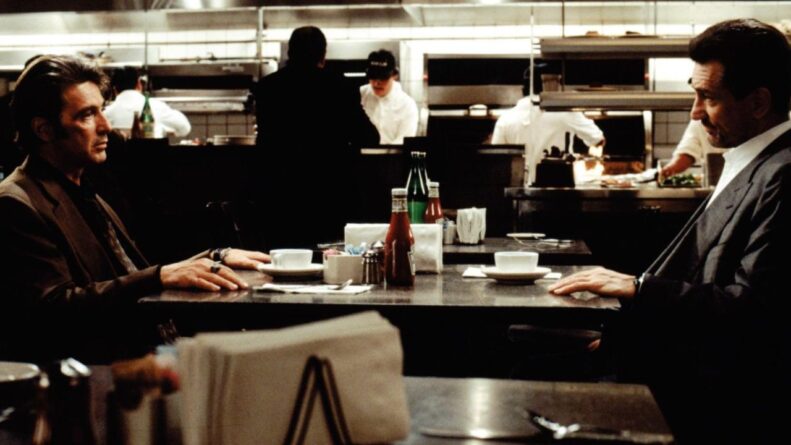
Now, their paths align in the worst possible way: going up against Val Kilmer and Al Pacino’s shadows. DiCaprio is widely reported to be in talks to play Chris Shiherlis, the surviving crew member originally played by Kilmer. Bale, reuniting with Mann after 2009’s Public Enemies , is the likely choice for Detective Vincent Hanna, the relentless cop originally portrayed by Pacino.
This casting ensures that the fundamental, high-stakes duel between the pursuer and the pursued, the very engine of the Heat universe is maintained by two actors capable of matching the original film’s intensity.
The Best Tribute to The Dark Knight
Why Bale’s presence in the is all the more poignant its connections to Heat and the contemporary superhero tale.
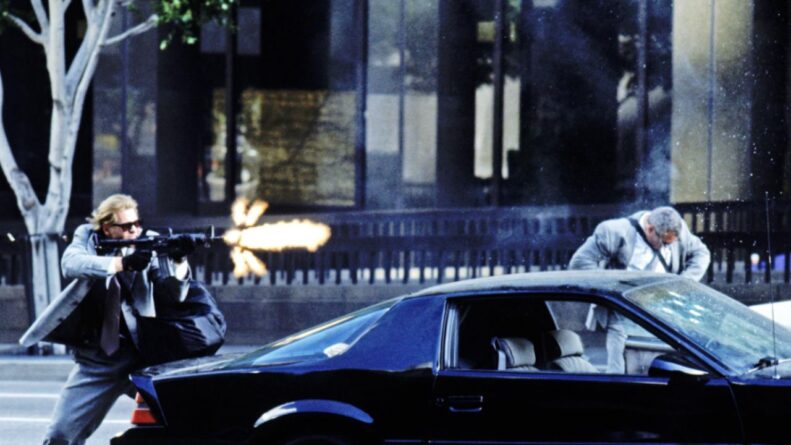
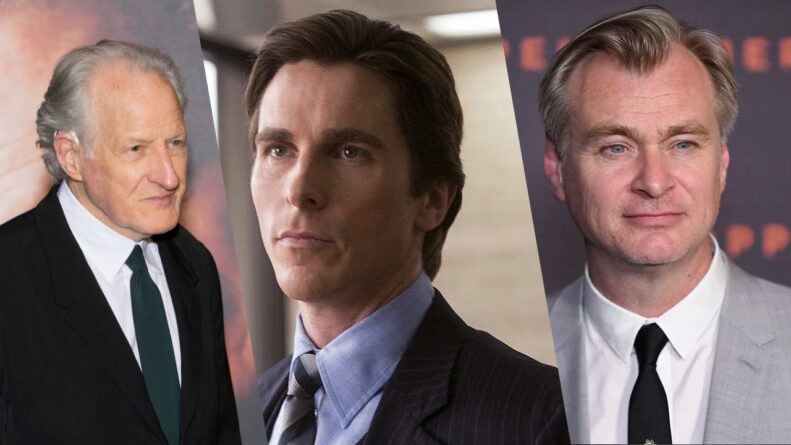
Christopher Nolan, who directed Bale in his career defining run as Batman has stated on numerous occasions, that the 1995 movie was a direct and critical influence on The Dark Knight trilogy. The precise choreography of the beginning bank robbery in The Dark Knight is Nolan’s most overt nod to Mann’s tour de force. What’s more, Nolan even cast actor William Fichtner, from the original Heat, in that iconic opening scene, purposefully cementing the illusion.
Michael Mann in the left and Christopher Nolan in the right along with Christian Bale in the center
For Christian Bale to go from the obsessive, driven character (Batman) who was conceptually inspired by the Heat archetypes, to playing Detective Vincent Hanna himself, well, that’s pretty much the ultimate fulfillment of that cinematic debt. It’s a resounding endorsement of Heat’s place at the genesis of a high tension, hyper-real crime cinema and establishes Bale as the iconic actor to play this archetype for a newer generation.
The complexity of the story justifies the huge financial outlay. Heat 2 is adapted from Mann and Gardiner’s 2022 novel and functions as a non-linear narrative, demanding an enormous geographical scope. Reports suggests, It moves the audience from 1988 Chicago (including the backstories of the crew and Hanna’s outset as a detective) directly into the post-1995 fallout, tilting toward Shiherlis as he exits Los Angeles and establishes in transnational crime in global locales such as Paraguay and possibly Singapore.
This need to convincingly realize two distinct time periods and multiple continents is why Mann was uncompromising on the scale, causing the project to shift from Warner Bros. to Amazon MGM/United Artists.
Crucially, the time-jumping plot is also why Mann must deploy cutting-edge, if controversial, technology. Since Bale and DiCaprio will be required to play their characters in the 1988 prequel timeline, where they are decades younger, digital de-aging is unavoidable.
“that such technology may be very important in the next film” ,
— Mann said
He defends the decision by insisting he only uses technology when there is a “dramatic need or aesthetic need for it”. In this case, the need is purely structural—to maintain continuity and prestige casting across the film’s vast chronological scope.
With Mann adapting his own material, and two cinematic heavyweights finally facing off, Heat 2 is shaping up to be far more than just a sequel. According to Collider, It is an essential, aspirational revision of one of the best crime epics ever created. The bar is set for high stakes both in front of and behind the cameras.
Conclusion
Heat 2 isn’t just the next long overdue sequel — it’s a can’t-miss cultural event. Mann directing once more to bring one of the finest crime sagas ever to the screen, and Leonardo DiCaprio and Christian Bale for the first time on screen together, the film is a melding of classic and contemporary cinema.
Mann’s sprawling global story, the hearts and heartbreaks of Heat (1995), and the nod it gives to today’s cinematic landscape means this movie will dictate a new way a crime saga can play-out. As production draws near and expectations continue to rise, the one certainty is: Heat 2 will be the film battle of the year, mixing nostalgia, reinvention, and powerhouse performances into a crime drama that will leave audiences breathless.
Welcome to Fandomfans — your source for the latest buzz from Hollywood’s creative underworld. We break down the stories, trends, and creative decisions shaping cinema today. Here we explore the buzz behind Leonardo DiCaprio and Christian Bale’s first production together.
Alpana
Articles Published :
156
Alpana is Fandomfans Senior Editor across all genres of entertainment. She evolved in the media industry since a very long time, she manages the content strategy and editing of all the blogs. Her focus on story development, review analysis, and research is well-equipped that ensures every article meets the standards of accuracy and depth.
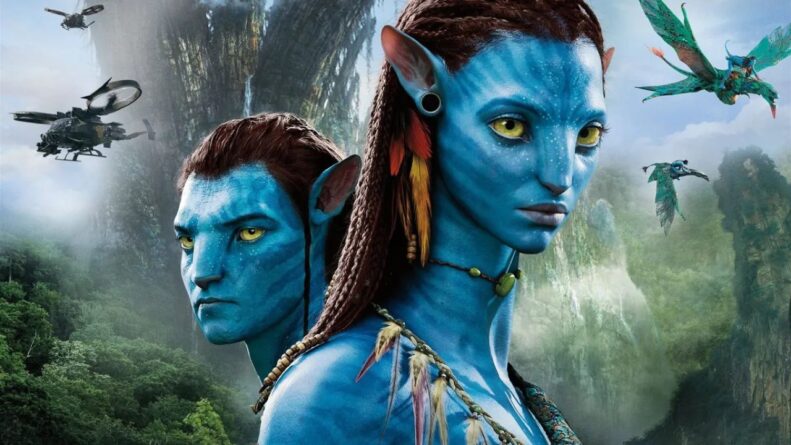
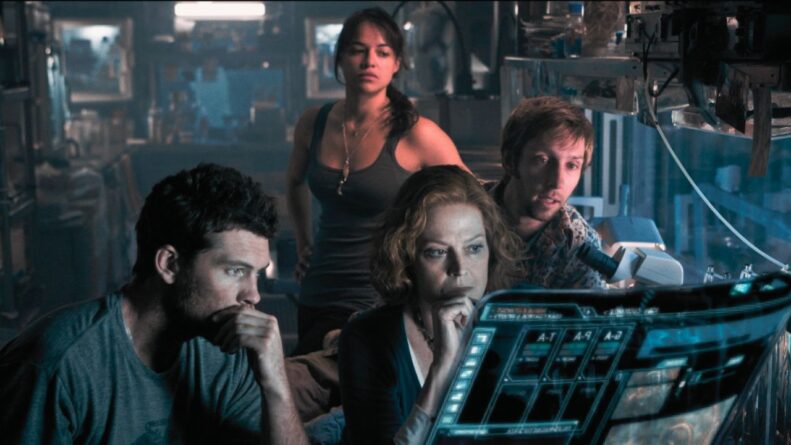
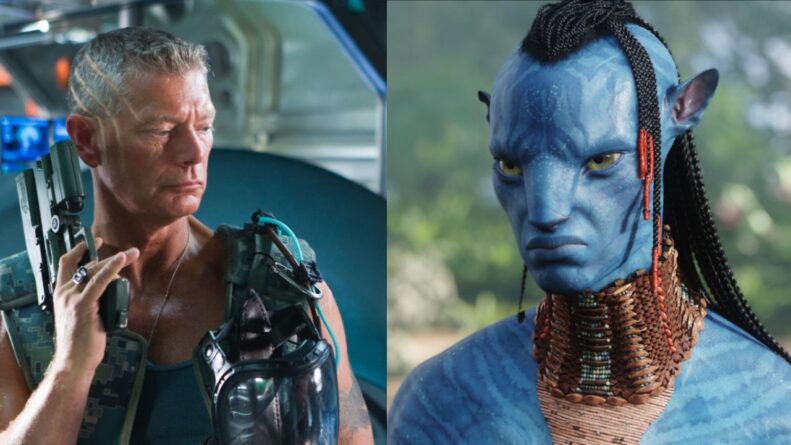
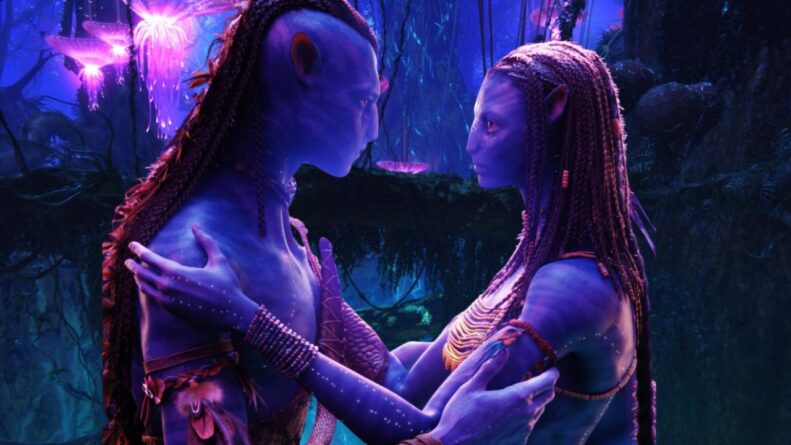
Avatar: Fire and Ash Review: Becoming the Lowest Rating Film of The Franchise
Avatar: Fire and Ash review explores James Cameron’s bold visuals, divisive story, critical backlash, and why it’s the lowest-rated film in the franchise.
The release of Avatar: Fire and Ash is an intriguing if somewhat chaotic, chapter in the career of James Cameron. Opening in theaters onDecember 19, 2025, the film is in an odd place: it’s both the most visually audacious entry in the series and the most critically divisive.
Although the technological crowd-pleasing remains unmatched, the “Pandora fatigue” some warned about seems to be setting in. The franchise is, for the first time, confronting the prospect of diminishing returns – not necessarily at the box office, but with the critics, who are starting to wonder, “Is spectacle enough?”
A High-Stakes Strategy
James Cameron isn’t merely making a movie, he’s defending an empire. With a mind-boggling $400 million budget, the film has to do more than just “well” — it has to dominate.
Premium Format Dominance: The film is designed for IMAX 3D and Dolby Cinema. In a streaming world, Cameron is betting everything on the ‘theatrical event,’ recouping sky-high production costs with now-higher ticket prices.
The Marvel Synergy: The cynical-looking (but actually rather smart) marketing move that Disney is rotating four different trailers for Avengers: Doomsday exclusively with Fire and Ash screenings. It’s a transparent play to encourage repeat viewings by exploiting the MCU’s “completionist” fanbase.
The Visuals: From Lush Jungles to Brutalist Ash
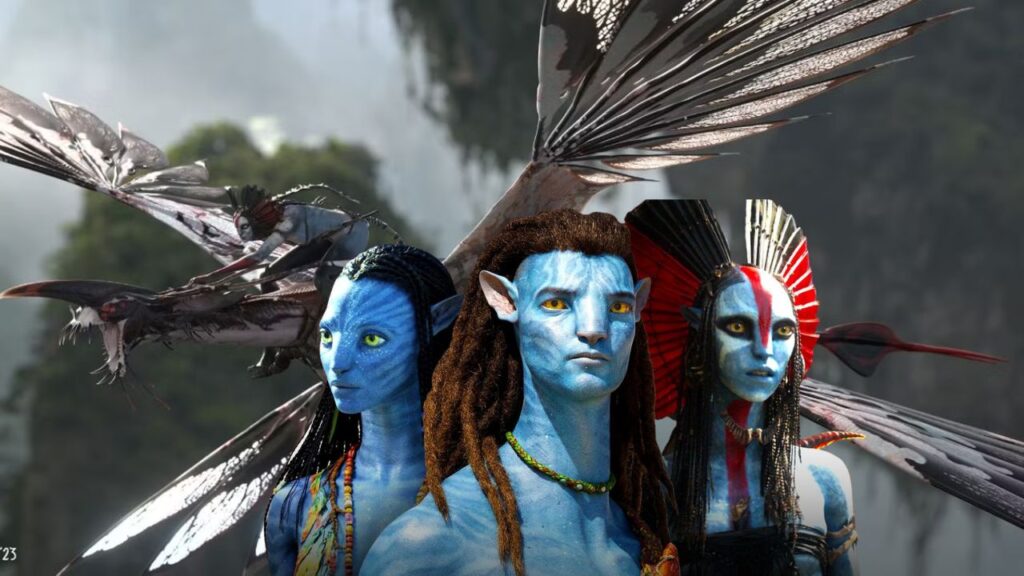
If the first Avatar was a dream and the second was a dive, Fire and Ash is a scorched-earth reality check. With the introduction of the Mangkwan (Ash People) the look shifts from bioluminescent wonder to something much more “brutalist.”
Image Credit: Fandomfans
The Ash Biome: The conjugated neons are gone. Rather, smoke-soaked oranges and greys are layered over rugged volcanic stone.
The Design: The Ash People are a spiritual defeat. Their buildings and “soot-stained” clothing imply a society that has distanced itself from the peaceful ways of Eywa and embraced the industrial and hostile.
The Critical Schism: Immersion vs. Innovation
The reception to Fire and Ash has been polarizing. It is now Cameron’s lowest rated film on aggregators, trending at a 61 on Metacritic.
The Spectacle Faction:Reviewers from such publications as Empire are enamored with the movie, calling it a “sensory feast” and the most “nakedly emotional” film yet. They consider it a film of both grief and world-making.
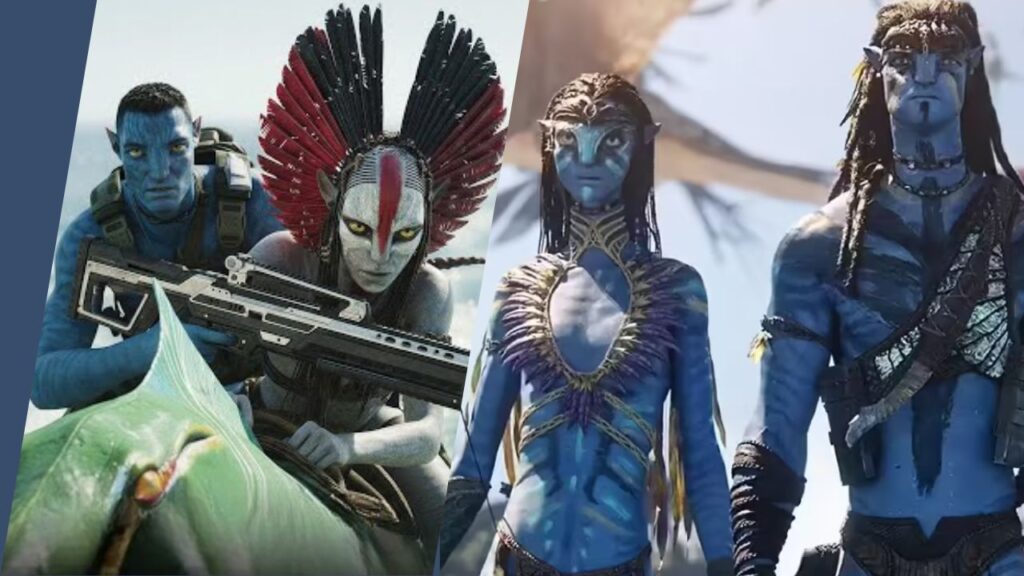
Image Credit: Fandomfans
The Redundancy Faction: But also savage critics like The Guardian are a different story. The main gripe? It’s too much of a rip off of The Way of Water. The “run off to a new tribe, pick up their customs, fight a final fight” pattern is beginning to look like a plot template, rather than a story.
Narrative Risks and Character Hurdles
The storytelling framework of the film’s seems to try and reject then repeat the “noble savage” cone tropes, by having a Na’vi antagonist: Varang (Oona Chaplin), who leads his own group of hunters who persecute the people of Pandora. Her performance is universally praised as the film’s best — a “witchy,” feral ruler who negotiates a dark pact with Quaritch.
But the movie still has to grapple with “the Spider problem.” The persona of Miles Spider Socorro is still a source of contention. Many consider his arc to be underwritten and the romantic tension that develops between him and Kiri (Sigourney Weaver) has been noted as “creepy” as the latter is quite a few years older and is an alien in the show.
Avatar: The Fire and Ash is a huge paradox. It’s a movie about environmental conservation that uses up more computer power than the equivalent of thousands of cars. It’s a story that seems to be stuck in the past, told through technology from the future.
Whether this franchise “middle child” can carry the weight for Avatar 4 and 5 is yet to be seen. But this much is clear: If a James Cameron movie turns out to be “formulaic,” it’s still far more ambitious than 90 percent of what gets made.
Fandomfans provide you with the latest updates on your favorite franchise and overall reviews conclusion.
Mariyam
Articles Published :
76
Mariyam Khan is Fandomfans Content Writer and providing reports and reviews on Movie Celebrities, and Superheroes particularly Marvel & DC. She is covering across multiple genres from more than 4+ years, experience in delivering the timely updates.
Avatar Trilogy Changed Cinema: Each Avatar Film Redefined Modern Blockbusters
Learn how James Cameron's Avatar trilogy transformed blockbuster cinema through groundbreaking technology, emotional storytelling, and franchise evolution.
There are few film franchises that work on the kind of timescale James Cameron likes to work on. Hollywood rushes to quickly churn out sequels, spin-offs and streaming extensions, the Avatar saga moves at a geological pace — slow, meditative, technologically transformative every time it arrives. With Avatar (2009), Avatar: The Way of Water (2022) and the newly released Avatar: Fire and Ash (2025), Cameron hasn’t simply made movies; he’s built cinematic milestones that push the boundaries of what is possible with each return.
What makes these films so interesting to assess is that none of the entry is “just” a sequel — they’re landmarks —- technical, narrative, commercial and even cultural. And while the first Avatar transformed global exhibition forever and the second perfected underwater storytelling, early indications are that Fire and Ash may well be the most aesthetically complete and emotionally resilient installment yet.
Let’s analyze how this legendary trilogy has progressed.
Avatar (2009): First Movie of The Different World
Avatar came out when cinema was about a different planet. 3D showings were scarce, digital projection was erratic, and a troupe of performance-captured aliens conveying real emotion seemed like far-off sci-fi. Cameron sat on the idea for more than a decade while waiting for technology to catch up and then invented the technology.
Image Credit: IMDb
A Technological Shockwave
The Fusion Camera System, full CGI real-time environments, and microexpression capture were not merely improvements, they were revolutions. Critics weren’t just reviewing the movie, they were reviewing the experience. Audiences were going to be able to walk into theaters and walk on to Pandora.
$2.92 billion worldwide, making it the highest-grossing film of all time.
An international release of 3D screens will follow.
A cultural phenomenon so powerful it caused the actual Earth to experience “Post-Avatar Depression” because Pandora seemed more alive than.
Image Credit: Fandomfans
Perfectly Executed Simple Storyline
Cameron deliberately employed a classical story structure, with clear stakes, emotional accessibility and mythic hero’s journey elements. It’s been criticized the screenplay for being predictable or pandering to “white savior” clichés, but it maintains that the film’s brilliance resides in its simplicity. You learn Pandora the way Jake learns it, which causes a rare emotional convergence between audience and protagonist.
Surprisingly, no cinematic “first contact” sequence has matched the wonder of that inaugural flight over the floating mountains.
Avatar: The Way of Water : Flowing With Reinvention
Now, 13 years on and many were asking if Avatar still mattered. Marvel was dominating the box office, streaming was messing with everything, and 3D was just a gimmick. Cameron defied every skepticism the way he always does: by reinventing cinema again.
Underwater Performance Capture: A New Frontier
From authentic underwater motion capture to sophisticated fluid dynamics, Cameron cracked one of the toughest problems in CGI: actual water. The visual result was stunning—critics described it as “hyper-real,” and audiences loved the immersion.
Image Credit: Fandomfans
A More Mature, Family-Driven Story
While the first movie was about discovery, the sequel was about consequence. Jake and Neytiri were no longer warriors—they were parents. Their children’s story arcs, particularly Lo’ak’s connection to Payakan, infused the narrative with emotional resonance that was absent from the first chapter.
Reviews were divided over the film’s running time and repetitive capture-rescue formula, but it was received with far greater enthusiasm by audiences, who bestowed a 90% audience score, even higher than the original.
Financially, the film made $2.32 billion, cementing its position as the third highest-grossing movie of all time.
Avatar: Fire and Ash (2025): The Beginning of the Saga’s Dark Age
Initial impressions of Fire and Ash indicate something that rarely occurs in franchise filmmaking: the third movie may be the best one.
A Bold Narrative Shift
The advent of the Ash People, a Na’vi clan forged by disaster and spiritually disconnected from Eywa, represents the largest transformation the franchise has ever undergone. Their leader, Varang, portrayed by Oona Chaplin, comes into alignment with the RDA not for avarice but for grief and fury.
For the first time, Cameron’ s realm has a crisis of conscience within the Na’vi, which responds to a nagging criticism that Pandora’s politics were too clear-cut. Echoing comparisons include this tonal turn being similar to The Empire Strikes Back — darker, more complex and emotionally heavier.
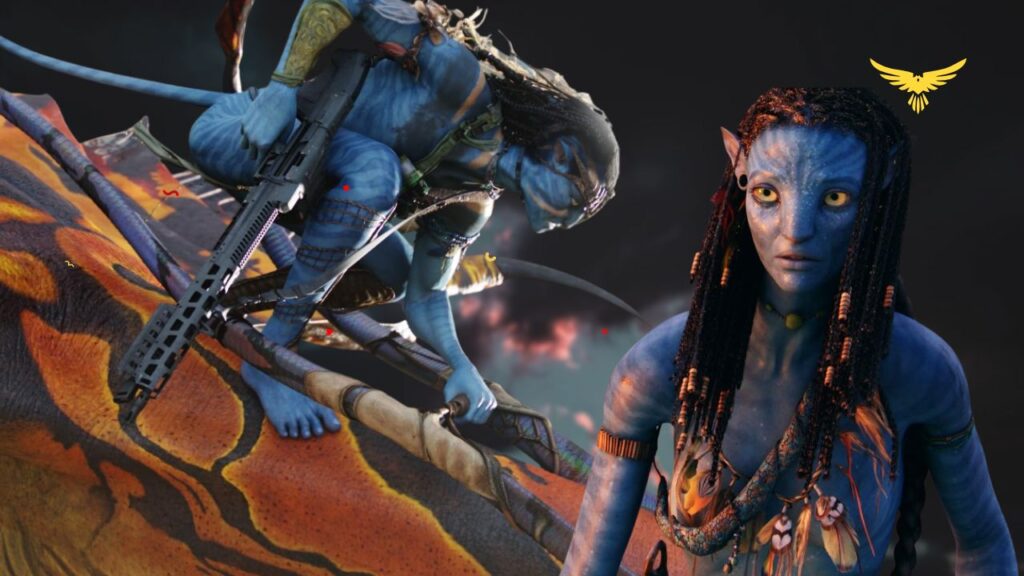
Image Credit: Fandomfans
Aesthetic and Technical Leap
If The Way of Water achieved fluidity on rendering, then Fire and Ash is certainly on its way to mastering volatility are fire, smoke, ash, and ruin. New fire simulations and improved HFR transitions deliver a more atmospheric, perilous Pandora as never before.
For the innovations: Avatar (2009) still stands alone.
For technical perfection, the crown is the Way of Water (2022).
For story and emotional depth: Fire and Ash (2025) looks poised to take the top spot.
Should Fire and Ash live up to its promise, it could be the movie that at last brings critics and fans together — delivering not only beauty and spectacle, but moral intricacy and a shattering emotional pay-off befitting a saga this ambitious.
The Avatar saga isn’t merely a franchise—it’s a cinematic era that extends with each generation of technology and storytelling. Avatar (2009) revolutionised the way the world watches movies and The Way of Water pushed emotion and technical refinement to new heights, Avatar: Fire and Ash is set to become the most ambitious chapter in the trilogy.
Featuring darker themes, complex Na’vi politics, and revolutionary fire simulation, the third may be the one that finally brings critics, fans, and industry analysts into lockstep agreement — Cameron’s slow-burn storytelling was always driving here. If early reviews are anything to go by, Fire and Ash will not only reshape Pandora, but also redefine blockbuster filmmaking itself.
The aim of fandomfansis to help readers make sense of not only the movies they watch but the shifting power structures in strategies that will dictate the future of the movie industry.
Babita
Articles Published :
25
Babita is Fandomfans Editor, experience in managing content. Her focus in general movies and web series. She is having a deep interest in TV shows and 90s movies - particularly Lord of the Rings, Harry Potter, & Rom-Com. Babita also covers psychological thrillers and major releases in current time and concern with deep interest in them.