Presumed Innocent: The Legal Thriller Taking Over Apple TV+
Presumed Innocent is a gripping Apple TV+ legal thriller starring Jake Gyllenhaal. Read the full review, plot details, cast info, and season 2 updates.
Published: December 21, 2025, 6:07 am

Presumed Innocent is a gripping Apple TV+ legal thriller starring Jake Gyllenhaal. Read the full review, plot details, cast info, and season 2 updates.
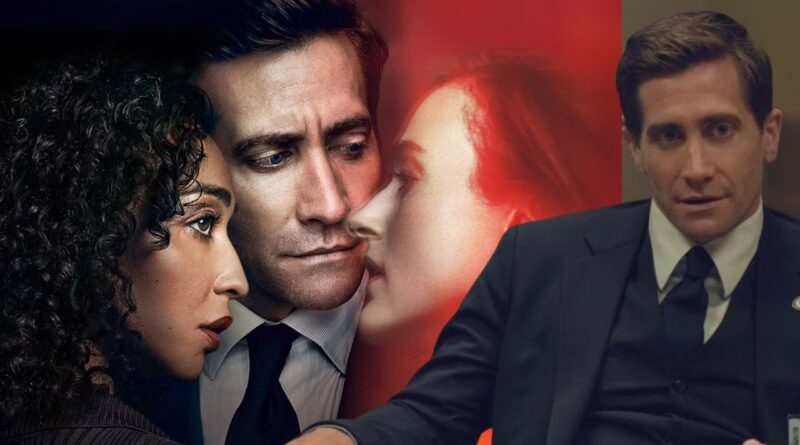
Presumed Innocent has solidified its place as one of the best legal thrillers of 2024, and if you haven’t dived into this tense series on Apple TV+ yet, it’s high time you discovered what all the buzz is about. This reworked version of Scott Turow’s seminal 1987 novel adds new urgency to the screen with Jake Gyllenhaal at the head of a superb ensemble through a whodunit that will keep you guessing until the last.
The narrative revolves around Rusty Sabich, an intelligent chief deputy prosecutor in Chicago who is caught in the worst possible trap when his colleague and ex-partner, Carolyn Polhemus, is savagely killed. Adding to the tragedy is the fact that Rusty is tasked with investigating her death—a jaw-dropping conflict of interest that quickly goes haywire. When his boss is successful election-wise and replaced with Nico Della Guardia, it’s a whole different ballgame. Rusty is taken off the case, and worse, he’s charged with the crime he was definitely doing it.
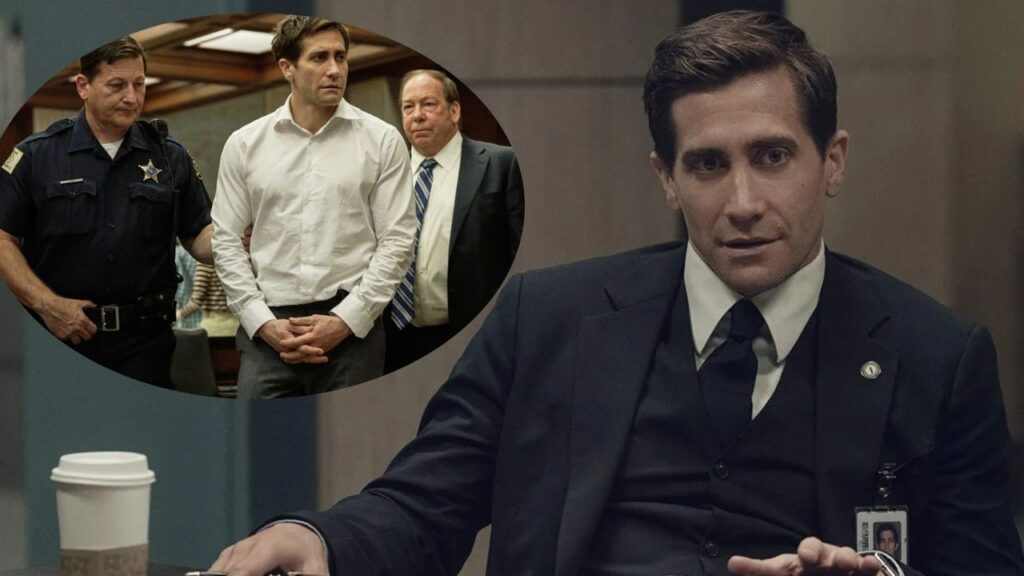
It’s a trial on steroids and at its core is obsession, betrayal, politics and the very nature of justice itself. The series expertly drops new leads and potential suspects in just about every episode, causing viewers to go through several iterations of who might have actually killed Carolyn.
Jake Gyllenhaal brings that intense presence to his new role as Rusty Sabich, giving a performance that critic after critic is describing as “endlessly watchable” and “stellar.” In contrast to Harrison Ford’s more sympathetic interpretation in the 1990 film version, Gyllenhaal’s Rusty is colder, more ambitious, and at times terrifyingly obsessive.
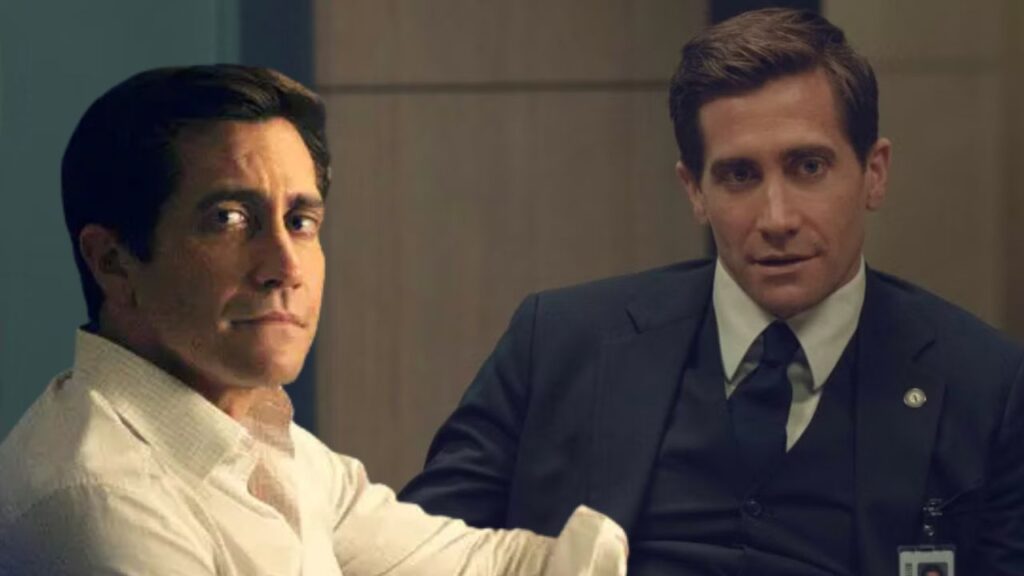
He’s a guy going through a separation, and balancing his family life, his legal defense, and his frantic need to hold on to some semblance of control — as the world is falling apart around him. That subtle play adds so much to the character and makes him a very interesting character to watch even when he’s being extremely unlikeable.
The series has an exceptional cast that makes each moment memorable. Barbara, Rusty’s wife (Ruth Negga), whose heartbreaking performances encompass the devastation of betrayal and the strength of a family unit. Peter Sarsgaard is thoroughly chilling as Tommy Molto the zealous prosecutor hellbent on nailing Rusty and Bill Camp infuses Raymond Horgan, Rusty’s ex-boss who turns unexpectedly into his staunch ally, with gravitas and nuance. The secondary cast are consistently outstanding across all eight episodes, delivering multi-faceted characters who come across as authentic and driven.
Read More 👉 Johnny Depp Returns to Hollywood With a Dark Gothic Comeback
What separates Presumed Innocent from the run-of-the-mill courtroom dramas is the speed and narrative design. According to THR, The eight-episode structure is ideal—each episode ratchets tension in a measured way while tossing new complications your way that challenge your assumptions. There are no time-wasting secondary plots in the series – every single scene works towards this bigger mystery. The trial form which the final episodes are virtually taken up with is indeed gripping, and unexpectedly unpredictable.

The series at times balances the courtroom drama with private family moments that reveal what Rusty and his family members have at stake. These quieter moments help make the legal fights feel truly consequential as opposed to simply procedural.
The first season is set to consist of eight episodes, which will be released weekly on Apple TV+ as of June 12, 2024, with the season finale on July 24. The ending is a shocking reveal that will have you reeling and instantly rewinding key moments to piece it all apart together.
Presumed Innocent will return for a second season on Apple TV+, the streamer’s hit legal thriller has been renewed by Apple TV+. However instead of continuing with Rusty’s story the series is now revolving into an anthology format where each season focuses on a different case and set of characters, as mentioned in Deadline.”That’s what keeps the show fresh and yet captures that legal thriller feel that made the first season so addictive.”
“Presumed Innocent” is a must-see for those who adore legal drama, character-learned narratives or just killer television in any format. It shows that the legal thriller genre still can be when crafted with the sort of excellence and lust for ambition as this one. Watch Presumed Innocent now on Apple TV+ and get ready to be thoroughly entertained.
Fandomfans is a platform where you can find every detail on legal thrillers story based Presumed Innocent series updates. Stay connected for all movie & series updates.

Explore Robin Hood Season 1 biggest twists, from Marian’s vigilante secret to political conspiracies that reshaped Sherwood forever.
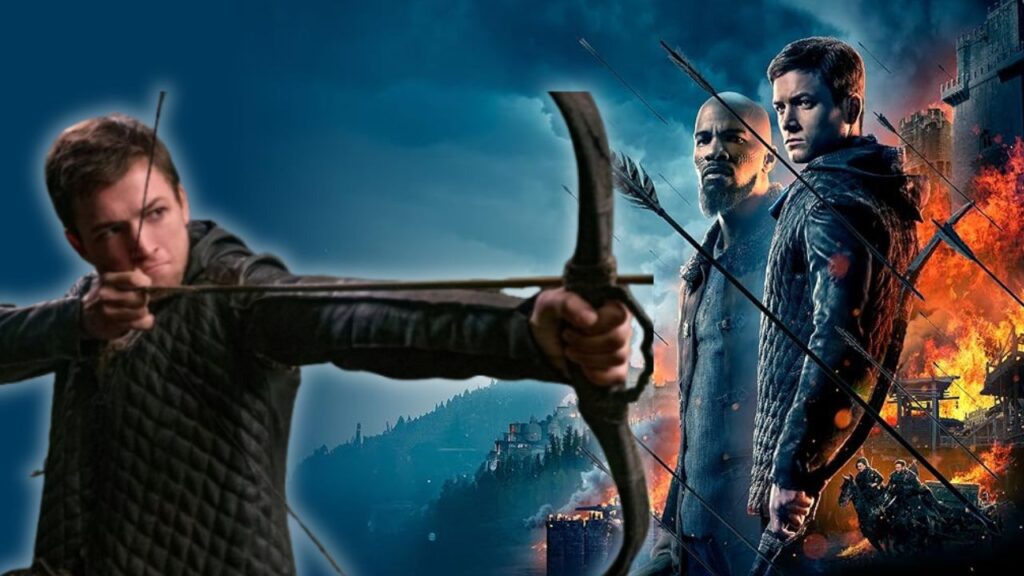
Folklore is seldom static. It lives, molds, and transforms to reflect the worries of the time that is telling it. Although the middle of the 20th century produced a Robin Hood Season 1 that was more pastoral idealist, green tights and all, the 2006 BBC version – and its 2025 MGM+ follow-up – broke the mold. These versions are not simply stories; they are “revisionist mythmaking,” in which stabilizing plot twists deconstruct the hero’s journey through the lens of contemporary socio-political realities.
The fundamental transformation of the 2006 series is based in the mind of its lead character. When Robin of Locksley comes home to England in 1192, he is no hero. Played by Jonas Armstrong, he and his manservant Much are traumatised veterans of the Third Crusade.
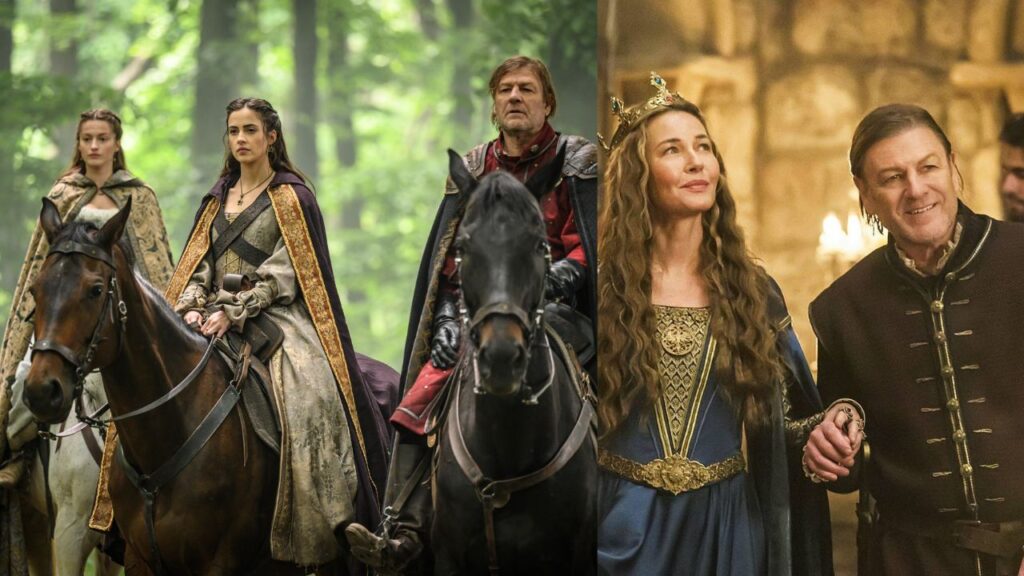
This incarnation of Robin is characterized by a renunciation of his aristocratic roots after learning that the “Holy War” he fought was less about divine justice and more about mindless killing. Adult disillusionment is set up straight away in the pilot, “Will You Tolerate This?” when Robin finds his home ruled by the “iron-fisted” Sheriff Vaisey. His decision to hit the road was an instinctive repudiation of the very systems he once worked within.
The 12th-century struggle is clearly enmeshed with 21st-century concerns in the script. Robin’s debate about whether the war is “ours” or “the Pope’s” reflected contemporary discussions about the invasion of Iraq, casting the outlaw as the tired warrior come home to a land he doesn’t know.
Maybe the biggest deviation from tradition is the character of Lady Marian. Not the “Maid” of folklore, but now a “Lady” playing a dangerous game of vigilante. The revelation in episode three that Marian moonlights as the “Night Watchman” makes her pretty much the all of the very first worldwide and medieval Batman, guarding the impoverished much prior to Robin ever rejoined with Sherwood.
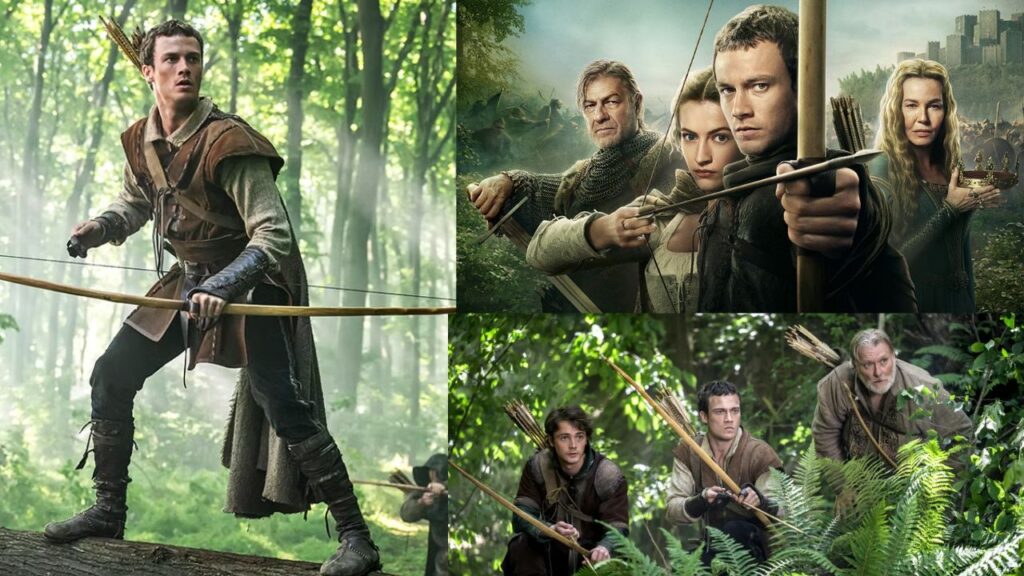
In this twist, Marian has an autonomy and martial capacity to match that of Robin’s. It also leads to an interesting interpersonal conflict: she resents Robin at first because his “loud” heroics risk blowing her cover.
Socio-Political Intrigue: Marian employs her position to spy, serving as the outlaws’ chief informant.
Physical Defiance: The fact that she has a ”knuckle-buster” ring and a dagger hidden in a hair-clip denotes a move to the “Action Girl” stereotype.
The Humbling of Nobility: When the Sheriff shaves Marian’s head on the gallows, it functions as a major turning point.It was an infringement on noble privilege, meant to demonstrate that no one was beyond Vaisey’s reach.
A continuing Spy arc of season 1 is that the corruption in Nottingham is not just local — it’s a conspiracy against King Richard himself. This climax of the arc culminates with a flashback that Robin once saved the King from a Saracen assassin with a wolf’s head tattoo in “Tattoo? What Tattoo?”. The twist? Guy of Gisborne has the same tattoo.
This revelation elevates the enmity between Robin and Gisborne from a petty disagreement over territory and a woman, to one of national ideology. The “Pact of Nottingham” — signed by the “Black Knights” — winds up functioning as the series’ recurring McGuffin, which symbolizes a concerted move to place Prince John on the throne.
One of the more subtle twists is the slow-burn betrayal of Allan A Dale. As their “average joe,” Allan has his loyalty chipped away by the Sheriff’s mind games. This “Judas” arc begins when the Sheriff ruthless jumps the execution date, ensuring Robin shows up too late to save Allan’s brother.
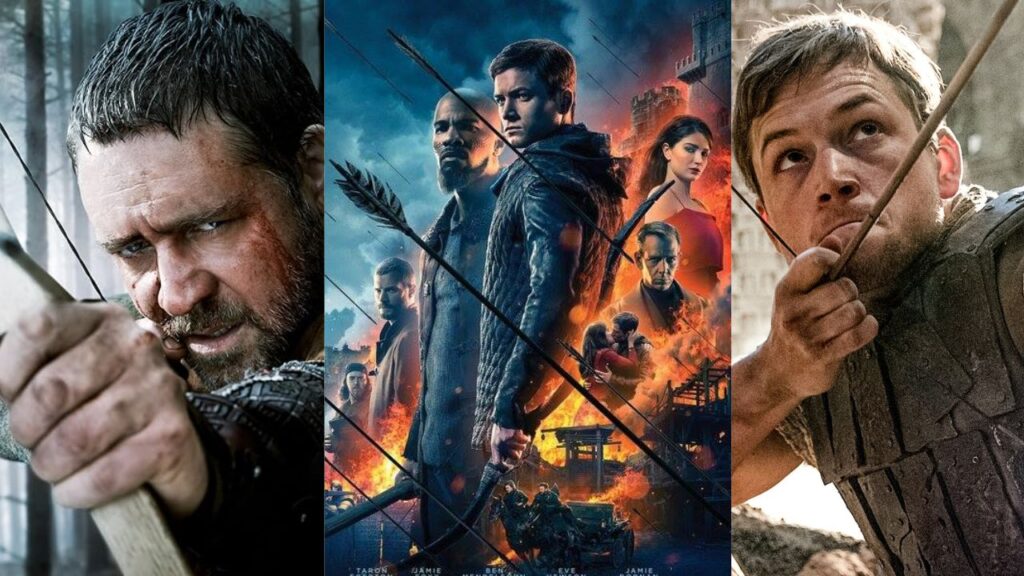
For the audience, Allan’s eventual “Face Heel Turn” in the season finale is a heartbreak. It breaks the illusion of the “Merry Men” as a perfect brotherhood, and underscores the human toll of Robin’s unbending ideological line.
Whereas the 2006 series was concerned with the ”Crusader Sickness,” the 2025 MGM+ reimagining brings even grimmer twists, with familial betrayal taking center stage. In this odd-version the character of Huntingdon is not a mentor, but rather the main antagonist—Robin’s own father.
| Theme | 2006 BBC Twist | 2025 MGM+ Twist |
| Paternal Role | Robin’s father is a legacy/hermit. | Huntingdon is the “Big Bad.” |
| Marian’s Agency | The Night Watchman (Vigilante). | Ally/Blackmailed by Queen Eleanor. |
| The Sheriff | Mercurial monster (Vaisey). | Played by Sean Bean; a survivor. |
Read More 👉 Stranger Things Spin-Off Expanding the Horror With New Cast & Story
The inaugural seasons of these contemporary versions show that the “Major Twist” is the large mooring modern folklore spins upon. In taking the emphasis away from archery tournaments and introducing systemic corruption rather than damsels in distress versus vigilantes, these shows make Sherwood Forest a continuing site for power and reform.
By the end of Season 1, the status quo is shattered. The outlaws have become a political party, and the forest is not a refuge but a revolution headquarters. These twists remind us that the legend is made out of blood and grit — that is the real cost of defiance.
Dive into the big cinematic industry with Fandomfans for deeper details from your favorite movies, series, and celebrities.

Dunk and Eggs are high in The Morrow’s conclusion of A Knight of the Seven Kingdoms, resulting in a sentimental closing note focused on honor and selection.
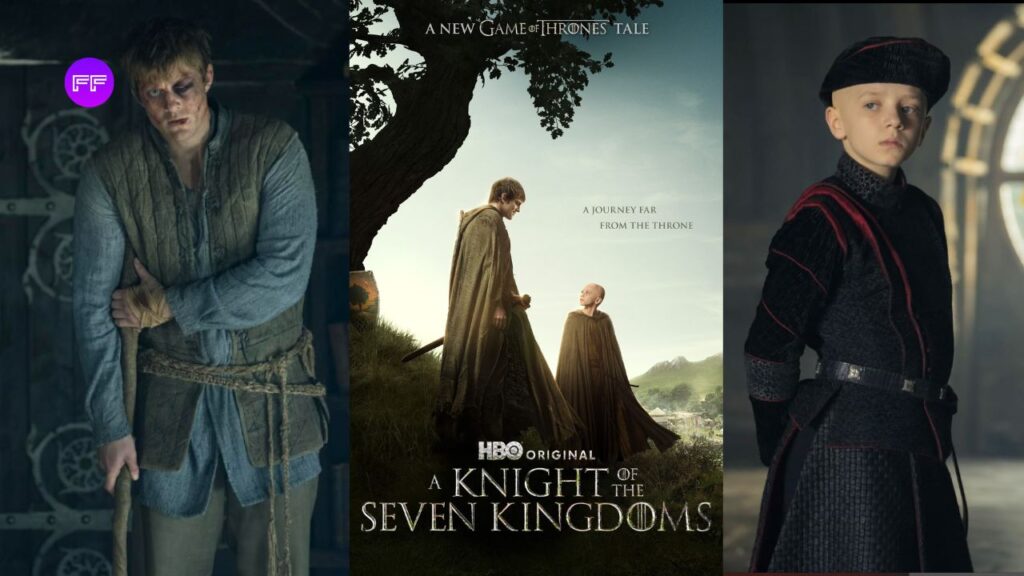
Halfway through A Knight of the Seven Kingdoms Episode 6, “The Morrow,” Dunk and Eggs is sitting opposite Prince Maekar Targaryen, and he declares with the sort of quiet conviction that can only come from having your understanding of the world dismantled and put back together across six weeks of television: “I think I’m done with princes.”
Five words. That’s all it takes. But in those five words you hear everything — the weight of Baelor’s death, the disillusionment with noble systems that warp children into monsters, and the blind, near-lunatic resolve of Dunk and Eggs to do what’s right even when the world rewards you for doing wrong.
The Guardians says, we’ve come to expect certain things from prestige fantasy television. The second to last episode turns up the spectacle—the battles, the killings, the “holy shit” moments. The series finale, while completing story arcs, sets up next season’s conflicts. There is usually a cliffhanger. There’s almost always a feeling of building momentum leading us to bigger, louder, more costly storytelling.
“The Morrow” does none of that. Which is exactly why it works.
The episode is basically 31 minutes of people talking. That’s it. No swords are drawn (save for the knife Egg considers using against his sleeping brother, which we’ll get to). No armies clash. The most violent thing that occurs is emotional. And yet, the viewer was drawn forward, utterly captivated, in a way as they had been in the earliest seasons of the original Game of Thrones, when dialogue resembled skirmishes and each character choice had the consequence of multiple kingdoms.
This is the show’s thesis, born out: being good isn’t what you are, it’s what you do. Repeatedly. Even when it costs you everything.
Peter Claffey’s Dunk facts for the season have been an exercise in making virtue compelling. It’s not easy to write a nice character that’s not boring. Our culture reveres the anti-hero, the morally complex operator, the person who commits bad acts for reasons that make sense to us. We’re trained to see all plain-spoken righteousness as either naïve or performative.
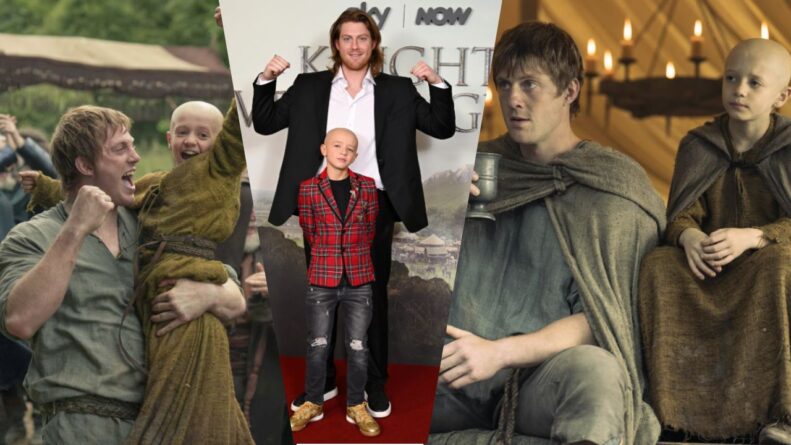
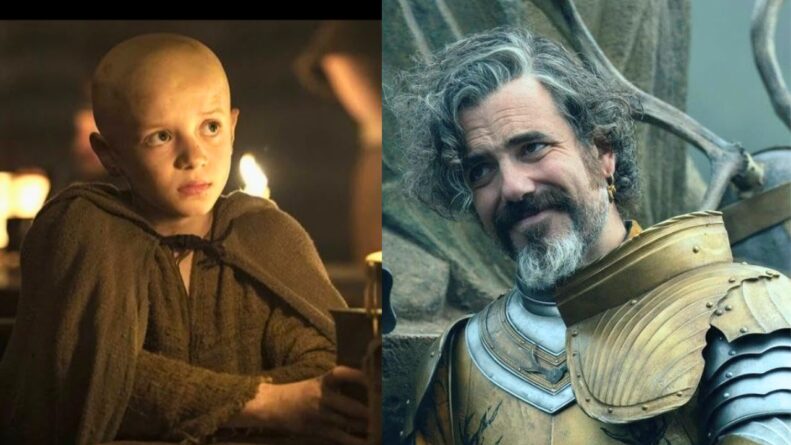
But Claffey treats Dunk’s morality as a conscious decision, rather than a baseline. Watch his face when Lyonel Baratheon offers him a life at Storm’s End — hunting, sailing, friendship, the sort of simple male bonding that would be the happy ending in any other story. You can see Dunk genuinely considering it. He wants it. Who wouldn’t? After a fortnight of sleeping in the mud and eating hard salt beef, the lure of comfort and companionship can’t be that strong.
But he says no. It’s not the offer he can’t afford, it’s just not what he wants to do. And he knows it.
This time it’s Maekar’s offer from Summerhall. When Maekar speaks of proper training and finishing what Arlan began you can see Claffey’s longing in his eyes. Dunk craves legitimacy. He wants to be the knight as he pretends to be. But when the price of this is Egg turning into just another Targaryen prince twisted to cruelty by the iron machinery of court life, he can’t bring himself to accept it.
The episode’s most powerful sequence is Dunk’s vision (memory? dream? hallucination?) of Ser Arlan of Pennytree. Their talk about the Pennytree tradition — hammering a copper penny into a tree when you leave, pulling it out when you come back, because “a good knight always finishes a story” — could be interpreted as symbolism too close to a cliche. But it doesn’t, because the show has earned its emotional moments over the course of six patient character episodes.
If Ser Arlan did in fact knight Dunk, then the source of Dunk’s legitimacy is a secret, private deathbed ceremony. But if Dunk has not been knighted after doing everything, then his authority is based solely on what he has done. The ceremony doesn’t matter.
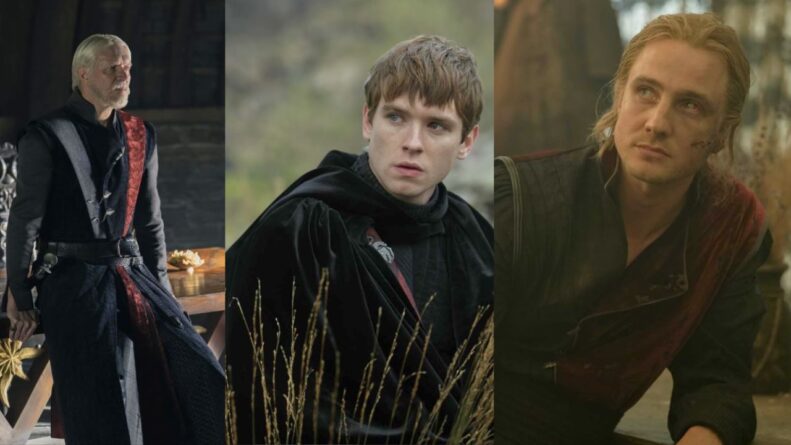
Egg stood over his sleeping brother Aerion, knife in hand. It’s not righteous indignation but tragic temptation, which Dexter Sol Ansell plays. Watch his face when he looks in the mirror and sees his silver hair coming back. He said in Episode 4 that he hated his Targaryen traits. But here, behold his eyes. We see the violence and entitlement woven into that bloodline, reasserting itself.
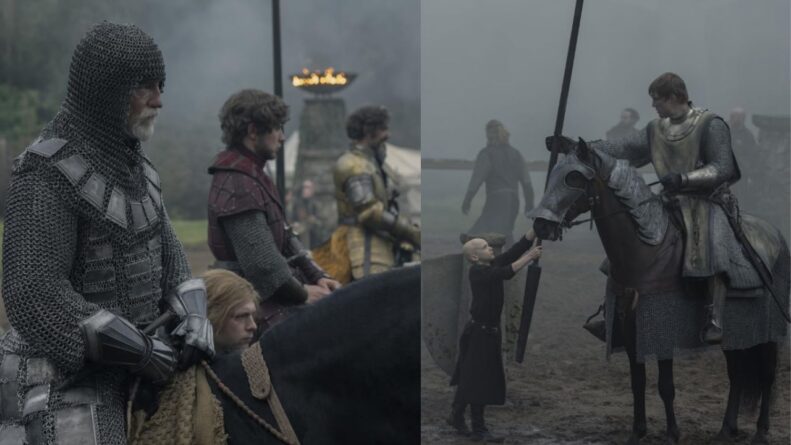
When Maekar catches his son—placing his hands gently on Egg’s shoulders rather than scolding him angrily—both Targaryens are crying. The work of Sam Spruell here is spectacular. He is aware of what could have been, too close for comfort, and what that means. He has good reason to believe Daeron was right: Aerion wasn’t born a monster. He was fashioned by the judicial machinery. And Egg has that as well, and always will, that same door hidden within himself, and what it takes to unlock that door.
One of Maekar’s sons still lives who might not be broken by this throne. And when Dunk offers to take him to save him by ditches and hard salt beef and a life of no iron machinery, Maekar says no. He can’t picture life as dignified. He loves his son enough to weep with him over Aerion, but not enough to send him away.
And that’s the real tragedy of Dunk and Eggs “The Morrow.” Maekar wants to save his children and he has no idea how.
Egg has fibbed about having his father’s permission – a deviation from George R.R. Martin’s original novella in which Maekar actually gives his consent. Some fans will disagree, as in the book version, Maekar’s consent is a sign of growth, and repentance for killing Baelor, inadvertently. The show’s version undermines that character growth for a laugh and possible Season 2 drama as season gets 9.0/10 rating from IMDb.
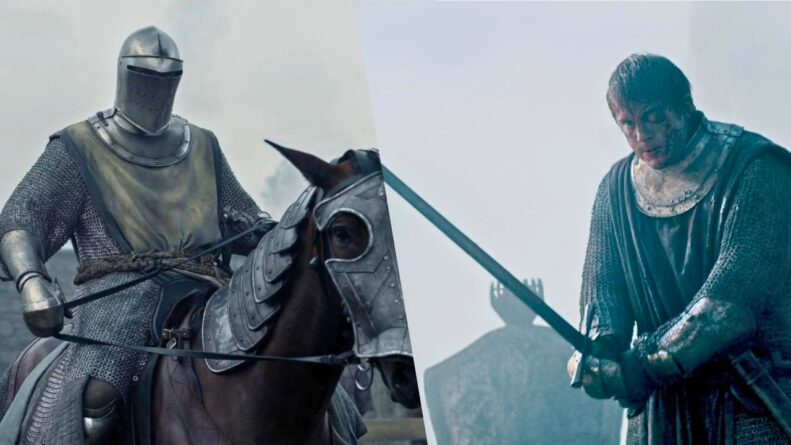
But even this choice is thematically defensible. The show is concerned with how difficult it is to select goodness. Egg (Pink Letter) lies and flees instead of accepting Maekar’s denial, losing his integrity. It robs Dunk of his assurance in Egg’s character when he comes upon the truth. It robs Maekar of his son. Doing what’s right is gonna cost something dearly for everyone.
The final shot where Arlan ghost riding off over a field of grass while Dunk and Eggs walk on down the road is grief made plain. Dunk is paying tribute to his mentor (the penny in the tree), applying his teachings (finish your story, keep your oaths), and moving beyond his need for Arlan’s approval. The question of being knighted is not relevant. It’s the road and the royal squire at his side that matters now.
Read More 👉 Absolute Universe DC Comics Bombshells from ComicsPRO That Will Reshape 2026
A Knight of the Seven Kingdoms Season 2 will explore George R.R. Martin’s second “Dunk and Eggs” novella, “The Mystery Knight.” Co-creator and showrunner Ira Parker spilled details on that direction in an interview with Variety. Also, Parker said one of the original titles for the series was nixed by Martin, but he didn’t reveal the reasoning or what the title was.
Season 2 can’t come fast enough but there was so much potential in that last shot of two figures on horseback riding off into the unknown, everything up in the air but their commitment to each other and to becoming better people. The show has demonstrated that tiny storytelling is viable in this universe, that you don’t need dragons and sprawling ensemble casts and constant escalation to justify your existence.
A Knight of the Seven Kingdoms has given the Game of Thrones universe new life in a way that seems almost miraculous. Dunk and Eggs makes us fall back in love with this world, not for the spectacle, but for the people. It’s because of the conviction that in a world that is structured to treasure self-interest and to punish kindness, the most radical thing that you can do is simply be good.
As Ser Arlan would say: A good knight always finishes a story. Dunk and Eggs are finishing this one and starting another. We just have to wait until then.
Dive into the world of dragons and dungeon politics with Fandomfans, our goal is to focus on recent updates and reviews from latest movies, series, characters, and interviews.