Netflix February 2026 Releases: Full Movies & Series List
Explore the best of Netflix February 2026 releases: movies, web series, documentaries, reality shows, and what’s retiring from the platform. Learn more...!
Take a bucket of popcorn and be ready to binge watch, the February Netflix lineup is looking so good! Expect romance, action, laughs and a couple of thrillers. Family dramas, big movies and reality shows galore to binge. I’ve selected a few highlights to discuss — let’s look into the list of Netflix February 2026 Releases.
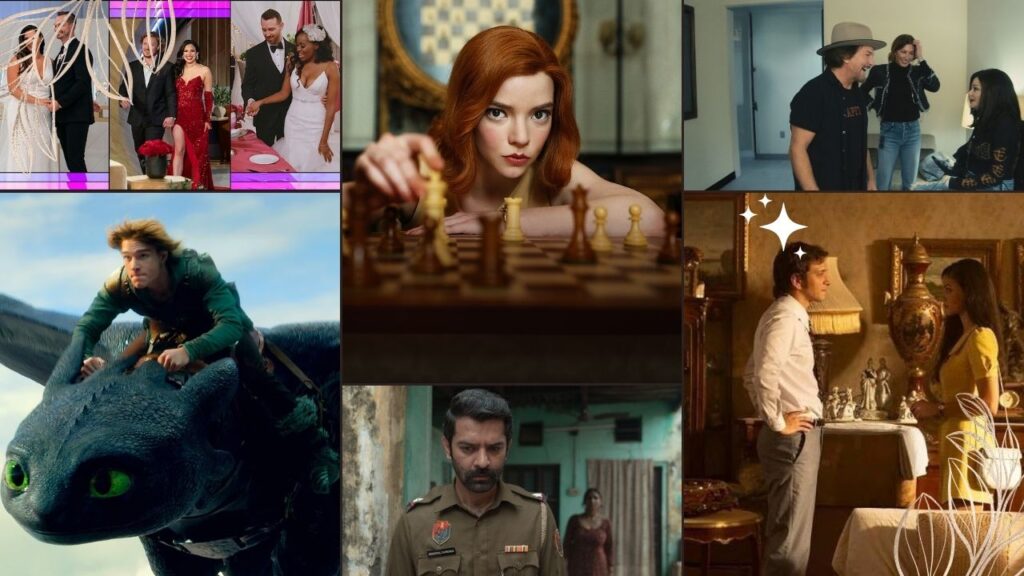
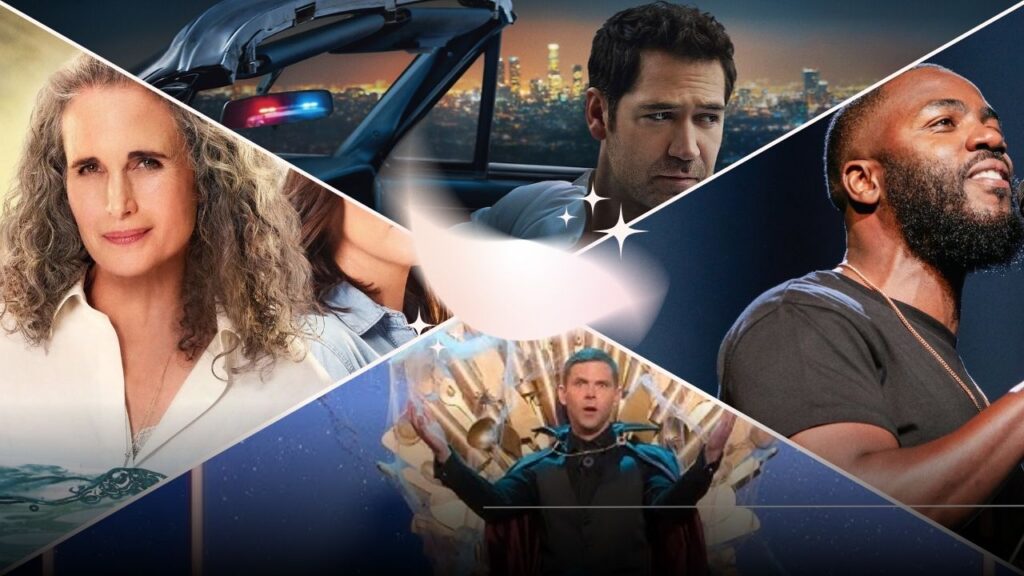
Open Feb 1st Glitter & Gold: Ice Dancing, a Duck team Presents doc about ice skaters pursuing dreams. There are shiny costumes, harsh training and big feelings. And then there’s The Way Home Season 3 which returns to that sweet family tale with time travel twists — ideal for cozy nights.
Love comedy? Feb 3rd has Mo Gilligan: In The Moment, where the comedian discusses life and love. Super relatable laughs! On Feb 4th, Is It Cake? Valentines returns with bakers crafting fake sweets that look real—perfect for Valentine’s vibes.
Series superfans, save the date: The Lincoln Lawyer Season 4 on Feb 5th Lawyer Mickey takes on the bad guys, so expect some surprises. The same day, Cash Queens, from France, follows tough women making money in dirty ways. Cool and stylish!

Feb 6th: “The Queen’s Gambit” is a doc about a girl rising to the top in the male-dominated world of chess. Motivating stuff – Feb 9th, Matter of Time (Life and Time in your Hands) profound, but OK.
Movie time! On 10th Feb, you can watch How to Train Your Dragon—dragons and adventure for all ages. 11, Feb has Love Is Blind Season 10 (insane love experiments) and Kohrra Season 2 (spooky Indian mystery—love the Punjab feel!).
More on 13, Feb: Museum of Innocence (Turkish romance with secrets) and Tyler Perry’s Joe’s College Road Trip (hilarious dad-daughter road trip). 17, Feb – Star Search Finale—talent show excitement!
18, Feb provides a glimpse into Being Gordon Ramsay—the chef’s wild life. Thrill seekers, The Night Agent Season 3 releases 19, Feb — spy action wakes up and never sleeps. 20, Feb comes with The Expendables 1-4 (explosions galore) and Strip Law (silly animated lawyer strippers).

24, Feb laughs his way through Taylor Tomlinson: Prodigal Daughter. Bridgerton Season 4 Part 2 Come 26, Feb —steamy balls and drama! Racing fans get Formula 1: Drive to Survive Season 8 on 27, Feb. Concludes with Jurassic World: Rebirth on 28, Feb —dinos on the loose!
| Date | Title | Format/Origin |
| 1, Feb | Glitter & Gold: Ice Dancing | Documentary |
| 1, Feb | The Way Home (Season 3) | Series (Licensed) |
| 3, Feb | Mo Gilligan: In The Moment | Comedy Special |
| 4, Feb | Is It Cake? Valentines | Series (Original) |
| 5, Feb | The Lincoln Lawyer (Season 4) | Series (Original) |
| 5, Feb | Cash Queens | Series (France) |
| 6, Feb | Queen of Chess | Documentary |
| 9, Feb | Matter of Time | Documentary |
| 10, Feb | How to Train Your Dragon | Movie (Licensed) |
| 11, Feb | Love Is Blind | Series (Original) |
| 11, Feb | Kohrra (Season 2) | Series (India) |
| 13, Feb | Museum of Innocence | Series (Turkey) |
| 13, Feb | Tyler Perry’s Joe’s College Road Trip | Movie (Original) |
| 17, Feb | Star Search (Live Finale) | Live Event |
| 18, Feb | Being Gordon Ramsay | Documentary |
| 19, Feb | The Night Agent (Season 3) | Series (Original) |
| 20, Feb | The Expendables 1-4 | Movie Collection |
| 20, Feb | Strip Law | Animated Series |
| 24, Feb | Taylor Tomlinson: Prodigal Daughter | Comedy Special |
| 26, Feb | Bridgerton | Series (Season 4) |
| 27, Feb | F1: Drive to Survive (Season 8) | Documentary |
| 28, Feb | Jurassic World: Rebirth | Movie (Licensed) |
| Departure Date | Title | Its Significance |
| 1, Feb | Parasite | Oscar winner for Best Picture; a cornerstone of prestige world cinema |
| 1, Feb | 28 Days Later | Defined the modern zombie genre; departure precedes theatrical sequels |
| 1, Feb | Groundhog Day | A high-concept comedy classic and Bill Murray standout |
| 5, Feb | Mean Girls | A foundational teen comedy that frequently rotates between streamers |
| 21, Feb | She-Ra (S1-5) | A rare departure of a “Netflix Original” due to DreamWorks licensing |
Dive deeper into the world of entertainment with Fandomfans to get a full list of Netflix’s shows and movies to binge watch.
Caught Stealing is the sleeper in Darren Aronofsky's output, and it includes Austin Butler's best career performance in this exhilarating 1998 NYC narrative.

If you checked the box office rankings in August 2025, you might have thought Caught Stealing was a bomb. It came, it saw, it didn’t come close to recouping even a quarter of its budget. That’s a flop in the cold calculations of Hollywood. But if you dig movies that actually mean something, you already know that box office numbers are never an indicator of quality.
Caught Stealing is a terrific film that was just released at the wrong time. It is a gritty, sweaty, adrenaline-charged tour of 1998 New York City, and it may be the most fun film Aronofsky has ever made. So as it finally comes to streaming, here’s hoping this misunderstood classic can find a wider audience.
Darren Aronofsky is generally known for his brutal misery. From the drug-fueled nightmares of Requiem for a Dream to the pornographic claustrophobia of The Whale, his movies are usually predicated on a formula of obsession triggering madness. You respect his films, but you don’t always “enjoy” them.

Stealing Caught steals the script and flips the script sideways. It’s Aronofsky loosening his tie. He brings his trademark intensity to a crime thriller that seems like a mash-up of Coen Brothers capers and a 90’s action flick. He’s no longer “wallowing” in his character’s pain; he’s feeling the chaos, literally. The upshot is a movie whose balance of excruciating suspense and farcical comedy achieves a tone that’s idiosyncratically, strangely electric.
Forget the hip-swivel of Elvis and the bald menace of Dune. According to Screenrant, In Caught Stealing, Austin Butler completely reinvents his physical presence. He plays Hank Thompson, a washed-up baseball prodigy turned alcoholic bartender.

To promote the part, Butler had to abandon the dehydrated “superhero abs” look for what the production termed the “Baseball Body.” He bulked up with 35 pounds to resemble a ‘90s power hitter — big, heavy and utilitarian. When Hank fights, he does not do karate but he draws on centrifugal force, wielding mundane objects like a bat, looking like a dashing person with the body mass of a football player. It’s a grounded, sweaty turn that brings gravity to the movie. You buy that he’s a guy who’s given up on life, which is what makes it so interesting when he has to fight for it.
Read More 👉 Avatar: Fire and Ash World Premiere Introduces a Darker, Unpredictable Pandora
One of the film’s smartest moves is its setting. By placing the action in 1998, Aronofsky removes the safety net of modern technology. There are no smartphones to GPS a getaway route. There is no cloud to upload evidence to. Hank is alone in the Lower East Side with nothing but payphones, paper maps, and his wits.

This “analog anxiety” imparts a breathless, hands-on energy to the film that so many modern thrillers are missing. It’s a “run and gun” movie powered by a pounding post-punk score that will make your heart race. The camerawork captures the filth of a non-gentrified New York, a city of dilapidated infrastructure and menacing shadows.
The story is straight-up noir, Hank is just an ordinary guy who winds up in the criminal underbelly simply because he agreed to watch his neighbor’s cat. That’s it. That’s the catalyst.
Suddenly he’s being chased by Russian mobsters, a terrifying corrupt cop (Regina King), and a wild card enforcer (Bad Bunny). It’s a “bureaucratic nightmare” of violence in which everyone believes Hank has the MacGuffin, and no one thinks he’s innocent.

With an 84% rating on Rotten Tomatoes, the critics have already determined what the general movie-going audience failed to see in theaters. Caught Stealing isn’t just a movie, it’s a mood. It’s a throwback to an era when action films had texture, when heroes were humble folk enduring a genuinely awful day, and survival wasn’t about saving the world — it was just about making it to the next morning.
Caught Stealing is the sort of movie that sneaks up on you – sharp, frenetic, bruised in both tone and spirit, and infused with a style we had no idea Aronofsky was capable of. It may have been a box office flop, but it’s a matter of time. With its gritty ‘98 vibe, an amazing career-best performance from Austin Butler, and a tone that is at once both panicked and infuriatingly funny, this movie is going to find a cult audience once the word gets out about what they missed in theaters. There are times when the loudest success stories aren’t the best films – but the ones that live with you the longest, after the lights come up.
Fandomfans bring you creative and engaging breakdowns of the movies and shows that you should watch.
The Mandalorian and Grogu characters introduces the Mandoverse to the big screen with the Mercenary Guard Droid, Rotta the Hutt & stakes that shift the galaxy.

The Mercenary Guard Droid is foreshadowed as a primary catalyst and menace in the next Star Wars film recently revealed in merchandise at Toy Fair 2026. The May 22, 2026 theatrical debut of ‘The Mandalorian and Grogu characters’ is not just another ‘Star Wars’ release date – it’s a turning point. Yet it will shortly be the first time since The ‘Rise of Skywalker’ wrapped the Skywalker Saga in 2019 that Lucasfilm has brought Star Wars back to the big screen. The pressure on this movie is immense.
The Mandalorian and Grogu characters is not just a movie but a test. A test to see if a streaming-churned universe, neatly constructed on Disney+, can be extended to the wider cinematic space. “Mandoverse” has thrived in episodic form, but said the big screen requires more: scale, spectacle and emotional weight. And all the signs out of this project indicate that the move to theaters is being considered a strategic progression, not just a format change.
Jon Favreau, the director, has been clear that transitioning from series television to film is more than just a matter of larger screens. It applies to the size of the language, visual and narrative.

The tightly controlled environments of StageCraft (“the Volume”) that have come to define the series are now being replaced with IMAX-scale compositions, vast landscapes, and cinematic movement. This is Star Wars turning back into spectacle.
The marketing distilled that dichotomy perfectly. The playful Super Bowl spot stole the show, but a more serious teaser featuring X-Wings, an R2 unit and the gritty Razor Crest refocused expectations. It was a very nuanced but clear signal: The Mandalorian and Grogu characters is not a parody of Star Wars. That’s the western-in-space motif, tuned up for the movies.
One of the more intriguing revelations didn’t come from trailers, it came from toys. Toy Fair 2026 brought us a “Mercenary Guard Droid” character. And while most background droids are generic, this one was differentiated by special packaging, multiple versions and exclusive collectibles. In Star Wars-speak merchandising, that means “important.
Mercenary Guard Droid is not a robot with a mind of its own. It’s a survivor. Developed using Clone Wars-era technology, its form is reminiscent of B1 and BX-Commando Droid models were droids crafted en masse for warfare. But take the word mercenary and put it front and center. This droid isn’t following orders. It’s deciding.
And this is hugely devastating – psychologically for Din Djarin.
Din is a child of the Clone Wars. He was scarred by trauma starting when battle droids bombed his home and slaughtered his family. For years he despised droids—not as tools, but as monsters. The things he experienced later softened that hatred, but the scar remains. And now he’s up against a sentient droid antagonist who bears the physical legacy of the very machines that made him an orphan. This droid isn’t just some physical link to his past, but its malevolent consciousness and warmaking decisions make the emotional stakes even higher.
So even the combat design borrows from that. The droid’s combination with a STAP (Single Trooper Aerial Platform) establishes vertical fighting parity with Din’s jetpack—making the skies a battleground. This isn’t merely narrative conflict. It’s Binford Choreography, a big screen spectacle.
Along with the psychological antagonist lurked another kind of threat: Embo.
The Kyuzo bounty hunter, familiar in animated canon, is the definition of professional. No armor. No Mandalorian tech. It’s precision, discipline, and lethal skill. His iconic hat, his bowcaster, and his stature make him a walking antithesis to Din Djarin’s encased presence.
The presence of Dave Filoni, Embo’s original voice makes his live action debut all the more real. Filoni has been known to bring animated characters into live canon and Embo is just that.
Embo and the droid represent opposing energies, their each unique facet of discord. Embo is the embodiment of calculated precision and lethal professionalism, and the droid is burdened with psychological depth and the ghost of what has passed.
Their upcoming battles with Din represent an age-old battle: brawn versus brains, crude technology versus refined technique. This play of light and shadow right here evokes the spirit of the samurai film, which is at the core of Star Wars’ storytelling DNA.
Rotta the Hutt has gone through an amazing evolution from the weak infant dubbed “Stinky” to a sinister gladiator. Scarred from his battles and now armed and physically menacing, this Rotta played by Jeremy Allen White represents not only personal growth but a shift in who holds the power.
As Jabba’s heir, Rotta’s very existence is a major political threat. In a galaxy filled with chaos and uncertainty, he represents the promise of uniting the scattered Hutt Cartel. This accumulation of power is alarming, but also brings about enemies who want to stand in his rise.
The Mandalorian and Grogu characters structure serves to emphasize the function of each character, all of whom revolve around Rotta, in which the plot revolves around a single mission. Din Djarin assumes the mantle of protector, shielding Rotta from danger. Rotta itself is the linchpin, the center-piece of the mission stakes. Embo becomes the merciless predator, hunting Rotta to the ends of the earth.
The droid, on the other hand, the personal nightmare becomes an element of fear and nerve-racking suspense. All of this is focused on one try: the attempt to control, protect, or eliminate Rotta, driving the story forward with purpose and intensity.
Among the underworld intrigue is the New Republic, headed by Colonel Ward (Sigourney Weaver), and its bureaucracy that must confront reality. Her part mirrors a classic conflict: bureaucracy against reality. The New Republic craves stability but does not have the stomach for it — so it employs the likes of Din Djarin to carry out what it cannot put on any official paperwork.
Below them is the Imperial Remnant — warlords, walkers, and regimented militarized entities for the unfinished business of the Empire. AT-ATs, snow troopers, and mechanized units tell you this isn’t just bounty hunting anymore but it’s war-scale fighting.
The Mandalorian and Grogu characters is at the heart of the narrative and embodies hope, purity, and the promise of a brighter future. His very existence, however, is a direct antithesis in opposition to Din Djarin’s past filled with trauma and hardship. The emotional core they share allows the story to transcend the action and explore deeper themes of maturation, connection and fear of loss.
Pedro Pascal anchors this emotional journey as Din Djarin — Din’s evolution from a solitary fighter to a wryly devoted but still reluctant father is a sweeping tale of redemption, where the odds they face not only forge them together, but transform their very fate.
The Mandalorian and Grogu characters is a pivotal chapter that takes its story to a place far beyond a simple episodic journey. It accepts a deep change, and provides a cinematic view that combines symbolism and politics with mythic storytelling and stakes that are highly personal.
Now, instead of just enemies, the antagonists are themes unto themselves. The stakes are not just survival, but also legacy and power. It’s all grandiose action, but the emotional core is petite and potent.
The Mandalorian and Grogu characters story is both introspective and far-reaching. The Mandalorian and Grogu characters is more than a foundling, and Din Djarin is more than a lone bounty hunter. They carried fate and memory and history together. Their enemies are now echoes of trauma and survival, not shadows to be scrubbed clean.
The Mandalorian and Grogu characters isn’t simply a matter of surviving hardships — it’s about seeing what there is to see after survival. It’s about the decisions, the consequences, the transformations that craft what it means to safeguard, guide, and mend. The Mandoverse boldly carves out a territory where screen size matches not just visual scale but narrative ambition.
‘The Mandalorian and Grogu characters’ is more than the Mandoverse making its theatrical debut, it’s Mandoverse birthed into true cinematic myth. Symbolic antagonists, greater emotional stakes, and a plot rooted in legacy rather than spectacle for the sake of spectacle transform the film’s Star Wars from episodic adventure to mythic storytelling.
Din Djarin and Grogu are at the center, but they’re not just survivors, they’re protectors of a future defined by memory, responsibility, and purpose.
No, this time it’s not just Star Wars coming back to the big screen, it is Star Wars ushering in a new age.
Fandomfans deliver updates and theories from movies and series, and catch up to get interesting stories.