Home > Movies > ‘Undertone’ Will be Biggest Psychological Horror Backed by..
‘Undertone’ Will be Biggest Psychological Horror Backed by A24
undertone Review: A24’s chilling psychological horror turns silence, family, and familiarity into fear, resulting in one of the studio’s most unsettling films.
The majority of us thought the lockdown years were pretty exhausting, but director Ian Tuason made that isolation a nightmare—the good kind. His new film, Undertone, is currently the buzz at Sundance, and it’s easy to understand why. It’s a scary, sound-centered psychological horror that came from real-life anxiety and a house that could possibly be haunted now.
The Horror of Moving Back Home
We’ve all been there—crashing at your parents’ place is not whatever you’re picturing it’s going to be. But for Tuason, it was a necessity so he could tend to his ailing parents.
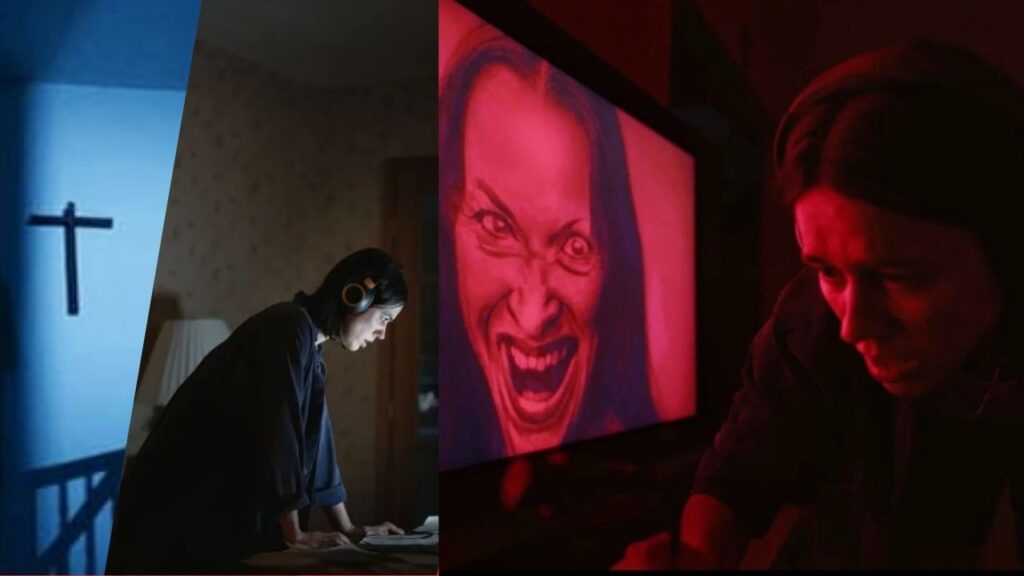
In an interview with Variety, he shared his experiences of where he got the idea. While he was there, he began to consider what makes us feel safe —and what happens when you flip that on its head. The Exorcist concept (taking a “safe” daughter and making her scary) and applied it to his own life.
“My mind is stuck on ‘The Exorcist’, how it scared me so much when I was a kid.”
–He said
He wondered, What if my mom, who relies on me, starts speaking in a different voice? That dark thought transformed a simple podcast script into a feature film. He even shot it in his parents’ house to save money, but it came at a price. Living on your own horror set meant he never felt truly alone, and he said the house began feeling “haunted” well after the cameras stopped rolling.
Why You Should Watch With Your Headphones On
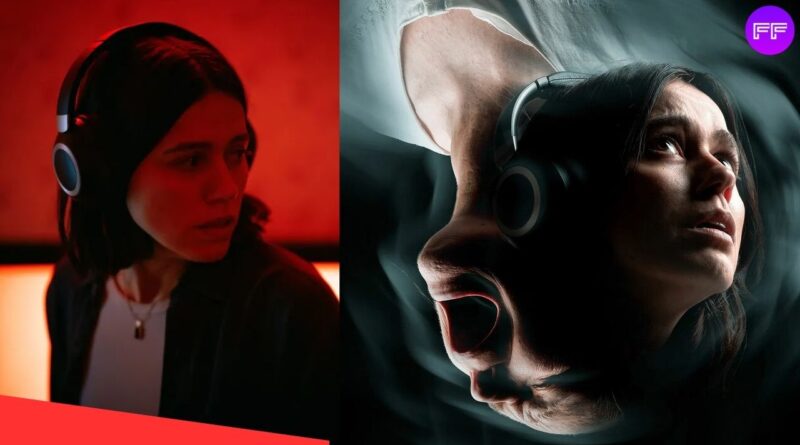
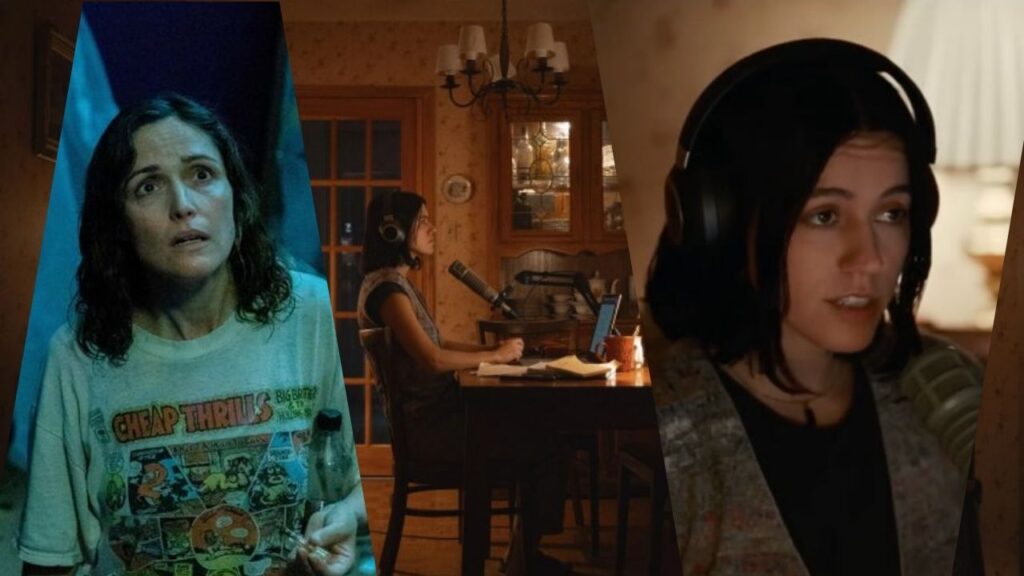
Undertone is distinguished by its sound. The lead, Evy, is the host of a podcast, and the film plays with your ears. Tuason engineered the sound as if you are wearing noise-cancelling headphones.
“Do you know that weird silence level where you have no clue what’s happening in the room behind you?”
–He said
That’s precisely what he employs to frighten you. The film oddballed the sounds that Evy hears on her tapes and the sounds that are really in her hallway.
Catching the Eyes of the Giants
The hype around Undertone is deafening and it seems like the biggest names in horror are officially placing their bets on Tuason. That’s just the beginning: A24 has already acquired the film and scheduled a March 13 release.
The legends behind Blumhouse and Atomic Monster (the producers of Insidious and The Conjuring) are the ones who brought in Tuason to give the Paranormal Activity franchise a revamp. It’s a complete full circle moment for a guy who started out recording spooky noises in his childhood bedroom. If he can make a DIY movie at his parents’ house this scary, then we can’t wait to see what he does with a Hollywood budget and the keys to one of the biggest horror series in history.
Undertone confirms the greatest horror has never been monsters or jump scares—it’s familiarity. By weaponizing a childhood home, a parent’s voice, and silence itself, Ian Tuason crafts a deeply personal and unsettling journey. Its choreography of sound is so perfect that it’s a movie to watch with headphones, each whisper feeling invasive and intimate.
With Sundance buzz, an A24 release, and major horror studios lining up to back Tuason’s next project, Undertone is not just a powerful first feature—it’s the introduction of a filmmaker who gets that the real horror is right at home.
With Fandomfans, you can find all the latest details and behind the scenes of movies and series.
Mariyam
Articles Published :
76
Mariyam Khan is Fandomfans Content Writer and providing reports and reviews on Movie Celebrities, and Superheroes particularly Marvel & DC. She is covering across multiple genres from more than 4+ years, experience in delivering the timely updates.
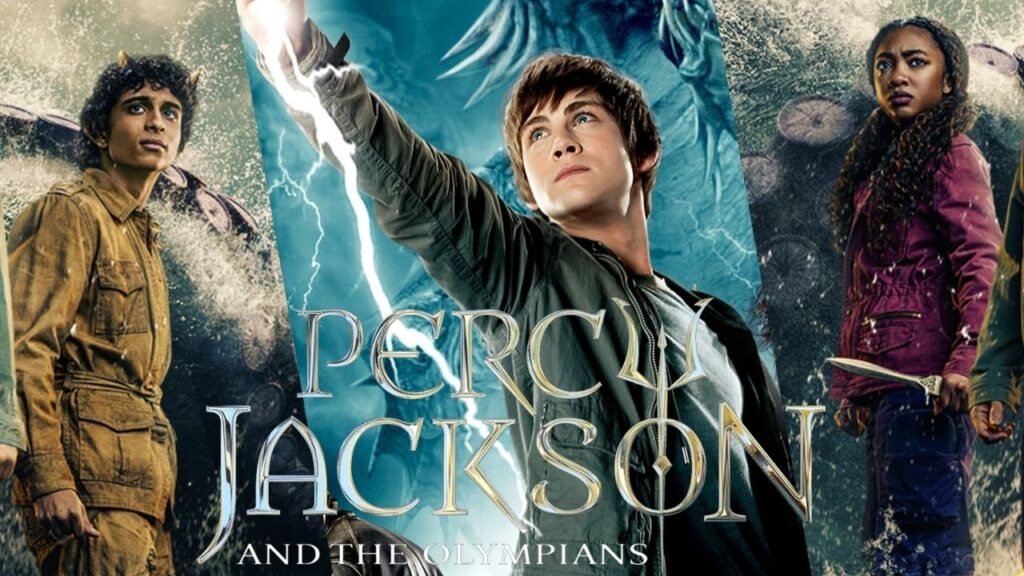
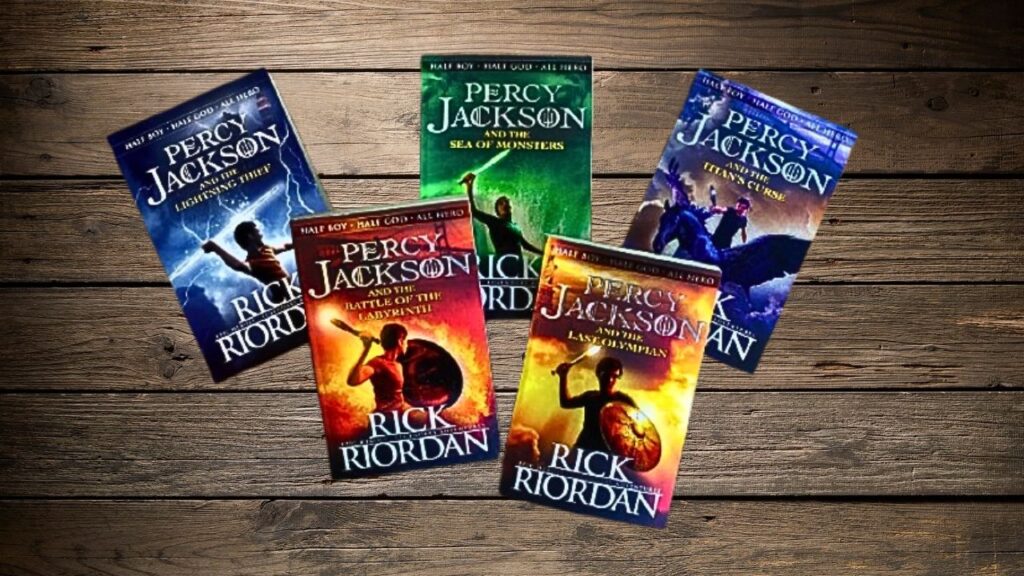
The narrative terrain that Rick Riordan lays out is a tremendous shift in modern mythic storytelling particularly in its portrayal of the “Hero’s Journey” as an experiential, unfolding psychological journey. As opposed to classical mythology where heroes are often static and embody a single pillar of virtue, Riordanverse characters such as Perseus Jackson, Annabeth Chase, and Nico di Angelo are the quintessential definition of “upgradation.”
This evolution is more than just a tit for tat accumulation of supernatural talents, but instead engulfs a radical transfiguration of their psychic constructs, social stations, and metaphysical essences. Venturing from the foundational Percy Jackson and the Olympians (PJO) saga to the Heroes of Olympus (HoO) cycle and then the “Senior Year Adventures,” we detect a systematic shift in reflections of what it means to be a hero, how traumatization impacts this, and moving into “adulthood.”
The Escalation of Perseus Jackson
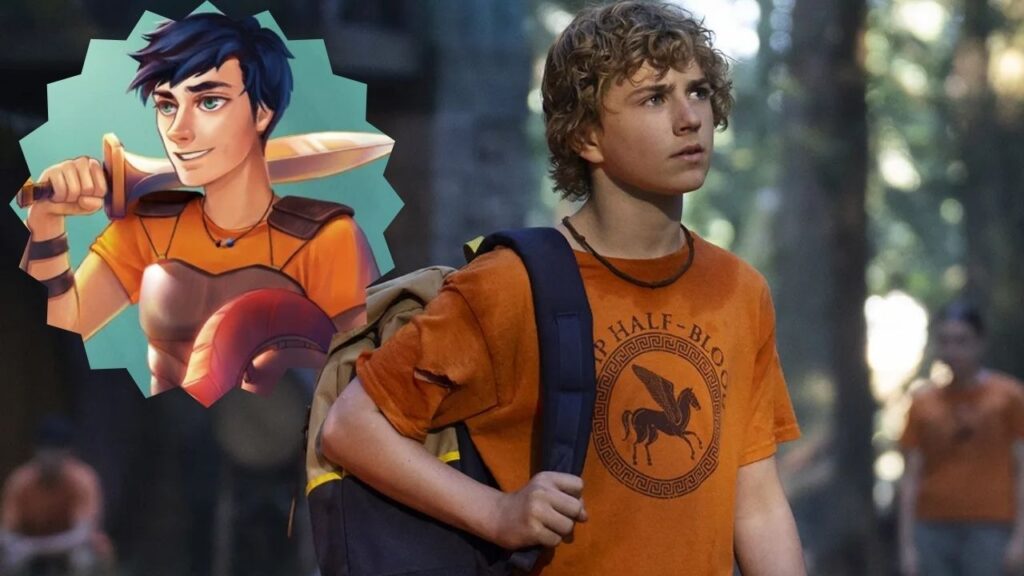
The power scaling in this universe is based on the main character Perseus Jackson. He evolves from unthinking, and frequently uncontrollable, bursts of power into a sophisticated, telekinetic control of the hydrosphere. Originally portrayed as a 12-year-old with ADHD and dyslexia — qualities that were later reframed as “battle reflexes” and a natural inclination toward the Ancient Greek language — Jackson performed early feats that were localized and reactive.
The Kinematics of Power
A thorough check on both Jackson’s physical feats and metaphysical ones show a consistent growth. In the earliest (PJO) books he used his hydrokinesis mainly for he and his friends’ protection. By the end of the PJO series, he had reached ”Building Level” power.
A notable “buff” to his baseline power occurred in the transition to the Heroes of Olympus series. His battle with the storm goddess Kymopoleia, which involved the formation of watery fists 150 meters tall— towering among current day skyscrapers.
Developmental Phase
Notable Feat
Scale Measurement
Early PJO
Summoning a wave from 0.5 miles away
Sub-Building
Late PJO
Williamsburg Bridge Destruction
Building Level (8-C)
Early HoO
Shaking Hubbard Glacier (75×7 miles)
Mountain/Island Level
Late HoO
Skyscraper-sized watery fists (150m)
City Block (8-B)
Senior Year
Controlling millions of tons of river water
Continental/High-Scale
The escalation has caused “Westernization Theory,” which means that demigod powers in the Riordanverse are simply a product of today’s culture obsessed with superheroes. The theory suggests that as humanity’s view of what constitutes a “hero” has changed to incorporate the “super-person” mythos, the gods have given their children increasingly elaborate and destructive powers to reflect this cultural evolution.
The Restructuring of Annabeth Chase
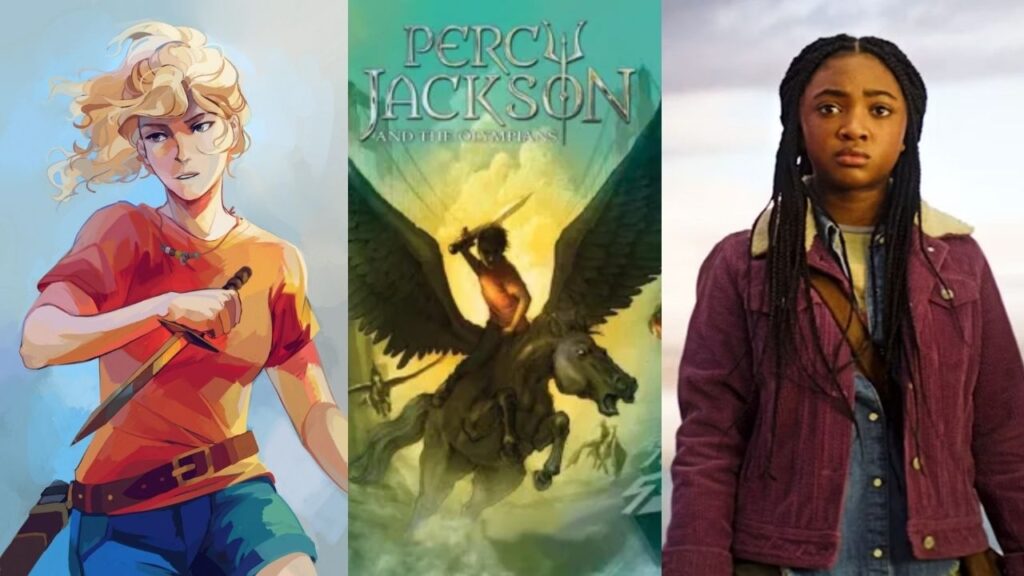
Annabeth Chase is a conceptual shift that tips more toward intellectual and psychological terms rather than pure kinetic ones. Her “upgrades” are determined by how she navigates and ultimately balances her fatal flaw: hubris.
From Architect to “Administrative” Wisdom
Over the course of the PJO series, Chase’s growth is focused on her conviction that she’s capable of “doing things better than anyone else.” Yet the Battle of the Labyrinth was a crucial developmental choke point. She couldn’t solve the Labyrinth with Raw Logic, and she had to face the boundaries of her divine nature.
In the most recent installments – including The Chalice of the Gods – Chase’s character has become controversial. Though she is still the “wise strategist,” her character has been recast as a more homebound, “administrative” figure. Some say it’s “one-dimensionalised” her, but psychologically, this is the “Shadow of Athena” taking shape as a yearning for order and stability in the aftermath of two world wars.
The Growth of Nico di Angelo
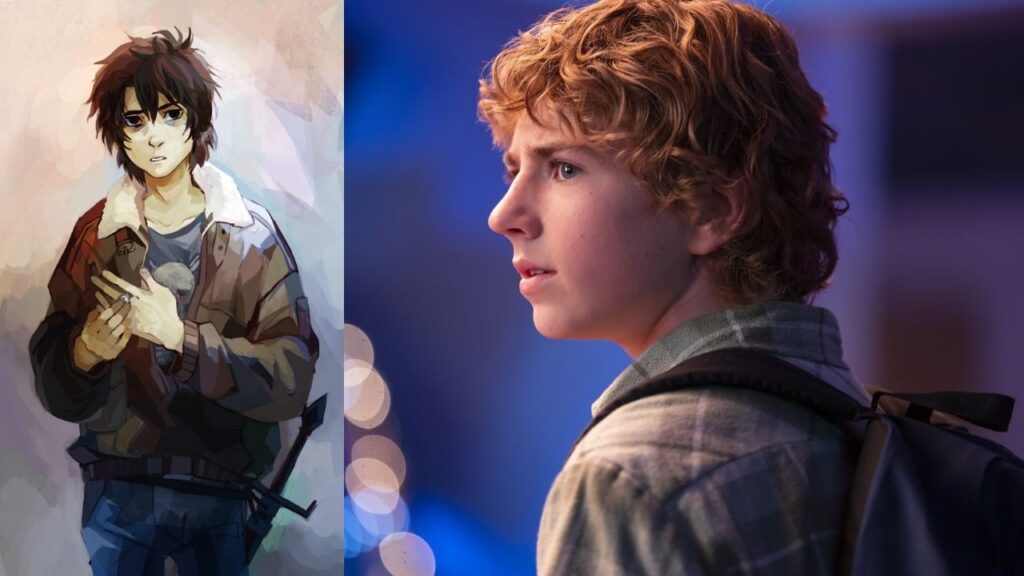
Nico Di Angelo’s story arc is the most incisive trauma and identity in the Riordanverse. It progresses from “Mythomagic-obsessed” child to grim necromancer and then to a hero who has embraced his “shadow.”
The Integration of the Cacodemon
A significant upgrade takes place as Nico descends into Tartarus. On this quest, he must face the “cacodemons” — physical representations of his worst fears and guilt. Instead of trying to kill these demons, di Angelo makes the radical move to “embrace and release them” — in other words, to live with his past trauma. It’s a “power-up” for the mind, and superior to any new necromantic talent.
The “Senior Year” Metamorphosis: Themes of Aging
The current stage of the Riordanverse, colloquially referred to as the “Senior Year Adventures,” is a thematic evolution from “Cosmic Conflict” to “Existential Maturation.” The central conflict has ceased with Titans war —-now a mortal world.
The Denial of Mortality
Immortality is explicitly turned down as a motif that is revisited. Jackson, now eighteen, is challenged by gods, such as Ganymede and Hebe, who are “disgusted by the idea of growing old.” The growth of Jackson’s character is solidified on his understanding that ”living one full complete life is better than an eternity stuck in one place.”
The narrative shift in these new titles is that mundane objectives — such as securing letters of rec for New Rome U. act as the basis for mythic adventures.
Ganymede’s Chalice: The burden of eternal youth.
Hecate’s Pets: The “haunted” quality of history.
Letters of Recommendation: Institutional validation vs. individual value.
To be sure, there is a unique and necessary “upgradation” in the series, which is the explicit naming of mental health problems. Although earlier books alluded to trauma in demigod existence, the newest series names particular mental health disorders.
The Diagnosis of the Seven: The impact of the “Great Prophecy” on mental health is a significant motif. These ”involuntary dreams” that demigods have are now interpreted as a form of intrusion, one of the symptom clusters of PTSD.
For those such as Nico di Angelo, trauma generates empathy. This “psychological upgrade” moves the hero archetype away from brute strength and toward resiliency and the power of choice.
Conclusion
The development of these personas is indicative of myth’s continual evolution in relation to the human situation. From the early 2000s “Building Level” combatants to the 2025 “Trauma-Informed” adults, the shifts undergone by these characters are overwhelmingly centered on emotional intelligence in place of divine invulnerability.
Jackson’s decision to embrace the god of old age, and di Angelo’s accepting his inner demons, mark a final “upgradation”: the understanding that a hero’s greatest strength is his or her ability to evolve, transform, and, ultimately, grow old. This keeps the Riordanverse as a “living mythology,” and role models a generation that values empathy and the bravery to confront the mundane in a chaotic world.
Fandomfansis a platform where you can find details on deep theories behind the legendary characters.
Alpana
Articles Published :
156
Alpana is Fandomfans Senior Editor across all genres of entertainment. She evolved in the media industry since a very long time, she manages the content strategy and editing of all the blogs. Her focus on story development, review analysis, and research is well-equipped that ensures every article meets the standards of accuracy and depth.
Richard Linklater is known for his temporal distortions, which he often varies over the course of decades, as in the Before trilogy or Boyhood. But in his 2025 magnum opus, Blue Moon, he does something radically different. He condenses the crushing burden of an entire career going down the tubes into a single confining night in the bowels of Sardi’s restaurant.
This movie is not simply a biopic, it’s a chamber piece on the brutal architecture of artistic mourning. It is March 31, 1943, and with these words the film memorializes the end of the Jazz Age, which was immediately supplanted by the “golden age” of the musical theater.
Larry Hart’s Emotional Unraveling Inside the Walls of Sardi’s
The setup is ruinously straightforward. Lorenz “Larry” Hart (an electric Ethan Hawke), the brilliant, jaded lyricist half of the legendary Rodgers and Hart team, is holding up the bar at Sardi’s.
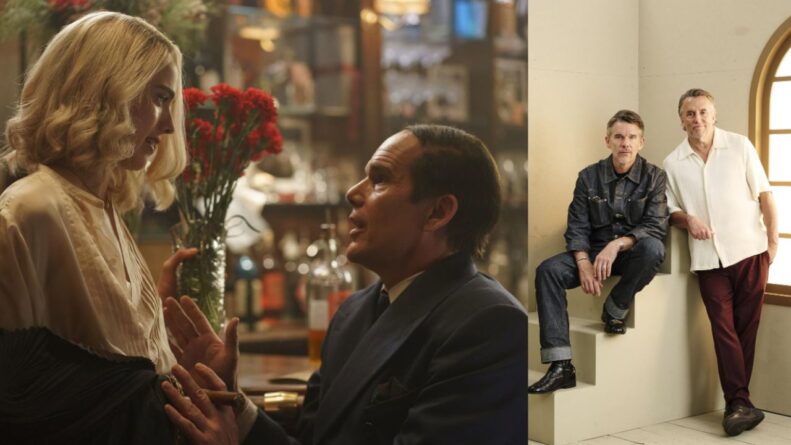
Andrew Scott, Margaret Qualley, & Ethan Hawke in Blue Moon | Image credit: Fandomfan
Just across the street, his one-time soul mate and partner, Richard Rodgers, is debuting Oklahoma! with another partner, Oscar Hammerstein II. Hart must wait in the limbo of the restaurant, the muted applause he can hear is the sound of him being made redundant.
Linklater has said the film “Deals with a trauma that is, in a way, two-fold.”
This is not just a business split, it’s an artistic divorce between two men who defined an era together. Rodgers, the practical puppet master, had to change in order to live, to detach himself from Hart’s chaotic alcoholism and revue-style wit to something more formal and honest. Hart, the poetic soul of the roaring twenties, was just abandoned.
Ethan Hawke’s Career-Defining Transformation as Lorenz Hart
The brilliance of Blue Moon is that it knows how to wait. According to The Guardian, Linklater and Hawke had been thinking about this film for more than ten years. Linklater famously told Hawke years ago,
“I’ll wait 10 years,”
Knowing the actor had to age into the role. To play the battered, gnome-like figure of the 47-year-old Hart, a guy worn down by drink and depression, he had to lose his youthful boyishness.
Image credit: Fandomfan
That prolonged timeline gives the film a deep, lived-in sadness. We see Hart desperately go through the motions of his old self — flirting, quipping, drinking trying to drown out the scary fact that the society he helped shape has no use for him anymore. He derides the “corny” nostalgia of Oklahoma! and cannot understand why the audience’s preference has moved away from his urbane sophistication to simple country sweetness.
Blue Moon Feels Like a Love Letter to Forgotten Artists
“We all think we’re gonna run the table forever but tastes can change,” Linklater says in the production notes.
That is the film’s haunting thesis. Blue Moon is a monument to the “loser” of historical change. It’s a beautiful, sad recognition that sometimes even the most brilliant cultural architects find themselves trapped in the past, watching the future being built just down the street without them.
Image credit: Fandomfan
Conclusion
Blue Moon isn’t merely a movie — it’s an elegy. Linklater creates a haunting reflection on change, mourning and the slow brutality of time. The film, anchored by Ethan Hawke’s brilliant performance, reminds us that even the most brilliant creative minds can quickly become relics. It’s a masterwork of stillness, sorrow and storytelling: a paean to those who made the past even as they watched the future speed by.
Our daily coverage brings you the key takeaways, storytelling and pop-culture shifts from cinema. TheFandomfan’s mission is to assist you understand films not just as entertainment, but as cultural events that influence in the world of what we think.
Alpana
Articles Published :
156
Alpana is Fandomfans Senior Editor across all genres of entertainment. She evolved in the media industry since a very long time, she manages the content strategy and editing of all the blogs. Her focus on story development, review analysis, and research is well-equipped that ensures every article meets the standards of accuracy and depth.