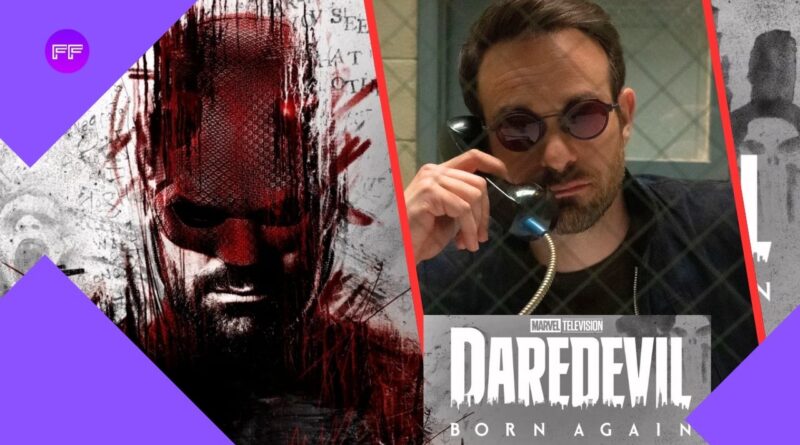
Daredevil Born Again Marks a New Era for Daredevil in the MCU
Daredevil Born Again returns Matt Murdock to the MCU. Check out crossovers, Kingpin’s ascension, courtroom showdowns and Daredevil’s new street-level legacy.
Matt Murdock’s ascent as the ultimate TV comeback tale with Daredevil Born Again. After his grim Netflix show was axed after three seasons in 2018, it seemed like the “Devil of Hell’s Kitchen” might be out of luck for good. Instead, Marvel pulled a master class in character rehabilitation.
Splitting him (and his arch-enemy, Kingpin) across four very distinct series — Spider-Man, She-Hulk, Hawkeye, and Echo — Marvel connected the dots between his grim, street-level beginnings and the bigger, flashier MCU.
Daredevil Born Again neighborhood hero became more than that now. He’s been raised to the ethical and legal foundation of the whole franchise. It’s not just a Season 4; it’s a character study of a man caught between the law and the mask, searching for justice in a New York still grooving to the chaos of the Blip.
The Road to Daredevil Born Again is a meticulously crafted “what-have-you-done-for-me-lately?” Marvel made four deliberate cameos to convince us that Matt Murdock could leave his first dark, solitary Netflix pocket and step out into the wider, stranger battlefield of the Avengers and then get his own show again.
The Movie Star Moment (Spider-Man: No Way Home): This was the “official” handshake. Catching a brick and standing in for Peter Parker, Matt demonstrated that he and Marvel live in the same universe as the Avengers. It presented him as a “really good lawyer” who still had keen super-senses and was ready for the big leagues.
The Vibe Check (She-Hulk): That was our first time seeing Matt—cute, fun, and draped in a throwback yellow suit. It showed him as more than “a brooding guy in a hallway” but an experienced warrior who could square off against beings like “Hulk-level” villains and still maintain his composure.
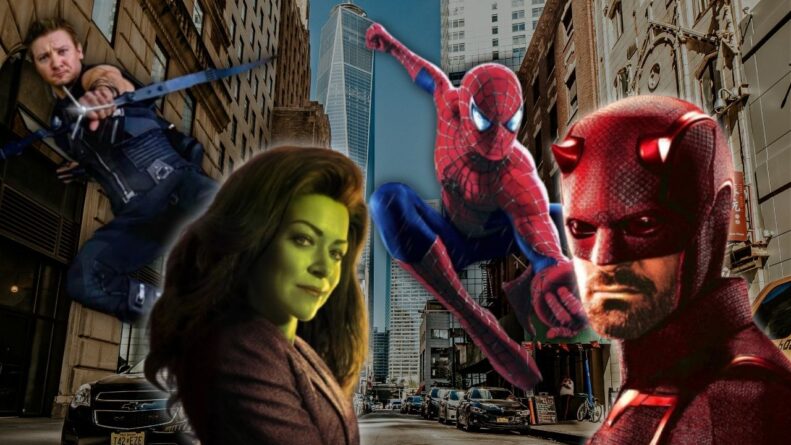
The Villain Upgrade (Hawkeye): This focused on Wilson Fisk. Raising the stakes Marvel elevated the stakes by making Kingpin durable against explosions and car crashes. Now he wasn’t just a mob boss he was a “global threat,” and his shadow stretched over the whole city.
The Final Link (Echo): Daredevil Born Again brought everything full circle. In a savage battle and an extended view into Fisk’s history, it served as a reminder that Matt didn’t stop fighting during the “Snap” years. It culminated with Fisk’s bid for Mayor, which paved the way nicely for the new series.
For ages fans were fretting that Marvel was going to force a “reset button” on Daredevil Born Again, retconning everything that made the Netflix show great. But after a sweeping creative shakeup at the top, Marvel made a pivot that encompassed everything: they were going to look to the past instead of running away from it.
The “Hard Continuation” Victory: Although Daredevil Born Again was going to be a “soft reboot.” However, Marvel replaced the original creative team with a new showrunner to continue as a direct sequel to the original three seasons. Matt’s past – his scars, his faith, his feud with Fisk – still matters. We already are into the deep end of the main story where it originated.
Matt survival from Thanos: It turns out that both Matt and Wilson Fisk survived Thanos’s Snap. With the Avengers either off-planet or mourning, Hell’s Kitchen was unraveling. This gap of five years is the “secret sauce” of the new story. It gave Fisk a chance to reestablish himself as a power in the collapsing world, turning his criminal empire upside down and presenting himself as a “savior” for a broken city.
A New Kind of Crisis: For Matt the Blip wasn’t just a simple logistical nightmare, it was a spiritual one. Daredevil Born Againcompounded his “crisis of faith.” If the laws of nature can just extinguish half the population, how is a blind lawyer supposed to believe in the “rule of law” on Earth? He’s starting this new chapter in his life with what has been the heaviest burden of a decade’s worth of ups and downs.
Daredevil Born Again renders stark reality in its depiction of a disease-ridden, drug-addled Matt Murdock that no one could ever forget. He has laid down the brass knuckles and picked up the gavel in his election as mayor of New York City, and is now using the entire city government as a weapon against Matt Murdock.
The “Kingpin Squeeze”: Fisk isn’t just dispatching thugs to Matt’s home anymore. He’s making being a hero illegal through the Anti-Vigilante Task Force (AVTF). By painting Daredevil as a public menace, he’s employed the “rule of law” to chase his nemesis with a badge and a siren.
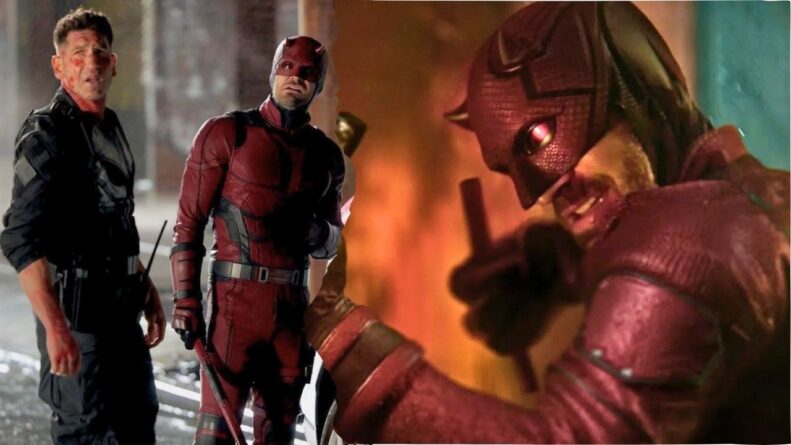
The Ultimate Strongman: Fisk’s ascent is a masterclass in manipulation. He preys on the anxieties of regular New Yorkers who feel the city has deserted them, not the Avengers. He presents himself as the only person who can restore order in a post-Blip world, and is taking advantage of “good optics” — even as he’s blackmailing the police commissioner and threatening martial law.
A Criminal “State-Within-a-State”: Behind the scenes of Daredevil Born Again, Fisk is working on the “Free Port,” in Red Hook. He’s attempting to establish a special-trade zone outside federal reach. If he pulls it off, he will have created a legal “black hole” through which the Five Families can move whatever they want without the law’s pesky interference.
Matt Murdock is basically a man serving two masters, and Daredevil Born Again, that strain is at last beginning to break. He’s a lawyer who takes an oath to uphold the law by day, but at night, he’s a vigilante who violates just about every ethical rule in the book. This isn’t just a “cool secret identity” this is a deep professional and moral crisis.
Here is what the “legal nightmare” Matt is facing right now:
The Threat of Disbarment: If a Bar Association in the real world got wind of what Matt does by night, he would be disbarred immediately. Rule 4.2 prohibits Attorney from communicating with a “represented party” without the party’s attorney being present. Anytime he has a Daredevil pin a criminal and punch the truth out of them, Lawyer-Matt is making a huge ethical error. He is basically using his mask to violate the legal rights which he is obliged to honor.
The Conflict of Interest: Matt frequently represents clients not to aid them but to gather intelligence for his missions. This makes it a “material risk” that he isn’t acting in the best interests of his client — which is the worst thing you can do as a lawyer.
The Hector Ayala Meltdown: This firestorm touches off Matt’s meltdown. To exonerate Hector (the White Tiger) from a murder charge, Matt stakes everything: he unmasks Hector in court to prove his innocence. It works—they win the case but what’s the victory but a hollow victory. Hector is assassinated by a corrupt cop right after leaving the courtroom.
The transition to the main MCU is not just a change of location; it’s a solidifying of Matt Murdock’s world. The people around him aren’t simply ”background characters”—they are the scars and the fuel for his new mission.
Here’s how the inner circle has changed in this “older and harder” reality:
The Heartbreak: The Death of Foggy Nelson. Foggy wasn’t just Matt’s law partner; he was his moral anchor. His death at the hands of Bullseye (by order of Vanessa Fisk) is the ruthless “catalyst” for the series as a whole. It shatters the “Nelson, Murdock & Page” trinity forever, and sends Matt into a year-long tailspin. In fact, he temporarily retires the mask, worried that his rage might make him a murderer.
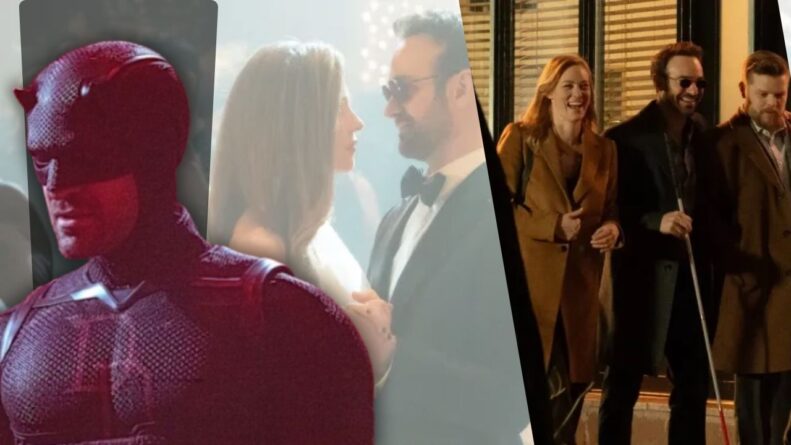
The Evolution: Karen Page as a Peer. Karen is a long way from, you know, the secretary. Daredevil Born Again she’s basically a lawyer in her own right, a professional equal who challenges Matt to be better. She’s the one who pulls him back into the fight, with her investigation skills, she digs to what was left by Foggy. “She Feeds Matt his Humour-Detecting BS and Then Keeps Him Human“: As far as who the true Page is in the gloves is concerned, that would be Karen Page.
The Dark Mirror: Frank Castle (The Punisher). The two used to spend all their time arguing about the “morality of killing.” Now they’re a “reluctant duo. The rupturing effect of Foggy’s death and the city’s decay soup on Matt is so palpable (NOT in the traditional sense!) that he is seriously considering Frank’s brutal approach. This is a heartbreaking indication of how much Matt has dropped, he cannot have a flawless sense of morality in a world that seems to be inherently rigged.
Now that the MCU is blasting off to space and multiverse madness, Matt Murdock is becoming the man who keeps the franchise’s feet planted firmly on the ground. He’s gone from “that blind guy in Hell’s Kitchen” to a cornerstone of Phase 5 and 6—essentially the Captain America of the Streets.
Here’s how Matt is assembling his “Street-Level Avengers”:
The Strategic Lead: The Avengers may deal with cosmic gods, but Matt makes the most sense to head up an organized opposition to Wilson Fisk. His legal brilliance, his “human lie detector” talent, and his tactical expertise make him the MCU’s connection from the city’s merciless truth to its sky-high heroics.
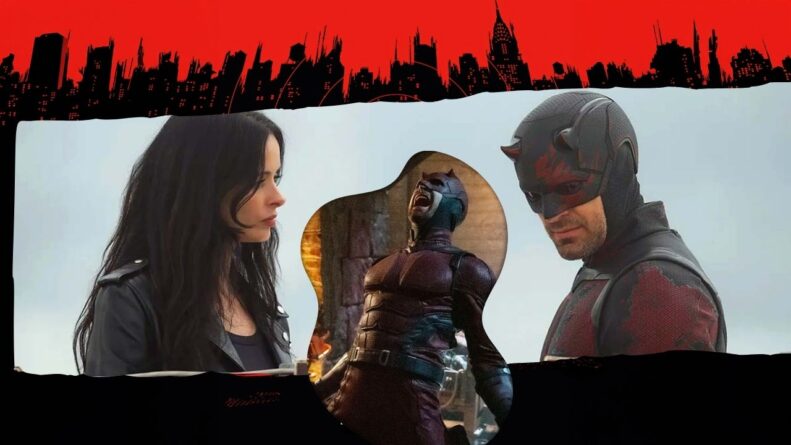
Mentoring Spider-Man: This is the partnership that everyone is eager to see. Following their short encounter in No Way Home, Matt now has the perfect place to show Peter Parker that you can’t just win every war with webs. He is the mentor Peter needs to survive in a world where the bad guy (Fisk) has a law degree and a mayor’s office.
The “Grounded” Anchor: Amid a world of magic and aliens, Matt ensures the stakes stay Earth-bound. He lets us know that though the galaxy is locked down, the block still might be rotting from within.
Matt Murdock isn’t just a supporting character now — he’s the head of a spin-off narrative arm that delves into corruption, systemic breakdown, and what it really means to be a “neighborhood” hero in a world buzzing with superheroes.
Read more:- The Green Lantern’s Guy Gardner Became the Heart of James Gunn’s New DC Universe
Ultimately, Matt Murdock’s story is not just about a hero returning: it’s about him coming home as the MCU’s streets’ cornerstone. He’s graduated from being a “neighborhood outlier” on Netflix to the moral compass of the entire franchise.
The cameos were the warm-up, Daredevil Born Again is the headliner. It is a definitive declaration that the Man Without Fear is exactly where he belongs right in the middle of the battle for the soul of the Marvel Cinematic Universe.
Dive deeper into the world of cinema with Fandomfans to get all the latest updates from movies, series, and celebrities.

Discover everything you missed from Spider-Man: Brand New Day, including key details, hidden clues, major reveals, characters, and important moments you may have overlooked.

Spider-Man: Brand New Day crossed a billion dollars worldwide in under a week, which means a lot of people have already seen it once and are gearing up for round two. That’s usually where the real fun starts with a Marvel movie everything you missed from Spider-Man: Brand New Day will catch up in the second viewing, when you’re not white-knuckling the plot and can actually clock the comic-book cover recreations, the villain cameos buried in a three-minute montage, and the one line of dialogue that quietly rewrites everything you thought you knew about the film’s antagonist.
Destin Daniel Cretton’s take on Peter Parker’s post-“No Way Home” life is stuffed with that kind of detail, and a lot of it moves fast enough that even attentive fans are catching up on second and third watches.
The most obvious change in Brand New Day is also the one with the deepest backstory. Tom Holland’s new red-and-blue costume ditches the Stark-tech panels and metallic trim that defined his earlier suits in favor of something closer to the comics’ classic look — bigger chest emblem, brighter colors, simpler webbing. That’s not a random redesign.

Holland and Cretton have both said the suit was built as a deliberate blend of Tobey Maguire’s and Andrew Garfield’s costumes, since this version of Peter has now actually met both of those men. Holland described it as pulling from “Tobey’s and Andrew’s designs” to create something like a spider-child of all three suits. It’s a subtle way of saying the movie takes Peter’s multiversal reunion in “No Way Home” seriously — that meeting his older, wiser variants changed something in him, down to the way he dresses for work.
The costume swap also lines up with a bigger story beat: Peter’s lost access to his old Stark-built tech entirely, so the downgrade in gadgets is baked into the visual downgrade in suit design.
Spider-Man: Brand New Day leans harder into direct comic-panel recreation than any prior Holland movie. The opening montage where Spider-Man carrying a thug echoes Amazing Fantasy #15, his first-ever appearance, and there’s a full recreation of the Spectacular Spider-Man #142 cover with Tombstone dangling him off a rooftop.
Later shots pull from The Spectacular Spider-Man #1 and Amazing Spider-Man #221. None of this is background noise — the film frames the whole montage around a crime board in Peter’s apartment, “great power comes with great responsibility” pinned above case files on the criminals he’s been quietly working through, including Scorpion and Tombstone by name.
It’s a nice visual shorthand for a Peter who’s been operating alone and methodically for years, treating crimefighting less like heroics and more like a caseload.
Read More 👉 Linkedin Games Answers Today (26 August 2026): All Puzzle Solutions
That opening montage is doing more legwork than it looks like on a first watch. Tombstone, played by Marvin Jones III, gets his few seconds of screen time as a nod to the character’s 1988 debut in Web of Spider-Man #36 — and Jones has actually played the role before, voicing Tombstone in “Into the Spider-Verse.”
Boomerang and Tarantula also flash through the same sequence. The Hand shows up fighting Spider-Man early on too, which is a strange left turn for characters usually tied to Daredevil, until the film reveals Bill Metzger has since “rehabilitated” them into a security force working for the Department of Damage Control.

Scorpion gets more to do here than he ever did in “Homecoming.” Michael Mando returns as Mac Gargan with two real fight sequences, the second of which — Scorpion under Jean Grey’s mind control, battling a Spider-Man losing his own grip on his unstable powers is one of the film’s better action beats.
There’s also a smaller, deeper cut for comics readers: Frank Castle hiding out on a decommissioned boat is a direct pull from Spectacular Spider-Man #141, where the Punisher used a boat called the “Golden Girl” to stash weapons, in a Gerry Conway and Sal Buscema arc that also involved Tombstone.
Tramell Tillman’s Department of Damage Control director looks like a fairly ordinary company-man role for most of the runtime, but his comic history says otherwise. Metzger led the Anti-Mutant Militia and fought the X-Men directly in the miniseries “X-Men: Children of the Atom.”
The film changes his role considerably, but the anti-mutant thread is still there if you’re watching for it — and once Jean Grey’s identity is confirmed, his hostility toward her reads very differently on a second viewing. This is a deliberate setup for future mutant-focused storytelling rather than a coincidence, though neither Sony nor Marvel has confirmed anything beyond what’s on screen.
Read More 👉 Lanterns Episode 1 Sets Hidden Batman-Gotham Connection
The film keeps its central antagonist masked in mystery for roughly the first half, before confirming that Sadie Sink is playing Jean Grey — one of the original X-Men, here introduced as a mind-jumping villain rather than a hero. Her motivation, once it lands, is genuinely sympathetic: she’s searching for her sister Sara Grey, a fellow telepath who died in Damage Control custody, and the only thing Jean has left of her is a hair scrunchie.
Cretton has said the film built Jean and Peter as mirrors of each other — both defined by traumatic loss, the difference being that Peter still has a community around him while Jean’s community was reduced to one person, then taken from her too.
It’s a genuinely strong character idea, and it’s part of why reviewers have singled Sink out as the best part of the movie. But the marketing-driven secrecy around her identity has also drawn real criticism.

Some critics have argued the mystery-villain approach — withholding her name and powers for marketing purposes — actually drained tension rather than building it, comparing it to the much-derided “Star Trek Into Darkness” reveal.
There’s also a fair critique that her body-count during the mind-control rampage sits awkwardly next to her eventual redemption arc, since several people are shown getting seriously hurt, if not killed, while she’s in control of them. Whether that tension gets addressed head-on in a future film or just quietly smoothed over is genuinely unclear right now.
Florence Pugh’s Yelena Belova shows up in a smaller but pointed scene, where she references the Red Room training program from “Black Widow” while comparing notes with Peter on mind control, and needles him by calling his caseload “small potatoes” next to what the New Avengers are currently handling — a fun bit of connective tissue for anyone keeping up with the post- “Thunderbolts” team.
The film sends a mind-controlled Scorpion via helicopter to Bellevue Hospital, a location with a long history in Marvel comics stretching back through Daredevil and Thor stories. And in a much quieter callback, Peter spots a LEGO Chewbacca in Ned’s room during a party scene — presumably from the same Death Star set Ned was building back in “No Way Home.”
If you’re rewatching specifically to hunt easter eggs, keep an eye on Bruce Banner’s scenes too; there’s an Empire State University detail tucked into the background that’s easy to miss on a first pass.
Read More 👉 Lanterns Episode 1 Ending Explained: Who Killed Hal Jordan?
Unlike some recent Marvel entries, Spider-Man: Brand New Day saves its one bonus scene for after the full credits roll, and it’s deliberately sparse: no actors, just Ned’s homemade Spider-Man tracker app. The interface, styled like an old pixelated video game map, shows Spidey’s usual New York City location before glitching and zooming out — past the Moon, into deep space where the tracker pings him somewhere off-world. Marvel’s “Spider-Man will return” card follows, without naming the project.
The obvious read is that this sets up “Avengers: Doomsday,” releasing December 18, 2026. But that film’s multiversal conflict, as far as anyone knows, doesn’t take place in space, which has led some outlets to argue the scene is actually pointing toward the still-uncast “Secret Wars” instead — a film widely rumored, but not officially confirmed, to reunite Holland with Maguire and Garfield.
Fan theories have also floated the idea that the off-world signal belongs to one of those other Peter Parkers rather than Holland’s own. Andrew Garfield was asked directly about it and gave a deliberately unhelpful non-answer, joking that it could just as easily be Miles Morales making his live-action debut.
Given that Garfield spent years publicly denying his “No Way Home” cameo before it happened, fans aren’t exactly taking his denial at face value but as of now, nothing about the scene’s actual meaning has been confirmed by Sony or Marvel.
Spider-Man: Brand New Day was clearly built to rewatch the crime board, the comic-cover restagings, and the Metzger foreshadowing all work better once you already know where Jean Grey’s story is headed.

If you’re going back in, skip past the obvious trailer easter eggs and watch for the smaller stuff instead: the scrunchie, the Empire State University signage, the “small potatoes” line. Whatever “Spider-Man will return” ends up meaning, this version of Peter Parker has earned enough goodwill and box office that Sony isn’t likely to let this be his last grounded outing before things go multiversal again.
Taken together, none of this reads as filler. The secondary mutation, the DODC’s anti-mutant undertones, Jean Grey’s introduction, and that final shot of Spider-Man drifting off into space are all pointing in the same direction: toward a much larger, more cosmic chapter of the MCU that’s already queued up with Avengers: Doomsday and Secret Wars.
Spider-Man: Brand New Day works as a self-contained story about a guy trying to figure out who he is without anyone around to remind him — but it’s also very clearly laying track for what comes next, one Easter egg at a time.
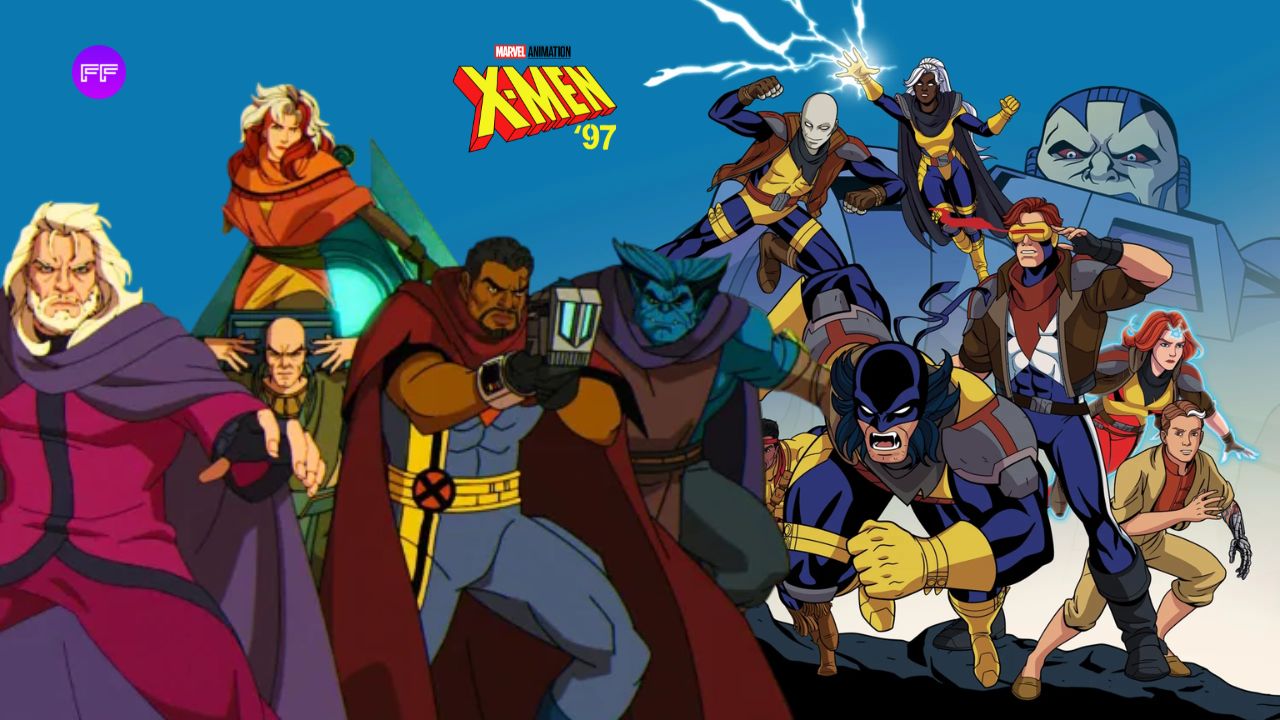
Get ready for XMen 97 Season 2 with the official Marvel comics guide. Discover the essential prelude series and key storylines to read before watching.

A few classic XMen comics that are worth diving into first before watching XMen 97 Season 2. Not because the series demands it, but to understand the depth of these stories that make the new season even more rewarding. When you are going to watch the new season knowing why Rama-Tut is terrifying, the complicated origins of Cable, Cyclops and Jean’s heartwrenching journey of raising a kid is going to wreck you emotionally before the season even hits its stride.
Marvel designed a guide around this season along with the nine new episodes. This makes you understand as Season 2 doesn’t play it safe with a single timeline. Characters are scattered in three different eras — past, present, and future. Ancient Egypt era where everything is started, future nightmare that is almost finished off the world, and present day that’s trying to hold itself together without its most powerful heroes.
Each of those threads is rooted in a specific chunk of 1990s and early 2000s comic lore, and if you go in blind, you’re going to miss half the emotional weight the writers spent years building. So let’s dive into the depth of the comic guide before watching XMen 97 Season 2.
Before getting into the comics, it helps to remember where Season 1 left off. The finale, now referred to in the show’s canon as Extinction Day or E-Day, ended with Magneto’s orbital sanctuary, Asteroid M, getting caught in a nuclear strike after Bastion weaponized it using Cable’s stolen time-travel technology. The explosion didn’t just destroy the asteroid — it tore open a temporal singularity that swallowed the surviving XMen whole.

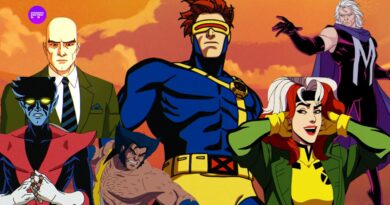
To the world of 1997, the team is dead. Martyrs who sacrificed themselves to save a species that spent years hunting them. In reality, they’re scattered across time, and that scattering is the entire engine of XMen 97 Season 2. Rogue, Nightcrawler, Beast, Magneto, and Xavier land in 3000 B.C. Cyclops and Jean Grey get thrown nearly two millennia into the future. And back in the present, Forge, Jubilee, Sunspot, Bishop, and an adult Cable are left to figure out how to defend a world that no longer has its XMen.
You just have to understand the structure that isn’t random. And you know it after looking at it like a blueprint.
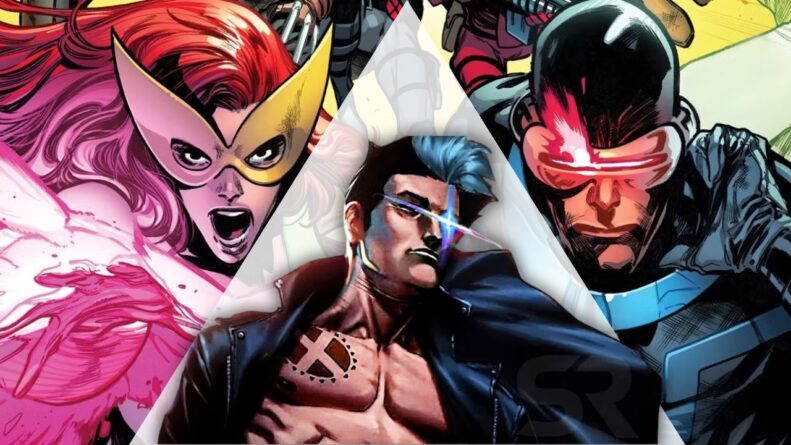
If there’s one book you actually shouldn’t skip, it’s this one. The Adventures of Cyclops and Phoenix, a four-issue miniseries from 1994 written by Scott Lobdell with art by Gene Ha, is the emotional backbone of the entire future timeline in Season 2.
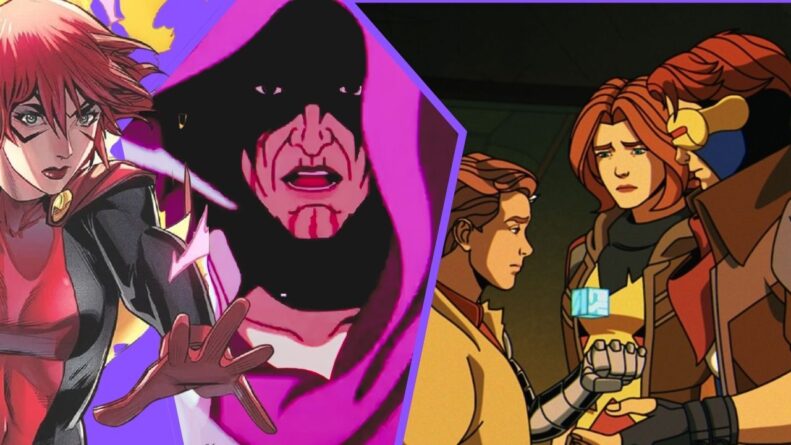
If we look at its Season 1, Cyclops and Jean have to send their little son Nathan forcibly into the future while trying to save him from a techno-organic virus. That infection is injected into the Mister Sinister before he could realise it. That separation broke something between them. Now, in Season 2, they land in that same future — a wasteland ruled by Apocalypse — and they’re reunited with Nathan, who’s being sheltered by a resistance movement called Clan Askani.
This is where the comic becomes essential reading. It’s not just about Cyclops and Jean surviving a hostile future. It’s about them getting an almost unbearable second chance: raising the son they thought they’d lost, knowing the whole time that his destiny is to become Cable and eventually travel back to fight a war against Apocalypse that never really ends. There’s also a deeper layer here if you dig into the lore — Mother Askani, the leader sheltering them, is in the comics an aged version of Rachel Summers, an alternate-reality daughter of Cyclops and Jean. That’s the kind of detail that turns a “oh that’s a nice reunion” scene into something that quietly gutting once you know what’s underneath it.
Read this one before Episode 1. It’ll change how you watch every scene between Scott, Jean, and young Nathan.
Read More 👉 What’s Next for Marvel After the Multiverse Saga? Future Plans Explained
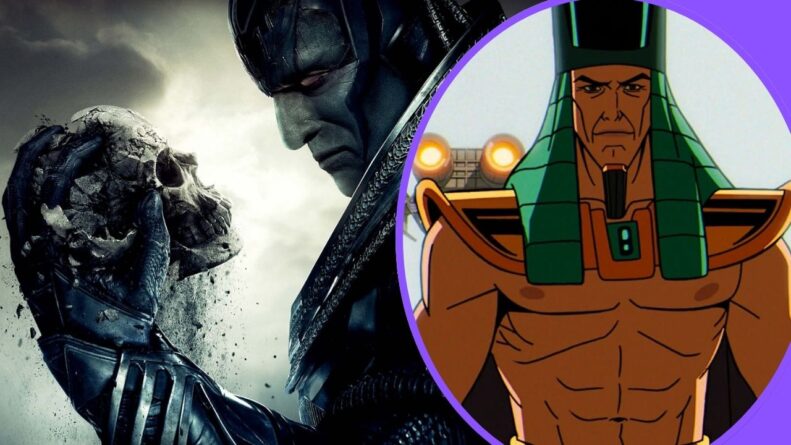
The second must-read is Rise of Apocalypse, a 1996 series that traces En Sabah Nur’s origins as an orphaned rebel rescued by the nomadic Sandstormers tribe and raised under the oppressive rule of Rama-Tut, a time-displaced version of Kang the Conqueror.
Season 2 leans hard into this. When Magneto, Xavier, Rogue, Beast, and Nightcrawler land in 3000 B.C., they don’t stumble into a fully formed tyrant. They meet a young, marginalized warrior fighting for survival against Rama-Tut’s forces — someone they instinctively want to protect. The series is clearly building one of the most thought-provoking ideas: what if X-Men act of goodness is actually the reason that pushes En Sabah Nur on the path to becoming Apocalypse?

That question is much more impactful if you have read the source material, as “Rise of Apocalypse” dedicates actual time — and page count, really — to making him more human before his Darwinian “survival of the’’fittest” ethos hardens into something monstrous. Watching Magneto, of all people, end up in a position to mentor him adds a whole other layer, given Magneto’s own history as a genocide survivor turned militant. This isn’t a book you need to memorize, but understanding the broad strokes will make the ancient Egypt storyline land as more than just “cool desert battles with a future villain.”
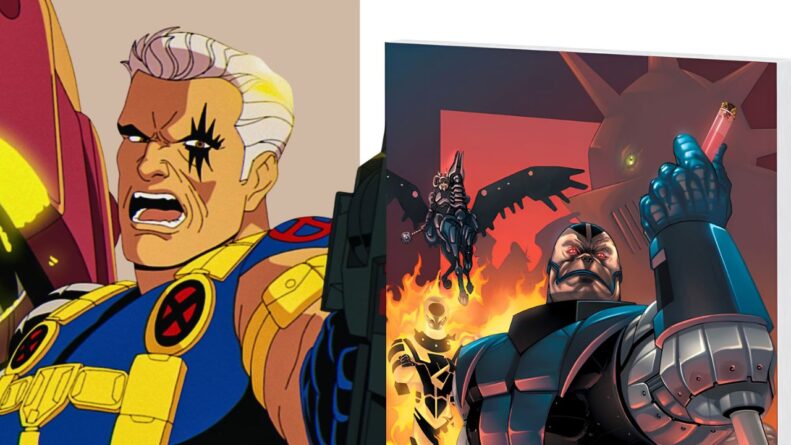
As Xavier is not present in the timeline so the burden of protecting mutantkind shifts to Cable. XMen 97 Season 2 has him forming the X-Force group that favors decisive, lethal defense over diplomacy and approaches hook that traditionally defined XMen.
If you read Rob Liefeld and Fabian Nicieza’s original X-Force run from 1991 then you could understand the tonal shift of this series. The nature of the story is heavily leaned towards aggressive and cold action, suggesting that peaceful coexistence isn’t always realistic when the world keeps trying to kill you. You don’t need to read the whole run cover to cover — even flipping through the first handful of issues will give you a feel for why Cable operates the way he does, and why characters like Archangel and Psylocke fit so naturally into this rougher, more combat-focused unit.
It also helps explain the tension the show is clearly building between Cable and Jubilee, who’s trying to hold onto Xavier’s original dream in a present day that increasingly doesn’t have room for it.
Read More 👉 X-Men ’97 Season 2: Marvel’s Legendary Mutants Return
The series is more focused on visual directions rather than the specific plot. Grand Morrison and Frank Quitely’s New X-Men crafting its heroes in a new look from bright colorful costumes of the 90’s. The expectation of updated designs in X Men 97 Season 2 could be more practical and understated than before that matches the tone of the series.
If you have seen any XMen 97 Season 2 promotional images, you would have noticed that they’re drawing clear inspiration from this influential era of the comics. A less primary-color superhero is a direct visual nod to this run.
You don’t have to read all of it, but even just scrolling through the art will give you a sense of the aesthetic direction the show is heading. Thematically, it seems to be turning into a rougher, more realistic time period for mutants which goes hand in hand with everything else we’re seeing this season.
Marvel released a five-issue prelude comic, written by Steve Foxe with art by Salva Espin, that was developed in direct coordination with Marvel Studios Animation. This isn’t a loosely connected tie-in. It’s built to fill in the gaps between the two seasons, focusing on Forge, Jubilee, Bishop, and Sunspot as they deal with a terrified public in the immediate aftermath of E-Day.

Because animated episodes only have so much runtime, a lot of connective tissue simply couldn’t fit on screen. This comic is where that missing context lives. It covers how the mutant population processes losing its most visible protectors, and it sets the emotional and political temperature for the present-day storyline you’ll see play out with X-Force and X-Factor. If you only have time for one book on this list, honestly, this is the one that most directly sets up what you’re about to watch.
Some shows throw comic references in as easter eggs for longtime readers. X Men 97 Season 2 is doing something more deliberate. The show went through a genuinely turbulent production period — original showrunner Beau DeMayo was removed before Season 1 even premiered, and Matthew Chauncey stepped in to lead a significant restructuring of scripts that had already been written. Despite that shake-up, the creative team clearly leaned even harder into comic accuracy rather than pulling away from it, likely to keep the storytelling grounded while so much else behind the scenes was in flux.
That’s part of why this reading list isn’t just marketing fluff. The show is adapting real, specific arcs, not just borrowing character names. Knowing where Cable actually comes from, why Apocalypse isn’t just a generic big bad, and what X-Force represents philosophically will genuinely change how you experience these nine episodes.
If a full reading list feels like a lot before July 1, prioritize in this order:
The XMen 97 Season 2 prelude comic first, since it’s the most directly connected to what you’re watching. Then The Adventures of Cyclops and Phoenix, because the future timeline hits differently once you know Mother Askani’s identity and the weight of what Cyclops and Jean are being given a second chance at. After that, a quick skim of Rise of Apocalypse will do more for your understanding of the 3000 B.C. storyline than any recap video could.
XForce and New XMen are the optional extras — great for context, not essential for following the plot.
Whatever you manage to get through, one thing’s clear: this isn’t a season built for casual viewing. It’s built for people who want to sit with these characters across five thousand years of history and come out the other side understanding exactly why the X-Men’s story never really lets them rest.
Read More 👉 X-Men ’97 Season 2: What Could Make It Marvel’s Next Big Hit?
XMen 97 Season 2 isn’t just continuing the animated series, it’s expanding the timeline of Marvel storytelling. From character arcs to costume choices, everything is rooted in comic history. That’s why you should read a few comics before starting watching this series.
You will understand the dangerous villain Apocalypse’s tragic beginnings and Cyclops and Jean’s emotional reunion with Nathan that adds depth to the show when you watch it only by reading a handful of key stories. You don’t need to read every comic. And that’s exactly what makes XMen 97 Season 2 feel like more than a nostalgic revival.
Dive deeper into the depth of the series, movies, and characters to understand your favorite stories. Enter into the world of entertainment with Fandomfans.