The Witcher 3: Nobody Can Agree on Geralt’s Greatest Line
Greatest lines of Geralt of Rivia in The Witcher 3 reminding everyone the highest stakes and emotional weight of the story after eleven years.
Published: July 14, 2026, 10:03 am

Greatest lines of Geralt of Rivia in The Witcher 3 reminding everyone the highest stakes and emotional weight of the story after eleven years.
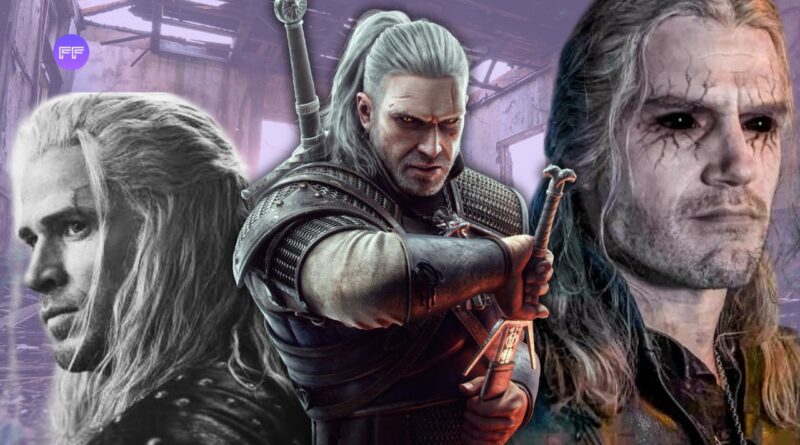
Eleven years after CD Projekt Red first sent Geralt of Rivia stumbling into White Orchard, the internet is once again arguing about the one thing it never actually settled: what his single best line in the entire game is. Not “top ten quotes” listicle territory — the one line, the mic-drop, the sentence people still bring up at parties nobody invited them to speak at.
Ask two different corners of the gaming press this week and you’ll get two completely different answers, and neither side seems to know the other exists. Some consider it merely a joke, and some treat it as a life philosophy. Surprisingly, both views hold water.
The case for comedy goes like this. About halfway through the main story, with Ciri’s trail going cold and the stakes about as high as they get, Geralt and his fellow witcher Lambert are crossing a lake by boat to reach the Circle of Elements. Fog rolls in. Tension should be building. Instead, Geralt — a man who has, up to this point, said maybe four sentences per hour of gameplay decides this is the moment to share a limerick he’s apparently been workshopping.
It shouldn’t work. It works anyway. That’s the whole argument for why this is the best line in the game: it’s not clever because of what it says, it’s clever because of who’s saying it. This is a character built entirely on the economy of words.
The voice acting that Doug Cockle gives in just the three games prepares you to expect silence from Geralt, so when he at last speaks, and what that is a limerick on a ship during a rescue mission, it gets played as a bona fide character moment rather than a throwaway joke. The Witcher 3 makes its emotional weight matter because it knows just when to knock it off.
The other side isn’t interested in jokes. Their pick is heavier, and it shows up when Geralt lays out — flatly, without any of his usual dry wit — how he actually sees the world:
“Evil is evil, Stregobor. Lesser, greater, middling — makes no difference. The degree is arbitrary. The definition’s blurred. If I’m to choose between one evil and another, I’d rather not choose at all.” — Geralt of Rivia
This isn’t a throwaway line buried in a side quest nobody finishes. It’s Geralt’s actual worldview, stated out loud, and CD Projekt Red clearly agreed it mattered, they reused it almost word for word in the “Killing Monsters” launch trailer, which means this was the line the studio chose to sell the entire game on. When a developer picks one piece of dialogue to represent thousands of lines of writing, that’s not a small endorsement.

Where the limerick works because it’s a break from Geralt’s character, this line works because it is his character. It’s the thesis statement for a man who spent two prior games and a pile of short stories getting burned by people who were sure they knew the difference between right and wrong.
Read More 👉 Westeros Is Not Done Yet: A Knight of the Seven Kingdoms Brings a New Legacy
Honestly, that depends on which version of Geralt you fell for. If what hooked you was the deadpan humor buried under the White Wolf routine, the limerick wins every time — it’s proof there’s a person under the mutations and monster contracts. If what hooked you was the moral weight, the constant refusal to pretend the world is simple, then the Stregobor line isn’t just his best line, it’s the one sentence that explains every choice he makes for the rest of the game.
Neither side is wrong. They’re just answering a different question about who Geralt actually is.
Honorable Mentions, Because The Bar Is Genuinely This High
“Lambert, Lambert, what a prick.”
— Not deep. Not trying to be. Still gets quoted more than most games manage in their entire script.
“No witcher’s ever died in his bed.”
— Said almost in passing, and somehow one of the saddest lines in the game.
The invisible hand of the market line is a Proof that Geralt would’ve survived an economics seminar just fine.
What’s actually interesting, more than a decade out, is that a game can still generate this kind of disagreement. Most RPGs get remembered for one big speech or one viral meme line and that’s the whole conversation.
The Witcher 3 has enough good writing scattered across sixty-plus hours that fans are still split on which piece of it mattered most and with Ciri stepping into the lead for The Witcher 4, there’s a real chance Geralt’s best line ever already happened, and we just can’t agree on which one it was.
So, limerick or lesser evil? Pick a side.
Video game writing gets thrown away constantly. Most dialogue exists to move you to the next objective marker, and players forget it the second the quest log updates. What makes both of these lines — the limerick and the Stregobor speech — worth arguing about eleven years later is that neither one is doing that job. They’re not exposition. They’re not filler between combat encounters. They’re the writers using a fifteen-second window to tell you who this man actually is, and trusting you to notice.
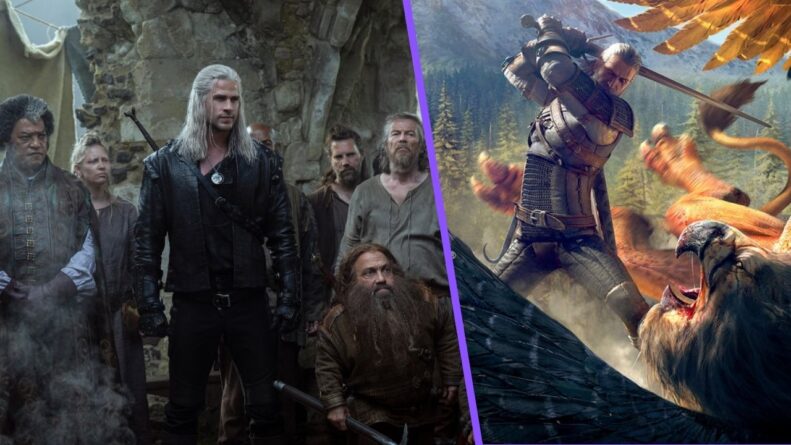
That’s rarer than it sounds. A game can have great combat, a sprawling map, and a hundred hours of content, and still forget to make its protagonist say anything worth repeating. The Witcher 3 didn’t forget. It built two completely different sides of Geralt — the deadpan joker and the reluctant philosopher — and let players pick their own entry point into the character. That’s not an accident of good voice acting. That’s writing with intent.
The next chapter doesn’t belong to Geralt at all — it belongs to Ciri, and that’s exactly what makes the wait interesting instead of frustrating. CD Projekt Red has confirmed The Witcher 4 as the first installment of a new trilogy, with Ciri stepping in as the playable character instead of Geralt. The studio has been explicit about why it made that choice, and it’s not a small swap — it’s a generational handoff for the entire series.
Don’t expect an early release of this game, CD Projekt Red has confirmed that it will launch in 2027. CFO Piotr Nielubowicz refused to give a more definitive date. However, the studio suggests that the team working on The Witcher 4 has expanded to several hundred developers, and CDPR said it wants to release the full Ciri trilogy within a six-year span — a much tighter turnaround between entries than fans saw the last time.
Read More 👉 Euphoria Season 3 Episode 3 Recap: “The Ballad of Paladin” Turns Out a Bloody Wedding
Handing the story to Ciri changes the entire question the series is asking. Geralt’s arc was about a man who’d already decided who he was and kept getting tested on it — hence lines like the Stregobor speech, a worldview stated once and defended for two more games. Ciri doesn’t have that settled worldview yet. She’s still becoming whoever she’s going to be, which means the writers get to build her defining lines from scratch instead of paying off ones we already know.
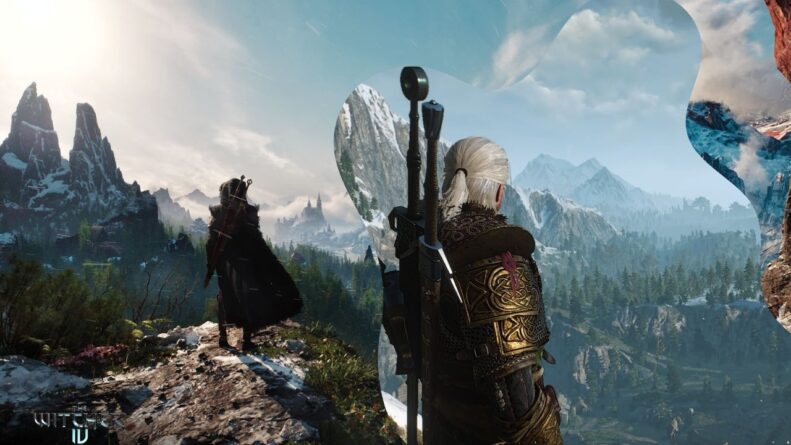
That’s the real reason this debate over Geralt’s best line isn’t just nostalgia. It’s a preview of the exact question fans will start asking about Ciri the moment The Witcher 4 lands: which line is hers? The joke that reveals the person under the training, or the flat, unshakeable statement of what she believes? CD Projekt Red already knows this game works. Now they just have to write it twice.
This debate is probably never going to have a definitive winner, and that’s fun. Geralt’s best line depends on which side of him catches your heart at first, but both are amazing for different readers. Fans are simply celebrating different parts of the same character. That’s what happens when a script is good enough to support two contradictory readings of the same character and have both hold up.
What’s worth sitting with is that eleven years on, a game can still generate this kind of argument without a remaster, a re-release, or a marketing push forcing the conversation. That’s the actual measure of writing that worked, not that everyone agreed on the best line, but that there were enough good ones in contention that the argument never had a clean winner.
And with Ciri picking up the mantle next, the debate isn’t closing. It’s resetting. Somewhere in The Witcher 4, there’s already a line — a joke on a boat, or a worldview stated flat and cold that fans will be arguing about in 2037. We just don’t know which one yet.
Get latest theories and updates from movies and series on Fandomfans, stay tuned for more details on your favorite franchise.

Star Trek Strange New Worlds : explores the emotional breakup of Spock and Chapel, revealing how their split reshapes relationships and future storylines.

If you have been watching the bridge of the USS Enterprise of late, then you are well aware that the halls of Star Trek Strange New Worlds have been a bit more “emotional” than your typical starship. Nurse Christine Chapel and Lieutenant Spock—the couple that fans cheered for, sobbed over, and then witnessed come apart in a way that is only describable as “peak awkward” was at the center of that cyclone.
At Farpoint 2026, however, Brock had to finally come to terms with the elephant in the room: that musical breakup. And her impression is just as brutally honest as the character she portrays.
We all know the scene. This season in the K/S musical “Subspace Rhapsody,” Christine Chapel not only ended it with Spock, she did so in a choreographed song-and-dance routine at work with their colleagues as backup dancers. It was tactile, it was rhythmical, and Spock was crushed by it.
When it came to the scene at Farpoint, Bush had no qualms, laughing and telling the audience:
“Look, I didn’t write it. I’ve gotta be honest, when I read the script for the musical, I was like, ‘Bill [Wolkoff], this is brutal. Like, what?”
This feeling is prevalent within a majority of the Trek fanbase. Watching Spock, a man who exemplifies the struggle of balancing logic and emotion receive his heart on a silver platter in an electrifying musical extravaganza is definitely a “a moment too agonizing to look at, too overwhelming to dismiss” moment of the ages. Bush said she was just as surprised as the fans when she initially viewed where the writers were going.
One of the greatest obstacles to the Spock–Chapel romance (often referred to as “Spapel” by fans) was the reality of modern television production. Strange New Worlds, on the other hand, has a slimmed down 10-episode schedule compared to the 26-episode seasons that were packaged in the 90s.
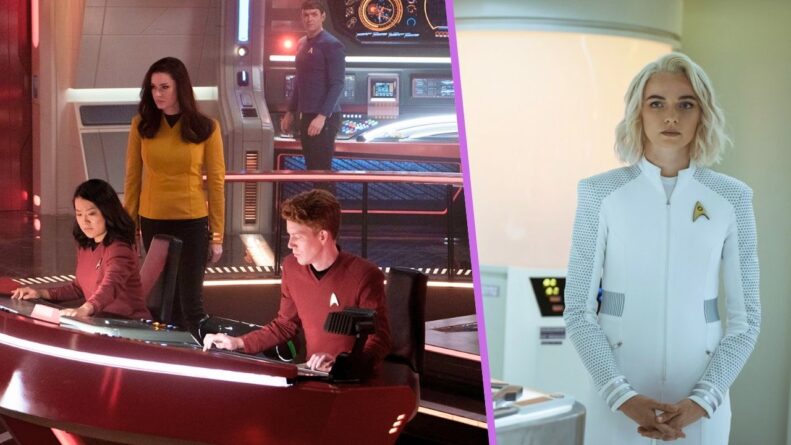
Due to this shortened format, their dating had to move from “will-they-won’t-they” to “full-blown romance” to “heartbreaking breakup” faster than the speed of light. Although Bush and Ethan Peck had undeniable chemistry, the narrative weight of the musical episode drove a wedge between them that seemed sudden to many.
Star Trek Strange New Worlds on Season 3 finds the dust settled but the terrain different:
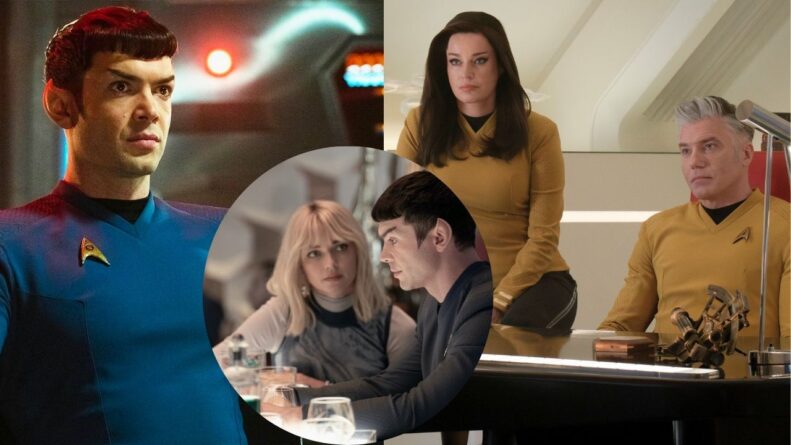
Jess Bush at the pity party her commentary on the breakup really wasn’t the most exciting part of her appearance at the con was that it turned to what’s to come.
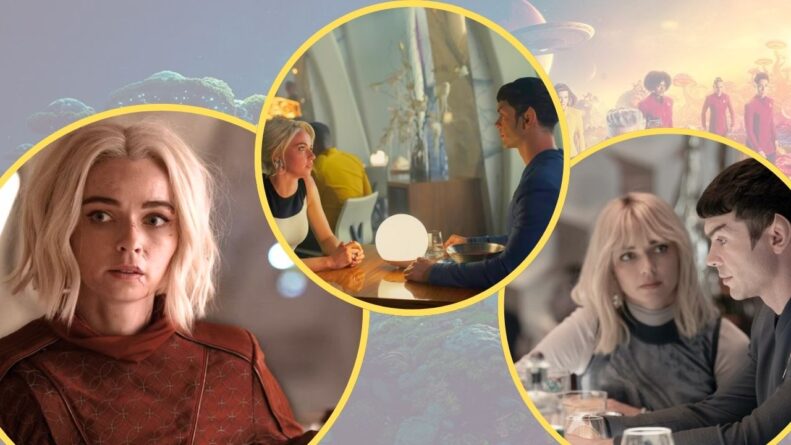
The series ended shooting its fifth and final series in December 2025, but Bush teased there could be more to the story.
Bush alluded to the thought, “I think it was a very bad end, but maybe it is not the end.”
With Season 4 and 5 yet to premiere on Paramount+, the question remains for fans of what “not the end” truly means. We know where these characters end up, eventually, in The Original Series—they’re still close colleagues, but the romantic flame seems to have waned into a mutual, if occasionally painful, respect.
Can these last 16 episodes close the gap, or is there one more twist in the stars for the nurse and the Vulcan?
Read More 👉 The Mandalorian and Grogu Strategy: Lucasfilm’s Star Wars Is Returning to Cinema Differently
Jess Bush has been a standout in the Star Trek Strange New Worlds, making a character that was routinely sidelined in the 60s into a juggernaut of ambition, wit, and vulnerability. Even if she believes the split was “brutal,” the fact that she could sell that pain is precisely why we’re all still talking about it years later.
If you are Team Chapel, Team La’an, or just Team “Let Spock Have a Nap,” there’s one thing we can all agree on is this: Strange New World’s final two seasons are shaping up to be a real tearjerker.
A Knight of the Seven Kingdoms Episode 5 review: Trial of Seven, Baelor’s tragic death, Dunk’s past & why this HBO episode changes Westeros forever. Read more!
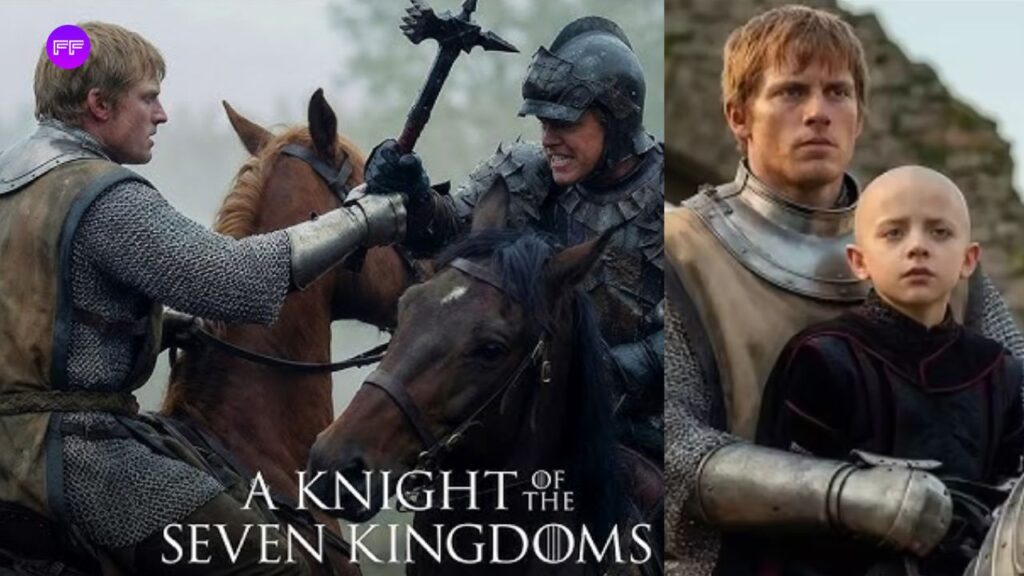
A Knight of the Seven Kingdoms Episode 5 Review makes you overwhelmed because not only did A Knight of the Seven Kingdoms offer us the episode before the last one, it ensured our heads would be lobbed off narratively. Episode 5, “In the Name of the Mother”, is already a perfect 9.8/10 on IMDb, for good reason. It successfully juxtaposed the high-stakes pageantry of the “Trial of Seven” with a dangerous, soul-crushing journey into Dunk’s history that upends everything we believed we knew about our “Lunk” of a protagonist. This is the split of why this episode is being credited for the return of the Westeros favourite series to peak TV form.
Typically, the penultimate episode of a season is a nothing but adrenaline shot. Owen Harris, the director, however went very much off track. Just as dunk is hit by a morningstar on the trial, the screen doesn’t go black – it goes back.
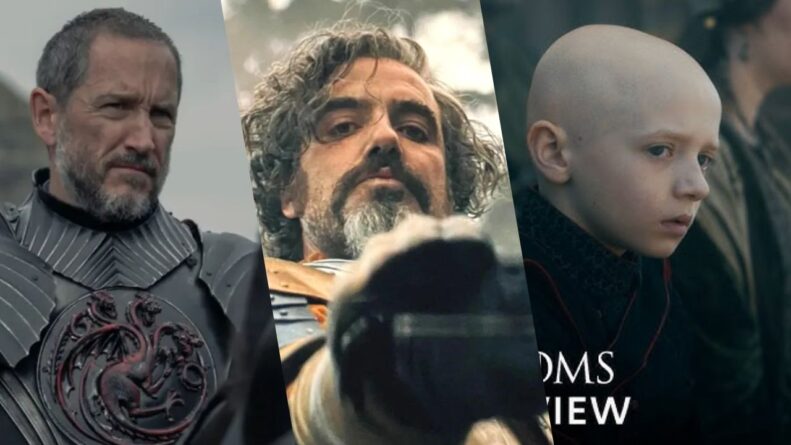
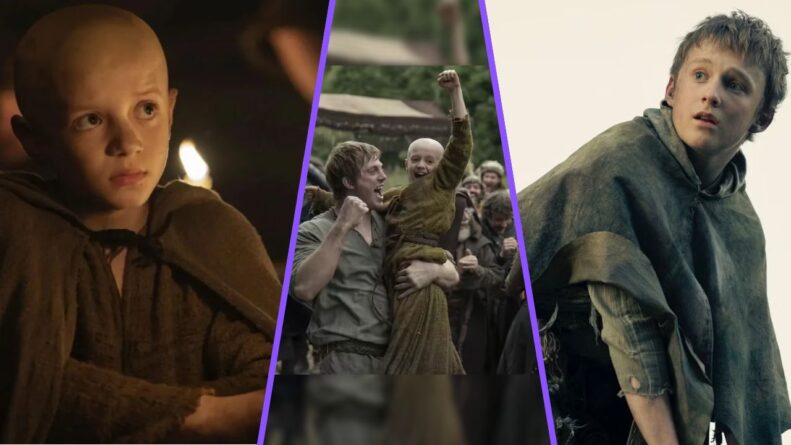
We were in a pretty big flashback to the Battle of the Redgrass Field (yes, that’s what it was), watching a youthful, “wide-eyed” Dunk (Bamber Todd) scavenging corpses. This was more than world-building, it was a psychological autopsy. The reason is to show us Dunk in the “shadowy wynds” of Flea Bottom, and so the show tells us why he fights the way he does. He’s not a knight of the books but he’s a survivor from the gutters.
The greatest deviation was the addition of Rafe (Chloe Lea), who is Dunk’s childhood companion. Rafe is the cynicism within the smallfolk. Her philosophy is the episode “thesis statement”:
“Repayment for previous misdeeds is always repaid with compound interest… Everybody remembers shit.”
It’s the kind of classic fridging moment that Rafe’s savage murder at the hands of a city watchman is, but—executed with such raw, unglamorous violence that it feels earned. It humanizes Dunk’s fierce protectiveness over Egg. He’s not just being a good knight—he’s constantly thinking about saving the ghost of the girl he failed to protect in King’s Landing.
As we return to the present day and Ashford Meadow, the “Trial of Seven” is a far cry from a chivalric minuet. The game took on a “fog of war” approach to the 14-man melee, making it a nightmarish, claustrophobic experience.
The season climax is the heartbreaking departure of Prince Baelor Breakspear (Bertie Carvel). Baelor was the Platonic ideal of a Targaryen – fair, compassionate, and intelligent. His death is a “meta-tragedy” for the franchise, he was the first domino to fall in a set that culminates in the Mad King.
The stripping away of his helm is one of the most graphic and unforgettable images in the show. When the back of his head comes off with the steel, we find out that he was slain not by an enemy but by his brother Maekar, accidentally. It reaffirms the nihilistic fact of Westeros, even if you are the “best of them” you don’t get plot armor.
| The Champions | Outcome |
| Ser Duncan the Tall | Survived. Forced Aerion to retract his accusation. |
| Prince Baelor Breakspear | Deceased. Killed by an accidental mace blow from Maekar. |
| Prince Aerion Targaryen | Humiliated. Yielded in the mud, losing his “dragon” persona. |
| The Humfreys | Deceased. Both Beesbury and Hardyng succumbed to wounds. |
Whereas House of the Dragon is concerned with the scope of dragons, A Knight of the Seven Kingdoms is concerned with the texture of the world.
Read More :- DC Film Zatanna Lost: Emerald Fennell’s Psychological Superhero Tragedy
In the Name of the Mother shows you can do high-stakes drama without breathing lizards or a gigantic budget. It confirmed with A Knight of the Seven Kingdoms Episode 5 that the show has produced a masterpiece by concentrating on class, memory and the “compound interest” of violence.
As Rafe warned, “NOBODY forgets.” Maekar will not forget he has killed his brother. Dunk won’t forget Rafe. And the audience won’t forget Baelor.
Keep getting updates, plot details and reviews from the latest episodes of the shows and movies on Fandomfans.