Spider Man Brand New Day Settles the Debate: Peter Parker Has What Jean Grey Never Could
Spider Man Brand New Day settles a long-running Marvel debate, showing why Peter Parker possesses a key strength that Jean Grey never truly had.
Jean Grey almost seems to have powers, a woman who has hosted the Phoenix Force itself which has given her access to cosmic-level abilities capable of destroying entire star systems, the most powerful telepaths and telekinetics in Marvel history. Spider Man, by contrast, has proportional strength, sticky hands, and a knack for one-liners. Comparing them is impossible but Spider Man Brand New Day has quietly made the case that Peter Parker has something Jean Grey has never fully had, and probably never will.
Spider-Man’s greatest strength is not his powers, but his ability to stay in control. And in a shared universe where power without control has repeatedly ended in catastrophe, that single trait might be the most underrated superpower in the entire Marvel roster.
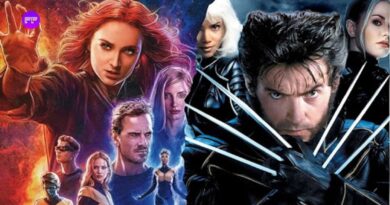
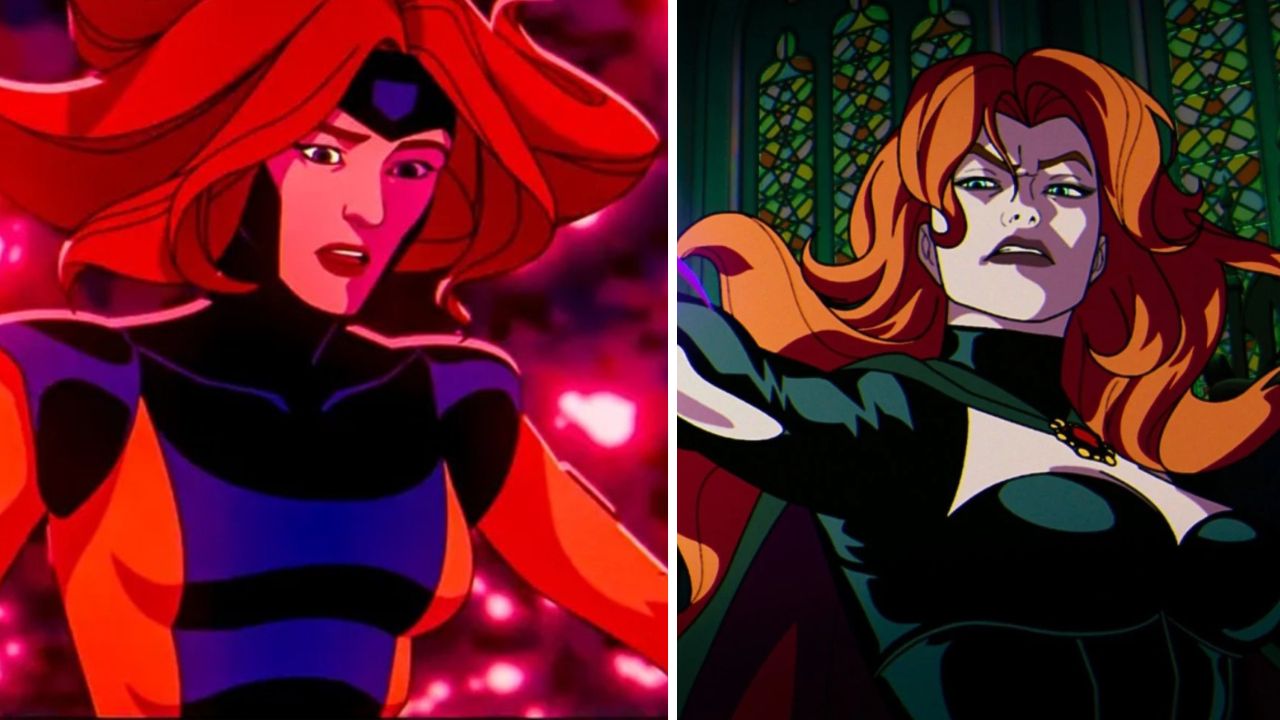
Jean Grey’s entire publishing history is, in some sense, a story about a woman who keeps losing herself. The Dark Phoenix Saga did not happen once. It has echoed across decades of X-Men storytelling because the underlying problem was never solved, only postponed. Jean’s power is cosmic in scale, but her ability to regulate that power has always been fragile, dependent on external safeguards: Professor X’s psychic shielding, the M’Kraan Crystal, death and resurrection cycles that reset the clock without actually fixing the wiring.
This is not a criticism of Jean as a character. It is the entire point of her tragedy. Her strength is inseparable from her vulnerability. Her challenge of controlling grows as her power grows. This tension has defined many of her most important storylines since Chris Claremont has had to grapple with the same unresolved question: what if Jean Grey won’t be able to handle the Phoenix force under control?
Read More 👉 Deadpool and Punisher Big Guns Crossover: Marvel’s Deadliest Heroes Collide
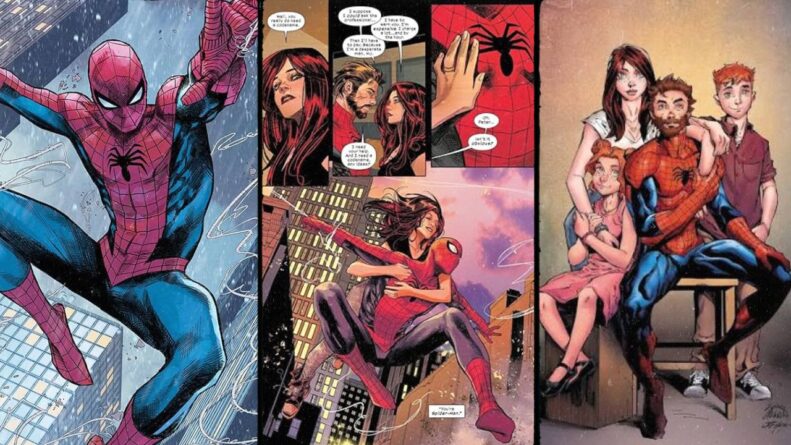
Unlike Jean Grey, Spider Man’s powers are always in control by the man behind the mask. Peter Parker has fought with powerful symbiotes and villains but his core abilities of strength, agility, spider-sense, never put his senses at risk. Spider-Man’s powers have never threatened to take control of who he is.
This matters more than it sounds like it should. A huge amount of Spider Man’s appeal, and a huge amount of his narrative stability, comes from the fact that his power has a ceiling Peter himself can actually manage. He gets stronger gear, smarter tactics, better web fluid formulas, but he is never one bad day away from accidentally incinerating a solar system. His mistakes are human-scale. They cost lives sometimes, devastatingly so, but they don’t threaten cosmic annihilation.

Brand New Day leans directly into this. The new arc strips Peter back down to fundamentals: a guy with a job, a strained personal life, and a set of powers he understands inside and out after two decades of trial and error. There’s no cosmic entity riding shotgun in his nervous system. There’s no countdown clock to a forced transformation into something unrecognizable. Whatever goes wrong in his life goes wrong because of choices, not because his own biology turned against him.
Jean Grey raw power is not actually the most valuable trait in a long-running superhero but a Control over itself. A superhuman who can bend their abilities according to their morale rather than being consumed by it is structurally more stable and more heroic and easier to write more consistently for that character.
Spider Man’s advantage isn’t that he could beat Jean Grey in a fight. He almost certainly couldn’t, and no serious reading of either character pretends otherwise. The advantage is narrative and psychological. Peter Parker has never needed an entire team of telepaths standing by in case his own power turns on him. He has never needed to die and come back just to reset a corrupted internal system. His worst-case scenario has always been “Peter makes a bad call,” not “Peter becomes an extinction-level event.”

That distinction sounds abstract until you actually compare the stakes of their respective failure states. When Spider Man fails, a building falls, someone gets hurt, a relationship breaks. When Jean Grey fails at containing the Phoenix, planets have died. Those are not the same category of risk, and the gap between them is exactly what makes Peter’s failures recoverable in a way Jean’s sometimes aren’t.
Read More 👉 What Marvel’s X-Men Lineup Could Look Like in the MCU
The current Brand New Day run doesn’t make this argument through a crossover fight or a direct confrontation between Peter and Jean. It makes the argument through restraint. The storyline deliberately resets Peter to a stripped-down status quo, no recent cosmic baggage, no Venom symbiote drama bleeding into every page, no marriage retcon hanging over his head. Just Peter, his powers, and his choices.
And the story works specifically because Peter’s powers don’t need a leash. There’s no subplot about him losing control of his own abilities. There’s no ticking clock toward Peter “going dark.” Every conflict in the arc comes from his decisions, his relationships, his double life catching up with him, not from some internal force threatening to hijack his body.

Compare that to how X-Men stories involving Jean almost always need a containment plan built into the premise. Cerebro shielding. Phoenix suppression tech. A team on standby specifically because Jean’s own power is treated as an ongoing risk factor, not just a tool she uses. Brand New Day never needs any equivalent safety net for Peter, because his powers were never written as a threat to himself in the first place.
It’s quite a premise that Marvel can build an entire arc around Spider-Man’s powers without once treating those powers as the danger. Try writing a major Jean Grey arc with the same constraint, and you will find it almost impossible to avoid touching the Phoenix question at all.
It’s easy to chalk this up to “Spider Man is more relatable because he’s just a regular guy.” That’s true, but it understates the point. Reliability is an advantage here rather than Relatability.
Spider Man can show up in street-level crime stories without a containment problem, that’s the type of self-control hero put into a story. His power scales to the situation because his control over it never wavers. Jean Grey, on the other hand, often has to be deliberately written around her own ceiling. Writers either avoid pushing her power to its limits, or they commit to another Phoenix arc and accept that the story is now, on some level, about her losing herself again.
Peter never forces that choice. That flexibility is the direct result of the advantage Brand New Day highlights: power that stays in proportion to the person holding it.
Read More 👉 X-Men ’97 Season 2: Marvel’s Legendary Mutants Return
A fair counterargument is that Jean Grey struggles to control her power because Phoenix is far beyond anything Spider Man has ever encountered. Spider Man’s control looks easy because he never loses himself, so comparing their situations isn’t entirely equal. That’s made the perspective more interesting as Jean’s constant battle with immense power makes her character remains one of the most compelling tragic figures in the X-Men mythos.

But that argument actually reinforces the original point rather than undercutting it. The advantage isn’t that Peter is stronger or braver. It’s that his power was built at a scale he can actually master. Jean was handed power at a scale no one, arguably not even her, can fully master. One of those setups produces a hero who can be trusted with almost any story. The other produces a recurring tragedy that has to be written carefully every single time. Both can be great storytelling. Only one of them is a genuine advantage in the practical, day-to-day sense of “can this character function without a built-in failure mode.”
Jean Grey will always be the more powerful character on a raw numbers basis, and nothing about Brand New Day changes that math. But power was never the category where Spider Man had a shot at winning this comparison. Control was. And Brand New Day proves, almost by omission, that Peter Parker’s powers have never needed a leash, a containment plan, or a reset button.
Stability is more important than strength. And in a universe built on cosmic stakes and constant escalation, a hero who never has to be the thing his own team worries about might be rarer, and more valuable, than anyone gives him credit for.
Dive into the world of entertainment with Fandomfans to get the latest updates from movies, series, and celebrities.
Daredevil: Born Again Season 2 Ep7 “The Hateful Darkness” delivers a darker, gritty Netflix era with shocking returns, deaths, and major MCU Phase 6 stakes.

Daredevil: Born Again Season 2 Ep7, ominously titled “The Hateful Darkness,” just dropped on Disney+, and it didn’t just shift the chess pieces on the board for next week’s blockbuster finale — it upended the whole table. Upending despairing character deaths with triumphant returns to the courtroom, this penultimate episode was essentially a love letter to the gritty Netflix era, padded out by the larger, high-stakes politics of the Marvel Cinematic Universe Phase 6.
As Matt Murdock (Charlie Cox) limps toward an explosive showdown with Mayor Wilson Fisk (Vincent D’Onofrio), the showrunners packed this hour so full of lore, comic-book history and sly callbacks that you almost certainly missed a few while shouting at your tv.
Let’s dive deep into the streets of Hell’s Kitchen in Daredevil: Born Again Season 2 Ep7 for a darker finale.
Let’s start with the loudest moment of Daredevil: Born Again Season 2 Ep7. The final image of Matt Murdock, injured and hopeless, praying in the red-lit pews of Clinton Church was cinematic perfection. But then, Krysten Ritter’s Jessica Jones emerges from the darkness. It is the jaw dropping moment for everyone.
But the true Easter egg is in the dialogue at the beginning of the episode. When Mr. Charles is talking about Jessica’s case, we get explicit mention of her husband, Luke Cage, and the fact that she has to shield her daughter, Danielle.

Danielle, a daughter of Luke Cage and Jessica Jones and named in honor of his fathers’s best friend Danny aka Iron Fist. This isn’t some throwaway name-drop for laughs, it solidifies the lives of our street-level superheroes after the Defenders as canon.
It makes clear that as Matt has been struggling on his own in a one-man battle, the other members of the Defenders have been establishing families. It escalates the stakes for Jessica’ return and she’s not just battling for New York any more, now she’s fighting for her kid.
We’ve observed Matt working under the cover of darkness for nearly a full season, watching as his alter ego, the vigilante, dominated, while Matt Murdock, Attorney at Law, played second fiddle. But when Karen Page (Deborah Ann Woll) is tossed into the legal meat grinder by the Anti-Vigilante Task Force (AVTF), Matt at last emerges into the light.
Making his way into the courtroom this time as co-counsel with Kirsten McDuffie (Nikki M. James) was a huge full-circle moment. It’s a direct thematic callback to his charming, sunlit cameo in She-Hulk: Attorney at Law. But here, the tone is reversed. There’s no wacky super power law puns. This is the dark, stifling legal rot in Fisk’s New York.

It perfectly echoes his defense of Frank Castle (The Punisher) in Netflix’s Season 2. Matt turns the courtroom not only to defend his client but to also use it as a platform from which to try the system itself.
Maybe the most soul-sapping sequence in “The Hateful Darkness” is Matt’s fraught chat with Benjamin Poindexter, a.k.a Bullseye (Wilson Bethel). Matt frees his mortal adversary, exhorting him to perform “one good deed” to balance the cosmic scales — by rescuing Governor McCaffrey from assassination.
In that exchange Matt specifically mentions the killings of Foggy Nelson and Father Lantom. If you saw Season 3 of the original Netflix run, Father Lantom died after he took a baton to the chest that Dex threw at Karen. And the heartbreakingly tragic death of Born Again’s Foggy is the wound that still fuels every reckless choice Matt makes.

Matt telling his arch enemy how much he hates him but a shred of his Catholic soul wants to forgive him is lifted directly from the moral ambiguity of Frank Miller’s iconic comics. It’s Matt Murdock at his most self-destructive, placing the city above his own need for vengeance.
We need to pour one out for Daniel Blake. Michael Gandolfini has been putting in incredible work this season as the ambitious, swaggering administrator who got way too deep into Fisk’s regime. But in Daredevil: Born Again Season 2 Ep7, his luck finally runs out.
Daniel is savagely clubbed and then killed by the cold-blooded Buck Cashman (Arty Froushan) for deciding to shield BB Urich (Genneya Walton). BB’s last name is Urich. Like, Ben Urich — the tenacious reporter who was viciously garrotted by Wilson Fisk in Season 1 of the Netflix show.

Daniel being killed while defending an Urich from Fisk’s enforcers is a vicious rhyme in the Daredevil poetry. It is a reminder that even though the corporate branding of Fisk’s empire has changed, it still eats anyone who tries to protect the truth. The common mob-movie trope of a gangster “digging his own grave” was completely turned on its head here; Daniel got his soul back right before he lost his life.
When Cherry (Clark Johnson) discloses he has an “inside man” who is watching over Karen Page up at the precinct, fans who have been around since the beginning took a collective breath-hold. And the show delivered: it was none other than Detective Brett Mahoney (Royce Johnson).
Brett Mahoney has been the unsung hero of the street-level MCU since the beginning. He’s a repeat helper in Daredevil, Jessica Jones and The Punisher.

Watching Brett sneak Karen out the back door for a secret rendezvous with Matt reminds us that for all Fisk’s AVTF, and the pervasive corruption in the NYPD, the OG Hell’s Kitchen good cops still want to be your sweethearts. It anchors the over-the-top superhero spectacle in believable, procedural fealty.
Let’s talk about cinematography and Catholic guilt—the pillars upon which Matt Murdock’s whole being rests.
After moving vigilantly through a parking-garage slaughterhouse, Matt is shot in the leg and barely manages to crawl to Clinton Church. He pleads with the Seminarian to pray to Saint Jude for “courage in my cowardice and consolation for my tribulations.”
Saint Jude is the advocate for the hopeless and things are indeed hopeless now. You just can’t get a better metaphor for Matt’s crusade against Fisk these days.
As Matt is bowed in prayer, the shot is awash in a thick, bloody, neon red light. That’s not an accident. It’s a very visual reference to the quintessential hallway battles and shadowy lighting of the first Netflix series. It informs viewers, with no need for a word of conversation, that Matt has been driven to the ends of his bodily and soul limits.
Wilson Fisk is a man of impeccable discipline, frightening regimens and violent rages. The first few seconds of Daredevil: Born Again Season 2 Ep7 depict Fisk getting dressed, and he sees that one of Vanessa’s earrings has gone missing.
It sounds like it’s just a tiny continuity nod. But for Fisk, Vanessa is his tether to his own sanity. In Netflix’s Daredevil Season 1 and 3, whenever Vanessa found herself in peril, was absent or figuratively compromised, the polished Fisk mask would crack, revealing the monstrous “Kingpin” beneath.

When the director dwells on the missing earring, it signals to the viewers that Fisk is slipping in terms of control. His later conversation with Karen in her cell where he chokes her while telling her he is “bringing back order” — establishes that the missing earring is a sign of his quickly disintegrating mind.
Daredevil: Born Again takes place on the streets of New York, but Daredevil: Born Again Season 2 Ep7 made it clear we’re solidly in Phase Six of the Marvel Cinematic Universe.
In a conversation, Mr. Charles drops a titanic global bomb: The U.S. government does not consider Mayor Wilson Fisk to be a “useful ally.” This clears the path for Governor McCaffrey (Lili Taylor) to come in and try to oust Fisk.
The MCU is currently navigating a fraught political climate, with actors like President Ross, the Thunderbolts, and the Department of Damage Control holding the board. In this context, it’s natural the government would view a strong, authoritarian NYC mayor who goes after vigilantes as a threat. Fisk just got over the line too much, and now these government bodies are at last getting involved.
The parking garage ambush was easily the the most exciting action set piece of the Daredevil: Born Again Season 2 Ep7. The Anti-Vigilante Task Force (AVTF) attempts to eliminate Matt and Kirsten, but are defended by Cherry and Angie Kim (Ruibo Qian), the “unspoiled” cops of the precinct.
This is more than just a neat fight scene; it’s a thematic extension of the narrative strand that began way back in 2015. Daredevil has always been intrigued by the war for the soul of the NYPD.
From Detectives Blake and Hoffman being on Fisk’s payroll in Season 1, to the FBI being completely infiltrated by Kingpin in Season 3, this franchise loves to examine systemic corruption.
The garage scuffle was raw, unrefined and intimate, and it was great to see the stunts that brought fame to this franchise in the first place.
Daredevil episodes don’t often have throwaway titles, they’re usually heavily thematic or taken directly from comic book arcs.
The ‘Hateful Darkness’ is the space Matt Murdock now finds himself in. He’s turned his friends into enemies, allied himself with his greatest enemy (Bullseye), and watched the city decay all around him. The “darkness” is not just Fisk’s regime; it is the hate that festers within Matt himself.
Kirsten McDuffie in her opening statement in court (explaining what the real definition of vigilante is to ADA Hochberg) exemplifies this perfectly. Matt is trying to battle the darkness, but his “self-defeating brand of heroism” (as critics have rightly pointed out) continues to drag his friends into the line of fire. Daniel Blake dies, Karen is beaten in a cell, and Matt bleeds in a church. The dark hatred is winning.
If Daredevil: Born Again Season 2 Ep7 served as the table setting, Season 2 finale will be an absolute earth-shattering event. Now we have Matt Murdock and Jessica Jones back together and ready to go to war. We have Bullseye on the loose with a warped mission for “redemption.”
We have Kingpin pushed into a political corner, his mayoral mask slipping away to reveal the full-blown mob-boss brutality beneath. And we have Karen Page at the heart of it all, poised to see if the legal system will rescue her or destroy her.
Read More:- Euphoria Season 3 Episode 3 Recap: “The Ballad of Paladin” Turns Out a Bloody Wedding
Daredevil: Born Again hasn’t just made it through the jump to Disney+ with episodes like “The Hateful Darkness” it has shown that it can pay homage to its Netflix roots while crafting an adult, shatteringly tragic, and deeply engrossing new narrative. With these gritty moments of Daredevil: Born Again Season 2 Ep7 shows Marvel Cinematic Universe is headed to Phase 6.
Dive deeper into the cinematic world with Fandomfans to get more latest and deep details from series, movies, and celebrities.
Get the latest Spider-Man: Brand New Day updates, including story details, cast news, release information, and what fans can expect from Marvel's next Spider-Man movie.

If you’ve checked social media even once today, you already know something big is going on with Spider-Man: Brand New Day. It’s not hype talk this time — the movie hit theaters this morning, July 31, 2026, and the numbers coming in are the kind studios usually only dream about. Between record previews, a near-perfect audience score, and a mystery casting decision Marvel still won’t touch, there’s a lot to sort through.
Know more about Spider-Man: Brand New Day latest updates and theories around the plot that was shared by Marvel Studios.
Thursday night previews alone pulled in more than $50 million, beating out No Way Home’s preview haul and putting Brand New Day within striking distance of Avengers: Endgame’s all-time preview record of $60 million. That momentum carried straight into Friday.
Exhibitor tracking now has the opening weekend landing somewhere between $260 million and $300 million domestically, well above NRG’s earlier survey estimate of $195 million. Deadline is projecting a $465 million global opening, which would make this the second-biggest debut in Sony’s history.
The critical and audience reaction backs up the money. Rotten Tomatoes has the film sitting at 90% Certified Fresh across 135 reviews, and the audience score debuted at 98%, tying the highest mark any MCU movie has ever posted on the platform. China delivered its biggest superhero opening day in seven years, and Sony says the film’s social media reach — 2.86 billion and counting has already topped Endgame. For a franchise four movies deep with this cast, that’s not a small thing.
This isn’t a soft reboot. Spider-Man: Brand New Day is set four years after No Way Home, and the spell Doctor Strange cast at the end of that film is still in effect — the entire world, including MJ and Ned, has forgotten Peter Parker ever existed.
He’s spent those four years as a full-time Spider-Man with no Stark tech, no Avengers backup, and nobody in his corner. Tom Holland has been describing it less as a fourth movie and more as a rebirth for the character.

The official synopsis confirms Peter is going through a physical transformation he can’t fully control, triggered by the pressure of the job, right as a new pattern of crimes points toward “a powerful villain no one can even see.”
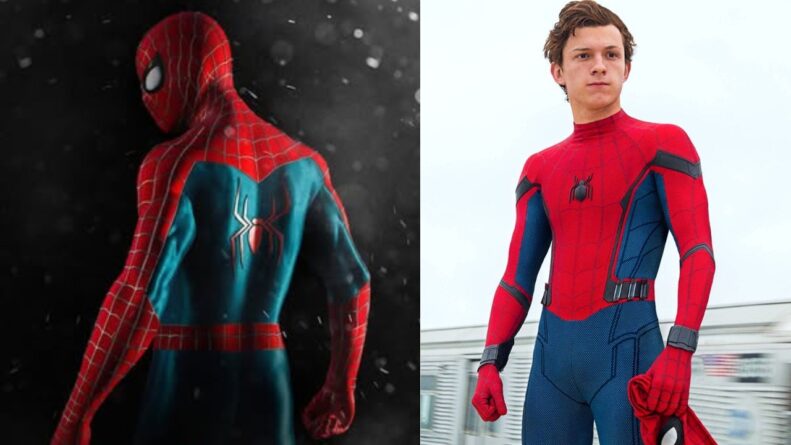
In the trailer, Tramell Tillman’s character, Bill Metzger, tells Peter directly that he’s the only one who can sense this threat. There are also organic web-shooters that shoot from Peter’s wrist, as well as a full Hulk transformation, which circles back to Bruce Bannel’s earlier warning to Peter in the movie to run if his gamma control ever falters. Marvel hasn’t indicated how far the Hulk connection goes, so consider that link to be in development rather than fully-explained.
Holland returns as Peter, with Zendaya back as MJ and Jacob Batalon as Ned. The newer additions are where it gets interesting: Jon Bernthal makes his first big-screen appearance as the Punisher alongside Holland, after showing up at Marvel’s Comic-Con Hall H panel with an exclusive clip of Spider-Man and Frank Castle fighting the Hulk together.
Mark Ruffalo is back as Bruce Banner, Michael Mando returns as Scorpion in a redesigned suit with a mechanical tail, and Marvin Jones III plays Tombstone. Tramell Tillman and Liza Colón-Zayas round out the cast in roles Marvel hasn’t fully detailed yet.
Shang-Chi and the Legend of the Ten Rings director Destin Daniel Cretton is at the helm, with a script from Chris McKenna and Erik Sommers, the writing team responsible for the last three Holland Spider-Man flicks.
Read More 👉 Why Chris Evans Was Chosen as Captain America
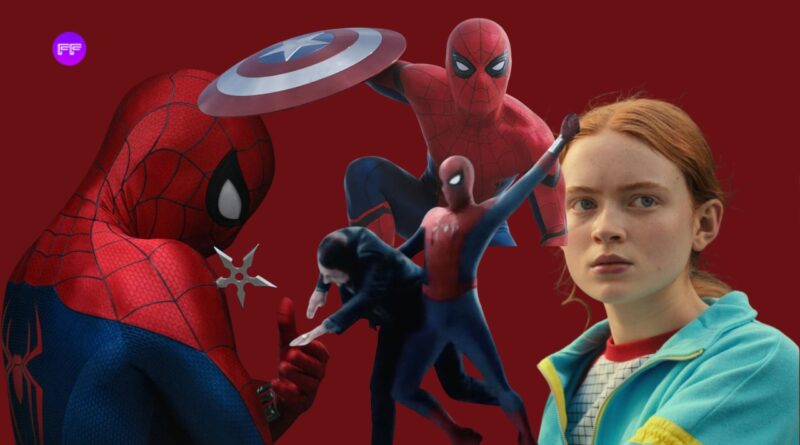
Sadie Sink is confirmed cast, but Marvel has never said who she’s playing. The leading theory going around for months is that she’s Jean Grey, which would make Brand New Day an early bridge into the X-Men side of the MCU — that’s still a fan theory, not a Marvel confirmation, so treat it that way.
Sink was reportedly spotted in San Diego during Comic-Con, but she never appeared on the Hall H stage, and the panel wrapped without a single mention of her role. Reports out of the film’s premiere claim actor Steve Lacy let details about her character slip on the red carpet, though that’s a secondhand report rather than something Marvel has verified, so it’s worth reading with a little caution until the studio actually confirms it.

Adding to the intrigue, Kevin Feige teased at BilibiliWorld that Yelena Belova might show up “a little bit sooner” than Avengers: Doomsday — and with only one Marvel movie left on the calendar before December, fans are doing the math on what that could mean for this film specifically.
Brand New Day is not playing in IMAX domestically. Christopher Nolan’s The Odyssey has an exclusive hold on IMAX screens in the US through its own theatrical run, so Sony built around it.
The film is instead launching in a new format called “Shot for ScreenX,” alongside Dolby Cinema and other premium large formats. Outside the US, the picture is different — Brand New Day does have IMAX screens locked up in China, Japan, and Korea, where The Odyssey doesn’t hold the same exclusivity.
Read More 👉 Why Spider-Man: Brand New Day Just Changed Everything for the MCU
Based on what’s confirmed so far — a 98% audience score, 90% from critics, and preview numbers chasing an Endgame-level record — this is shaping up to be the biggest Spider-Man opening the franchise has had. If you’re planning to go, book ahead; previews already outpaced No Way Home, and weekend showtimes are filling fast.

Just don’t go looking for an IMAX screen near you, since that option isn’t on the table domestically this time — ScreenX or Dolby is your best bet for the biggest possible presentation. And if you’re trying to piece together the Sadie Sink storyline before you sit down, know that Marvel itself still hasn’t confirmed it, so anything you’ve read is fan detective work until the studio says otherwise.
Spider Man Brand New Day has arrived with the exactly kind of launch fans were hoping to see. The story that pushes Peter Parker into unfamiliar territory has made it one of the biggest MCU events in years. Spider-Man: Brand New Day is obviously a film that rewards viewing without spoilers. With Avengers: Doomsday just around the corner, this isn’t simply another Spider-Man movie—it might be a big stepping stone for what comes next in the Marvel Cinematic Universe.
Fandomfans delivers latest updates and theories from movies, series, celebrities.