This One Prequel You Must Read Before Watching Darth Maul’s New Star Wars Series
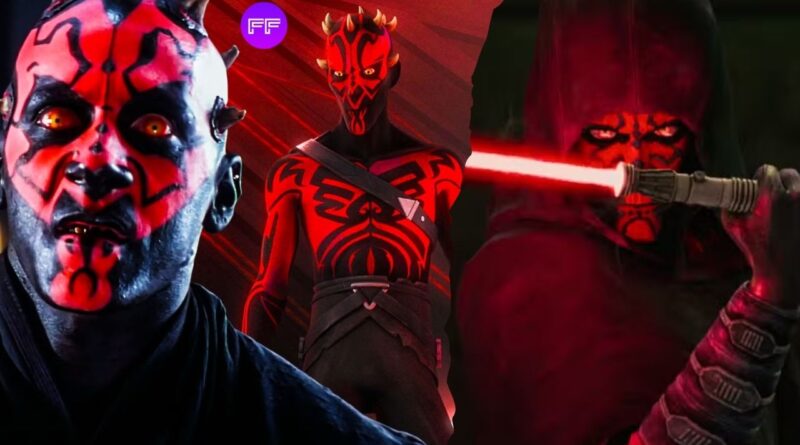
Before Darth Maul Shadow Lord on Disney+, read Shadow of Maul. The Star Wars prequel comic reveals the crime underworld & key characters behind the new series.
When Star Wars at last decides to bestow the spotlight upon a beloved character, there’s a certain electricity in the air. For years Darth Maul has been this strange figure hovering in between icon and enigma— a villain whose image burned into our consciousness with nothing but his menacing look, his acrobatic fighting style, and about three lines of dialogue in The Phantom Menace.
We saw him survive being bisected, mutate into a cyborg spider, become a crime lord, apparently die in Rebels, and then defy death like the true star (literally) of the show he is. The ex-Sith Lord will at last be the central character in his own series with Star Wars: Maul – Shadow Lord, coming to Disney+ on 6 April 2026.
But here’s the problem with Star Wars storytelling nowadays: the galaxy is so interconnected and tied together that walking into the big show without preparation is rapidly becoming like showing up to a movie in the middle of it. Lucasfilm knows this. They’ve perfected the transmedia prelude and now with Shadow Lord, they have created something that isn’t just companion material —it’s essential viewing.
Enter Star Wars: Shadow of Maul, a five-issue comic miniseries from Marvel that isn’t a cynical cash-in tie-in, but a real narrative cornerstone that will change the way you watch the forthcoming animated show.
When Marvel revealed Shadow of Maul at the end of 2025, the premise appeared fairly straightforward: a prequel comic taking place in the world and featuring characters from the upcoming Disney+ series. Standard Star Wars fare by now. However, after getting more information regarding the creative team and their take, it was evident this was a different ball game.
Former writer of Darth Maul, Benjamin Percy had already been creative with Black, White & Red anthology in the character that is going to change with specific creative purpose: to tell a gritty crime-noir tale set the seamy underworld of Janix—the same world Maul will once again seek to establish power in and regain its hold. Percy himself has been refreshingly candid about the way he writes.
“It’s a sci-fi story, but it’s also a crime story, with cops and criminals that are based on the land where many sins and secrets are buried.” he told Marvel in the official announcement.
That description alone should be enough to grab the attention of anyone who thought The Book of Boba Fett never quite got off the ground as a crime lord story. Where that show never seemed quite sure of its tone, vacillating between underworld politicking and Saturday-morning cartoons chauvinism, Shadow of Maul knows exactly what it wants to be from page one.
The first issue, dated March 4, 2026, has us Meet Captain Brander Lawson and his droid partner Two Boots. These aren’t your typical Star Wars protagonists. Lawson is a sheriff attempting to impose law on a region that laughs at the notion, a detective on a planet so far from the Empire that it hasn’t even tried to take hold.
Two Boots, voiced by stone cold comedy gold Richard Ayoade in the up-coming series, is a dry sardonic foil to Lawson’s weary resolve. Their chemistry is instantly lived-in, like partners in crime and life, who have been disappointed and killed together.
Required reading usually means “homework you need to shovel through in order to get to what you really want to consume.” We’ve all been there, gritting our teeth through some so-so comic or novel because the mainline product assumes we’ve done the prep work. Shadow of Maul easily avoids this pitfall because it is genuinely interesting in its own right.
Madibek Musabekov’s art, however, needs a special shout out. Now under his own name, Musabekov offers a grittier, more grounded visual style than what we’re used to seeing in the galaxy far, far away.
Janix isn’t the clean, bright light of Coruscant or Tatooine’s desert minimalist — it’s a neon-drenched hive of shadows and secrets, a place where the very lighting informs that nothing good comes after dark. The noir overtones aren’t just in the story telling, that’s in the dna of the show. Every panel could be a still from a classic detective movie, just there are more aliens and laser fire.
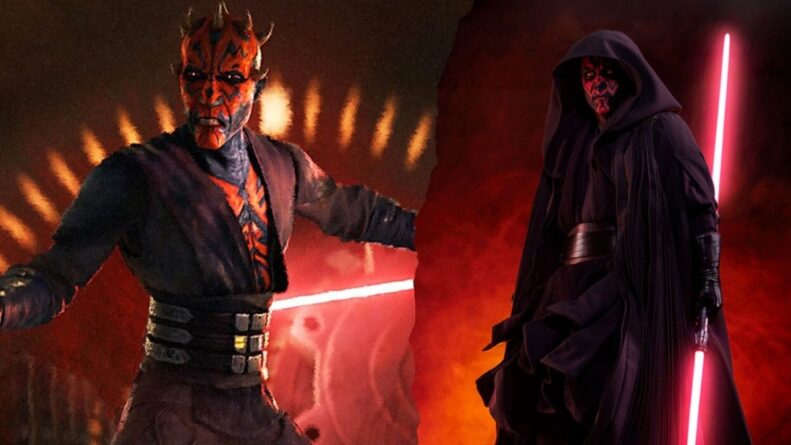
But what makes Shadow of Maul stand out from “good comic” to “must-have prequel” is what it does with its titular character. Maul doesn’t rule the first issue, he threatens. We feel his presence before we feel him, feel his presence in the void of criminal power that he is moving to occupy.
It’s the Jaws approach to villainy, and it’s perfect for a character whose entire appeal revolves around his aura of menace. When Maul does appear, it is significant.The comic realizes that in a series named after him, less is far, far more.
There’s a practical purpose to this restraint as well. Shadow of Maul is introduced to the power brokers on Janix, the criminal infrastructure Maul hopes to co-opt if not crush. Without that context, the cartoon series would have to use up precious time just telling us who these folks are and why we should care if they die. By having the world-building work already done in comics form, Shadow Lord can open right up and zero in on Maul’s character journey rather than exposition dumps.
What is interesting about Shadow of Maul is its close tie in with the production of the animated series. Percy’s not been working in a vacuum, deciphering ideas secondhand. He and Musabekov have been in direct contact with Lucasfilm, reading scripts and watching episodes of Shadow Lord as they developed the comic.This isn’t retrofitting a backstory; it’s true co-operative storytelling across mediums.
The comic presents Janix as a world “the Empire never set foot on,” a wild frontier where Maul thinks he can get his business done with no Imperial interruptions. That right there is the stakes for the animated series. We know from Solo and Rebels that Maul ultimately becomes the head of Crimson Dawn, but Shadow Lord covers the chaotic and brutal steps he takes to establish that power.
The comic gives us the “before” — the criminal syndicates which believe they hold dominion over Janix, the local law enforcement seeking to maintain order, and the ordinary citizens merely trying to scrape by in the shadows.
Captain Lawson, especially, appears to be a significant baller in the show. Voiced By: Wagner Moura — (NARCOS) Lawson is the latest iteration of the nuanced villains that Star Wars has been cultivating as of late. He’s not bad, he’s just trying to bring law to a lawless place, but he’s never going to agree with Maul’s goals.
The comic allows us to see where he’s coming from, to buy into his partnership with Two Boots, before the animated series presumably places them on a path of confrontation with the former Sith Lord .
For fans that have followed Maul’s path into The Clone Wars and Rebels, Shadow Lord hold a bittersweet resonance. We know where this road eventually takes us: a last meeting with Obi-Wan Kenobi on Tatooine, a death that at last allows peace to a life shaped by fury and retribution.
But the era between the Clone Wars and that final duel, has been somewhat of a no-man’s land.We caught snippets in Solo, saw he was establishing Crimson Dawn, but the “how” and “why” were obscured.
Shadow of Maul and the animated sequel seem set to fill that void with real character development over plot devices. Sam Witwer, who has voiced Maul since The Clone Wars, said Shadow Lord delves into Maul’s own existential dilemma. “What does he think about his whole life?” Witwer asked for interviews, implying more introspection than the character has ever shown. This is Maul when he is at his lowest point stripped of his criminal empire, his brother, his purpose – and must not only rebuild his power base but his very sense of self.
The comic’s noir setting is ideal for this purpose. Film noir has historically been concerned with protagonists caught up in corrupt systems, but those characters have generally been troubled souls themselves. Maul, whose past is riddled with self-destructive obsession, is the most fitting example.
Shadow of Maul introduces the physical place where he’ll be conducting business, but it also provides the mental backdrop issue for a man trying to convince himself he actually matters in a galaxy that now knows all.
There’s an almost old-school vibe to how Lucasfilm is handling Shadow Lord, both with the comic and the game. Since Disney took over the rights in the past decade, the franchise has undergone a host of transmedia storytelling experiments with somewhat inconsistent results.
Sometimes comics and novels really feel like afterthoughts to the brand rather than part of a comprehensive narrative, like optional extras for the truly devoted. At other times, they hold vital information that explains why the films and shows are so bewildering.
Shadow of Maul holds a different balance. It gets the best part of the experience by just watching the cartoon, but it does add viewers to the Shadow Lord experience. You don’t have to read the comics to follow the show, but if you want a deeper insight into Janix, its characters, and the shifting power play between them, it’s a good idea.
It’s the Star Wars version of reading the book before you see the movie — and you get the full backdrop, the subtle callbacks, the emotional weight behind characters that might otherwise just seem like werewolves.
Now, with Shadow of Maul coming out on March 4, 2026 and the animated series debuting on April 6, there’s a purposeful gap for fans to get a taste of the comic’s world-building before the show is released. Apparently, the comic will continue on even after the show starts issues will be released throughout and after Shadow Lord’s run, which ends on May 4 (Star Wars Day, naturally) . This seems to imply that the comic could delve into repercussions or side stories that the animated series simply doesn’t have time for, rather than dumping all its setup in one place.
Read More:- Real Reason Critics Are Split on Christian Bale’s ‘The Bride’ R-Rated Monster Film
With the countdown to April 6 on, the hype for Darth Maul – Shadow Lord is so real. The trailers display animation that is an evolution of the Clone Wars style, with a more stylized, cinematic look that suits the darker tone. Return of Sam Witwer to voice Maul also brings continuity to Maul’s prior animated appearances, and the creation of new characters such as Devon Izara— a disillusioned Jedi Padawan whom Maul seeks to recruit points towards new paths for the character’s story.
But if you really want to have the full experience, if you really want to see the full breadth of what Lucasfilm is building with this little corner of the galaxy, Star Wars: Shadow of Maul is not optional—it’s the opening chapter. It elevates the animated show from a self-contained adventure to the climax of a larger storyline, one that takes advantage of comics’ special abilities to lay the groundwork in ways that animation can’t.
In an age when franchise narratives frequently feel like they need to be produced in bulk, it’s a genuine thrill when a project actually gets to breathe and build its world. Shadow of Maul is Star Wars at its slow, moody, path juncture-lockstep best, so bent on telling us that the journey is as important as the destination. Before you see Maul regain his strength as the shadow lord, you should check out the shadows he’s been lurking in. The galaxy far, far away has never looked, sounded or moved quite like this and not a single panel should be missed.
Stay in the world of cinema with Fandomfans to get all the latest updates from movies, series and celebrities.

Michelle Randolph’s Big Break is landing a big film co-starring role for the first time and it’s a real career moment.

Michelle Randolph is officially stepping into the light. After making a name for herself with her breakout roles in Taylor Sheridan’s hit dramas, the up-and-coming actress has been cast as the female lead in Amazon MGM Studios’ holiday rom-com, Clashing Through the Snow. She stars opposite The Summer I Turned Pretty favorite Christopher Briney in her first major feature film role. This is a major career moment for Randolph and fans can’t wait to see what she does next.
When Randolph made a splash in 1923, a spinoff of Yellowstone, opposite Hollywood legends Harrison Ford and Helen Mirren, she was an unknown herself. Her performance as a determined young woman finding her way through the social-political landscape of the post-war era won her critical praise and a devoted following.

That success led directly to her booking Landman-here she’s the rebellious, beguiling Ainsley Norris, the daughter of the character played by Billy Bob Thornton. The series became Paramount+’s largest global premiere week for originals, with Randolph’s character becoming an instant fan favorite.
The thing that’s most incredible about Randolph’s journey isn’t even the roles she’s landed, it’s the confidence she’s gotten along the way. She’s also been refreshingly candid in recent interviews about battling impostor syndrome while appearing alongside some of Hollywood’s most venerable veterans.
“I have worse imposter syndrome,”
—she confessed
Though she’s getting better about being less hard on herself when she sees that actors whose work is the most celebrated in this industry have doubts like hers. This vulnerability is one of the reasons she has gone on to be beloved by viewers who find her refreshingly real in a business often characterized by meticulously constructed personas.
Directed by Carlson Young (the lovely rom-com Upgraded), the film is set to give you a treat. Amazon is presenting Clashing Through the Snow as Planes, Trains and Automobiles for the new age—a contemporary take on the classic 1987 John Hughes film that starred Steve Martin and John Candy. Written by Love Hard’s Daniel Mackey and Rebecca Ewing, the script combines smart, relatable banter with genuine feeling, all framed by a festive holiday setting.

Christopher Briney is at a turning point in his career with the age-appropriate lead role, after breaking through as Conrad Fisher in the hit series The Summer I Turned Pretty. After enchanting young viewers for three seasons, Briney is now taking on different projects, eager to prove his versatility outside of the darling teen romance series. His casting opposite Randolph has also created a buzz, with fans looking forward to their on-screen chemistry.
Read More:- Priyanka Chopra Jonas’ ‘The Bluff’ Inspired From The Real Life Pirate Queens
Production will begin in February for a planned holiday 2026 release ― which is just right for audiences looking for some good vibes around the winter holidays. This is a big step career-wise for both leads, but especially for Randolph, whose trajectory from unknown to co-starring in a major streaming holiday movie demonstrates the power of steady, captivating work.

As the landscape of entertainment shifts, Michelle Randolph is a testament to the fact that those performers who are truly able to be both strong and vulnerable will eventually have their moment. Crashing Through the Snow seems to belong to her.
The path Randolph’s taken seems less like a sudden ascendant storyline, and more the culmination of an incredible amount of hard work. From competing with iconic attorneys in 1923 to becoming a Landman favorite, she has earned straight-faced, hardened, and genuine connections with audiences.
Clashing Through the Snow is more than just another holiday rom-com—it’s a pointed signal that Randolph can carry a story, not just support one.
Dive into the cinema world with Fandomfans to get the latest update from your favorite celebrities.
See how George RR Martin draws tragic parallels between Baelor Breakspear and Oberyn Martell, reverberating fate & honor throughout the history of Westeros.

If you have ever found yourself buried deep in the lore of George RR Martin — A Song of Ice and Fire, or you just have a passing interest in Game of Thrones, you are probably familiar with the popular phrase “History doesn’t repeat itself, but it often rhymes.”
In Westeros, this is more than just a clever saying. How the George RR Martin whole story is built around it. George RR Martin has a penchant for retroactively playing out events of the past in the present, but often with a grimmer, more twisted result. But of all his books’ historical “rhymes,” there are none quite so heartbreaking or headache-inducing as the link between Prince Baelor “Breakspear” Targaryen and Prince Oberyn “The Red Viper” Martell.
Almost a hundred years apart, these two men were the rockstars of their times. They were the top fighters, the coolest princes, the dudes everyone wanted to be. Yet, both of them died in virtually the same way: trial by combat against a giant, intimidating rival with a gory, skull-crushing ending, in a result that altered the destiny of the George RR Martin Seven Kingdoms for all time.
So let’s get down to the fascinating, tragic and completely brutal comparisons between the George RR Martin Dragon and the Viper.
Before discussing how they died, we need to talk about why what they died for hurt so much. “In a George RR Martin narrative tragedy it must hit home, so you make the audience fall in love with the character first.” Martin did this to perfection with both Baelor and Oberyn.
Baelor Targaryen as seen in The Hedge Knight is the very picture of the perfect prince. He was crown prince and Hand of the King, and also a legendary warrior. Not only was he a man of strength and power, but his character was so good that he was looked upon as a shining light of virtue and leadership in the land.

In addition, he was both the Hand of the King and the crown prince, and a fighter so famous that he was the subject of ballads. He wasn’t just strong; he was good. He was the kind of leader who made people feel safe. Had Baelor ascended the throne, the Targaryen rule might have persisted for an additional thousand years or so.
A century and change from there to the main series. Oberyn Martell was Baelor’s polar opposite in personality, but his equal in charisma. He’s the “Red Viper” – a second son who lives in the world, fighting in mercenary companies, learning poisons, and basically doing whatever he wants. He was dire, capricious, and that Shot-in-the-dark Really Cool, Just as Baelor stood for the best House Targaryen could offer, Oberyn stood for the prickly, fiery, indomitable soul of Dorne.
Both were what we call “Era Parents.” When they entered a room, they demanded respect. When they pulled out a gun, you knew something amazing was about to happen.
The similarities really start to emerge when you examine the causes of their deaths. Neither prince died in a grand war or a serendipitous mishap. They each took part in a judicial duel—a trial by combat to rescue someone who was being annihilated by the system.
Baelor Breakspear shocked the whole realm when he backed a hedge knight named Duncan the Tall (Dunk). Dunk was charged with attacking a royal prince (who actually deserved it), and Baelor saw that his own family was wrong. In an act of idealistic chivalry, Baelor practically staked his life on a nobody’s honor. He battled for the helpless against the mighty.

Oberyn Martell advances to champion Tyrion Lannister. However Oberyn’s motivation was slightly different, he craved the chance to kill Gregor Clegane (The Mountain) for the murder of his sister, Elia. But it’s the same: a scion of high-born nobility takes up his rapier in the ring, now defending a man whose fate has been decided by the crown.
Here again, we have a champion confronting a beast for a small fry, in both cases. And in both cases the story tricks us into thinking they’re going to win.
This is the part that makes everyone cringe. George RR Martin didn’t simply kill those characters — he dismembered them, in ways that are specific, graphic, and medically horrifying.
The “head-crush” is a very specific motif in Westeros. It is the beheading of a family or movement’s “head.”
The Hedge Knight tells the tale, and Baelor appears fine at the end of the fight. He’s sitting up, chatting, and instructs his maester to attend the other injured men first. But then, he complains about a headache. The horror is revealed when he removes the helmet.
His brother, Maekar, had clubbed him with a mace in the scramble. The blow had crushed the back of Baelor’s skull. The helmet was the only thing holding his head together. Baelor collapsed when the helmet was removed and the pressure relieved. The “red blood and pale bone” that is poured out here is one of the most memorable images in fantasy literature. Baelor was exhausted as a “walking ghost” – alive only thanks to his armor and force of will.

Oberyn’s death is the violent, fast-paced rhyme to Baelor’s slow tragedy. We all know the scene. Oberyn has the Mountain pinned. He has won. But his arrogance gets the better of him. He wants a confession.
The Mountain trips him, punches his teeth out, gouges his eyes and then— in a moment sextillions of TV viewers will rerun in their heads that crushes his skull with his bare hands. The “sickening crunch” described in the books is a direct echo of the noise Baelor’s skull emitted when his helmet was taken off.
Both men were inches away from survival. Both men were the superior fighters. And both men were left broken on the tourney grounds.
If we investigate a little, there turns out to be an interesting “technical” reason why they both died, and it says a lot about what kind of men they were.
He raced late into the melee without any armor of his own. He had to borrow armor from his son, Prince Valarr. The problem? Valarr was smaller and slimmer than Baelor. The helmet was too tight.
A helmet must be padded and have some space in front to play the shock of the hit in medieval fights. The death of Baelor Toesdrinker was a tragic example of what can happen when armor is ill-fitting. That which should have protected him from harm, was what killed him, underscoring the need for accuracy and caution when making protective equipment.
Oberyn was known to fight without a helmet. He wanted to be quick, light, and to have everything in sight. This was his hubris. He thought his ability was sufficient protection. If Oberyn had been wearing a heavy helm like a regular knight, the Mountain would not have been able to gouge out his eyes and crush his skull so easily.
Baelor is one of the coolest lessons on how to read prophecies George RR Martin Game of Thrones can teach us.
In The Hedge Knight, Daeron the Drunkard has a “dragon dream.” He says to Dunk:
“I dreamed a great red dragon fell upon you, but you were living and the dragon was dead.”
Everyone is initially under the impression that Dunk is going to kill a prince in the fight. But that’s not what happens. Baelor (the “great red dragon”) dies from a blow to the head and collapses over Dunk, who is crying on the ground. The prophecy was fulfilled, but not as anyone expected.
Tragedy is the source of great wisdom that audiences can learn from in this tale. When Daenerys has visions, or Cersei hears prophecies, it is a signal to treat such pronouncements with a grain of salt and a generous helping to understand the “falling dragon” is not an actual monster that drops from the sky but it’s the fall of a great man. Baelor’s death is the key to understanding the magical logic of the whole George RR Martin series.
You might be thinking: “So a prince died 90 years ago, big deal. Where’s the relevance to the main storyline?”
But this is why we have the Mad King, thanks to Baelor Breakspear’s death.
Let’s see how the dominoes fall:
The succession to the throne would have been secure. There would be no Mad King Aerys, no Robert’s Baratheon, and no Ned Stark losing his head.
Baelor’s death was the “hammer blow” that shattered the foundations of House Targaryen. When we reach Oberyn’s death in the novels, we are simply witnessing the end of the house.
Read More 👉 ‘The Mandalorian and Grogu characters’: Mandoverse Steps Into Cinema Differently with Mercenary Guard Droid
Baelor Targaryen, by birth, looked very different from most Targaryens. His mother was Mariah Martell of Dorne the source of his Dornish heritage, he inherited her black hair and black eyes. It gave him a decidedly Doran look, and some quietly commented that Baelor was “more Martell than Targaryen.”
Particular, grotesque fate for the Martell line Martin has reserved, it seems like. It’s almost a “blood-rhyme.” The ones who have the blood of Dorne with fierce, proud, rebellious to keep ending up crushed by the likes of what the Iron Throne can put its enforcers, blunt force.
So the next time you see that gruesome scene of Oberyn Martell in Season 4, or The Hedge Knight, keep in mind that you’re not just watching a fight. You are watching a cycle of history repeating itself.
George RR Martin connected these two men across time to reveal to us that the “Game of Thrones” consumes even its best players. Baelor was the fire of the past, and Oberyn was the hope of the present. They both crumbled under the burden of their own decisions, and the cruelty of their world.
The death of Baelor broke the Targaryen dynasty, and that of Oberyn shattered the peace between the Lannisters and Dorne. They are the two “crushed crowns” of Westeros that testaments to how even the brightest stars can go out swiftly, violently.
Get all the updates on Fandomfans from your favorite franchise and movies/series and celebrity news. Our goal is simple, focusing on the marvel and dc theories to provide you stories.