Best Superhero Books and Superhero Comics Books to Read

Discover the best Superhero Books and superhero comics to read, featuring iconic heroes, thrilling stories, powerful villains, and must-read adventures for every fan.

Walk into a comic shop right now and you’ll notice something that hasn’t happened in over a decade: DC and Marvel are both mid-reinvention at the same time. DC blew up its own continuity with 2024’s Absolute Power event and rebuilt half its roster from the ground up in a new line called the Absolute Universe. Marvel did something similar on its side, resetting the Ultimate Universe and letting Jonathan Hickman rewrite Spider-Man’s entire life before issue one even hits shelves. 

If you’ve been searching for superhero books that are worth your dollars and your minutes, this is one of the best jumping on points we’ve had in years and every single superhero comic on this list either began or ended in the past two years, so don’t expect to find anything ancient in the boxes here. 

The 10 Best Superhero Books to Read About Superheroes

Every pick below is either a currently-running series with a strong first volume or a maxiseries that’s already finished. Prices reflect standard trade paperback pricing at time of writing; flag anything below as unconfirmed and double-check at checkout, since comics pricing shifts with printings.

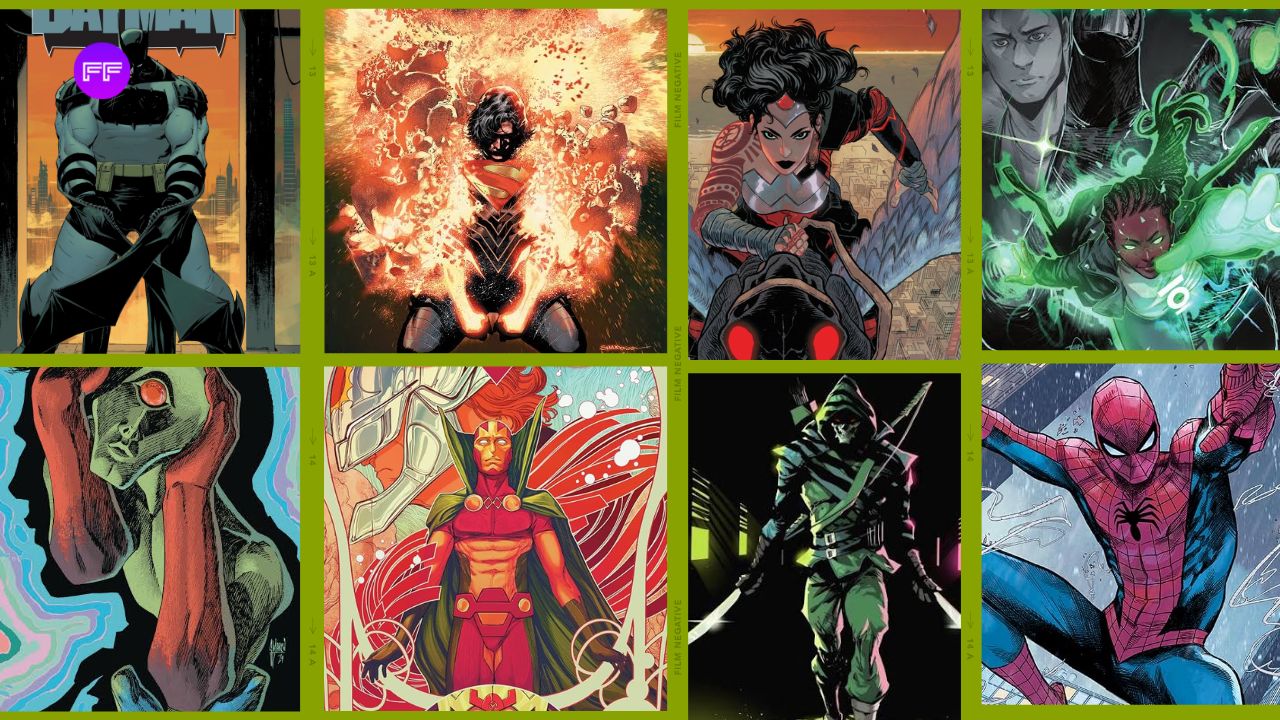
1. Absolute Batman Vol. 1: The Zoo 

Writer: Scott Snyder | Artist: Nick Dragotta | Publisher: DC Comics | Collects Absolute Batman #1–6 | Price: ~$17.99 paperback (standard Absolute-line price; confirm at your retailer) | Best for: readers who want the flagship title everyone’s talking aboutThe Zoo
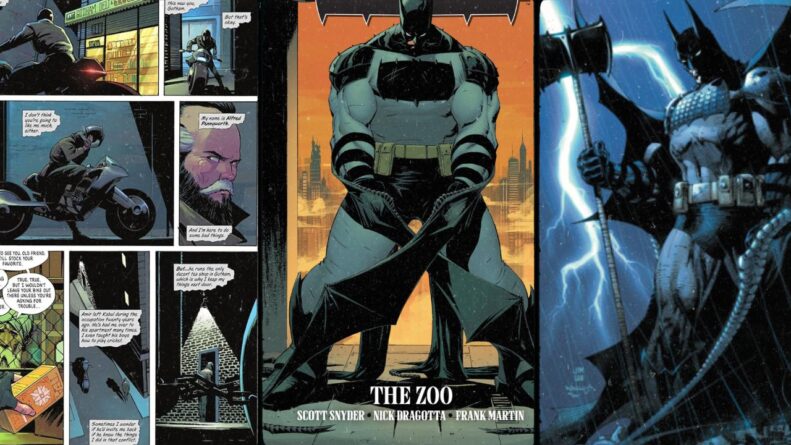
 

This is the book that kicked off DC’s Absolute Universe in October 2024, and it’s still the line’s biggest seller. Bruce Wayne here isn’t a billionaire — he’s a civil engineer with no manor, no Alfred, and a much rougher relationship with Gotham’s underworld. Snyder and Dragotta play that blue-collar card strong and it makes the character truly feel like something you haven’t read before. However, it’s a build-up, not a payoff like the marketing suggests, and if you’re expecting classic Batman gadgetry, the first half a dozen issues are more about building the world than throwing punches. 

2. Absolute Superman Vol. 1: Last Dust of Krypton 

Writer: Jason Aaron | Artist: Rafa Sandoval | Publisher: DC Comics | Collects Absolute Superman #1–6 | Price: $17.99 paperback | Best for: readers who want Superman with real stakes and no safety net
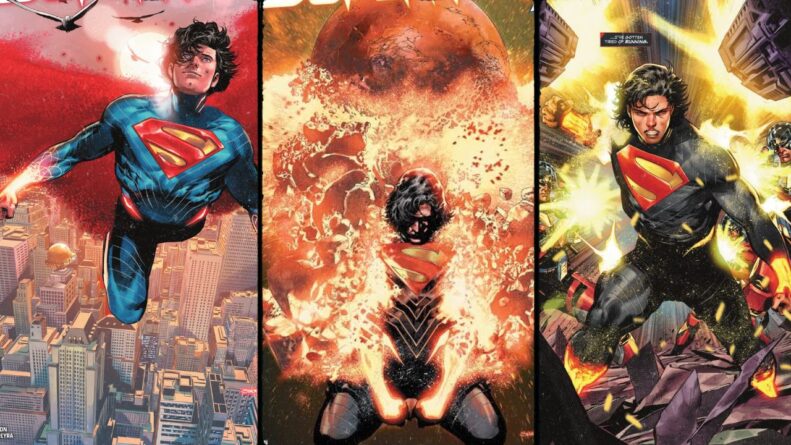
Last Dust of Krypton

Aaron strips away everything comfortable about Clark Kent — no Fortress of Solitude, no found family waiting at home — and drops him into conflict with a shady multinational corporation almost immediately. It’s a more streamlined and aggressive version of the character but it still keeps his decency intact. There is a limit to this as whiplash is felt: certain readers feel the corporate-conspiratorial plot is a step down from ambition compared to Snyder’s Batman – even if Sandoval’s art is ever-consistent. 

3. Absolute Wonder Woman Vol. 1: The Last Amazon 

Writer: Kelly Thompson | Artist: Hayden Sherman | Publisher: DC Comics | Collects Absolute Wonder Woman #1–7 | Price: $17.99 paperback, published August 2025 | Best for: readers who want horror and dark fantasy in their superhero comics
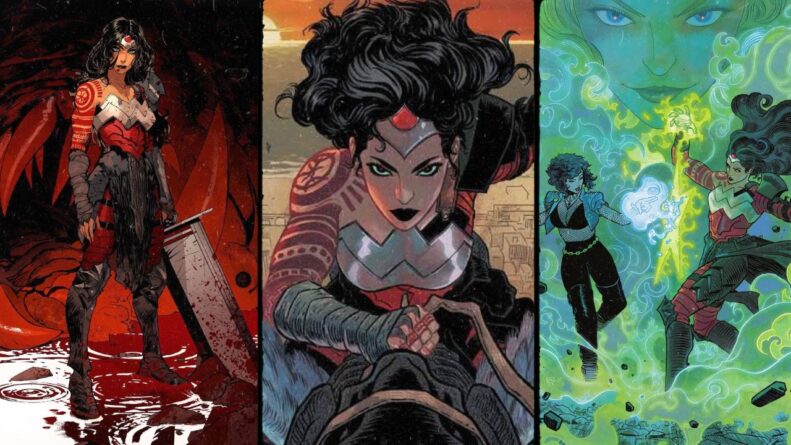
The Last Amazon 

Thompson takes Diana’s known Themysciran childhood and turns it on its head by raising her in the underground with Circe rather than among the Amazons. The result is less a classic superhero origin story and more one of supernatural terror. Sherman’s art is just as eye-catching, with sharp linework and disquieting colors that lend the entire book a unique visual voice. 

The only negative is that this is not the Wonder Woman that most casual fans know. For a more standard Themyscira-centric origin story, Wonder Woman: Year One is the superior place to begin. 

4. Absolute Green Lantern Vol. 1: Without Fear 

Writer: Al Ewing · Artist: Jahnoy Lindsay | Publisher: DC Comics | Collects Absolute Green Lantern #1–6 | Price: $17.99 paperback, published December 2025 | Best for: readers who want cosmic sci-fi over street-level stakes
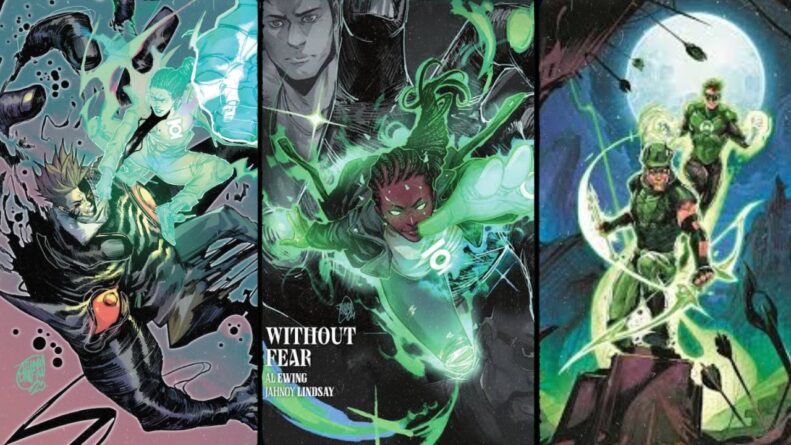
Without Fear 

Ewing shakes up Green Lantern mythology with an alien monolith that arrives in a remote Nevada town and starts judging its citizens. Hal Jordan, Guy Gardner, John Stewart, and Jo Mullein are all dragged into the fray, but they come out of the gate as ordinary people and not Corps members. 

It’s an ambitious, high-concept set up, perfect for Ewing’s gift for weird, cosmic storytelling. The downside is that having four future Lanterns to balance means the first volume is a lot of world building before any one character really takes the stage. 

Read More 👉  Best Spider-Man Marvel Comics for New Readers

5. Absolute Martian Manhunter Vol. 1: Martian Vision 

Writer: Deniz Camp | Artist: Javier Rodríguez | Publisher: DC Comics | Collects Absolute Martian Manhunter #1–6 | Price: $17.99 paperback, published November 2025 | Best for: readers who want something genuinely strange
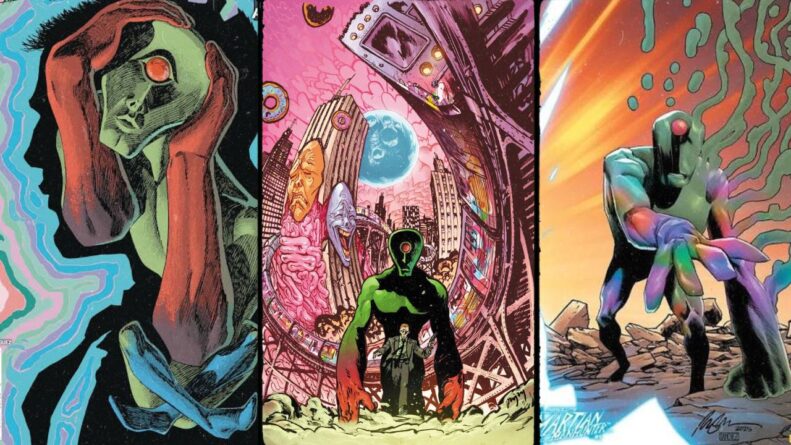
Martian Vision 

This is the trippiest book on the list. FBI agent John Jones gets his mind overwritten by an alien consciousness that perceives reality in ways the human brain can barely process, and Camp and Rodríguez lean fully into that disorientation rather than softening it for accessibility. It’s one of the more purely inventive superhero comics being published right now. The limitation is exactly what makes it interesting — the fractured, psychedelic structure asks more of a first-time reader than any other book on this list.

6. The New Gods Vol. 1–2: The Falling Sky / Edge of Darkness 

Writer: Ram V | Artist: Evan Cagle | Publisher: DC Comics | Collects The New Gods #1–12 (complete maxiseries) | Price: $17.99 paperback per volume (unconfirmed — verify at checkout) | Best for: readers who want a complete story, not an ongoing commitment
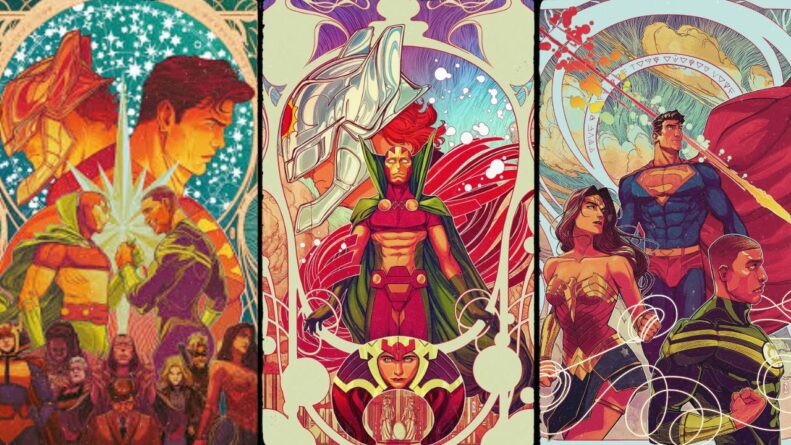
The Falling Sky Edge of Darkness 

It is the one selection on this list you can consume all at once with no cliffhangers, as the entire 12-issue story arc was published from February 2025 to January 2026 and ended as a complete and very satisfying epic. Ram V reinvents Jack Kirby’s Fourth World mythos as Scott Free and Big Barda make their way through the jungle of new parents while an astral prophecy is poised to rip New Genesis and Apokolips asunder. 

It’s honestly one of the best-reviewed superhero books in the past year. The catch: Ram V takes for granted, if not outright expects, that readers already know who the New Gods are, so it isn’t the softest introduction to characters like Darkseid, Orion, and Mister Miracle. 

7. Absolute Green Arrow #1 

Writer: Pornsak Pichetshote | Artist: Rafael Albuquerque | Publisher: DC Comics | Single issue only — no trade collection yet | Price: standard single-issue price, likely $4.99–$5.99 (unconfirmed) | Best for: readers who want to get in on day one of a new series
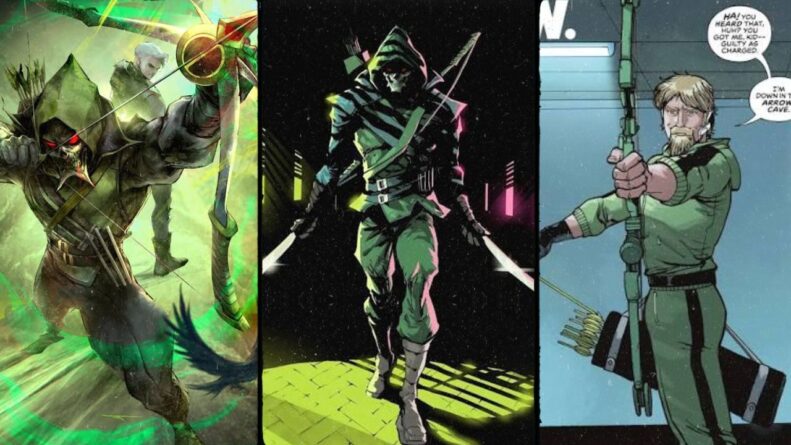
Absolute Green Arrow

This is the freshest book on the list — issue #1 hit shelves in May 2026 and sold well enough to warrant a second printing within weeks. Oliver Queen is murdered before the story even starts, and the mystery of who’s using his old Green Arrow gimmick to hunt down corrupt billionaires is told largely through Dinah Lance’s eyes rather than Oliver’s. It’s a sharper, more mystery-driven angle than past Green Arrow runs. The obvious limitation: there’s no collected edition yet, so you’re buying single issues or waiting, and it’s still unclear whether this becomes an ongoing series or stays a miniseries.

8. Ultimate Spider-Man by Jonathan Hickman Vol. 1: Married with Children 

Writer: Jonathan Hickman | Artist: Marco Checchetto | Publisher: Marvel Comics | Collects Ultimate Spider-Man (2024) #1–6 | Price: $17.99–$19.99 depending on retailer | Best for: readers who want Marvel’s version of a no-baggage relaunch

Hickman brings Spider-Man to a startlingly new place: Peter Parker wasn’t bitten by a radioactive spider. Rather, he was raised, married MJ, had children, and he lived a normal life – until Iron Man comes calling and gives him the powers he never had as a kid. 
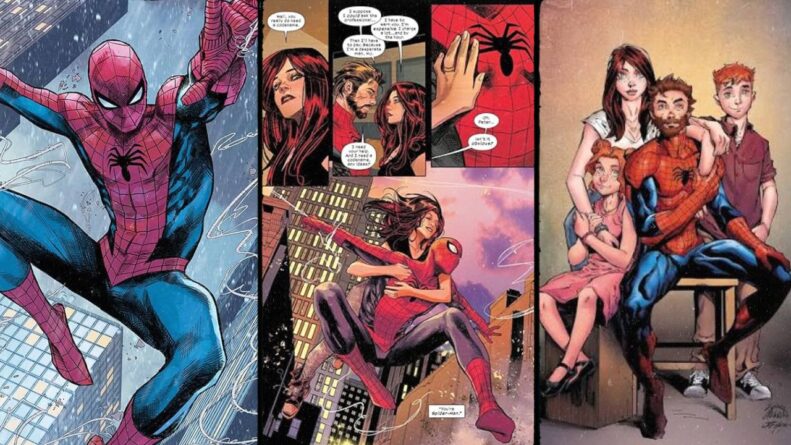
Spider-Man by Jonathan Hickman

The series was named Best Marvel Comic of 2024 by The Hollywood Reporter, and the 24-issue run is ending in February 2026, allowing new readers to experience the whole story without having to pause for the next issue. This is a much more down-to-earth, family-focused Spider-Man than the one most fans think of as the wall-crawler. This is not the quintessential teenage Peter Parker story, if that’s what you want. 

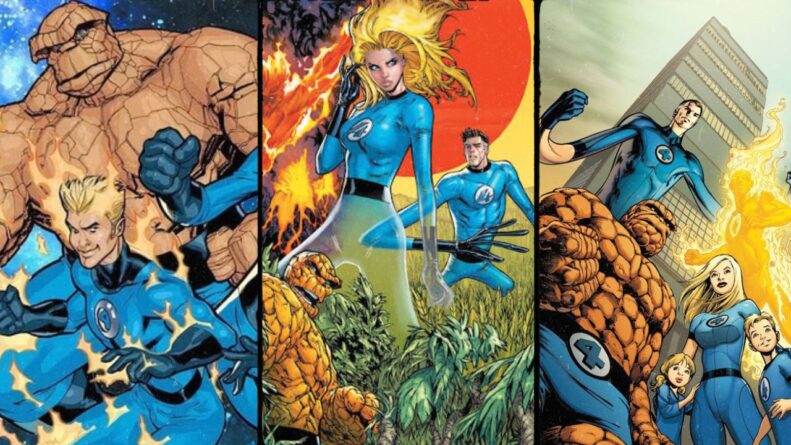
9. Fantastic Four Vol. 1: Save Everyone 

Writer: Ryan North | Artist: not fully confirmed at time of writing — check current solicitation | Publisher: Marvel Comics | Collects Fantastic Four (2025) #1–5 plus the Free Comic Book Day 2025 Fantastic Four story | Price: unconfirmed, expect the standard $15.99–$17.99 Marvel trade range | Best for: readers who want smart, structurally clever superhero comics

Ryan North’s Fantastic Four run has developed into one of Marvel’s most consistently acclaimed ongoing books, and this 2025 volume is the latest jumping-on point after the team’s Doctor Doom arc. North’s scripts lean on clever high-concept plotting — time loops, killer Doombots, alternate worlds without losing the family dynamic that makes the FF work. But north’s take is dialogue-heavy and idea-dense, which some readers love and others find slows the pacing compared to a more action-first book like Absolute Batman.

Read More 👉   Will There Be Another Spider-Man Movie? Here’s Everything Confirmed So Far

10. The Ultimates by Deniz Camp Vol. 1: Fix the World 

Writer: Deniz Camp, with Jonathan Hickman | Artist: Juan Frigeri | Publisher: Marvel Comics | Collects Ultimates (2024) #1–6 and Ultimate Universe (2023) #1 | Price: unconfirmed, expect standard $17.99 Marvel trade pricing | Best for: readers who want Marvel’s Avengers-level team book without 60 years of continuity
The Ultimates by Deniz Camp

Camp writes this as the flagship team book of Marvel’s rebuilt Ultimate Universe, with a search for answers eventually pulling in a reimagined She-Hulk. It’s been one of the better-reviewed launches in the Ultimate line, praised for treating its ensemble cast with real weight instead of just cameos. 

Because it’s tied so closely into the wider Ultimate Universe relaunch, it reads best after — or at least alongside — Ultimate Spider-Man, rather than as a fully standalone entry point.

Where to Buy These Superhero Comics

Don’t route all your buying through one retailer. Trade paperbacks on this list should be available through Barnes & Noble, Amazon, Books-A-Million, and Target, and if they’re not on your local comic shop’s shelves, they can most likely special-order them for you.  

With respect to individual issues, primarily Absolute Green Arrow#1, which has no collected edition as of yet — your local shop or a site such as the regional comic shop locator will in general provide you with a copy sooner than you’d get it from a restock of a big box retailer. Digital readers can find nearly everything here through Marvel Unlimited or DC’s digital storefront the same day it hits print.

Which One Should You Actually Start With?

If you’ve never read a superhero comic and want the safest, most talked-about entry point, start with Absolute Batman Vol. 1: The Zoo — it’s the best-selling book on this list for a reason. If you want a complete story with no waiting, go with The New Gods or Ultimate Spider-Man by Jonathan Hickman, since both are already finished. 

If budget matters and you only want to try one book before committing further, skip the newest single issue (Absolute Green Arrow) until a trade collection exists, and pick up one of the $17.99 Absolute Universe volumes instead — they’re consistently the best per-dollar entry point on this list. Whichever you choose, all ten of these are proof that 2026 is a genuinely good year to start reading superhero comics again.

Read More 👉   Why Spider-Man: Brand New Day Just Changed Everything for the MCU

Conclusion 

Superhero comics are going through a surprisingly great moment for new readers this very moment. DC’s Absolute Universe and Marvel’s reconstructed Ultimate Universe both provide new starting points that don’t demand decades of continuity, and complete stories like The New Gods and Ultimate Spider-Man let you read from cover to cover without waiting for the next issue. 

If you want the safest first pick, Absolute Batman Vol. 1: The Zoo is the obvious choice, while Ultimate Spider-Man is best for fans of a more down-to-earth, family-themed version of Peter Parker. For something weirder and more sinister or cosmic, there’s Absolute Wonder Woman, Absolute Martian Manhunter, and Absolute Green Lantern, all very different rides. Since all ten books provide fairly new entry points, 2026 is a great year to jump into superhero comics. 

Comments

Leave a Comment

Your email address will not be published.

Alpana

Articles Published: 178

Alpana is Fandomfans Senior Editor across all genres of entertainment. She evolved in the media industry since a very long time, she manages the content strategy and editing of all the blogs. Her focus on story development, review analysis, and research is well-equipped that ensures every article meets the standards of accuracy and depth.

View Profile ↗

Footage Revealed Depressed Peter Parker in Spider-Man: Brand New Day

Also included in Sony ’s CinemaCon 2026 presentation for Spider-Man: Brand New Day was a disheartened Peter Parker, returning antagonists, and Sadie Sink.

Published: Apr 21, 2026, 11:28 AM
Last Updated: Apr 22, 2026, 6:46 AM

Sony Pictures just went all out at CinemaCon 2026, sharing the biggest scoop about Tom Holland’s much-anticipated comeback in the Marvel Cinematic Universe in Spider-Man: Brand New Day. Holland himself was seen only in a video message, but his statement that the film is the “most emotional” and “most grown-up” Spider-Man story yet was heavily backed up by the footage screened to the audience. 

Synopsis of the exclusive CinemaCon footage features a very secluded Peter Parker dealing with the consequences of Doctor Strange’s spell that wiped his memory. From cringing run-ins with his ex-besties to savage jail brawls and the casting of newcomers Sadie Sink and Eman Esfandi, Phase 6 is assembling a street-level war. 

Let’s dive deep into the description of the exclusive Spider-Man: Brand New Day footage, its biggest theories for the MCU’s upcoming July blockbuster.

Ned’s ‘Spidey-Tracker’ App and the Dark Path to the Hobgoblin

One of the biggest shocks from the footage is where we find Ned Leeds after Spider-Man: No Way Home. From the footage of Spider-Man: Brand New Day, Ned appears to have a wall of Spider-Man research and has even created an app called “Spidey-tracker” to report sightings of the wall-crawler. He currently suspects that either his former teacher or Flash Thompson is the man behind the mask.

From afar, it looks classic and humorous Ned Leed but he is obsessed and a total red flag. As he forgets about Peter Parker, he has no attachment to him which makes him a repulsive man. To Ned, Spider-Man is just a puzzle to be solved.

Ned’s tech skills and his obsession will also make him powerful enough to uncover the truth of Spider-Man. It also makes him a target, crime bosses like Tombstone will use him right after discovering that a brilliant MIT student has an app tracking Spider-Man’s movements. This dangerous inquisitiveness is the ideal narrative accelerant to send Ned careening down a sinister road. If Ned accidentally causes people harm or gets kidnapped and brainwashed by the mob—the trauma could break his mind, paving the way for his tragic comic-book destiny as the Hobgoblin.

The “Maynard” Heartbreak and the Flaw in Doctor Strange’s Spell

The emotional heart of the footage is Peter Parker spying on his former friends. He observes Ned in a store, tails him to a party, and finally meets MJ. The exchange is heartbreaking: Peter gives MJ flowers and reluctantly tells her his name is “Maynard.”

The selection of the name “Maynard” is a deliberate if subconscious nod to his deceased Aunt May. It illustrates how traumatized Peter is, how completely alone he is – he can’t even make up a fake name without referencing his grief. The most interesting part of this interaction though is what MJ says. She thinks that something big is waiting for her so she turns down his job offer. 

Doctor Strange’s Spell

Peter Parker’s existence is erased by Doctor Strange’s spell, he is being erased from everyone’s life but emotional attachment is still there somewhere. MJ still has the sense that she’s waiting on something or someone — so the spell is imperfect. Her soul remembers what her mind has forgotten. 

This star-crossed love story gets more complicated with the entry of Eman Esfandi’s character, who kisses MJ and refers to her as “his girl.” Fans are speculating Esfandi might be playing a civilian, but it seems more likely he has been cast as an MCU version of Harry Osborn, or even Paul, a massively divisive figure in recent Spider-Man comics who was paired with MJ. After watching MJ with someone else pushed Peter into the darker and violent state of Spider-Man.

The Prison Break: Punisher, Scorpion, and Tombstone

The lens abruptly turns from teen drama to high-octane action showing Spider-Man doing stretches before weaving through bullets shot by heavily armed prison guards. That’s a major change of pace. Spider-Man is usually friendly with law enforcement, so clashing with prison guards shows he’s running completely outside the law. 

We’ve got Michael Mando back as Mac Gargan (Scorpion) and Marvin Jones III as the menacing crime lord Tombstone. In addition, Jon Bernthal officially returns as Frank Castle, the Punisher. 

supervillains

Spider-Man is not really battling the guards—he’s attempting to infiltrate. He is located in a secret underground complex, such as the Raft, a Damage Control installation, or a detention center. And why is that? He needs to reach Mac Gargan before everyone else. 

With Kingpin presumably sitting on the throne as New York’s Mayor (courtesy of Daredevil: Born Again), its prisons could be under his influence. Tombstone may be running his crime empire with political immunity. While the Punisher is currently on a spree wiping out street-level kingpins such as Tombstone and Scorpion, Peter may have to bust a guy out of jail to prevent Frank Castle from killing them, landing Spider-Man in the middle of crooked cops, a deadly vigilante and a pair of lethal supervillains. 

Bruce Banner Role in Spider-Man: Brand New Day?

An unexpected addition to the cast list is Mark Ruffalo as Bruce Banner. Spider-Man and the Hulk have never been given much time to interact, so Banner’s inclusion is a big question mark for this street-level story. But Spider-Man: No Way Home post-credit scenes have already answered this question. 

Eddie Brock

Eddie Brock left a small piece of Venom Symbiote in Mexico while returning to his own universe and this alien will grow into the city of New York. We are surely going to see this Venom symbiote at the time Brand New Day starts. 

Peter Parker will recognize this alien life form with more advanced abilities as he is a brilliant scientist and engineer, but he doesn’t have access to Stark Industries tech. So, he needs a top radiation and biology guy to explain it to him. 

Peter, maybe still going by “Maynard,” will probably turn to Bruce Banner for science advice. Banner, not realizing he is speaking to a former Avenger, may end up helping Peter connect with the Black Suit. The venom symbiote is always searching for a host who has an isolated, heartbroken mindset, which Peter Parker considered is the best option for now. 

Brand New Day

Read More:- Star Wars: ‘Maul – Shadow Lord’ Redefines What It Means to Be a Sith

Sadie Sink’s Mystery Role: Enter The Black Cat?

Sadie Sink (Stranger Things’s Actress) role is still a mystery, Marvel and Sony keeping it a secret but the footage revealed the theme of Spider-Man: Brand New Day which hinting towards the iconic character: Felicia Hardy, a.k.a. The Black Cat. 

The dominoes have been lined up flawlessly for the introduction of Black Cat in the MCU. Peter Parker is totally gone into a state of depression, seeing his love MJ moved on with someone else in front of him, and completely cut off from his civilian life. He is burying his pain by spending all his time as Spider-Man.

Felicia Hardy is different from MJ and she loves Spider-Man, the reckless, exhilarating superhero whereas MJ loved only Peter Parker. Felicia doesn’t care about Peter’s everyday problems. If Sadie Sink is cast as Black Cat then she is also going to be the greatest temptation for Peter. She tells him to give up his miserable human life and truly live as the mask. A romance with Black Cat, a down and dirty version of the alien symbiote suit, would be exactly the “grown-up” and emotionally layered story Tom Holland promised. 

Conclusion

Spider-Man: Brand New Day may be the last single movie of Spider-Man before the biggest crossover in Avengers: Doomsday and Avengers: Secret Wars. Sony Pictures and Marvel Studios are undoubtedly using this July debut to reduce Peter Parker to his barest essence. 

By placing him in the proximity of deadly street-level threats (Tombstone and Scorpion), holding up the brutal worldview of the Punisher to him, and shattering his heart with MJ’s new life, the MCU is pushing Spider-Man to limits it’s never explored before. Whether he succumbs to the darkness of the symbiote or rises above it, the CinemaCon footage makes it clear that Peter Parker’s new day will be his darkest day. 

Spider-Man: Brand New Day will set on screens on July, 31.


Fandomfans is an entertainment platform where you can get reviews and updates from movies, series and celebrities.

Comments

View comments and join the discussion

Alpana

Articles Published: 178

Alpana is Fandomfans Senior Editor across all genres of entertainment. She evolved in the media industry since a very long time, she manages the content strategy and editing of all the blogs. Her focus on story development, review analysis, and research is well-equipped that ensures every article meets the standards of accuracy and depth.

View Profile ↗

Marvel’s Amazing Spider-Man #1000: What Fans Need to Know

Greatest Marvel's Amazing Spider-Man #1000 comic that shaping future MCU with great storyline and villains, releasing after Brand New Day

Published: Jul 15, 2026, 5:25 AM
Last Updated: Jul 15, 2026, 5:26 AM

Marvel has been leading up to this moment for months, and now it’s almost here. On Sep 16, 2026, Amazing Spider-Man #1000 will be released, one of the biggest issues to ever hit shelves for the character. This is being laid out as a major turning point for Spider-Man that will open new storylines, new threats, and a creative team that will scale the event. It’s a bona fide event book, the kind Marvel only does once a decade. 

The release is coming as well when excitement for Spider-Man is building once more, fueled by the arrival of Spider-Man: Brand New Day in theaters. Peter Parker is having a moment. 

What Exactly Is Amazing Spider-Man #1000?

There are not many superhero comics that ever make it to issue #1000, but Spider-Man is about to join that select group. For Spider-Man, the milestone represents decades of stories, untold creative teams, and generations of fans. Even though the current run is just at issue #36, Marvel’s legacy numbering takes into account the entire publishing history going all the way back to the original Amazing Spider-Man series that was first published back in 1963, so this has the potential to be one of the biggest issues the title has ever produced.

Amazing Spider-Man

The book is being led by writer Joe Kelly and artist Pepe Larraz, the current creative team on Amazing Spider-Man, in a story titled “Ravaged.” This isn’t a stand-alone tribute story disconnected from the ongoing plot — it’s described as both a culmination of Kelly and Larraz’s run so far and the launchpad for whatever comes next. In other words, if you’ve been following the current arc, #1000 pays it off. If you haven’t, it’s designed to work as an entry point too.

Meet Ravage: The Villain Built to Break Peter

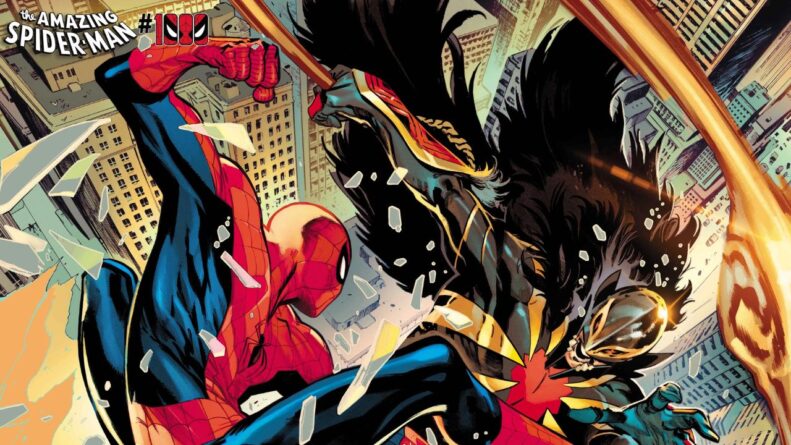
The centerpiece of the issue introduces a brand-new villain, and Marvel has been fairly blunt about the intent behind him. Kelly described the character as engineered specifically to “terrify and enrage and torture Peter at maximum potential,” aiming for the kind of antagonist readers end up loving to hate. Larraz, who designed Ravage’s look, wanted something Spider-Man readers hadn’t seen before — the early art shows a black-and-yellow costume with red boots and gauntlets, a fur cape, a Black Knight-style helmet, and a sharpened gold chain as his signature weapon.

What makes Ravage dangerous isn’t just brute strength. The solicitations frame this as one of Spider-Man’s most personal battles yet, with the villain’s power forcing Peter to question his own legacy which is a fairly loaded thing to say about a character debuting in an anniversary issue. Preview pages show Spider-Man fighting Ravage across the skyline before cutting to Peter racing through a hospital emergency room, intercut with flashbacks to his childhood with Aunt May and Uncle Ben. That’s not incidental framing. Marvel is clearly setting Ravage up to hit close to home.

Fan theory worth watching: several corners of the fandom believe Ravage’s secret identity connects to Mr. Crane, a mysterious character recently introduced as a possible son of Ben and May Parker. If that theory holds, Ravage wouldn’t just be a new rogue in the gallery — he’d be family, which would recontextualize everything about “his most personal battle yet.”

A Reunion of Legendary Creators

Beyond the main story, the Amazing Spider-Man #1000 is stacked with short anniversary tales from a genuinely unusual mix of Spider-Man legends and newcomers. Dan Slott and Marcos Martin revisit the night Uncle Ben died in a story called “Now I Can Rest.” Brian Michael Bendis reunites with artist Stuart Immonen for a team-up between Spider-Man and the Avengers titled “The Gesture.” 

The Villain Built to Break Peter

Frank Miller teams up with Peach Momoko for the first time on “Tears of the Spider-Queen,” pitting Spidey against the ninjas of the Hand. J.M. DeMatteis and Humberto Ramos reunite on “Requiem of a Goblin,” and even Larry Lieber — one of the last living creators from Marvel’s earliest era — contributes a story called “Of Webs and Six-Guns.”

Perhaps the most unexpected name on the list is Noah Hawley, the showrunner behind Fargo, Legion, and Alien: Earth, making his comic book writing debut in this very issue. That’s not a small detail for fans tracking Marvel’s growing overlap between its comics, streaming, and film divisions, pulling in a prestige TV writer for a Spider-Man anniversary book signals how much weight Marvel is putting behind this release.

Read More 👉  XMen 97 Season 2 Episodes 1-3: Who Really Sent the XMen Through Time?

The Covers: A Milestone Gets the Star Treatment

Marvel gave the Amazing Spider-Man #1000 two main covers instead of the usual one — a painted collaboration between John Romita Jr. and Paolo Rivera, and a separate piece by current series artist Pepe Larraz. Editor Nick Lowe explained the decision was about bringing together as many iconic Spider-Man artists as possible for a book this significant. 

On top of that, the variant program has turned into its own event, with contributions from Alex Ross, Mark Bagley, Skottie Young, J. Scott Campbell, and a Steve Ditko homage cover, among dozens of others.

One variant in particular matters more than the rest for movie fans: a cover officially branded for Marvel Studios’ Spider-Man: Brand New Day. Marvel doesn’t usually spend a variant slot cross-promoting a film unless it wants readers making the connection deliberately.

How Does This Connect to the Spiderman Movies?

The timing here is not a coincidence. Spider-Man: Brand New Day, directed by Destin Daniel Cretton and starring Tom Holland, releases in theaters on July 31, 2026 — just weeks before the comic hits shelves. The film picks up four years after No Way Home, with Peter Parker living entirely alone, having erased himself from the memories of everyone he loves. He’s fighting crime full-time in a city that no longer remembers him, and the pressure of that isolation triggers what’s being described as a physical transformation he can’t fully control, just as a new and unusually powerful threat starts to emerge.

The title ‘Brand New Day’ suggests the most iconic storyline of Amazing Spider-Man, which was written by Dan Slott, following the ‘One More Day’ event. In that comic, The storyline returned Peter to a simpler life because he is being erased from everyone’s memories after a spell cast in ‘No Way Home’. He made a deal with Maphesto to not marry MJ in order to save Aunt May’s life, he was back living with Aunt May. The movie is clearly leaning on that same emotional architecture — a Peter Parker stripped of the support system he built across three films, forced to rebuild his identity from the ground up.

the Spiderman

Both Amazing Spider-Man #1000 and Spider-Man: Brand New Day follow different stories but exploring the same thing. Who is Spider-Man now after losing everything he had, there’s nothing left to lean on and the only thing left is the choice to keep going anyway. Ravage forcing Peter to “question his very legacy” in the comic, and movie-Peter rebuilding his life from scratch in total anonymity, are two versions of the same gut-punch. Marvel putting a Brand New Day variant cover on the anniversary issue isn’t just marketing synergy — it’s Marvel pointing at both stories and saying, look, this is the theme right now.

Why This Comic Is More Important Than a Regular Milestone Issue

Anniversary issues happen periodically — #700, #800, #900 all had their moment. What makes #1000 different converges are happening around it. It’s landing during the biggest theatrical Spider-Man push since 2021, with Quorum audience tracking reportedly showing Brand New Day as the highest-interest tentpole of the summer. It’s introducing a villain explicitly designed to have long-term consequences rather than a one-issue cameo. It’s pulling in a Hollywood showrunner for his comics debut, which reads like Marvel building bridges between its publishing arm and its screen ambitions. And it’s doing all of this while explicitly tying its cover art to a movie in theaters at the same time.

It’s not Marvel simply celebrating where Spider-Man has been. This is Marvel indicating where he’s going next, in comics and on screen. At the very moment that mainstream audiences are starting to pay attention again, by using the character’s most iconic number. 

What to Expect on September 16

Readers picking up Amazing Spider-Man #1000 should go in expecting more than a nostalgia lap. Ravage is being positioned as a villain meant to stick around, not a milestone gimmick. The anniversary stories give long-time fans real emotional payoffs — Uncle Ben’s death, the Hand, an Avengers team-up without needing the main plot to carry all of it. And for fans coming in fresh off Brand New Day at the theater, this issue offers something the movie can’t: eight-plus decades of context for why Peter Parker rebuilding his life, alone, still means something.

Expect on September 16

Whatever Ravage ends up being whether the Mr. Crane theory holds up or Marvel has something else up their sleeves, one thing is already clear from the buildup: This issue is supposed to make a difference for the next thousand, not just look good sitting on a shelf. 

Read More 👉  XMen 97 Reading Guide: Every Marvel Comic You Need to Read

Conclusion

A once-in-a-lifetime event like Amazing Spider-Man #1000 will happen only one time, but what makes this issue special isn’t the number on the cover. Instead, the fact that Marvel is using it to push Spider-Man forward rather than just celebrate the past. Between Ravage’s introduction, an all-star lineup of creators, and the obvious thematic connection to Spider-Man: Brand New Day, the anniversary issue is less about a victory lap and more about the beginning of Peter Parker’s next defining chapter. 

Whether you’ve followed Amazing Spider-Man for decades or you’re returning to the character after the new film, #1000 is shaping up to be one of the most significant Spider-Man comics in years. If Marvel makes good on its promises, and they are, readers won’t recall this issue because it was a historic milestone—they’ll recall it as the issue where Spider-Man’s future changed in a big way. 

Dive deeper into the details and theories of movies, series, and characters on Fandomfans.

Comments

View comments and join the discussion

Mariyam

Articles Published: 90

Mariyam Khan is Fandomfans Content Writer and providing reports and reviews on Movie Celebrities, and Superheroes particularly Marvel & DC. She is covering across multiple genres from more than 4+ years, experience in delivering the timely updates.

View Profile ↗

How Did Wolverine Get His Adamantium Skeleton in X-Men ’97? Explained

Discover the story behind Wolverine's Adamantium Skeleton in X-Men '97, how it impacts the series, and what it means for Logan's future.

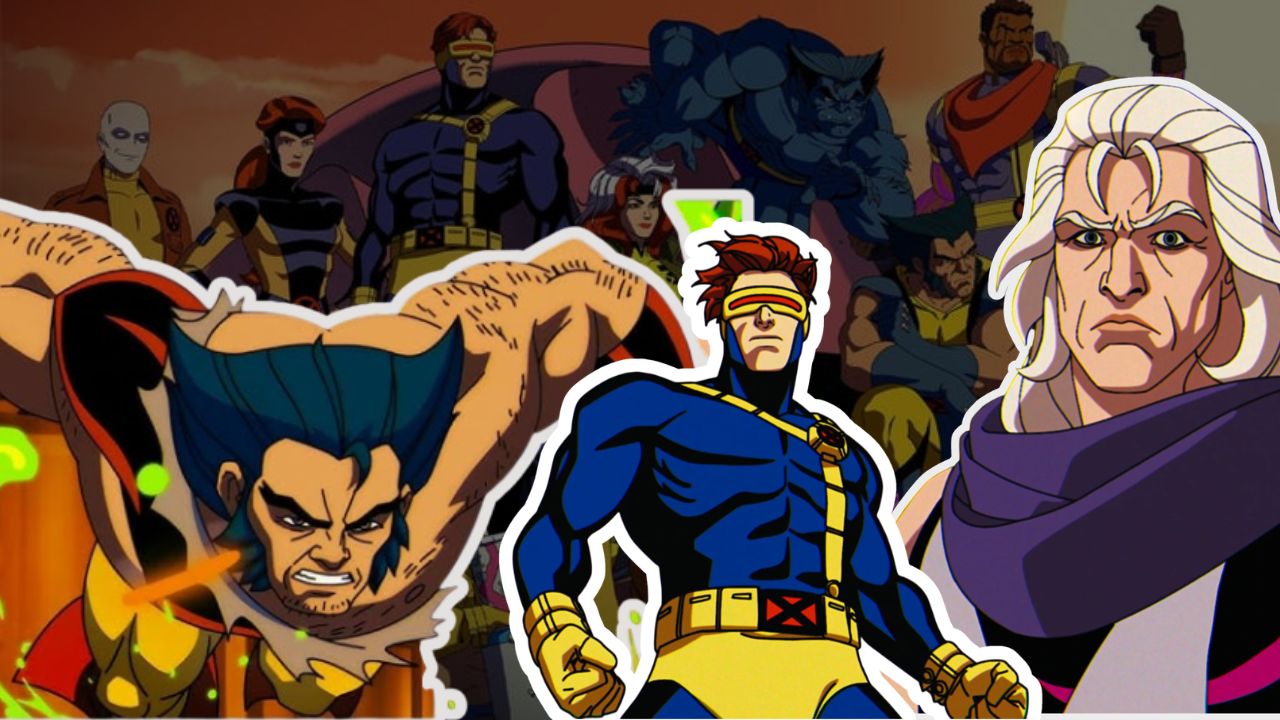
Marvel introduced Wolverine’s Adamantium Skeleton in X-Men ’97 but there is only a glimpse of how he got it in the first place. Since they already made Wolverine origin stories before so they avoid repetition. X-Men longtime fans already know his origin but the new viewers didn’t know much. The show heavily leans on decades of X-Men comic history so it’s essential to understand ‘how did Wolverine get his adamantium skeleton.’

Wolverine, a mutant who is born with healing ability and natural bone claws never asked for adamantium skeleton. It was forcibly given to him during a covert government program, his entire skeletal structure is bonded with the indestructible metal adamantium that turns him into a living weapon. The show treats it as a backstory rather than dramatized from scratch as it happened long before the events of X-Men ’97. 

The Origin of Wolverine’s Adamantium Skeleton in X-Men ’97

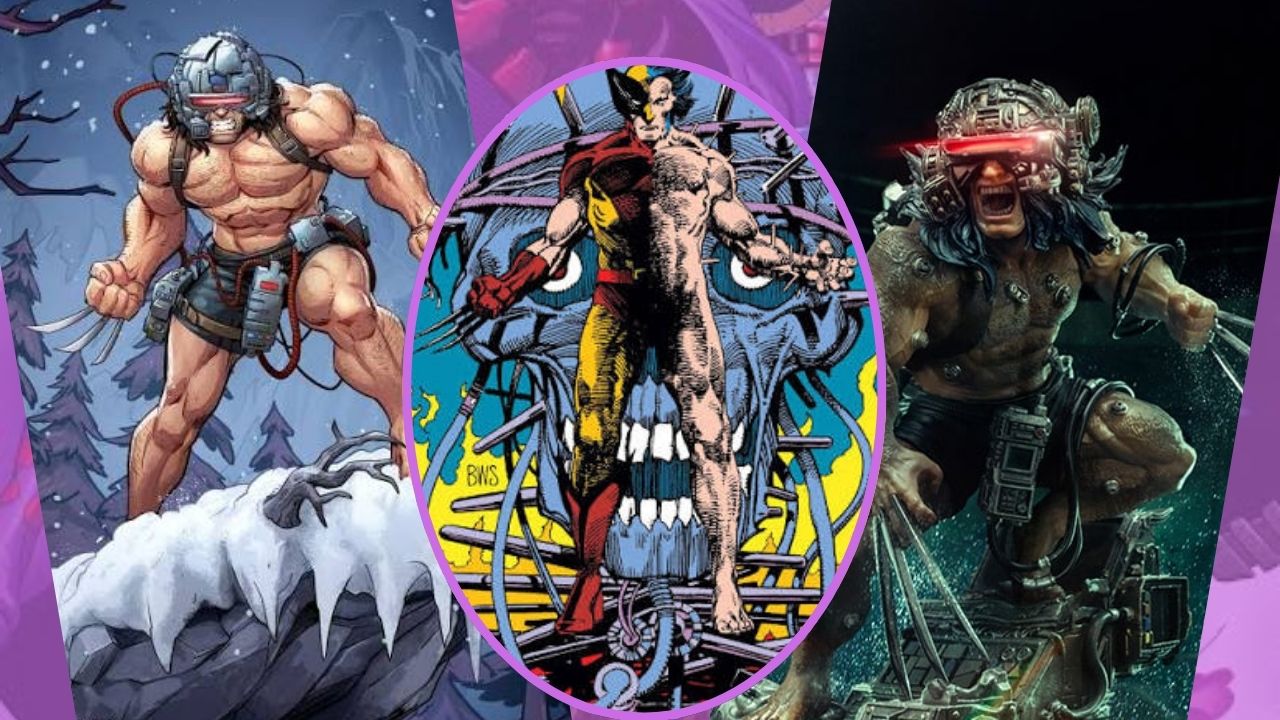
The Wolverine’s origin traces back to Weapon X, a black-ops program that saw an opportunity, catches and uses Logan as their test subject. Weapon X scientists fuse adamantium (indestructible metal alloy) directly onto his skeleton to create a nearly unkillable soldier who could heal from almost anything. He is already a mutant with retractable bone claws and a mutant healing ability which quickly heals him and that’s the reason he survived that experiment. 

Wolverine's Adamantium Skeleton in X-Men '97

The procedure of Wolverine’s Adamantium Skeleton in X-Men ’97 is very brutal as liquid Adamantium bonded to his bones through an excruciating procedure. It blended the physical trauma with psychological conditioning and made Logan lose his memory. Wolverine spent so many years afterwards without knowing his own past or who he used to be that essentially made him a weapon with no clear sense.

Why Logan Was the Only One Who Could Survive It 

In Marvel lore, Adamantium is an indestructible, man-made steel alloy, Weapon X scientists fuse and turn it into a liquid form which is stronger than anything found in nature. But bonding it to a living body could clearly kill anyone because the metal itself is inherently toxic to human tissue. 

During the Weapon X experiment, Logan was injected with molten adamantium which bonded with his bones at a molecular level. Any human being would have been killed in this procedure because either of sheer trauma or from slow metal poisoning afterward. Logan survived due to only reason: his mutant healing ability. That works 24/7 to fight off the toxic effects of having metal fused into his skeleton.

Survive It

Before Weapon X ever touched him, Logan had natural bone claws that move out and in on their own. So adamantium just coated those claws into blades capable of slicing through almost anything. It indicates that a metal skeleton is not his superpower but a physical burden his body is constantly working to survive, and always will be.

How X-Men ’97 Series Treats Wolverine’s Adamantium Skeleton 

Marvel didn’t waste time to explain Wolverine’s Adamantium Skeleton in X-Men ’97 in detail because it already exists in the original animated series & wider X-Men mythology. The Wolverine’s adamantium skeleton and claws has been treated as a part of Wolverine in a show, making occasional references to his mysterious past and the fragmented memories that continue to haunt him. Fans who read comics or watch 90s cartoons already recognize this reference.

The show is focusing on Logan’s character and what he became after the Weapon X brutal experiment rather than telling a procedure. The past trauma shaped his nature — he distances himself from everyone, guarding his founding family X-Men, and stops himself turning into a monster.

Read More:- Who Is the New Editor-in-Chief of Marvel Comics? Stephen Wacker Explained

Why the Metal Skeleton is Wolverine’s Biggest Weakness in X-Men ’97

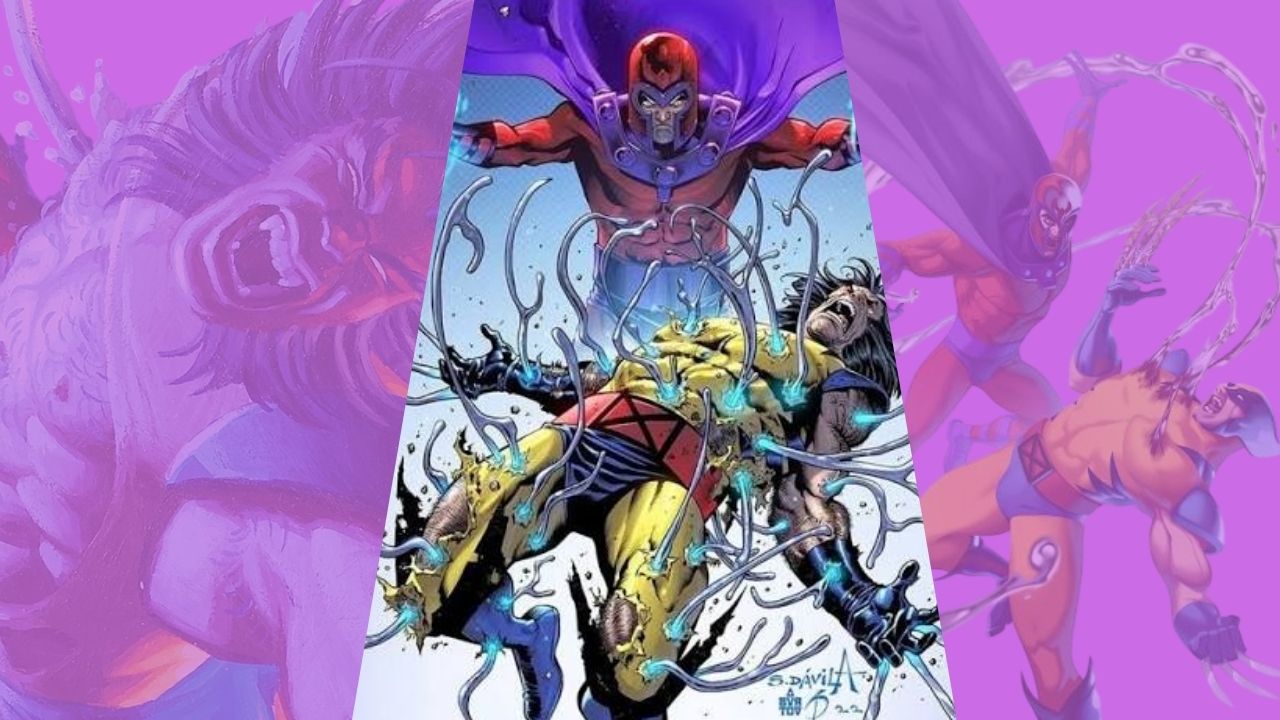
The twist that made Wolverine’s Adamantium Skeleton in X-Men ’97 origin story more interesting, his body has become the ultimate guarded shield to protect him but in the world of mutants, it also makes Logan vulnerable towards Magneto. 

The 1993 Fatal Attractions arc shapes the tone of X-Men ’97 right now. X-Men ‘97 season 2 showed Magneto using his magnetic ability to violently extract the adamantium out of Wolverine’s body in one of the character’s most brutal moments. Viewers get shocked because it flips Logan’s greatest strength into his greatest exposure. 

Wolverine's Adamantium Skeleton in X-Men '97

The thing that makes Wolverine indestructible becomes his greatest weakness, the show keeps the storyline sword dangling over his head any time Magneto enters the conflict. It is more than just a rivalry, Wolverine’s Adamantium Skeleton in X-Men ’97 indicating a bigger threat to every superhero who uses adamantium and wider the stakes of future X-Men.

The Glimpse of Origin Still Going to Show in X-Men ’97 

What makes this backstory endure across decades of adaptations is that it’s not just a cool power-up. The adamantium bonding is framed as violation, not enhancement. They did this experiment forcibly to make him indestructible but he never wanted this. This resonance makes him what he is, someone who stops at every edge to become a weapon. 

Wolverine's Adamantium Skeleton in X-Men '97

If future seasons of X-Men ’97 continue building on this thread, viewers can expect more moments from Weapon X. This slow burn approach keeps the backstory intriguing without revealing everything at once. 

Conclusion

Wolverine’s Adamantium Skeleton in X-Men ’97 is not new for longtime fans as Logan origin story already existed before the events of X-Men ’97, Logan was forced into the Weapon X program, which causes trauma and fragmented memories that still shape the character’s identity. 

If viewers want to know the origin story they can watch animated series or 90s cartoons because the show is interested in telling how his brutal experiment and experiences impacts on his relationships and decisions. 

As the series moves forward, fans can expect more Weapon X era glimpses, slowly revealing how Logan became one of Marvel’s most enduring heroes. 

Get the deeper details from the movies, series, and comics of your favorite character and stories on Fandomfans.

Comments

View comments and join the discussion

Alpana

Articles Published: 178

Alpana is Fandomfans Senior Editor across all genres of entertainment. She evolved in the media industry since a very long time, she manages the content strategy and editing of all the blogs. Her focus on story development, review analysis, and research is well-equipped that ensures every article meets the standards of accuracy and depth.

View Profile ↗

Marvel First Family & Doctor Doom Are Friends Until Doomsday

Discover how Marvel's First Family and Doctor Doom go from uneasy allies to bitter enemies in Marvel First Family & Doctor Doom Are Friends Until Doomsday.

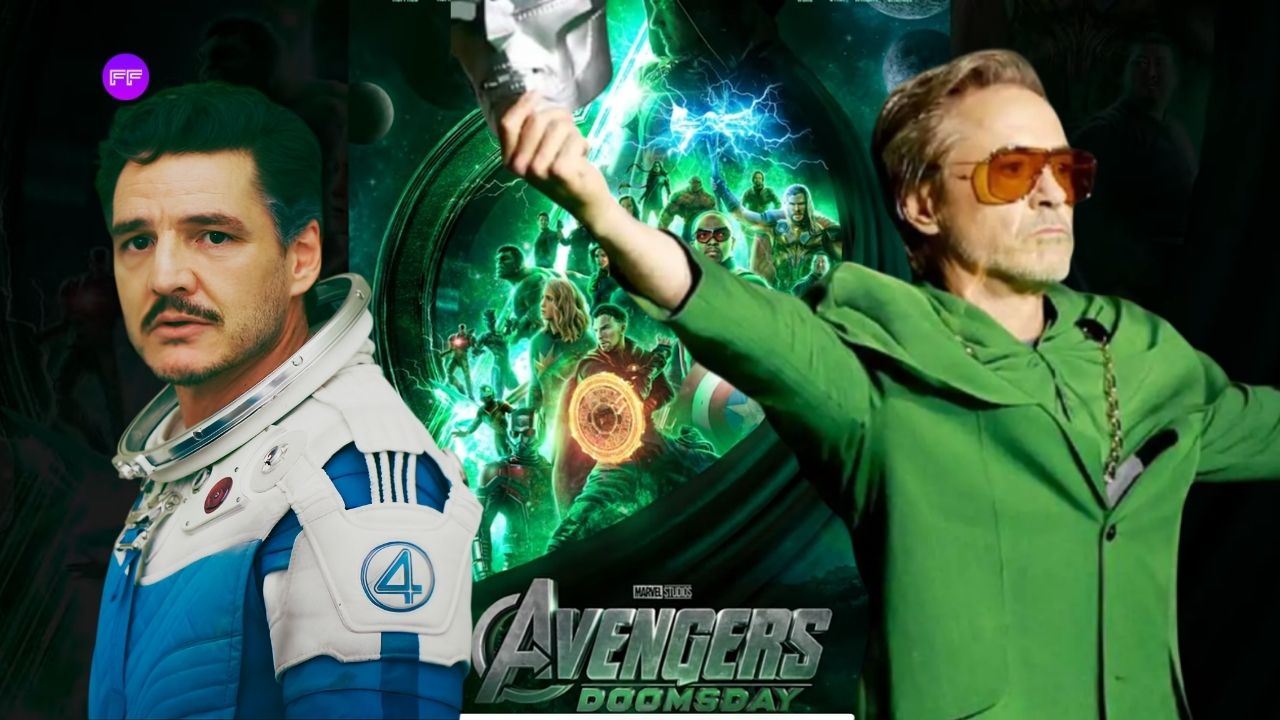
Nobody expects that Doctor Doom, about to threaten every universe in the multiverse in Avengers: Doomsday, isn’t a stranger to the Fantastic Four. He’s family friend material. Reed Richards and Victor von Doom go back decades in the comics, and it’s confirmed after official comments from insiders reveal that it’s the emotional spine of the entire movie. 

This isn’t the origin story where Doom shows up as a masked menace on day one. This is a slower, sadder kind of villain arc, and it’s exactly why Robert Downey Jr. signing on to play him made so much sense once you stopped picturing Iron Man and started picturing a man who lost everything and blames the people who once called him a friend.

Doctor Doom Was Never Just “The Villain Next Door”

Long before he was ruling Latveria and building doombots by the thousand, Victor von Doom shared a dorm with Reed Richards at State University. They were rivals in the lab, not enemies in the field. 

The Villain Next Door

The accident that scarred Doom’s face and pushed him toward sorcery and tyranny is tangled up with Reed’s own guilt — Reed warned Victor his calculations were flawed, Victor ignored him, and the explosion that followed set both of their lives on separate, colliding paths.

Doctor Doom and Reed Richards Known Each Other Before They Gained Superpowers 

What makes their relationship genuinely unusual in Avengers: Doomsday is that it never fully curdled into simple hatred. Doctor Doom has, at various points, called a truce with the Fantastic Four to fight bigger cosmic threats. 

He’s shown up for moments on with Marvel’s first family. Most strikingly, in the comics, Doom personally delivered Reed and Sue’s daughter, Valeria, when a pregnancy complication threatened both mother and child and he later became her godfather. That’s not a footnote. That’s a writer deliberately keeping the door open between a hero and his greatest enemy, generation after generation.

Doctor Doom and Reed Richards

Why this matters for the movie: If the MCU is borrowing this dynamic, Doom isn’t being introduced as a stranger the Fantastic Four have to figure out. He’s someone Marvel’s first family already trusted. That’s a much heavier betrayal to write and a much heavier one to watch.

Fantastic Four: First Steps Post-Credit Scene

According to a widely circulated from industry leaker Daniel Richtman, the Fantastic Four’s Reed Richard and Doctor Doom are described as being on friendly terms heading into the film as people who have known each other for years rather than adversaries meeting for the first time. 

Fantastic Four

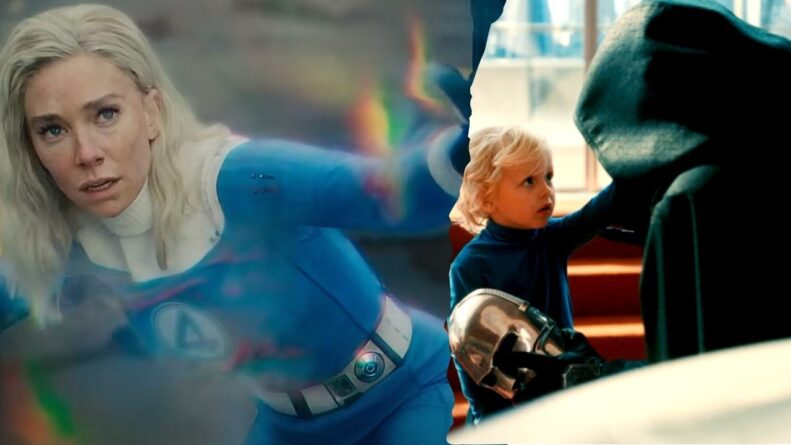
The same rumor claims the fallout that turns them into enemies is essentially the plot of the movie itself, with Doctor Doom reportedly seen playing with Franklin Richards in a post-credits scene of Fantastic Four: First Steps. Vanessa Kirby’s Sue Storm saw them and tried to prepare to use her power to protect her son but the scene ended. 

However, the scene made fans mind that Doom was an enemy, if he’s friendly then Sue may not see Doom as a threat and calm down. 

“Doctor Doom is just playing with Franklin, he mean no harm to the kid” — Ritchman Says

Marvel Studios hasn’t laid out the Reed-Doom relationship on record. But it lines up too neatly with six decades of comics history to dismiss, and directors Joe and Anthony Russo have publicly described Doom as one of the most complex characters in Marvel’s library — someone they wanted to explore with “complexities and vulnerabilities” rather than write as a straightforward conqueror.

“He’s not simply a villain; he’s one of the most complex Marvel characters. He’s always three moves ahead.” — Joe Russo, co-director, on Doctor Doom

Franklin Richards: The Wild Card Nobody’s Talking About Enough

If there’s one thread connecting the comics history to the reported MCU plot, it’s Franklin Richards. In the comics, Franklin is regarded as one of the most powerful beings to ever exist — capable of warping reality, creating pocket universes, and reading minds before he can properly walk. The Fantastic Four: First Steps already introduced him as a baby who ages into a young child by the film’s end, and multiple reports suggest Doom’s interest in Franklin is central to why he moves against the family at all.

A godfather turning on the family he swore to protect, driven by what a child could become, that’s not comic book villainy for its own sake. That’s a tragedy with body count.

Read More 👉  Marvel’s Amazing Spider-Man #1000: What Fans Need to Know

Avengers: Doomsday Official Details Overview

Title Details
Title / Event Avengers: Secret Wars (follow-up: Avengers: Secret Wars — Part II noted as Dec 17, 2027)
Release date December 18, 2026
Follow-up installment Avengers: Secret Wars follows (sequel/next major MCU event) on December 17, 2027
Main villain Doctor Doom — played by Robert Downey Jr.; full costume unveiled at CinemaCon 2026
Returning lead cast Chris Evans (Steve Rogers), Chris Hemsworth (Thor), Pedro Pascal (Reed Richards), Vanessa Kirby (Sue Richards)
Fantastic Four presence Seven characters from First Steps confirmed to appear, including HERBIE (the robot)
Directors Anthony Russo and Joe Russo (returning to MCU since Avengers: Endgame)
Setting / premise Heroes from three separate universes — Earth-616, Earth-828 (Fantastic Four’s world), and Fox X-Men universe — converge to face Doctor Doom

The trailer shown at CinemaCon and in teasers has already leaned into Doom’s overwhelming power — a scene where he stops Thor’s Stormbreaker with one hand has become the moment fans keep replaying. 

But the same trailer reportedly closes on a much quieter, more devastating line from Doom: “One day you will forgive me.” That’s not the sentence of a conqueror talking to strangers. That’s the sentence of someone talking to people he actually cares whether they forgive.

Why This Angle Is the Smartest Thing Marvel Could Do

The MCU has struggled with villain motivation before — plenty of Phase Four and Five antagonists existed mainly to be defeated. Doom being a person the Fantastic Four actually liked, trusted, and maybe even loved solves that problem before it starts. They also don’t have to start from scratch in making us feel sympathetic for Doom; they get that from sixty years of history between Reed and Victor, and they get to spend their running time dismantling it on-screen rather than explaining it in exposition. 

Marvel Could Do

It also raises the stakes for everyone standing next to the Fantastic Four when Doctor Doom turns. If he’s willing to burn a friendship this old to get what he wants, nobody in Avengers: Doomsday is safe because they’re powerful. They’re at risk because they’re close to him.

Read More 👉  XMen 97 Season 2 Episodes 1-3: Who Really Sent the XMen Through Time?

Conclusion

Doctor Doom isn’t a fascinating Avengers: Doomsday antagonist simply because he’s the most powerful person present. He’s compelling because he’s introduced as someone Fantastic Four already know, trust, and consider part of their lives. That background makes every encounter not just a fight to save the multiverse, but the shattering of a friendship that once felt unshakable. 

If Marvel follows the emotional roadmap it set forth in the comics, “Avengers: Doomsday” won’t just establish Doom as the MCU’s next major villain. It’ll show how pride, grief, and unthinkable choices can turn a trusted friend into the deadliest enemy Marvel heroes have ever encountered. And now, with the multiverse at stake and Reed Richards facing the friend he couldn’t save, the conflict is far more tragic than your standard-oh-hero-versus-villain story. 

Dive into details of latest movies, series, and characters before watching it on Fandomfans

Comments

View comments and join the discussion

Alpana

Articles Published: 178

Alpana is Fandomfans Senior Editor across all genres of entertainment. She evolved in the media industry since a very long time, she manages the content strategy and editing of all the blogs. Her focus on story development, review analysis, and research is well-equipped that ensures every article meets the standards of accuracy and depth.

View Profile ↗

Best Spider-Man Marvel Comics for New Readers

Discover the best Spider-Man Marvel comics for new readers, from iconic origin stories to must-read adventures, with beginner-friendly picks to start your journey.

You just watched a Spider-Man movie in theaters and you’re hyped, now you open a Marvel website to find “Amazing Spider-Man #1,000-something” and other sections featuring dozens of series with “Spider” in the title. That’s the moment most people get confused and close the tab. Once you look at a clean list of best Spider-Man Marvel Comics which is especially good for new readers, you’ll definitely own them.

Spider-Man has been published continuously since 1963, which means there are literally thousands of issues, and no one is expecting you to read all of them. You need maybe six comics to actually understand why this character has outlasted every trend in pop culture for over sixty years.

This is a guide to Spider-Man Marvel comics built specifically for people who have never picked one up. No filler, no “if you really want to go deep” tangents into 1990s clone sagas. Just the stories that made the character, in an order that won’t burn you out in week one.

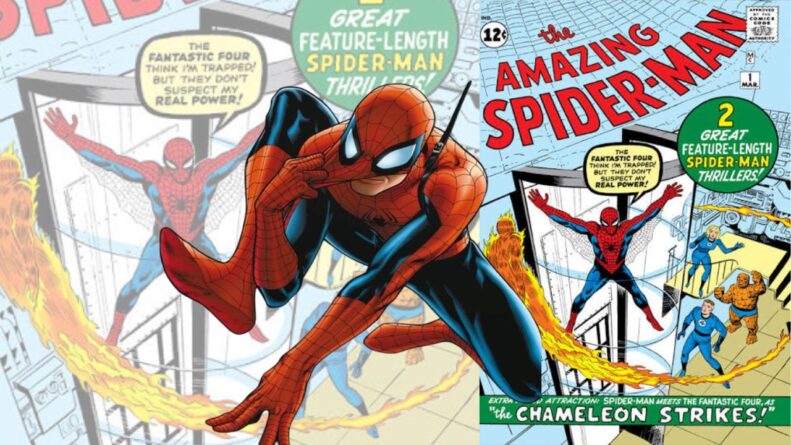
“The Amazing Spider-Man #1” 1963 Original Spider-Man Marvel Comic

The one where issues starts is The Amazing Spider-Man #1 from 1963, if you are a new reader then start with this comic. Because it is the oldest and still so valuable to the Spider-Man fans. It carries stiff dialogues, different storytelling reminiscing nostalgia, and the different version of Peter Parker from the one you know in the movies. Comic readers mostly recommend toward “the beginning,” but that advice mostly exists because it’s easy to give, not because it works.

The Amazing Spider-Man

What actually works is starting with a story built to be an entry point — something written by people who knew a new generation of readers had zero patience for sixty years of backstory.

The Modern Reboot That Still Works Best: Ultimate Spider-Man (2000)

If you are still deciding whether you read or not then begin with Ultimate Spider-Man Vol. 1 which is written by Brian Michael Bendis, since it is a full retelling of Peter Parker’s origin from scratch. This isn’t any spin-off comic, it is prepared with art by Mark Bagley, stripped of decades of continuity Spider-Man introduction so it is best for readers who’d never touched a comic before. 

Bendis and Bagley led this series for more than 100 issues in a row, which is a ridiculous, unheard of run length for two creators on one superhero book, and it’s part of why the world is so tightly built. 

It hits the beats you already know — the radioactive spider bite, Uncle Ben, the “Great Responsibility comes with great power” lesson but it takes its time with Peter as an actual teenager dealing with actual teenage problems before the costume shows up. In movies, Peter Parker’s high-school version where he felt true to life —- the tone came from this book.

Read More 👉 Spider-Man: Brand New Day Latest Update: What’s Really Happening?

Two Short, Self-Contained Classics Worth Your Time

If you are new and scared to find more than 100 Marvel comics, don’t worry because you don’t need the full 1970s-1980s Spider-Man run. There are two main stories which you can read as a beginner and that’s worth your time.

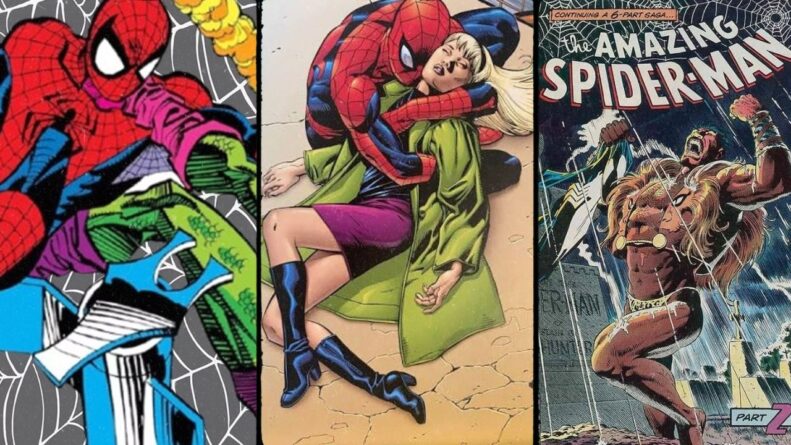
The Death of Gwen Stacy — This is the point where most comic historians reference about Superheroes doesn’t always get to win. Amazing Spider-Man #121-122 (1973), written by Gerry Conway follows the story, Spider-Man fails to save the person he loves. If you have watched Andrew Garfield’s Spider-Man then you probably understand the specific kind of grief the movie showed. That emotional heartbreaking tone came from this version, you’ll know once you read. 

Marvel comics

Kraven’s Last Hunt (1987) — J.M. DeMatteis and artist Mike Zeck crafted this six-issue saga, across three different Spider-Man titles of the era (Web of Spider-Man #31-32, Amazing Spider-Man #293-294, Spectacular Spider-Man #131-132). This is widely considered the single best Spider-Man story ever published, full stop. It’s dark, psychological, and doesn’t require you to know anything about Kraven the Hunter going in — the story tells you everything you need. Buried alive, replaced by his obsessive hunter, Spider-Man has to claw his way back to himself, literally and figuratively. It’s collected as one volume, so you’re not chasing three different comics.
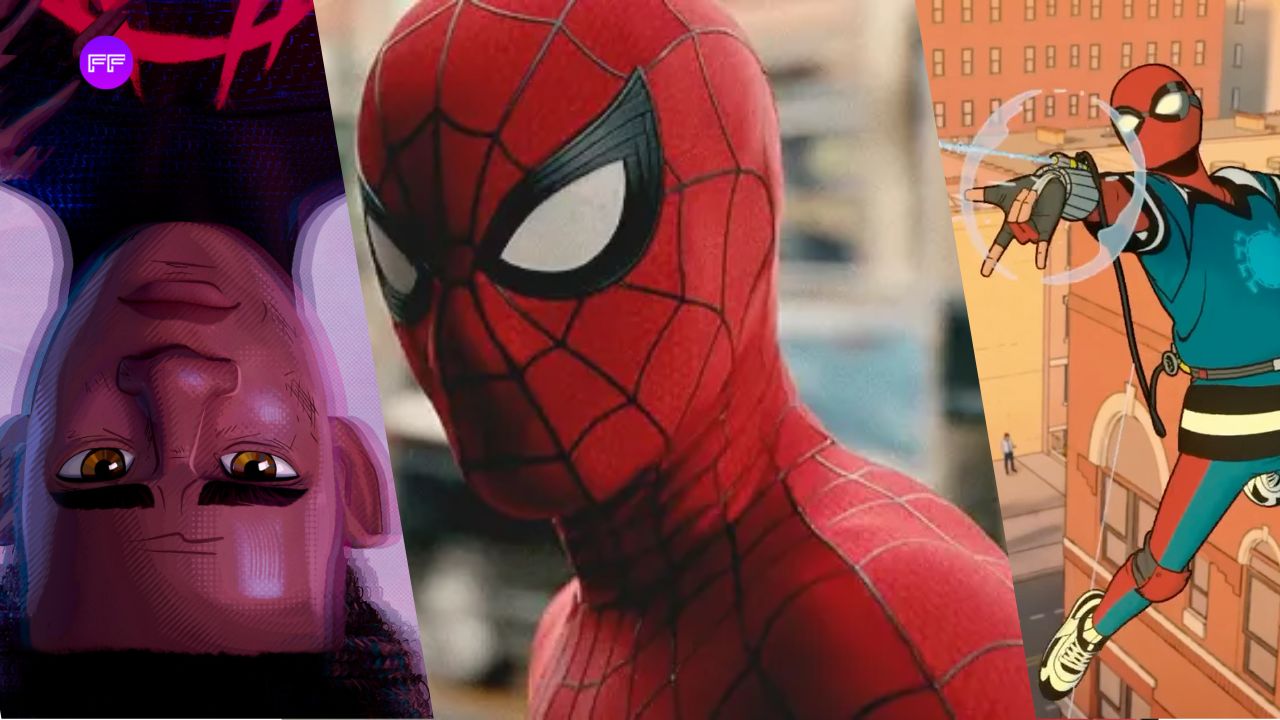
If Peter Parker Isn’t the Spider-Man You Want: Miles Morales

Miles Morales wasn’t just a temporary replacement of Spider-Man because Brian Michael Bendis introduced him as a fully new version of Peter Parker after killing off the Ultimate universe’s Peter Parker in 2011. And now this character is running on-screen as Miles Morales: Spider-Man series in the main Marvel Universe (Earth-616), that shows Miles become Marvel’s core heroes. 

If you discovered Miles through the Spider-Verse films, and came to read comics then you land on the right place because you don’t need to read a single Peter Parker comic first. The Miles storyline built on its own and the comics is the original source of the films. Miles’s book has a completely different tone with its own villains, his own family drama with his parents, and a fresh perspective on living up to a legacy he never expected to inherit. 

Read More 👉 Will There Be Another Spider-Man Movie? Here’s Everything Confirmed So Far

Where the Comics Actually Are in 2026

Right now, the newest Marvel Comic published is The Amazing Spider-Man which is now on its 7th volume that launched in April 2025. It is written by Joe Kelly. The series is currently in the middle of the “Death Spiral” crossover, featuring Spider-Man with Venom and Mary Jane Watson is hosting a symbiote, against a serial killer known as Torment. This storyline has a heavier tone, following a grittier crime-thriller than any Spider-Man story before. This is co-written by Joe Kelly and Al Ewing. 

Comics Actually

Otherwise, if it is a finished modern story you seek rather than an ongoing, Essential Ultimate Spider-Man (2024) by Jonathan Hickman and artist Marco Checchetto just wrapped up in February 2026 after 24 issues — and unlike most superhero runs, it makes an end. This is a what if scenario where Peter Parker is older, married with two kids and just now came out as Spider-Man, which turns the typical “teenager learns responsibility” formula upside down. While the title may be similar, this is genuinely a different take than Bendis’ version above, so don’t get the two confused. 

A Reading Order That Won’t Burn You Out

If you’re the type who wants the best Spider-Man Marvel Comics checklist instead of prose, here’s the actual order to read these in:

  1. Ultimate Spider-Man Vol. 1 (2000), Bendis/Bagley — your entry point
  2. Amazing Spider-Man #121-122, “The Death of Gwen Stacy” (1973) — the emotional gut-punch
  3. Kraven’s Last Hunt (1987) — the best single Spider-Man story, full stop
  4. Miles Morales: Spider-Man (start with any recent trade) — if you want a different lead character
  5. Ultimate Spider-Man (2024) by Hickman/Checchetto — a complete, self-contained modern story
  6. The Amazing Spider-Man Vol. 7, current issues — if you want to follow what’s coming out monthly right now

That’s five to six books, not five hundred are best Spider-Man Marvel Comics. You’ll walk away understanding why Spider-Man has survived every reboot, every costume change, and every “is this character still relevant” think piece since Kennedy was in office — and you’ll have done it without touching a single clone saga.
If you only pick up one Spider-Man comic this weekend, make it Kraven’s Last Hunt. It’s a self-contained narrative that doesn’t depend on years of continuity or encyclopedic Marvel knowledge, yet it encompasses everything that makes Spider-Man such a timeless character. 

Read More 👉  How Did Wolverine Get His Adamantium Skeleton in X-Men ’97? Explained

Conclusion

More than 30 years on, it is still one of the most emotionally resonant and psychologically complex superhero comics ever written—and the best Spider-Man Marvel Comics most likely to have even non-comics readers agreeing that Spider-Man is a bit more than a wisecracking guy who wears a red and blue suit. 

Comments

View comments and join the discussion

Alpana

Articles Published: 178

Alpana is Fandomfans Senior Editor across all genres of entertainment. She evolved in the media industry since a very long time, she manages the content strategy and editing of all the blogs. Her focus on story development, review analysis, and research is well-equipped that ensures every article meets the standards of accuracy and depth.

View Profile ↗

Will There Be Another Spider-Man Movie? Here’s Everything Confirmed So Far

Will There Be Another Spiderman Movie? Explore the latest news, expected release timeline, cast updates, and what fans can expect next.

Fans who have watched Spider-Man: Brand New Day wondering if they get to see Peter Parker again, or not. The film already broke records during its release on July 31, 2026. The speculation is surrounding “Will there be another Spider-Man Movie?” There’s no official confirmation of Spider-Man 5 yet, but there are projects already in motion.

Taking everything Brand New Day has given us suggests that it is just an entry door for the bigger MCU and Peter Parker connection in Avengers: Doomsday.

Spider-Man: Brand New Day Just Had One of the Biggest Openings Ever

Sony and Marvel had no plan to let Spider-Man rest with the success of $355 million, directed by Destin Daniel Cretton. “Brand New Day” became the second-biggest domestic debut and first is still the “Avengers: Endgame’s” $357 million. Spider-Man crossed $927 million worldwide in just three days because fans liked this movie and also gave it a 98%score online.

Will There Be Another Spiderman Movie

This film was also backed by critics with a 90% score. Tom Holland returned as Peter Parker alongside Zendaya, Jacob Batalon, Sadie Sink as Jean Grey, Jon Bernthal’s Punisher, Florence Pugh’s Yelena Belova, and Mark Ruffalo’s Bruce Banner. The film closes on Peter reintroducing himself into a world that had forgotten him, and the post-credits scene simply reads “Spider-Man Will Return” — no title, no date attached. That vagueness is the whole reason this question is worth answering properly.

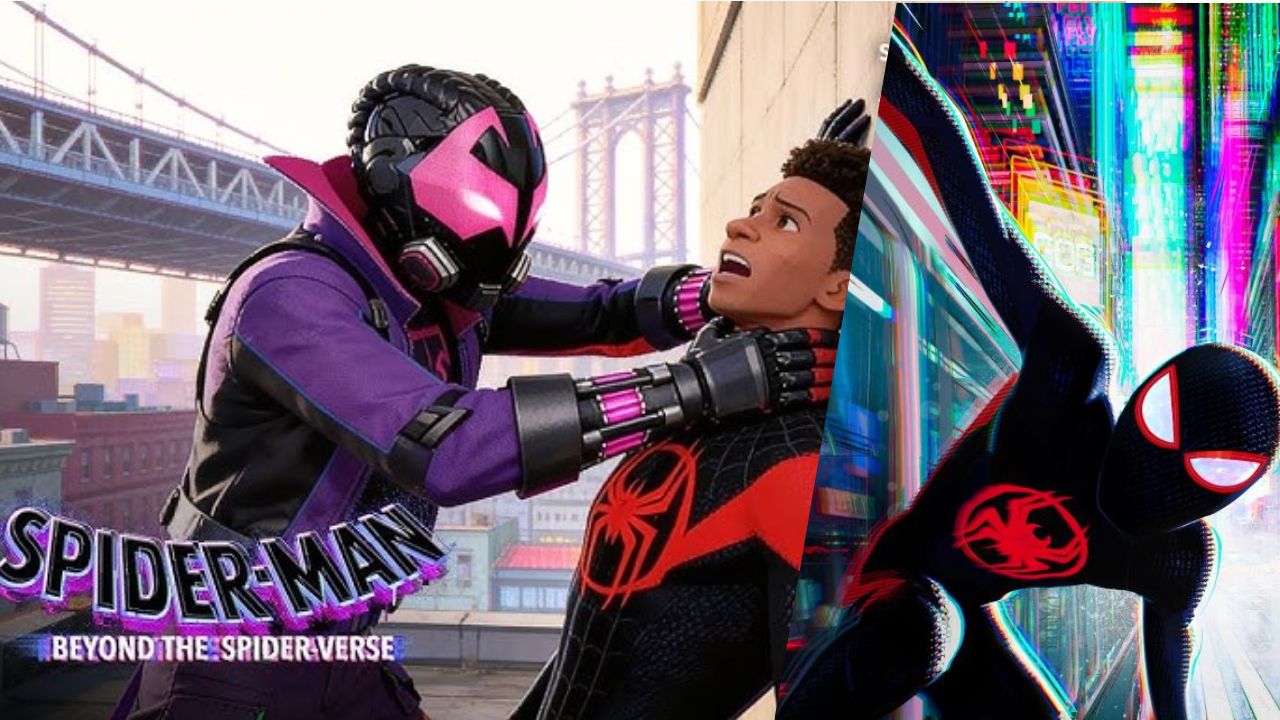
Spider-Man: Beyond the Spider-Verse Is Officially Set to Hit Theaters

“Spider-Man: Beyond the Spider-Verse,” the final part of Miles Morales’s trilogy which started with “Into the Spider-Verse” and continued with “Across the Spider-Verse,” was announced for June 18, 2027 at CinemaCon 2026. 

Will There Be Another Spiderman Movie

Bob Persichetti and Justin K. Thompson is once again helming, with Phil Lord, Christopher Miller and David Callaham penning the screenplay. One caveat for any eagle-eyed watchers: this release date has already been shifted at least three times since 2023, initially moving from March 2024 to an indefinite delay, then to three separate dates in 2027, and now June 18. Given that history, take this as the “current plan” and not a firm date.

Read More 👉  Spider-Man: Brand New Day Ending Explained – 6 Marvel Loose Threads

A New Animated Series Is Also on the Way

Apart from the movies, Marvel is also delivering “Your Friendly Neighborhood Spider-Man” Season 2 to screens at the end of 2026, with Hudson Thames as the new voice of Peter Parker, replacing Holland. 

Will There Be Another Spiderman Movie

It’s a more intimate project than the theatrical films, but it matters for search intent — a lot of people searching “new spider man” are going to end up on this one not realizing Holland isn’t in it.

Read More 👉 How Did Wolverine Get His Adamantium Skeleton in X-Men ’97? Explained

Will There Be Another Spider-Man Movie? A Fifth Tom Holland Movie

Tom Holland has stated that he plans on playing Peter Parker as long as Marvel wants him to, but he has also mentioned the possibility of Peter passing on his mantle to a protégé — Miles Morales, Silk, Spider-Gwen, and Spider-Woman have come up as options in his statements. 

Will There Be Another Spiderman Movie

If you’re searching for Will there be another Spider-Man Movie? Then there have been no announcements. What is confirmed is the rest of the MCU slate surrounding him: “Avengers: Doomsday” hits the big screen on December 18, 2026, from the Russo brothers, with “Avengers: Secret Wars” landing in December 2027. 

Each of those crossovers would be a likely spot for Spider-Man to show up again, but Marvel never said he would be involved in either.

Could Miles Morales Get a Live-Action Movie?

A few entertainment writers, such as Forbes’ Paul Tassi, have made the case that the success of “Brand New Day” means a live-action Miles Morales is all but confirmed, probably kicking off with a Peter-and-Miles team up before Miles gets his own solo run. 

Will There Be Another Spiderman Movie

Will there be another Spider-Man Movie? Is what most people would wanna know. That’s industry analysis and speculation based on how much the character has earned, not a confirmed announcement from Marvel or Sony — probably worth being upfront about if you’re citing it. 

Read More 👉 Who Is the New Editor-in-Chief of Marvel Comics? Stephen Wacker Explained

Conclusion

There’s no official fifth live-action Peter Parker film as of now, but if you’re wondering “Will there be another Spider-Man Movie?” calling this a drought would be an exaggeration. “Beyond the Spider-Verse” arrives June 18, 2027, “Your Friendly Neighborhood Spider-Man” debuts later this year, and two Avengers team-ups within the next 18 months give Marvel a bunch of time to bring Holland back before a proper fifth solo film even gets announced. 

Get the latest updates from movies, series, and celebrities on Fandomfans.

Comments

View comments and join the discussion

Alpana

Articles Published: 178

Alpana is Fandomfans Senior Editor across all genres of entertainment. She evolved in the media industry since a very long time, she manages the content strategy and editing of all the blogs. Her focus on story development, review analysis, and research is well-equipped that ensures every article meets the standards of accuracy and depth.

View Profile ↗

Who Is the New Editor-in-Chief of Marvel Comics? Stephen Wacker Explained

Stephen Wacker is the new Editor-in-Chief of Marvel Comics. Learn about his career, achievements, and vision for Marvel's next chapter.
Published: Jul 21, 2026, 10:16 AM
Last Updated: Jul 21, 2026, 12:51 PM

Marvel announced Stephen Wacker Marvel Comics Editor-in-Chief recently who previously worked on successful projects including Spider-Man, Hawkeye, and Ms. Marvel. This recent development created a lot of buzz among Marvel fandom and Marvel Comics is packing up its nearly nine-decade-old New York operation and moving to Burbank, California, right next to Marvel Studios.

However, taking a deeper look at what piece of work he brings along with him and the future of Marvel comics after Stephen Wacker officially becomes editor-in-chief.

Marvel Comics Announces Stephen Wacker as New Editor-in-Chief 

The announcement about Stephen “Steve” Wacker becoming new Editor-in-Chief came before San Diego Comic-Con. He takes over from C.B. Cebulski. Brad Winderbaum, who now oversees Marvel’s Television, Animation, Comics, and Franchise operations, made the call, and Wacker will report directly to him. That reporting line alone tells you something — Marvel’s publishing arm now formally sits under the same umbrella as its screen and franchise business, rather than running as its own separate division.

Who Is Stephen Wacker? A Brief Biography

Wacker isn’t a new name to anyone who’s followed Marvel’s output since the mid-2000s. He started out on the DC side of the industry before crossing over to Marvel, where he spent well over fifteen years in various roles — editor, then eventually VP of Creative & Content — before stepping away to run other ventures. 

He’s the kind of editor whose name shows up in the letters pages and back-matter of some genuinely beloved runs, which is a big part of why this appointment landed as a “welcome home” moment rather than a surprising outsider hire.

Stephen Wacker’s Career Journey in the Comic Book Industry

Wacker already spent years at DC Comics editing before joining Marvel, he also got titles like JLA, JSA, Legion of Super-Heroes, Jonah Hex, Villains United, and the critically praised weekly title 52 at DC. That experience running a high-output weekly book turned out to be good training for what came next. He joined Marvel as an editor in 2006 and spent about seven years steering some of the publisher’s most divisive and most celebrated stories at once — proof that a single editor can be both praised and criticized loudly by the same fandom in the same year. 

Stephen Wacker's Comic Book

Around 2013–2014, his career shifted toward Marvel’s television and animation side, and by 2019 he’d risen to VP of Creative & Content. He eventually left Marvel altogether to become Editor-in-Chief of 3W3M, Jonathan Hickman’s independent worldbuilding project, before co-founding the entertainment studio Stone Kite, where he served as SVP of Media. Now, he’s back at the company where he built his reputation — this time running the whole show.

Stephen Wacker’s Previous Roles at Marvel Comics

During his first run at Marvel, Wacker wore two very different hats. As a senior editor, he oversaw the comics side — the Spider-Man office, plus a run of acclaimed creator-driven books. Wacker later expanded into Marvel’s animation and digital media projects after working in comics, he co-producing the Emmy-nominated Rocket & Groot shorts.

Stephen Wacker Marvel Comics Editor-in-Chief

He proved his outstanding work which takes him in co-executive producer’s position for Avengers Assemble, Ultimate Spider-Man, and Guardians of the Galaxy. And expanded to the Marvel’s Wastelanders audio drama series. 

Wacker’s overall cross-format experience by working comics-to-screen in Marvel before leaving is what actually Marvel comics need right now. 

Major Marvel Storylines and Characters Edited by Stephen Wacker

The entire work journey of Stephen Wacker is a breakthrough, as the editor of Amazing Spider-Man, he guided major storylines like One More Day, Brand New Day, and Superior Spider-Man for which he got huge appreciation. That’s not enough, he fluently edited on other fan-favorite projects like Hawkeye and Daredevil, both got praised by critics and readers. 

Stephen Wacker Marvel Comics Editor-in-Chief

Wacker also helped in the launch of Kamala Khan (Ms. Marvel), who is one of the most important Marvel superheroes and developed alongside Sana Amanat. Captain Marvel and some Venom storylines were edited by Wacker, so it is proved that he can handle both blockbusters, superheroes and character-driver stories.

Why Did Marvel Comics Choose Stephen Wacker as Editor-in-Chief?

Winderbaum’s own framing gives away most of the reasoning: he called Wacker someone who understands that Marvel Comics is “the source code” of the entire Marvel enterprise. Translation — the company wants an EIC who treats the comics not as a standalone print business, but as the idea factory feeding movies, shows, and games. 

Wacker’s mixed background in both comics editing and screen production makes him an unusually good fit for that framing, especially with publishing now folded into Winderbaum’s TV, animation, and franchise division rather than operating independently. It’s less “we found the best pure editor” and more “we found someone fluent in both languages.”

Read More 👉 Official Spiderman Brand New Day Merchandise | Shop Marvel Spidey Must-Haves

What Happened to the Previous Editor-in-Chief?

Former editor-in-chief of Marvel comics isn’t fired but C.B. Cebulski served his role since November 2017 which makes him the 3rd longest-serving Editor-in-Chief. Cebulski is simply stepping into a new role: Editor at Asia Originals. He relocated to Tokyo where he will lead Marvel’s original manga and graphic fiction across the region with Japanese creators and publishers as his relations are good over there. 

Stephen Wacker Marvel Comics Editor-in-Chief

It’s a notable full-circle assignment given his own complicated history with Japanese comics — years before becoming EIC, he’d written Marvel comics under the pseudonym “Akira Yoshida,” posing as a Japanese writer, a story he only confirmed publicly in 2017. Cebulski and Wacker talked about the transition and both spoke warmly about their new positions. 

Stephen Wacker’s Vision for the Future of Marvel Comics

Wacker shows his excitement and nostalgia through his statement.

it “a full-circle moment,” —Wacker 

He also shared his first thing which sparked his love for comics — reading an issue of Marvel Two-in-One as a kid. It seems that his return is meaningful.

Stephen Wacker Marvel Comics Editor-in-Chief

Wacker’s own statement leaned nostalgic and ambitious at once. He said returning to Marvel felt like “a full-circle moment,” recalling that picking up a Marvel Two-in-One issue as a kid is what turned him into a comics fan in the first place. He’s framed his goals around building on the work of Marvel’s founding generation while insisting the publisher’s best stories are still ahead of it — his words were about wanting to add “new floors to the House of Ideas.” 

It’s early, so specifics haven’t been laid out yet, but the tone suggests a mix of respect for legacy runs and appetite for new creator-driven swings, not unlike the mix he championed the first time he held an editorial chair at Marvel.

How Stephen Wacker’s Appointment Could Impact Marvel’s Publishing Strategy

This appointment doesn’t exist in a vacuum. It’s the latest move in a publishing shake-up that’s been building since spring 2026, when longtime publisher Dan Buckley exited and Disney Music Group’s David Abdo came over as general manager of comics and franchise. That period also saw layoffs that removed sales chief David Gabriel and several Marvel editors, alongside cuts to the Studios side’s in-house visual development team. 

Combine that with the physical relocation of Marvel Comics from Manhattan to Burbank over the next year, and the direction seems clear: Marvel wants its comics division sitting physically and organizationally closer to its film, TV, and franchise machinery. 

Whether that tightens creative coordination between comics and screen projects, or just streamlines corporate overhead, will likely become clearer once the move is complete and Wacker’s first slate of editorial decisions starts rolling out.

Fan Reactions to Stephen Wacker Becoming Marvel Comics’ Editor-in-Chief

Wacker already worked with many creators and they all expressed their overwhelmingly warm excitement. Writer Zac Thompson called him one of the best editors in the business, while Declan Shalvey praised his taste and editorial vision. 

Chris Cross, who’s worked with him at both DC and Marvel, described him as consistently fair and sharp. G. Willow Wilson, who co-created Kamala Khan alongside Wacker, joked on social media about the upside of Marvel’s move to the West Coast — no more brutal 2 p.m. East Coast deadlines. 

Deniz Camp, Eisner-nominated writer endorse Wacker for this role as he is one of the finest editors in Marvel history. After the announcement, comic outlets dug Wacker’s old forum posts and poked jokes on daily challenges at being an Editor-in-Chief. While industry professionals are sharing positive excitement with enthusiasm rather than skepticism.

Upcoming Marvel Comics Projects Under Stephen Wacker

Since this is a fresh appointment, Marvel hasn’t detailed a specific slate of titles or storylines tied directly to Wacker yet — his editorial priorities as EIC will likely become clearer once the Burbank relocation is underway and San Diego Comic-Con conversations settle. What’s reasonable to expect, based on his track record, is a continued mix of flagship Spider-Man storytelling alongside space for smaller, creator-owned-feeling books in the Hawkeye or It’s Jeff! mold. 

Anyone hoping for an early announcement will want to keep an eye on Marvel’s Comic-Con panels and press notes over the coming months rather than assuming anything is locked in yet.

Read More 👉 Marvel First Family & Doctor Doom Are Friends Until Doomsday

Conclusion

Stephen Wacker’s return to Marvel as Editor-in-Chief closes a loop that started with a kid buying a Marvel Two-in-One issue off a spinner rack. It also opens a new one — a Marvel Comics division physically relocating to Burbank, reporting into the same leadership as the studios, with an editor at the helm who’s spent time on both sides of that divide. 

Cebulski’s move to Tokyo isn’t an ending so much as a reassignment, and the broader restructuring around this appointment suggests Marvel is betting on tighter integration between its comics and its screen output. Whether that pays off in the actual books on shelves is the part fans will be watching for next.

Dive deeper into the details of movies, comics and series with Fandomfans to get the latest updates.

Comments

View comments and join the discussion

Alpana

Articles Published: 178

Alpana is Fandomfans Senior Editor across all genres of entertainment. She evolved in the media industry since a very long time, she manages the content strategy and editing of all the blogs. Her focus on story development, review analysis, and research is well-equipped that ensures every article meets the standards of accuracy and depth.

View Profile ↗

How Daredevil: Born Again Season 2 Blurs the Line Between Fiction and Reality

Delve into the way Daredevil: Born Again Season 2 blurs the lines of fiction & reality with its politics, Matt Murdock’s transformation, and Fisk’s ascension. 

There is a point in the narrative when the fiction becomes part of the real world and even the makers of the story are left breathless. And that’s exactly where Daredevil: Born Again is set to be as it gears up to debut for its highly anticipated second season on Disney+. What was once a meticulously planned storyline about Wilson Fisk’s rise to power in politics has evolved into something much more terrifying — a show that now seems to be chronicling current events, not just predicting them. 

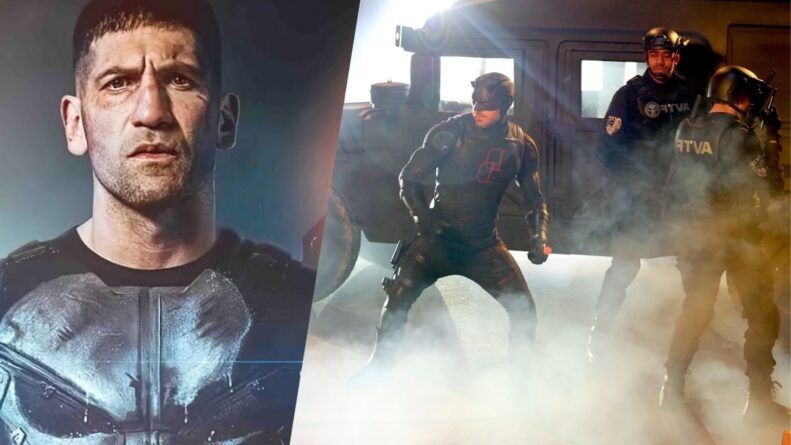
Recently, Dario Scardapane, the showrunner, had the chance to talk about scenes that were written and shot over a year ago and then watch near-identical scenes play out on the evening news. The Anti-Vigilante Task Force that Mayor Fisk unleashes in season 2 — all-black agents, nondescript vans, detention facilities looks and feels like the Immigration and Customs Enforcement (ICE) raids that have dominated headlines as of late. The resemblance is not by chance, and not by accident. Instead it is a creative team who went to the history books for inspiration and found , much to their mutual frustration, that history was about to do just that. 

“We were attempting to construct a narrative of a rise to power and a resistance, and it was less about the headlines and more about looking back in history, Now did we know that the imagery we captured would be on the news in two months? No. It’s humbling. It’s chilling. You derive no pleasure from that.” Scardapane said in a recent interview with USA Today.

That sense, both unsettling and humbling and strange unfulfillment creatively, are the perfect encapsulation of what it feels like to put out politically charged art in 2018. We live in an era when the distinction between fiction and reality seems more blurred than ever. It hasn’t seemed like the cast and crew of Born Again that they’ve been forecasting the future—more that they’ve been coming to terms, a little uncomfortably, with the fact that the modes of authoritarian control aren’t all that different, even across centuries. 

The ICE Parallels: Intentional or Inevitable?

As Marvel Television started working on the second season of Daredevil: Born Again, showrunners were intent on wrapping up the Mayor Fisk arc that kicked off in season one and carried over from the Echo series. Fisk’s martial law and he-war on vigilantes gave way to a classic resistance gestalt—albeit one with foundations that could be traced all the way back to the dawn of superhero genre storytelling. What they didn’t expect was how the aesthetic language of that resistance would connect with today’s audiences. 

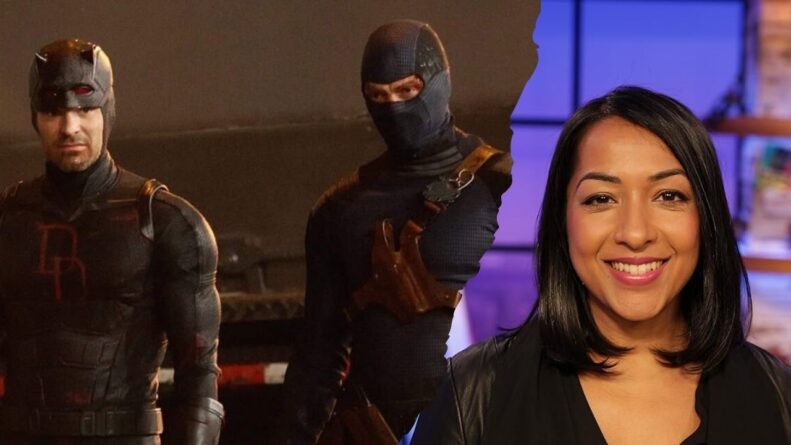
Executive producer Sana Amanat has been open about the show’s political nature, describing the story as a study on how authoritarian leaders use institutional power to target marginalized communities. In a chat with Entertainment Weekly, Amanat and Scardapane admitted they knew people were going to “make comparisons” between the Anti-Vigilante Task Force and today’s immigration enforcement tactics. The black uniforms, the paramilitary-style raids, the rounding up of people with no due process — it all builds a visual lexicon that reads like it was plucked from recent news, even though it predates them by several months. 
The ICE Parallels

Scardapane has been especially vocal on the historical roots of the parallels. He doesn’t pretend to know what the future holds, only what the past has shown before, citing historical personages such as Nero, Pinochet and Franco as leaders who “follow a script” when they gain power. The series also includes nods to real history such as the 1974 Turkish invasion of Cyprus tying its fictional disputes to real-world, documented instances of authoritarianism. “You tend to get ‘History repeating itself,” noted the creative team, implying what feels topical is actually timeless — the same mechanisms of control and resistance playing out in different times and places. 

That’s a tightrope to balance for Marvel. The studio, on the other hand, has embraced the political implications of the source material, recognizing that superhero stories have always functioned as stand-ins for real-world wars. The X-Men were born out of the civil rights movement, Captain America was beating up Nazis in World War II, and the Black Panther books tackled colonialism and its fall-out. Daredevil: Born Again is part of that tradition, in depicting how the engines of power can be taken over by those who would rule, not serve. 

Conversely, there’s the danger of simplification of political complexities into a superhero pageantry. The ICE parallels, while powerful visually and emotionally, also risk compressing the particular lived experiences of immigrant communities into a generic “resistance” narrative. The show’s creative team appears to have a sense of this push and pull, with Scardapane stating that their object was never to make a statement on any particular current-day policies, but rather to look at the “timeless power dynamics — corruption, and the moral resistance.” 

The Evolution of Matt Murdock: From Lawyer to Full-Time Vigilante

The political climate of Season 2 isn’t just for show — it serves as a substantial catalyst for Matt Murdock’s journey. As of “Street” at the close of Season 1, Matt was still struggling to balance his two identities, still attempting to play by the rules even as the system was being used as a weapon against him. But for Season 2, he is in a very, very different place. 

Matt is officially a “missing person” after his apartment is bombed, and he can no longer go about as an ordinary lawyer. The very identity he’d been desperately clinging to for much of the first season — Matt Murdock, blind attorney and crusader for justice — has been taken from him by circumstance. Now, he’s Daredevil full-time, a fugitive living in the shadows, hunted not only by Fisk’s Anti-Vigilante Task Force but by his friends. 

Charlie Cox, who has played Matt Murdock for more than ten years across the Netflix and now Disney+ version of the character, summed up this evolution with an oddly mundane comparison. “Does that come to mind for you when you were losing your baby teeth and there was one tooth that was wobbly for what felt like a decade and it just wouldn’t go?” Cox asked in a recent interview. “It was just a constant irritation and a pain in your mouth, and it wouldn’t go. That’s how Matt feels about Wilson Fisk. He’s inhabited this man, and he can’t get away from this person.” 

The Evolution of Matt Murdock

This aching body is a reflection of what Matt has actually become is the mind-shattering psychological reality of his new reality. Previously he had been able to go back to his law practice, to his friendships with Foggy Nelson and Karen Page, to the relative normalcy of Hell’s Kitchen living, but now there’s just the mission. The suit is more than just a costume, it is a second skin, which both characters wear in almost every scene – a practical challenge for Cox that results in an emotional weight for the role. 

One especially moving scene in season 2 captures this erosion of self. When Karen Page asks Matt if he ever misses “being Matt Murdock,” the query lands with the emotional power of the iconic final scene in The Graduate—that moment of lucidity following the adrenaline rush, when the leading man realizes that winning and losing are indistinct. “It’s a fun thing to be able to be the full Daredevil and almost forget who Matt Murdock is and what he is and how he operates,” Cox said, balancing both the freedom and tragedy of that evolution. 

This is the same arc in Fisk’s own story that we are seeing play out in this character evolution. Where Matt has been forced to lean into his darker identity, Fisk is now letting his real self as the Kingpin peel back the layers of Mayor Wilson Fisk. Vincent D’Onofrio who portrays a menacing yet pitiable Fisk has called the dynamic between the two characters symbiotically obsessive for “a piece of corn stuck in his teeth” which Fisk nervously picks at. 

Mentions to both heroes and villains are a constant in the show runner aana Amanat, who describes them as having “spent a lot of the first season in denial of who they were” before Season 2 where they are “finally wearing their suits” – both literally and figuratively. This symmetry throws into relief how the Daredevil/Kingpin battle has left straight hero/villain war behind: it is now a mirror-match, two men who have embraced their natures, both for good and evil. 

Grief as a Character

Daredevil: Born Again would be as empty as if not for Season 1: Foggy Nelson dies and presses this-jawbiting madness home. From the time the original Netflix show debuted in 2015, Elden Henson’s character has been Matt’s best friend, law partner, and his moral compass. His death in the first few minutes of the Disney + reboot makes clear right away that this is going to be a very different Daredevil tale — one that’s personal, permanent, and catastrophic. 

Season 2 picks up after that loss for Matt, who is now dealing with grief and PTSD that impact not only how he feels but also the tactical choices he makes on the battlefield, how he works with his team, and even how he suits up as Daredevil. “He will never be the same again,” Cox said emphatically. “There will be not a day in his life when he doesn’t think about him and think about what he did.” From an actor’s point of view it’s kind of a dream, because it just gives it so much texture.” 

Grief as a Character

The reappearance of Foggy Nelson in Season 2 teased in trailers and confirmed by Henson’s inclusion in marketing materials opens up all sorts of questions about how the show will address this mourning. Flashbacks? Dream sequences? Or something more metaphysical? Against all odds what’s matters the most is Foggy is a presence that reminds Matt with other methods to what he’s lost and what he’s still fighting for. 

That emotional core is what grounds the political allegory of Season 2 in personal stakes. The crusade against Fisk is not an abstraction—it is about keeping people from losing their lives in the way that has defined Matt’s life. The Anti-Vigilante Task Force is not only a metaphor for institutional overreach, but also a real threat to the community Foggy risked everything to save. 

The Return of Jessica Jones and the Defenders Legacy

While the Season 2 political thriller has been dominating headlines, the season also serves as a send-off of Marvel Television’s Netflix legacy as Krysten Ritter returns as Jessica Jones. The hard-drinking, super-powered PI, who had three seasons on her own show, teams up with Matt in his fight against Fisk, bringing them together in a reunion fans have been longing for since the original Defenders miniseries.

Scardapane has been effusive about Ritter rejoining the fold, describing it as “top of the checklist” for the season. “I love the work that Melissa [Rosenberg] did in Jessica Jones,” he told GamesRadar+. “It’s one of the best genre television shows you’ll ever see. Krysten has created an amazing character,”I think she’s done an amazing job.” 

From Lawyer to Full-Time Vigilante

This comeback is a multipurpose one. It’s for those viewers who have been along for the ride through the Netflix Marvel universe, a confirmation of that continuity and a reward for their investment in these characters. In terms of the Born Again story, Jessica is a different kind of hero – a less burdened by catholic guilt and legal ethics, more pragmatic and self-preserving. Her interactions with Matt, who has wrestled with the ethics of vigilantism, will certainly give both of them some tension and unexpected camaraderie. 

Amanat emphasized that Jessica’s return was “a desire we’ve had right from the beginning,” suggesting that the creative team sees the Netflix characters not as orphaned IP, but rather as integral elements of the Marvel landscape. “It’s exciting to see where she is now many years later,” Amanat said, teasing how time and experience have altered the character since we last saw her. 

The End of Mayor Fisk and a Return to the Streets

Maybe the biggest among the recent Scardapane interviews is what it revealed not about S2, but what lies beyond it. The Mayor Fisk arc, which has been the spine of Born Again and its related series, will reach its “inevitable conclusion” at the end of the second season. This political phase of Daredevil’s life is drawing to a close, and the series has planted its feet to shift course for Season 3. 

“The playbook is pretty well established,” Scardapane told SFX Magazine. “So when we were writing this stuff we’re like, ‘This is what he does.’ The anti-vigilante taskforce is the comic book. And we built them and costumed them from the comics.” 

Yet, while the political thriller aspects have been fun to delve into, Scardapane has said she’d like to bring the character back to his roots. “Going into politics, New York politics, Game of Thrones back-stabbing, allying, and betraying behind the scenes. That’s a good bit of fun, but when it starts to become almost too topical, it feels like it’s moving away from the big, mythological genre stuff,” he observed. “So as we wind down the Mayor Fisk run in season 2, as that story arc comes to its inevitable end, what we’re doing going forward has definitely more of a [Frank] Miller-era comics feeling to it. So yeah, I had a good time playing in the world of politics, but I prefer something a little more street level, personally.” 

That is a very brazen artistic declaration. Frank Miller’s 1980s Daredevil is the definitive, dangedest, noirest, morally questionable version of the character we’ve seen more enmeshed in the world of Hell’s Kitchen organized crime than the political machinations at City Hall. Miller introduced Elektra, turned the Kingpin into a Daredevil rather than a Spider-Man villain, and established the visual and thematic lexicon that the Netflix series and now Born Again have borrowed from. 

Mayor Fisk and a Return to the Streets

A return to Miller-era storytelling provides a number of intriguing options for season 3. The addition of Bullseye – Wilson Bethel’s Benjamin Poindexter made an appearance in the original Netflix series and is expected to return – would go hand in hand with this aesthetic. I would say that Elektra showing up is just as fitting and one could even see Elodie Yung return. And for what it’s worth, Scardapane hasn’t ruled anything out, and given the Miller era’s penchant for bold narrative gambits, that means there’s at least a chance that Foggy Nelson’s demise might not have been as final as it seemed. 

At its core, the change in tone is an admission that Daredevil is at his best when telling a street-level crime story, as opposed to a political thriller. The character’s powers — enhanced senses, martial arts expertise, legal understanding — are really best suited for smaller-scale skirmishes, rather than big political movements. The Netflix series got that, earning its reputation on grounded storytelling about crime, morality and the boundaries of what’s legal. Born Again has opened things up to city-wide politics, but Season 3 is set to bring the focus back down to the neighborhoods and the criminal organizations and personal vendettas that have always been the truest home for Daredevil. 

The Challenge of Topical Superhero Stories

The creative choices confronting Daredevil: Born Again are symptomatic of wider pressures within super hero storytelling in the 2020s. This is not to say these characters have not always been political—Superman took on corrupt landlords in his first ever stories, Captain America whose first cover appearance is punching Hitler, the X-Men function, since their very inception, as allegories for marginalized groups. To suggest that superhero narratives play out in a political void is to deny both their past, and their power. 

But there is storytelling wise a difference between timeless allegory and then and there commentary. When you tie superhero stories too closely to narrow, specific current events, they have a tendency to age poorly, alienate some of their audiences, and oversimplify complex political matters into good guy/bad guy dynamics. The ICE analogues in Born Again Season 2 straddle that line, quite literally by invoking historical patterns of authoritarian conduct while inevitably engaging with the present. 
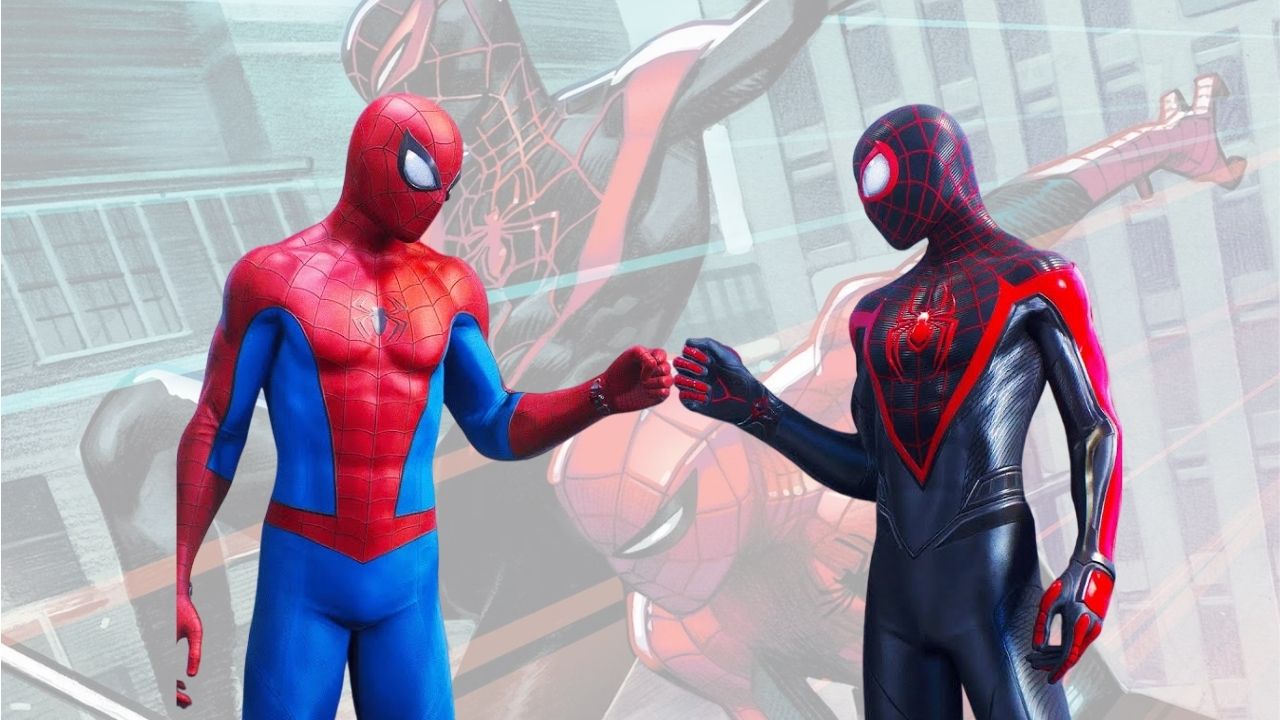
Scardapane’s declared desire for “something a little more street level” reflects an understanding that Daredevil is at its best when the politics are implied rather than shouted when the narrative fixates on the human toll of corruption and violence over the nuts and bolts of political power. The Miller-era comics on which Season 3 will be based were undoubtedly political, but their politics was rooted in character and atmosphere rather than explicit statements on the politics of the day.

That doesn’t say Born Again will eschew its discussions of real-world concerns. The finest crime tales from the comics, movies or television always reveal something about the culture that spawned them. But, in retaking the streets of Hell’s Kitchen as its setting, the show can address those concerns in terms of character and community, rather than the spectacle of political confrontation. 
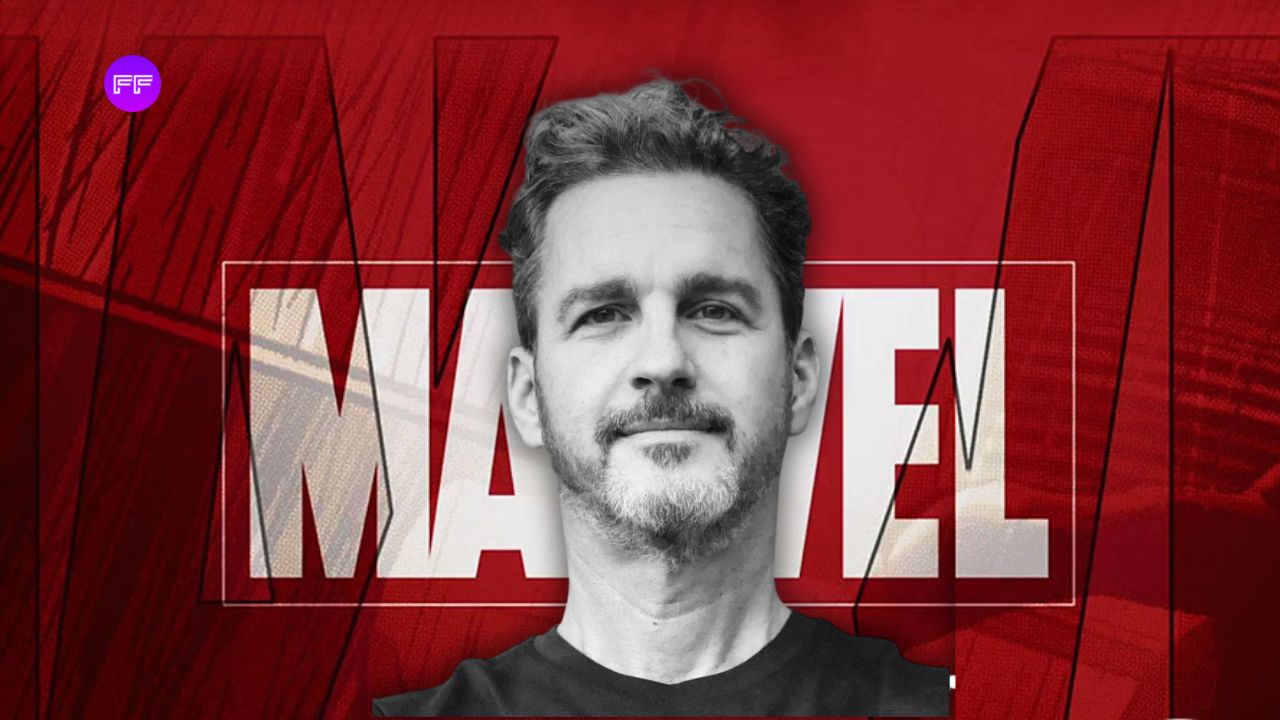
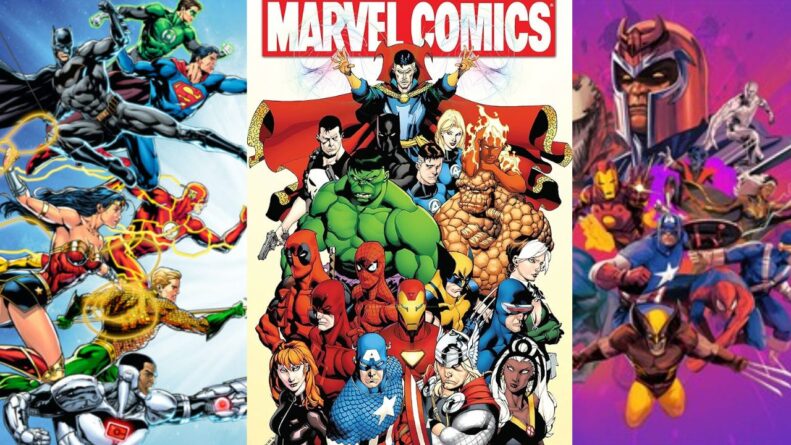
The Future of Daredevil

As Daredavil: Born Again Season 2 is coming out on 24 March, 2026, this series stands at a mid-point. The political thriller aspects that have defined this chapter of the character are coming to an end, making way for a return to the noir-tinged street-level stories that have always been Daredevil’s best meat and potatoes. The ICE analogs, which have become the focus of so much pre-release discussion, will give way to new antagonists maybe including Bullseye, Elektra, and the criminal underworld that has long been the true battlefield for Matt Murdock’s soul. 

What stays the same, though, is the core connection between Matt Murdock and Wilson Fisk, a feud that has now defined a decade of television narrative. Charlie Cox and Vincent D’Onofrio have matured in these roles, discovering new layers in a rivalry that could well have stale in lesser hands. The two actors still are able to mine new angles out of this dynamic — they compare it to wobbly teeth and corn kernels indicates there’s still life left in their antagonism even as the political storyline winds down. 

The Future of Daredevil

To the viewer, the promise of a Frank Miller-run Season 3 feels like the best possible compromise: political nuance that has ultimately defined Born Again-era Marvel and street-level grit that made the original Netflix run a must-watch. If Scardapane and his team can pull off this transition, they’ll have proven that Daredevil is still one of Marvel’s most flexible and enduring characters able to talk to the political moment and be grounded in the timeless themes of justice, corruption, and what it costs to fight for what’s right. 

That’s what superhero stories do best, in the end. They don’t so much forecast the future or provide direct comment on the present as remind us of the patterns that shape human experience — the ascent of authoritarianism, the resistance of the downtrodden, the personal toll of moral engagement. Daredevil: Born Again has serendipitously become a topical series, but its real power is in rising above those concerns to locate in its very particular Hell’s Kitchen disputes something universal about the battle between power and justice. 

Read More:-  The Sinister Six That Never Was: How a Cyberattack Killed Drew Goddard’s Spider-Man Dream

As the series leaves behind the Mayor Fisk era and returns to the streets, it has the heft of that political experiment — the acknowledgment that even when we take our cues from history, we’re confronted with the present. The Anti-Vigilante Task Force is a comic book invention, but the anxieties it embodies are real. And Daredevil’s superhuman will   improbable as it is   speaks to something just as real: the tenacious, unyielding belief that one man can take on the system, that the devil of Hell’s Kitchen can still make a dent in a world that more and more seems to be throwing up its hands. 

Fandomfans delivers deeper details from your favorite movies, series and characters directly to you.

Comments

View comments and join the discussion

Alpana

Articles Published: 178

Alpana is Fandomfans Senior Editor across all genres of entertainment. She evolved in the media industry since a very long time, she manages the content strategy and editing of all the blogs. Her focus on story development, review analysis, and research is well-equipped that ensures every article meets the standards of accuracy and depth.

View Profile ↗