The Mercenary Guard Droid is foreshadowed as a primary catalyst and menace in the next Star Wars film recently revealed in merchandise at Toy Fair 2026. The May 22, 2026 theatrical debut of ‘The Mandalorian and Grogu characters’ is not just another ‘Star Wars’ release date – it’s a turning point. Yet it will shortly be the first time since The ‘Rise of Skywalker’ wrapped the Skywalker Saga in 2019 that Lucasfilm has brought Star Wars back to the big screen. The pressure on this movie is immense.
The Mandalorian and Grogu characters is not just a movie but a test. A test to see if a streaming-churned universe, neatly constructed on Disney+, can be extended to the wider cinematic space. “Mandoverse” has thrived in episodic form, but said the big screen requires more: scale, spectacle and emotional weight. And all the signs out of this project indicate that the move to theaters is being considered a strategic progression, not just a format change.
Cinema, Not Streaming: A Different Kind of Storytelling
Jon Favreau, the director, has been clear that transitioning from series television to film is more than just a matter of larger screens. It applies to the size of the language, visual and narrative.
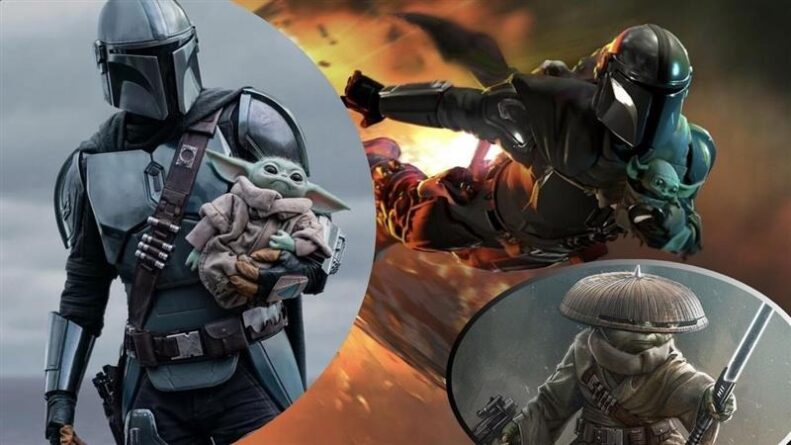
The tightly controlled environments of StageCraft (“the Volume”) that have come to define the series are now being replaced with IMAX-scale compositions, vast landscapes, and cinematic movement. This is Star Wars turning back into spectacle.
Star Wars Strategic Storytelling Transformation
The marketing distilled that dichotomy perfectly. The playful Super Bowl spot stole the show, but a more serious teaser featuring X-Wings, an R2 unit and the gritty Razor Crest refocused expectations. It was a very nuanced but clear signal: The Mandalorian and Grogu characters is not a parody of Star Wars. That’s the western-in-space motif, tuned up for the movies.
The Rise of a New Kind of Enemy
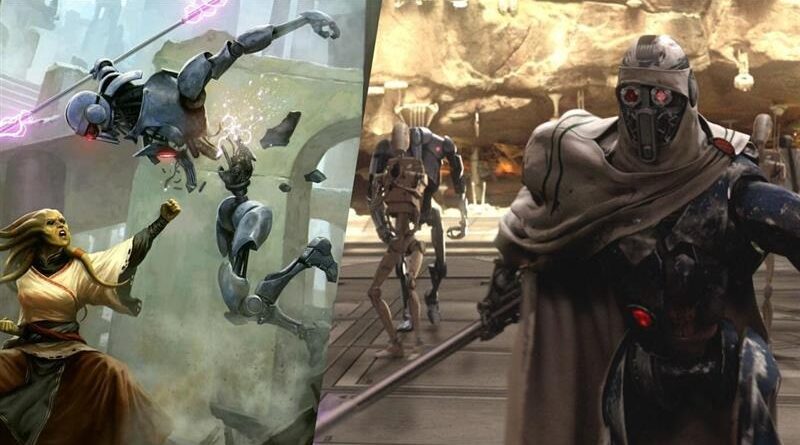
One of the more intriguing revelations didn’t come from trailers, it came from toys. Toy Fair 2026 brought us a “Mercenary Guard Droid” character. And while most background droids are generic, this one was differentiated by special packaging, multiple versions and exclusive collectibles. In Star Wars-speak merchandising, that means “important.
Why is the Mercenary Guard Droid so Important?
Mercenary Guard Droid is not a robot with a mind of its own. It’s a survivor. Developed using Clone Wars-era technology, its form is reminiscent of B1 and BX-Commando Droid models were droids crafted en masse for warfare. But take the word mercenary and put it front and center. This droid isn’t following orders. It’s deciding.
And this is hugely devastating – psychologically for Din Djarin.
The “Perfect Rival” Theory
Din is a child of the Clone Wars. He was scarred by trauma starting when battle droids bombed his home and slaughtered his family. For years he despised droids—not as tools, but as monsters. The things he experienced later softened that hatred, but the scar remains. And now he’s up against a sentient droid antagonist who bears the physical legacy of the very machines that made him an orphan. This droid isn’t just some physical link to his past, but its malevolent consciousness and warmaking decisions make the emotional stakes even higher.
- Din is a man in armor.
- The droid is a machine about life.
- A human encased in metal and an emulated human in metal.
So even the combat design borrows from that. The droid’s combination with a STAP (Single Trooper Aerial Platform) establishes vertical fighting parity with Din’s jetpack—making the skies a battleground. This isn’t merely narrative conflict. It’s Binford Choreography, a big screen spectacle.
Embo: The Professional Threat
Along with the psychological antagonist lurked another kind of threat: Embo.
The Kyuzo bounty hunter, familiar in animated canon, is the definition of professional. No armor. No Mandalorian tech. It’s precision, discipline, and lethal skill. His iconic hat, his bowcaster, and his stature make him a walking antithesis to Din Djarin’s encased presence.
The presence of Dave Filoni, Embo’s original voice makes his live action debut all the more real. Filoni has been known to bring animated characters into live canon and Embo is just that.
Embo and the droid represent opposing energies, their each unique facet of discord. Embo is the embodiment of calculated precision and lethal professionalism, and the droid is burdened with psychological depth and the ghost of what has passed.
Their upcoming battles with Din represent an age-old battle: brawn versus brains, crude technology versus refined technique. This play of light and shadow right here evokes the spirit of the samurai film, which is at the core of Star Wars’ storytelling DNA.
Rotta the Hutt: The Story Catalyst
Rotta the Hutt has gone through an amazing evolution from the weak infant dubbed “Stinky” to a sinister gladiator. Scarred from his battles and now armed and physically menacing, this Rotta played by Jeremy Allen White represents not only personal growth but a shift in who holds the power.
As Jabba’s heir, Rotta’s very existence is a major political threat. In a galaxy filled with chaos and uncertainty, he represents the promise of uniting the scattered Hutt Cartel. This accumulation of power is alarming, but also brings about enemies who want to stand in his rise.
Each Character Related to Rotta
The Mandalorian and Grogu characters structure serves to emphasize the function of each character, all of whom revolve around Rotta, in which the plot revolves around a single mission. Din Djarin assumes the mantle of protector, shielding Rotta from danger. Rotta itself is the linchpin, the center-piece of the mission stakes. Embo becomes the merciless predator, hunting Rotta to the ends of the earth.
The droid, on the other hand, the personal nightmare becomes an element of fear and nerve-racking suspense. All of this is focused on one try: the attempt to control, protect, or eliminate Rotta, driving the story forward with purpose and intensity.
Order vs Chaos: The New Republic and the Remnant
Among the underworld intrigue is the New Republic, headed by Colonel Ward (Sigourney Weaver), and its bureaucracy that must confront reality. Her part mirrors a classic conflict: bureaucracy against reality. The New Republic craves stability but does not have the stomach for it — so it employs the likes of Din Djarin to carry out what it cannot put on any official paperwork.
Below them is the Imperial Remnant — warlords, walkers, and regimented militarized entities for the unfinished business of the Empire. AT-ATs, snow troopers, and mechanized units tell you this isn’t just bounty hunting anymore but it’s war-scale fighting.
The Emotional Core of the Film
The Mandalorian and Grogu characters is at the heart of the narrative and embodies hope, purity, and the promise of a brighter future. His very existence, however, is a direct antithesis in opposition to Din Djarin’s past filled with trauma and hardship. The emotional core they share allows the story to transcend the action and explore deeper themes of maturation, connection and fear of loss.
Pedro Pascal anchors this emotional journey as Din Djarin — Din’s evolution from a solitary fighter to a wryly devoted but still reluctant father is a sweeping tale of redemption, where the odds they face not only forge them together, but transform their very fate.
Read More 👉 Outlander Star Rosie Day Directing One Hundred and Fifty-Two Days with The Night Manager star Alistair Petrie
Mandoverse Stepping Into Mythic Scale Storytelling
The Mandalorian and Grogu characters is a pivotal chapter that takes its story to a place far beyond a simple episodic journey. It accepts a deep change, and provides a cinematic view that combines symbolism and politics with mythic storytelling and stakes that are highly personal.
Legacy at Its Stake
Now, instead of just enemies, the antagonists are themes unto themselves. The stakes are not just survival, but also legacy and power. It’s all grandiose action, but the emotional core is petite and potent.
The Mandalorian and Grogu characters story is both introspective and far-reaching. The Mandalorian and Grogu characters is more than a foundling, and Din Djarin is more than a lone bounty hunter. They carried fate and memory and history together. Their enemies are now echoes of trauma and survival, not shadows to be scrubbed clean.
Star Wars Narrative Transformation
The Mandalorian and Grogu characters isn’t simply a matter of surviving hardships — it’s about seeing what there is to see after survival. It’s about the decisions, the consequences, the transformations that craft what it means to safeguard, guide, and mend. The Mandoverse boldly carves out a territory where screen size matches not just visual scale but narrative ambition.
Conclusion
‘The Mandalorian and Grogu characters’ is more than the Mandoverse making its theatrical debut, it’s Mandoverse birthed into true cinematic myth. Symbolic antagonists, greater emotional stakes, and a plot rooted in legacy rather than spectacle for the sake of spectacle transform the film’s Star Wars from episodic adventure to mythic storytelling.
Din Djarin and Grogu are at the center, but they’re not just survivors, they’re protectors of a future defined by memory, responsibility, and purpose.
No, this time it’s not just Star Wars coming back to the big screen, it is Star Wars ushering in a new age.
Fandomfans deliver updates and theories from movies and series, and catch up to get interesting stories.