Home > Web Series > Netflix’s ‘The Sinner’ Remains the Ultimate Binge for..
Netflix’s ‘The Sinner’ Remains the Ultimate Binge for Existential Dread
Dive into Netflix's The Sinner– a gripping psychological thriller where the mystery is not who committed the crime, but why. A must-watch binge-watching series.
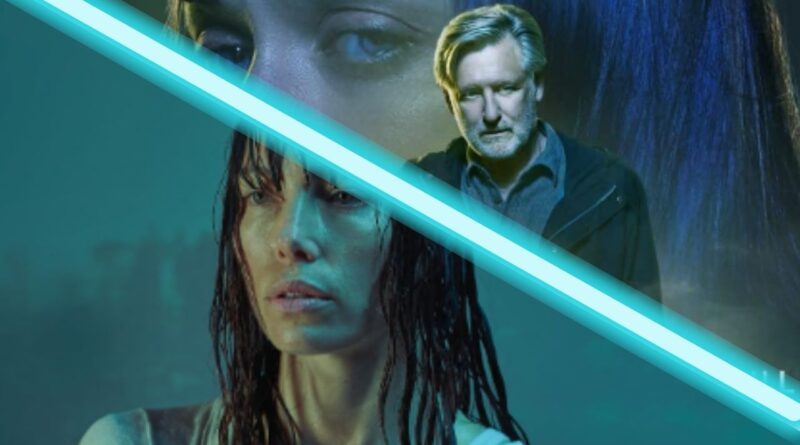
For those viewers eager for a mystery series that goes well beyond the usual forensic evidence checklist and red herring distractions, The Sinner offers four seasons of unique, unremitting psychological suspense. This show, which was a four solid season run at global Network before landing its full run on Netflix, got its ever-gripping tension by way of a key narrative inversion: it is not a “whodunit” — but a “whydunit.”
The Genius of the ‘Whydunit’ Blueprint
The suspense in The Sinner is not in the question of Who, as the culprits are usually known from the beginning. Everything else in the story machine, from beginning to end, revolves around the internal crisis of the villain and the frighteningly deep wells of motivation concealed beneath the surface.
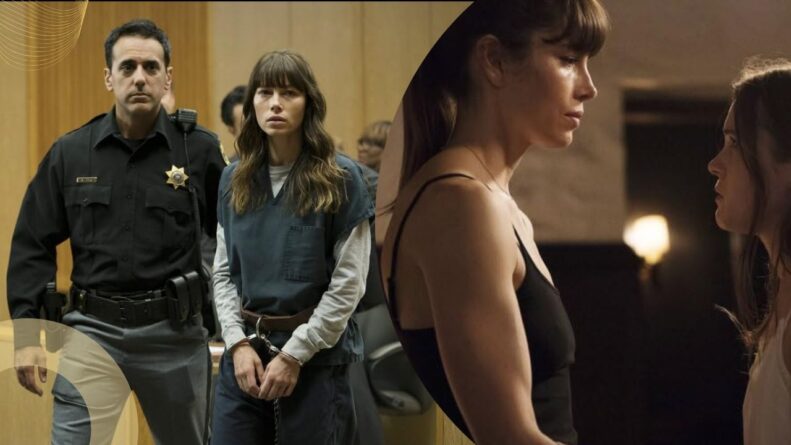
This radical construction was gallantly carried off – in season one’s very case of Cora Tannetti (Jessica Biel), a deceptively placid mother who, provoked by a song on a beach, violently stabs a stranger. The crime itself is just the finish line. That mystery itself and the source of the show’s “darkly compelling” atmosphere comes down to what Cora buried for so long in her mind.
Image Credit: Fandomfans
In intensifying its depiction of the excruciatingly disjointed process by which recollections return, the show moves the focus of the investigation out of simply a criminal case and into an increasingly fraught psychological excavation. Taken together, elements of this approach eschew most traditional genre clichés and instead immerse the viewer into a highly sympathetic and, at times, disturbing engagement with the alleged “sinner.”
Detective Harry Ambrose: The Troubled Anchor
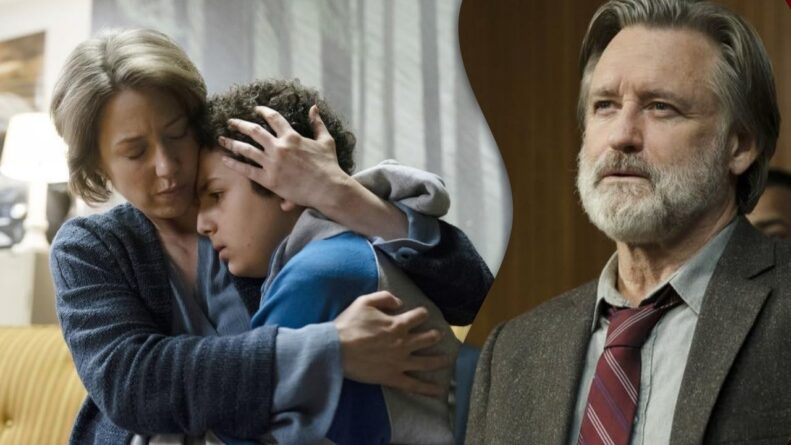
Detective Harry Ambrose (Bill Pullman) is the only constant role across all four seasons. Ambrose is instantly identifiable as the psychologically wounded detective wrestling with his own personal demons, anxiety, and taboo instincts. Yet this disturbed mindset are not intended to confuse the readers, it represents the condition for his triumph.
Image Credit: Fandomfans
Ambrose’s own profound personal trauma gives him a unique empathy with the duality he sees within the perpetrators, not simply as criminals, but as wounded individuals who want to be “found out” and understood.
“The relationship of [Detective Harry] Ambrose and Cora … I had this design of two people who are suffering from their own traumas finding this unlikely intimacy with each other and the opportunity to heal.” —Derek Simonds said
His style of investigation is highly personal, creating deep (and often morally questionable) psychological relationships that pull lines of conversation which a procedural case couldn’t. This dynamic, means that when he’s pursuing the ‘why’, he’s really pursuing himself, so every case is an act of self-therapy for him.
It is this psychology-in-perpetual-engagement – the detective trying to be saved by the subject – that drives the show’s explosive, character-centric energy throughout its entire run.
An Anthology of Existential Guilt
So The Sinner toes its momentum line fine and dandy in its use of anthology series format to consider a revolving door of high-concept philosophical/psychological dilemmas, never allowing it premise to stale up.
Image Credit: Fandomfans
The series turned its attention away from repressed childhood trauma in Season 1 to the toxic power of a cult in Season 2 (Julian Walker). This culminated in Season 3, only ever going further, into existential crisis and nihilism with Jamie Burns (Matt Bomer).
“It asked more of me, psychologically. It asked more of me, emotionally. … I was more often thinking about Jamie’s life and Jamie’s world than I was thinking about my own.” —Matt Bomer
Jamie’s destructive journey was fuelled by a philosophical wager to find meaning in confronting the meaninglessness of death – an existential challenge that put Ambrose to the test and ends with the detective facing his own potential for violence. Finally Season 4 took on issues of inherited guilt and spiritual crisis through Percy Muldoon and the exploration of perverted spirituality and human weakness.
“He’s sent down a dark rabbit hole after a missing woman.” —-Bill Pullman said
Such thematic aspiration helps to ensure that the audience’s view of the characters is always in flux, swinging them around the four corners of the victim-executioner matrix. Such intentional moral ambiguity, and the capacity to suddenly veer from psychological scarring to metaphysical terror, cements the series’ legacy as “fearless, fearless and atmospheric” and one which perpetually provides something disturbingly novel.
With all 32 episodes of The Sinner now on Netflix it makes for a perfect binge recommendation. The series was known for having superb acting and edge of your seat scripts, telling unforgettable stories that guarantee a rollercoaster of emotion that stays well beyond the end credits. For that rare mystery which plumbs the depths of the human soul—where the question of “who” is far less important than the dark, complicated answer to “why”—The Sinner delivers both immediate and deep gratification.
Fandomfansis a platform to provide quick updates on entertainment, anime, reviews & celebrity news. Our goal is to bring you valuable and accurate information on your favorite entertainment buster.
Babita
Articles Published :
25
Babita is Fandomfans Editor, experience in managing content. Her focus in general movies and web series. She is having a deep interest in TV shows and 90s movies - particularly Lord of the Rings, Harry Potter, & Rom-Com. Babita also covers psychological thrillers and major releases in current time and concern with deep interest in them.
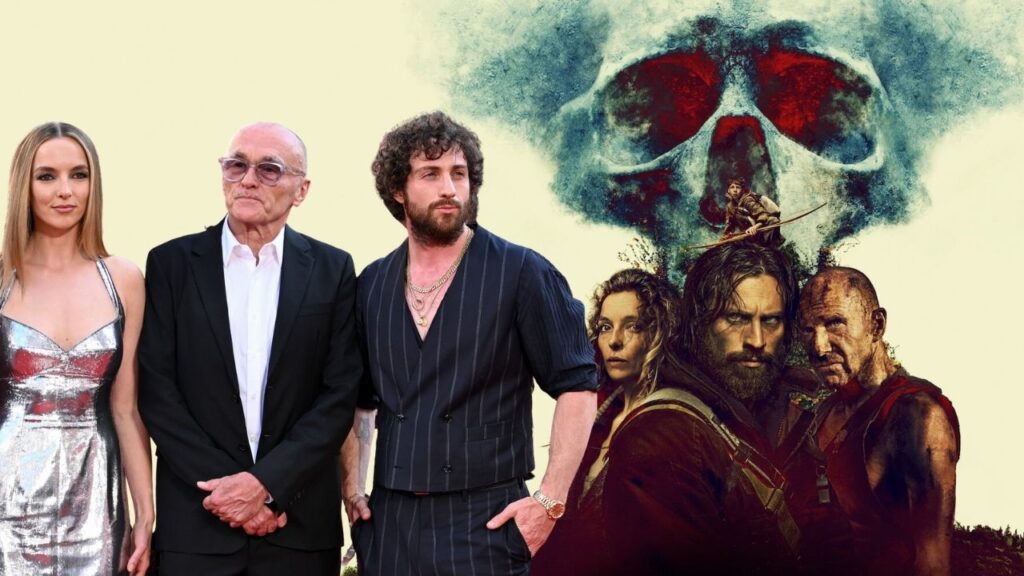
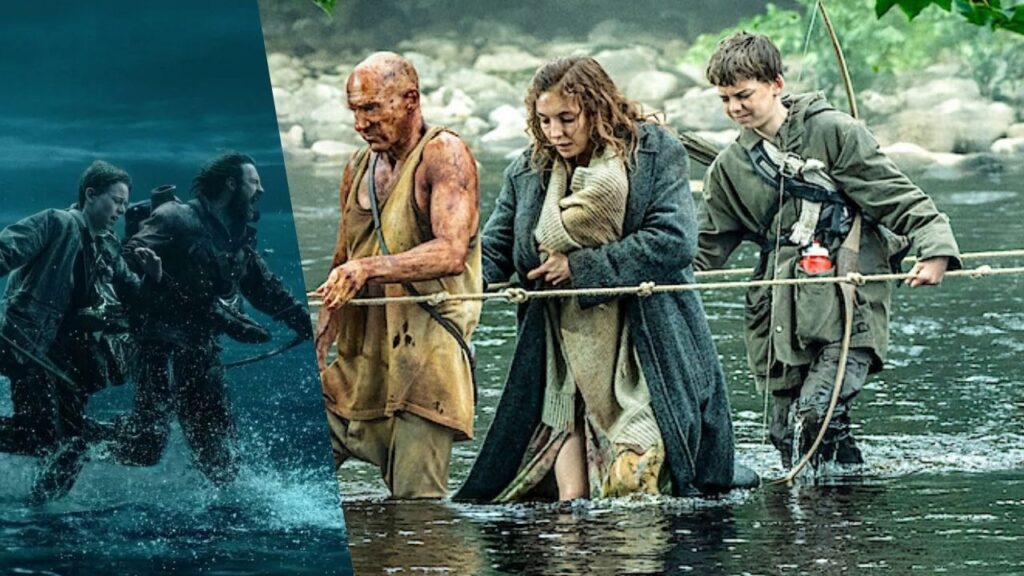
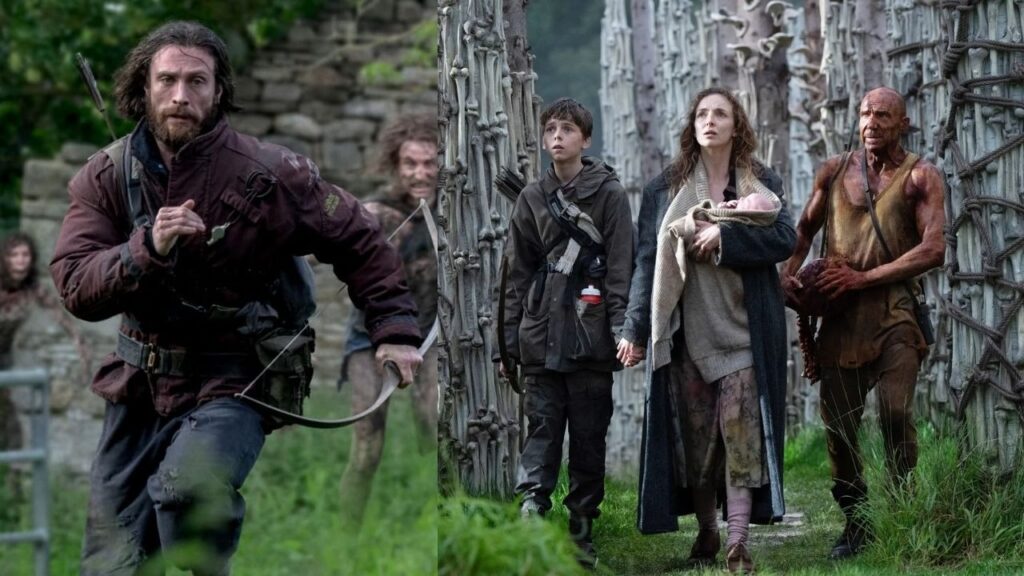
The overall cinematic output for 2026 seems an entirely new prospect. Ender’s game trailer We have gone beyond the generation of the predictable jump-scare and established ourselves in a more cerebral place of “high horror,” a change led by the long overdue revival of the 28 Days Later universe. With 28 Years Later releasing in June 2025, and its direct sequel, 28 Years Later: The Bone Temple, releasing in January 2026, the creative team of Danny Boyle and Alex Garland has not merely brought a franchise back to life – they have redefined how horror can speak to what it means to be human.
A Legacy Born from “Development Hell”
For almost 20 years, fans speculated about 28 Months Later. It turned into a development hell myth, held up by rights issues and creative changes. The wait, though, served a purpose.
Skipping ahead almost three decades, the filmmakers leave behind the panic of a viral outbreak and delve into “post-progressive” societal decay. In this new world, the end of the world isn’t a tragic event—it’s the only reality the current generation has ever known.
The Technical Radicalism of the iPhone 15 Pro Max
Perhaps what has most people talking about the 2026 comeback is the technical decision to shoot mostly on the iPhone 15 Pro Max. This wasn’t a gimmick. Boyle took the Canon XL1 and turned it into a grainy, digital realism. In 2026, he adapted this “guerrilla” style on a new scale with multi-camera megasuites.
By placing iPhones into “Beastgrip” cages with professional-grade cinema lenses, the team captured a high-shutter-speed energy. This technical decision removed the infected from ‘cinematic motion blur’ and as a consequence their movements look staccato, hyperactive, and terrifyingly real.
Evolutionary Biology: The Mutations of Rage
The “high horror” tag derives from the trilogy’s immersion in evolutionary biology. Rage Virus is not a static disease; it took biological forms:
The Slow-Lows: Fat and bloated dead, in this case terminal stage creatures that are aftermath survivors of the original outbreak.
The Alphas: They are intelligent, sentient hunters on a higher plane of thinking and do possess some form of strategic thought albeit intermittent and social hierarchy.
This change re-centers the horror from the mindless zombies to a more understanding-if-distorted on the human experience of pain and suffering. The infected are depicted as martyrs to an “unthinkable fate,” rendering the films to “tone poems” that are profane yet emotionally stirring.
Socio-Political Echoes and “The Bone Temple”
While the 2025 film was set among the isolationist society of Holy Island (Lindisfarne), the 2026 sequel, The Bone Temple, directed by Nia DaCosta, turns its gaze to human cruelty. The addition of “The Jimmies” — a cult based on the more shadowy recesses of British cultural history conjures a society sliding back into nostalgic myth and “strategic derangement.”
Ralph Fiennes turns in a career-defining performance as Dr. Ian Kelson, a man running a mausoleum to the fallen human. His viral “death-metal dance” to Iron Maiden is already the defining meme of early 2026, embodying the trilogy’s mash-up of high art and visceral madness.
As 2026 begins to approach, the 28 Years Later trilogy is the narrative equivalent of looking up in awe. It has demonstrated that horror can be a serious instrument for social commentary, addressing anxieties of the Brexit era and the “denial of death” through the prism of the Rage Virus.
Conclusion
The arrival of 28 universe is more than just nostalgic it’s a cultural recalibration of what modern horror could be. With 28 Years Later and The Bone Temple, Danny Boyle and Alex Garland have re-imagined the once–genre-defining zombie blast as a philosophical rumination on survival, memory, and generation trauma.
The trilogy, which can be seen as a response to fulfilling and confronting socio-political anxieties brewing in a crumbling Britain, alongside utter terror grounded in evolutionary biology and filmmaking radicalism, transforms horror into something far more intimate and unsettlingly human.
If 2026 is any indication, these films are testimony to the fact that fear doesn’t need to resort to cheap shocks to survive, but can instead find nourishment in ideas, mood, and the quiet recognition that the real horror isn’t the end of the world — it’s learning to live after it.
Dive deeper into the world of cinema with Fandomfans to get the latest update from your favorite movie, shows, and celebrity.
Babita
Articles Published :
25
Babita is Fandomfans Editor, experience in managing content. Her focus in general movies and web series. She is having a deep interest in TV shows and 90s movies - particularly Lord of the Rings, Harry Potter, & Rom-Com. Babita also covers psychological thrillers and major releases in current time and concern with deep interest in them.
Lyonel Baratheon and Tyrion Lannister: How Westeros Repeats the Same Character
Lyonel Baratheon & Tyrion Lannister tienen muchos rasgos, corazón y humor en común demostrando que en Westeros se repite mucho sus más carismáticos personajes.
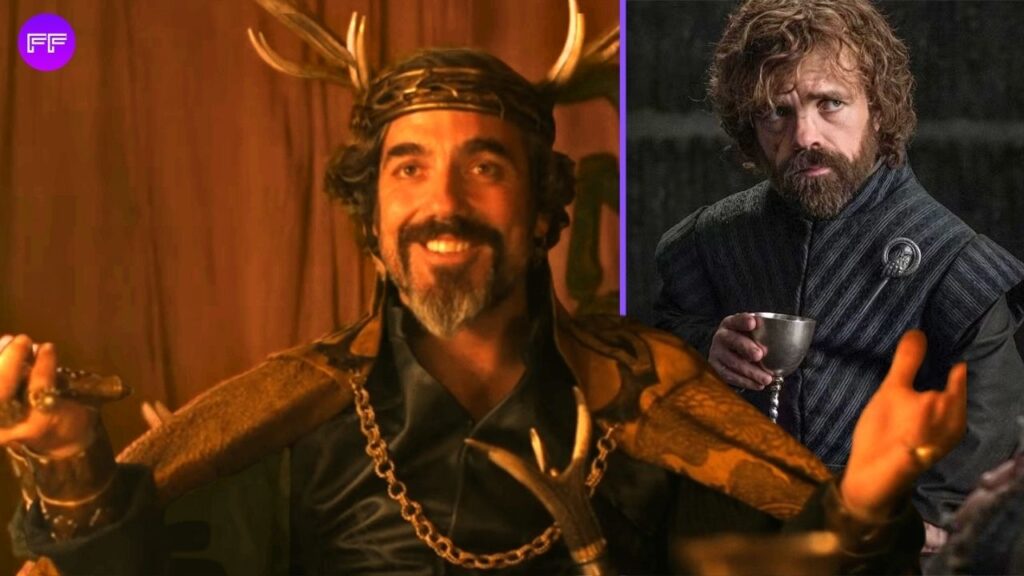
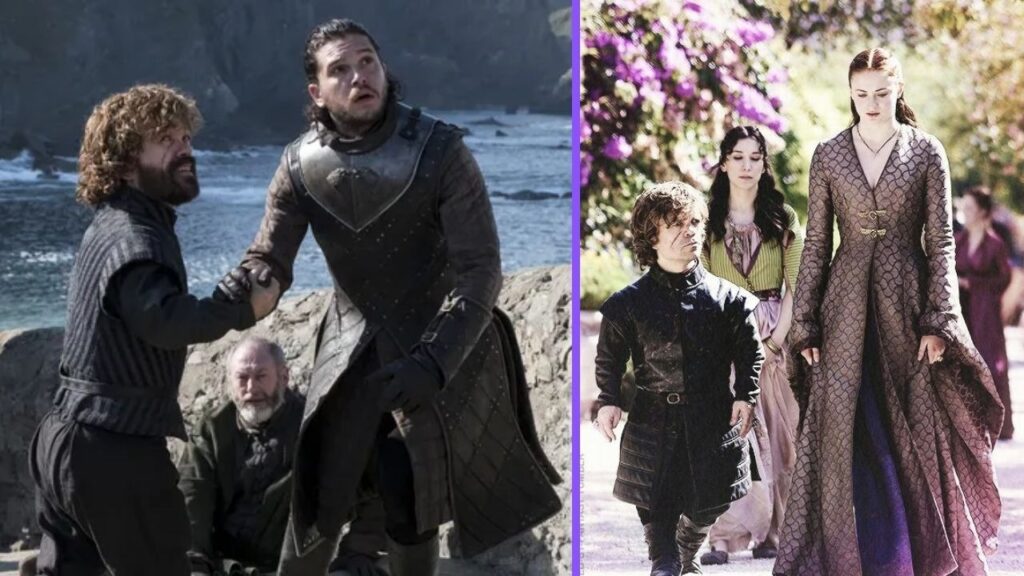
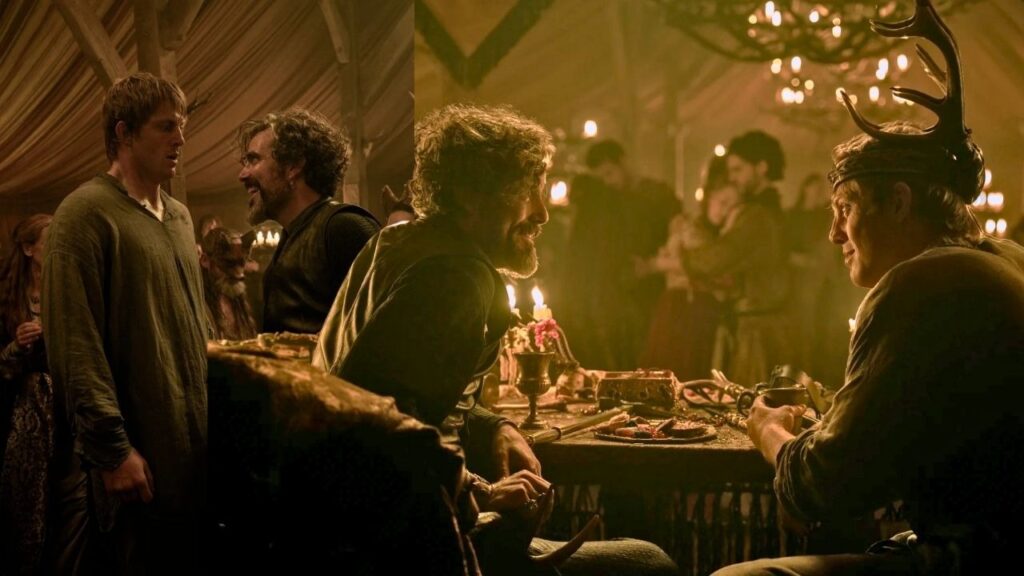
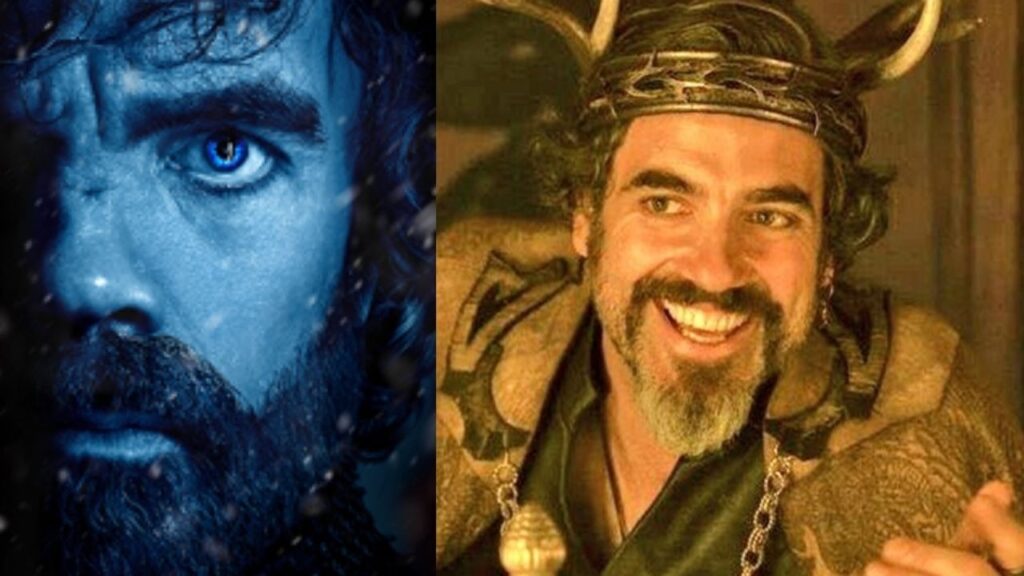
Ser Lyonel Baratheon (The Laughing Storm) and Tyrion Lannister (The Imp). Though separated by a hundred years and described as having wildly different physical builds, one a seven-foot giant, the other a dwarfed outcast—the Collider claims they amount to the same story character.
Both men have “performance” as a defense: Lyonel cackles maniacally in battle to rattle his foes, and Tyrion wittily mocks himself in advance. They’re defined by their “soft spot for cripples, bastards, and broken things,” and they serve as mentors to the series’ underdogs (Dunk and Jon Snow). In the end, it shows how both were molded by absent parents to rebel against the status quo — not because they wanted power, but respect.
Why Every Great Story Needs a Friendly Outlier
Westeros is generally quite a crap place to have a conversation. So there are the Starks, all gloomily honourable, the Lannisters, all ruthlessly cold, and the Targaryens, well, you know. But once in a while, George R.R. Martin does hand us someone who opts to look at the world and thinks if it’s going to be a dumpster fire I might as well bring the marshmallows.
Among the Dunk and Egg tales, it is Lyonel Baratheon. In Gal of Thrones, that would be Tyrion Lannister. They seem, on the face of it, to be nothing alike. Lyonel is a hulking, golden-armored giant who could probably bench a horse, Tyrion is a man whose greatest weapon is a library card. But once you strip away the layers, they’re basically the same coin.
1.The Mask of the Party Animal
WinterIsComing discuss their ”vices.” Lyonel and Tyrion are introduced as men who enjoy a good drink, a loud party, and not taking the “seriousness” of high-born life too seriously. But this is nothing new for happy hour fans. It’s psychological warfare.
Lyonel—for laughs because he literally laughs in the faces of those trying to kill him, making him The Laughing Storm. Imagine jousting a guy, hitting him with a wooden pole at 30 miles per hour, and he just starts giggling. It is frightening. It projects invulnerability.
Tyrion does the exact same thing with his tongue. The man’s an outcast, and so he masquerades as the “capering fool,” raffling away the power to mock him. If you’ve already dubbed yourself a “drunken little imp,” what’s an insult from Cersei going to do? For both men: comedy is the armor they put on so the world can’t get under their skin.
2.Mentors of the “Broken Things”
The best part about these two isn’t just the jokes—it’s their hearts. In a world where lords are expected to treat commoners like literal dirt, Lyonel and Tyrion emerge as “modernist nobles.” They don’t give a damn about your family tree, they want to know who you are.
Lyonel and Dunk: Where others looked at Ser Duncan the Tall and saw a “gutter knight” with no family name, Lyonel saw an honest core and bravery in the man. He didn’t only get Dunk a drink, he put his life on the line in a Trial of Seven for him.
Tyrion and Jon Snow: How about when Tyrion told Jon “Wear your bastardy like armor”? That’s the Lyonel Baratheon spirit. He sees another outsider and, rather than punching down, he helps them up.
Both are positioned as a “fulcrum of balance” in the narrative. They serve as a reminder that even in a savage system of feudalism, there are those who value justice and human connection more than they do ancestral legitimacy.
3.The Rage Hidden Behind the Fun
Don’t be deceived by the laughter. These guys get offended, they burn the house down.
Lyonel had been a staunch loyalist to the Crown until the Prince reneged on a marriage pact with his daughter. To Lyonel, that was no mere scheduling conflict – it was a snub to the honor of House Baratheon. He immediately proclaimed himself “Storm King” and raised the sword.
Sound familiar? Throughout his life, Tyrion had tried to be a “loyal” Lannister, but a life of being viewed as a curse by his father eventually forced him to pick up a crossbow and flee to a ship heading to Daenerys Targaryen. Both men take up arms against the crown not because they desire it, but because they are sick and tired of being overlooked and underappreciated.
4.The Proto-Robert
For the Baratheon devotees, Lyonel is the “Golden Age” Robert Baratheon. He’s what Robert would have been if he’d never been made to sit upon that uncomfortable iron throne. He’s blunt, he’s loud, and he’s “confused when he is not at war.”
But Lyonel had a covering of empathy that Robert ultimately lost. By wedding a Targaryen princess to his family line to end his rebellion, Lyonel actually granted the “blood claim” that Robert would subsequently use to ascend the throne. Even in his defiance, Lyonel was shaping the future of the Seven Kingdoms.
In the end, characters like Lyonel and Tyrion are really important because they allow us to see the “human” in a show that’s so often about dragons and ice zombies. They teach us that the most lethal weapon in Westeros isn’t a Valyrian steel sword—it’s the capacity to stare down a bleak, authoritarian regime and chuckle at its absurdity.
Striking Lyonel hurls a rival’s helm into a thumping audience, and Tyrion uses his superior intellect to best his sister on the Small Council — such “friendly” outliers keep reminding us that as an outsider, you get a vantage point the “great lords” will never have. They are the heart of the story, even if the story does its damnedest to shatter them.
Fandomfans is a platform where you can get deep theories on characters of your favorite movies and series.
Babita
Articles Published :
25
Babita is Fandomfans Editor, experience in managing content. Her focus in general movies and web series. She is having a deep interest in TV shows and 90s movies - particularly Lord of the Rings, Harry Potter, & Rom-Com. Babita also covers psychological thrillers and major releases in current time and concern with deep interest in them.