Home > Movies > Avatar Trilogy Changed Cinema: Each Avatar Film Redefined..
Avatar Trilogy Changed Cinema: Each Avatar Film Redefined Modern Blockbusters
Learn how James Cameron's Avatar trilogy transformed blockbuster cinema through groundbreaking technology, emotional storytelling, and franchise evolution.
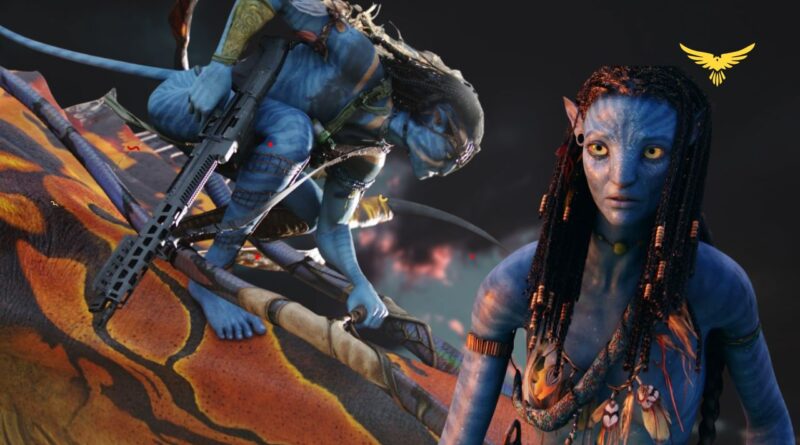
There are few film franchises that work on the kind of timescale James Cameron likes to work on. Hollywood rushes to quickly churn out sequels, spin-offs and streaming extensions, the Avatar saga moves at a geological pace — slow, meditative, technologically transformative every time it arrives. With Avatar (2009), Avatar: The Way of Water (2022) and the newly released Avatar: Fire and Ash (2025), Cameron hasn’t simply made movies; he’s built cinematic milestones that push the boundaries of what is possible with each return.
What makes these films so interesting to assess is that none of the entry is “just” a sequel — they’re landmarks —- technical, narrative, commercial and even cultural. And while the first Avatar transformed global exhibition forever and the second perfected underwater storytelling, early indications are that Fire and Ash may well be the most aesthetically complete and emotionally resilient installment yet.
Let’s analyze how this legendary trilogy has progressed.
Avatar (2009): First Movie of The Different World
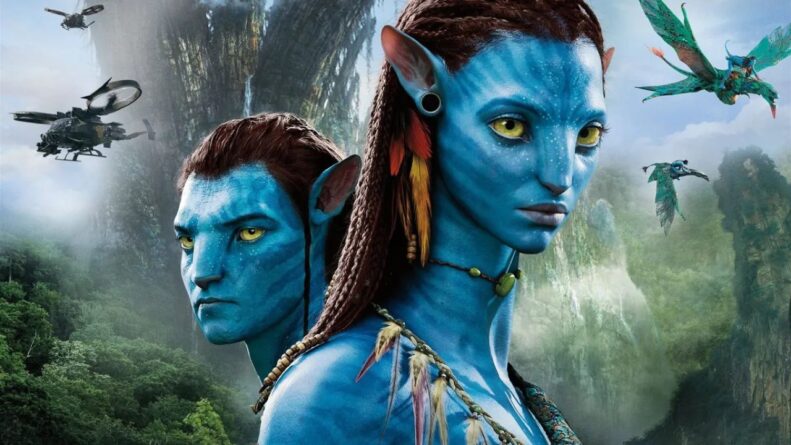
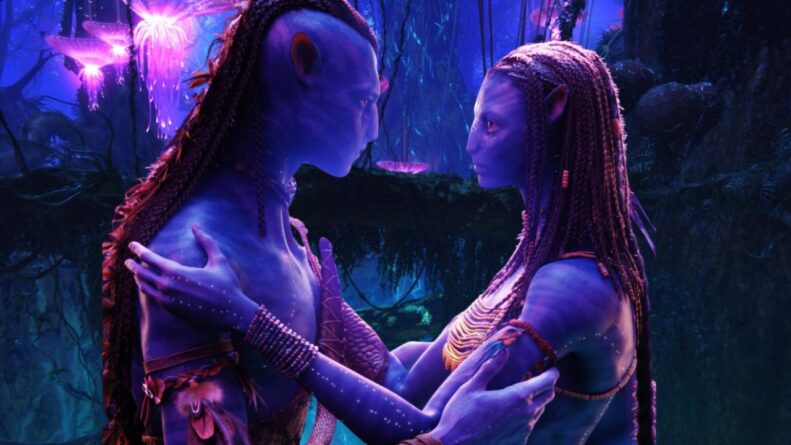
Avatar came out when cinema was about a different planet. 3D showings were scarce, digital projection was erratic, and a troupe of performance-captured aliens conveying real emotion seemed like far-off sci-fi. Cameron sat on the idea for more than a decade while waiting for technology to catch up and then invented the technology.
Image Credit: IMDb
A Technological Shockwave
The Fusion Camera System, full CGI real-time environments, and microexpression capture were not merely improvements, they were revolutions. Critics weren’t just reviewing the movie, they were reviewing the experience. Audiences were going to be able to walk into theaters and walk on to Pandora.
$2.92 billion worldwide, making it the highest-grossing film of all time.
An international release of 3D screens will follow.
A cultural phenomenon so powerful it caused the actual Earth to experience “Post-Avatar Depression” because Pandora seemed more alive than.
Image Credit: Fandomfans
Perfectly Executed Simple Storyline
Cameron deliberately employed a classical story structure, with clear stakes, emotional accessibility and mythic hero’s journey elements. It’s been criticized the screenplay for being predictable or pandering to “white savior” clichés, but it maintains that the film’s brilliance resides in its simplicity. You learn Pandora the way Jake learns it, which causes a rare emotional convergence between audience and protagonist.
Surprisingly, no cinematic “first contact” sequence has matched the wonder of that inaugural flight over the floating mountains.
Avatar: The Way of Water : Flowing With Reinvention
Now, 13 years on and many were asking if Avatar still mattered. Marvel was dominating the box office, streaming was messing with everything, and 3D was just a gimmick. Cameron defied every skepticism the way he always does: by reinventing cinema again.
Underwater Performance Capture: A New Frontier
From authentic underwater motion capture to sophisticated fluid dynamics, Cameron cracked one of the toughest problems in CGI: actual water. The visual result was stunning—critics described it as “hyper-real,” and audiences loved the immersion.
Image Credit: Fandomfans
A More Mature, Family-Driven Story
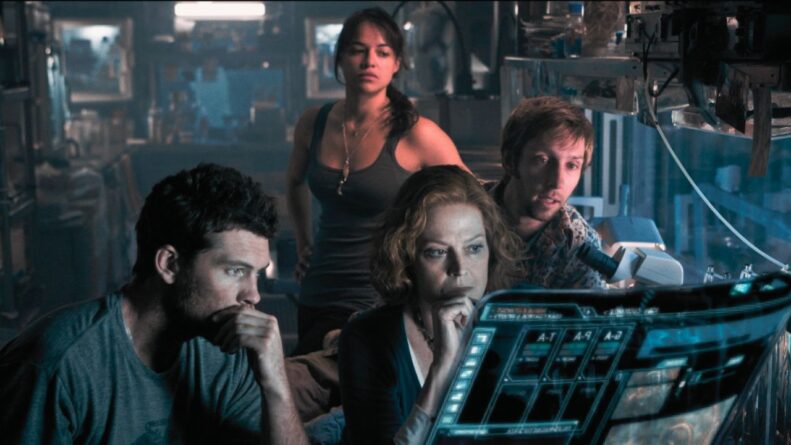
While the first movie was about discovery, the sequel was about consequence. Jake and Neytiri were no longer warriors—they were parents. Their children’s story arcs, particularly Lo’ak’s connection to Payakan, infused the narrative with emotional resonance that was absent from the first chapter.
Reviews were divided over the film’s running time and repetitive capture-rescue formula, but it was received with far greater enthusiasm by audiences, who bestowed a 90% audience score, even higher than the original.
Financially, the film made $2.32 billion, cementing its position as the third highest-grossing movie of all time.
Avatar: Fire and Ash (2025): The Beginning of the Saga’s Dark Age
Initial impressions of Fire and Ash indicate something that rarely occurs in franchise filmmaking: the third movie may be the best one.
A Bold Narrative Shift
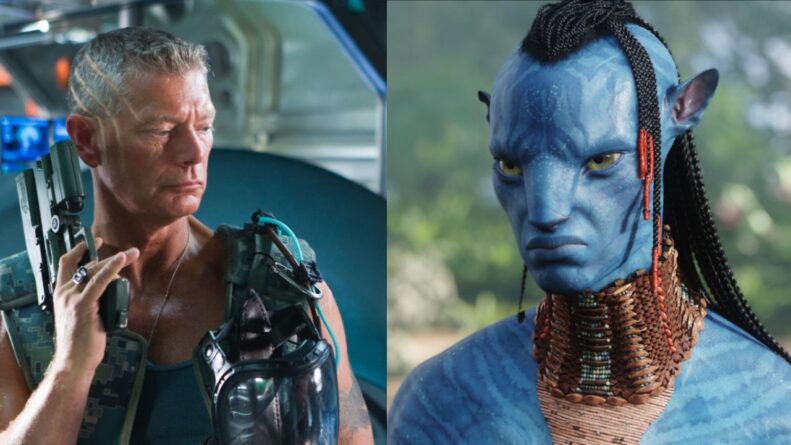
The advent of the Ash People, a Na’vi clan forged by disaster and spiritually disconnected from Eywa, represents the largest transformation the franchise has ever undergone. Their leader, Varang, portrayed by Oona Chaplin, comes into alignment with the RDA not for avarice but for grief and fury.
For the first time, Cameron’ s realm has a crisis of conscience within the Na’vi, which responds to a nagging criticism that Pandora’s politics were too clear-cut. Echoing comparisons include this tonal turn being similar to The Empire Strikes Back — darker, more complex and emotionally heavier.
Image Credit: Fandomfans
Aesthetic and Technical Leap
If The Way of Water achieved fluidity on rendering, then Fire and Ash is certainly on its way to mastering volatility are fire, smoke, ash, and ruin. New fire simulations and improved HFR transitions deliver a more atmospheric, perilous Pandora as never before.
For the innovations: Avatar (2009) still stands alone.
For technical perfection, the crown is the Way of Water (2022).
For story and emotional depth: Fire and Ash (2025) looks poised to take the top spot.
Should Fire and Ash live up to its promise, it could be the movie that at last brings critics and fans together — delivering not only beauty and spectacle, but moral intricacy and a shattering emotional pay-off befitting a saga this ambitious.
The Avatar saga isn’t merely a franchise—it’s a cinematic era that extends with each generation of technology and storytelling. Avatar (2009) revolutionised the way the world watches movies and The Way of Water pushed emotion and technical refinement to new heights, Avatar: Fire and Ash is set to become the most ambitious chapter in the trilogy.
Featuring darker themes, complex Na’vi politics, and revolutionary fire simulation, the third may be the one that finally brings critics, fans, and industry analysts into lockstep agreement — Cameron’s slow-burn storytelling was always driving here. If early reviews are anything to go by, Fire and Ash will not only reshape Pandora, but also redefine blockbuster filmmaking itself.
The aim of fandomfansis to help readers make sense of not only the movies they watch but the shifting power structures in strategies that will dictate the future of the movie industry.
Babita
Articles Published :
25
Babita is Fandomfans Editor, experience in managing content. Her focus in general movies and web series. She is having a deep interest in TV shows and 90s movies - particularly Lord of the Rings, Harry Potter, & Rom-Com. Babita also covers psychological thrillers and major releases in current time and concern with deep interest in them.
Mystery TV Shows Get Cancelled After Season 4 — Westworld, Manifest & The Sinner Explained
Explore why Mystery TV Shows hook audiences early but struggle long-term. Learn how complex plots, high costs, and viewer fatigue lead to cancellations.
There is a particular kind of heartbreak unique to the viewer of television in the 21st century. It’s that feeling, typically experienced somewhere around the start of a show’s fourth season, when you begin to realize that the Mystery TV Shows you used to be a rabid fan of—one that spawned a million fan theories—is starting to feel like work.
Insiders in the industry refer to this as the “Fourth Season Curse.” In a contracting “Peak TV” era, with streaming behemoths slashing their libraries, the four-season mark is becoming a brutal natural selection point. This is especially true for “mystery box” shows: the high-concept series that trade in secrets and puzzles and delayed gratification.
But what is it that makes the fourth season the breaking point? And what can the rise and fall of hits like Westworld, Manifest and The Sinner tell us about the future of how we watch TV?
The Complexity Debt: When the Bill Comes Due
The “mystery box” format, made popular by J.J. Abrams, is an interesting narrative tool that involves curiosity and waiting. It hooks us with a “hook” (the mystery) and then gets us addicted to a “fix” (the answers). Still, creators often rack up what critics call “complexity debt”. Each time a writer reveals a new mystery without answering an old one, they are taking out a loan on the audience’s patience. By Season 4, the debt is usually too high. If the answers don’t live up to decades of fan speculation, the audience doesn’t just get bored—they get angry.
Feature of Mystery Box
The Risk Factor
Information Withholding
Speculative fatigue; the “IQ test” feeling
Non-linear Storytelling
Narrative opacity and total viewer confusion
The “Gotcha” Twist
Prioritizing shock over character growth
To understand how this curse manifests, we have to look at three very different shows that hit the same wall.
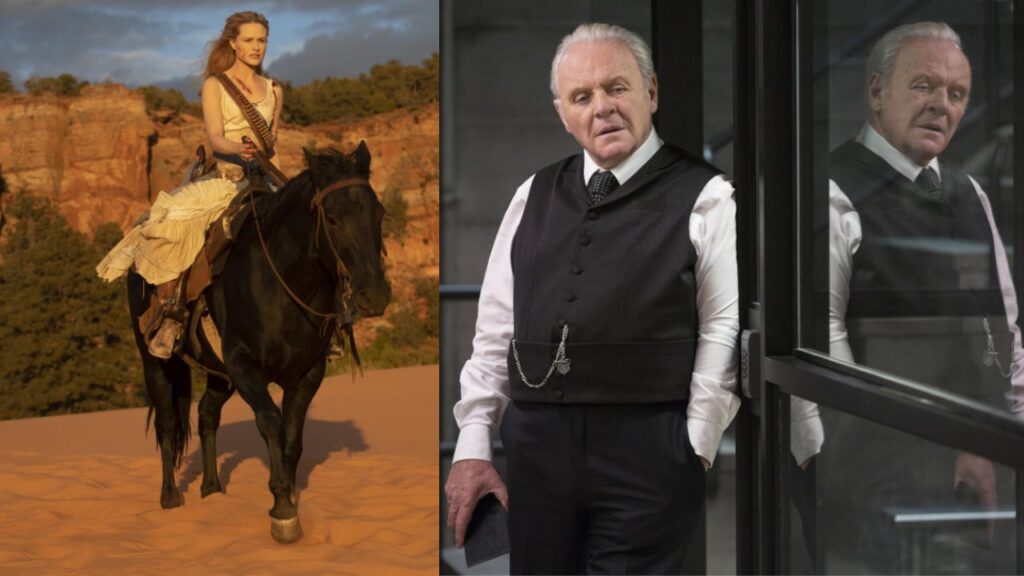
1. Westworld: The Failure of Over-Engineering
Westworld was scripted to be the next Game of Thrones. Instead it turned into a cautionary tale. The showrunners got so obsessed with, I would say, “outsmarting” the internet that the plot evolved into a dense forest of timelines and philosophical gobbledygook.
Image Credit: Fandomfans
By season 4, it lost 81% of its viewers. It wasn’t just that it was confusing; it had lost its heart. When a show treats its characters like chess pieces in a logic puzzle, audiences eventually stop cheering for the players.
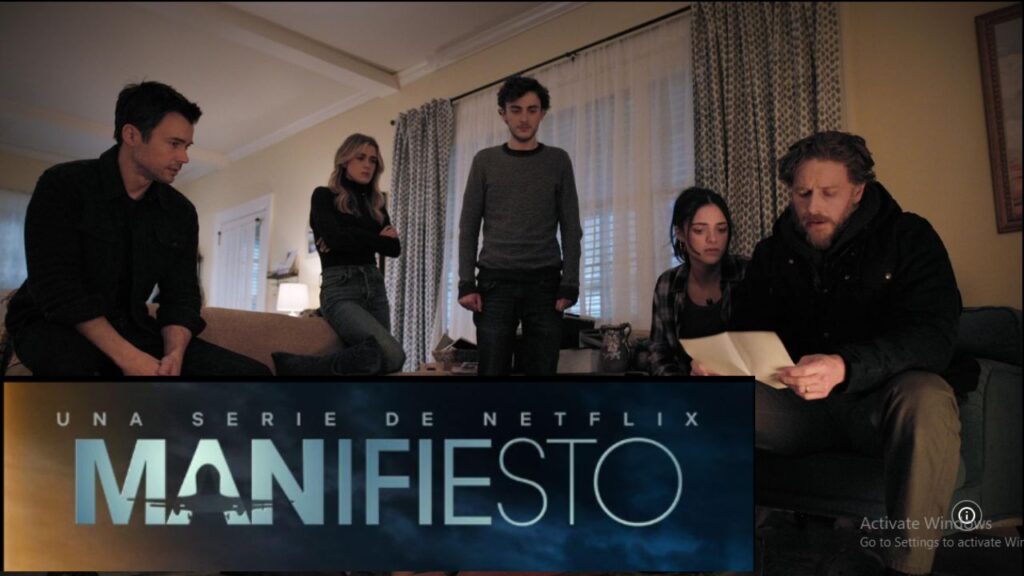
2. Manifest: The Survival of the “Netflix Bump”
Manifest is the exception on both counts. The scripted series was canceled by NBC after three seasons when live ratings dropped but then got a second life on Netflix. Why? Because mystery boxes are wonderful to binge-watch, even when they don’t work as appointment viewing.
Image Credit: Fandomfans
By compressing a planned six-season arc into a final, 20-episode fourth season, the showrunners had to cut all the fat and actually ratify. It demonstrated that a “forced ending” is in fact the best antidote to a narrative slump
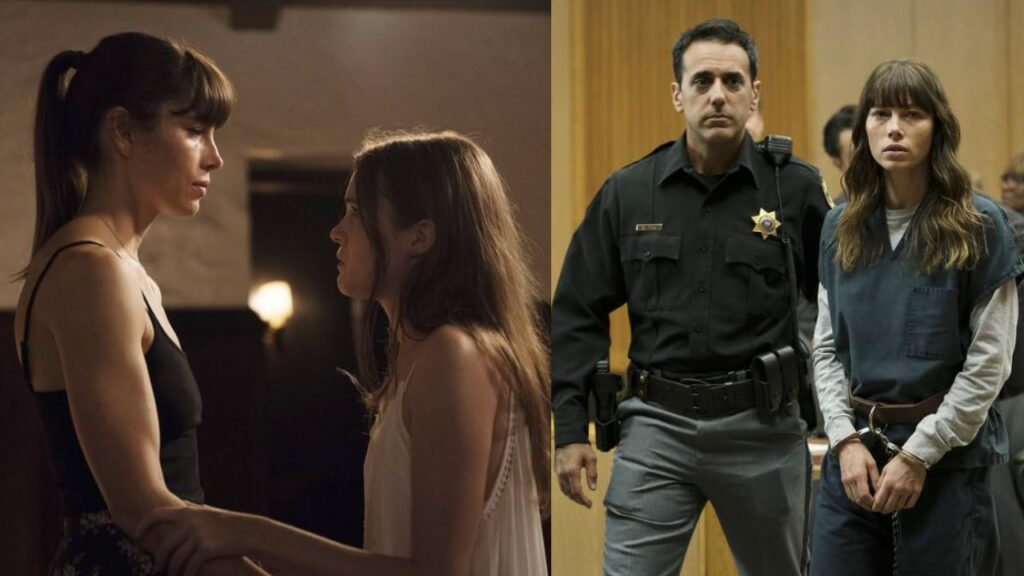
3. The Sinner: The Death of the Venue
In contrast to the rest, The Sinner was an anthology. Each season was a new “why-dunnit.” Yet, it still fell victim to the curse. This time the “curse” was financial.
Image Credit: Fandomfans
As networks such as USA move away from scripted dramas and toward less expensive reality TV, mid-budget series—no matter how prestige they seem are the first to be cut.
The Economics of Exhaustion
The Fourth Season Curse isn’t simply the result of shoddy writing; it has to do with the profit motive. In 2025, a mid-tier drama is priced at $4 million to $6 million per episode.
Contract raises: By Season 4 the cast and crew are pricier.
Viewer Attrition: Audiences traditionally, well, went down every year.
The “New” Factor: What streamers are willing to pay for and find value in — is $50 million for a brand-new “hit,” not for continuing an aging series with a niche viewership.
If we want better TV, the creators need to alter how they make their boxes. The most durable shows – for example Breaking Bad or Succession are all character-centric. The “mystery” is just the backdrop; the “show” is the people.
Critics are now claiming “Magic Show” storytelling is superior. Rather than hide certain pieces of information (the Mystery Box), creators should disclose information and allow us to observe as characters react to the consequences. This makes for a sustainable emotional hook as opposed to a maddening intellectual one.
Conclusion
The age of the “ever-show” is ever-show is over. As budgets tighten and our attention spans splinter, the most successful shows of tomorrow will be those with a defined, limited scope. Ending is just as – it’s just as important to know when to end as it is to know how to begin.
Dive into the world of entertainment with Fandomfans, our goal is to deliver updates from movies, shows, and interviews.
Mariyam
Articles Published :
76
Mariyam Khan is Fandomfans Content Writer and providing reports and reviews on Movie Celebrities, and Superheroes particularly Marvel & DC. She is covering across multiple genres from more than 4+ years, experience in delivering the timely updates.
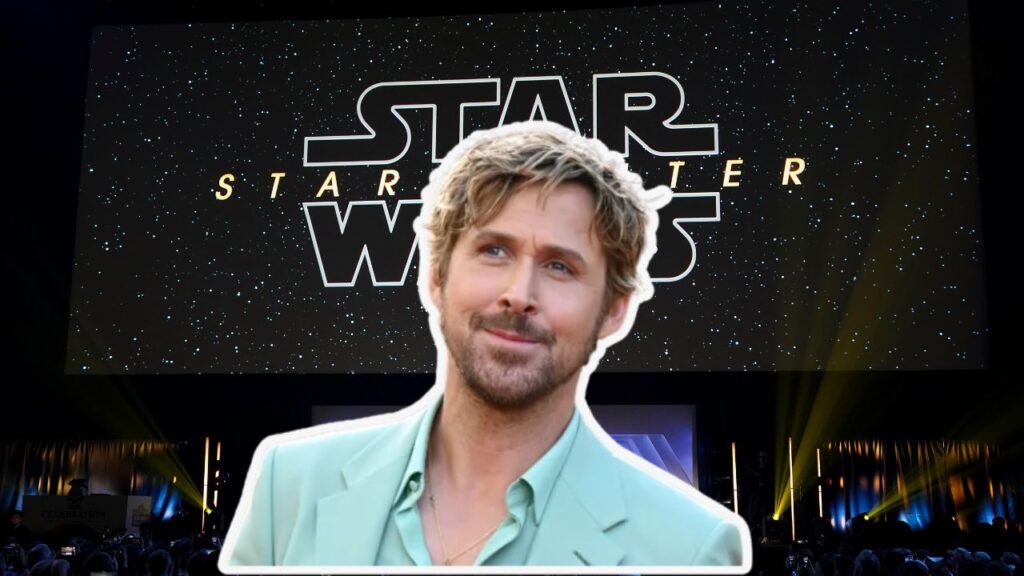
Star Wars new movie production starts in August 2025, first look of Ryan Gosling at Star Wars: Starfighter has sent shockwaves through the fandom, that visual represents a clean break from the past and a leap into unexplored space. Filmmaker Shawn Levy also confirmed at EW that the Film franchise continues but not with a prequel or sequel. It’s entirely a fresh chapter of Star Wars that is set in a period of time that we haven’t explored yet.
It is set to hit theatres in May 2027, the first big-screen Star Wars film since 2019’s The Rise of Skywalker. The storyline is kept a secret while the buzz is circling around the fans but it’s not tied to Skywalker era.
A New Kind of Star Wars Adventure
Levy stated that it’s not a prequel or sequel but a refreshing story, describing ‘the profound sense of excitement and honor as we begin production on Star Wars: Starfighter.’ He realizes about the fact how characters and cinematic moments can live with us forever. To join this storytelling galaxy with such brilliant collaborators on screen and off, is the thrill of a lifetime.”
Gosling is showing that same energy with what the filmmakers said, “The script is good, It has such a great story with great and original characters.”
Image Credit: indiatimes
He pointed out the point from the original characters, there is no connection to old characters including Han, Leia or Luke. This new chapter of Star Wars: Starfighter will take to another universe, creating a new spark in the global franchise.
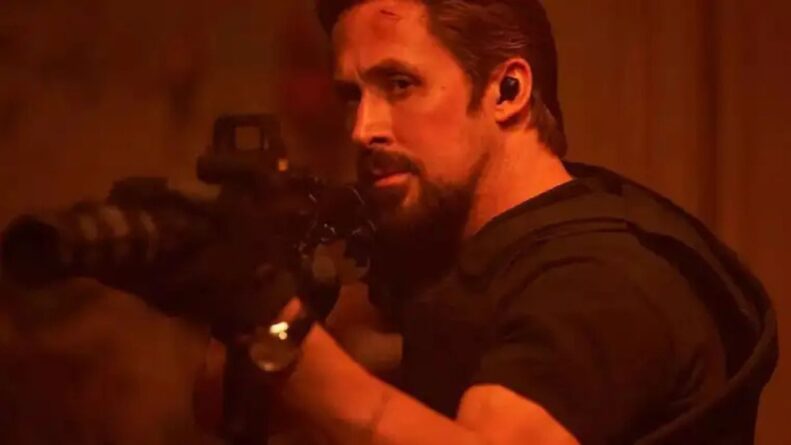
The first look reveals Gosling (in a leading role) and his nephew Gray dressed in rugged, middle of a sea hanged around somewhere in the universe.
They are expecting to join other cast members including Amy Adams, Mia Goth, Aaron Pierre, Matt Smith, Simon Bird, and Jamael Westman.
Is Gosling the “New Han Solo”? The Truth Behind the Buzz
There is no indication that Ryan Gosling is playing any legacy character or Han Solo. From the Levy statement it is clear that this Star War: Starfighter comes with new faces, new story.
But the speculation made from Han Solo’s legendary dialogue “Never tell me the odds.” Which maybe let the fans get confused. While it’s just Gosling’s hat with this dialogue written on it.
The visual of the rogue-ish look is echoing Solo’s spirit but that’s about the tone, not identity. Lucasfilm president Kathleen Kennedy also confirmed that it can’t happen, “we can’t do that”, making it abundantly clear.
Starfighter isn’t trying to relive the past. It’s carving out a future. Gosling as lead star making it possible to drive both his and Star Wars fans crazy. Lucasfilm is focused on the post-Skywalker era which gives the franchise a fresh start with original characters and new worlds.
Conclusion
Get ready for the new chapter of Star Wars: Starfighter comes May 2027. The long-awaited film series heated the fans’ excitement with its first look. It represents the storyline moved on to the next chapter — no strings attached to Skywalker saga
Alpana
Articles Published :
156
Alpana is Fandomfans Senior Editor across all genres of entertainment. She evolved in the media industry since a very long time, she manages the content strategy and editing of all the blogs. Her focus on story development, review analysis, and research is well-equipped that ensures every article meets the standards of accuracy and depth.