Michelle Randolph’s Big Break: From Landman Fan Favorite to Amazon MGM’s Holiday Rom-Com Lead
Michelle Randolph’s Big Break is landing a big film co-starring role for the first time and it’s a real career moment.
Published: January 10, 2026, 7:56 am

Michelle Randolph’s Big Break is landing a big film co-starring role for the first time and it’s a real career moment.

Michelle Randolph is officially stepping into the light. After making a name for herself with her breakout roles in Taylor Sheridan’s hit dramas, the up-and-coming actress has been cast as the female lead in Amazon MGM Studios’ holiday rom-com, Clashing Through the Snow. She stars opposite The Summer I Turned Pretty favorite Christopher Briney in her first major feature film role. This is a major career moment for Randolph and fans can’t wait to see what she does next.
When Randolph made a splash in 1923, a spinoff of Yellowstone, opposite Hollywood legends Harrison Ford and Helen Mirren, she was an unknown herself. Her performance as a determined young woman finding her way through the social-political landscape of the post-war era won her critical praise and a devoted following.

That success led directly to her booking Landman-here she’s the rebellious, beguiling Ainsley Norris, the daughter of the character played by Billy Bob Thornton. The series became Paramount+’s largest global premiere week for originals, with Randolph’s character becoming an instant fan favorite.
The thing that’s most incredible about Randolph’s journey isn’t even the roles she’s landed, it’s the confidence she’s gotten along the way. She’s also been refreshingly candid in recent interviews about battling impostor syndrome while appearing alongside some of Hollywood’s most venerable veterans.
“I have worse imposter syndrome,”
—she confessed
Though she’s getting better about being less hard on herself when she sees that actors whose work is the most celebrated in this industry have doubts like hers. This vulnerability is one of the reasons she has gone on to be beloved by viewers who find her refreshingly real in a business often characterized by meticulously constructed personas.
Directed by Carlson Young (the lovely rom-com Upgraded), the film is set to give you a treat. Amazon is presenting Clashing Through the Snow as Planes, Trains and Automobiles for the new age—a contemporary take on the classic 1987 John Hughes film that starred Steve Martin and John Candy. Written by Love Hard’s Daniel Mackey and Rebecca Ewing, the script combines smart, relatable banter with genuine feeling, all framed by a festive holiday setting.

Christopher Briney is at a turning point in his career with the age-appropriate lead role, after breaking through as Conrad Fisher in the hit series The Summer I Turned Pretty. After enchanting young viewers for three seasons, Briney is now taking on different projects, eager to prove his versatility outside of the darling teen romance series. His casting opposite Randolph has also created a buzz, with fans looking forward to their on-screen chemistry.
Read More:- Priyanka Chopra Jonas’ ‘The Bluff’ Inspired From The Real Life Pirate Queens
Production will begin in February for a planned holiday 2026 release ― which is just right for audiences looking for some good vibes around the winter holidays. This is a big step career-wise for both leads, but especially for Randolph, whose trajectory from unknown to co-starring in a major streaming holiday movie demonstrates the power of steady, captivating work.

As the landscape of entertainment shifts, Michelle Randolph is a testament to the fact that those performers who are truly able to be both strong and vulnerable will eventually have their moment. Crashing Through the Snow seems to belong to her.
The path Randolph’s taken seems less like a sudden ascendant storyline, and more the culmination of an incredible amount of hard work. From competing with iconic attorneys in 1923 to becoming a Landman favorite, she has earned straight-faced, hardened, and genuine connections with audiences.
Clashing Through the Snow is more than just another holiday rom-com—it’s a pointed signal that Randolph can carry a story, not just support one.
Dive into the cinema world with Fandomfans to get the latest update from your favorite celebrities.

Watch now Monarch Legacy of Monsters Season 2 trailer. Apple TV+ airs a glimpse of Skull Island, a new Alpha Titan, timelines shift, and MonsterVerse ties.
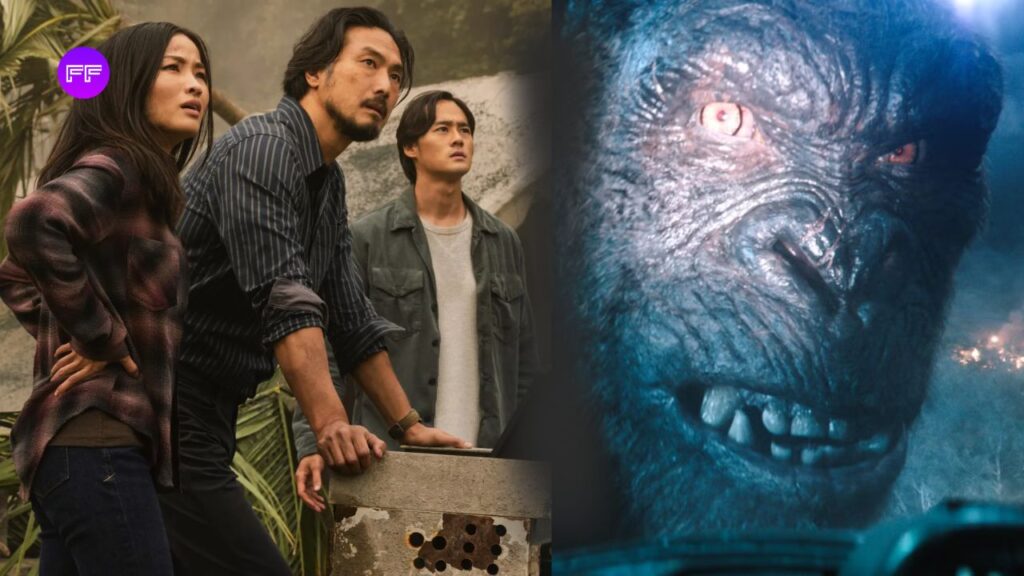
AppleTV+ has at last released the official trailer for Monarch Legacy of Monsters Season 2 at their Press Day event, and to say the MonsterVerse fanbase is going haywire would be an understatement.
The series has returned after a breakout first season that demonstrated you can blend high-prestige human drama with city-stomping kaiju. But this time, they’re not just holed up in bunkers, they’re going to the most dangerous place on Earth. With a new “Alpha” threat on the horizon and the timelines in flux, Season 2 looks to start to connect the dots between the small screen and the huge cinematic battles we know are coming in 2027.
The Monarch Legacy season itself starts with a world premiere on Friday, February 27, 2026, leading into what seems like a regular weekly obsession.
Over the course of 10 episodes, the story will be revealed one chapter at a time, with new episodes released every Friday. The journey ends on May 1, 2026; just enough time for fans to fan theories, argue online, and countdown between every reveal.
Genre: Fiction → science fiction, action-adventure, monster drama.
Theme: The main theme this season appears to go from “discovery” to “consequence.” The trailer shows a series of ripple effects of the past hitting the present. It’s about the trauma passed between generations of living in a world where “Gods” exist, and the corporate greed (hello, Apex Cybernetics) vying to control them.

Setting: The story scope has gone through the roof. We are presented with a split timeline:
The original Monarch Legacy Season 1 hitmakers are back to captain the ship:
Showrunners: Chris Black (Severance) and comic book legend Matt Fraction. Their Presence assures we have that blend of bureaucratic realism and off-the-walls, comic-book heart.
Executive Producers: Joby Harold, Tory Tunnell, and Matt Shakman (director of WandaVision).
Studio Oversight: Toho Co., Ltd. continues to keep a close eye which is key. They are the keepers of the Godzilla legacy — making sure the Titans look and move exactly as they should.
Season 1 concluded with a massive cliffhanger, leaving our heroes stranded in the time-bending dimension of Axis Mundi. Season 2 is going to be piecing things back together. The timeline has jumped to 2017 and the Randa siblings (Cate and Kentaro) aren’t just searching for their father now – they are fighting to stay alive.

The trailer shows a “Titan Event” coming. Monarch is scrambling, but a rival group, Apex Cybernetics, is making a name for itself on Skull Island. The narrative will probably follow the race to discover “buried secrets” beneath the island that ties into the 1950s timeline, and a new, ancient danger emerges from the deep.
The casting for this show is still one of its best selling points, especially when it comes to the “Legacy” gimmick of the Russell father-son duo.
Kurt Russell as the elder Lee Shaw (the man who knows too much).
Wyatt Russell as the young Lee Shaw (1950s timeline).
Takehiro Hira as Hiroshi Randa.
Amber Midthunder (Prey): She adds to the cast as a character named “Isabel,” presumably an action-heavy part based on her past work.
Cliff Curtis: Role TBC, but reports say a senior villain or military leader.
Dominique Tipper reprises her role as Brenda Holland, the public face of Apex Cybernetics’ corporate dreams.
The most talked about thing out of the trailer was the announcement of a new Alpha: Titan X.
The New Monster: Titan X – Billed as a ”living cataclysm”, Titan X is an aquatic, tentacled drake with bioluminescent blue/red scales and “sideways 8” pupils. It can create huge storms.
The Rivalry: The trailer implies that the solution to stopping this thing is to throw Godzilla and Kong at it.
Crossovers: We’re really part of a slow burn this season and laying the groundwork for the international geopolitical muscle flexing that will really heat up in Godzilla x Kong: Supernova, and again we’re talking 2027.
Apple isn’t holding back the purse strings. The VFX for Titan X and the Skull Island sequences are feature-film quality.
Production: Location shooting for a tough approximation of Skull Island was extensive.
Sound Design: The trailer featured a particular acoustic weapon/sound emanating from Titan X that causes fear. The sound designers are weaponizing the audio in the narrative.
Read More 👉 Michael Biopic Trailer is Released: Most Long-Awaited Biopic of the King of Pop
The rating is expected to be TV-14, but it’s intense. With the Titan attacks, heavy psychological horror aspects, it’s really pushing the boundaries of the rating. Parents should be aware that while it’s not R-rated, danger seems very real.
Platform: Exclusively on Apple TV+.
Global Reach: The series will air simultaneously in over 100 countries worldwide, allowing the huge international fanbase — particularly in Japan and the US to watch together.
The bar is set very high this time. It’s not monster-sized battles fans want anymore—they want answers. The story is now scheduled to reveal the lore: how Apex Cybernetics went underground to become the creators of Mechagodzilla.
Questions about the time skip also hang heavily—what is Axis Mundi, really, and how long has Lee Shaw been gone?
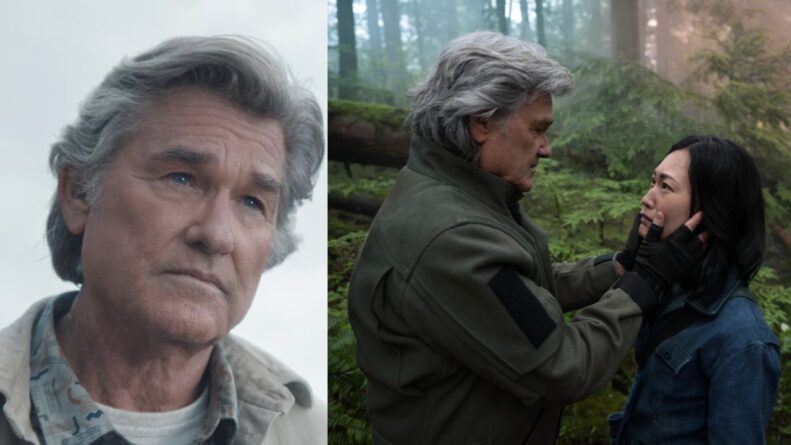
Let’s not forget Skull Island, which also teases larger mysteries. Are we going to see a younger Kong learning his way, or is the titular “King” already grown up in 2017?
It’s all got that Lost-meets-Godzilla vibe, cloaked in secrecies, timelines and slow-burn revelations. Should the writers really nail the mystery side of things, they could easily be in the running for best sci-fi series of 2026. You can find these answers by watching the full series on Apple TV+ after its release.
Monarch Legacy of Monsters Season 2 appears to be leveling up from “spinoff” to “must-watch” pillar of the MonsterVerse. By relocating the action to Skull Island and bringing in a frightening new antagonist, Apple TV+ is upping the ante. The February 27 countdown is on.
Fandomfans is delivering every update from Hollywood Entertainment Industry directly to you

Landman Season 3 raises the stakes as power struggles, shifting alliances, and dangerous deals reshape the oil world in a tense, gripping new chapter.
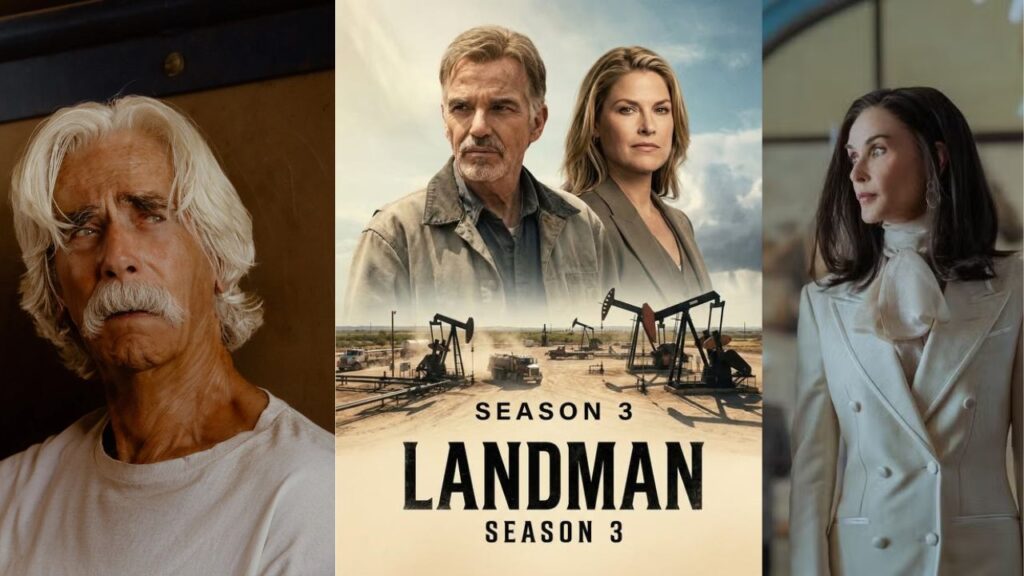
Landman has quickly become a can’t-miss series, capturing the tension of Yellowstone but focused on oil, dollars, and ever-growing boomtowns. The show has been a huge hit for Paramount+, ranking among its most watched series. Now, with all this success, we are wondering when we will be going to watch Landman Season 3.
There’s no official release date for Landman season 3 but it will eventually return in the late 2026 as official confirmation of its making.
Yes, Landman has been officially renewed for a Landman Season 3.
After the Landman Season 2 launch was a smash hit, racking up 9.2 million streaming views in the past two days, Paramount+ didn’t wait around. The choice was obvious. The series has been able to “strike gold,” and the network is looking to capitalize on this momentum.
And while we wait for the next chapter, it’s worth noting: The show has continuously broken viewership records, perhaps making it the hottest ticket on the platform right now.

Currently, April 2026, there’s no official release date for Landman Season 3. While Taylor Sheridan has a reputation for being an incredibly hard worker.
Production had settled into a comfortable fall-new-season rhythm. There’s nothing concrete yet, but the general feeling is a Fall 2026 release date for Season 3. Sheridan loves to keep fans waiting for years, and while the show is doing at least so far with this season’s success it means the cog wheels in the writers’ room are no doubt turning.
If you’ve been keeping up with the mayhem, you know that mute Tommy Norris and his M-Tex gang aren’t really options. The pressure had been cranked up to an almost unbearable volume by the end of Season 2.
The biggest change for next season is the formation of CTT Oil Exploration and Cattle—the new corporation created by Tommy for his family and friends. This is not just a business decision, it is an act of declaring independence. But in West Texas oil, independence is expensive, very expensive.
Recall the deal with the cartel boss Gallino (Andy Garcia, coldly perfect)? While Tommy may have raised the money to get his job up and running, he’s still very much on the hook. Gallino, though, doesn’t seem like the kind of guy who lets a debt or a slight go uncollected. The big tension for Season 3 will likely be that the cartel is lurking, fingers poised to snatch if CTT so much as stumbles.
Outside the oil rigs, there’s the changing family layout. With Cami Miller taking the wheel at M-Tex and Tommy’s relationship with his father, T.L. (the iconic Sam Elliott), continuing to evolve, the family drama is shaping up to be as volatile as the boardroom battles. We’re also watching Cooper and his blossoming relationship with Ariana, which looks like it’s leading to marriage more personal complications for one of the most chaotic lives.
After the abrupt passing of its owner, Monty Miller, the season opens with a power vacuum at M-Tex. His wife, Cami (Demi Moore), is the new CEO. Cami and Tommy Norris (Billy Bob Thornton) clash right off the bat about the company’s financial disaster in particular, Monty’s embezzlement of money meant for gas wells in the Gulf of Mexico.
Cami fires Tommy from the company he helped build before turning around and asking him for help when he protests her reckless choices.
Rather than taking the comfortable road and working for Chevron, Tommy decides to start his own business. He lands a staggering $44 million deal with Danny ”Gallino” Morrell (Andy Garcia) an international drug cartel boss masquerading as an investor. Behind these cartel funds Tommy establishes CTT Oil Exploration and Cattle, LLC after he, his son Cooper, and his father T.L. named it.
At the beginning of the season, the fiancée of Cooper’s, Ariana, is savagely attacked right outside a café. Cooper comes to her rescue, pounding the assailant in a now-viral video. When the assailant dies in the hospital, Cooper is charged with murder.
The Norris family enlists their formidable attorney, Rebecca Falcone, to take on the relentless detectives. In the end, Cooper is released after an autopsy shows that the assailant had died of an unconnected heart attack, but the close call with jail time alters and hardens Cooper. He moves up to become president of his father’s new firm, CTT.
Tommy’s elderly father, T.L. (Sam Elliott), escapes from his care home to come and stay with the family. Although T.L. and Tommy have a tense past, T.L. provides valuable, hard-learned oil field knowledge and starts to mend his relationship with his son and grandchildren.
Ainsley, Tommy’s daughter, goes to Texas Christian University (TCU) and wants to be a cheerleader. But nothing goes right as she can’t make the squad and she clashes with her stogy roommate, Paigyn. Over time, things change when Ainsley defends Paigyn from bullies, and they form an uneasy friendship. That shows Ainsley more confident, more independent.
Angela, Tommy’s ex-wife, remains a significant presence in his life. She is struggling with Ainsley leaving for college and with her complex feelings for Tommy, as she still has feelings for him.
Season 2 ends by laying the groundwork for an epic corporate and personal battle Cami’s M-Tex and Tommy’s fledgling CTT, both under the lethal gaze of cartel supervision.
While Paramount has not released an official Landman Season 3 cast list, its narrative format suggests that most of our favorites will return. As there have been no huge character “departures” to prevent them from coming back, you can certainly expect the main characters to be back:
Billy Bob Thornton as Tommy Norris: The guy who keeps everything running (just). He is the heart and soul of the show, and we can’t imagine Landman without that grizzled, cynical charisma.
Demi Moore as Cami Miller: Filling the power vacuum at M-Tex, her arc is probably one of the most fun to watch.
Sam Elliott as T.L.: Because a show about Texas, oil, and grit isn’t complete without Sam Elliott.
Jacob Lofland as Cooper Norris: We love cheering for him as he makes his way out of the oil patch and into the realm of running a business.
Paulina Chávez as Ariana: Her future with Cooper and where she fits in the family dynamic is certainly going to be a highlight.
Andy Garcia as Gallino: The ever-present menace that keeps us rattled.
There are definitely small characters who drift into the background — like Ainsley’s boyfriend on the show but the principal cast is feel like it’s here for the long haul.
If you’re attempting to explain to a friend why they need to binge before Season 3 releases, it truly comes down to the “Sheridan Factor.”
Taylor Sheridan has a gift for taking industries, the average person has no background in ranching, prisons, and now, the oil patch and turning them into adrenaline-filled soap operas. It’s not just a matter of the money or the politics, it’s about the people who live on the edges of these gigantic, earth-shaking industries.
Setting: West Texas is more than just the setting, it almost functions as a character. It’s hard, cruel, but still kind in a way.
Realism: Landman is a series that touches real problems like climate change, economic and global energy politics. That is what makes it feel real and believable.
Performances: Billy Bob Thornton’s solid acting is taking up the series so high, he earned that character.
Landman has established that this isn’t just a flash in the pan. It’s found its own place among the crowded field of streamers that offer prestige drama. With Landman Season 3 on the way, we know we’re getting more of the High-Stakes, Dusty Action that we’ve Come to Love.
As we await that still-to-be-confirmed official premiere date, the most important thing to keep in mind is that in the world of Landman, the status quo never remains quite long. Tommy Norris – still out there, still running a squeaky-tight racket while owing a dangerous debt, is gonna need all the help he can get next season rolls around
Dive deeper with Fandomfans for updates from movies, series, and celebrities to get ahead in the entertainment world.