The Gosling Effect in Star Wars Starfighter – A New Era for Space Opera
Gosling joins Star Wars Starfighter Obey your thirst. Discover how the Gosling-Levy pairing might reshape the genre of space opera when it arrives in 2027.
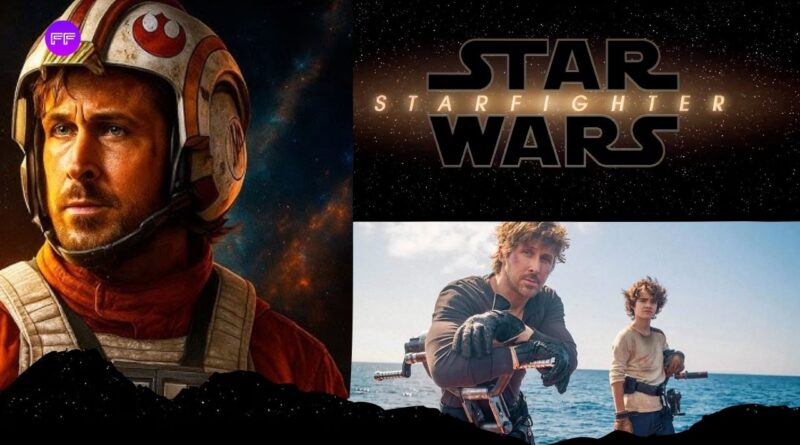
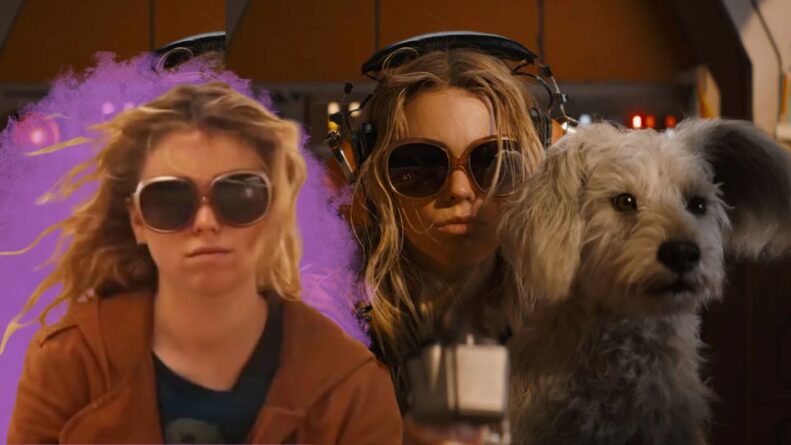
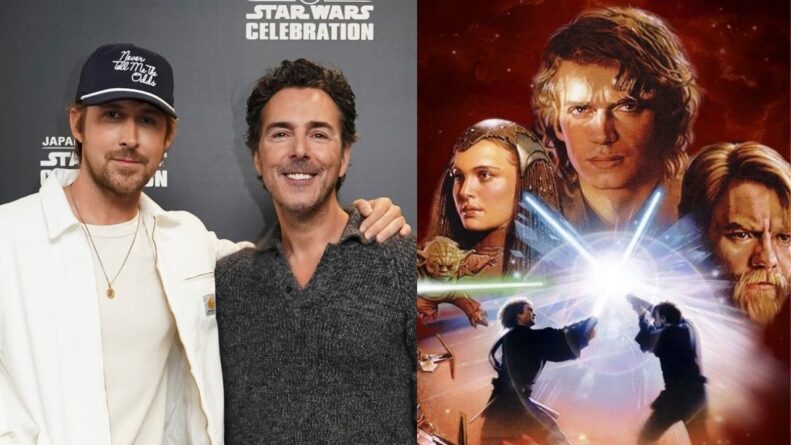
There is a strange buzz that fills the air when Ryan Gosling appears on set. It’s not the orchestrated buzz of a marketing strategy, it’s the quiet assurance of a performer who knows that film is as much about what you don’t say as what you do. When Gosling was officially announced to be joining Star Wars Starfighter with Shawn Levy at Star Wars Celebration Tokyo in April 2025, the news was more than a simple casting win for Lucasfilm. It was something far more fragile: a possible course correction for a franchise that’s been failing for focus for the better part of a decade.
The Rise of Skywalker ended the Skywalker Saga, and since then, Star Wars has felt less like one shared universe and the galaxy has become multiple tossed captains in the ship. But “The Mandalorian and Grogu” restored faith and The Book Boba Fett got things all mixed up, Andor demonstrated maturity and seriousness in Star Wars storytelling, and The Acolyte explained how far off that can fly.
Through it all, one question looms over Kathleen Kennedy’s leadership: what the hell is Star Wars Starfighter in 2027?
Now, enter the Gosling–Levy pair — not so much a studio double feature as two filmmakers connected by the same childhood dreams and creative vision, returning with something that actually feels personal once again.
Here we’re getting into speculation, Star Wars Starfighter focuses on Gosling as not a smuggler, not a Jedi, but a very real trader in an uncle outraged into protecting his Force-sensitive nephew from dark side hunters in a galaxy still recovering from Palpatine’s final death, in which Amy Adams is said to be the boy’s mother, and possibly a Jedi herself who gives her brother (Gosling) the son’s protection as she goes to meet the galactic threats elsewhere.
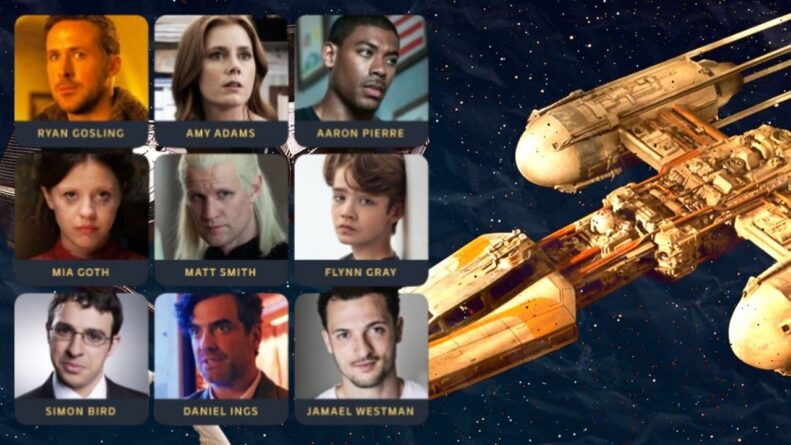
If this is the case and screenwriter Jonathan Tropper has been as characteristically tight-lipped as always then this setup is genius in its simplicity. For four decades, Star Wars has weighed fathers and sons, masters and apprentices, the burden of blood and destiny. An uncle-nephew relationship allows for a genuinely horizontal dynamic: chosen responsibility as opposed to inherited burden. Gosling wouldn’t be wrestling with the sins of his father—he’d be leaping into danger for love of his sister and her child.
This turns the whole hero’s journey on its head. Luke Skywalker became a legend because of who his father was. Gosling’s character, let’s call him Kael for the sake of our theory, would be a hero for who he chooses to be. That has a very modern ring to it, in a time when a found family often trumps blood ties.
There’s another theory made that mentioned by CBR that’s worthy of your attention, one which links Star Wars Starfighter to the wider weave of today’s Star Wars narrative.
Baylan Skoll references the Bokken Jedi in Ahsoka, Force users who trained outside of the Now I’m watching Ahsoka. They are survivors, self-made warriors who cobbled together knowledge from legends, ancient holocrons, and fragments of lore rather than being expert practitioners. Crude, authentic, and defined by loss rather than tradition.
But what if Baylan is one of them? A former student of Luke Skywalker’s temple who escaped Ben Solo’s massacre — someone who saw friends die, chose survival over heroism, and vanished rather than standing and fighting. That kind of background would explain everything about who he is now. Five years post-Exegol, the galaxy doesn’t need another chosen one. It needs a broken man who relearns how “to be whole” by protecting someone else.
That would explain the “Star Wars Starfighter” titles even better than a simple aesthetic reason. He is flying a starfighter, literally, because he is on the run. Now action sequences become character beats — every evasive dive through an asteroid field isn’t just spectacle, it’s a man dodging his past until he can no longer. The ship becomes a metaphor: run-down, cobbled together, but still capable of amazing things when properly captained.
Shawn Levy, the director of the new Star Wars movie is really important to this equation. Levy is not a visionary auteur in the conventional sense. He’s not Denis Villeneuve drawing with shadows and silence, or Christopher Nolan stretching time like taffy.
Levy’s talent is subtler, and perhaps more challenging: He makes tentpole movies feel intimate. Free Guy shouldn’t have worked as a comedy about an NPC gaining self-awareness in a video game that sounds like algorithmic nightmare fuel. And yet Levy injected it with such happy earnestness that even Ryan Reynolds’ blue-shirted everyman seemed worth rooting for.
Then there was Deadpool & Wolverine, and that could’ve been a cynical IP soup concoction. But Levy approached Wolverine’s mourning with sincere respect all the while delivering the R-rated mayhem fans desired. He understands that the most successful blockbusters function on two or three different frequencies simultaneously: the visual, emotional and, in the case of the sense of irreverent humor.
For Star Wars Starfighter, this approach is just right - it’s fun without feeling like a drag and you get a sense of accomplishment for each stage you complete. The sequel series always felt embarrassed to be Star Wars, constantly trying to upend expectations until there were none left to upend.
Levy is not a subversion, he is an embrace. He’ll give us the trench run homage, the cantina scene, the binary sunset moment – he’ll give us all of those things, but he’ll earn them through character work rather than nostalgia triggers.
Star Wars Starfighter movie appearance five years after The Rise of Skywalker is something that builds hope to open up interesting story possibilities while closing others.
This is a galaxy being rebuilt. The New Republic that was decapitated by the destruction of Hosnian Prime that the First Order killed is either in the process of rebuilding or has fractured into various regional powers. The First Order’s remnants haven’t simply vanished but they’ve likely sprouted as warlords, marauders, or desperate holdouts.
And the Jedi? Rey is probably off training her first students somewhere, but the Force-sensitive populace hasn’t suddenly exploded in size. If anything, parents are likely keeping their children’s talents under wraps, taking heed of how the last regime treated “Force-wielding terrorists.
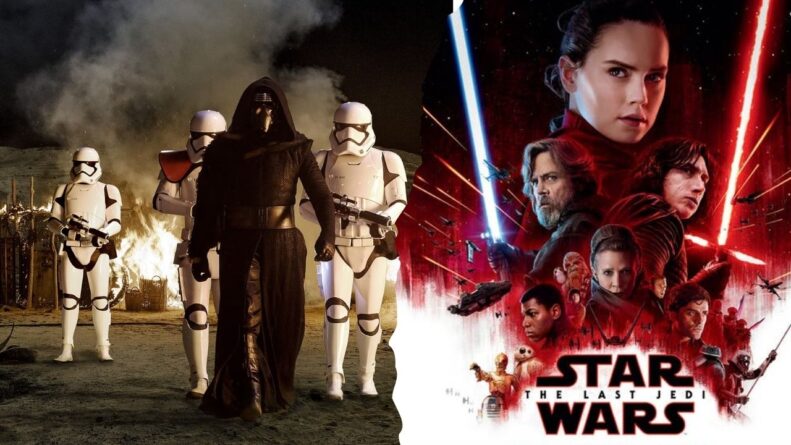
As IGN mentioned, This adds poignancy to Gosling’s role as the overprotective uncle. He’s not just running from dark side hunters, he’s trying to navigate a hideous bureaucratic system in which signing up a Force-sensitive kid for school could very well be handing him or her over to a government that wants to stop another Palpatine. The film might delve into the paranoia of the post-war generation, the way its trauma reverberated through organizations even after it won.
There’s also the prospect of legacy characters turning up that don’t overwhelm the story. Daisy Ridley’s Rey makes a cameo not as a savior, but as a distant hope, a legend that Kael doesn’t believe in until she sees for herself. The Starfighter vs. the sequel trilogy, however, would be scale: Rey is not the main character in this one, She’s not in this world, She’s is in another dimension, a parallel story.
What interesting is about the path Ryan Gosling’s career has taken. He’s also one of the few actors to flex his star power between indie bona fides (The Nice Guys, Blade Runner 2049, First Man) and blockbuster draw (Barbie, La La Land) without ever really feeling like he’s slumming in either realm. He has never led a franchise this large, this culturally laden.
There’s danger here. Star Wars has chewed up bright futures before, just look at the Solo cast, or the skilled actors buried beneath sequel trilogy exposition. But there’s also an unprecedented opportunity. If Starfighter works, Gosling doesn’t just get one big movie, he gets ownership of a new corner of the galaxy.
Gosling is the right age for this at 46 as he can convey gravitas, yet be around for multiple films, and is savvy enough to know when to fight for creative input.
But more than that, he adds an element of the audience that doesn’t usually think about Star Wars. The Barbie crowd, the Drive lovers, the Oscar-season crowd who tip it to his nominations, they will come to this galaxy, enlarging the base beyond the faithful who gauge midi-chlorian counts on Reddit.
In January 2026, screenwriter Jonathan Tropper made a comment that should have attracted more attention:
“Star Wars Starfighter is truly standalone, there are no secret cameos from legacy characters. Interview In a day and age where all blockbusters are secretly backdoor pilots for ten other projects, this is radical.”
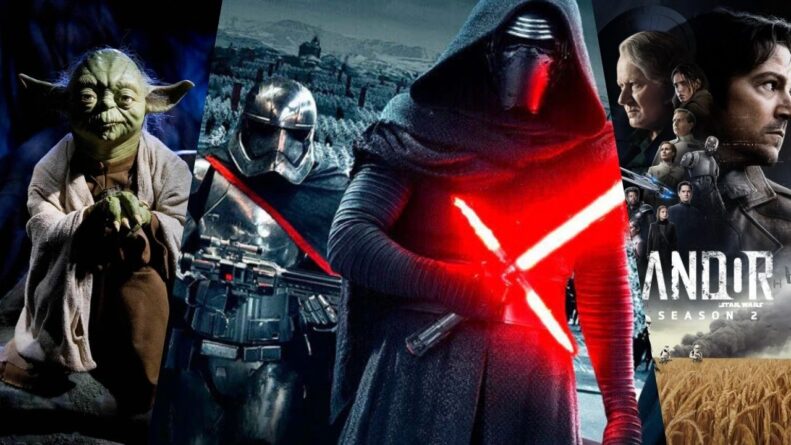
What that means is the film has to be able to stand on its own. You don’t just play John Williams’ Force Theme to make you cry, you have to earn it through new themes. It can’t just take the outline of Darth Vader to create menace — it must introduce new villains (Matt Smith and Mia Goth, according to casting rumours) that feel as iconic. This is Lucasfilm betting on storytelling over brand recognition, and that confidence is contagious.
It’s not trying to sound legendary — it’s practical, almost humble. A name that can function as a job, a vehicle, and just a way to get around, instead of a symbol burdened with the weight of mythology. It implies a movie about people at work—hazardous, urgent work rather than destiny congealing in the veins.
If Star Wars Starfighter is successful as early executive reactions indicate that it could rewrite the Star Wars rule book entirely. No more trilogies in the works before the first film debut. No more mystery boxes that go nowhere. Just filmmakers with passion projects, actors with real chemistry, and stories that just happen to take place in space.
For Ryan Gosling, success means showing that he can bear the impossible load of fan expectations and still come out on the other side as a fully realised artist. For Shawn Levy, it’s proof that his particular brand of warm-hearted blockbuster filmmaking can survive in the most closely parsed sandbox in cinema. What they really want is for the original 1977 Star Wars to feel real again — not because of twists or surprises or retcons, but because that film had heart. And it made people feel, and that’s what we haven’t had.
Speculation, set visits and Star Wars Starfighter trailer dissections over the past 18 months have been propelled by that one hope that Star Wars will discover its soul again. Release was then scheduled for May 28, 2027, for the new film. But in years now, that excitement really does feel deserved rather than manufactured. Because somewhere in a London editing suite, Ryan Gosling is learning to fly, and the galaxy is at last becoming large enough for new stories once again.
Dive into the world of cinema with Fandomfans to get deeper updates from upcoming movies, series and celebrities.

DC’s Lost Zatanna movie hit the dust- find out what Emerald Fennell’s dark, chic take on the character was and why Warner Bros abruptly ended production.

A special kind of heartbreak is reserved for the “best movies never made.” We preoccupy ourselves with Jodorowsky’s Dune and Del Toro’s At the Mountains of Madness, speculating on how they might have altered the cinematic terrain. In 2026, with Emerald Fennell on the press trail for her raw adaptation of Wuthering Heights, a new identity was officially added to that tragic pantheon: Zatanna.
For years, speculation has swirled about what the Oscar-winning writer/director of Promising Young Woman and Saltburn might do with DC’s best stage magician. Now, with Fennell’s recent frank interviews, we at last have a peek behind the curtain.
“It wasn’t a superhero flick, it was a fairly deranged saga about a nervous breakdown.”
–She says
Fennell depicted Zatanna around the time of a very strong personal and professional transition. Immediately following her Academy Award win, she was catapulted into the high-gloss Hollywood movie star — a world she didn’t quite recognize.

Feigen became the tool she used to filter her alienation through the script. Instead of a typical origin story in which a hero discovers how to use their powers to save the world, Fennell’s Zatanna is a woman coming undone.
I had this very simple question: “How do I make a superhero movie that I’m comfortable watching with my kids and that personally speaks to me?” I was a woman having a breakdown.
— Emerald Fennell
This wasn’t just “gritty” like we’ve grown accustomed to from DC, it was psychological terror. For a character like Zatanna, who practices Logomancy (speaking backwards to affect reality), a broken mind is a frightening weapon. When the magician loses her grasp on reason, reality itself starts to distort.
If you’ve seen Saltburn, you’re aware Fennell doesn’t do “palatable.” Her take on Zatanna would almost certainly have swapped clean CGI energy blasts for something more tactile and grotesque.
| Feature | The Traditional Heroine | Fennell’s Zatanna (The Archetype) |
| Mental State | Resilient & Stoic | Fractured & “Hysterical” |
| Relationship to Power | A Responsibility | An Addiction/Burden |
| Aesthetic | Clean & Heroic | Grotesque & Baroque |
This incarnation of the character was described as a “hard woman” — untidy, scary, and thoroughly human. It was a dismissal of the “cool girl” trope, instead dwelling on the bodily and cognitive toll of doing magic.

The removal of Fennell’s Zatanna exemplifies an escalating anxiety in contemporary film: the struggle between auteur ambition and franchise security. While Zatanna probably will debut in the new DCU (if not before in James Mangold’s Swamp Thing), she will unquestionably be a more “stable” version of the character.

Fennell’s “lost” script is still an intriguing “what if” — a souvenir from a moment when the superhero genre nearly gripped something decidedly raw, unsettling, and revolutionary. It appears that in today’s blockbuster economy there’s a lot of room for monsters, but precious little for meltdowns.
Read More 👉 ‘Star Trek: Starfleet Academy’ Rebuilds Hope as Episode 6 is Turning Point
The still unproduced Emerald Fennell’s Zatanna is not merely a scrapped project, it’s an alarm that modern blockbuster cinema is too scared to ring. With all the sophistication as well as volatility of the mind, it tested safe franchise logic that was unthinking. What we lost was not a superhero movie, it’s a risk. And in today’s studio system, that may be a rarer magic than any other.
Fandomfans is a platform where you can get all the deeper details from the DC franchise about characters and movies.
ComicsPRO 2026 Absolute Universe DC reveals game-changing new developments, bold stories, character twists, and plans for the future of the multiverse DC.

Absolute Universe DC Comics made big news for Absolute Universe at the February 2026 ComicsPRO meeting. The company demonstrated that it is finished playing it safe. Instead, DC announced plans to overhaul how it produces comics across three distinct categories of books. These changes will be for both new readers and veteran Absolute Universe DC fans.
The conference was held February 19-22 in Glendale, California. This is the news that comic book stores get when they find out what the publishers hold for the next year. DC took the opportunity to prove it has a plan solidified for growth after sweeping changes in late 2024 and 2025.
DC has three ways to publish comics in 2026:
Different strategies appeal to different readers. Taken together, they demonstrate that DC is intent on expanding its fans and fitting the hobbies of existing fans better.
The Absolute Universe started as an experiment. The concept was straight forward: Take well-known DC heroes, and take away all of their advantages. Batman doesn’t have money. Superman was not raised in Kansas. Wonder Woman has no royal family.
This world has previously sold more than eight million copies. Readers love watching heroes rise from zero in a world where villains already rule.
The villains in ‘this world’ had their own “Justice League.” This team includes:
These baddies are on the lookout for newfound super folks through means of something called the “Mirror World.” They also take a few new recruits along. In this world, Lex Luthor is just a happy farmer. Hawkman betrayed his fellow heroes to the government in the 1950s.
Absolute Green Arrow debuts on May 20, “experimental” is a major understatement. Pornsak Pichetshote winner of The Sandman Universe: Nightmare Country Eisner-pairs off with Rafael Albuquerque to deliver what DC is literally calling I Know What You Did Last Summer for billionaires. But somebody slasher isn’t the baddie here. Or is he?
Here’s the delicious twist: Oliver Queen is already dead. Murdered. The green-arrow wielding “Absolute Hunter” who eliminates corrupt billionaires could be a successor, an apparition, or who knows what. Dinah Lance is now reworked as an “executive protection specialist” as opposed to a costumed crime-fighter that must track a cadre of archers, all linked to the late Queen, through her list of suspects. No trick arrows. No fortune. Just urban horror and class warfare clothed in hunter’s green.
Then it’s Absolute Catwoman on June 10th, and DC are just playing a whole different game. Batman and Superman are the underdogs in this world and Selina Kyle came out on top. She’s the “Absolute Apex Predator,” the greatest thief of all time and who has access to technology that makes Batman’s gadgets look like kid’s toys.Scott Snyder co-writes with Che Grayson and Selina is the establishment figure while Bruce Wayne is the guy living on the fringes. The reversal in power is so delicious it ought to be illegal.
Absolute Universe DC also revealed the first big event in the Absolute Universe. It is scheduled for release in late 2026. The story will be a crossover with Absolute Wonder Woman, Absolute Superman and Absolute Batman.
The event is designed to be accessible without needing to buy other books. Fans have speculated the heroes may also create their own team to battle the villain “Justice League.” Some speculate they call themselves the Legion of Doom. This is the book most likely to be the big seller of the holiday season.
Condensing what the Absolute Edition was offering up to readers new to the material, “DC Next Level” = pure obsessiveness excellence. This is the victory lap for Scott Snyder and Joshua Williamson — a creator-firstline where talent gets to pick its characters, not the other way around.
The idea is pretty straightforward: Let amazing creators pick the characters they love, even if those characters are relatively obscure. Snyder described these books as “big swings” and “passion projects.”
The March rollout gave us a taste of this with Lobo by Skottie Young (cosmic violence meets psychological evaluation), Batwoman by Greg Rucka’s triumphant return to Kate Kane, and Deathstroke: The Terminator by Tony Fleecs. But the summer announcements? That’s where things get genuinely disruptive.
Barbara Gordon: Breakout may well be the most politically resonant superhero comic set for 2026. Mariko Tamaki (just fresh off her Eisner win) is sending Barbara to Supermax. Not as a visitor. As an inmate.
Commissioner Vandal Savage (let that title roll off the tongue) has constructed a prison for Gotham’s vigilantes and babs is trapped inside, without her tech and surrounded by criminals she helped capture. Orange Is the New Black meets The Shawshank Redemption as Oracle tries to make it through on brainpower. The survival thriller structure is so perfect for Barbara’s skill set that you wonder why no one did it sooner.
Then there is The Deadman, which wins my subjective prize for “comic I am most likely to reread on the spot.” W. Maxwell Prince and Martín Morazzo, the creators of the existential terror masterpiece Ice Cream Man are now bringing their unique vision to Boston Brand in a six-issue miniseries about “ghostly derangement.” The DC K.O. event broke down walls between the living and the dead (comic book events have the best collateral damage), and now souls are stuck in spirals of spiritual turbulence. Deadman must inhabit humans and metahumans alike in a race to repair the afterlife before the fabric of reality tears apart. If you know Ice Cream Man you are aware that Prince writes horror that whispers in your ear long after the last page.
Essentially DC saying: “Sure, we can do Vertigo-quality horror in the mainline universe.”
Kyle Higgins and Daniele Di Nicuolo, the creator and illustrator team that revolutionized the Power Rangers comics are taking the franchise to a place it’s never been. Jason Todd runs the show meaning Red Hood is heading the Teen Titans.
Not Dick Grayson giving wholesome guidance or Damian Wayne putting on a team-player front. This is Jason Todd lethal, traumatized, controversial investigating a plot surrounding disappeared superpowered teens and rounding up a team of “plugged-in, hyper-capable young heroes” to blow open systemic lies.

The lineup features Cheshire Cat, Flatline and Fairplay – as well as two mysterious new characters including what looks like a Gen-Z construction worker with powers related to building.
This isn’t your nostalgia-bait Titans This is Absolute Universe DC realizing the coolest stories come from breaking the toys, then giving them to creators willing to play from a different place.
Hiding in the big blockbuster announcements was possibly DC’s most culturally significant move and bringing back the Vertigo imprint in full. Not as a nostalgia line, but as a destination for mature readers with real creative freedom.
What is salient here is that Vertigo was not simply a label—it was a mindset. Sandman, Preacher, Transmetropolitan, Y: The Last Man — these were comics that showed the medium could be literature for grownups without the spandex. 2026 DC’s slate suggests they’re taking a page from that lesson.
While no specific Vertigo titles were mentioned in the ComicsPRO presentation, the dedication to ”mature-reader demographics” and the hiring of talent such as Prince and Morazzo definitely signals intent. The Deadman mini-series is really Vertigo horror dressed up in DC costume. Look for announcements at San Diego Comic-Con that will get the literary comics crowd talking.
For years the publisher seemed caught between pursuing after Marvel’s cinematic synergy and placating a direct market that was terrified of change. The 2026 slate is a different animal—three distinct publishing strategies working in tandem, each with clear creative mandates and focuses.
Absolute Universe are the onboarding ramps: continuity-free, high concept, visually arresting entry points for readers who have lapsed from the mainline or for newcomers. DC Next Level is the love project nursery, where familiar creators can get weird with underutilized characters. Vertigo (or whatever the mature line transforms into) is your prestige level, your evidence that comics can hold its own with HBO dramas and literary fiction.

A refined understanding that the direct market is not dying—it is just starving for more worthwhile products to collect. Those tiered prices for Absolute Catwoman aren’t greedy, they’re smart. They understand that comic book collecting is now experiential retail, where the tactile experience matters as much as the story on the inside.
All of this took its cues from the DC K.O. story arc. This concludes the five-issue mini-series of March 2026. A new “King Omega” will be established for this cosmic battle tournament to face Darkseid.
The aftermath of that event is a shattered world of Absolute Universe DC Next Level. Spiritual realms are in disarray. Hero teams are fragmented. This allows writers to tell all kinds of new stories without negating what came before.
Read More 👉 ‘Spiderman 4’ Official Synopsis Revelation of Theme of “Peter Parker is no more”
Absolute Universe DC Comics started 2026 with its intentions clear. The company has stopped waiting for Hollywood movies to make its characters popular. DC is producing comics worth paying attention to on their own terms.
From horror-tinged Green Arrow stories to prison survival tales with Barbara Gordon, from Jason Todd leading the Titans to Deadman fixing the afterlife, these books take chances. They trust readers to keep up with weird ideas.
DC’s three-tier approach is Absolute for newcomers, Next Level for fans, Vertigo for adults that suggests Absolute Universe DC knows its buyers. The company recognizes that its readers are not all the same. DC wants to do both — grow by adding to those disaffected consumers while keeping existing readers happy.
2026 may be the year when Absolute Universe DC demonstrates that audacious comics can capture massive audiences. The plans are set. The creators are hired. Now the books must deliver on these big promises.
Get all the updates on Fandomfans from your favorite franchise and movies/series and celebrity news. Our goal is simple, focusing on the marvel and dc theories to provide you stories.