The Green Lantern’s Guy Gardner Became the Heart of James Gunn’s New DC Universe

Find out how Guy Gardner emerges as the emotional heart of James Gunn’s new DC Universe and redefines the Green Lantern mythos in Superman 2025. Read more...!!

Published: March 9, 2026, 6:20 am

The availability of James Gunn’s Superman in 2025 did more than just give us a new Man of Steel, it flung wide the door to a sprawling, “lived-in” universe. Eschewing the slow-burn origin narratives of yore, this new era dubbed Chapter 1: Gods and Monsters slaps us unmistakably into a reality where superheroes aren’t simply myths, but elements of the geopolitical and corporate realm.

Making that interface between galactic and Earth-bound politics is a character who is the ideal entree into both: Guy Gardner, the Green Lantern. Played with a combination of arrogant charm and neurological instability by Nathan Fillion, Gardner’s inclusion in the film is transmedia genius. He’s not only a cameo, he is the ideological counterpoint to Superman and the connective tissue for the future of the DCU. 

The Death of the Traditional Superhero Origin Story

Superhero movies have eaten the same sorts of roles for years: the hero gets powers, the hero learns a lesson, and the hero puts on a suit in the last ten minutes. This is something with which Gunn’s Superman takes a particularly robust swing. David Corenswet’s Superman is already an established figure, and more crucially, he’s not the only one.

A World Where the Green Lanterns Already Exist

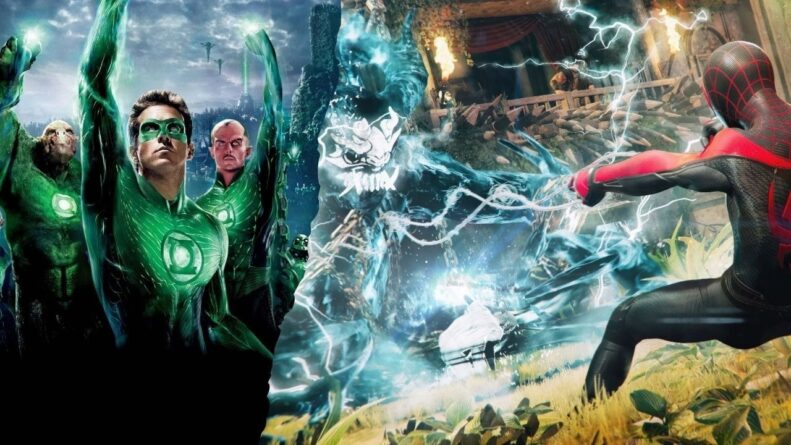
Instead of an exposition sequence explaining how these rings work, the movie establishes (through vet Guy Gardner) that “ring-slinging” Lantern is already up and running on Earth.
A World Where the Green Lanterns

Equally, it’s allowed Green Lantern Corps to function as a kind of back-up law enforcement without becoming comic busy bodies. 

Why Guy Gardner Was the Perfect Choice

Selecting Gardner instead of popular choices such as Hal Jordan or John Stewart was a strategic move. It keeps the “prestige” Lanterns available for the gritty, detective Lanterns series on HBO, and gives Superman a hero who can also stand as a powerful combatant and a source of friction. Gardner is the guy who has the most powerful weapon in the universe, but doesn’t have the social filter required to use it gracefully. 

When Heroism Meets Corporate Branding

One of the most provocative topics of Gods and Monsters is the convergence of heroism and capitalism. In this dimension, there is no traditional Justice League, but rather the Justice Gang — a team financed and organized by billionaire industrialist Maxwell Lord through his company, LordTech.

The Justice Gang Line-Up

Unlike Superman, who flies on the wings of altruism, the Justice Gang is a carefully curated PR machine. Their roster is as much about “brand alignment” as tactical superiority: 

Hero Identity Corporate/Thematic Function
Green Lantern (Guy Gardner) The Volatile Enforcer; provides “alien” legitimacy to a human corporation.
Mister Michael Terrific The Genius; aligns with LordTech’s cutting-edge scientific branding.
Hawkgirl (Kendra Saunders) The Aerial Combatant; provides tactical versatility and mythological ties.
Metamorpho—Rex  The Elemental; represents the boundaries of corporate-sponsored science.

The Meaning Behind Gardner’s Costume

Guy Gardner’s cinematic appearance is a story in oppression. His suit prominently displays the “JL/I” logo which is a reference to the Justice League International comics but in this case it also symbolizes corporate ownership. Most notably, Gardner is seen wearing a jetpack or exoskeleton.

Why a Green Lantern Needs a Jetpack

For a character whose ring lets him fly faster than the speed of light, this is a pretty glaring omission. It could be that LordTech requires the use of their hardware for “branding” purposes, or that Gardner’s use of the ring is being closely tracked and limited by his corporate masters. 

Guy Gardner’s Traumatic Brain Injury that Shaped His Personality

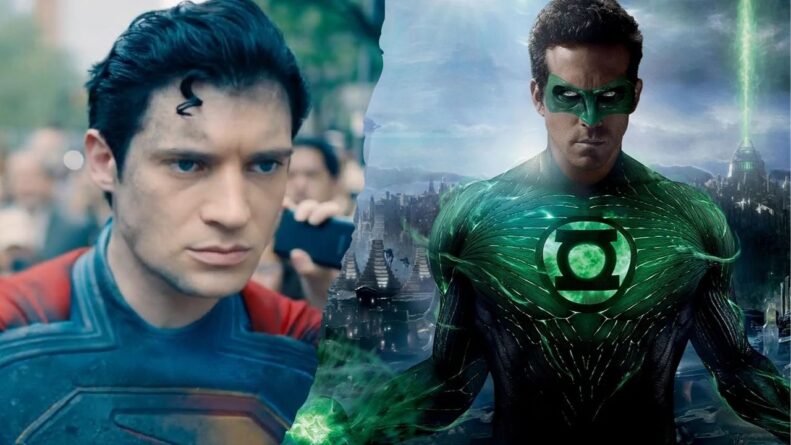
To give Gardner some depth beyond just being a loudmouth, the DCU has drawn on a tragic part of his comic history: Traumatic Brain Injury (TBI).
Guy Gardner’s Traumatic Brain Injury

Nathan Fillion has said that his version of Guy Gardner was “flipped” after being hit by a metropolitan bus and falling into a coma. This brain damage removed his social filters and impulse control. It makes his arrogance not just a personality quirk but a clinical feature of his illness.

The Perfect Opposite of Superman

This makes him the ultimate contrast to Superman. While Clark Kent is the ideal of biological and moral perfection, Gardner is the gritty, broken human reality. A “Sophia Petrillo-esque” inclination to say what he’s really thinking means Lex is a potential PR catastrophe in heels — and a perfect pawn for Lex Luthor.

Luthor is tapping into Gardner’s abrasive, “local boy from Cincinnati” narrative to stoke xenophobia. Guy Gardner is, in Luthor’s telling, the “safe, human” face of the “alien, unpredictable” Superman. 

Geopolitics Conflict in Superman 2025

The conflict of the 2025 Superman movie isn’t an alien invasion — it’s a territorial dispute between two fictional countries, Boravia and Jarhanpur. When Superman takes it upon himself to stop the killing, he breaks international law. 

The Moment Guy Gardner Finally Chooses a Side

Gardner answers to two masters: the Guardians of the Universe (who preach neutrality) and LordTech (who fear liability). However, the cynical Guy Gardner’s shell is eventually broken when he witnesses Superman risk global condemnation to save lives. For him to disobey his corporate overlords and come join Superman in the mud is the heart of his emotional arc. 

Bridging the Gap: The “Lanterns” HBO Series

The DCU employs an “asynchronous timeline” much like Star Wars. So this is why in the new Lanterns title, Hal Jordan (Kyle Chandler) calls himself the “only human Lantern.” 
HBO Series

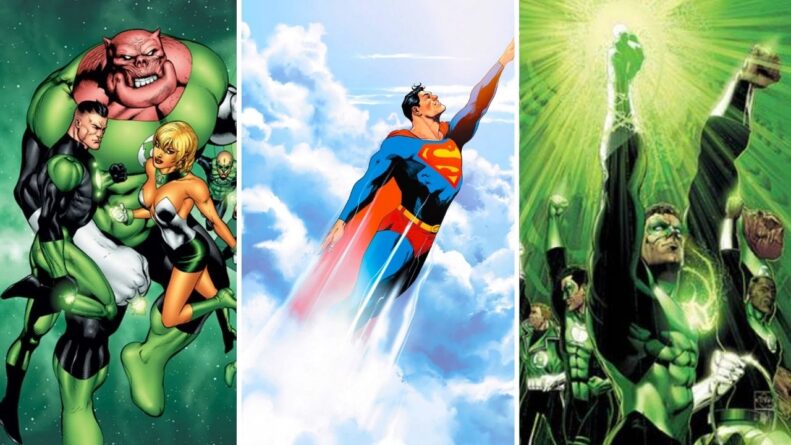
The Evolution of the Green Lantern Legacy

The Lanterns series is a prequel of sorts to Superman. It’s gritty, ‘True Detective’ style procedural where a younger Hal Jordan and rookie John Stewart team up to crack a terrestrial murder mystery that suggests a larger cosmic conspiracy.

  • Lanterns (Past/Present) Hal and John uncover the dark side of Earth’s place in the cosmos.
  • Superman (Future): The world is now flooded with heroes such as Guy Gardner, who have achieved celebrity status as.

This way, viewers can watch the development of the Green Lantern mythos — from Jordan and Stewart’s listen-to-your-color roots to the manic corporatized gamified era of Gardner. 

Read More:-  The Gosling Effect in Star Wars Starfighter – A New Era for Space Opera

Conclusion

Guy Gardner is the “powder keg” of the new DC Universe. He is a personification of the doubt, couldn’t-care-less attitude damage and crass commercialism of today’s world. By lining up Superman with a figure like Greer, Gunn is able to underscore why the Man of Steel is even necessary because it’s not just about nabbing the bruisers, but about encouraging the most fallen among us to remember their earliest vows.

Guy Gardner starts out as a corporate mascot with a short fuse but evolves through his interaction with Superman into a real hero. This integration means the Green Lantern mythos no longer sits as some space-only concept, but rather it has become a face that tells the human story in the DCU. 

Fandomfans delivers entertainment updates from blockbusters movies, series, and amazing characters to you directly.

Mariyam

Articles Published : 72

Mariyam Khan is Fandomfans Content Writer and providing reports and reviews on Movie Celebrities, and Superheroes particularly Marvel & DC. She is covering across multiple genres from more than 4+ years, experience in delivering the timely updates.

Leave a Comment

Your email address will not be published.

Mystery TV Shows Get Cancelled After Season 4 — Westworld, Manifest & The Sinner Explained

Explore why Mystery TV Shows hook audiences early but struggle long-term. Learn how complex plots, high costs, and viewer fatigue lead to cancellations.

Written by: Mariyam
Published: December 24, 2025, 9:17 am
Westworld, Manifest & The Sinner Explained

There is a particular kind of heartbreak unique to the viewer of television in the 21st century. It’s that feeling, typically experienced somewhere around the start of a show’s fourth season, when you begin to realize that the Mystery TV Shows you used to be a rabid fan of—one that spawned a million fan theories—is starting to feel like work.

Insiders in the industry refer to this as the “Fourth Season Curse.” In a contracting “Peak TV” era, with streaming behemoths slashing their libraries, the four-season mark is becoming a brutal natural selection point. This is especially true for “mystery box” shows: the high-concept series that trade in secrets and puzzles and delayed gratification.

But what is it that makes the fourth season the breaking point? And what can the rise and fall of hits like Westworld, Manifest and The Sinner tell us about the future of how we watch TV? 

The Complexity Debt: When the Bill Comes Due

The “mystery box” format, made popular by J.J. Abrams, is an interesting narrative tool that involves curiosity and waiting. It hooks us with a “hook” (the mystery) and then gets us addicted to a “fix” (the answers). Still, creators often rack up what critics call “complexity debt”. Each time a writer reveals a new mystery without answering an old one, they are taking out a loan on the audience’s patience. By Season 4, the debt is usually too high. If the answers don’t live up to decades of fan speculation, the audience doesn’t just get bored—they get angry. 

Feature of Mystery BoxThe Risk Factor
Information WithholdingSpeculative fatigue; the “IQ test” feeling
Non-linear StorytellingNarrative opacity and total viewer confusion
The “Gotcha” TwistPrioritizing shock over character growth

To understand how this curse manifests, we have to look at three very different shows that hit the same wall.

1. Westworld: The Failure of Over-Engineering

Westworld was scripted to be the next Game of Thrones. Instead it turned into a cautionary tale. The showrunners got so obsessed with, I would say, “outsmarting” the internet that the plot evolved into a dense forest of timelines and philosophical gobbledygook.

Westworld
Image Credit: Fandomfans

By season 4, it lost 81% of its viewers. It wasn’t just that it was confusing; it had lost its heart. When a show treats its characters like chess pieces in a logic puzzle, audiences eventually stop cheering for the players. 

2. Manifest: The Survival of the “Netflix Bump”

Manifest is the exception on both counts. The scripted series was canceled by NBC after three seasons when live ratings dropped but then got a second life on Netflix. Why? Because mystery boxes are wonderful to binge-watch, even when they don’t work as appointment viewing.

Manifest The Survival of the Netflix Bump
Image Credit: Fandomfans

By compressing a planned six-season arc into a final, 20-episode fourth season, the showrunners had to cut all the fat and actually ratify. It demonstrated that a “forced ending” is in fact the best antidote to a narrative slump 

3. The Sinner: The Death of the Venue

In contrast to the rest, The Sinner was an anthology. Each season was a new “why-dunnit.” Yet, it still fell victim to the curse. This time the “curse” was financial.

The Sinner The Death of the Venue
Image Credit: Fandomfans

As networks such as USA move away from scripted dramas and toward less expensive reality TV, mid-budget series—no matter how prestige they seem are the first to be cut. 

The Economics of Exhaustion

The Fourth Season Curse isn’t simply the result of shoddy writing; it has to do with the profit motive. In 2025, a mid-tier drama is priced at $4 million to $6 million per episode.

Contract raises: By Season 4 the cast and crew are pricier.

Viewer Attrition: Audiences traditionally, well, went down every year.

The “New” Factor: What streamers are willing to pay for and find value in — is $50 million for a brand-new “hit,” not for continuing an aging series with a niche viewership. 

Read More 👉 Percy Jackson Characters Upgradation Explained: Power, Trauma & Growth

How to Break the Curse

If we want better TV, the creators need to alter how they make their boxes. The most durable shows – for example Breaking Bad or Succession are all character-centric. The “mystery” is just the backdrop; the “show” is the people.

Critics are now claiming “Magic Show” storytelling is superior. Rather than hide certain pieces of information (the Mystery Box), creators should disclose information and allow us to observe as characters react to the consequences. This makes for a sustainable emotional hook as opposed to a maddening intellectual one. 

Conclusion

The age of the “ever-show” is ever-show is over. As budgets tighten and our attention spans splinter, the most successful shows of tomorrow will be those with a defined, limited scope. Ending is just as – it’s just as important to know when to end as it is to know how to begin. 

Dive into the world of entertainment with Fandomfans, our goal is to deliver updates from movies, shows, and interviews.

Mariyam

Articles Published : 72

Mariyam Khan is Fandomfans Content Writer and providing reports and reviews on Movie Celebrities, and Superheroes particularly Marvel & DC. She is covering across multiple genres from more than 4+ years, experience in delivering the timely updates.

Leave a Comment

Your email address will not be published.

Godzilla vs Kong: Hollow Earth and Axis Mundi of MonsterVerse Explained

Godzilla vs Kong delves into Hollow Earth, Axis Mundi, and Titan ancestries. Find out how the MonsterVerse fuses ancient myth with contemporary science. 

Written by: Mariyam
Published: February 27, 2026, 11:50 am
Godzilla vs Kong

Think falling down a spiral of blue, where gravity inverts and ancient titans wander through an upside down world pulled from myth — welcome to the MonsterVerse’s Hollow Earth, first revealed in Godzilla vs Kong. This subterranean world combines ancient myths like Agartha with modern science, making Godzilla vs Kong epic clash into the equivalent of doorways for deep lore. Dive in to see how this secret universe reshapes the franchise’s mythology. 

The MonsterVerse — the hugely profitable shared universe developed by Legendary Pictures and Warner Bros. has found a genuinely smart way to work its mythology. It combined two concepts that have captivated human thought for ages, the Hollow Earth idea and the notion of the Axis Mundi, and molded them into the axis of its narrative. But it didn’t just take these ideas wholesale for the story. It turned them into something different.

MonsterVerse’s Myth-to-Science Fusion

In older lore, hollow or subterranean worlds are spiritual ones meaning they’re afterlives, secret havens for the truly enlightened, or mystical planes along the lines of the fabled Agartha where timeless wisdom is maintained. 

The MonsterVerse takes out the theology and puts in biology. Its subterranean world is not a souls’ destination after death, or a place where secret masters find quiet meditation. It’s a living, breathing, wildly energetic system — the original home of the Titans, those massive beasts like Godzilla vs Kong that dwarf skyscrapers and carve coastlines simply by walking across them. 

MonsterVerse's Myth-to-Science Fusion

Within the franchise’s own internal logic, this subterranean world is more than just the monsters’ home territory. Kabbalistic perceptions describe being as layers or levels of planes of existence. The MonsterVerse does the same thing, but replaces divine judgment and mystical energy with speculative science, evolutionary biology and astrophysics. 

Three-Layered Structure of the MonsterVerse Underground World

The subterranean landscape of the MonsterVerse isn’t just one giant cavern. It’s some very specific portions of the United States divided into three zones, each with its character and function.

The Global Tunnel Network (The Caverns)

It starts with the caverns — the vast, global system of tunnels hollowed out of the Earth’s crust. In a technical sense, you could go from the surface down through these tunnels all the way to the lower regions, but it would take a very long time and push any traveler to his or her limit. They’re more like connective tissue than a thoroughfare. 

The Axis Mundi Zone 

The second layer is what Monarch: Legacy of Monsters calls the Axis Mundi and now we’re off the rails. Consider it a no-man’s-land, in between the world of the surface and the world of the true underground beneath. Gravity isn’t doing what it’s supposed to do here.

The Global Tunnel Network

Physics is contorting in ways that they shouldn’t. Time is slithering and bending all around us. It’s a volatile limbo, not really one world, not really the other, and crossing it requires that you have either special equipment or a willingness to emerge the other side quite rattled. 

Hollow Earth Core (The Titan Homeland)

The third and final layer is the Hollow Earth core itself, where the franchise takes its imagination into overdrive. It’s a reverse landscape of terrifying scope — a world upside down, with its own weather, its own ancient forests and oceans, its own prehistoric creatures, and at its core, a radiant energy source that acts like a mini sun. It’s where the Titans were born, where their ancient civilizations rose and fell, and where the deepest roots of the MonsterVerse’s world lie hidden and waiting. 

How Titans Travel Through the Planet

Travelling from the surface to the depths of the Hollow Earth is not simply a matter of excavating. The distances are immense, and the geology between is basically toxic to anything attempting to make its way through. So how do Titans the size of mountains go under the ocean and come up on the other side of the world? The MonsterVerse’s solution is simple: they don’t go through the rock. They Go Around It.

What Are Vile Vortices?

There are natural spatial rifts scattered across the earth, which the franchise terms Vile Vortices, places where spacetime itself doubles in on itself, allowing one to traverse thousands of miles in just seconds. These are not tunnels or caves. They are worm holes, geological in creation but functioning more like holes in the fabric of space. In that regard, they are the MonsterVerse’s most straightforward representation of the Axis Mundi. 

Where Eliade conceived the Axis Mundi as a spiritual pathway, a channel through which shamans can travel through time and space in trance states, the Vile Vortices take that journey literal and physical. The revered track between the worlds turns into a quantifiable, trackable, scientific classified event. 

How it Connects to Real World Geography

What makes these portal locations in particular brilliant from a narrative perspective is simply where the writers decided to locate them. Instead of creating fictional geography, the MonsterVerse embeds its gateways within real locations that have already grabbed the human imagination, if for very different reasons. 

Real-World Portal Locations in Godzilla vs Kong Lore

Bermuda Triangle — The Vortex Cluster

The Bermuda Triangle, a geographical mystery best known in pop culture, is in the MonsterVerse a region with the highest accumulation of Vile Vortices — which explains a few decades of folklore about ships and planes vanishing into thin air. 

Antarctica — Humanity’s Gateway to Hollow Earth

Antarctica, which has been linked with conspiracy theories about polar access to inner Earth and Cold War conspiracies for ages, is the primary gateway in Godzilla vs Kong that the humans first cross that line and go down to the core. 

Mariana Trench — Godzilla’s Personal Transit Route

The Mariana Trench, the deepest part of any ocean, and a location that even now feels alien to most of the people who look at it, is Godzilla vs Kong personal transit hub — the underwater gate he crosses to reach his ancient temple deep below. 

Real-World Portal Locations in Godzilla vs Kong Lore

Skull Island and Area 51 — Monarch’s Hidden Watchpost

Skull Island, which anchors Kong’s origin story, lies at the center of a web of vortices that had already begun to destabilize when the films took place. Area 51, that longstanding nexus of governmental conspiracy mythology, has been recast not as a secret hangar for alien spacecraft but as a Monarch observation post, monitoring Titan activity underground. Infant Island retains its significance from the original Toho films, effectively keeping Mothra’s mythological home intact from the original continuity within the new one. 

Global Portal Network

Egypt, Kazakhstan and Japan are added to the portal scattering across the globe, reinforcing the idea this subterranean line runs worldwide – under ancient civilizations and modern cities, alike.

The motif here is intentional. By basing its fictional geography on place people have preexisting fears of or find weird, the Monster Verse establishes a reality it seems like has just been under the surface of the real world all along. 

Axis Mundi — The Most Terrifying Place in Monarch: Legacy of Monsters

In most myths the term Axis Mundi is used to refer to a giant cosmic tree or pillar which connects various levels of the universe as a central point for the organization of the cosmos. The Apple TV+ show Monarch: Legacy of Monsters does something different. It’s using that term to designate a unique and horrible place in the Monster Verse’s subterranean landscape. In so doing, Monarch: Legacy of Monsters pulls off one of the franchise’s most intellectually daring aims: it synthesizes ancient cosmological symbolism with the actual mathematics of Einstein’s theory of relativity.

The Most Terrifying

In Monarch, the Axis Mundi, well, it’s not the luxurious, panoramic underground world reminiscent of Godzilla vs Kong. That place is the central core of Hollow Earth, with its inverted terrain and miniature sun that is a whole other ball of place, much deeper and far more stable. 

How Titans Pass Through it

The Axis Mundi is what lies between. It is a shadowy, unpredictable spate of underground pockets trapped between the surface world above and the core beneath in a gravitational standoff. Godzilla vs Kong-sized Titans consistently and seamlessly pass through it as if it were just an airport that everyone must go through like a requisite checkpoint on the journey to somewhere. But for them, that does not become a mere transit stop, it becomes much worse. 

How Beings Get Trapped in Axis Mundi

No one who goes to the Axis Mundi does so intentionally. It is what goes wrong when crossing a Vile Vortex. “The mechanics of these things, as explained by the show, are just trajectory,” to navigate a vortex successfully, you must keep moving constantly downward through the gravitational inversion at its Heart. This sustained direction is what takes you through to the other side, into the Hollow Earth core. 

But if that trajectory is disrupted, the traveler doesn’t bounce back its origin or stop, which means they are stuck there forever. They don’t come out the way they went in. Instead they get ejected sideways, spat out through a horizontal portal into the Axis Mundi instead. It’s not like there’s a dramatic warning. One second you’re plummeting down toward the core. Then all of a sudden you’re someplace else entirely, and getting out isn’t exactly straightforward.

It’s a brilliant piece of spatial storytelling. The difference between making it out safely or being trapped for all eternity is basically just a question of angle. 

Time Has No Meaning in the Axis Mundi

The worst thing about the Axis Mundi isn’t the dark or the shaking. It is what it does to time.

Since the plane is located at the center of conflicting gravitation fields of the surface Earth and the Hollow Earth core, there is a great deal of spacetime warping in that place. This is where Monarch: Legacy of Monsters plucks real physics for its scares. 

Time Has No Meaning in the Axis Mundi

Einstein’s general theory of relativity also tells us that time runs more slowly in stronger gravitational fields — the deeper you are in a gravity well, the more slowly your clock runs relative to someone in weaker gravity. The Axis Mundi takes that principle and turns it into a human tragedy.

Time within the Axis Mundi moves at a pace close to non-existence compared with the surface world. 

Time Dilation in Monster Verse Logic

The series Monarch: Legacy of Monsters actually makes this concrete with two characters whose narratives are involuntarily shattering when you discern what really is happening to them. Dr. Keiko Miura is Fallen into the Axis Mundi in 1959 on a mission that goes disastrously wrong. When she is finally located by the series’ contemporary other leads, she remains unaged. From her point of view, only a handful of weeks have elapsed. From the view of the world, almost sixty years have passed. 

They’re all old or dead. She had her era and it had moved on without her. She is physically unaltered and temporally marooned, living in the wrong era through no fault of her own.

Lee Shaw has a similar experience, believing he’s briefly visited the realm, only to reemerge to find that two decades have been wrenched from his life, transforming everything he’d left behind without his input. 

Read More:- Avengers The Kang Dynasty Not Only Changes Its Title But Also Superheroes Powers

Why Hollow Earth Doesn’t Cause Time Distortion

What makes the whole thing feel scientifically sound rather than arbitrary is that the main Hollow Earth core doesn’t do that. In Godzilla vs Kong the characters take time to explore that world for hours and come back to the surface with no temporal disturbance at all. The reason is that within the universe’s logic, gravity in the core has equalized. Encased within the Earth’s mantle on all sides, the pull of gravity cancels out and time runs at a normal rate compared to the surface.

But the Axis Mundi has no such balance. That is the uneasy midpoint, pinned between the attraction of two huge gravitational forces, and this formless tension is just what makes it so dangerous. 

Myth Meets Physics: The Old Legend of Agartha

To the effects that time dilation creates has an even mythological resonance. A place where people cease to age, where centuries pass outside as moments pass inside is the old legend of Agartha, the subterranean world where ancient, enlightened beings reside exempt from the flow of time on the surface above. 

The Old Legend of Agartha

The Monster Verse reaches that same figure through physics rather than allowed Mysticism, that’s exactly the kind of translation that makes its world-building seem genuinely layered. Godzilla vs Kong translates myth into physics. 

Conclusion

It’s a film about two giant monsters fighting it out on neon lit city streets at a quick glance. But if you look at what the Monster Verse has been quietly constructing under all the spectacle, there’s something much bigger going on here. 

Godzilla vs Kong film is what ancient myth would look like if you rebuilt it using the language of science. It’s spiritual cosmology redrawn with physics. It takes the oldest stories humanity has ever told — stories about gods, underworlds, sacred centers of the universe and reimagines them in a world where those things are real, just not in the way any religion ever told stories about them. The fantasy is still there but it’s been anchored in something that feels almost believable, a kind of speculative realism that makes the world feel simultaneously primitive and futuristic. 

What the Monster Verse has created isn’t fantasy — it’s a parallel cosmogony. Gods are made biological, myths become historical, and divinity converts to energy. The so-called “monsters” were never invaders but they were the planet’s first rulers, shaping Earth for years before humanity came into being.

And that changes everything. The difference is that the true battle in Godzilla vs Kong isn’t Godzilla and Kong — it’s humanity and the reality of who really owns this world. 

Dive into the world of the monster verse with Fandomfans to get the latest updates on theories, characters and facts from movies and series.

Mariyam

Articles Published : 72

Mariyam Khan is Fandomfans Content Writer and providing reports and reviews on Movie Celebrities, and Superheroes particularly Marvel & DC. She is covering across multiple genres from more than 4+ years, experience in delivering the timely updates.

Leave a Comment

Your email address will not be published.