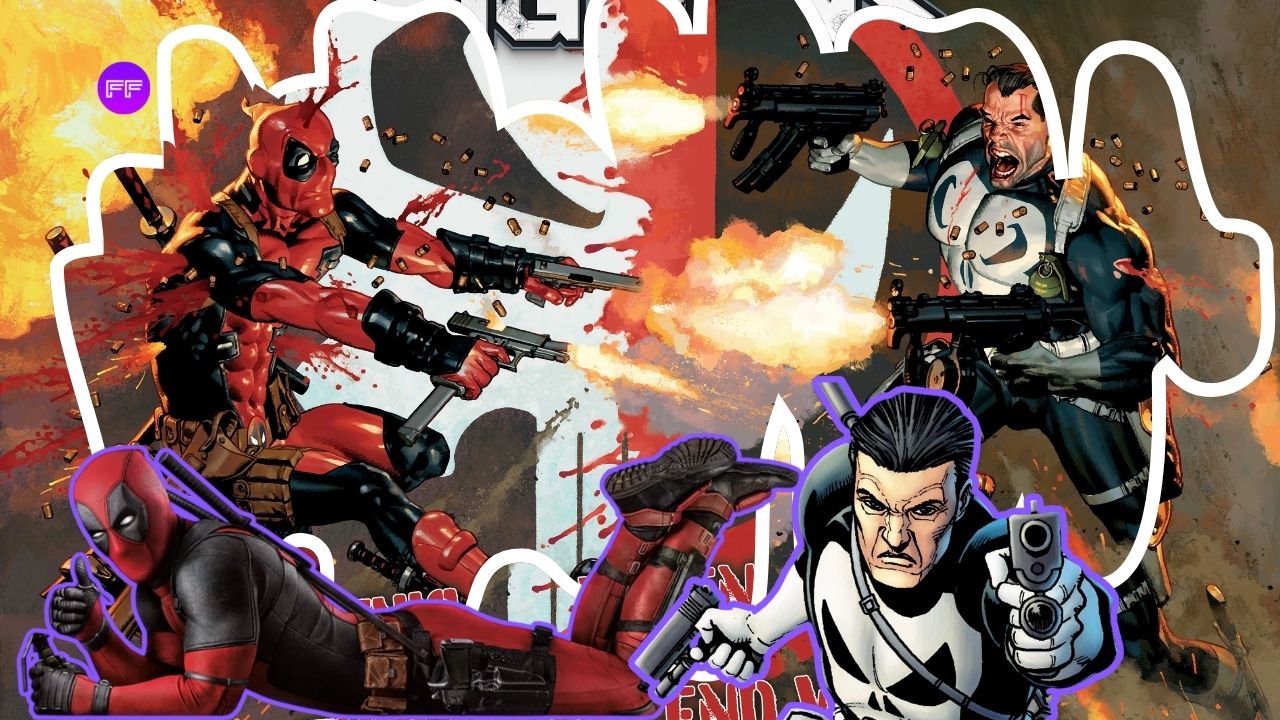
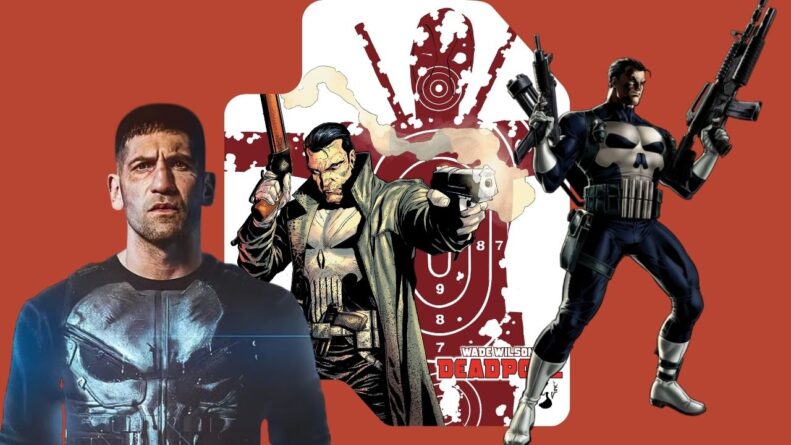
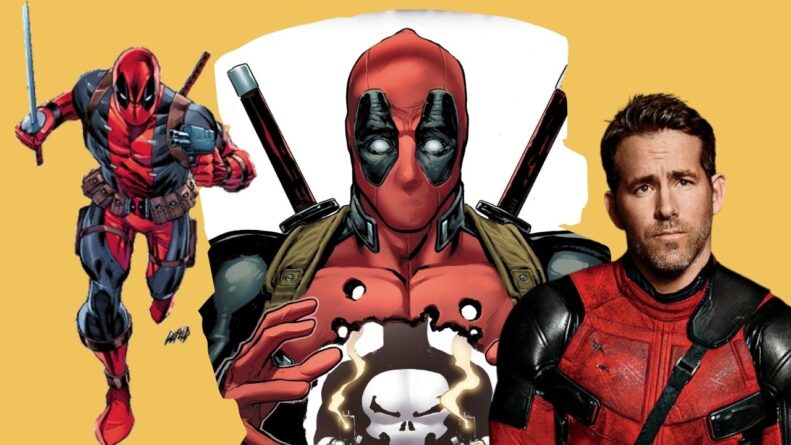
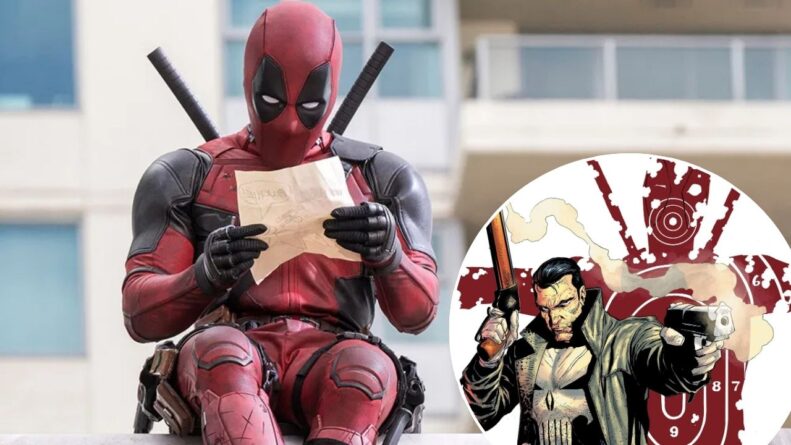
Deadpool and Punisher Big Guns Crossover: Marvel’s Deadliest Heroes Collide

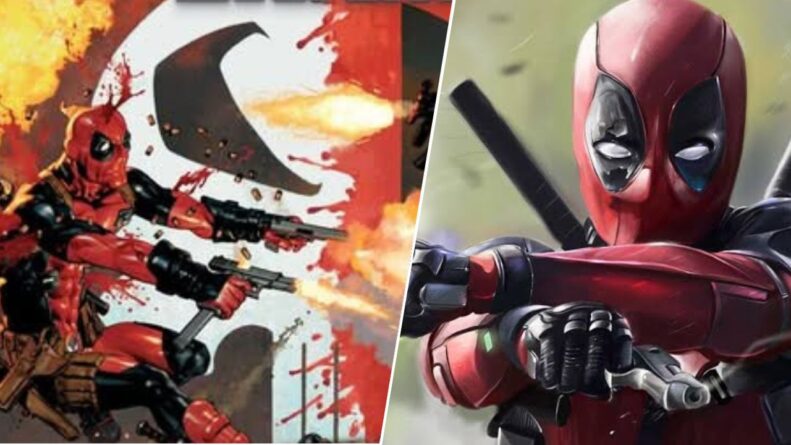
Deadpool & Punisher Big Guns Crossover brings Marvel’s deadliest heroes together in an explosive action-packed collectible adventure.

This September, Deadpool & Punisher Big Guns Crossover bring two superheroes together. This one comic event offers an action-packed performance of two heroes with completely different natures. Dark humour of Wade Wilson who thrives on making his fans laugh, whereas the Punisher barely cracks a smile. A combo of epic collide promises explosive brutal fights and humour that deliver unforgettable moments that marvel fans don’t wanna miss. 

Big Guns arrives at a time when both Deadpool and Punisher solo series have trended toward grittier, more grounded narratives, and that’s likely why this collision seems less like a stunt and more like something bigger. 

Big Guns Crossover Release Schedule 

Mark your calendars, because Marvel isn’t dragging this one out. The carnage kicks off September 2, 2026 with Wade Wilson: Deadpool #8, drawn by Geoff Shaw. A week later, on September 9, Punisher #8 hits shelves with art from José Luis Soares, picking up right where Wade left things burning. The story wraps in October with Wade Wilson: Deadpool #9 and Punisher #9, though Marvel hasn’t locked in exact dates for those yet.

Deadpool & Punisher Big Guns Crossover

Marvel decided to reveal all of this on June 16th — “616 Day,” the publisher’s annual tribute to Earth-616, the main Marvel universe. It’s a small thing but it’s a sign of how much Marvel is playing this as a flagship-style street-level event and not a side story. 

Creative Team of Deadpool and Punisher: Big Guns Crossover

Geoff Shaw handles the main cover for issue #8 of Deadpool, while David Marquez takes the art duties on Punisher #8’s cover. Josemaria Casanovas is also doing a four-part connecting variant set across all four issues, so anyone hunting that full picture across covers will want to track down each part as it drops. 

Read More 👉 Spider-Man: Brand New Day Official Synopsis Reveals Major Villain Details

What is the “Big Guns” Crossover?

This isn’t just a brief cameo of the Punisher or Deadpool. It’s a massive four-part event that weaves directly through the current ongoing series of both characters. The chaos kicks off in Wade Wilson: Deadpool and bleeds over into Punisher.

Deadpool & Punisher Big Guns Crossover

The story has a classic and exciting setup. Deadpool makes a massive mess because things get out of control on one of the biggest mercenary jobs of his life. It attracts The Punisher’s attention who is brutal and known for his serious behaviour. Both are caught up in a single path that sets the stage for a relentless clash where neither man is walking away without a few extra holes in them.

The Masterminds Behind the Deadpool vs Punisher Big Guns Marvel Series

Benjamin Percy is currently writing for both the Deadpool and Punisher solo series. He perfectly balances the crazy humor with high-stake action in Deadpool & Punisher Big Guns Crossover.

Deadpool & Punisher Big Guns Crossover

Percy recently noted that putting these two together was simple math. They are two heavily armed, street-level characters with completely opposite personalities. To bring this violent vision to life, Marvel tapped artists Geoff Shaw (handling the Deadpool issues) and José Luis Soares (drawing the Punisher chapters). According to Percy, they are “the best pens drawing the biggest guns.”

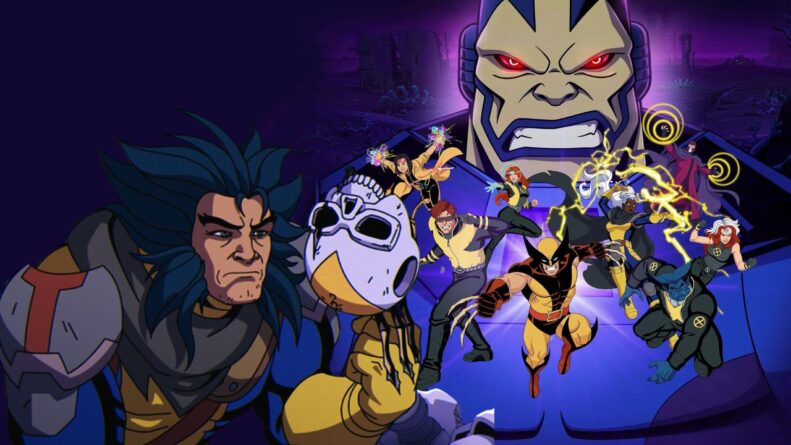
Read More 👉 X-Men ’97 Season 2: Marvel’s Legendary Mutants Return

Why the New Deadpool and Punisher Crossover 2026 is a Must-Read

If watching Frank Castle get increasingly frustrated by Wade Wilson’s endless talking isn’t enough to sell you, Marvel has promised some massive additions to the 616 universe in Deadpool & Punisher Big Guns Crossover run. 

  • A Classic Villain Gets a New Twist: An unknown interloper is stitching the thread behind the conflict, and a duo is ready to return with a fresh new look and role.
  • The “Merc-Mobile”: Deadpool is getting a brand-new rolling headquarters, which is guaranteed to be as ridiculous and dangerous as he is.
  • A Game-Changing Weapon: The storyline revolves around multiple forces converging on an “ultimate weapon” that Percy claims will change the Marvel 616 universe forever.

Deadpool & Punisher Big Guns Crossover

Whether you are here for the intricate plot or just want to see two of Marvel’s most lethal anti-heroes tear each other apart, the Deadpool and Punisher: Big Guns Crossover is shaping up to be the spectacle of the fall.

Read More 👉 The MCU ‘X-Men Reboot’ is Finally Happening: Major Details Dropped

Conclusion 

Deadpool & Punisher Big Guns Crossover has all the ingredients for a classic Marvel team-up – high-octane action, violent slugfests, black comedy, and a mystery with implications that could reverberate throughout the Marvel Universe for years to come. 

With Benjamin Percy writing and some of the best artists in the business illustrating the chaos, this four-part event will be about more than your run-of-the-mill hero vs hero skirmish. If you’ve been laughing along at Deadpool’s unpredictable brand of humor, or wondering how things got so dark with the Punisher’s brutal version of justice, Big Guns is lining up to be one of the biggest comics events for Marvel in 2026 and a must-read for anyone who enjoyed explosive superhero storytelling. 

Dive into the world of entertainment with Fandomfans to get the latest updates from movies, series, and celebrities.

Comments

Leave a Comment

Your email address will not be published.

Alpana

Articles Published: 173

Alpana is Fandomfans Senior Editor across all genres of entertainment. She evolved in the media industry since a very long time, she manages the content strategy and editing of all the blogs. Her focus on story development, review analysis, and research is well-equipped that ensures every article meets the standards of accuracy and depth.

View Profile ↗

From Hell’s Kitchen to Cell Block D: Breaking Down the Epic Jumps in Daredevil Born Again

Daredevil Born Again ending with twists leaves a cliffhanger for season 3. Here is the breakdown to understand what happened with Matt Murdock and Wilson Fisk.

Published: May 7, 2026, 10:20 AM
Last Updated: May 7, 2026, 10:26 AM

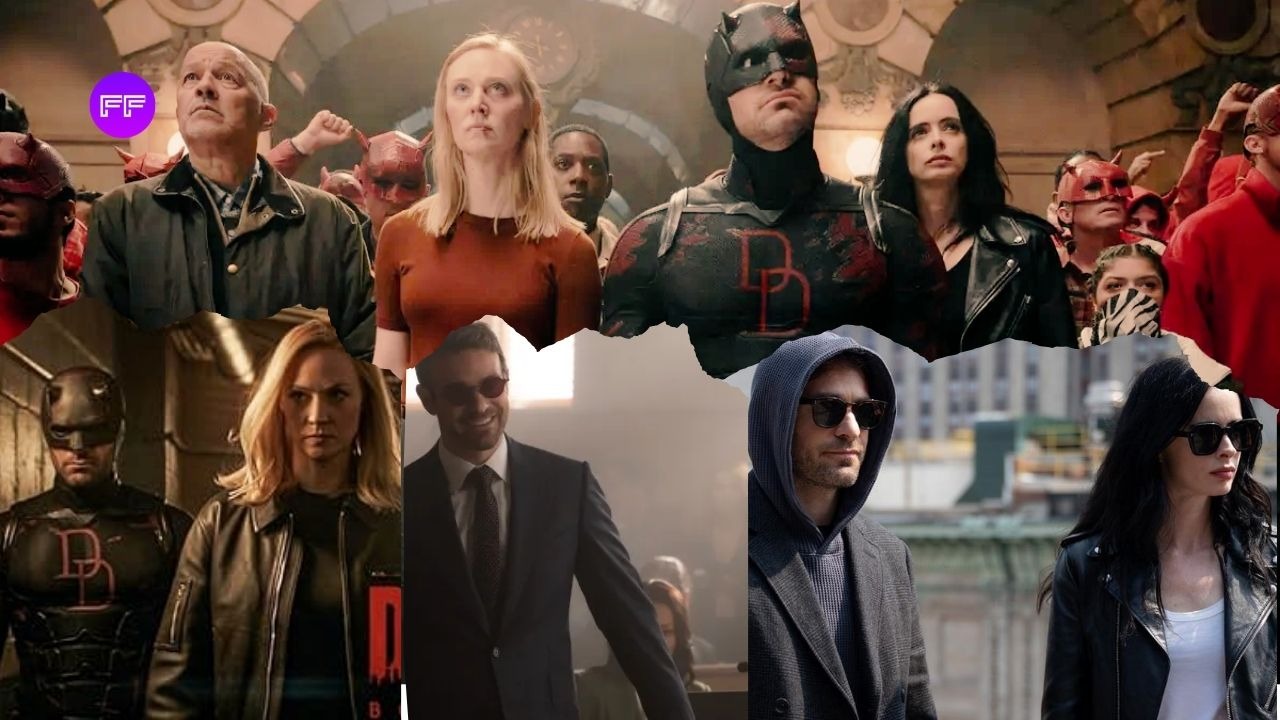
Daredevil Born Again left a biggest twist in the Season 2 finale episode and it’s not like a new storyline, it’s going to change the entire show. Matt Murdock puts his identity at risk for justice and to win Karen’s case. While exiling Fisk and being sent away from New York City can be relaxing but revealing himself as Daredevil puts him at a risk. 

The leap jump from season 1 to season 2 is like taking control and building a resistance to fight against Fisk’s corrupted system. Now the gap between season 2 to season 3 is huge to speculate, season 2 ending hinted for the Cell Block D prison where Matt is trapped. And streets need other allies to fight with gangs.

Let’s dig into the detailed blog to understand the Daredevil Born Again season 2 ending which leaves excitement for the next season. 

How Resistance is Formed in New York City

If we look into the Daredevil Born Again Season 1 ending then we can understand how Season 2 has become such an action-packed. 

By the end of the first season, Wilson became a Mayor of New York City but kept doing underground work as a mob boss and successfully manipulated the public against the masked Vigilante. He built up his ruthless Anti-Vigilante Task Force (AVTF) to lock up every costumed hero in the entire city in a Red Hook Port Prison. 

The evil won but Daredevil aka Matt Murdock isn’t finished fighting. He takes a bullet to protect Fisk from Bullseye, he finally realizes that playing by the book isn’t enough to control these gangs and stop crimes. He came up with a plan along with his partners Karen Page and Frank Castle to change their fate from survival to rebellion. 

Daredevil Born Again Season 2 Breakdown

When Season 2 kicks off, the show doesn’t waste time by chatting in a josie’s bar. It started with gritty stakes, Matt Murdock found out the truth about the political power of Fisk after attacking Fisk weapon cargo called “The Northern Star”. It bridges the gap between Fisk’s Mayor position from Season 1 and his ongoing criminal empire in Season 2.

Matt isn’t just sitting alone as a lone wolf anymore, he is preparing a street-level resistance against a corrupt government. While Matt fights in the shadows, Karen is thrown on trial for her vigilante connections. 

This indicates a dual-threat narrative — Karen’s case in the courtroom becomes a legal war and on the other hand, physical war on the docks.

The Explosive Season 2 Finale: The Ultimate Sacrifice

Daredevil Born Again season 2 gives an absolute cliffhanger when it ends with emotional and legal brawl, it just rewrote the rulebook. 

Saving Karen from Fisk’s hand is an impossible task but both Matt and Kirsten McDuffie are fighting a losing battle. But the most powerful act by Matt in the courtroom is unthinkable, he plays his ultimate trump card to win the battle. 

Matt calls Fisk as a Witness in front of the judge, the jury, the prosecution, and dozens of live television cameras. For what? To reveal his identity (Kingpin) publicly. He outs himself as Daredevil to witness the illegal weapons smuggling on the Northern Star which he attacks. 

This statement of Daredevil puts him at risk and causes chaos around the city. But the revelation actually works to put Fisk’s empire crumbles down and all the charges against Karen are dropped. Fisk is removed from his office by the governor. 

The Last Powerful Action in Daredevil Born Again Nobody Thought It Needed

The streets are full of people who put on their own Daredevil masks and storm the streets to protest. Fisk even shoots protesters, Matt stops the protestors to kill Fisk in revenge. As if it’s not enough, Bullseye appears at the court to kill the Mayor which sets off a panic situation. 

What happened to Fisk? He takes a plea deal and drops his US citizenship, sent away to some remote tropical island. 

At the very end, Matt finally enjoys a peaceful date with Karen at a cafe but the outcome after his secret identity is revealed is tough to walk away clean. The next shocking thing happens when police sirens wail and Matt is arrested for multiple crimes like assault, perjury, and obstruction of justice. 

Matt Murdock Being Locked Away in Ryker’s Island Cell Block D

Why Cell Block D? The final shot showed Matt being locked up in a Cell Block D and left us with an explosive finale that jumps us into Season 3. There’s no official confirmation yet but writers have laid down the breadcrumbs perfectly. 

The story narrative is going to change completely with this ending, it completely flipped the universe. This cell is exactly built for the exact same criminals which are dangerous and powerful, he put there over the years. Now Matt has to fight every single day not for the city to save but for survival.

Read More:- House Of The Dragon Season 3: Release Date, Plot Details Explained, Cast & Characters

What Is Expected in Daredevil Born Again Season 3 

If you are a hardcore comic book fan, you can guess that the next season is setting up for the famous “The Devil in Cell Block D” storyline. Daredevil is like a sitting duck in a prison with his enemies. While the streets of Hell’s Kitchen are wide open for gang wars and underworld criminals. 

Bullseye is still on the run after creating chaos in the courtroom. But there is a chance of Fisk’s revenge returning because he is not the man who is going to sit on a beach drinking margaritas forever. 

We can expect him pulling strings from the shadows in season 3, manipulating the prison criminals to make Matt’s life a living hell. Making bloody plans to take back the city not being the man in the tower but as the exiled king planning his return.

The reunion of street-level Marvel heroes could be uniting for saving the city from drowning. With Matt locked up, Karen and the rest of the crew are going to need help. Making allies with other characters like the Punisher or Jessica Jones is setting up a new course of action to keep the streets safe while Matt is stuck in Ryker’s. 

Conclusion

Daredevil: Born Again has done a masterful job by keeping the storyline of season 3 under wraps and left a shocking twist in the season 2 finale. Its seasonal jumps feel earned with strong narratives and high-stakes. The leap from Season 1 to Season 2 already gave us a formation of resistance against corrupted system. Now the jump from season 2 to season 3 will strip Matt Murdock down to his absolute core. Daredevil without a mask, just a blind man fighting with his old enemies in a cage to survive is going to flip the universe.

But is it enough with the storyline? I don’t think so because we can expect more twists from season 3. We just have to wait for the next season.

Dive deeper into the Daredevil Born Again season 2 ending and season 3 expected storyline with Fandomfans.

Comments

View comments and join the discussion

Mariyam

Articles Published: 87

Mariyam Khan is Fandomfans Content Writer and providing reports and reviews on Movie Celebrities, and Superheroes particularly Marvel & DC. She is covering across multiple genres from more than 4+ years, experience in delivering the timely updates.

View Profile ↗

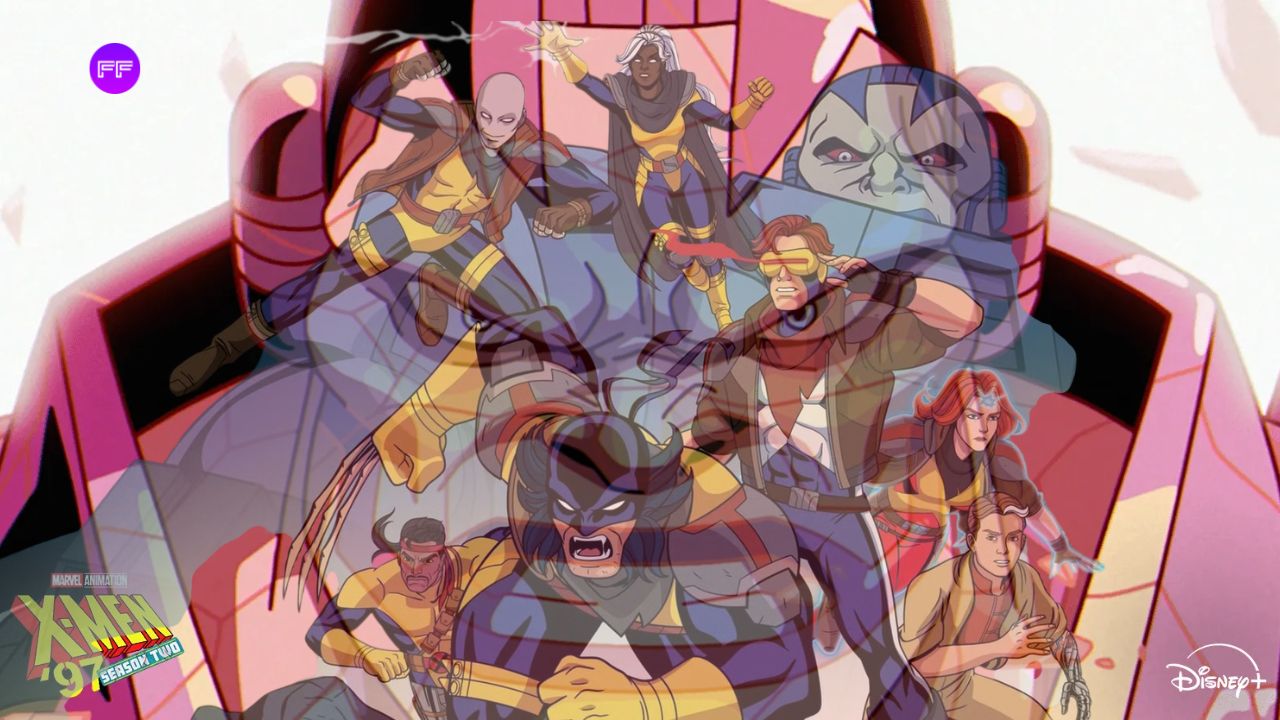
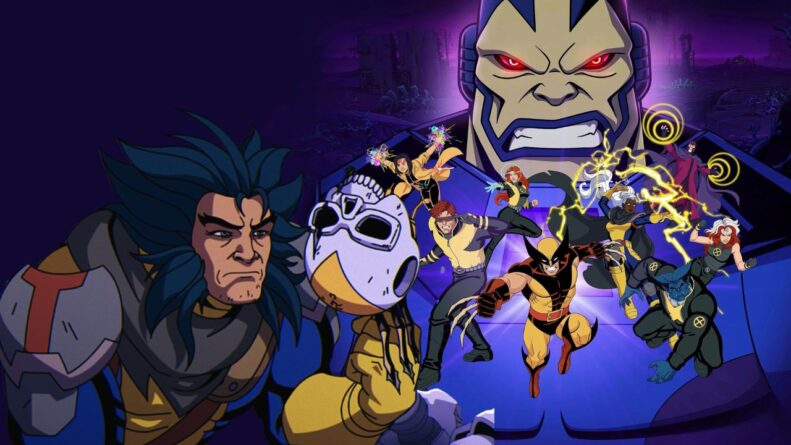
Read Before You Watch: The Official XMen 97 Season 2 Comics Guide

Get ready for XMen 97 Season 2 with the official Marvel comics guide. Discover the essential prelude series and key storylines to read before watching.

A few classic XMen comics that are worth diving into first before watching XMen 97 Season 2. Not because the series demands it, but to understand the depth of these stories that make the new season even more rewarding. When you are going to watch the new season knowing why Rama-Tut is terrifying, the complicated origins of Cable, Cyclops and Jean’s heartwrenching journey of raising a kid is going to wreck you emotionally before the season even hits its stride.

Marvel designed a guide around this season along with the nine new episodes. This makes you understand as Season 2 doesn’t play it safe with a single timeline. Characters are scattered in three different eras — past, present, and future. Ancient Egypt era where everything is started, future nightmare that is almost finished off the world, and present day that’s trying to hold itself together without its most powerful heroes. 

Each of those threads is rooted in a specific chunk of 1990s and early 2000s comic lore, and if you go in blind, you’re going to miss half the emotional weight the writers spent years building. So let’s dive into the depth of the comic guide before watching XMen 97 Season 2.

Why Extinction Day Changes Everything

Before getting into the comics, it helps to remember where Season 1 left off. The finale, now referred to in the show’s canon as Extinction Day or E-Day, ended with Magneto’s orbital sanctuary, Asteroid M, getting caught in a nuclear strike after Bastion weaponized it using Cable’s stolen time-travel technology. The explosion didn’t just destroy the asteroid — it tore open a temporal singularity that swallowed the surviving XMen whole.

Extinction Day Changes Everything

To the world of 1997, the team is dead. Martyrs who sacrificed themselves to save a species that spent years hunting them. In reality, they’re scattered across time, and that scattering is the entire engine of XMen 97 Season 2. Rogue, Nightcrawler, Beast, Magneto, and Xavier land in 3000 B.C. Cyclops and Jean Grey get thrown nearly two millennia into the future. And back in the present, Forge, Jubilee, Sunspot, Bishop, and an adult Cable are left to figure out how to defend a world that no longer has its XMen.

You just have to understand the structure that isn’t random. And you know it after looking at it like a blueprint. 

The Adventures of Cyclops and Phoenix — Your Ticket Into 3960 A.D.

If there’s one book you actually shouldn’t skip, it’s this one. The Adventures of Cyclops and Phoenix, a four-issue miniseries from 1994 written by Scott Lobdell with art by Gene Ha, is the emotional backbone of the entire future timeline in Season 2.

If we look at its Season 1, Cyclops and Jean have to send their little son Nathan forcibly into the future while trying to save him from a techno-organic virus. That infection is injected into the Mister Sinister before he could realise it. That separation broke something between them. Now, in Season 2, they land in that same future — a wasteland ruled by Apocalypse — and they’re reunited with Nathan, who’s being sheltered by a resistance movement called Clan Askani.

This is where the comic becomes essential reading. It’s not just about Cyclops and Jean surviving a hostile future. It’s about them getting an almost unbearable second chance: raising the son they thought they’d lost, knowing the whole time that his destiny is to become Cable and eventually travel back to fight a war against Apocalypse that never really ends. There’s also a deeper layer here if you dig into the lore — Mother Askani, the leader sheltering them, is in the comics an aged version of Rachel Summers, an alternate-reality daughter of Cyclops and Jean. That’s the kind of detail that turns a “oh that’s a nice reunion” scene into something that quietly gutting once you know what’s underneath it.

Read this one before Episode 1. It’ll change how you watch every scene between Scott, Jean, and young Nathan.

Read More 👉  What’s Next for Marvel After the Multiverse Saga? Future Plans Explained 

Rise of Apocalypse — Understanding the Villain Before He’s a Villain

The second must-read is Rise of Apocalypse, a 1996 series that traces En Sabah Nur’s origins as an orphaned rebel rescued by the nomadic Sandstormers tribe and raised under the oppressive rule of Rama-Tut, a time-displaced version of Kang the Conqueror.

Season 2 leans hard into this. When Magneto, Xavier, Rogue, Beast, and Nightcrawler land in 3000 B.C., they don’t stumble into a fully formed tyrant. They meet a young, marginalized warrior fighting for survival against Rama-Tut’s forces — someone they instinctively want to protect. The series is clearly building one of the most thought-provoking ideas: what if X-Men act of goodness is actually the reason that pushes En Sabah Nur on the path to becoming Apocalypse?

Rise of Apocalypse

That question is much more impactful if you have read the source material, as “Rise of Apocalypse” dedicates actual time — and page count, really — to making him more human before his Darwinian “survival of the’’fittest” ethos hardens into something monstrous. Watching Magneto, of all people, end up in a position to mentor him adds a whole other layer, given Magneto’s own history as a genocide survivor turned militant. This isn’t a book you need to memorize, but understanding the broad strokes will make the ancient Egypt storyline land as more than just “cool desert battles with a future villain.”

X-Force (1991) — The Comic Behind Cable’s New Team

As Xavier is not present in the timeline so the burden of protecting mutantkind shifts to Cable. XMen 97 Season 2 has him forming the X-Force group that favors decisive, lethal defense over diplomacy and approaches hook that traditionally defined XMen.

If you read Rob Liefeld and Fabian Nicieza’s original X-Force run from 1991 then you could understand the tonal shift of this series. The nature of the story is heavily leaned towards aggressive and cold action, suggesting that peaceful coexistence isn’t always realistic when the world keeps trying to kill you. You don’t need to read the whole run cover to cover — even flipping through the first handful of issues will give you a feel for why Cable operates the way he does, and why characters like Archangel and Psylocke fit so naturally into this rougher, more combat-focused unit.

It also helps explain the tension the show is clearly building between Cable and Jubilee, who’s trying to hold onto Xavier’s original dream in a present day that increasingly doesn’t have room for it.

Read More 👉  X-Men ’97 Season 2: Marvel’s Legendary Mutants Return

New X-Men (2001) — Why Everyone’s Wardrobe Changed

The series is more focused on visual directions rather than the specific plot. Grand Morrison and Frank Quitely’s New X-Men crafting its heroes in a new look from bright colorful costumes of the 90’s. The expectation of updated designs in X Men 97 Season 2 could be more practical and understated than before that matches the tone of the series.

If you have seen any XMen 97 Season 2 promotional images, you would have noticed that they’re drawing clear inspiration from this influential era of the comics. A less primary-color superhero is a direct visual nod to this run. 

You don’t have to read all of it, but even just scrolling through the art will give you a sense of the aesthetic direction the show is heading. Thematically, it seems to be turning into a rougher, more realistic time period for mutants which goes hand in hand with everything else we’re seeing this season. 

X Men 97 Season 2 is The Official Bridge Comic

Marvel released a five-issue prelude comic, written by Steve Foxe with art by Salva Espin, that was developed in direct coordination with Marvel Studios Animation. This isn’t a loosely connected tie-in. It’s built to fill in the gaps between the two seasons, focusing on Forge, Jubilee, Bishop, and Sunspot as they deal with a terrified public in the immediate aftermath of E-Day.

X Men 97 Season 2

Because animated episodes only have so much runtime, a lot of connective tissue simply couldn’t fit on screen. This comic is where that missing context lives. It covers how the mutant population processes losing its most visible protectors, and it sets the emotional and political temperature for the present-day storyline you’ll see play out with X-Force and X-Factor. If you only have time for one book on this list, honestly, this is the one that most directly sets up what you’re about to watch.

Why References of Comics Matters More Than Usual

Some shows throw comic references in as easter eggs for longtime readers. X Men 97 Season 2 is doing something more deliberate. The show went through a genuinely turbulent production period — original showrunner Beau DeMayo was removed before Season 1 even premiered, and Matthew Chauncey stepped in to lead a significant restructuring of scripts that had already been written. Despite that shake-up, the creative team clearly leaned even harder into comic accuracy rather than pulling away from it, likely to keep the storytelling grounded while so much else behind the scenes was in flux.

That’s part of why this reading list isn’t just marketing fluff. The show is adapting real, specific arcs, not just borrowing character names. Knowing where Cable actually comes from, why Apocalypse isn’t just a generic big bad, and what X-Force represents philosophically will genuinely change how you experience these nine episodes.

Where to Start If You’re Short on Time

If a full reading list feels like a lot before July 1, prioritize in this order:

The XMen 97 Season 2 prelude comic first, since it’s the most directly connected to what you’re watching. Then The Adventures of Cyclops and Phoenix, because the future timeline hits differently once you know Mother Askani’s identity and the weight of what Cyclops and Jean are being given a second chance at. After that, a quick skim of Rise of Apocalypse will do more for your understanding of the 3000 B.C. storyline than any recap video could.

XForce and New XMen are the optional extras — great for context, not essential for following the plot.

Whatever you manage to get through, one thing’s clear: this isn’t a season built for casual viewing. It’s built for people who want to sit with these characters across five thousand years of history and come out the other side understanding exactly why the X-Men’s story never really lets them rest.

Read More 👉 X-Men ’97 Season 2: What Could Make It Marvel’s Next Big Hit?

Conclusion 

XMen 97 Season 2 isn’t just continuing the animated series, it’s expanding the timeline of Marvel storytelling. From character arcs to costume choices, everything is rooted in comic history. That’s why you should read a few comics before starting watching this series. 

You will understand the dangerous villain Apocalypse’s tragic beginnings and Cyclops and Jean’s emotional reunion with Nathan that adds depth to the show when you watch it only by reading a handful of key stories. You don’t need to read every comic. And that’s exactly what makes XMen 97 Season 2 feel like more than a nostalgic revival.

Dive deeper into the depth of the series, movies, and characters to understand your favorite stories. Enter into the world of entertainment with Fandomfans.

Comments

View comments and join the discussion

Alpana

Articles Published: 173

Alpana is Fandomfans Senior Editor across all genres of entertainment. She evolved in the media industry since a very long time, she manages the content strategy and editing of all the blogs. Her focus on story development, review analysis, and research is well-equipped that ensures every article meets the standards of accuracy and depth.

View Profile ↗

What’s Next for Marvel After the Multiverse Saga? Future Plans Explained 

Explore Marvel’s plans after the Multiverse Saga, including new MCU storylines, upcoming heroes, Avengers projects, and future phases.

Published: Jun 25, 2026, 1:06 PM
Last Updated: Jun 25, 2026, 1:12 PM

Marvel gave us powerful superheroes stories for years, now the Multiverse Saga has expanded the MCU into the new world by introducing alternate timelines, parallel universes, returning legacy characters, and stakes. One question is hovering among fans: what comes next for Marvel after the multiverse? 

But as thrilling as those prospects have been, they’ve also left a lot of viewers wondering what direction Marvel can go next. With Avengers: Secret Wars anticipated to be the conclusion of the current era, stares are already turning to what comes next. From the much-anticipated introduction of the X-Men to a renewed emphasis on grounded storytelling and supernatural adventures, Marvel’s post-Multiverse future might just reimagine the franchise for an all-new generation of fans. 

How ‘Secret Wars’ Simplifies Everything

Secret Wars is genuinely the pillar of multiverse saga as it destroys a collapsing multiverse and then mends the surviving shards together into a unified, coherent reality. 

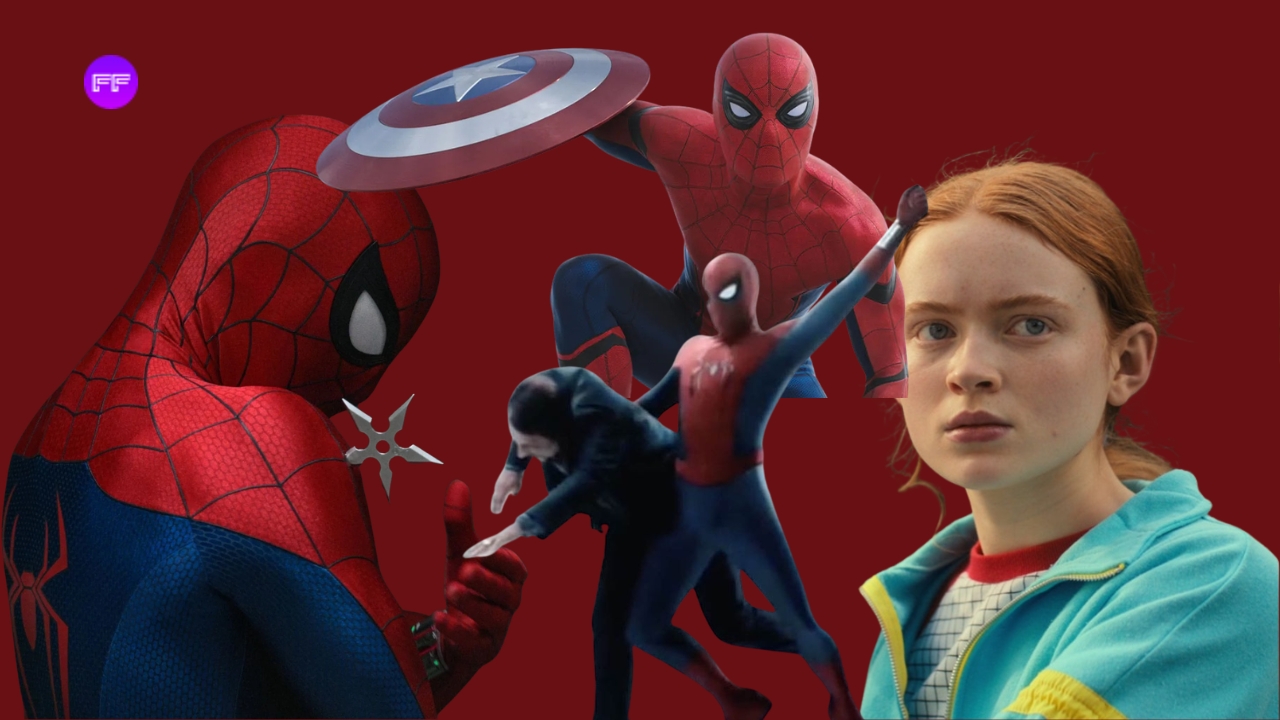
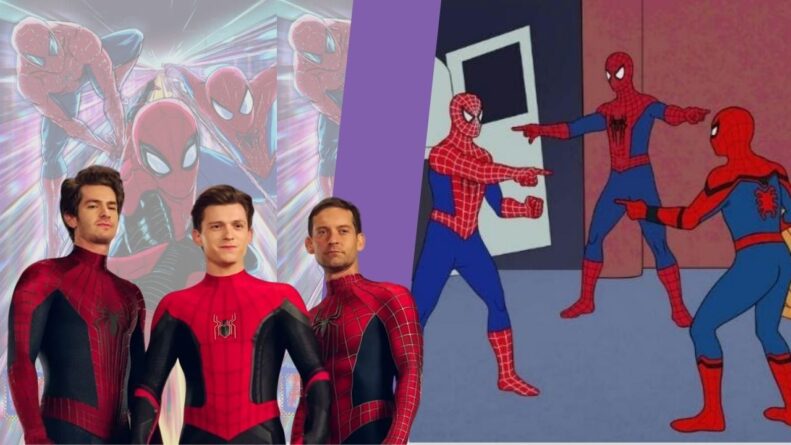
Marvel Studios is highly likely to follow this exact blueprint. Let’s face it—the Multiverse Saga has given us unforgettable moments (hello, three Spider-Men sharing the screen), but it also brought a heavy dose of “variant fatigue.” When any deceased character can just pop up from an alternate Earth, the emotional weight of character choices can start to feel a little cheap.

Jean Grey struggles

The stakes worked of Infinity Saga because everything occurred on a single timeline. The Multiverse Saga expanded the sandbox, but it watered down the tension. Avengers: Secret Wars will serve as a narrative “soft reboot,” giving Feige the opportunity to merge different universes, retire aging heroes with grace, and introduce a brand new, streamlined timeline where everyone coexists. 

No more explaining complex timeline mechanics to casual moviegoers. No more multiverse rulebooks. Just one universe, one shared history, and a clean slate.

Welcome to the Mutant Saga: The X-Men Take Center Stage

There are signs that suggest the third chapter would be the Mutant Saga because Spider-Man: Brand New Day also shows the physical mutation of Peter Parker and Wolverine resurrection in X-Men’ 97, all signs indicate towards it.

For years, fans have been wondering when the X-Men would officially integrate into the main MCU. We’ve had teasing appetizers—Professor X in Multiverse of Madness, Beast in The Marvels, and the glorious R-rated chaos of Deadpool & Wolverine. But Phase 7 is where the mutants stop being multivariate cameos and start running the show.

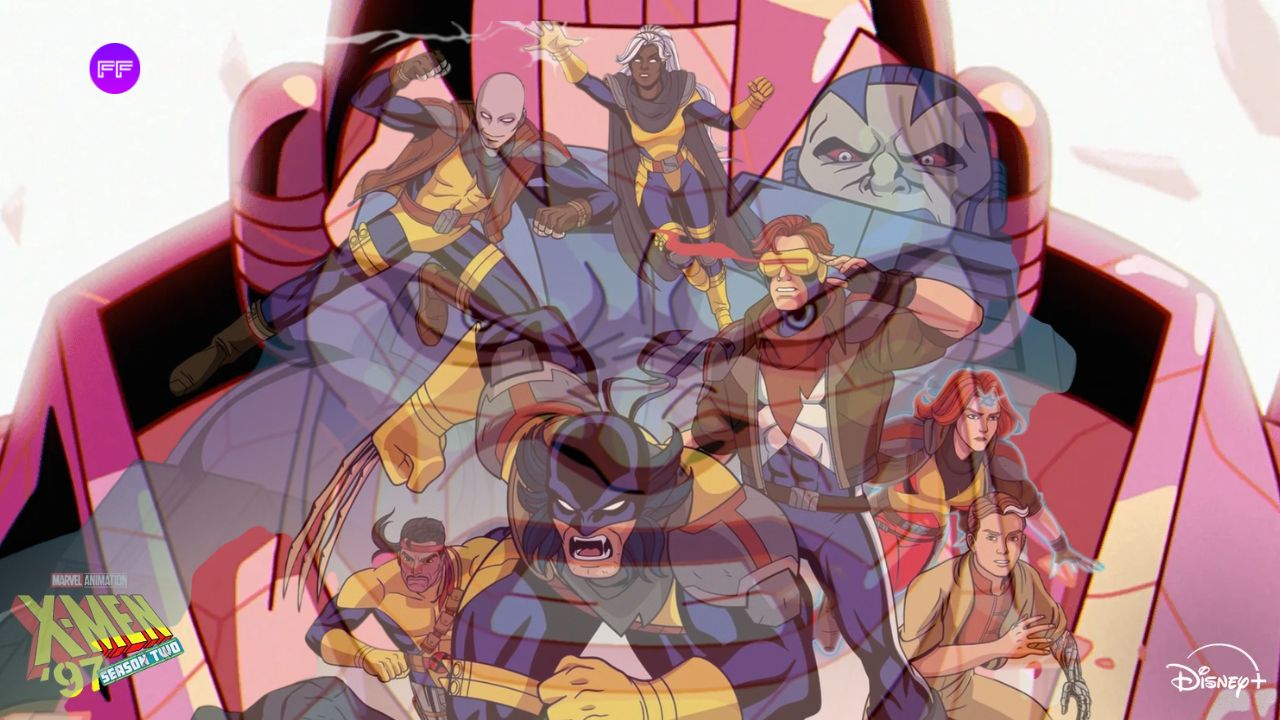
X-Men '97 Season 2

Let’s mention all the signs that suggests Marvel’s mutant-focused future plans:

  • A New X-Men Movie: Jake Schreier who works in Thunderbolts is directing a new live-action X-Men film.
  • A Powerhouse Creative Team: Lee Sung Jin (Beef) and Joanna Calo (The Bear) are onboard to pen the reboot, suggesting a highly character-driven, incisive and realistic interpretation of the group rather than a pure CGI extravaganza. 
  • The New Narrative Anchor: Instead of Earth’s Mightiest Heroes defending the planet from interdimensional cosmic threats, the central conflict of Phase 7 will likely pivot to the classic Marvel trope: the political and social tension between regular humans and mutants.

The New Trinity: Who Leads the Next Generation?

With the original Avengers largely retired, passed on, or scattered across space, the post-Endgame MCU has occasionally felt a bit leaderless. The post-multiverse era will finally establish the new narrative pillars of the franchise. Instead of Iron Man, Captain America, and Thor, the next grand saga will likely be anchored by a new trinity:

  • Spider-Man (Tom Holland): Peter Parker is expected to enter a more mature phase of his journey through Brand New Day Fresh, hero carrying the responsibility of protecting New York on his own terms. 
  • Reed Richards (Pedro Pascal): After arriving from an alternate 1960s reality in The Fantastic Four: First Steps, Mr. Fantastic will naturally fill the scientific leadership void left by Tony Stark.
  • Cyclops / Wolverine: As the X-Men establish their place in the MCU, whichever mutant steps up to lead the newly formed X-Men will instantly become a political and strategic heavyweight in the global MCU landscape.

Grounded Realities and Legacy Sequels

One of the loudest critiques of recent Marvel phases was that the scale got too big, too fast. We went from street-level heroes fighting arms dealers to cosmic entities holding up the sky, leaving the universe feeling fragmented.

Marvel’s post-Multiverse direction suggests a conscious effort to pull things back down to Earth. Marvel has already started scaling back its yearly output by tightening its creative strategy with strong characters, coherent storytelling, and the upcoming Phase 7 slate reflects a return to focused, character-driven storytelling.

Black Panther 3

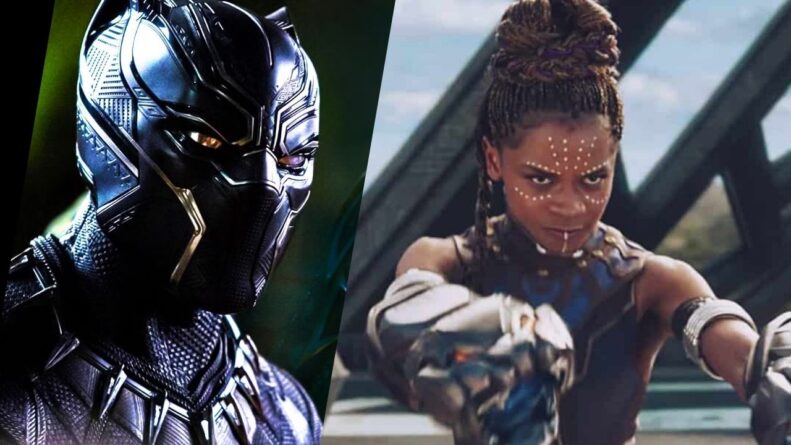
Shuri The Black Panther Refined

Ryan Coogler is reportedly developing the next chapter of the Black Panther saga, which is heavily suggested to be one of the very first movies to kick off the post-multiverse era in 2028. After the massive, reality-altering events expected to define Secret Wars, a return to the political intrigue, rich culture, and grounded stakes of Wakanda is exactly what the MCU will need to recalibrate its tone.

Shang-Chi 2

Destin Daniel Cretton is still widely expected to return for Shang-Chi 2 after a long wait. A post-multiverse MCU could be the better space to grow the characters that are so compelling with mythology and hidden mystical corners of Marvel’s world. Exploring martial-arts underworld of the MCU without having to worry about a timeline collapsing overhead.

Stepping Into the Shadows: The Supernatural Corner

While the mutants handle the sci-fi and political drama, Marvel has another long-gestating corner ready to explode: the supernatural.

We’ve seen pieces of this puzzle scattered around for years—Moon Knight, Werewolf by Night, and the mystical underbelly of Agatha All Along. While certain projects like the Blade reboot have famously taken their time in development, Marvel hasn’t given up on its darker side.

Many industry insiders believe Phase 7 will finally deliver the Midnight Sons—a team of supernatural anti-heroes handling the magical, occult threats that the Avengers are entirely unqualified to fight. A team consisting of Blade, Moon Knight, Ghost Rider, and perhaps a magic-weary Doctor Strange would offer a completely different tonal flavor to the franchise, swapping out the colorful cosmic playground for gothic, high-stakes horror.

Read More:- Spider-Man: Brand New Day Settles the Debate: Peter Parker Has What Jean Grey Never Could

Why the Post-Multiverse Future is Bright

Change is hard, and saying goodbye to an era defined by endless, chaotic possibilities can feel bittersweet. But the end of the Multiverse Saga isn’t a funeral for the MCU; it’s a graduation.

By closing the book on alternating timelines, Marvel is giving itself—and the audience—the greatest gift possible: consequences. When there is only one universe left standing, death matters again. Actions have permanent weight. We get to stop staring at the sky wondering which nostalgic portal is going to open next, and start looking at the characters standing right in front of us. Whether you are counting down the days for the X-Men to finally suit up in yellow spandex or you just want to see a straightforward detective story on the streets of Manhattan, the future of Marvel is shaping up to be more focused, more grounded, and incredibly exciting.

Conclusion

The next chapter for Marvel looks like it dedicates less of its time to making the universe bigger and more making the universe stronger. The likely reset following Secret Wars gives Marvel a rare opportunity to streamline its storytelling, to usher in new flagship heroes, and finally bring iconic teams like the X-Men into the heart of the MCU. 

But the character focus Black Panther 3, Shang-Chi 2 and potentially supernatural tales signals a return to character-based stories with more razor-sharp stakes and emotional payoffs. When the next era is officially announced, one thing is clear: Marvel is getting ready to move beyond multiverse saga and create a more unified, focused universe—one that could very well lead us for another decade of blockbuster storytelling. 

Dive into the world of entertainment with fandomfans to get deeper details and theories of your favorite character, movies, and series.

Comments

View comments and join the discussion

Alpana

Articles Published: 173

Alpana is Fandomfans Senior Editor across all genres of entertainment. She evolved in the media industry since a very long time, she manages the content strategy and editing of all the blogs. Her focus on story development, review analysis, and research is well-equipped that ensures every article meets the standards of accuracy and depth.

View Profile ↗

Best Superhero Books and Superhero Comics Books to Read

Discover the best Superhero Books and superhero comics to read, featuring iconic heroes, thrilling stories, powerful villains, and must-read adventures for every fan.

Walk into a comic shop right now and you’ll notice something that hasn’t happened in over a decade: DC and Marvel are both mid-reinvention at the same time. DC blew up its own continuity with 2024’s Absolute Power event and rebuilt half its roster from the ground up in a new line called the Absolute Universe. Marvel did something similar on its side, resetting the Ultimate Universe and letting Jonathan Hickman rewrite Spider-Man’s entire life before issue one even hits shelves. 

If you’ve been searching for superhero books that are worth your dollars and your minutes, this is one of the best jumping on points we’ve had in years and every single superhero comic on this list either began or ended in the past two years, so don’t expect to find anything ancient in the boxes here. 

The 10 Best Superhero Books to Read About Superheroes

Every pick below is either a currently-running series with a strong first volume or a maxiseries that’s already finished. Prices reflect standard trade paperback pricing at time of writing; flag anything below as unconfirmed and double-check at checkout, since comics pricing shifts with printings.

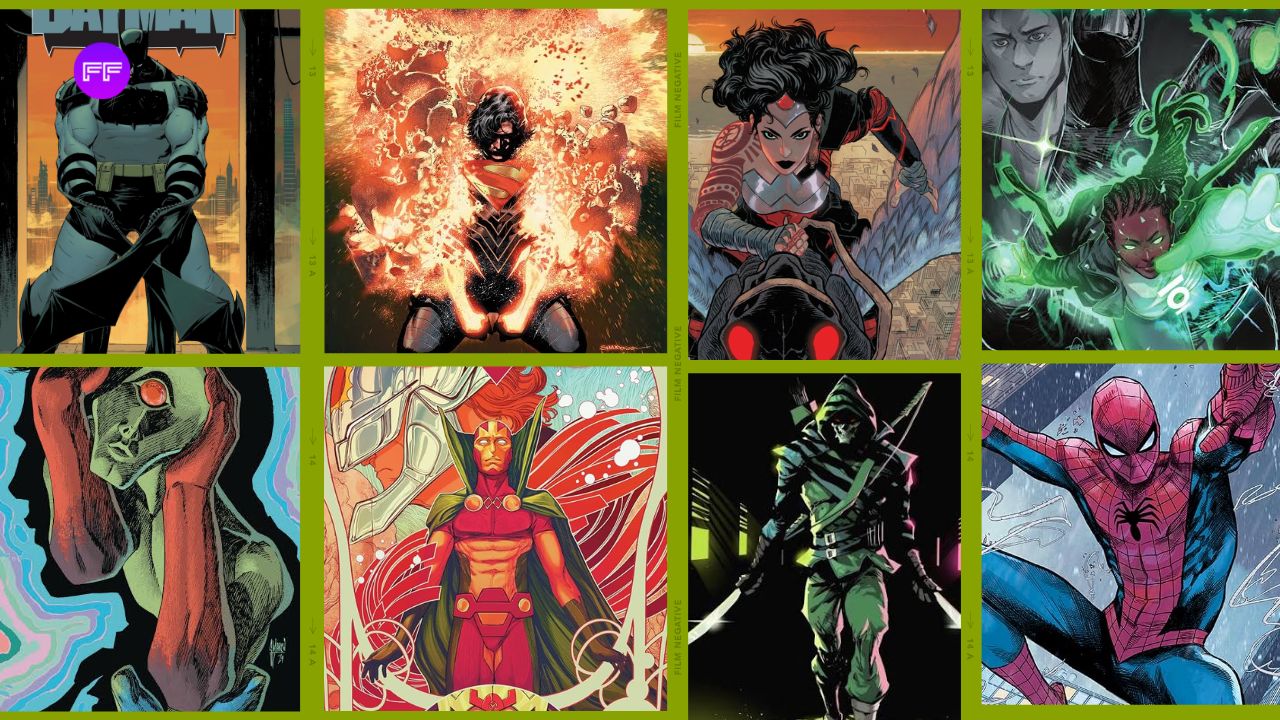
1. Absolute Batman Vol. 1: The Zoo 

Writer: Scott Snyder | Artist: Nick Dragotta | Publisher: DC Comics | Collects Absolute Batman #1–6 | Price: ~$17.99 paperback (standard Absolute-line price; confirm at your retailer) | Best for: readers who want the flagship title everyone’s talking aboutThe Zoo
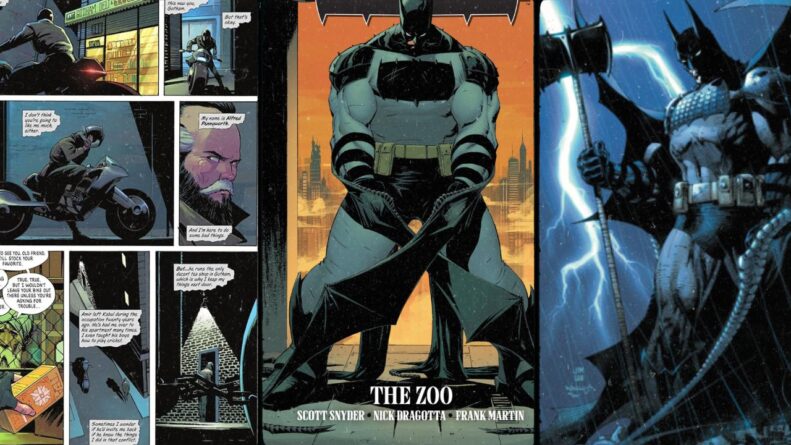
 

This is the book that kicked off DC’s Absolute Universe in October 2024, and it’s still the line’s biggest seller. Bruce Wayne here isn’t a billionaire — he’s a civil engineer with no manor, no Alfred, and a much rougher relationship with Gotham’s underworld. Snyder and Dragotta play that blue-collar card strong and it makes the character truly feel like something you haven’t read before. However, it’s a build-up, not a payoff like the marketing suggests, and if you’re expecting classic Batman gadgetry, the first half a dozen issues are more about building the world than throwing punches. 

2. Absolute Superman Vol. 1: Last Dust of Krypton 

Writer: Jason Aaron | Artist: Rafa Sandoval | Publisher: DC Comics | Collects Absolute Superman #1–6 | Price: $17.99 paperback | Best for: readers who want Superman with real stakes and no safety net
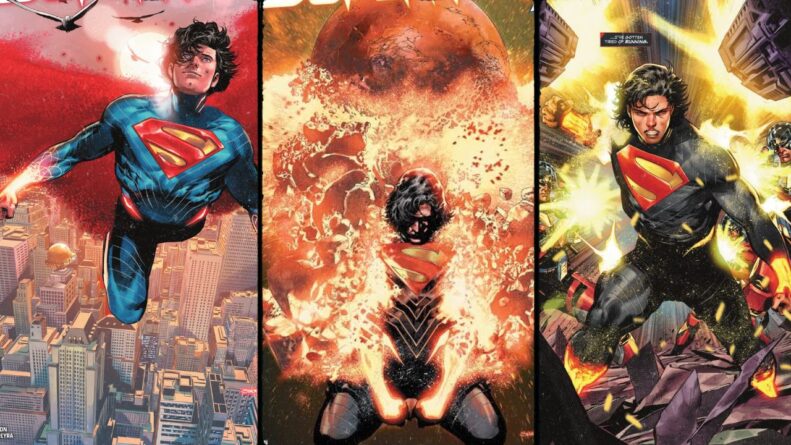
Last Dust of Krypton

Aaron strips away everything comfortable about Clark Kent — no Fortress of Solitude, no found family waiting at home — and drops him into conflict with a shady multinational corporation almost immediately. It’s a more streamlined and aggressive version of the character but it still keeps his decency intact. There is a limit to this as whiplash is felt: certain readers feel the corporate-conspiratorial plot is a step down from ambition compared to Snyder’s Batman – even if Sandoval’s art is ever-consistent. 

3. Absolute Wonder Woman Vol. 1: The Last Amazon 

Writer: Kelly Thompson | Artist: Hayden Sherman | Publisher: DC Comics | Collects Absolute Wonder Woman #1–7 | Price: $17.99 paperback, published August 2025 | Best for: readers who want horror and dark fantasy in their superhero comics
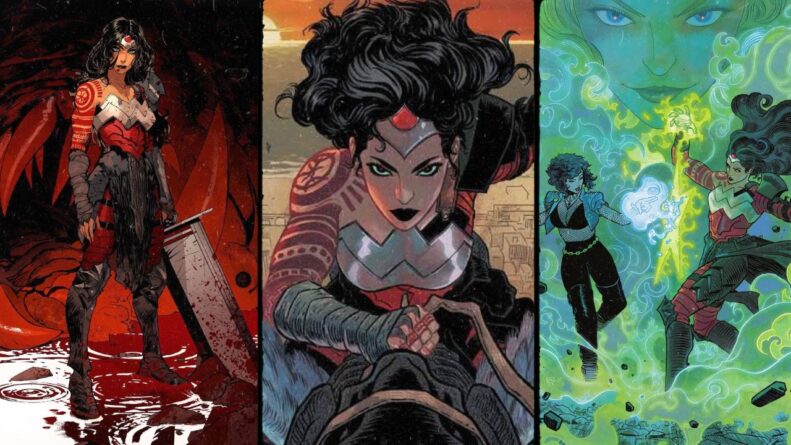
The Last Amazon 

Thompson takes Diana’s known Themysciran childhood and turns it on its head by raising her in the underground with Circe rather than among the Amazons. The result is less a classic superhero origin story and more one of supernatural terror. Sherman’s art is just as eye-catching, with sharp linework and disquieting colors that lend the entire book a unique visual voice. 

The only negative is that this is not the Wonder Woman that most casual fans know. For a more standard Themyscira-centric origin story, Wonder Woman: Year One is the superior place to begin. 

4. Absolute Green Lantern Vol. 1: Without Fear 

Writer: Al Ewing · Artist: Jahnoy Lindsay | Publisher: DC Comics | Collects Absolute Green Lantern #1–6 | Price: $17.99 paperback, published December 2025 | Best for: readers who want cosmic sci-fi over street-level stakes
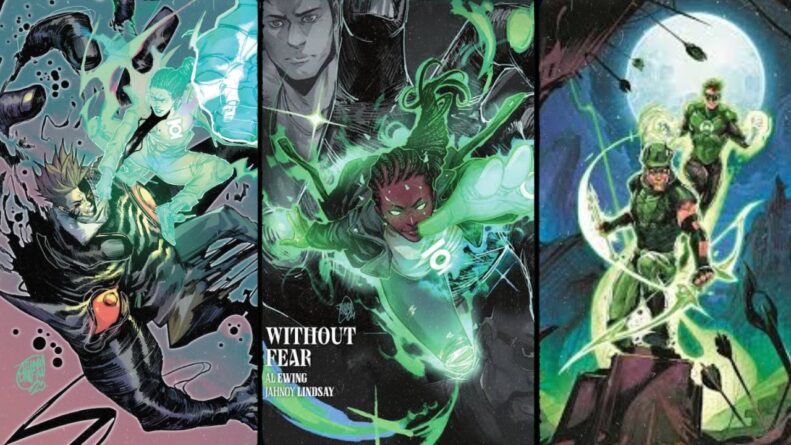
Without Fear 

Ewing shakes up Green Lantern mythology with an alien monolith that arrives in a remote Nevada town and starts judging its citizens. Hal Jordan, Guy Gardner, John Stewart, and Jo Mullein are all dragged into the fray, but they come out of the gate as ordinary people and not Corps members. 

It’s an ambitious, high-concept set up, perfect for Ewing’s gift for weird, cosmic storytelling. The downside is that having four future Lanterns to balance means the first volume is a lot of world building before any one character really takes the stage. 

Read More 👉  Best Spider-Man Marvel Comics for New Readers

5. Absolute Martian Manhunter Vol. 1: Martian Vision 

Writer: Deniz Camp | Artist: Javier Rodríguez | Publisher: DC Comics | Collects Absolute Martian Manhunter #1–6 | Price: $17.99 paperback, published November 2025 | Best for: readers who want something genuinely strange
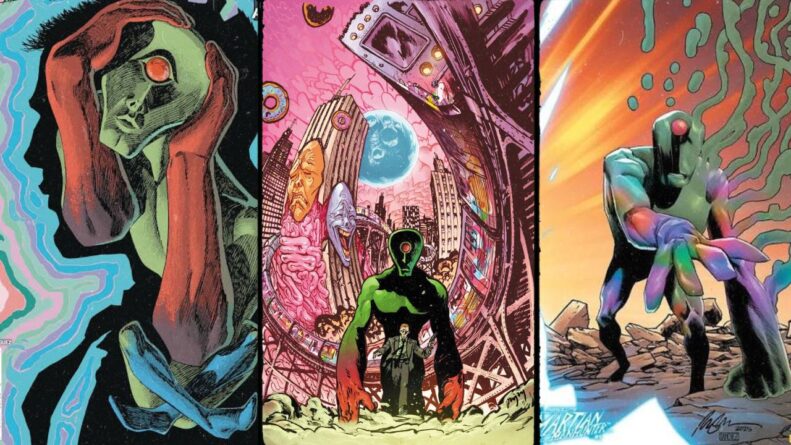
Martian Vision 

This is the trippiest book on the list. FBI agent John Jones gets his mind overwritten by an alien consciousness that perceives reality in ways the human brain can barely process, and Camp and Rodríguez lean fully into that disorientation rather than softening it for accessibility. It’s one of the more purely inventive superhero comics being published right now. The limitation is exactly what makes it interesting — the fractured, psychedelic structure asks more of a first-time reader than any other book on this list.

6. The New Gods Vol. 1–2: The Falling Sky / Edge of Darkness 

Writer: Ram V | Artist: Evan Cagle | Publisher: DC Comics | Collects The New Gods #1–12 (complete maxiseries) | Price: $17.99 paperback per volume (unconfirmed — verify at checkout) | Best for: readers who want a complete story, not an ongoing commitment
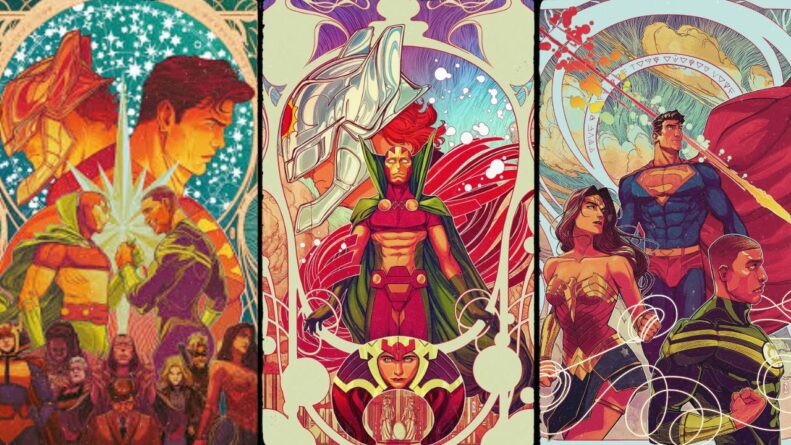
The Falling Sky Edge of Darkness 

It is the one selection on this list you can consume all at once with no cliffhangers, as the entire 12-issue story arc was published from February 2025 to January 2026 and ended as a complete and very satisfying epic. Ram V reinvents Jack Kirby’s Fourth World mythos as Scott Free and Big Barda make their way through the jungle of new parents while an astral prophecy is poised to rip New Genesis and Apokolips asunder. 

It’s honestly one of the best-reviewed superhero books in the past year. The catch: Ram V takes for granted, if not outright expects, that readers already know who the New Gods are, so it isn’t the softest introduction to characters like Darkseid, Orion, and Mister Miracle. 

7. Absolute Green Arrow #1 

Writer: Pornsak Pichetshote | Artist: Rafael Albuquerque | Publisher: DC Comics | Single issue only — no trade collection yet | Price: standard single-issue price, likely $4.99–$5.99 (unconfirmed) | Best for: readers who want to get in on day one of a new series
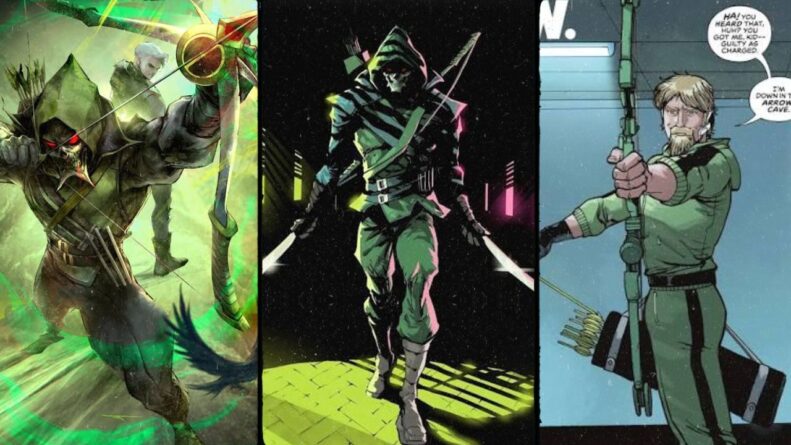
Absolute Green Arrow

This is the freshest book on the list — issue #1 hit shelves in May 2026 and sold well enough to warrant a second printing within weeks. Oliver Queen is murdered before the story even starts, and the mystery of who’s using his old Green Arrow gimmick to hunt down corrupt billionaires is told largely through Dinah Lance’s eyes rather than Oliver’s. It’s a sharper, more mystery-driven angle than past Green Arrow runs. The obvious limitation: there’s no collected edition yet, so you’re buying single issues or waiting, and it’s still unclear whether this becomes an ongoing series or stays a miniseries.

8. Ultimate Spider-Man by Jonathan Hickman Vol. 1: Married with Children 

Writer: Jonathan Hickman | Artist: Marco Checchetto | Publisher: Marvel Comics | Collects Ultimate Spider-Man (2024) #1–6 | Price: $17.99–$19.99 depending on retailer | Best for: readers who want Marvel’s version of a no-baggage relaunch

Hickman brings Spider-Man to a startlingly new place: Peter Parker wasn’t bitten by a radioactive spider. Rather, he was raised, married MJ, had children, and he lived a normal life – until Iron Man comes calling and gives him the powers he never had as a kid. 
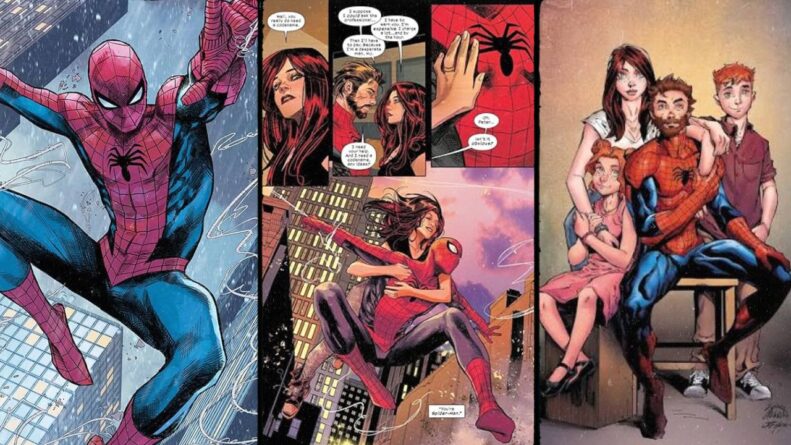
Spider-Man by Jonathan Hickman

The series was named Best Marvel Comic of 2024 by The Hollywood Reporter, and the 24-issue run is ending in February 2026, allowing new readers to experience the whole story without having to pause for the next issue. This is a much more down-to-earth, family-focused Spider-Man than the one most fans think of as the wall-crawler. This is not the quintessential teenage Peter Parker story, if that’s what you want. 

9. Fantastic Four Vol. 1: Save Everyone 

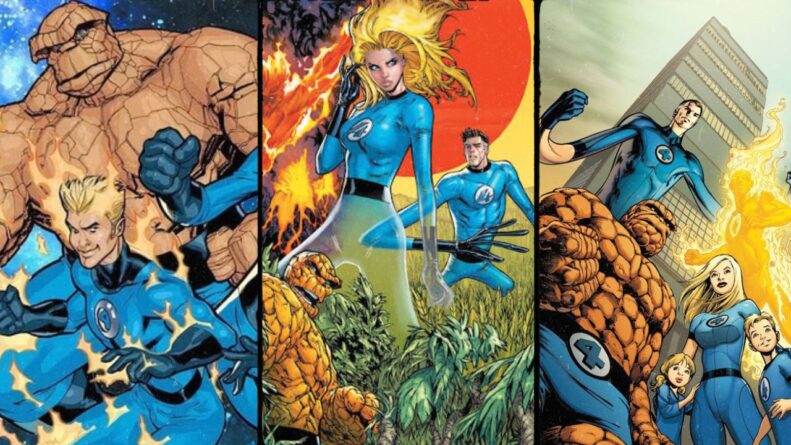
Writer: Ryan North | Artist: not fully confirmed at time of writing — check current solicitation | Publisher: Marvel Comics | Collects Fantastic Four (2025) #1–5 plus the Free Comic Book Day 2025 Fantastic Four story | Price: unconfirmed, expect the standard $15.99–$17.99 Marvel trade range | Best for: readers who want smart, structurally clever superhero comics

Ryan North’s Fantastic Four run has developed into one of Marvel’s most consistently acclaimed ongoing books, and this 2025 volume is the latest jumping-on point after the team’s Doctor Doom arc. North’s scripts lean on clever high-concept plotting — time loops, killer Doombots, alternate worlds without losing the family dynamic that makes the FF work. But north’s take is dialogue-heavy and idea-dense, which some readers love and others find slows the pacing compared to a more action-first book like Absolute Batman.

Read More 👉   Will There Be Another Spider-Man Movie? Here’s Everything Confirmed So Far

10. The Ultimates by Deniz Camp Vol. 1: Fix the World 

Writer: Deniz Camp, with Jonathan Hickman | Artist: Juan Frigeri | Publisher: Marvel Comics | Collects Ultimates (2024) #1–6 and Ultimate Universe (2023) #1 | Price: unconfirmed, expect standard $17.99 Marvel trade pricing | Best for: readers who want Marvel’s Avengers-level team book without 60 years of continuity
The Ultimates by Deniz Camp

Camp writes this as the flagship team book of Marvel’s rebuilt Ultimate Universe, with a search for answers eventually pulling in a reimagined She-Hulk. It’s been one of the better-reviewed launches in the Ultimate line, praised for treating its ensemble cast with real weight instead of just cameos. 

Because it’s tied so closely into the wider Ultimate Universe relaunch, it reads best after — or at least alongside — Ultimate Spider-Man, rather than as a fully standalone entry point.

Where to Buy These Superhero Comics

Don’t route all your buying through one retailer. Trade paperbacks on this list should be available through Barnes & Noble, Amazon, Books-A-Million, and Target, and if they’re not on your local comic shop’s shelves, they can most likely special-order them for you.  

With respect to individual issues, primarily Absolute Green Arrow#1, which has no collected edition as of yet — your local shop or a site such as the regional comic shop locator will in general provide you with a copy sooner than you’d get it from a restock of a big box retailer. Digital readers can find nearly everything here through Marvel Unlimited or DC’s digital storefront the same day it hits print.

Which One Should You Actually Start With?

If you’ve never read a superhero comic and want the safest, most talked-about entry point, start with Absolute Batman Vol. 1: The Zoo — it’s the best-selling book on this list for a reason. If you want a complete story with no waiting, go with The New Gods or Ultimate Spider-Man by Jonathan Hickman, since both are already finished. 

If budget matters and you only want to try one book before committing further, skip the newest single issue (Absolute Green Arrow) until a trade collection exists, and pick up one of the $17.99 Absolute Universe volumes instead — they’re consistently the best per-dollar entry point on this list. Whichever you choose, all ten of these are proof that 2026 is a genuinely good year to start reading superhero comics again.

Read More 👉   Why Spider-Man: Brand New Day Just Changed Everything for the MCU

Conclusion 

Superhero comics are going through a surprisingly great moment for new readers this very moment. DC’s Absolute Universe and Marvel’s reconstructed Ultimate Universe both provide new starting points that don’t demand decades of continuity, and complete stories like The New Gods and Ultimate Spider-Man let you read from cover to cover without waiting for the next issue. 

If you want the safest first pick, Absolute Batman Vol. 1: The Zoo is the obvious choice, while Ultimate Spider-Man is best for fans of a more down-to-earth, family-themed version of Peter Parker. For something weirder and more sinister or cosmic, there’s Absolute Wonder Woman, Absolute Martian Manhunter, and Absolute Green Lantern, all very different rides. Since all ten books provide fairly new entry points, 2026 is a great year to jump into superhero comics. 

Comments

View comments and join the discussion

Alpana

Articles Published: 173

Alpana is Fandomfans Senior Editor across all genres of entertainment. She evolved in the media industry since a very long time, she manages the content strategy and editing of all the blogs. Her focus on story development, review analysis, and research is well-equipped that ensures every article meets the standards of accuracy and depth.

View Profile ↗

XMen 97 Reading Guide: Every Marvel Comic You Need to Read

Discover every Marvel comic you need to read before and after XMen 97. Explore the essential storylines, characters, and iconic issues that inspired the series.

Published: Jul 8, 2026, 12:45 PM
Last Updated: Jul 8, 2026, 12:51 PM

If you are currently watching XMen 97 and want to go deeper as it doesn’t come from nowhere. The show’s most exciting moments borrow straight from the Marvel comics, some of them are truly amazing. Writers take a comic arc that ran for a year and compress it into twenty minutes making it the most iconic show ever.

If you want to understand where this version of the XMen actually comes from, follow the list and start reading important XMen 97 comics in order. Everything started to make sense, but you must have patience for that.

1. “Dark Phoenix Saga” — XMen: Dark Phoenix Saga (paperback) or Uncanny X-Men #129–137

This is the most essential comic that builds the character’s arc of Jean Grey, her transformation into the Phoenix that becomes the emotional backbone of the entire show. If you want to know which comic is still considered one of the greatest superheroes then pick Dark Phoenix Saga — Chris Claremont and John Byrne wrote this back in 1980. 

The show brings back this story as unfinished business since fans didn’t like the original ending. This is what makes people go crazy about the show so read this first to know what happened to Jean on the moon.

2. The early Claremont/Byrne run — XMen Epic Collection: Second Genesis

This XMen epic collection is already running and introduced modern XMen before Dark Phoenix Saga even happens. This 70’s comic is the origin of Wolverine, Storm, and the team dynamic arc. Once you read it, you will understand why in the show they talk like they are the real family. Every relationship, joke, and grudge in XMen 97 was built here first. 

3. “God Loves, Man Kills” — XMen: God Loves, Man Kills (standalone graphic novel)

God Loves, Man Kills is a short comic written by Claremont that actually gave the world the “mutants as a metaphor for prejudice” which every XMen adaptation follows and pulls back this tone and this one becomes a moral spine of the entire franchise from 1982.

XMen 97

XMen 97 pulls directly from this book’s tone whenever it deals with anti-mutant hysteria, and Magneto’s arc across the season only makes sense if you’ve read how his philosophy was originally built here.

4. The Genosha slavery arc — Uncanny XMen #235–238, sometimes collected as “Genosha”

The show’s early handling of Genosha as a haven for mutants, and everything that goes wrong there, has roots in a comic arc where the island nation was actually a slave state built on mutant labor. If you are watching the show then you should have been thinking that Genosha’s fate hit hard but if you read the comic the tone is darker. 

The massive destruction of thousands of mutants on that island was a heartbroken tragedy that the show didn’t even fully present yet.

Read More 👉 Read Before You Watch: The Official XMen 97 Season 2 Comics Guide

5. “Mutant Massacre” — XMen: Mutant Massacre 

Mister Sinister dispatches the Marauders to slaughter the Morlocks — a group of mutants living beneath the streets of New York City, resulting in one of the bloodiest massacres in XMen history. XMen 97 really doesn’t explain all the reasons why Mister Sinister is so scary. The storyline in this comic will tell you why. It reveals just how ruthless and dangerous he truly is rather than being a mysterious evil.

6. “X-Cutioner’s Song” — XMen: X-Cutioner’s Song 

Take a time for this one because it is the bigger storyline, originally spanning four different comic series. XMen 97 draws on several elements from this crossover, it will help you fully understand about the time travel and Summers family legacy.

XMen 97

This narrative helps explain one of the more bewildering aspects of XMen mythos. If you’re looking for answers on exactly how Cable, Stryfe, Cyclops are related, this book has them. The epic feud between Cable and Stryfe culminates, and the convoluted, time-travel riddled past of the Summers family is revealed. 

7. “Fatal Attractions” — XMen: Fatal Attractions 

This story arc shocks everyone because it turned the both character’s arc. Since XMen 97 places so much emphasis on Magneto’s redemption, this arc gives a clear understanding on how low their trust goes that any chance of reconciliation becomes impossible. The moment where Magneto tears the adamantium from Wolverine’s skeleton marks the history in the entire franchise of XMen. 

8. “Onslaught” — Onslaught Omnibus or Onslaught: X-Men

Based on how the first season of XMen 97 ends, everyone can guess that Onslaught will play a role in the future. The 1996 crossover event introduced Onslaught which created Xavier’s suppressed rage and trauma and became one of the most dangerous threats the XMen and Avengers have ever faced together.

XMen 97

If you want to understand how powerful Xavier’s psychology is, this one will surely help you. This is where the show is headed.

9. “Bishop’s Crossing” — Uncanny XMen #282–287

The entire essence of Bishop is that he has survived a mutant genocide in the future that hasn’t taken place yet and that fear is exactly what he brings to every encounter in the show. This is the arc where his history, as well as a fixation with stopping a specific kind of betrayal, are first described, and it puts a lot of his paranoia in the show into context. 

The Comic That Never Got Made: Morph’s History

A quick note for readers confused about Morph — the character barely existed in the comics under that name and role. Most of Morph’s presence in XMen 97 is original to the animated continuity, built from a character called Changeling who died early in Marvel history. There’s no single comic to point you to here, and that’s fine. Not every emotional gut-punch in the show has a comic-book receipt.

Read More 👉 A Knight of the Seven Kingdoms: The Story Fans Didn’t Know They Needed

Conclusion

The show is built to work without any comic knowledge at all. This guide is for viewers who finished an episode and wanted to go deeper, not a prerequisite. The most important comic is The Dark Phoenix Saga which is an absolute emotional and narrative center of the entire franchise. 

This XMen 97 Marvel Comics guide will help you understand the deeper narrative that already lived in comics. You can read them one-by-one and they are all available on Amazon.
Stay tuned to Fandomfans for more guides and updates from movies, series, celebrities.
Comments

View comments and join the discussion

Mariyam

Articles Published: 87

Mariyam Khan is Fandomfans Content Writer and providing reports and reviews on Movie Celebrities, and Superheroes particularly Marvel & DC. She is covering across multiple genres from more than 4+ years, experience in delivering the timely updates.
View Profile ↗

Spider Man Brand New Day Settles the Debate: Peter Parker Has What Jean Grey Never Could

Spider Man Brand New Day settles a long-running Marvel debate, showing why Peter Parker possesses a key strength that Jean Grey never truly had.

Published: Jun 23, 2026, 11:20 AM
Last Updated: Jun 30, 2026, 4:17 AM

Jean Grey almost seems to have powers, a woman who has hosted the Phoenix Force itself which has given her access to cosmic-level abilities capable of destroying entire star systems, the most powerful telepaths and telekinetics in Marvel history. Spider Man, by contrast, has proportional strength, sticky hands, and a knack for one-liners. Comparing them is impossible but Spider Man Brand New Day has quietly made the case that Peter Parker has something Jean Grey has never fully had, and probably never will.

Spider-Man’s greatest strength is not his powers, but his ability to stay in control. And in a shared universe where power without control has repeatedly ended in catastrophe, that single trait might be the most underrated superpower in the entire Marvel roster.

The Phoenix Problem Jean Grey Can Never Fully Escape

Jean Grey’s entire publishing history is, in some sense, a story about a woman who keeps losing herself. The Dark Phoenix Saga did not happen once. It has echoed across decades of X-Men storytelling because the underlying problem was never solved, only postponed. Jean’s power is cosmic in scale, but her ability to regulate that power has always been fragile, dependent on external safeguards: Professor X’s psychic shielding, the M’Kraan Crystal, death and resurrection cycles that reset the clock without actually fixing the wiring.

This is not a criticism of Jean as a character. It is the entire point of her tragedy. Her strength is inseparable from her vulnerability. Her challenge of controlling grows as her power grows. This tension has defined many of her most important storylines since Chris Claremont has had to grapple with the same unresolved question: what if Jean Grey won’t be able to handle the Phoenix force under control?

Read More 👉 Deadpool and Punisher Big Guns Crossover: Marvel’s Deadliest Heroes Collide

Peter Parker’s Power Has Never Outgrown Peter Parker

Unlike Jean Grey, Spider Man’s powers are always in control by the man behind the mask. Peter Parker has fought with powerful symbiotes and villains but his core abilities of strength, agility, spider-sense, never put his senses at risk. Spider-Man’s powers have never threatened to take control of who he is. 

This matters more than it sounds like it should. A huge amount of Spider Man’s appeal, and a huge amount of his narrative stability, comes from the fact that his power has a ceiling Peter himself can actually manage. He gets stronger gear, smarter tactics, better web fluid formulas, but he is never one bad day away from accidentally incinerating a solar system. His mistakes are human-scale. They cost lives sometimes, devastatingly so, but they don’t threaten cosmic annihilation.

Peter Parker's

Brand New Day leans directly into this. The new arc strips Peter back down to fundamentals: a guy with a job, a strained personal life, and a set of powers he understands inside and out after two decades of trial and error. There’s no cosmic entity riding shotgun in his nervous system. There’s no countdown clock to a forced transformation into something unrecognizable. Whatever goes wrong in his life goes wrong because of choices, not because his own biology turned against him.

Why It’s the Advantage Jean Can’t Buy

Jean Grey raw power is not actually the most valuable trait in a long-running superhero but a Control over itself. A superhuman who can bend their abilities according to their morale rather than being consumed by it is structurally more stable and more heroic and easier to write more consistently for that character. 

Spider Man’s advantage isn’t that he could beat Jean Grey in a fight. He almost certainly couldn’t, and no serious reading of either character pretends otherwise. The advantage is narrative and psychological. Peter Parker has never needed an entire team of telepaths standing by in case his own power turns on him. He has never needed to die and come back just to reset a corrupted internal system. His worst-case scenario has always been “Peter makes a bad call,” not “Peter becomes an extinction-level event.”

Spider Man Brand New Day

That distinction sounds abstract until you actually compare the stakes of their respective failure states. When Spider Man fails, a building falls, someone gets hurt, a relationship breaks. When Jean Grey fails at containing the Phoenix, planets have died. Those are not the same category of risk, and the gap between them is exactly what makes Peter’s failures recoverable in a way Jean’s sometimes aren’t.

Read More 👉  What Marvel’s X-Men Lineup Could Look Like in the MCU

How Spider Man  Brand New Day Actually Proves It

The current Brand New Day run doesn’t make this argument through a crossover fight or a direct confrontation between Peter and Jean. It makes the argument through restraint. The storyline deliberately resets Peter to a stripped-down status quo, no recent cosmic baggage, no Venom symbiote drama bleeding into every page, no marriage retcon hanging over his head. Just Peter, his powers, and his choices.

And the story works specifically because Peter’s powers don’t need a leash. There’s no subplot about him losing control of his own abilities. There’s no ticking clock toward Peter “going dark.” Every conflict in the arc comes from his decisions, his relationships, his double life catching up with him, not from some internal force threatening to hijack his body.

Spider-Man

Compare that to how X-Men stories involving Jean almost always need a containment plan built into the premise. Cerebro shielding. Phoenix suppression tech. A team on standby specifically because Jean’s own power is treated as an ongoing risk factor, not just a tool she uses. Brand New Day never needs any equivalent safety net for Peter, because his powers were never written as a threat to himself in the first place.

It’s quite a premise that Marvel can build an entire arc around Spider-Man’s powers without once treating those powers as the danger. Try writing a major Jean Grey arc with the same constraint, and you will find it almost impossible to avoid touching the Phoenix question at all.

Why This Makes Peter More Reliable as a Hero, Not Just More Relatable

It’s easy to chalk this up to “Spider Man is more relatable because he’s just a regular guy.” That’s true, but it understates the point. Reliability is an advantage here rather than Relatability. 

Spider Man can show up in street-level crime stories without a containment problem, that’s the type of self-control hero put into a story. His power scales to the situation because his control over it never wavers. Jean Grey, on the other hand, often has to be deliberately written around her own ceiling. Writers either avoid pushing her power to its limits, or they commit to another Phoenix arc and accept that the story is now, on some level, about her losing herself again.

Peter never forces that choice. That flexibility is the direct result of the advantage Brand New Day highlights: power that stays in proportion to the person holding it.

Read More 👉 X-Men ’97 Season 2: Marvel’s Legendary Mutants Return

Isn’t This Just Because Jean Has More Power?

A fair counterargument is that Jean Grey struggles to control her power because Phoenix is far beyond anything Spider Man has ever encountered. Spider Man’s control looks easy because he never loses himself, so comparing their situations isn’t entirely equal. That’s made the perspective more interesting as Jean’s constant battle with immense power makes her character remains one of the most compelling tragic figures in the X-Men mythos.

Jean Grey struggles

But that argument actually reinforces the original point rather than undercutting it. The advantage isn’t that Peter is stronger or braver. It’s that his power was built at a scale he can actually master. Jean was handed power at a scale no one, arguably not even her, can fully master. One of those setups produces a hero who can be trusted with almost any story. The other produces a recurring tragedy that has to be written carefully every single time. Both can be great storytelling. Only one of them is a genuine advantage in the practical, day-to-day sense of “can this character function without a built-in failure mode.”

Conclusion 

Jean Grey will always be the more powerful character on a raw numbers basis, and nothing about Brand New Day changes that math. But power was never the category where Spider Man had a shot at winning this comparison. Control was. And Brand New Day proves, almost by omission, that Peter Parker’s powers have never needed a leash, a containment plan, or a reset button.

Stability is more important than strength. And in a universe built on cosmic stakes and constant escalation, a hero who never has to be the thing his own team worries about might be rarer, and more valuable, than anyone gives him credit for.

Dive into the world of entertainment with Fandomfans to get the latest updates from movies, series, and celebrities.

Comments

View comments and join the discussion

Mariyam

Articles Published: 87

Mariyam Khan is Fandomfans Content Writer and providing reports and reviews on Movie Celebrities, and Superheroes particularly Marvel & DC. She is covering across multiple genres from more than 4+ years, experience in delivering the timely updates.

View Profile ↗

Everything You Missed From ‘Spider-Man: Brand New Day’ 

Discover everything you missed from Spider-Man: Brand New Day, including key details, hidden clues, major reveals, characters, and important moments you may have overlooked.

Spider-Man: Brand New Day crossed a billion dollars worldwide in under a week, which means a lot of people have already seen it once and are gearing up for round two. That’s usually where the real fun starts with a Marvel movie everything you missed from Spider-Man: Brand New Day will catch up in the second viewing, when you’re not white-knuckling the plot and can actually clock the comic-book cover recreations, the villain cameos buried in a three-minute montage, and the one line of dialogue that quietly rewrites everything you thought you knew about the film’s antagonist. 

Destin Daniel Cretton’s take on Peter Parker’s post-“No Way Home” life is stuffed with that kind of detail, and a lot of it moves fast enough that even attentive fans are catching up on second and third watches.

A Suit Built From Three Spider-Men

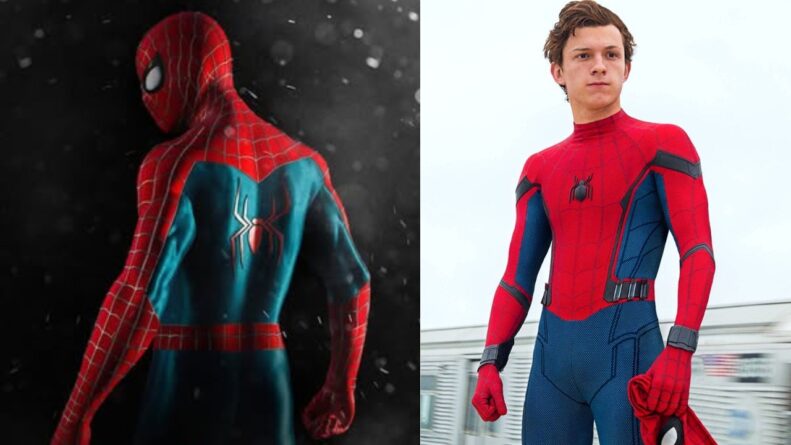
The most obvious change in Brand New Day is also the one with the deepest backstory. Tom Holland’s new red-and-blue costume ditches the Stark-tech panels and metallic trim that defined his earlier suits in favor of something closer to the comics’ classic look — bigger chest emblem, brighter colors, simpler webbing. That’s not a random redesign. 

Spider-Man: Brand New Day

Holland and Cretton have both said the suit was built as a deliberate blend of Tobey Maguire’s and Andrew Garfield’s costumes, since this version of Peter has now actually met both of those men. Holland described it as pulling from “Tobey’s and Andrew’s designs” to create something like a spider-child of all three suits. It’s a subtle way of saying the movie takes Peter’s multiversal reunion in “No Way Home” seriously — that meeting his older, wiser variants changed something in him, down to the way he dresses for work. 

The costume swap also lines up with a bigger story beat: Peter’s lost access to his old Stark-built tech entirely, so the downgrade in gadgets is baked into the visual downgrade in suit design.

Comic Panels Hidden in Plain Sight

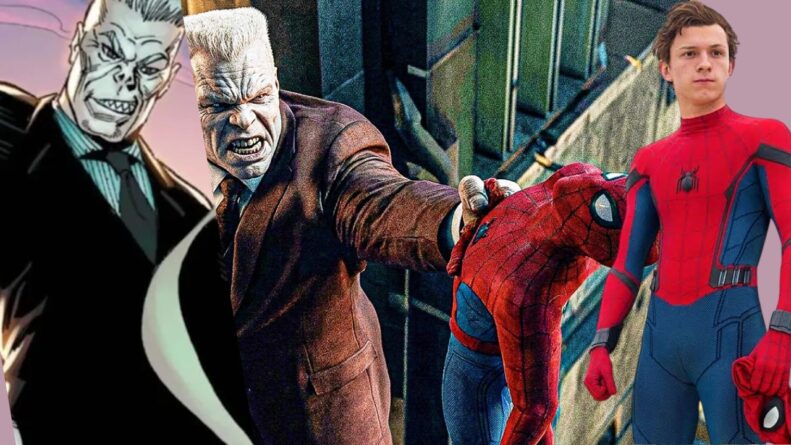
Spider-Man: Brand New Day leans harder into direct comic-panel recreation than any prior Holland movie. The opening montage where Spider-Man carrying a thug echoes Amazing Fantasy #15, his first-ever appearance, and there’s a full recreation of the Spectacular Spider-Man #142 cover with Tombstone dangling him off a rooftop. 

Later shots pull from The Spectacular Spider-Man #1 and Amazing Spider-Man #221. None of this is background noise — the film frames the whole montage around a crime board in Peter’s apartment, “great power comes with great responsibility” pinned above case files on the criminals he’s been quietly working through, including Scorpion and Tombstone by name. 

It’s a nice visual shorthand for a Peter who’s been operating alone and methodically for years, treating crimefighting less like heroics and more like a caseload.

Read More 👉 Linkedin Games Answers Today (26 August 2026): All Puzzle Solutions

Villains Pulled Straight Off the Page

That opening montage is doing more legwork than it looks like on a first watch. Tombstone, played by Marvin Jones III, gets his few seconds of screen time as a nod to the character’s 1988 debut in Web of Spider-Man #36 — and Jones has actually played the role before, voicing Tombstone in “Into the Spider-Verse.” 

Boomerang and Tarantula also flash through the same sequence. The Hand shows up fighting Spider-Man early on too, which is a strange left turn for characters usually tied to Daredevil, until the film reveals Bill Metzger has since “rehabilitated” them into a security force working for the Department of Damage Control.

Villains Pulled Straight

Scorpion gets more to do here than he ever did in “Homecoming.” Michael Mando returns as Mac Gargan with two real fight sequences, the second of which — Scorpion under Jean Grey’s mind control, battling a Spider-Man losing his own grip on his unstable powers is one of the film’s better action beats. 

There’s also a smaller, deeper cut for comics readers: Frank Castle hiding out on a decommissioned boat is a direct pull from Spectacular Spider-Man #141, where the Punisher used a boat called the “Golden Girl” to stash weapons, in a Gerry Conway and Sal Buscema arc that also involved Tombstone.

The DODC is Quietly Setting Up The X-Men — Bill Metzger Isn’t Just a Bureaucrat

Tramell Tillman’s Department of Damage Control director looks like a fairly ordinary company-man role for most of the runtime, but his comic history says otherwise. Metzger led the Anti-Mutant Militia and fought the X-Men directly in the miniseries “X-Men: Children of the Atom.” 

The film changes his role considerably, but the anti-mutant thread is still there if you’re watching for it — and once Jean Grey’s identity is confirmed, his hostility toward her reads very differently on a second viewing. This is a deliberate setup for future mutant-focused storytelling rather than a coincidence, though neither Sony nor Marvel has confirmed anything beyond what’s on screen.

Read More 👉 Lanterns Episode 1 Sets Hidden Batman-Gotham Connection

The Jean Grey Reveal — A Mind Jumping Villain Introduced X-Men New Hero

The film keeps its central antagonist masked in mystery for roughly the first half, before confirming that Sadie Sink is playing Jean Grey — one of the original X-Men, here introduced as a mind-jumping villain rather than a hero. Her motivation, once it lands, is genuinely sympathetic: she’s searching for her sister Sara Grey, a fellow telepath who died in Damage Control custody, and the only thing Jean has left of her is a hair scrunchie. 

Cretton has said the film built Jean and Peter as mirrors of each other — both defined by traumatic loss, the difference being that Peter still has a community around him while Jean’s community was reduced to one person, then taken from her too.

It’s a genuinely strong character idea, and it’s part of why reviewers have singled Sink out as the best part of the movie. But the marketing-driven secrecy around her identity has also drawn real criticism. 

Post-Credits Scene

Some critics have argued the mystery-villain approach — withholding her name and powers for marketing purposes — actually drained tension rather than building it, comparing it to the much-derided “Star Trek Into Darkness” reveal. 

There’s also a fair critique that her body-count during the mind-control rampage sits awkwardly next to her eventual redemption arc, since several people are shown getting seriously hurt, if not killed, while she’s in control of them. Whether that tension gets addressed head-on in a future film or just quietly smoothed over is genuinely unclear right now.

Yelena Belova’s “Big Potato Stuff” Short Cameos Lead Another Path

Florence Pugh’s Yelena Belova shows up in a smaller but pointed scene, where she references the Red Room training program from “Black Widow” while comparing notes with Peter on mind control, and needles him by calling his caseload “small potatoes” next to what the New Avengers are currently handling — a fun bit of connective tissue for anyone keeping up with the post- “Thunderbolts” team. 

Street-Level Villains You Might Have Clocked in Passing

The film sends a mind-controlled Scorpion via helicopter to Bellevue Hospital, a location with a long history in Marvel comics stretching back through Daredevil and Thor stories. And in a much quieter callback, Peter spots a LEGO Chewbacca in Ned’s room during a party scene — presumably from the same Death Star set Ned was building back in “No Way Home.” 

If you’re rewatching specifically to hunt easter eggs, keep an eye on Bruce Banner’s scenes too; there’s an Empire State University detail tucked into the background that’s easy to miss on a first pass.

Read More 👉 Lanterns Episode 1 Ending Explained: Who Killed Hal Jordan?

The Post-Credits Scene Nobody Can Fully Explain

Unlike some recent Marvel entries, Spider-Man: Brand New Day saves its one bonus scene for after the full credits roll, and it’s deliberately sparse: no actors, just Ned’s homemade Spider-Man tracker app. The interface, styled like an old pixelated video game map, shows Spidey’s usual New York City location before glitching and zooming out — past the Moon, into deep space where the tracker pings him somewhere off-world. Marvel’s “Spider-Man will return” card follows, without naming the project.

The obvious read is that this sets up “Avengers: Doomsday,” releasing December 18, 2026. But that film’s multiversal conflict, as far as anyone knows, doesn’t take place in space, which has led some outlets to argue the scene is actually pointing toward the still-uncast “Secret Wars” instead — a film widely rumored, but not officially confirmed, to reunite Holland with Maguire and Garfield. 

Fan theories have also floated the idea that the off-world signal belongs to one of those other Peter Parkers rather than Holland’s own. Andrew Garfield was asked directly about it and gave a deliberately unhelpful non-answer, joking that it could just as easily be Miles Morales making his live-action debut. 

Given that Garfield spent years publicly denying his “No Way Home” cameo before it happened, fans aren’t exactly taking his denial at face value but as of now, nothing about the scene’s actual meaning has been confirmed by Sony or Marvel.

Spider-Man: Brand New Day Was Clearly Built to Rewatch For Catching Up Everything

Spider-Man: Brand New Day was clearly built to rewatch the crime board, the comic-cover restagings, and the Metzger foreshadowing all work better once you already know where Jean Grey’s story is headed. 

Spider-Man

If you’re going back in, skip past the obvious trailer easter eggs and watch for the smaller stuff instead: the scrunchie, the Empire State University signage, the “small potatoes” line. Whatever “Spider-Man will return” ends up meaning, this version of Peter Parker has earned enough goodwill and box office that Sony isn’t likely to let this be his last grounded outing before things go multiversal again.

Conclusion

Taken together, none of this reads as filler. The secondary mutation, the DODC’s anti-mutant undertones, Jean Grey’s introduction, and that final shot of Spider-Man drifting off into space are all pointing in the same direction: toward a much larger, more cosmic chapter of the MCU that’s already queued up with Avengers: Doomsday and Secret Wars. 

Spider-Man: Brand New Day works as a self-contained story about a guy trying to figure out who he is without anyone around to remind him — but it’s also very clearly laying track for what comes next, one Easter egg at a time.

Comments

View comments and join the discussion

Alpana

Articles Published: 173

Alpana is Fandomfans Senior Editor across all genres of entertainment. She evolved in the media industry since a very long time, she manages the content strategy and editing of all the blogs. Her focus on story development, review analysis, and research is well-equipped that ensures every article meets the standards of accuracy and depth.

View Profile ↗

Why Chris Evans Was Chosen as Captain America

Discover why Chris Evans Captain America casting was the perfect choice. Learn what made him the ideal actor to portray Marvel's iconic superhero.

Published: Jul 27, 2026, 12:43 PM
Last Updated: Jul 27, 2026, 12:44 PM

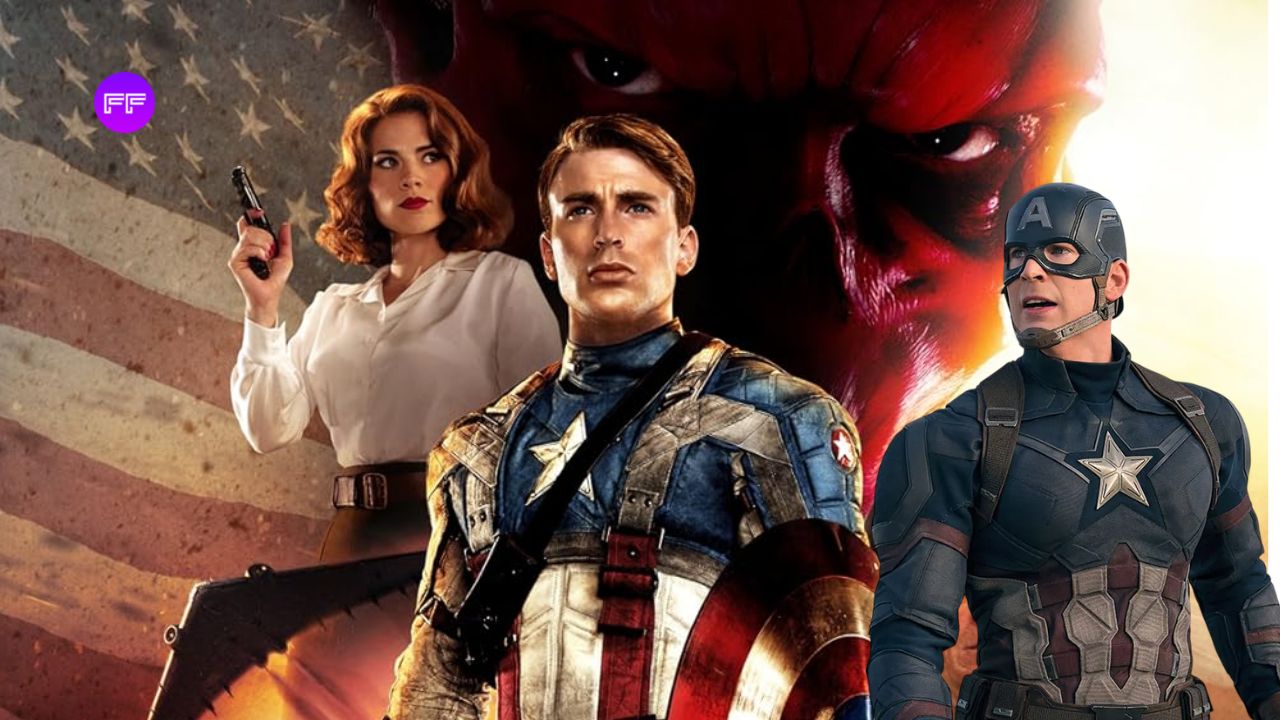
The actor who became the most obvious casting choice in Marvel history almost wasn’t cast at all. The Chris Evans Captain America role isn’t a simple casting. He is an actor who turned down this role but the studio didn’t take no for an answer. Casting directors bend down their rules to make it happen.

Looking back now, it’s hard to remember that the actor destined to define Steve Rogers had no interest in picking up the shield. And Marvel Studio just proved, casting really matters as Hollywood comeback could anchor a superhero blockbuster, Robert Downey Jr. back into the MCU as Doctor Doom is an example. 

The Steve Rogers Search That Almost Ended Without Chris Evans 

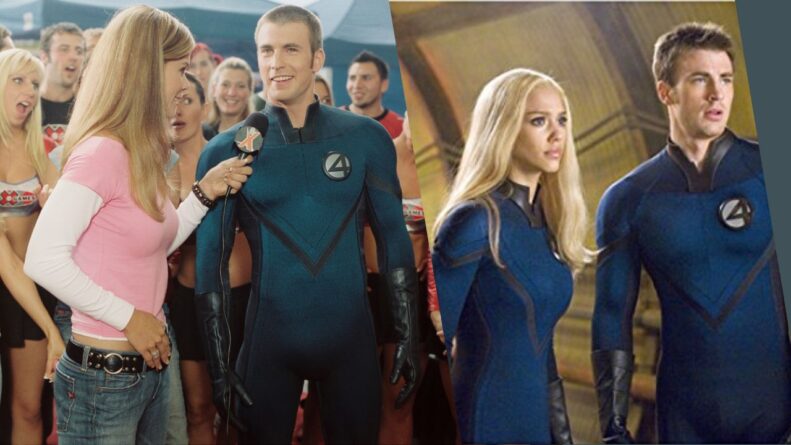
Casting director Sarah Halley Finn ran a genuinely exhausting search for Captain America. She sat through round after round of screen tests that just didn’t land. The specific blend of old-classic style decency and body structure is hard to see in anyone. And Even isn’t in that line up because he already played a Marvel character, Johnny Storm.

The Steve Rogers

Yeah, that Sue Storm’s brother in the Fantastic Four movies from 2005 and 2007. And there was a rule in Marvel Studio at the time that the same actor can’t play the two different comic-book roles. It muddies the brand. Finn knew Evans might fit Steve Rogers, but she sat on that instinct because of the rule.

It took a string of underwhelming screen tests before she finally said it out loud in a casting meeting: 

Why not consider Chris Evans? 

The room agreed almost instantly. People already liked him as an actor. They’d seen the work. And enough of what makes Chris Evans Captain America tick — earnestness, a kind of stubborn decency — was already visible in how Evans carried himself on-screen. Marvel broke its own rule for him.

The Finalists Who Nearly Became Captain America

Two names come up constantly when fans dig into the Captain America casting search, and neither of them ended up wearing the suit.

John Krasinski was in serious contention. Years later, he’d say he heard through his agent that Marvel had gone with Chris Evans Captain America instead and his reaction wasn’t bitterness, it was recognition. He basically said the same thing every fan says now: 

Of course it’s him, look at the guy.

Sebastian Stan came even closer, in a stranger way. He sent in three audition tapes for Steve Rogers, then canceled a trip home to Romania to fly back for an in-person Marvel meeting. He didn’t get the part. What he got instead was Bucky Barnes — a role that turned into a decade-plus career inside the MCU, arguably richer and stranger than Cap’s arc ever was. 

But Stan is happy because losing that role turned out to be the better outcome for him. He got a more satisfying job that he deserved. 

Why Becoming Captain America Scared Chris Evans

Evans said no. More than once because the commitment terrified him. Marvel’s initial offer was a nine-picture deal. It eventually got negotiated down to six, but even six films was an enormous chunk of a career to hand over to a single character, with no real way to predict how the movies — or his life — would turn out. 

Evans’ reason to say no for the role isn’t the heavy work and action but he knows after signing it would permanently change his life in ways he couldn’t take back.

Captain America Scared Chris Evans

There was also something more personal underneath it. Evans has since described dealing with anxiety around fame and public attention, and the jump from “working actor” to “face of a global franchise” was the exact kind of exposure that made him uneasy. Turning down Captain America wasn’t a business calculation. It was closer to self-preservation.

The Conversation That Changed Evans’ Mind 

Marvel didn’t let it go. Kevin Feige and director Joe Johnston brought Evans back in for a second meeting, and this time they didn’t just pitch a contract — they pitched the actual story. The character’s arc of Chris Evans Captain America across the franchise is a real concept art. This is not a job for Evans, director said: 

Here’s the character we think only you can play.

Evans has said he took the weekend to think it over, and that it was one of the hardest decision-making stretches of his life. He said yes anyway. And in interviews since, he’s called it the best professional decision he ever made — which is a fairly remarkable thing to hear from someone who almost walked away from it entirely.

Read more 👉 Who Is the New Editor-in-Chief of Marvel Comics? Stephen Wacker Explained

What Marvel Actually Saw in Him

Finn and Feige were searching for qualities in an actor who can bring the genuinely kind, quietly confident, and grounded enough on the screen to make audiences believe he was an ordinary kid from Brooklyn before he ever became Captain America. It is more important for them rather than the shield, costume and the super-soldier physique. Evans captured those qualities in a way that couldn’t be taught or faked. 

His hesitation actually worked in his favor. Finn has said the reluctance itself became a kind of evidence — an actor who didn’t chase fame for its own sake was exactly the temperament they wanted radiating off a character whose entire identity is putting the mission ahead of himself.

Marvel Actually Saw

There was also a practical acting challenge nobody talks about enough. Steve Rogers is really two roles stitched into one performance: the fragile, undersized guy from the pre-serum scenes, and the peak-physical-condition soldier after. Johnston was blunt about it at the time — whatever the visual effects team did to sell the “before” version, the performance itself, the internal logic of the character, had to be Evans from start to finish. 

That’s not a small ask. It’s asking one actor to make an audience believe in the same soul wearing two very different bodies.

How Chris Evans Became the Heart of the MCU 

Captain America: The First Avenger landed in theaters in July 2011, with no guarantee Steve Rogers would resonate with audiences but Evans made Steve Rogers heart of the MCU forever. He wasn’t just delivered an outstanding performance but he actually turned into the franchise’s emotional backbone. Marvel took that risk and delivered The Avengers, both Captain America sequels, and eventually Avengers: Endgame in 2019.

What made the casting work wasn’t that Evans looked the part. Plenty of actors look the part. It’s that his real hesitation — the anxiety, the reluctance, the fear of losing himself to the role — is basically the same internal conflict Steve Rogers wrestles with across ten years of movies. A guy who never wanted the spotlight, carrying a responsibility he didn’t ask for, because it mattered more than his own comfort. Marvel didn’t just cast an actor who could play that. They cast an actor who, at least for one nerve-wracking weekend, actually lived a smaller version of it.

Captain America The First Avenger

Even after stepping away from the shield, Evans hasn’t distanced himself from the character. When Anthony Mackie took over as Captain America following Sam Wilson’s arc in the comics and MCU timeline, Evans publicly backed the change, saying flatly that Sam Wilson is Captain America now. That’s not the reaction of someone who resents the role he almost turned down. It’s the reaction of someone who understood, eventually, exactly what he’d said yes to.

The next time someone says a casting choice of Chris Evans Captain America was “obvious,” it’s worth remembering this one wasn’t obvious at all. It was rejected, reconsidered, nearly given to two other actors, and only worked because Marvel refused to accept the first no.

Read More 👉 Why Marvel Comics Launching the Midnight Universe Variant Cover Program?

Conclusion 

The casting of Chris Evans Captain America was not the obvious choice people recall today—it was a risk that nearly didn’t get taken. Between Marvel contravening its own casting rule, Evans saying no to the part multiple times, and various other actors almost being cast, the path to Steve Rogers was far from easy. 

Ultimately, Marvel didn’t just find a guy who looked like Captain America — they found an actor who captured his humility, bravery, and selflessness. That move helped make Steve Rogers the emotional center of the MCU and stands as one of the best casting wins in superhero movie history. 

Fandomfans delivers latest updates from movies, series, and celebrities to you directly.

Comments

View comments and join the discussion

Mariyam

Articles Published: 87

Mariyam Khan is Fandomfans Content Writer and providing reports and reviews on Movie Celebrities, and Superheroes particularly Marvel & DC. She is covering across multiple genres from more than 4+ years, experience in delivering the timely updates.

View Profile ↗