The Surprising Cancellation of Peacemaker Season 3: What’s Next for the DC Universe?
Peacemaker Season 3 has been cancelled. Find out why DC ended the show and what's next in James Gunn's DC Universe.
Published: October 15, 2025, 10:35 am

Peacemaker Season 3 has been cancelled. Find out why DC ended the show and what's next in James Gunn's DC Universe.

In a surprising twist, it was revealed on Friday that “Peacemaker” is not coming back for Season 3. After two seasons of blow it up funny, surprisingly heartfelt, and John Cena’s no-holds-barred performance as the anti-hero, the series ending so suddenly marks a stark turn in DC’s narrative approach. With James Gunn now at the helm of the DCU, the emphasis is shifting and — Peacemaker’s exit might just be the first ripple in a much larger shift. But what does it say about the future of the DC Universe? Let’s look into the reports and speculation about the new DC era.
Why “Peacemaker” Season 2 ends is pretty clear. The Full Nelson story ends with Chris being captured and taken to an ARGUS black site. They dump him straight into the metahuman prison world that Flag chose. The DC Universe, after all, is evolving rapidly under new leadership. That means new focuses for their shows. James Gunn is in charge of the DCU now and he’s very focused on a very specific blueprint for what comes next. That effort may have taken precedence over the foxhunting “Peacemaker,” much to the delight of its fans.
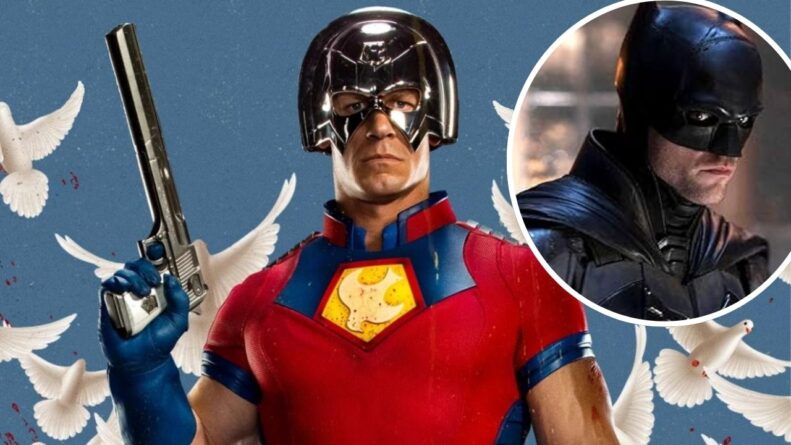
“Peacemaker” had established quite the following, but DC’s overlords may have decided it was no longer in their vision moving forward. Gunn verified at a press conference that it’s titled Salvation (again, we’ll get to that in just a moment).
As “Peacemaker” wraps up, attention turns to the next big thing: the “Man of Tomorrow” movie. It promises to upend Superman’s role and story in the DC Universe. With the cancellation of “Peacemaker,” this one could open doors to a new story for viewers. That story may incorporate elements of the Peacemaker.

Reports show Man of Tomorrow follows Superman’s journey on a new, contemporary path. The character is evolved in more depth of themes like optimism, responsibility, and the challenging aspects of being a hero in today’s world. The film is aiming to connect with both nostalgic fans and new viewers. That’s a big part of Gunn’s DCU plan. The opportunities for team-ups and cross-overs with other characters, say ones from ”Peacemaker,” are really building up the buzz for this flick.
Along with the buzz surrounding “Man of Tomorrow,” reports say how Deadpool might make his way into the DC Universe. They’ve always longed for that wise-cracking anti-hero to DC stars. The cheerful tone of “Peacemaker” makes it all feel so right. Deadpool belongs to Marvel, sure. Put him in a DC show? That’s some real curiosity-sparking, now that “Peacemaker” got axed.

Deadpool’s arrival in the DCU could shake things up. Reports led to imagine him crossing paths with Peacemaker or Superman. That sort of team-up could generate chuckles and new story ideas combining the two worlds. With Gunn at the helm for the DC Universe, surprise appearances like this remain exciting.
As everyone wonders what the characters and the DC world have in store for us next. The excitement over “Man of Tomorrow” and possibly Deadpool appears is a bright spot for those who have lost their go-to show. The cancellation of “Peacemaker” may signal the end of an era, but it also makes room for a new storyline for the next DC film that might alter what’s possible within superhero stories.
Read More:- Peacemaker Season 2 Finale Explained: Why Jennifer Holland Calls the Ending “Heartbreaking in Retrospect”
The finale of “Peacemaker” marks a major turning point for the DC Universe story. Fans swear farewell to John Cena’s hard-as-nails anti-hero. They yearn for “Man of Tomorrow” and surprise team-ups. That includes the buzz about Deadpool making an appearance. Changing feels hard sometimes. But it’s a gateway to new opportunities and fun twists. James Gunn takes the DCU in a different direction.

Get ready for Captain America: Brave New World! Sam Wilson faces global crises, new threats, and the discovery of adamantium.
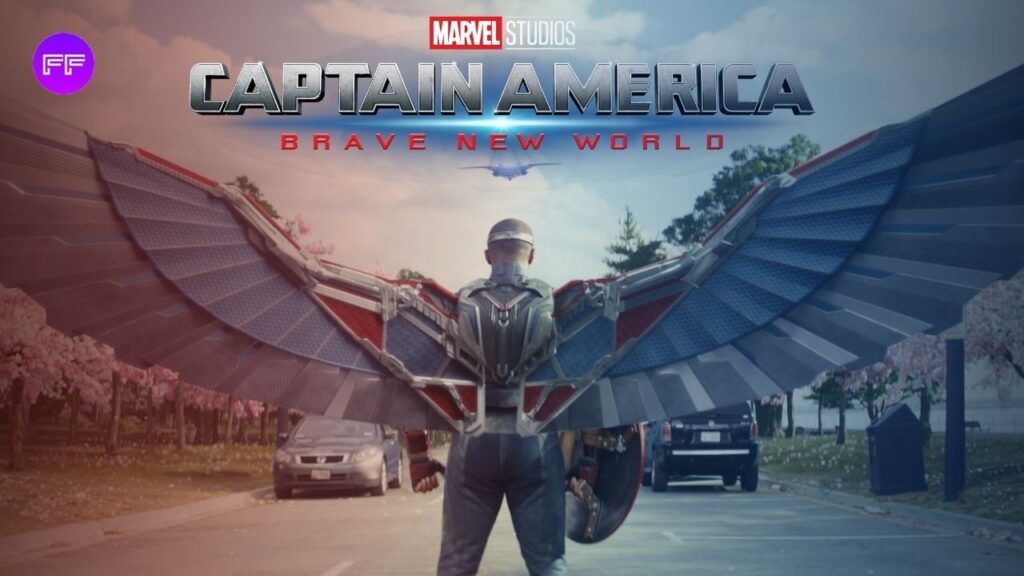
Marvel fans, brace yourselves! Captain America: Brave New World is on the way! This film will pick up where Sam Wilson left off as Captain America. It is set after The Falcon and the Winter Soldier TV show. When you see how new Captain Sam takes to the air!
It will be packed with action and political drama in the midst of global disputes. The world is evolving and new threats are on the rise. Sam needs to earn his stripes as Captain America.
Sam Wilson is now Captain America. He replaced Steve Rogers in the role. Now he’s just trying to get used to the job. After a mission in Mexico with Joaquin Torres, he visits the White House. There he meets the new U.S. President, Thaddeus Ross.
Ross is seeking to reinstate the Avengers Initiative. But something happens to scupper the scheme: an assassination attempt. It really goes off the rails at a global summit. Sleeper cells, including Isaiah Bradley, strike at world leaders. Chaos breaks out. Sam realizes a deeper conspiracy is at play.
Ross is unimpressed, but Sam makes his move. He emerges to seek out the true masterminds. The road he must travel is perilous, but he is prepared. Captain America has to save the world again.
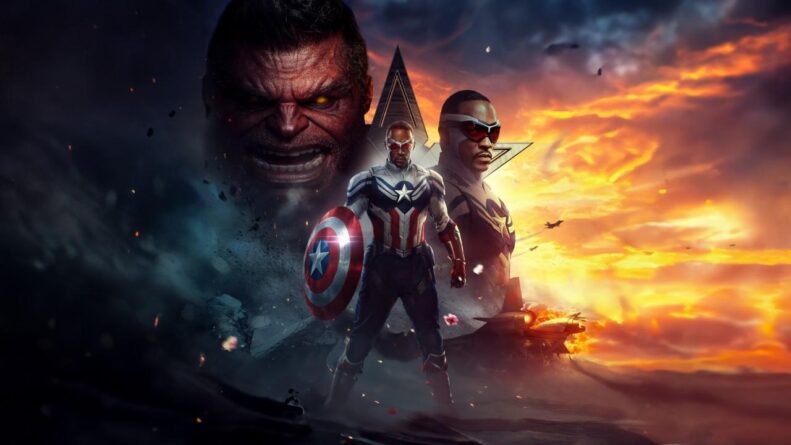
One big breakthrough changes the equation. Scientists discover adamantium, a strong metal, on Celestial Island in the Indian Ocean. The insular landmass is the encased form of the Celestial Tiamut. President Ross dubs adamantium “the discovery of the millennium.”
He thinks it will shift the balance of world power for ever. Ross craves the adamantium. He intends to share it with the allies of America. He calls on world leaders to negotiate a treaty. But he’s a bit too ambitious for his taste. There are many nations to claim their share.
Others regard it as a danger. The criminal element quickly becomes interested. They desire adamantium for their own use. They know its power can alter the world. They’d do anything to have it. The battle for power starts.
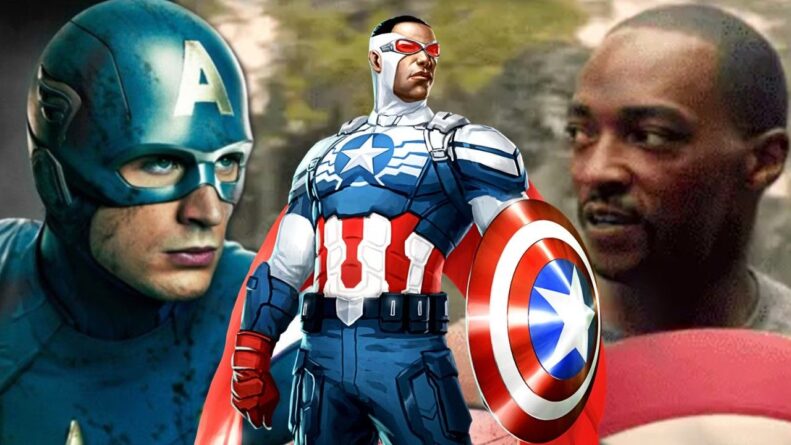
Sam Wilson gets caught in the middle. He has to prevent deadly forces from obtaining adamantium. He also wonders if it is ethical to use such a potent material. Should one country have control over it? Can it be put to good use?
This fight is too big for one man. It’s about power, politics, and responsibility. Sam needs to make a choice as to what is right. He must battle to save the world. The stakes have never been higher. The world is watching.
This is a Julius Onah queasy thriller, so hang on. Screenplay by Rob Edwards, Malcolm Spellman, Dalan Musson, Onah, and Peter Glanz. The film was produced by Kevin Feige and Nate Moore. Louis D’Esposito and Charles Newirth were the executive producers.
The title of the film was changed from New World Order to Brave New World partway through production. Reshoots took place between May and November 2024. Matthew Orton came on board to polish the script.
Read More 👉 Meryl Streep Net Worth 2025: Age, Movies, Family & Martin Short Trut

This film is a key pillar in the MCU’s Phase Five. It follows The Falcon and the Winter Soldier. Sam Wilson as Captain America Is Back. He must confront new enemies and new worlds.
The discovery of adamantium changes everything. This rare metal is very strong. Countries battle for it. Wolverine, adamantium and the X-Men. This could be the film that introduces them into the MCU.
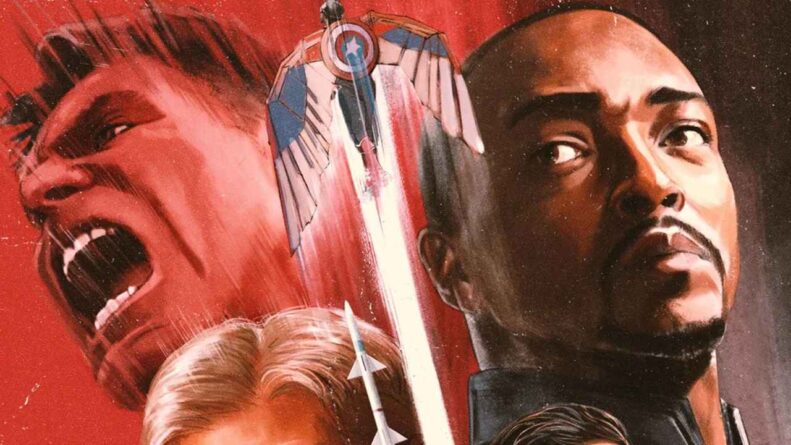
Familiar characters turn up. Tim Blake Nelson is back as Samuel Sterns. His character is a tease for future stories. Liv Tyler is back as Betty Ross. Her character contributes to the political drama. This movie will define the MCU.”
Critics have shared positive reviews. Anthony Mackie’s performance as Captain America stands out. His portrayal of Sam Wilson impresses many. Herb Scribner from The Washington Post loved the film. He called it an “absolute blast.” He said it brings back the excitement of past MCU films.
Chris Gallardo agreed. He praised Mackie’s chemistry with Danny Ramirez. He also appreciated Harrison Ford’s strong performance as President Ross and Red Hulk. Jazz Tangcay highlighted the film’s blockbuster appeal. She described it as “entertaining” and a great addition to the MCU.
Viewers will get a combination of action and political intrigue. The movie deals with leadership and international tensions. The earth is on the brink of disorder. Adamantium is important in the story. The return of key MCU characters brings a buzz of excitement.
Fans can’t wait to get their hands on it. The film is scheduled to be released in theaters on February 14, 2025. It will define the future of the MCU. Sam Wilson’s path as Captain America continues. This picture has the potential to be a treat of action, drama and compelling storytelling.”
Fandomfans love diving deep into the worlds that fans obsess over. We deliver breakdowns, character guides, reviews, and updates that help you stay ahead of the curve.

The Dreadful (2026) blends Gothic and folk horror. Explore release date, cast, plot, themes, and why Sophie Turner’s film is a must-watch.

The Dreadful Movie in 2026 has witnessed a resurgence of the Gothic mode, with one of its leading exponents emerging as a project that promises to be as unsettling as it is historic. The Dreadful isn’t your typical horror flick; it’s an elegant meeting point between period drama and supernatural terror. Drawing on the immense cultural capital of its legendary leads, the film plunges into the murkier realms of human survival and moral complexity.
For fans of prestige television, the movie marks a pointed and bold next step for Sophie Turner and Kit Harington. Departing from the sprawling, high-fantasy politics of Westeros, they have swapped iron thrones for the claustrophobic, psychologically crushing domain of “misty forests and crushing dread.” This is a tale in which the mood is as leaden as the secrets its players harbour.
The metaphysical core of The Dreadful is based upon a wish to orient the themes of classic international cinema in the savage reality of English history. Writer-director Natasha Kermani is inspired by Kaneto Shindō ’s 1964 Japanese cult classic, Onibaba. In the process, she has created a storytelling model around a small, isolated community with its members’ interrelations just as deadly as the supernatural elements hiding in the forest.

This is in keeping with the “folk horror” motif, where the land becomes a sort of other foe. The film, meanwhile, is a groundbreaking achievement for independent horror, combining the art house virtues of auteur-directed filmmaking with the marketing muscle of Lionsgate. With Sophie Turner in the lead role and also producer, there is a definite sense of creative ownership that should keep the “emotional heart” of the film beating from start to finish.
The Dreadful release is positioned to take advantage of the early 2026 market. The Dreadful release date is perfect to capitalize on the late-winter audience that enjoys moody thrillers, and wide-release is scheduled for February 20, 2026.
| Territory | Release Date | Primary Platform | Format |
| United States | 20/February/2026 | Theaters & Digital | Wide / Day-and-Date |
| United Kingdom | 20/February/2026 | Theatrical | Wide (True Brit) |
| India | Q1 2026 | Lionsgate Play | Streaming Premiere |
| Global Digital | 20/February/2026 | VOD / Amazon / Apple | Digital Purchase/Rent |
The Dreadful’s aesthetic is dominated by its 15th-century setting: the Wars of the Roses. This period of English history (1455–1487) was marked by violent civil war between two rival houses, the House of Lancaster and the House of York.
The Red Rose–White Rose rivalry is more than mere window dressing; it drives the characters to desperate acts. In a world where central authority has disintegrated, people such as Anne and Morwen are abandoning the edges of civilization.
| Faction / Element | Historical Basis | Narrative Implication |
| House of Lancaster | Red Rose Symbolism | Associated with the “war” Anne’s husband attends. |
| House of York | White Rose Symbolism | Represents the broader political chaos. |
| Ostracized Living | Outskirts of Society | Heightens the vulnerability of the protagonists. |
| 15th Century | Transition to Tudor Era | A time of deep superstition and radical change. |
From both sides of the conflict, the film adopts elevated perspectives. While the film is Gothic horror at its core—defined by crumbling homes and buried family secrets—it is also very much a work of folk horror. Director Natasha Kermani delves into fear, desire, and regret through a visceral medieval aesthetic. The “English countryside,” with its mud, rain, and cold nights, becomes a character in its own right. The supernatural elements are implied to arise from the land itself, and the “curse” may be read as a projection of the characters’ moral failings.
The Dreadful is, brilliantly, entirely in Natasha Kermani’s hands. Known for pushing genre boundaries in films such as Imitation Girl and Lucky, Kermani applies a layered “Three Keys” approach on set: forming a trusted team, drawing on her short-film experience, and turning to classical texts.
The production is a partnership between the independent studios Black Magic and Redwire Pictures. Sophie Turner’s role as a producer is particularly vital, signalling a shift toward more equitable power relations among lead performers.
Director / Writer: Natasha Kermani (the visionary behind the film’s transposition of Onibaba)
Director of Photography: Julia Swain (capturing the film’s “mud and rain” aesthetic)
Editor: Jeff Betancourt (shaping the film’s slow-burn suspense)
The story of The Dreadful is a brutal account of survival. We follow Anne (Sophie Turner), who lives in isolation in the countryside with her overbearing mother-in-law, Morwen (Marcia Gay Harden), as she waits for a husband taken by the wars.

This stasis is shattered by the arrival of Jago (Kit Harington), a figure from Anne’s past. He brings news of death while reviving erotic tensions—both sexual and homicidal—that imperil the household. As Jago infiltrates their lives, a “mysterious knight” emerges: the materialization of a curse that feeds on their sin.
The Dreadful movie cast is small, yet the film’s triumph lies in this tiny ensemble, which somehow carries immense psychological weight.
Sophie Turner as Anne: the film’s emotional heart. Turner portrays a woman whose strength is forged through solitude in a cruel world.

Kit Harington as Jago: a figure of ambiguity. Harington is equal parts puppy-eyed vulnerability and latent darkness.
Marcia Gay Harden as Morwen: the ruthless mother-in-law. She grounds the supernatural in a very real human desperation.
The on-screen reunion of Turner and Harington is the film’s biggest marketing hook. Having portrayed siblings for ten years, their evolution into lovers has been described by the actors as both “weird” and “igniting.” This discomforting tension feeds directly into the movie’s atmosphere of dread, allowing the audience to viscerally sense the boundary-crossing.
Shot on location amidst the craggy hills of Cornwall, the production embodies environmental naturalism. Cinematographer Julia Swain employs a visual language reminiscent of The Green Knight, emphasizing misty and eerie hues.
The supernatural elements are deliberately restrained, designed to feel earned rather than “cheap.” The film has received an MPA-R rating for “violence, gory images, and sexual references,” a rating crucial to presenting a medieval nightmare without compromise.
Read More:- ‘Vanished’ (2026) – Mystery Thriller Series Release Date, Cast & Plot
The participation of Lionsgate guarantees extensive coverage, with True Brit Entertainment concentrating on the horror legacy of the UK.
What are the fans saying? The response on places like Reddit is electric. Although some are uneasy with the transition from “sibling-to-lover,” it has ignited a viral discussion that goes far beyond horror. Industry Insiders say the film is likely to become a cult hit, a consistent moneymaker that confirms that Natasha Kermani is a force to be reckoned with.
The Dreadful Movie isn’t just a horror movie – it’s a celebration of the Gothic tradition. It asks us to confront the demons that arise from our own histories — all the while cloaked in the lovely, horrifying mists of 15th-century England.
Fandomfans is a platform where you can find all the latest details from movies review, webseries review, and television shows that are worth watching.