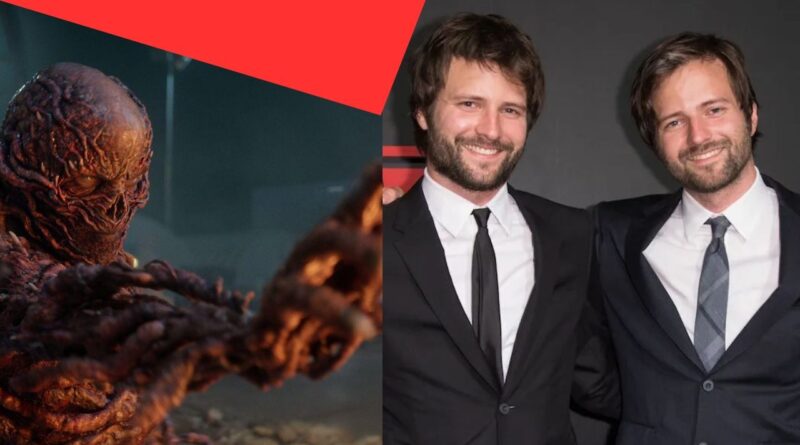
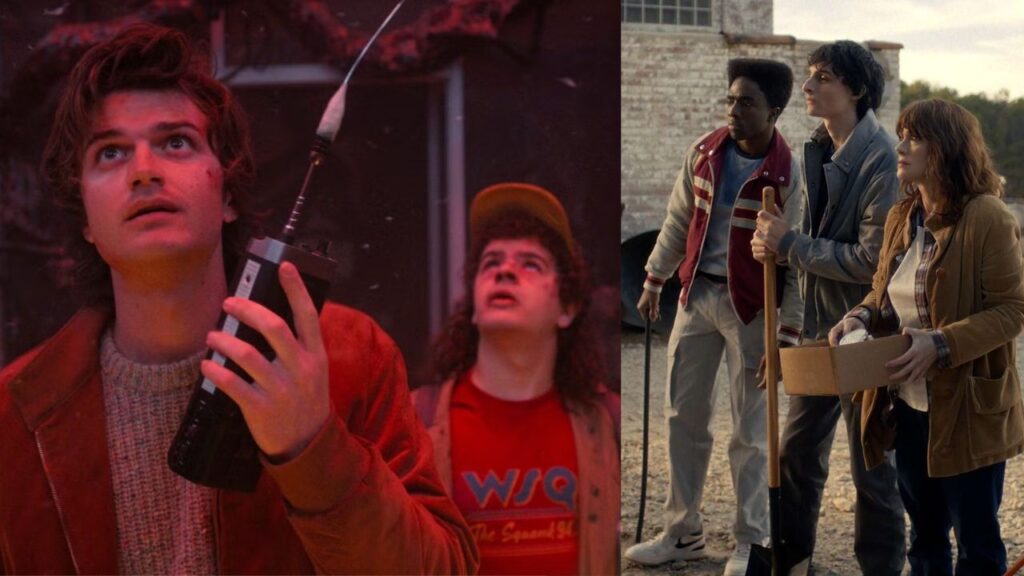
Late 2025 will mark the end for the cultural moment that is Stranger Things Spin-Off. But if you believe the Duffer Brothers are set to turn off the lights, think again. The conclusion of the Hawkins saga isn’t an ending, it is a strategic, high-risk pivot into a new era of franchise management.
Matt and Ross Duffer, through their production company Upside Down Pictures, are doing something rare in the age of sequels: they are subverting the “nostalgia trap.” Rather than give us a Steve and Dustin road-trip show or an Eleven spinoff, they are going for a “clean slate.”
The Long Goodbye: Dominating the Holidays
First, let’s see how they wrap it up. The Duffers aren’t just dropping the season and letting us binge it over a weekend. They are orchestrating a holiday takeover to capture maximum engagement and control the massive VFX workload the 2023 strikes.
Season 5 Release Schedule:
Release Phase
Date
Content
Volume-1
26/Nov/2025
Episodes 1-4 (The Initial Incursion)
Volume 2
25/Dec/2025
Episodes 5-7 (The Escalation)
The Finale
31/Dec/2025
The Series Finale (The Definitive Conclusion)
In treating these episodes as “eight blockbuster movies,” Netflix sidesteps “churn” (where users subscribe for a month and then leave). It also means that Stranger Things is the dominant cultural talking point for all of Q4 2025.
The “Clean Slate” Strategy
The Duffer Brothers have revealed that their new spinoff will feature “a completely new” story, set in a “different location,” with a “completely new” cast (none of the original series actors). This ambitious leap implies that they want to take the universe to new and surprising places, while giving fans something different to enjoy.
Why ditch the characters we love?
The Budgetary Reality: The original cast are now global superstars with massively inflated market values. A new cast allows the budget to be manageable (Netflix is said to be spending $60 million per episode for Season 5).
Creative Freedom: The Duffers, as quoted, said they want to avoid getting bogged down in the “massive web of lore” that legacy characters have. A clean slate allows them to pass the baton to new creative teams without being chained to previous storylines.
The “Lightning in a Bottle” Effect: They want to recapture that feeling of discovering talent that no one knew about before, like they did in 2016.
Oddly, Finn Wolfhard (Mike Wheeler) was the sole cast member who predicted this route years ago, which means, despite the rotating faces, the storytelling DNA is still very much intact.
Expanding the Mythology, Not the Town
Since the characters are dead, what connects the universe? The answer is cosmic horror.
Through the stage play The First Shadow, the mythology has expanded beyond the Upside Down to include Dimension X (also known as “The Abyss”). This indicates that the Upside Down is not just a mirror of Hawkins, but a cosmic tunnel. This “Wormhole Theory” enables the spinoff to take place anywhere — Nevada, Russia, or even further — and still keep the signature “government conspiracy meets supernatural horror” feel.
Testing the Waters: Animation and Original IP
The Duffers are also spreading the portfolio to make sure the brand can survive without them in the director’s chair.
Stranger Things: Tales From ’85: Due out in 2026, this animated series is set to act as a bridge. Crucially, it has voice actors instead of using the live-action cast. It distances the characters from the actors, an important part of turning the IP evergreen.
The Boroughs: The new series is a barometer test. Starring legends Alfred Molina and Geena Davis, it swaps the “kids on bikes” trope for a retirement home under siege from a supernatural menace. It gauges whether audiences will follow the “Duffer Vibe” into a completely different story.
The leap from hit show to decades-long franchise is fraught with peril (just ask the Game of Thrones team). But in slamming shut the door on Hawkins, and refusing to dilute the original story with unnecessary sequels, the Duffer Brothers are safeguarding their legacy.
When we tune in on Dec. 31, 2025, we won’t be “just watching an ending.” We’ll be viewing a Stranger Things Spin-Off carefully crafted prelude to a time of unseen faces and untold stories. The magic isn’t in the town of Hawkins any more — it’s in the brand itself.”
Fandomfansis a platform for entertainment updates, stay connected for new stories behind your favorite series and movies.
Mariyam
Articles Published :
77
Mariyam Khan is Fandomfans Content Writer and providing reports and reviews on Movie Celebrities, and Superheroes particularly Marvel & DC. She is covering across multiple genres from more than 4+ years, experience in delivering the timely updates.
‘Breaking Bad’ Creator Vince Gilligan’s Release a New Sci-Fi Series ‘PLURIBUS’ Trailer
Watch the trailer for Pluribus, a thrilling sci-fi drama from Breaking Bad creator Vince Gilligan. Starring Rhea Seehorn, streaming on Apple TV+from Nov, 2025.
Apple TV+ has posted the trailer for PLURIBUS, the much anticipated new series from the Emmy Award-winning creator of Breaking Bad and Better Call Saul, Vince Gilligan. The nine-episode sci-fi drama, which is Gilligan’s first big project outside of the Breaking Bad universe in 17 years, will debut on November 7, 2025, and is already causing a stir within the US entertainment industry.
Trailer Details and Plot Revelations
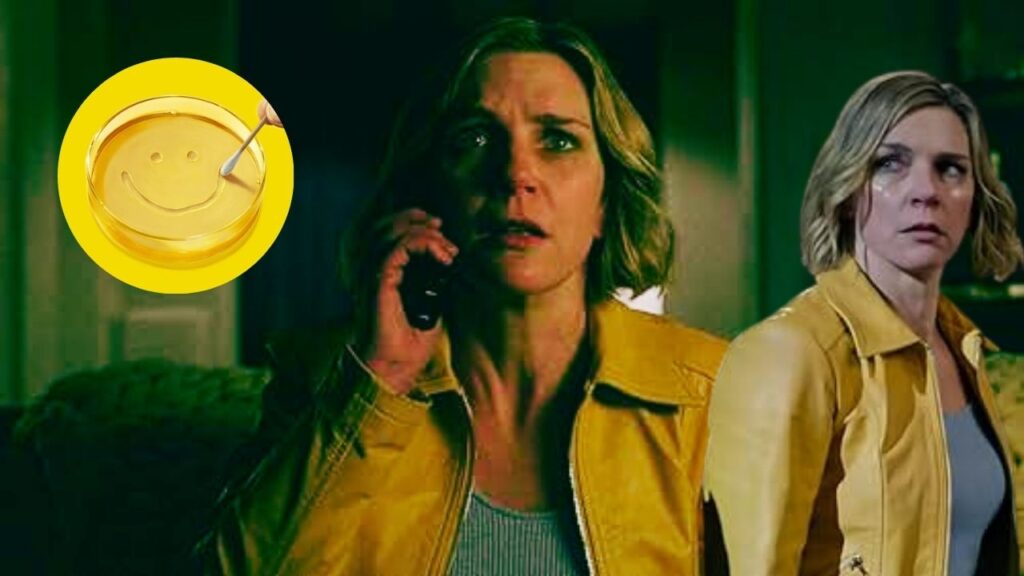
The two-minute official trailer, debuting October 21, 2025, gives a peek at an incredibly disturbing world revolving around Carol Sturka (Rhea Seehorn), who’s “the most miserable person on Earth” and has to “save the world from happiness.” The trailer shows that Carol is the only who appears to be immune to the virus, which has turned the entire global population into perpetually content, optimistic and unnervingly cheerful individuals.
The trailer shows the environment around Carol is unrealistic, everyone is enjoying an ultra level of joy and helpfulness that covers the entire horrible psychology under the wrap of positivity. US President (Peter Bergman) reaches out to Carol through television to turn her into one of them because she is the only one who wasn’t affected by the virus.
Thematic Suspense of Pluribus
As Deadline reports, the series is full of action with explosions, plane crashes, dead bodies, and chaos of marching hordes. The most captivating scene occurs in the 2 minute trailer — Carol asked for a grenade, bazooka, and tank from one of the DHL workers and he said “Oh, sure”.
Carol is alone in her misery and trying to reverse all of this but her head is full of confusing thoughts. It’s the kind of thing that messes with your head but keeps you hooked with its dark humor and sci-fi suspense.
What Bob Odenkirk of Breaking Bad Is Saying About The Series
Bob Odenkirk is Gilligan’s trusted partner in crime, and the one who plays the great Saul Goodman in Breaking Bad and Better Call Saul. Screenrant mentioned Odenkirk told The Hollywood Reporter in an interview: “I don’t know a goddamn thing. But I know it’s going to be massive. Giant! It’s going to be the biggest thing, well, since sliced bread, but really since Game of Thrones.”
Odenkirk also compared PLURIBUS to the Apple TV+ prestige hit Severance, saying, “I think that [PLURIBUS] is going to be the next big show, and I can’t wait”.His excitement is especially interesting as he is not involved with the project at all, which implies honest belief in Gilligan’s vision.
IndieWire also raved on Gilligan’s turn to Twilight Zone – and it asks if happiness is “actually a good thing when it’s universal and unquestioned. The series delves into themes of coerced conformity, the worth of genuine feeling and if the uniform happiness removes the need for humanity.
Critics have praised the trailer as it delivers fascinating, strange sequences in the series. It shows the level of Gilligan’s signature cinematography once again after Breaking Bad.
Gilligan revealed the conceptual origins of PLURIBUSwith Entertainment Weekly, Gilligan said the concept initially confused him: “I’m still not exactly sure what it means.” But the relevance of the concept to the divided society we live in today was obvious to him: “There’s no question that we live in a very divided nation. What I love about this series and that potential is the hope that people watching may say, ‘What would that be like, if we all got along?’ There’s probably an element of wish fulfillment in that idea.”
Apple TV+ had already ordered two seasons prior to premiere—a rare move demonstrating extraordinary confidence in Gilligan’s vision. The early renewal can be taken as a sign that Apple sees PLURIBUS as a potential flagship show in the vein of Ted Lasso and Severance.
Conclusion
“When you smile the whole world smiles with you— and Rhea Seehorn is finding out the reverse is also true.” This inversion of optimism into terror marks PLURIBUS as perhaps Gilligan’s most philosophically daring episode to date, posing the question of whether a reality devoid of suffering, strife and genuine feeling is one that deserves salvation—or if, through Carol, misery makes her the last real human being on the planet.
This series will air on 7 November, 2025 on Apple TV with a total of nine episodes in one season. Rhea Seehorn, Karolina Wydra, and Carlos Manuel Vesga are lead actors in the series who take this one on the top of the list.
Alpana
Articles Published :
163
Alpana is Fandomfans Senior Editor across all genres of entertainment. She evolved in the media industry since a very long time, she manages the content strategy and editing of all the blogs. Her focus on story development, review analysis, and research is well-equipped that ensures every article meets the standards of accuracy and depth.
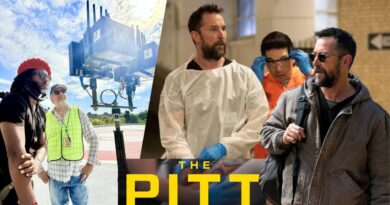
HBO Max’s ‘The Pitt’ Real-Time Medical Drama Renowned For Season 3
HBO Max’s ‘The Pitt’ real-time medical drama earns Season 3 renewal. Explore how its nonstop ER format delivers unmatched realism and emotional impact.
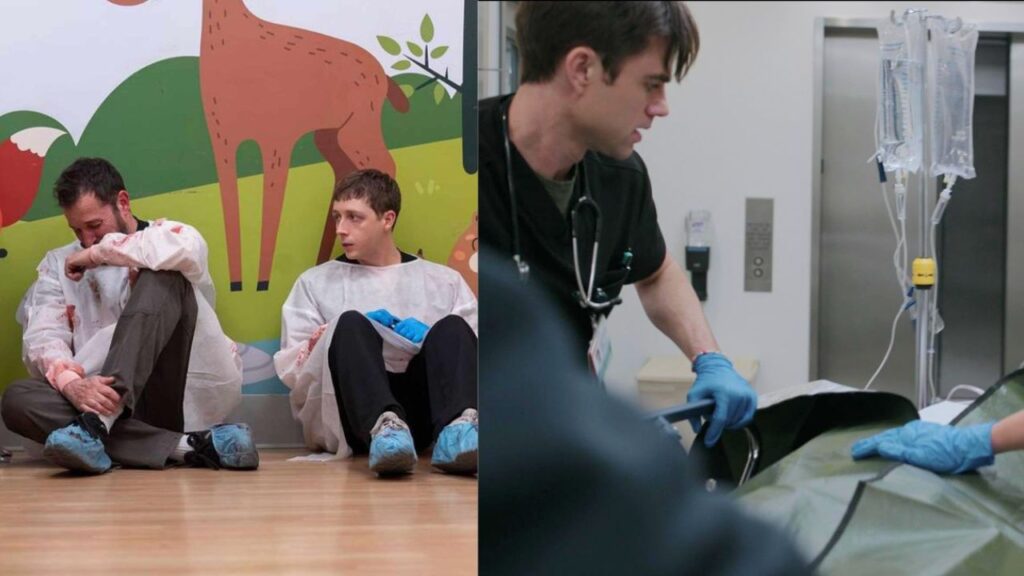
Medical dramas tend to get their mentality out of the emotional highs and neat resolutions. A disaster occurs, people cry, and by the following week it’s as if nothing ever happened. HBO Max’s The Pitt, is nothing if not a complete shatter of that formula. Taking place in a nonstop shift over a single day (and in real time), the series makes you feel as pressured, fatigued, and emotionally burdened as the doctors themselves without any relief.
Why Real-Time Storytelling Hits So Hard
In classic fare such as Grey’s Anatomy or The Good Doctor, audiences are always given a break; a surgeon might die at the end of an episode, but come the next episode, they will have presumably slept, showered, and reset for a “new” week. According to Collider, This safety net is removed by The Pitt.
When it adopted a real-time format with each season covering one season of a single, nonstop 24-hour period, the show wasn’t simply using a gimmick similar to 24. It’s running a harsh test on its audience. In The Pit, time is not a storytelling device – the characters and the audience are buried by it.
The Emotional Cost of Never Slowing Down
The genius of The Pitt is in what it withholds: the narrative ellipsis. In film theory, this is the cut ahead (lookaway) to the boring or painful parts. But in today’s emergency room, the “boring” parts are the soul obliterating truth.
And as none of this is interrupted by time jumps, we get to be stuck in the “emotional residue” of each tragedy.
If a patient dies in Hour 3, the doctor doesn’t get to go home and think about it over a glass of wine.
They have to walk into the next room in Hour 4, haunted by that failure, to treat a stubbed toe or a gunshot wound.
This architecture mimics the particular “commanded urgency” that contributes to physician burnout; it simulates a pressure-cooker where the tension is not only coming from life-or-death surgery, but from an accumulation of minor, never-ending stressors.
What makes The Pitt feel like “stressful television” isn’t just the blood and guts, it’s also the red tape.
The real-time format reveals “the ontological truth” of American healthcare:
Boarding: We observe patients waiting in hallways for hours because there are no beds.
The Insurance Barrier: We listen to doctors bickering over billing codes as they try to save lives.
Tech Failures: We witness the “promise” of AI devolve into a headache as fatigued employees proofread.
The show makes the case that the bad guy isn’t a disease — it’s the system.
Realism That Pushes Boundaries
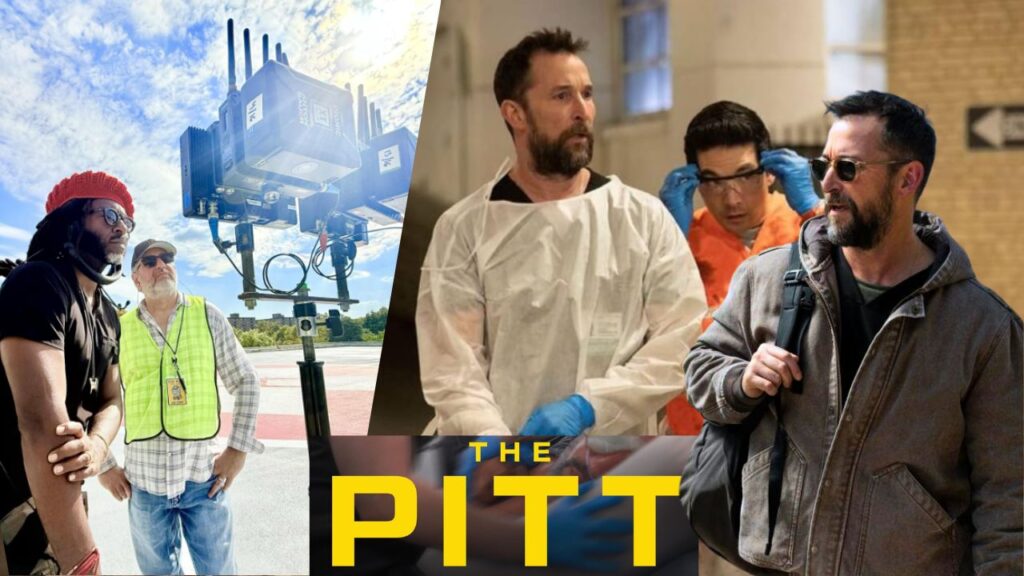
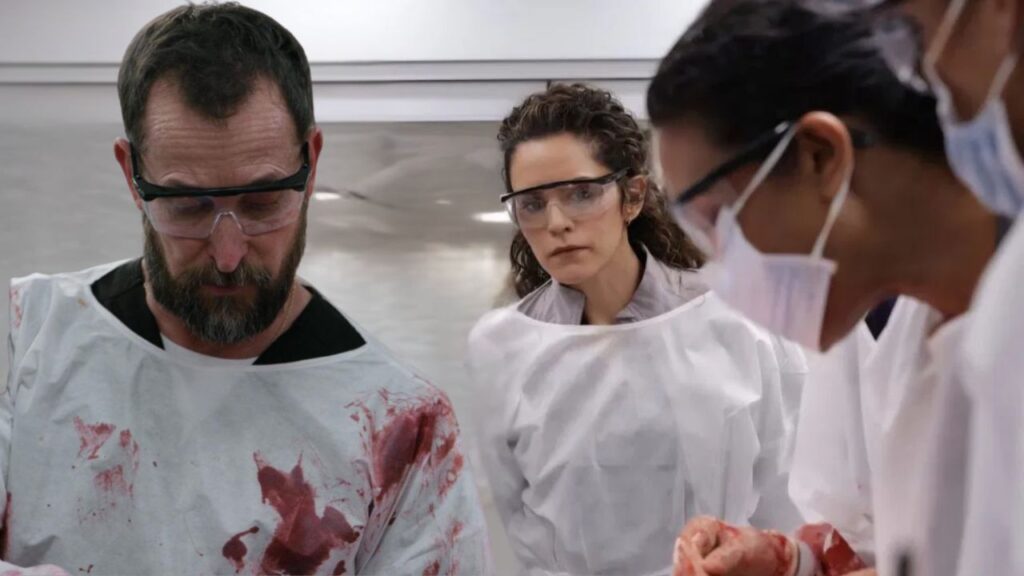
The scope of realism is staggering. Background actors aren’t just scenery, they are monitored on a “Risk” style map, holding hospital beds for the duration of the 15-hour shoot to physically maintain continuity. Leading actors such as Noah Wyle learned to do procedures without stunt doubles, so they could speak while physically performing.
But the show is not immune from criticism. Doctors have criticized the “erasure of the interdisciplinary team,” arguing that the show fantasizes that doctors do everything and ignores the nurses and respiratory therapists who day-to-day are running the ER. And the compressions have been ripped as “weak sauce” — a nod to actor safety that momentarily takes pros out of the experience.
‘The Pitt’ Renewed for Season 3
HBO Max’s The Pitt season 3 is going into production soon. The president of HBO Casey Bloys made the announcement at the Season 2 premiere in Los Angeles on January 7.
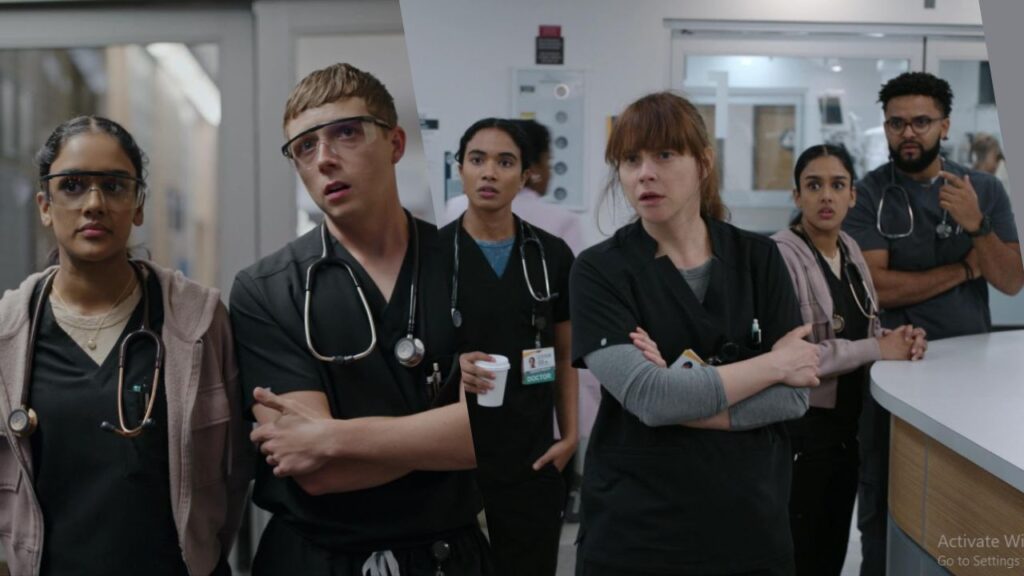
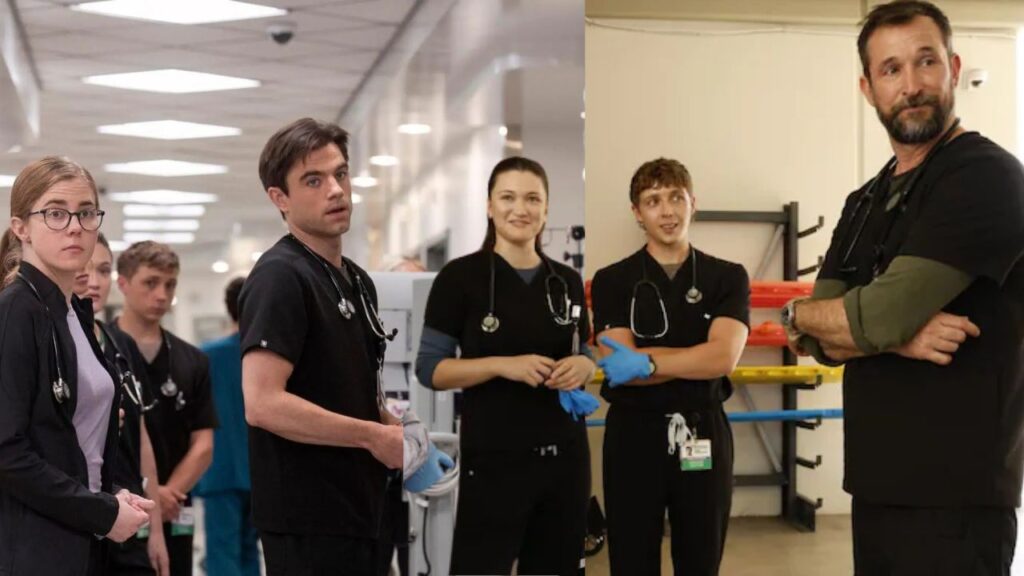
Developed by R. Scott Gemmill the series stars Noah Wyle and centers around doctors and nurses who work one chaotic shift in a Pittsburgh ER, with every episode taking place in real time. The series premiered in 2025.
The series was hailed in its first season, garnering 13 Emmy nominations with five wins, including Best Drama. Excellent reviews for season 2 also garnering it major nominations.
Other cast members include Noah Wyle, Katherine LaNasa, Shawn Hatosy and more, with Sepideh Moafi as series regular joining in Season 2.
HBO Max’s The Pitt is painful to watch and that’s the whole point. In not turning away from fatigue, defeat, and the bureaucracy of it all, the show becomes perhaps the most visceral (and truthful) medical drama on TV. The third season renewal is a confirmation that viewers want a narrative that doesn’t comfort, but confront reality.
Fandomfans is a platform where you can find deeper details from your movies, series, and celebrities.
Mariyam
Articles Published :
77
Mariyam Khan is Fandomfans Content Writer and providing reports and reviews on Movie Celebrities, and Superheroes particularly Marvel & DC. She is covering across multiple genres from more than 4+ years, experience in delivering the timely updates.