For the past 10 years we have been living in a two giant world. Marvel had constructed a cultural skyscraper only to allow it to become a little wobbly with “multiverse homework” and streaming bloat. Meanwhile, the DC Universe was like a stunning, shadowy cathedral that somebody got distracted from completing, leaving fans polarized and breathless.
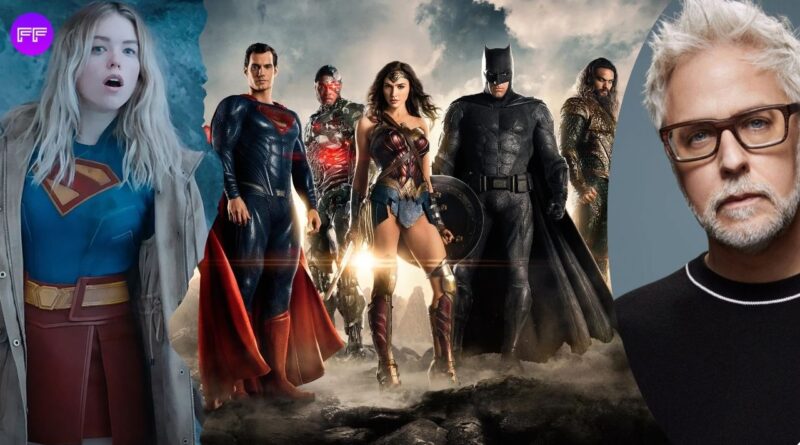
The tides are turning. Now, with James Gunn and Peter Safran in charge at the newly created DC Studios, it’s not just a “refresh.” We’re seeing a wholesale architectural teardown rebuild. Here’s how the upcoming DCU is trying to learn from the past, and look very different doing so.
When Warner Bros. Discovery finished its large-scale reorganization, they not only brought in new executives — they gave control to a filmmaker who had actually made successful DC movies.
Peacemaker series and Gunn’s The Suicide Squad (2021) were a handful of bright spots in the DCEU’s waning years. Now, as co-chairs of the newly created DC Studios, they are doing something no one has ever done: a total reboot that takes a leaf out of every mistake its competitors and precipitants made.
Resetting the Multiverse Without Erasing the Past
Here’s the thing about rebooting a multibillion dollar franchise: you can’t just act like the last decade never happened. Hard reboots drive away your most loyal fans. Soft reboots carry all the baggage with them. You’re in a lose-lose situation — unless you have some smarts.
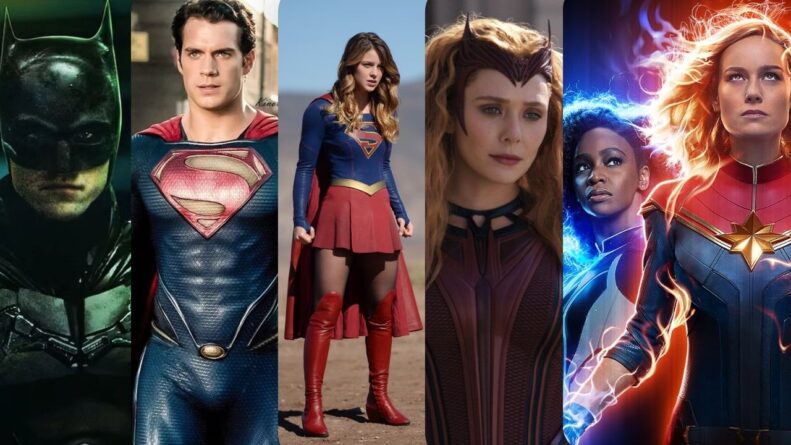
DC Universe had its answer in The Flash (2023), and it’s weirder and more beautiful than anything Marvel has tried.
In the vast majority of multiverse tales—including Marvel’s—time travel causes branching timelines. Alter the past, and you are bifurcating reality into parallel lines that coexist. It’s neat, it makes sense, and it’s mathematically satisfying. DC Universe threw that playbook out the window.
DC’s Clever Solution to Continuity
Instead, they brought in what they refer to as the “spaghetti” multiverse theory. When Barry Allen took the Chronobowl to save his mother, he didn’t just branch reality—he tangled it. In the DC multiverse, time isn’t just moving in a straight line. Alter one event and that change cascades forward and backwards in time, ripping apart what we usually think of as temporal linearity. When you drop a fork into a pot of boiling spaghetti and stir it vigorously – everything coils, knots, and blends. The end result, by the end, is something that is nothing like the simple elements you began with.
This granted Gunn and Safran a vast creative loophole. They didn’t have to pitch their new DC Universe as some other dimension, separate from anything fans had ever seen. Rather, the old DCEU continuity was effectively broken down and rebuilt, with certain aspects able to survive and the rest washed away.
Viola Davis as Amanda Waller and you don’t have to hear me complain about that? Done. John Cena’s Peacemaker? There’s no way for me he should lose. Xolo Maridueña’s Blue Beetle? Sure, that worked. But Zack Snyder’s Justice League? The blowing up of Metropolis in Man of Steel? All that convoluted lore that weighed the franchise down.
From a business angle, Gunn just kept what he personally controlled and dumped the rest. It’s the most elegant corporate restructuring ever disguised as science fiction.
Learning From Marvel’s Biggest Mistake
If you wanted to understand everything that The Marvels (2023) has its fingers in, then you”ll be needing about 20 hours of streaming content first. WandaVision, Ms. Marvel, Secret Invasion, the movie presumes that you’ve done your homework. This “interconnectivity at all costs” mentality began turning casual entertainment into a chore, and audiences reacted by sheltering in place.
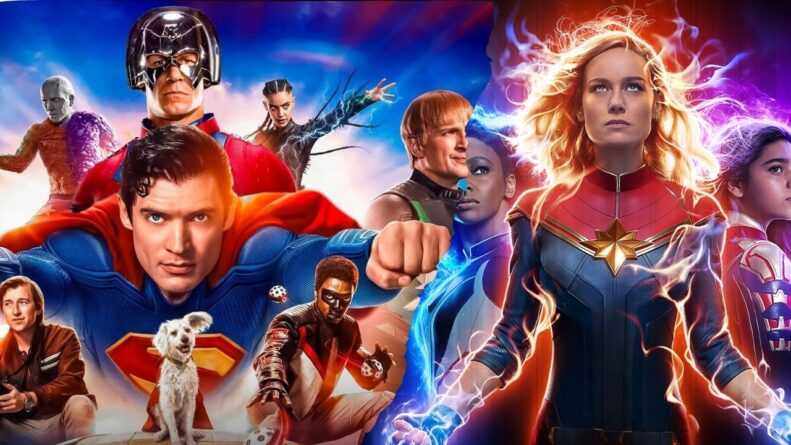
James Gunn saw this disintegration before his eyes and he made an intent that sounds simple but is revolutionary: Every DCU movie must work as a standalone film.
The New DCU Storytelling Strategy
Consider the new universe’s first series, the upcoming Creature Commandos animated show that begins in December 2024. Characters such as Rick Flag Sr. and Circe, are introduced with the fictional country of Pokolistan. Then in 2025, Flag Sr. was the primary antagonist shown in a Peacemaker Season 2. He refers to breaking his back (which occurred in Creature Commandos) and to missions in Pokolistan.
Certain fans can look at these connections, and the whole universe feels lived-in and pays off for those that pay attention. For more casual viewers? They are just idiosyncrasies that add “texture.” You don’t have to watch the cartoon show to know that Flag is a military man with a grudge. The central plot, Flag hunting down those responsible for his son’s death—stands on its own.
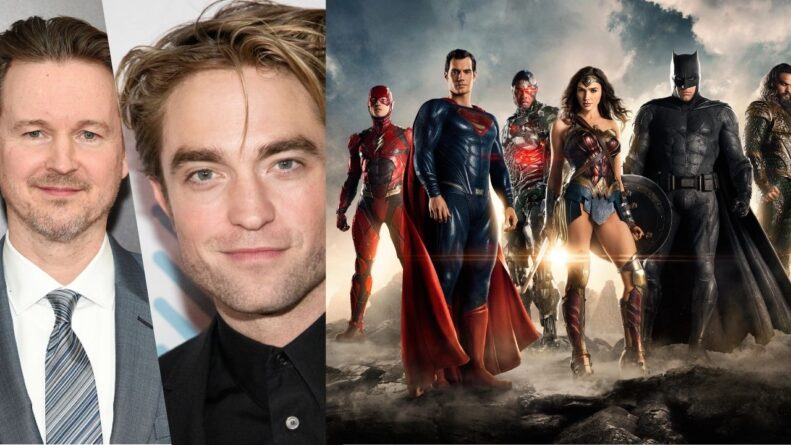
Release dates for movies are the same. There’s no requirement for readers to have consumed any other material when Superman flies into theaters in July 2025. Gunn’s Superman has already been on the scene for three years. There’s no Krypton exploding, no Kansas farm boy routine, no “how I got my wings” montage. We are handed a world where there are superheroes, where the Justice Gang (Mr. Terrific, Hawkgirl, Metamorpho) is already up and running and where we both the viewers and those who lurk within the show’s mythology have to hang or catch on.
Even Marvel’s Kevin Feige himself — the man who is essentially the superhero of Marvel’s master plan attended a London screening and sang the praises of that mentality. You’ll figure out who is Mr. Terrific. When the president of your rival company is complimenting your tactics, you know you’ve got something good going.
Slow and steady world-building, when every superpower needs a solid pseudoscience explanation? passed style of era. The audiences are now smart enough to go into fantasy straight away if the characters are strong and they know what the emotional stakes are.
The Script-First Rule
Here is an industry secret that explains why so many recent blockbusters look so bad: The “fix it in post” mentality of Marvel. Rather than completed scripts, during its breakneck growth Marvel approved projects on the basis of loose pitches and release dates.
How DC Studios Plans to Avoid Marvel’s VFX Chaos
Directors staged enormous action sequences on barren green screens with none of the costume designs locked in, with no practical lighting and without the choreography final. Basic creative choices were punted to post, where drained VFX artists attempted to patch together intelligible movies from dailies of shot footage.
The number of dead was staggering. Marvel VFX workers described brutal overwork, ever-shifting directives from studio heads demanding massive third act rewrites just weeks before premiere, and filmmakers new to heavily CGI-driven pipelines. This was exploited to the breaking point in the mid-2020s, culminating in historic unionization under IATSE. By May 2025, these workers successfully negotiated and ratified their first collective bargaining agreements which provides for overtime pay, pensions, healthcare, and mandatory rest intervals.
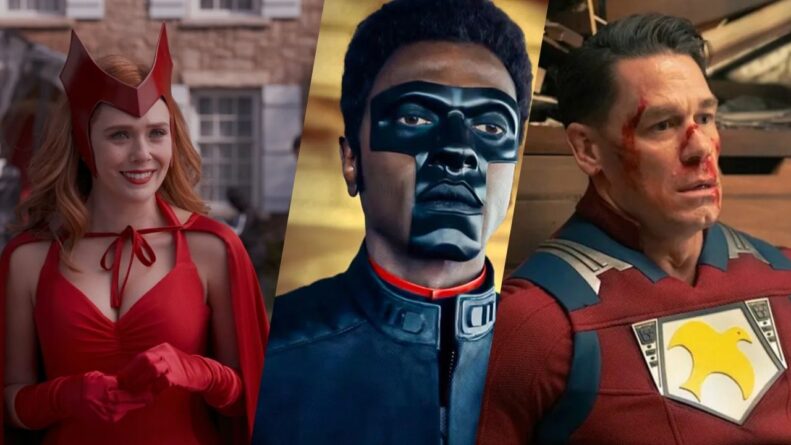
James Gunn gazed upon this bled-out pipeline and implemented a policy that was radical for the time: no project would go into production without a finished, studio-locked script. This ‘script-first’ mentality might appear to be common sense, but it has become revolutionary in today’s Hollywood. With the narrative locked before filming, directors are now able to storyboard all their action sequences, finalize costume designs and have an exact idea of how much CGI they’ll need. VFX suppliers get concrete blueprints rather than moving targets. The endless revisions and last-minute rendering sprints are gone.
Smaller Budgets, Bigger Freedom
The payoff is already clear. MCU films in late stages were inflating to $250-300+ million with reshoots and VFX reworks, but this is extreme fiscal responsibility from DC Studios. Supergirl carries a $150-170 million budget which will hit in 2026) and Clayface thrives on $40 million.
Smaller budgets mean smaller break-evens. Supergirl can gross 40% less than Superman and still turn a profit. Not every movie has to go after a billion dollars. This relieves the pressure that made Marvel productions into joyless corporate chores, and lets filmmakers take real creative risks.
From Snyder’s Dark Cathedral to Gunn’s Creative Sandbox
In order to understand what the DCU is turning into you need to know what it’s turning away from. Zack Snyder bared his soul to the whole DC pantheon with a brutal art-house aesthetic. He thought of superheroes not as people you could identify with, but as contemporary mythological gods.
His movies — Man of Steel, Batman v Superman, Zack Snyder’s Justice League — were grand, operatic tragedies rooted in Christian allegory, extreme slow-motion camerawork and heavily drained color palettes.
Critics labeled it a “cathedral”: breathtakingly beautiful, solemn, hard-edged and unified. But cathedrals aren’t made for evolution. Once the DC Universe found its footing with this dark, end-of-the-world tone, everything had to adapt. There was no place for comedy, whimsy, or — you know — bright sci-fi optimism. A universe designed for a dark, god-like Batman certainly can’t handle Booster Gold without breaking its own reality.
Why DC Is Changing Its Most Iconic Hero
Snyder’s Superman, in particular, was quite polarizing. In three film appearances, Henry Cavill’s incarnation uttered just 159 lines. He was apprehended as a terrifying geopolitical reality—an alien messiah whose being precipitated worldwide paranoia. He became the symbol of divine responsibility by floating above humanity.
The theme changed to counterprogramming in Gunn’s Superman (2025). The David Corenswet version radiates warmth, happiness, and openness. He gets beat. He bleeds. He becomes emotionally distraught when he is unable to rescue civilians in a war between the fictional nations of Boravia and Jarhanpur. He has great chemistry with Lois Lane – who is now an equal partner and not a damsel in distress — and he also stars alongside Krypto, a hilariously disobedient super-dog who ignores commands.
The costume, after all, tells the tale: frequently singed, crumpled, a bit too tight. This isn’t some perfect, infallible god. This guy is a Midwestern nice guy, just an earnest, hardworking guy trying his best.
Gunn describes his take as a “sandbox not a cathedral.” The DCU is a multigenre system in which tone is defined by character needs rather than studio requirements. In 2026 alone, we’ve got Supergirl (cosmic space op!), Lanterns (gritty earthly mystery à la True Detective), and Clayface (small-scale body horror). This is mimicking what you do in an actual comic book experience anyway, where you flip pages and find yourself going from vibrant sci-fi to moody horror.
Multiple Batman Without Confusing Fans
Here’s a paradox that gave Marvel a headache: How do you keep continuity interconnected while letting auteur filmmakers pursue distinct visions? Marvel’s response was traditionally to strangle signatories of its “house style” with directorial voices. The result was a look and tone that blurred together, making movies interchangeable.
This DC Studios issue was solved with the institutionalization of the “Elseworlds” label — taken from the labyrinth of DC Comics publishing — as a core business strategy. Projects under this banner are completely out of continuity and will give top-tier talent the chance to create adult oriented masterpieces, not worried about the implications of crossovers.
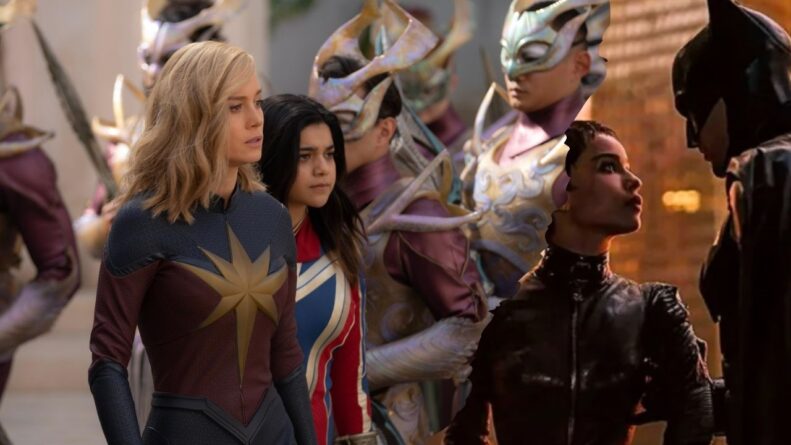
The more ambitious Matt Reeves, now working with a Robert Pattinson trilogy and a spin-off series about The Penguin, The Batman Epic Crime Saga (Robert Pattinson’s Films & The Penguin Series) continues. Todd Phillips’ Joker universe is standalone.
The Harley Quinn cartoon series is still running on Max. When Warner Bros. Discovery CEO David Zaslav famously stated in 2022 that “there is not going to be four Batmans,” he was technically correct—there would be multiple Batmans, they would just be clearly demarcated and marketed so consumers could tell them apart.
This just goes to show that the very idea of multiple iterations is a feature, not a bug. While viewers can bask in Reeves’ hyper-realistic noir, they can also look ahead to the more fantastical “bat-family” team-up to be seen in DC Universe’s The Brave and the Bold. Narrative monopoly is not required for franchise expansion.
The Future of DC Studios
Projecting 2026 to break box office record of this decade, the industry analyst expects it to make $35 billion worldwide. The big increase is being driven by the massive franchise IP owned by each of the two major players.
Spider-Man: Brand New Day and Avengers: Doomsday. But as had been the case in the 2010s, when Marvel essentially ran the roost, DC Studios is now potentially in a position to take substantial market share. Supergirl (June 26, 2026)· Lanterns (HBO)· Clayface (September)·.
If DC Universe can continue to meet the high bar of Creature Commandos and Superman, then that drought will be broken and the greater tide of the economy will benefit these series.
Read More:- Netflix’s One Piece Season 2 Introduced Early Cameo From Original Manga by Eiichiro Oda
Conclusion
James Gunn and Peter Safran’s DC Universe is a step-up in franchise stewardship. An examination of the operational, narrative, and labor failures of the late-stage Marvel and pre-New 52 DCEU has led to a more robust, creatively flexible, and fiscally responsible model.
The “script-first” mandate shields against VFX disasters and budget fattening.
The “sandbox” method pays homage to comic book versatility by way of real tonal diversity. The splitting off of narrative universes removes the “homework” burden while still rewarding dedicated fans. The ‘Elseworlds’ principle protects the auteur vision without further fracturing the corporate logic.
But most important is that the victory of an openly resisted Superman proves they never turned their backs on superheroes; what they did turn their backs on was cynical, ill-conceived, too-burdensome storytelling.
As 2026 looms, the DC Universe isn’t just vying with Marvel. It is setting a new standard for how huge intellectual properties can be created, produced and marketed to an increasingly global audience.
Dive into the world of entertainment with Fandomfans to get more latest updates from movies, series, and celebrities.