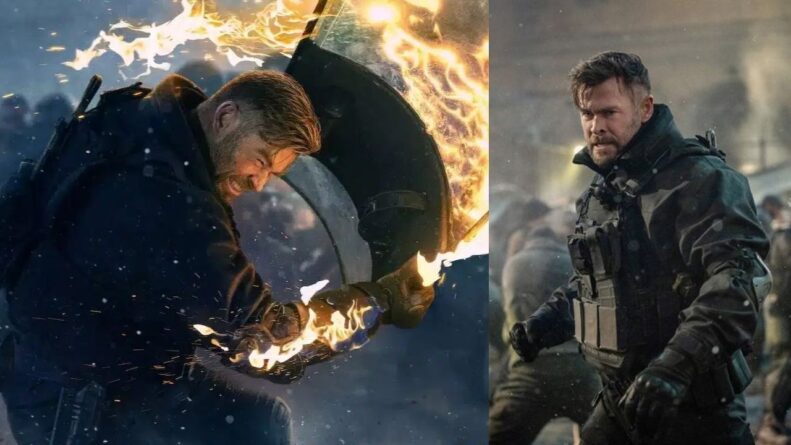
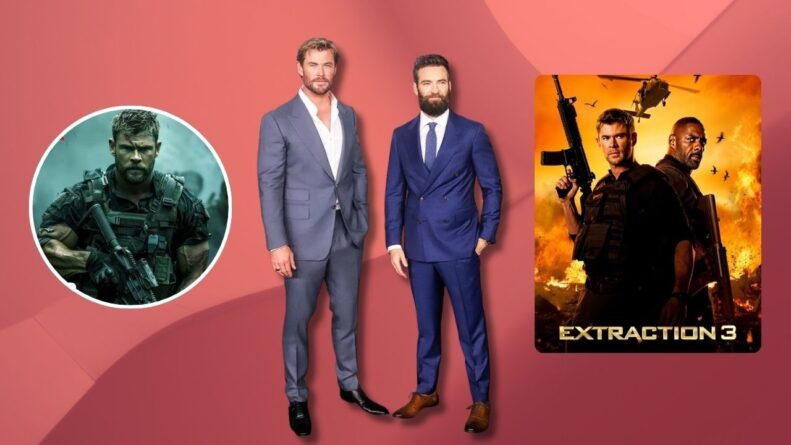
Chris Hemsworth’s Extraction 3 Officially in the Works — Delay Reasons, Story Details & More

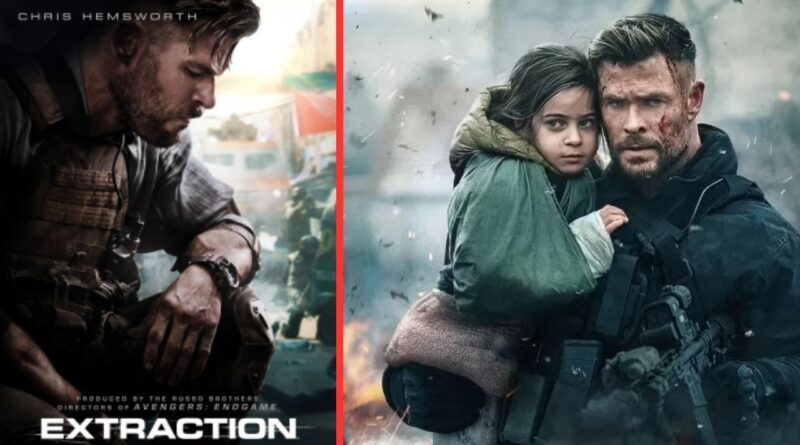
Chris Hemsworth's Extraction 3 is back, Find out about filming status, the reason for delay, the confirmed cast and what the sequel has in store for your fans.

Published: October 9, 2025, 9:22 am

Director Sam Hargrave has revealed details about Chris Hemsworth’s Extraction 3 and it seems like the fans will have to wait a little longer. At the Apple TV+ premiere of his series “The Last Frontier,” Hargrave mentioned in passing that production is slated to begin in 2026. “We roll cameras in 2026, we’ll see how it goes,” which sounds like there’s still some leeway in the date. The most big issue of the delay and Hargrave let his fans wait for the next part of Extraction due to Chris Hemsworth’s busy schedule, especially with his Marvel Avengers films. 

Reasons for the Delay of Extraction 3

Production hold-up is due to several disagreements. Chris Hemsworth stressed the need to make the story-to-script right, telling Collider, “We just wanna make sure that we’ve got it right, that we’ve got a script that’s good enough to go follow the last two, because I am really proud of what we’ve done previously”. 

The creative team is now concentrated on the development of the script and the story. As Joe Russo explained, “We’re in the process of writing that story right now. Hard at work”. In addition to this, managing Hemsworth’s busy agenda, including his Marvel obligations, also extended the timeline. 

What the Previous Movies Have Given Us

The Extraction franchise has become the best action thriller series on Netflix. The original 2020 film was watched by more than 99 million households in its first month, shattering Netflix records and becoming the platform’s most-viewed original film at the time. 

Extraction 2, was released in June 2023, continuing the success with more than 85 million views within its first ten days. The franchise broke the record by being the first movie series to hold Netflix’s no.1 and no.2 spots for two straight weeks.

The films follow Tyler Rake (Chris Hemsworth), a black ops mercenary with a troubled past. Extraction had him rescuing the kidnapped son of an Indian crime lord in Bangladesh. Extraction 2 featured a risky prison extraction in Georgia, where Rake saved his ex-wife’s sister and her children from her violent gangster husband. 

Read More 👉 HBO’s Next Big Move: Why A Knight of the Seven Kingdoms Marks a Turning Point for Game of Thrones

What to Expect in the Third Installment

Extraction 3 is due to start immediately after the end of the second film, opening up with the cliffhanger ending. Tyler and Nik were released after a harrowing mission in Georgia when Idris Elba’s mysterious character, Alcott, intervened. But there’s a catch: he’s got a new job for them, as Digital Spy stated, from his shadowy and apparently ultra-hard boss.

Expect in the Third Installment

Joe Russo has teased not only Idris Elba’s role will be a big one this time around, but the actor is going to have some interesting dynamics with Chris Hemsworth’s character. If you liked the chemistry this duo in Extraction 2, rest assured this sequel will serve more of that cocktail. Plus: Alcott’s employer, who is called a “gnarly motherfucker.” Sounds like there’s a lot of action and mystery right up my alley!  

Cast Members for Extraction 3

  • Chris Hemsworth as Tyler Rake
  • Golshifteh Farahani as Nik Khan, Tyler’s partner
  • Idris Elba as Alcott, the mysterious handler 

Director’s Theme for the Movie

Director Sam Hargrave and writer Joe Russo have now revealed some exciting new information regarding Extraction 3, teasing that the story is going to explore more of Tyler Rake’s emotional state. Russo said Tyler’s character is interesting because he’s emotionally wounded, and his relationship with violence is motivated by self-loathing and guilt. 

Director's Theme for the Movie

It sounds like there’s a lot of play in his backstory that can be told. Hargrave calls the series “a redemption story through sacrifice,” with Tyler seeking meaning through these high-stakes assignments. Fans will also be able to enjoy the series’ signature intense action sequences, all while getting an ever closer look at what makes Tyler tick. Looks like this next installment will bring a nice balance of heart-stopping thrills and tear-jerking moments.  

Conclusion

Extraction 3 is going to be even more action-packed thrills with Tyler Rake back in the forefront ready to adapt to new challenges. Filming in 2026 with a story that promises an exciting continuation … but now, there’s a neat twist. Idris Elba joins the cast in a secret role tied to an influential employer, adding even more layers (and lore) to the franchised mythology. Viewers can expect explosive action, heartbreaking drama, and a new layer of mystery as the show takes us to new corners of its world. Looks like a lot more to look forward to here! 

Alpana

Articles Published : 156

Alpana is Fandomfans Senior Editor across all genres of entertainment. She evolved in the media industry since a very long time, she manages the content strategy and editing of all the blogs. Her focus on story development, review analysis, and research is well-equipped that ensures every article meets the standards of accuracy and depth.

Leave a Comment

Your email address will not be published.

‘Star Trek: Starfleet Academy’ Rebuilds Hope as Episode 6 is Turning Point

Star Trek: Starfleet Academy Episode 6 is a turning point, as cadets confronthard truths, moral sacrifices, and even the end of hope in a shattered galaxy. 

Written by: Mariyam
Published: February 13, 2026, 12:32 pm
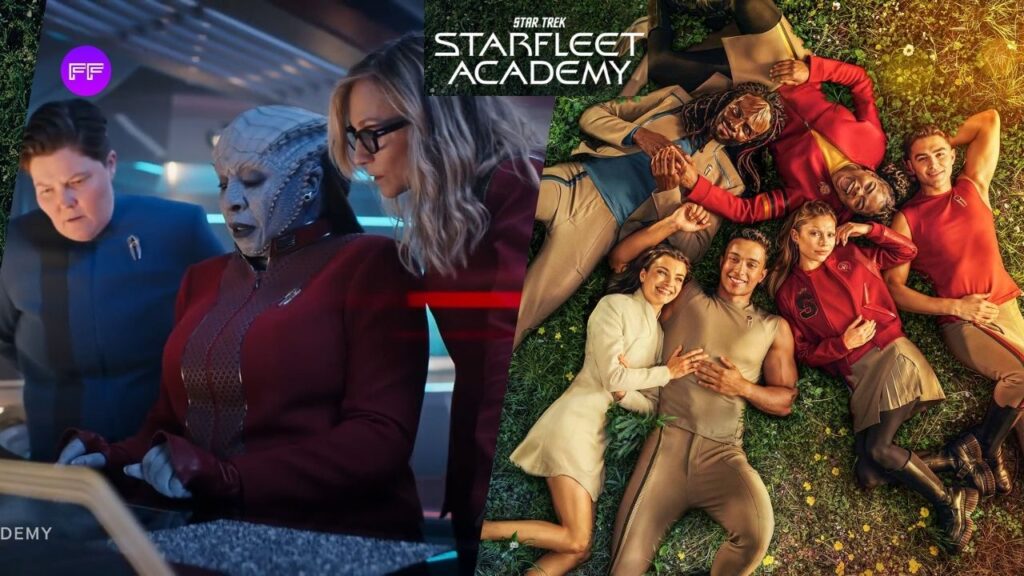
Star Trek Starfleet Academy

When Star Trek: Starfleet Academy premiered on January 15, 2026, we got a whole new show as it gave the entire franchise a soul transplant. Following the launch of Star Trek: Discovery leading us into a 32nd century devastated by “The Burn,” the galaxies felt distant and broken. Academy arrives as the desperately “Architecture of Optimism,” you could call it, because it’s about a generation that doesn’t simply study history — they have to rebuild it.

At the midway point (Episode 6, “Come, Let’s Away”), the series has established itself as an intriguing, if divisive, “teaching hospital” among the stars. 

Learning the Cost of Idealism in a Broken Galaxy

Showrunners Alex Kurtzman and Noga Landau took a sharp left turn away from Trek tradition. Typically we are chasing the best of the best.” In the Academy, taking place on the USS Athena in the year 3195, the school is not simply a campus in San Francisco, as it is a mobile unit where the classroom itself is the front line.

Learning the Cost of Idealism in a Broken Galaxy

It is this paradigm that enables the series to address the cost of idealism. These cadets aren’t legacy hires, they’re survivors of a galaxy that stopped trusting. Seeing them fall on their faces — emotionally and professionally — helps their triumphs later on feel earned, not scripted. 

Casting That Elevates the Entire Series

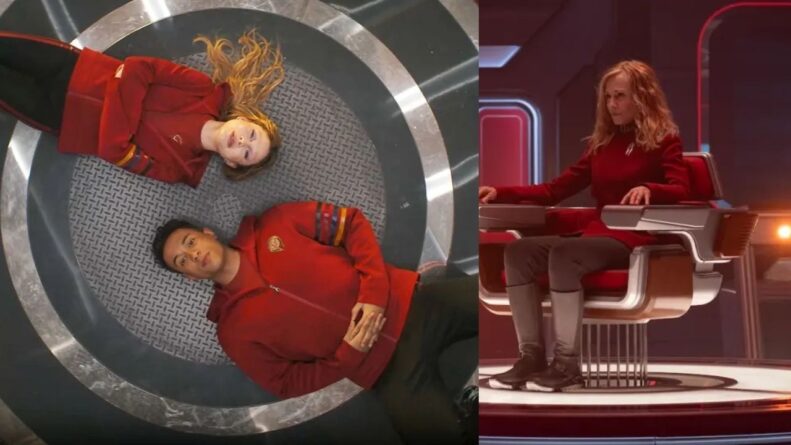
The series derives real dramatic heft from its powerhouse cast, and Holly Hunter’s Chancellor Nahla Ake is a defining force that lifts the whole show. She’s not a hard-nosed commander; she is a “reformed” officer who at one point walked out of Starfleet in protest. Her “steel magnolia” energy is a perfect foil to the raw, explosive energy of the cadets.

Casting That Elevates the Entire Series

Opposite her is Paul Giamatti as Nus Braka. Giamatti never becomes the stereotypical “cackling space pirate” character, instead portraying Braka as a bitter victim of the Federation’s past mistakes. He’s a “Small Man” with a big grudge, a reminder that a single individual with a scheme can be as lethal as a Borg Cube. 

The Bridge to the Past

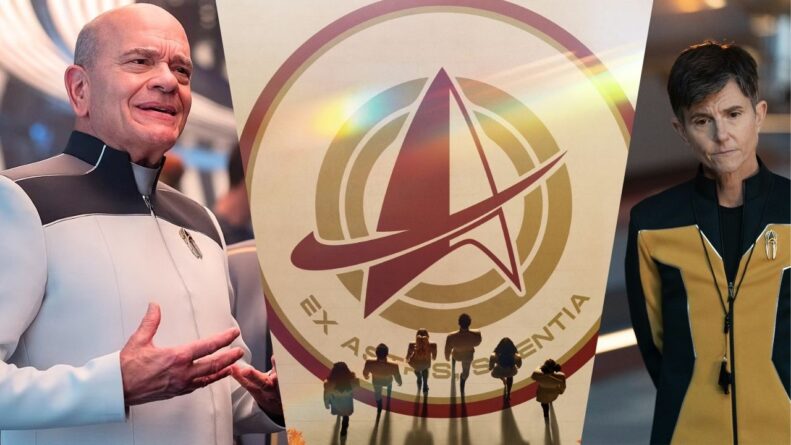
With the addition of Robert Picardo (The Doctor) and Tig Notaro (Jett Reno), you do have the vital connective tissue to Trek’s history.

The Doctor is the “voice of history,” having evolved from a 24th-century medical instrument to an ethics mentor.

Jett Reno is still the final reality check with the dry wit needed to put all the high stakes drama in perspective. 

Character Arcs — A New Class of Starfleet Heroes

Caleb Mir (Sandro Rosta) is a reluctant leader. His vulnerability offers a welcome breath of fresh air among all the “swaggering captains”.

Tarima Sadal (Zoë Steiner): A Betazoid whose abilities are more of a curse than a gift. Her arc culminated in utter bleakness in Episode 6 when she had to take her empathy out as a lethal weapon.

Jay-Den Kraag (Karim Diané): A Klingon who shuns the “warrior” stereotype. In the 32nd century, Klingon is a diasporic identity, and Jay-Den gains his strength from arguing rather than from the bat’leth.

SAM (Kerrice Brooks): A photonic cadet engaging with the “Pinocchio” trope in terms of faith, resulting in a stunning (and divisive) homage to Benjamin Sisko. 

Mid-Season Transition: From Classroom Drama to Survival Horror

The first six episodes made a brilliant transition from “academic orientation” to “survival horror.””

Many singled out Episode 5, “Series Acclimation Mil,” as a love letter to Deep Space Nine. The use of archival audio of Avery Brooks (with the blessing of the Sisko estate) was a gamble that paid off by anchoring the high-tech 32nd century in the spiritual mystery of the Prophets.

Episode 6 Turning Point

But then there was Episode 6. The addition of The Furies—cannibalistic hybrids taken the “CW Trek” whines down several notches. It was a painful reminder that the “teaching hospital” is now a trauma center. Tarima when she rescues the crew by “liquefying” the enemies’ brains, the show is letting you know it’s no longer the age of innocence. 

From “CW Trek” to Mature Sci-Fi Drama

Maybe for the first three episodes, but by Episode 6, Starfleet Academy has got it right. It’s a show about how fragile civilization is, and how much responsibility comes with being the “Class of the Rebirth.” 

Aspect Detail
Theme Rebuilding the Federation through empathy.
MVP Holly Hunter (Chancellor Ake).
Key Set The Sato Atrium (Largest in Trek history).
The Big Bad Nus Braka & The Furies.

The first half of a season has established a high standard. We’ve had “sorting hat” moments; now we’re seeing the scars. As they pursue Nus Braka into the latter half of the season, these cadets have moved beyond mere students—they’re the final hope of a Federation desperate to make its way back toward the light. 

Read More 👉 Star Wars Character Kylo Ren’s Iconic Line That Changed the Skywalker Legacy Forever

Conclusion

What Star Trek Starfleet Academy truly is not so much another story about the spacefaring life — it’s what hope looks like in a shattered galaxy. Star Trek: Discovery showed us the end of the world, Academy the slow, painful, everyday work of rebuilding. By moving the storyline focus away from iconic captains to fallible cadets, from glory missions to moral consequence, the series recalibrates optimism as something acquired rather than bequeathed. 

Dive deeper into the world of entertainment with Fandomfans to get updates from your favorite movies.

Mariyam

Articles Published : 76

Mariyam Khan is Fandomfans Content Writer and providing reports and reviews on Movie Celebrities, and Superheroes particularly Marvel & DC. She is covering across multiple genres from more than 4+ years, experience in delivering the timely updates.

Leave a Comment

Your email address will not be published.

‘The Mandalorian and Grogu characters’: Mandoverse Steps Into Cinema Differently with Mercenary Guard Droid

The Mandalorian and Grogu characters introduces the Mandoverse to the big screen with the Mercenary Guard Droid, Rotta the Hutt & stakes that shift the galaxy.

Written by: Mariyam
Published: February 18, 2026, 7:55 am
The Mandalorian and Grogu characters

The Mercenary Guard Droid is foreshadowed as a primary catalyst and menace in the next Star Wars film recently revealed in merchandise at Toy Fair 2026. The May 22, 2026 theatrical debut of ‘The Mandalorian and Grogu characters’ is not just another ‘Star Wars’ release date – it’s a turning point. Yet it will shortly be the first time since The ‘Rise of Skywalker’ wrapped the Skywalker Saga in 2019 that Lucasfilm has brought Star Wars back to the big screen. The pressure on this movie is immense.

The Mandalorian and Grogu characters is not just a movie but a test. A test to see if a streaming-churned universe, neatly constructed on Disney+, can be extended to the wider cinematic space. “Mandoverse” has thrived in episodic form, but said the big screen requires more: scale, spectacle and emotional weight. And all the signs out of this project indicate that the move to theaters is being considered a strategic progression, not just a format change. 

Cinema, Not Streaming: A Different Kind of Storytelling

Jon Favreau, the director, has been clear that transitioning from series television to film is more than just a matter of larger screens. It applies to the size of the language, visual and narrative.
A Different Kind of Storytelling

The tightly controlled environments of StageCraft (“the Volume”) that have come to define the series are now being replaced with IMAX-scale compositions, vast landscapes, and cinematic movement. This is Star Wars turning back into spectacle.

Star Wars Strategic Storytelling Transformation

The marketing distilled that dichotomy perfectly. The playful Super Bowl spot stole the show, but a more serious teaser featuring X-Wings, an R2 unit and the gritty Razor Crest refocused expectations. It was a very nuanced but clear signal: The Mandalorian and Grogu characters is not a parody of Star Wars. That’s the western-in-space motif, tuned up for the movies. 

The Rise of a New Kind of Enemy

One of the more intriguing revelations didn’t come from trailers, it came from toys. Toy Fair 2026 brought us a “Mercenary Guard Droid” character. And while most background droids are generic, this one was differentiated by special packaging, multiple versions and exclusive collectibles. In Star Wars-speak merchandising, that means “important.

Why is the Mercenary Guard Droid so Important?

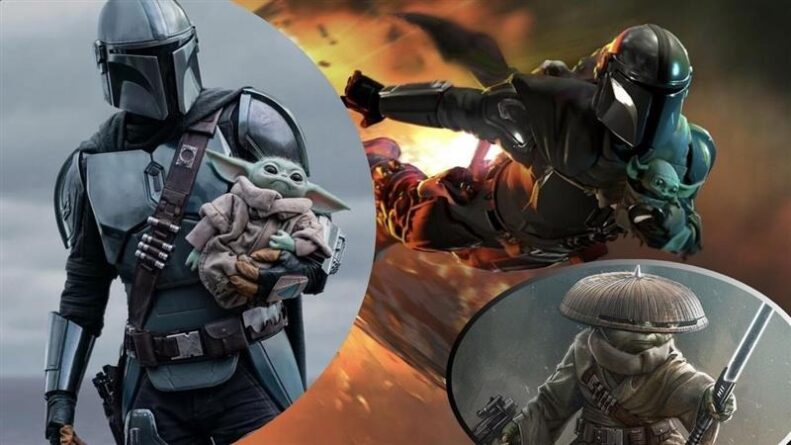
 Mercenary Guard Droid is not a robot with a mind of its own. It’s a survivor. Developed using Clone Wars-era technology, its form is reminiscent of B1 and BX-Commando Droid models were droids crafted en masse for warfare. But take the word mercenary and put it front and center. This droid isn’t following orders. It’s deciding. 

And this is hugely devastating – psychologically for Din Djarin.

The “Perfect Rival” Theory

Din is a child of the Clone Wars. He was scarred by trauma starting when battle droids bombed his home and slaughtered his family. For years he despised droids—not as tools, but as monsters. The things he experienced later softened that hatred, but the scar remains. And now he’s up against a sentient droid antagonist who bears the physical legacy of the very machines that made him an orphan. This droid isn’t just some physical link to his past, but its malevolent consciousness and warmaking decisions make the emotional stakes even higher. 

  • Din is a man in armor.
  • The droid is a machine about life.
  • A human encased in metal and an emulated human in metal. 

So even the combat design borrows from that. The droid’s combination with a STAP (Single Trooper Aerial Platform) establishes vertical fighting parity with Din’s jetpack—making the skies a battleground. This isn’t merely narrative conflict. It’s Binford Choreography, a big screen spectacle. 

Embo: The Professional Threat

Along with the psychological antagonist lurked another kind of threat: Embo.

The Kyuzo bounty hunter, familiar in animated canon, is the definition of professional. No armor. No Mandalorian tech. It’s precision, discipline, and lethal skill. His iconic hat, his bowcaster, and his stature make him a walking antithesis to Din Djarin’s encased presence.

The presence of Dave Filoni, Embo’s original voice makes his live action debut all the more real. Filoni has been known to bring animated characters into live canon and Embo is just that. 

Embo and the droid represent opposing energies, their each unique facet of discord. Embo is the embodiment of calculated precision and lethal professionalism, and the droid is burdened with psychological depth and the ghost of what has passed. 

Their upcoming battles with Din represent an age-old battle: brawn versus brains, crude technology versus refined technique. This play of light and shadow right here evokes the spirit of the samurai film, which is at the core of Star Wars’ storytelling DNA. 

Rotta the Hutt: The Story Catalyst

Rotta the Hutt has gone through an amazing evolution from the weak infant dubbed “Stinky” to a sinister gladiator. Scarred from his battles and now armed and physically menacing, this Rotta played by Jeremy Allen White represents not only personal growth but a shift in who holds the power.

As Jabba’s heir, Rotta’s very existence is a major political threat. In a galaxy filled with chaos and uncertainty, he represents the promise of uniting the scattered Hutt Cartel. This accumulation of power is alarming, but also brings about enemies who want to stand in his rise. 

Each Character Related to Rotta

The Mandalorian and Grogu characters structure serves to emphasize the function of each character, all of whom revolve around Rotta, in which the plot revolves around a single mission. Din Djarin assumes the mantle of protector, shielding Rotta from danger. Rotta itself is the linchpin, the center-piece of the mission stakes. Embo becomes the merciless predator, hunting Rotta to the ends of the earth. 

The droid, on the other hand, the personal nightmare becomes an element of fear and nerve-racking suspense. All of this is focused on one try: the attempt to control, protect, or eliminate Rotta, driving the story forward with purpose and intensity.

Order vs Chaos: The New Republic and the Remnant

Among the underworld intrigue is the New Republic, headed by Colonel Ward (Sigourney Weaver), and its bureaucracy that must confront reality. Her part mirrors a classic conflict: bureaucracy against reality. The New Republic craves stability but does not have the stomach for it — so it employs the likes of Din Djarin to carry out what it cannot put on any official paperwork.

Below them is the Imperial Remnant — warlords, walkers, and regimented militarized entities for the unfinished business of the Empire. AT-ATs, snow troopers, and mechanized units tell you this isn’t just bounty hunting anymore but it’s war-scale fighting. 

The Emotional Core of the Film

The Mandalorian and Grogu characters is at the heart of the narrative and embodies hope, purity, and the promise of a brighter future. His very existence, however, is a direct antithesis in opposition to Din Djarin’s past filled with trauma and hardship. The emotional core they share allows the story to transcend the action and explore deeper themes of maturation, connection and fear of loss. 

Pedro Pascal anchors this emotional journey as Din Djarin — Din’s evolution from a solitary fighter to a wryly devoted but still reluctant father is a sweeping tale of redemption, where the odds they face not only forge them together, but transform their very fate. 

Read More 👉  Outlander Star Rosie Day Directing One Hundred and Fifty-Two Days with The Night Manager star Alistair Petrie

Mandoverse Stepping Into Mythic Scale Storytelling

The Mandalorian and Grogu characters is a pivotal chapter that takes its story to a place far beyond a simple episodic journey. It accepts a deep change, and provides a cinematic view that combines symbolism and politics with mythic storytelling and stakes that are highly personal.

Legacy at Its Stake

Now, instead of just enemies, the antagonists are themes unto themselves. The stakes are not just survival, but also legacy and power. It’s all grandiose action, but the emotional core is petite and potent.

The Mandalorian and Grogu characters story is both introspective and far-reaching. The Mandalorian and Grogu characters is more than a foundling, and Din Djarin is more than a lone bounty hunter. They carried fate and memory and history together. Their enemies are now echoes of trauma and survival, not shadows to be scrubbed clean. 

Star Wars Narrative Transformation

The Mandalorian and Grogu characters isn’t simply a matter of surviving hardships — it’s about seeing what there is to see after survival. It’s about the decisions, the consequences, the transformations that craft what it means to safeguard, guide, and mend. The Mandoverse boldly carves out a territory where screen size matches not just visual scale but narrative ambition.

Conclusion

‘The Mandalorian and Grogu characters’ is more than the Mandoverse making its theatrical debut, it’s Mandoverse birthed into true cinematic myth. Symbolic antagonists, greater emotional stakes, and a plot rooted in legacy rather than spectacle for the sake of spectacle transform the film’s Star Wars from episodic adventure to mythic storytelling.

Din Djarin and Grogu are at the center, but they’re not just survivors, they’re protectors of a future defined by memory, responsibility, and purpose.

No, this time it’s not just Star Wars coming back to the big screen, it is Star Wars ushering in a new age. 

Fandomfans deliver updates and theories from movies and series, and catch up to get interesting stories.

Mariyam

Articles Published : 76

Mariyam Khan is Fandomfans Content Writer and providing reports and reviews on Movie Celebrities, and Superheroes particularly Marvel & DC. She is covering across multiple genres from more than 4+ years, experience in delivering the timely updates.

Leave a Comment

Your email address will not be published.