Home > Web Series > Fallout: How the Post-Apocalyptic Giant Is Still Ruling..
Fallout: How the Post-Apocalyptic Giant Is Still Ruling the Streaming World
Find out why Fallout is still dominating the global streaming charts with record viewership, growing fan excitement, and massive impact ahead of Season 2.
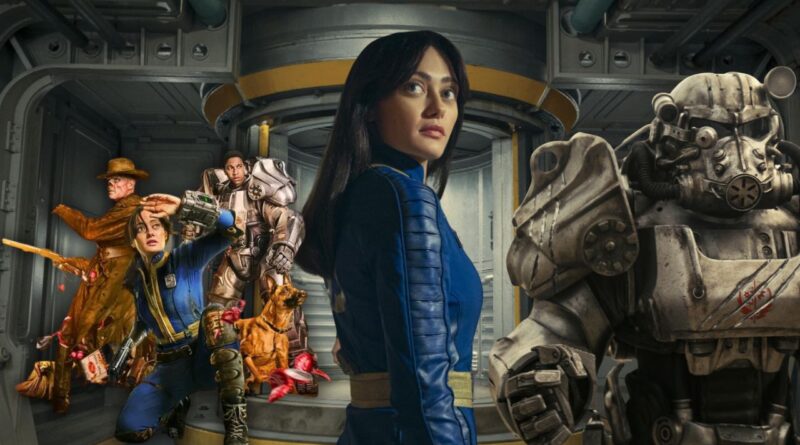
Amazon Prime Video’s Fallout, developed by Graham Wagner and Geneva Robertson-Dworet, not only became a streaming sensation — it burst into a cultural and commercial powerhouse. It is six months since the series first aired, and it still rules the global charts as record-breaking and redefining what a video-game adaptation can be. What many saw as a dangerous experiment has turned into a model success narrative, bringing in millions of new audiences, breathing fresh life into a 27-year-old gaming franchise, and proving that the much ballyhooed “video-game adaptation curse” can be broken with the right vision.
Why Fallout Is Still Vault-Dwellin’ on Top of the Streaming Charts
Half a year after Amazon Prime Video released all eight episodes of Fallout, the series isn’t just eking out a living in the streaming wasteland, it’s flourishing. It’s not just another post-apocalyptic show, it’s a global phenomenon and one of the biggest hits the platform has ever had. The question about Fallout isn’t whether the game was popular, but why it stayed as a chart staple so long after the initial binge had ended.
The figures show an explosive story. Prime Video has confirmed that the series, worldwide, has now been seen by over 100 million viewers. Fallout is now in the same rarefied air as Amazon’s biggest fantasy property, The Lord of the Rings: The Rings of Power, if that helps put things into perspective. So it wasn’t just eyeballs that were being counted, we were seeing engagement.
Image credit: IMDb
The series is the first non Netflix series ever to break 2 billion minutes viewed for two weeks in a row according to Collider. This high rate of consumption confirms that Amazon’s risky decision to greenlight the show was a commercial success, and that the show had an extraordinary ability to get viewers to binge, particularly in the highly sought-after 18-34 demographic.
Most importantly for the platform itself, the show contributed to an 8% increase in Prime Video average daily viewership during its debut month and says a lot about the show if it drove a jump in average daily viewership, Fallout not only held the attention of existing subscribers, it attracted new users and growing platform engagement.
So where exactly did Fallout go right to defy the “video game curse”?
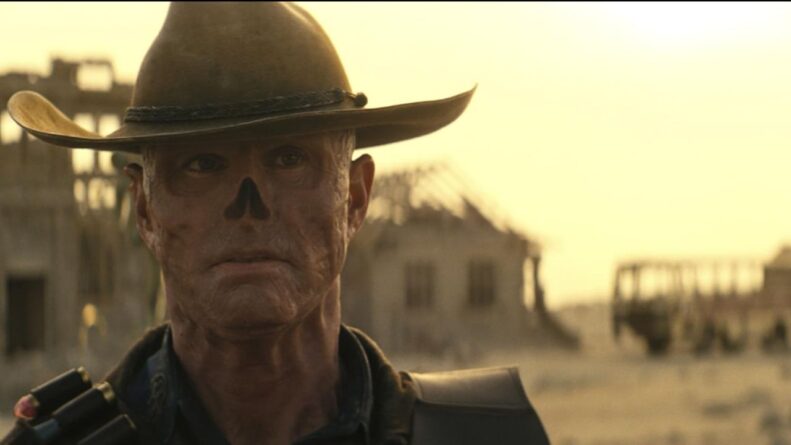
It struck just the right balance between creative fidelity and narrative inventiveness. The show perfectly encapsulated the series’ distinctive retro-futurist style and darkly satirical humour, garnering an outstanding 93% Certified Fresh ratingfrom critics. But instead of retelling the story of a beloved game, showrunners Graham Wagner and Geneva Robertson-Dworet write an all-new, canonical adventure, centering on Lucy MacLean, Maximus, and the gloriously scenery-chewing Ghoul (Walton Goggins). This ground-up approach, taking advantage of the larger world rather than a specific storyline, appealed to long-time players, while welcoming new players to the franchise.
Image credit: IMDb
And the best demonstration of its transmedia potency is the very real gold rush it inspired in games. The show became a massive, $80 million marketing bonanza for Bethesda. Player counts for the Fallout back catalogue, meanwhile, doubled overnight following the debut on platforms such as Steam. Even the 14-year-old classic New Vegas saw its concurrent players spike to 20,000. This amazing bonanza showed how an excellent adaptation can prolong the money-making lifecycle of an entire IP catalog forever.
Season 2 Hype — What Comes Next for Vault-Dwellers?
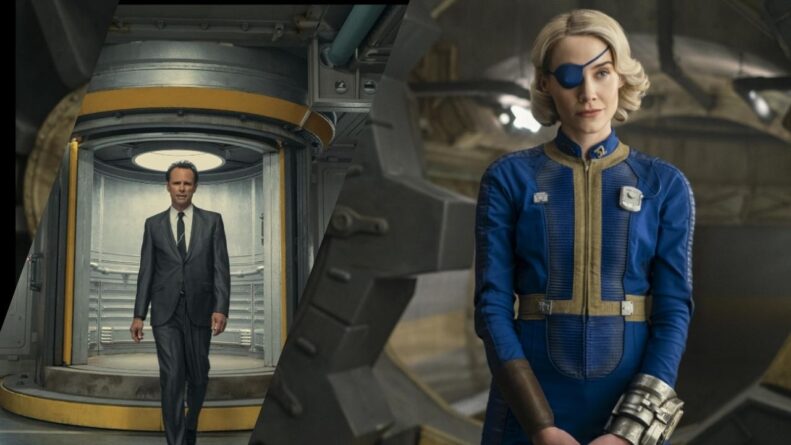
Now, it’s all about Season 2, and the buzz on forums like Reddit is palpable. The first season ended with our trio en route to New Vegas, one of the series’ most iconic locales. Fans are speculating about lively Deathclaw encounters as well as the return of the New California Republic (NCR). But the real stakes drama is that Justin Theroux is playing Mr. House. Reddit is already talking about the intense canonical tension this introduces, and whether the show will stay true to House’s character – a calculating isolationist who was obsessed with preventing the Great War or turn him into a Vault-Tec henchman.
Image credit: IMDb
IGN reports, To make sure that excitement endures, Amazon is going with a strategic shift: the Season 2 premiere will arrive on December 17, 2025, then the series will release weekly until the finale on February 4, 2026. This shift away from the Season 1 binge in its entirety is intended to drag discussion and retention along over weeks, and take advantage of the massive, proven global audience.
Conclusion
Fallout is now more than just a popular show — it’s a multi-platform phenomenon that’s changing how studios consider adaptations, fan loyalty, and long-term engagement. From blistering ratings to the reinvigoration of a whole gaming franchise, the series speaks to the idea that staying true to a franchise’s heart while telling bold new stories can create historic success. And with much-anticipated Season 2 to be released weekly from December 17, 2025, the wasteland will soon be going wilder! One thing is for sure: Fallout is not going away from the charts anytime soon, it’s building an empire.
Fandomfans love diving deep into the worlds that fans obsess over. We deliver breakdowns, character guides, reviews, and updates that help you stay ahead of the curve.
Emma
Articles Published :
36
Emma Miller is an entertainment enthusiast who is focusing on crafting storytelling blogs across all genres. Her special focus is build up around superheroes, thrillers, & historical dramas and movies. Her experience of delivering sharp review analysis and interview podcasts is helping fans to get transparency about their favorite cinema.
Westeros Is Not Done Yet: A Knight of the Seven Kingdoms Brings a New Legacy
Discover how A Knight of the Seven Kingdoms keeps the world of Westeros alive with new characters, rich storytelling, and a legacy that bridges the past and future.
For a franchise that ended one story by burning half a continent to ash, Westeros has an odd talent for making you care about small things again. That is exactly what A Knight of the Seven Kingdoms pulls off. After Game of Thrones gave us prophecy and mass destruction, and House of the Dragon gave us a family tearing itself apart over a chair, HBO’s newest entry in George R.R. Martin’s world does slow down and give us a dynamic.
There is no war council plotting the fate of nations here. Instead, the story follows a hedge knight with more honor than money, a young squire whose identity is hidden from everyone that could change everything if it is revealed. And a path leading them into conflict again and again which neither of them asked for. Let’s dive into the deeper details of the quieter tale of the Game of Thrones franchise.
George Martin’s Tales of Dunk and Egg Sets the Stage
A Knight of the Seven Kingdoms is adapted from Martin’s Tales of Dunk and Egg, a set of novellas he began writing decades ago, long before Fire & Blood or House of the Dragon existed as ideas anyone outside his head could see. The show picks up roughly a century before the events of the original series and about 77 years after the House of the Dragon timeline closes, when the Targaryens still sit the Iron Throne and dragons have only just vanished from living memory.
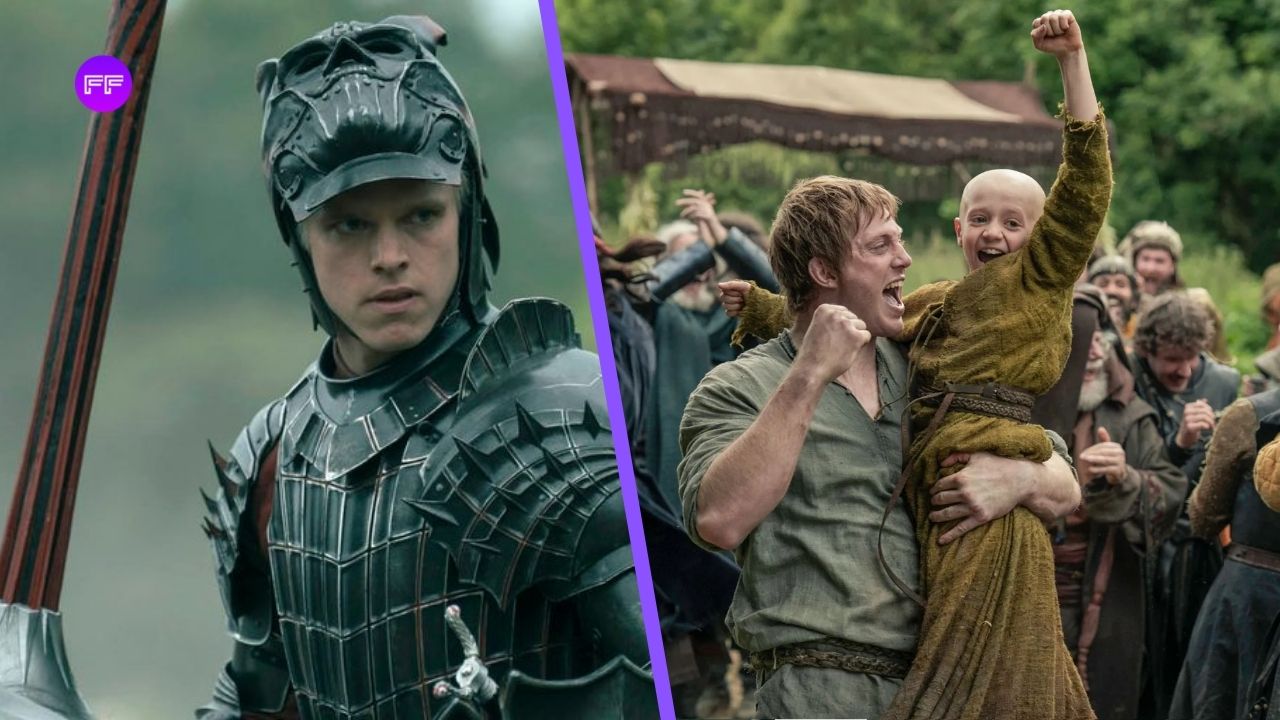
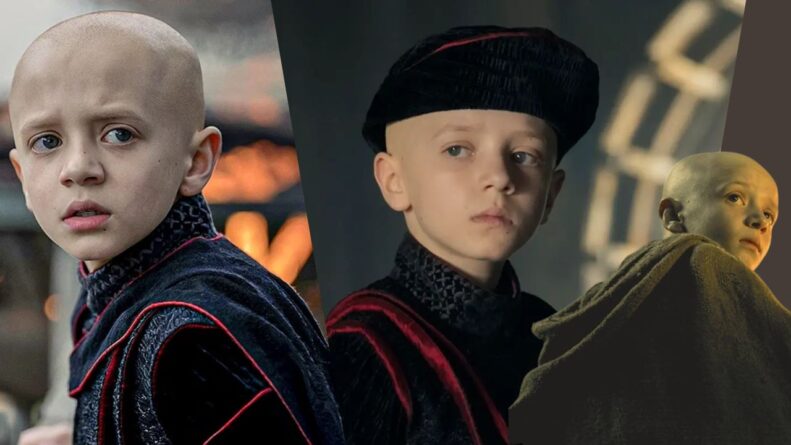
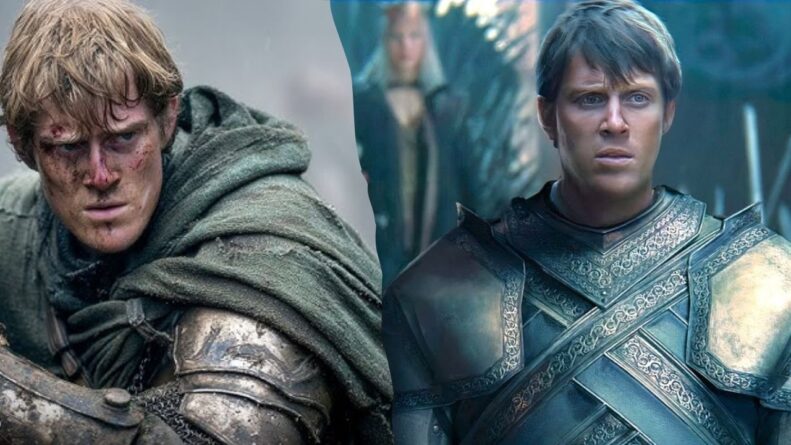
Ser Duncan the Tall, played by Peter Claffey, is a hedge knight in the truest sense of the word — landless, largely broke, and defined less by his birth than by the code he refuses to abandon. His friend, Egg, a character played by Dexter Sol Ansell disguises himself as a clever, bald young boy who is actually a Prince Aegon Targaryen on a journey through the seven kingdoms. Rather than the Game of Thrones-style storyline involving deception and the pursuit of power, A Knight of the Seven Kingdoms finds its drama between two friends trying to defend to do the right thing in a world that rarely favors honor.
How A Knight of the Seven Kingdoms Storyline Shifts from GOT
HBO could have easily tried to recreate the big spectacle that made Game of Thrones a worldwide phenomenon. But showrunner Ira Parker went with a more low-key, character-driven tact that paid off. Its six episodes in the first season is a refreshing change of pace — they’re around 30 to 40 minutes instead of the feature-length episodes fans have come to expect. Parker has spoken about how freeing that structure was, saying it meant the writers did not have to stretch a story that was never built for ten episodes in the first place. Rather than stretch a fairly compact story out into a long season.
That discipline shows in the storytelling. Tournaments, taverns and dust roads are envied by dragon war and politics room. The stakes are personal, not civilizational that somehow makes them hit the land harder. When Dunk defends a stranger for whom he stands to gain nothing, it matters because the show has made you believe he really has nothing to gain.
Viewers & Critics Response on the Season 1
A Knight of the Seven Kingdoms caught the lost audience of GOT and silently reached their hearts after a few days of its release in January. The series received critical appreciation for its intimate storytelling and outstanding performance of actors that received a 94% approval rating on Rotten Tomatoes based on over 170 reviews. The scale suggests that returning to Westeros through a more gentle, emotional, character-driven narrative is better rather than high-stakes drama on kings landing.
A few days post-release, HBO announced millions of U.S. viewers, and as the season reached its finale, the show was averaging around 14 million viewers per episode domestically and approximately 26 million globally, making it one of the most successful series premieres in HBO Max’s history. For a story about a hedge knight with no land and a squire nobody was supposed to notice, that is a significant statement.
What A Knight of the Seven Kingdoms Season 2 Brings
What makes the title of this piece more than just a clever hook is that Westeros genuinely is not finished expanding. The series was renewed by HBO for a second season prior to the premiere of the first, with the next chapter to adapt The Sworn Sword and to be expected in 2027. Martin has also stated that he provided the show’s producers outlines for 12 unpublished Dunk and Egg stories, well beyond the three novellas that have been officially released. The plan, at least as it stands, is big, complicated, and at least for the moment ambitious: The published material first, then using that as a base to expand the saga over the next 20 years.
That’s a lot of runway from a show that came out of the gate asking its audiences to care about a knight that no one else in his own world seemed to care about. It is also further confirmation that the franchise doesn’t require dragons flying in the sky or armies battling at the eye of the gate to capture an audience. A decent man just trying to keep his word is sometimes enough.
A Knight of the Seven Kingdoms does not try to replace what came before it. It simply reminds you why Westeros was worth returning to in the first place.
Conclusion
A Knight of the Seven Kingdoms showed us a different side of Westeros where dragons, wars, or the Iron Throne doesn’t define it. Instead, the story follows the two companions Dunk and Egg —- their choices, their flaws, and the values they cling to when the odds are stacked against them.
HBO has been able to come up with a new way to grow the franchise and keep the series going with a second season. As A Knight of the Seven Kingdoms Season 2 reminds us that in a kingdom plagued by fixation on its crowns and conquests, the most memorable champions are oftentimes the ones simply opting to do the right thing.
Dive deeper into the details of movies, series, and celebrities with Fandomfans to get the latest updates and theories.
Alpana
Articles Published :
164
Alpana is Fandomfans Senior Editor across all genres of entertainment. She evolved in the media industry since a very long time, she manages the content strategy and editing of all the blogs. Her focus on story development, review analysis, and research is well-equipped that ensures every article meets the standards of accuracy and depth.
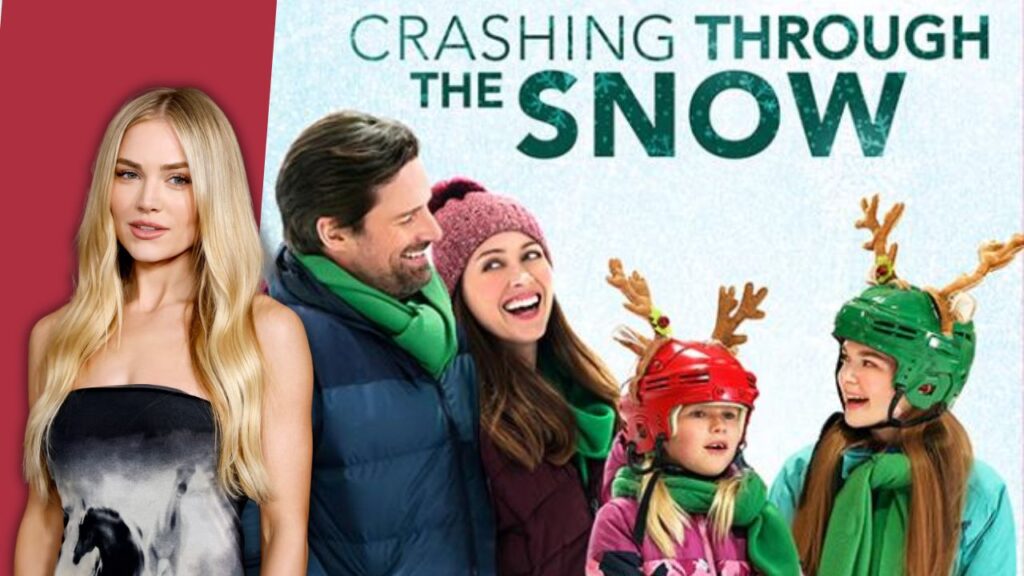
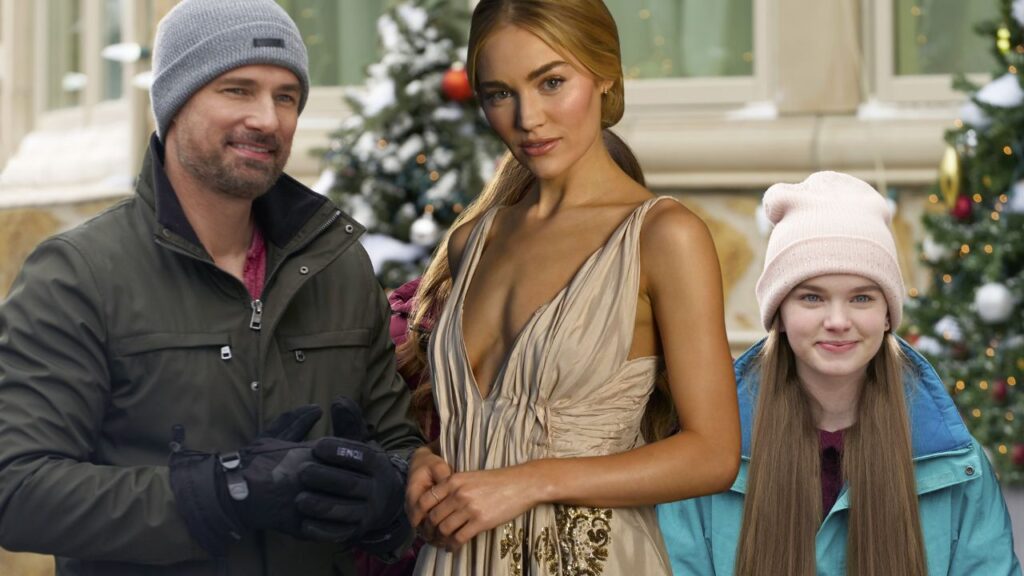
Michelle Randolph is officially stepping into the light. After making a name for herself with her breakout roles in Taylor Sheridan’s hit dramas, the up-and-coming actress has been cast as the female lead in Amazon MGM Studios’ holiday rom-com, Clashing Through the Snow. She stars opposite The Summer I Turned Pretty favorite Christopher Briney in her first major feature film role. This is a major career moment for Randolph and fans can’t wait to see what she does next.
Michelle Randolph’s Rise Through Taylor Sheridan’s Prestige TV Universe
When Randolph made a splash in 1923, a spinoff of Yellowstone, opposite Hollywood legends Harrison Ford and Helen Mirren, she was an unknown herself. Her performance as a determined young woman finding her way through the social-political landscape of the post-war era won her critical praise and a devoted following.
That success led directly to her booking Landman-here she’s the rebellious, beguiling Ainsley Norris, the daughter of the character played by Billy Bob Thornton. The series became Paramount+’s largest global premiere week for originals, with Randolph’s character becoming an instant fan favorite.
Michelle Randolph Opens Up About Impostor Syndrome
The thing that’s most incredible about Randolph’s journey isn’t even the roles she’s landed, it’s the confidence she’s gotten along the way. She’s also been refreshingly candid in recent interviews about battling impostor syndrome while appearing alongside some of Hollywood’s most venerable veterans.
“I have worse imposter syndrome,”
—she confessed
Though she’s getting better about being less hard on herself when she sees that actors whose work is the most celebrated in this industry have doubts like hers. This vulnerability is one of the reasons she has gone on to be beloved by viewers who find her refreshingly real in a business often characterized by meticulously constructed personas.
Clashing Through the Snow Plot, Director, and Creative Team
Directed by Carlson Young (the lovely rom-com Upgraded), the film is set to give you a treat. Amazon is presenting Clashing Through the Snow as Planes, Trains and Automobiles for the new age—a contemporary take on the classic 1987 John Hughes film that starred Steve Martin and John Candy. Written by Love Hard’s Daniel Mackey and Rebecca Ewing, the script combines smart, relatable banter with genuine feeling, all framed by a festive holiday setting.
‘The Summer I Turned Pretty’ Impacted Christopher Briney’s Role
Christopher Briney is at a turning point in his career with the age-appropriate lead role, after breaking through as Conrad Fisher in the hit series The Summer I Turned Pretty. After enchanting young viewers for three seasons, Briney is now taking on different projects, eager to prove his versatility outside of the darling teen romance series. His casting opposite Randolph has also created a buzz, with fans looking forward to their on-screen chemistry.
Production will begin in February for a planned holiday 2026 release ― which is just right for audiences looking for some good vibes around the winter holidays. This is a big step career-wise for both leads, but especially for Randolph, whose trajectory from unknown to co-starring in a major streaming holiday movie demonstrates the power of steady, captivating work.
As the landscape of entertainment shifts, Michelle Randolph is a testament to the fact that those performers who are truly able to be both strong and vulnerable will eventually have their moment. Crashing Through the Snow seems to belong to her.
Conclusion
The path Randolph’s taken seems less like a sudden ascendant storyline, and more the culmination of an incredible amount of hard work. From competing with iconic attorneys in 1923 to becoming a Landman favorite, she has earned straight-faced, hardened, and genuine connections with audiences.
Clashing Through the Snow is more than just another holiday rom-com—it’s a pointed signal that Randolph can carry a story, not just support one.
Dive into the cinema world with Fandomfans to get the latest update from your favorite celebrities.
Mariyam
Articles Published :
77
Mariyam Khan is Fandomfans Content Writer and providing reports and reviews on Movie Celebrities, and Superheroes particularly Marvel & DC. She is covering across multiple genres from more than 4+ years, experience in delivering the timely updates.