Why Chris Evans Was Chosen as Captain America
Discover why Chris Evans Captain America casting was the perfect choice. Learn what made him the ideal actor to portray Marvel's iconic superhero.
Published: July 27, 2026, 12:43 pm

Discover why Chris Evans Captain America casting was the perfect choice. Learn what made him the ideal actor to portray Marvel's iconic superhero.
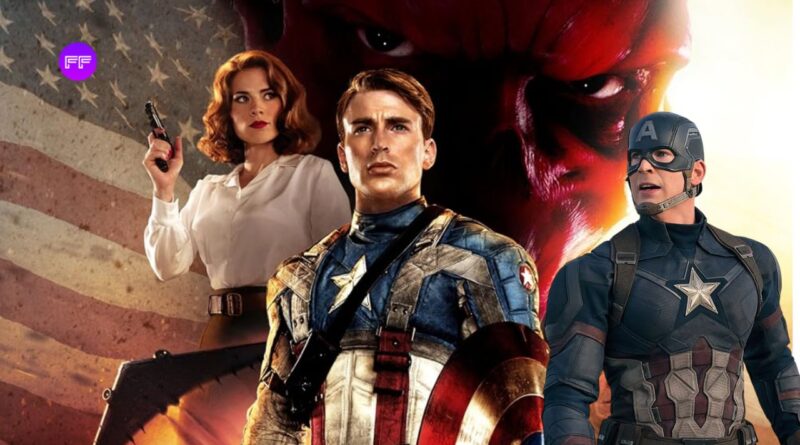
The actor who became the most obvious casting choice in Marvel history almost wasn’t cast at all. The Chris Evans Captain America role isn’t a simple casting. He is an actor who turned down this role but the studio didn’t take no for an answer. Casting directors bend down their rules to make it happen.
Looking back now, it’s hard to remember that the actor destined to define Steve Rogers had no interest in picking up the shield. And Marvel Studio just proved, casting really matters as Hollywood comeback could anchor a superhero blockbuster, Robert Downey Jr. back into the MCU as Doctor Doom is an example.
Casting director Sarah Halley Finn ran a genuinely exhausting search for Captain America. She sat through round after round of screen tests that just didn’t land. The specific blend of old-classic style decency and body structure is hard to see in anyone. And Even isn’t in that line up because he already played a Marvel character, Johnny Storm.
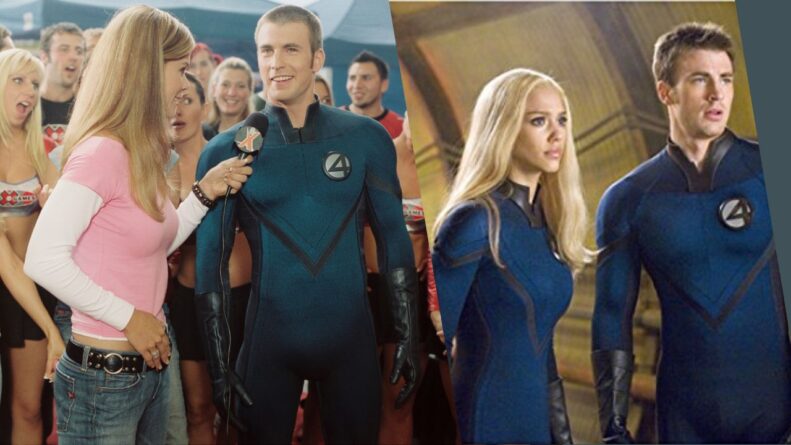
Yeah, that Sue Storm’s brother in the Fantastic Four movies from 2005 and 2007. And there was a rule in Marvel Studio at the time that the same actor can’t play the two different comic-book roles. It muddies the brand. Finn knew Evans might fit Steve Rogers, but she sat on that instinct because of the rule.
It took a string of underwhelming screen tests before she finally said it out loud in a casting meeting:
Why not consider Chris Evans?
The room agreed almost instantly. People already liked him as an actor. They’d seen the work. And enough of what makes Chris Evans Captain America tick — earnestness, a kind of stubborn decency — was already visible in how Evans carried himself on-screen. Marvel broke its own rule for him.
Two names come up constantly when fans dig into the Captain America casting search, and neither of them ended up wearing the suit.
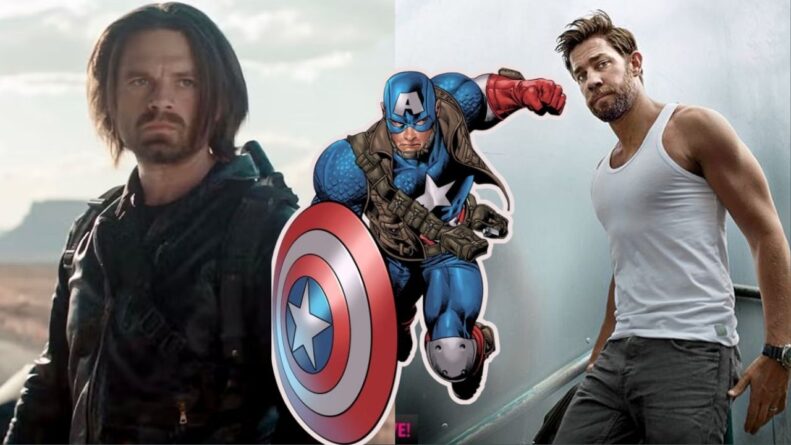
John Krasinski was in serious contention. Years later, he’d say he heard through his agent that Marvel had gone with Chris Evans Captain America instead and his reaction wasn’t bitterness, it was recognition. He basically said the same thing every fan says now:
Of course it’s him, look at the guy.
Sebastian Stan came even closer, in a stranger way. He sent in three audition tapes for Steve Rogers, then canceled a trip home to Romania to fly back for an in-person Marvel meeting. He didn’t get the part. What he got instead was Bucky Barnes — a role that turned into a decade-plus career inside the MCU, arguably richer and stranger than Cap’s arc ever was.
But Stan is happy because losing that role turned out to be the better outcome for him. He got a more satisfying job that he deserved.
Evans said no. More than once because the commitment terrified him. Marvel’s initial offer was a nine-picture deal. It eventually got negotiated down to six, but even six films was an enormous chunk of a career to hand over to a single character, with no real way to predict how the movies — or his life — would turn out.
Evans’ reason to say no for the role isn’t the heavy work and action but he knows after signing it would permanently change his life in ways he couldn’t take back.
There was also something more personal underneath it. Evans has since described dealing with anxiety around fame and public attention, and the jump from “working actor” to “face of a global franchise” was the exact kind of exposure that made him uneasy. Turning down Captain America wasn’t a business calculation. It was closer to self-preservation.
Marvel didn’t let it go. Kevin Feige and director Joe Johnston brought Evans back in for a second meeting, and this time they didn’t just pitch a contract — they pitched the actual story. The character’s arc of Chris Evans Captain America across the franchise is a real concept art. This is not a job for Evans, director said:
Here’s the character we think only you can play.
Evans has said he took the weekend to think it over, and that it was one of the hardest decision-making stretches of his life. He said yes anyway. And in interviews since, he’s called it the best professional decision he ever made — which is a fairly remarkable thing to hear from someone who almost walked away from it entirely.
Read more 👉 Who Is the New Editor-in-Chief of Marvel Comics? Stephen Wacker Explained
Finn and Feige were searching for qualities in an actor who can bring the genuinely kind, quietly confident, and grounded enough on the screen to make audiences believe he was an ordinary kid from Brooklyn before he ever became Captain America. It is more important for them rather than the shield, costume and the super-soldier physique. Evans captured those qualities in a way that couldn’t be taught or faked.
His hesitation actually worked in his favor. Finn has said the reluctance itself became a kind of evidence — an actor who didn’t chase fame for its own sake was exactly the temperament they wanted radiating off a character whose entire identity is putting the mission ahead of himself.
There was also a practical acting challenge nobody talks about enough. Steve Rogers is really two roles stitched into one performance: the fragile, undersized guy from the pre-serum scenes, and the peak-physical-condition soldier after. Johnston was blunt about it at the time — whatever the visual effects team did to sell the “before” version, the performance itself, the internal logic of the character, had to be Evans from start to finish.
That’s not a small ask. It’s asking one actor to make an audience believe in the same soul wearing two very different bodies.
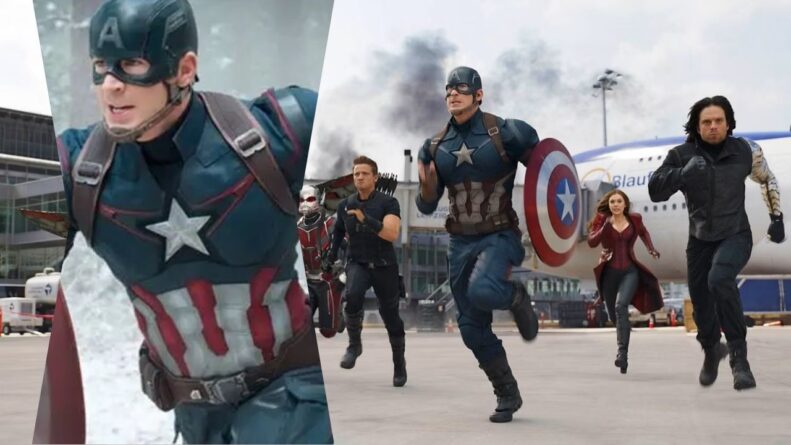
Captain America: The First Avenger landed in theaters in July 2011, with no guarantee Steve Rogers would resonate with audiences but Evans made Steve Rogers heart of the MCU forever. He wasn’t just delivered an outstanding performance but he actually turned into the franchise’s emotional backbone. Marvel took that risk and delivered The Avengers, both Captain America sequels, and eventually Avengers: Endgame in 2019.
What made the casting work wasn’t that Evans looked the part. Plenty of actors look the part. It’s that his real hesitation — the anxiety, the reluctance, the fear of losing himself to the role — is basically the same internal conflict Steve Rogers wrestles with across ten years of movies. A guy who never wanted the spotlight, carrying a responsibility he didn’t ask for, because it mattered more than his own comfort. Marvel didn’t just cast an actor who could play that. They cast an actor who, at least for one nerve-wracking weekend, actually lived a smaller version of it.
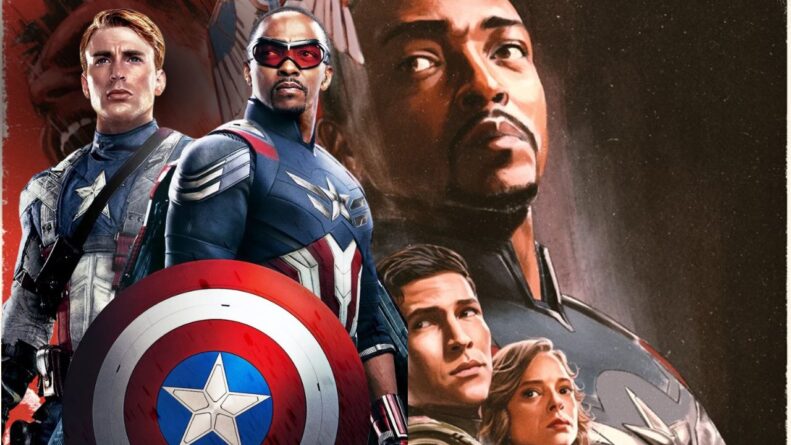
Even after stepping away from the shield, Evans hasn’t distanced himself from the character. When Anthony Mackie took over as Captain America following Sam Wilson’s arc in the comics and MCU timeline, Evans publicly backed the change, saying flatly that Sam Wilson is Captain America now. That’s not the reaction of someone who resents the role he almost turned down. It’s the reaction of someone who understood, eventually, exactly what he’d said yes to.
The next time someone says a casting choice of Chris Evans Captain America was “obvious,” it’s worth remembering this one wasn’t obvious at all. It was rejected, reconsidered, nearly given to two other actors, and only worked because Marvel refused to accept the first no.
Read More 👉 Why Marvel Comics Launching the Midnight Universe Variant Cover Program?
The casting of Chris Evans Captain America was not the obvious choice people recall today—it was a risk that nearly didn’t get taken. Between Marvel contravening its own casting rule, Evans saying no to the part multiple times, and various other actors almost being cast, the path to Steve Rogers was far from easy.
Ultimately, Marvel didn’t just find a guy who looked like Captain America — they found an actor who captured his humility, bravery, and selflessness. That move helped make Steve Rogers the emotional center of the MCU and stands as one of the best casting wins in superhero movie history.
Fandomfans delivers latest updates from movies, series, and celebrities to you directly.

Discover who really sent the XMen through time in XMen 97 Season 2 Episodes 1-3, Mother Askani's true identity, and what it means for Apocalypse's rise.
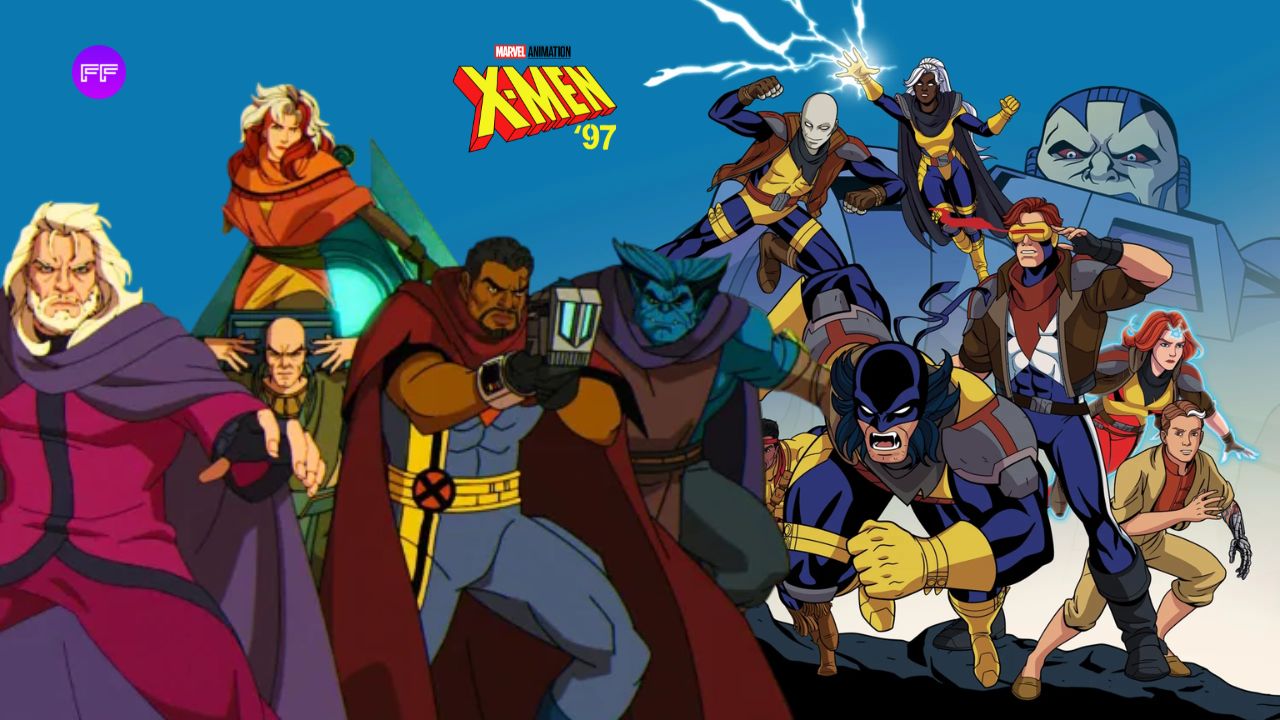
Season 1 of XMen 97 ended with the team getting blown apart on Asteroid M, and not in the way anyone expected. They didn’t die. They scattered across time. Some woke up centuries in the future. Others opened their eyes in ancient Egypt, thousands of years before Apocalypse became Apocalypse. For three episodes, nobody on the show, and nobody watching, knew who was pulling the strings. Xmen 97 Season 2 spends its opening act making you sit with that mystery before finally answering it.
So who actually did it? A woman named Mother Askani. And by the time episode 3 ends, you find out she’s not just some new mystic dropped into the story for convenience. She’s family.
The beginning of Episode 1 shows Forge and Storm trying to gather their missing teammates by building up a new time machine. Forge traveled into the future to bring Cyclops, Jean, Storm, Morph, and Wolverine back into the present where they’re reunited with someone they thought they’d lost: their son, Nathan. In Season 1, Scott and Jean sent baby Nathan into the future to cure him of a techno-organic virus. What they didn’t know is who raised him on the other side.
That’s Mother Askani. She’s the mysterious figure who has spent Nathan’s entire life preparing him to become Cable. Mother Askani made him a battle-hardened soldier who is ready to defeat Apocalypse. However, when news of this prophecy reaches Apocalypse, he sends four horsemen after the boy but Askani and Storm reach at the right time to save the Summers.
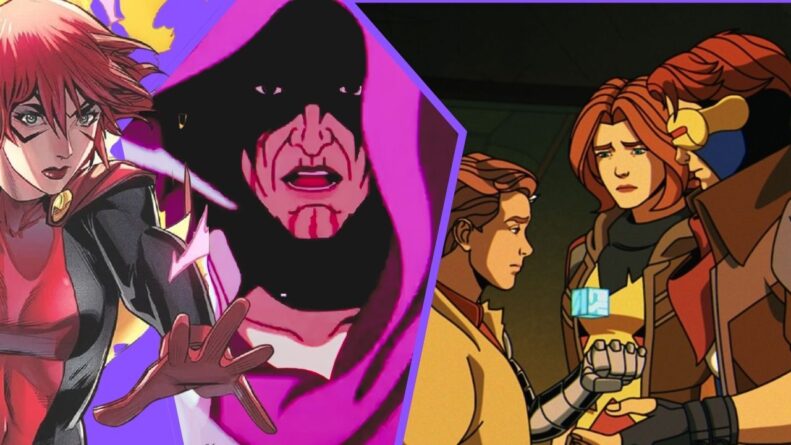
They crash into the Citadel and Mother Askarni reveals herself to Storm as Mother Askani, and when the hood comes off, longtime comic readers will recognize the face: Rachel Summers, daughter of Cyclops and Jean Grey from another timeline entirely.
She’s the family the Summers don’t know they have yet, and she’s been rewriting the timestream on purpose, placing both halves of the team at the exact moments that could stop Apocalypse for good. On the other hand, Apocalypse gets more angry and tries to strike the X-Men at their vulnerable time.
It’s a rough, honest episode, where Scott and Jean are stuck choosing between the son they just found and the world they still have to save. And it sets the emotional stakes before the show even explains the mechanics of the time split.
Apocalypse failure angers him more and decides to strike X-Men at their vulnerable, XMen 97 Season 2 steps away from the past and future entirely and checks in on the present, where the X-Men who didn’t get pulled through time are left picking up the pieces. Two factions form: X-Force, led by a fully grown Cable, and X-Factor, a group that’s chosen to work alongside the government instead of against it. Jubilee and Sunspot get pulled into Cable’s crew, and the episode uses their recruitment to show just how much the world has changed since the team went missing.
It’s important to understand who sent X-Men in the past and future because Apocalypse is the most dangerous villain and he wants to destroy all mutants. The one who has the remote can actually help the team to fight.
Traveling roughly 5,000 years into the past, the other half of the team—Professor Xavier, Magneto, Rogue, Nightcrawler, and Beast are in ancient Egypt with a young En Sabah Nur, the mutant who eventually becomes Apocalypse. Magneto hatches a bold scheme: to raise Nur under Xavier’s ideals and not hunger for domination. Meanwhile, they intend to use the high technology of Rama-Tut to return to their time.
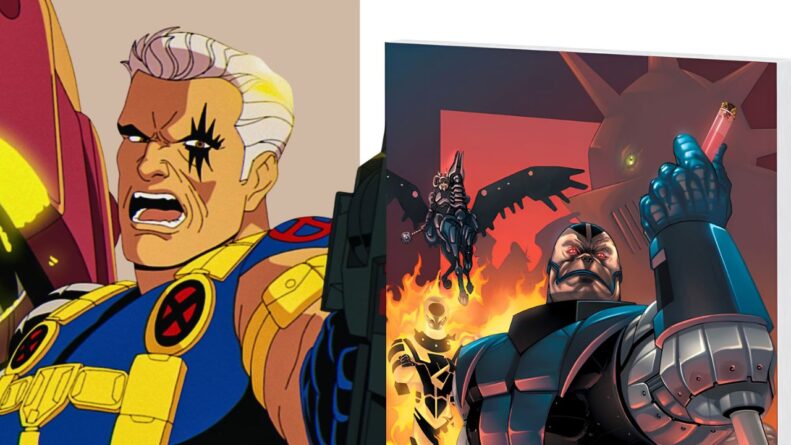
Nur leads his Sandstormers against Logos and his robotic army of Rama-Tut where his powers as a mutant fully emerge, enabling him to destroy the mighty machines and defeat Logos. However, he stops before blowing up entirely since he is following Magneto’s advice and spares his enemy that shocked Professor Xavier. Magneto is determined to keep believing that Nur’s future can still be changed.
That doesn’t go well until Nur finds out about X-Men’s hidden lab that made Nur lose its control with rage. Rama-Tut strikes X-Men with his army right before they prepare to escape, leaving a cliffhanger for the fans which leads to raise many questions among them. The show is stepping forward into a more darker and twisted storyline which sets the character’s emotional stakes higher.
Read More :- XMen 97 Reading Guide: Every Marvel Comic You Need to Read
Because one shot wasn’t enough. Askani needed Nathan trained and ready to become Cable, and she needed someone in Nur’s life early enough to change his path before Apocalypse’s ideology ever took root. Splitting the X-Men across both timelines wasn’t an accident of the Bastion fight. It was the plan the entire time.
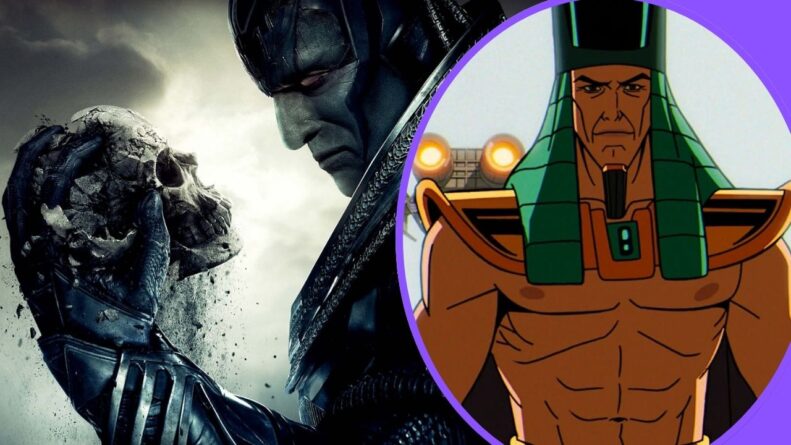
There’s another important comic detail to keep in mind. Rama-Tut, the pharaoh of ancient Egypt in Nur’s day, is in fact one of Kang the Conqueror’s aliases in Marvel Comics. If XMen 97 Season 2 follows that storyline, it’s possible the show could be setting up for a grander multiversal dispute — one that goes well beyond.
XMen 97 Season 2 has already answered its central mystery, but it’s opened up a dozen new ones. Can Scott and Jean actually walk away from Nathan a second time?
What happens when Magneto’s plan to “fix” Nur inevitably collides with Nur’s own free will? And how much does Askani actually know about a future she’s trying to prevent?
These three episodes of XMen 97 Season 2 are much more than explain who sent the X-Men through time. The answer is easy, Mother Askani sent X-Men in different timelines to achieve the goal: destroy Apocalypse. With one team set in the future and the other in ancient Egypt, the series converts time travel into a profoundly personal tale of family, sacrifice and the belief that even the worst evils in history can find an alternate way.
XMen 97 Season 2 promises that the battle ahead won’t just decide the fate of the X-Men, it could determine the future of the entire Marvel universe.
Dive into the world of entertainment with Fandomfans and get latest updates from the movies, series and celebrities.

Also included in Sony ’s CinemaCon 2026 presentation for Spider-Man: Brand New Day was a disheartened Peter Parker, returning antagonists, and Sadie Sink.
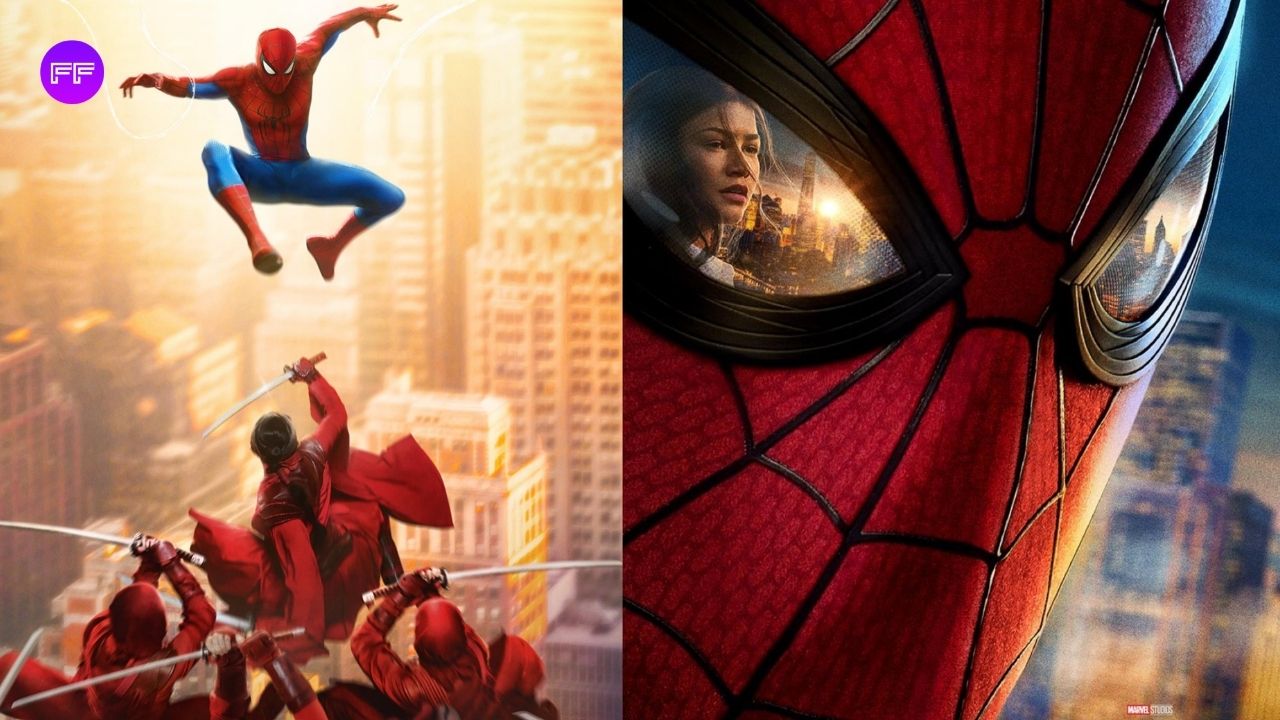
Sony Pictures just went all out at CinemaCon 2026, sharing the biggest scoop about Tom Holland’s much-anticipated comeback in the Marvel Cinematic Universe in Spider-Man: Brand New Day. Holland himself was seen only in a video message, but his statement that the film is the “most emotional” and “most grown-up” Spider-Man story yet was heavily backed up by the footage screened to the audience.
Synopsis of the exclusive CinemaCon footage features a very secluded Peter Parker dealing with the consequences of Doctor Strange’s spell that wiped his memory. From cringing run-ins with his ex-besties to savage jail brawls and the casting of newcomers Sadie Sink and Eman Esfandi, Phase 6 is assembling a street-level war.
Let’s dive deep into the description of the exclusive Spider-Man: Brand New Day footage, its biggest theories for the MCU’s upcoming July blockbuster.
One of the biggest shocks from the footage is where we find Ned Leeds after Spider-Man: No Way Home. From the footage of Spider-Man: Brand New Day, Ned appears to have a wall of Spider-Man research and has even created an app called “Spidey-tracker” to report sightings of the wall-crawler. He currently suspects that either his former teacher or Flash Thompson is the man behind the mask.
From afar, it looks classic and humorous Ned Leed but he is obsessed and a total red flag. As he forgets about Peter Parker, he has no attachment to him which makes him a repulsive man. To Ned, Spider-Man is just a puzzle to be solved.
Ned’s tech skills and his obsession will also make him powerful enough to uncover the truth of Spider-Man. It also makes him a target, crime bosses like Tombstone will use him right after discovering that a brilliant MIT student has an app tracking Spider-Man’s movements. This dangerous inquisitiveness is the ideal narrative accelerant to send Ned careening down a sinister road. If Ned accidentally causes people harm or gets kidnapped and brainwashed by the mob—the trauma could break his mind, paving the way for his tragic comic-book destiny as the Hobgoblin.
The emotional heart of the footage is Peter Parker spying on his former friends. He observes Ned in a store, tails him to a party, and finally meets MJ. The exchange is heartbreaking: Peter gives MJ flowers and reluctantly tells her his name is “Maynard.”
The selection of the name “Maynard” is a deliberate if subconscious nod to his deceased Aunt May. It illustrates how traumatized Peter is, how completely alone he is – he can’t even make up a fake name without referencing his grief. The most interesting part of this interaction though is what MJ says. She thinks that something big is waiting for her so she turns down his job offer.
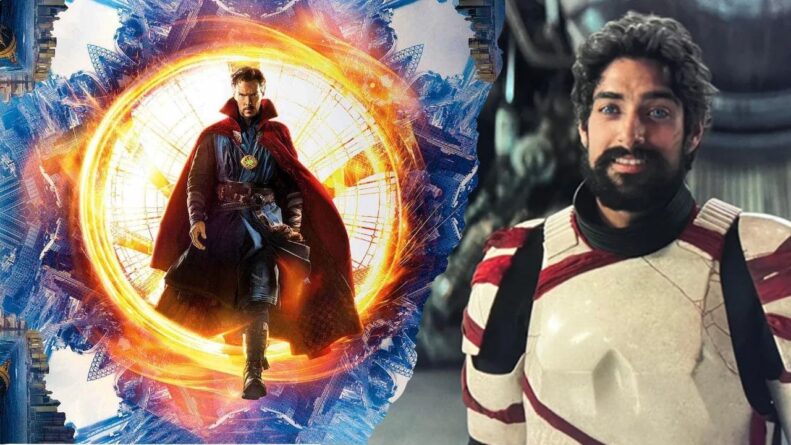
Peter Parker’s existence is erased by Doctor Strange’s spell, he is being erased from everyone’s life but emotional attachment is still there somewhere. MJ still has the sense that she’s waiting on something or someone — so the spell is imperfect. Her soul remembers what her mind has forgotten.
This star-crossed love story gets more complicated with the entry of Eman Esfandi’s character, who kisses MJ and refers to her as “his girl.” Fans are speculating Esfandi might be playing a civilian, but it seems more likely he has been cast as an MCU version of Harry Osborn, or even Paul, a massively divisive figure in recent Spider-Man comics who was paired with MJ. After watching MJ with someone else pushed Peter into the darker and violent state of Spider-Man.
The lens abruptly turns from teen drama to high-octane action showing Spider-Man doing stretches before weaving through bullets shot by heavily armed prison guards. That’s a major change of pace. Spider-Man is usually friendly with law enforcement, so clashing with prison guards shows he’s running completely outside the law.
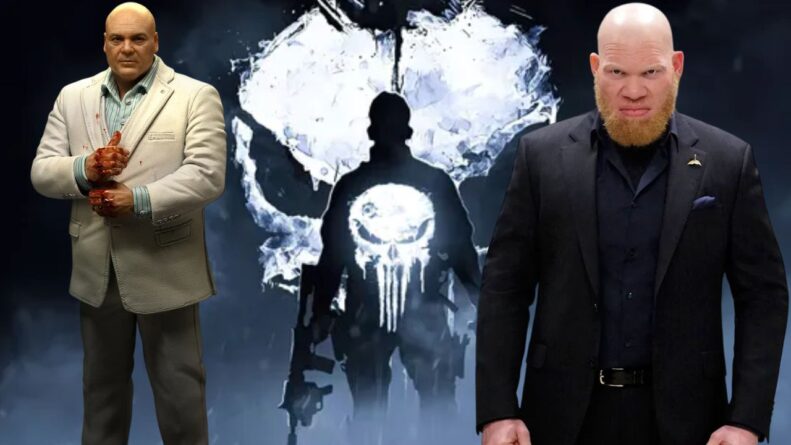
We’ve got Michael Mando back as Mac Gargan (Scorpion) and Marvin Jones III as the menacing crime lord Tombstone. In addition, Jon Bernthal officially returns as Frank Castle, the Punisher.
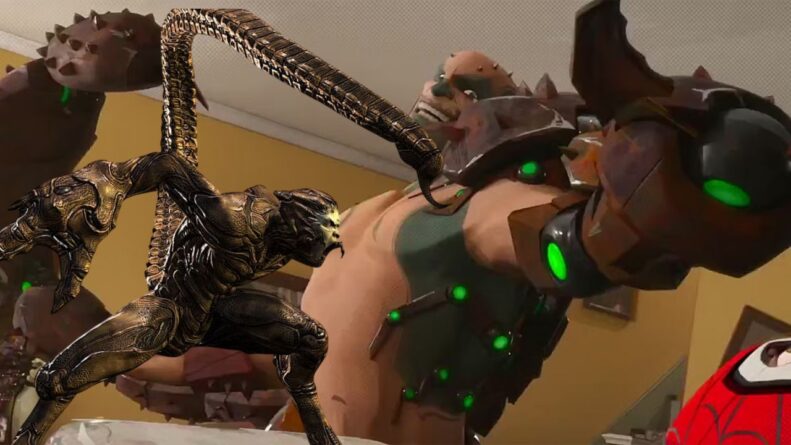
Spider-Man is not really battling the guards—he’s attempting to infiltrate. He is located in a secret underground complex, such as the Raft, a Damage Control installation, or a detention center. And why is that? He needs to reach Mac Gargan before everyone else.
With Kingpin presumably sitting on the throne as New York’s Mayor (courtesy of Daredevil: Born Again), its prisons could be under his influence. Tombstone may be running his crime empire with political immunity. While the Punisher is currently on a spree wiping out street-level kingpins such as Tombstone and Scorpion, Peter may have to bust a guy out of jail to prevent Frank Castle from killing them, landing Spider-Man in the middle of crooked cops, a deadly vigilante and a pair of lethal supervillains.
An unexpected addition to the cast list is Mark Ruffalo as Bruce Banner. Spider-Man and the Hulk have never been given much time to interact, so Banner’s inclusion is a big question mark for this street-level story. But Spider-Man: No Way Home post-credit scenes have already answered this question.
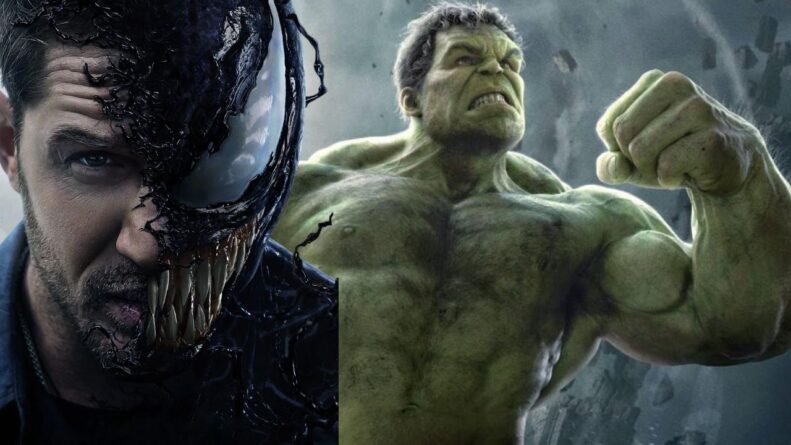
Eddie Brock left a small piece of Venom Symbiote in Mexico while returning to his own universe and this alien will grow into the city of New York. We are surely going to see this Venom symbiote at the time Brand New Day starts.
Peter Parker will recognize this alien life form with more advanced abilities as he is a brilliant scientist and engineer, but he doesn’t have access to Stark Industries tech. So, he needs a top radiation and biology guy to explain it to him.
Peter, maybe still going by “Maynard,” will probably turn to Bruce Banner for science advice. Banner, not realizing he is speaking to a former Avenger, may end up helping Peter connect with the Black Suit. The venom symbiote is always searching for a host who has an isolated, heartbroken mindset, which Peter Parker considered is the best option for now.
Read More:- Star Wars: ‘Maul – Shadow Lord’ Redefines What It Means to Be a Sith
Sadie Sink (Stranger Things’s Actress) role is still a mystery, Marvel and Sony keeping it a secret but the footage revealed the theme of Spider-Man: Brand New Day which hinting towards the iconic character: Felicia Hardy, a.k.a. The Black Cat.
The dominoes have been lined up flawlessly for the introduction of Black Cat in the MCU. Peter Parker is totally gone into a state of depression, seeing his love MJ moved on with someone else in front of him, and completely cut off from his civilian life. He is burying his pain by spending all his time as Spider-Man.
Felicia Hardy is different from MJ and she loves Spider-Man, the reckless, exhilarating superhero whereas MJ loved only Peter Parker. Felicia doesn’t care about Peter’s everyday problems. If Sadie Sink is cast as Black Cat then she is also going to be the greatest temptation for Peter. She tells him to give up his miserable human life and truly live as the mask. A romance with Black Cat, a down and dirty version of the alien symbiote suit, would be exactly the “grown-up” and emotionally layered story Tom Holland promised.
Spider-Man: Brand New Day may be the last single movie of Spider-Man before the biggest crossover in Avengers: Doomsday and Avengers: Secret Wars. Sony Pictures and Marvel Studios are undoubtedly using this July debut to reduce Peter Parker to his barest essence.
By placing him in the proximity of deadly street-level threats (Tombstone and Scorpion), holding up the brutal worldview of the Punisher to him, and shattering his heart with MJ’s new life, the MCU is pushing Spider-Man to limits it’s never explored before. Whether he succumbs to the darkness of the symbiote or rises above it, the CinemaCon footage makes it clear that Peter Parker’s new day will be his darkest day.
Spider-Man: Brand New Day will set on screens on July, 31.
Fandomfans is an entertainment platform where you can get reviews and updates from movies, series and celebrities.