KPop Demon Hunters animated film is now a top trending on Netflix, listed in the most-watched movies of all time is a big achievement. This turning event of film after becoming a top five in English-language film noted at Cartoonbrewsurprised everyone including the film industry and worldwide audience.
From Quiet Release to Viral Sensation
Interestingly, the film did not really receive much audience on the day it released – 20 June 2025, but now it has become viral. According to data reported by TheWrap, KPop Demon Hunters got 158.8 million views in 90 days on Netflix. The number is huge from the viewers that led this film to list on the number four in most popular films. It slightly passed the big action movies like The Adam Project and Leave the World Behind.
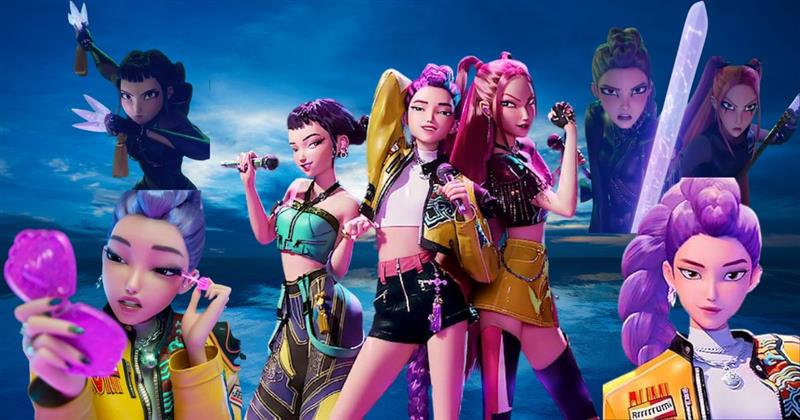
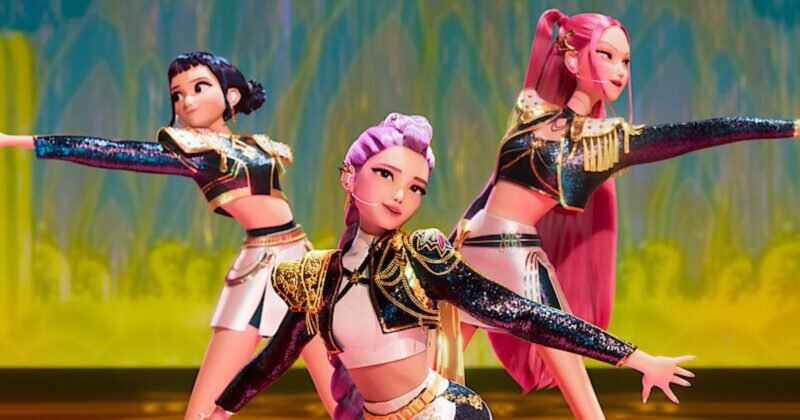
KPop Girl Group HUNTR/X with their Musical Numbers. Credit: Netflix
Consistent Growth in Viewership
Many other Netflix Originals which got massive surge in their first week of air but KPop Demon Hunters has become a consistent on the top films due to its week-over-week growth. The viewership pattern is making a remarkable success for the Sony Pictures Animation & Netflix. As noted by ScreenRant, the number of viewers started to increase from 20M to 25M views in its fifth week on the service that gives it a unique pattern of climbing up the all-time charts.
The film centers on a fictional K-Pop girl group, HUNTR/X, who are also skilled demon hunters. The mix of vibrant action, amazing storytelling, and incredible music are catching the hearts of the audience. According to TheWrap, The soundtrack took an important part in its groundbreaking success, the original song ‘Golden’ got at 1st rank on the Billboard Global Charts.
The film is getting great reviews not only from the audiences but critics also gave 97% rating on Rotten Tomatoes. KPop Demon Hunters seems to further become a No.1 on Netflix from the fourth position because the 90-day tracking period is still left to leave behind Red Notice (230.9 million views), Carry On (172.1 million), and Don’t Look Up (171.4 million). Publications like ScreenRantbelieve it could beat these movies and become the most-watched movie ever on Netflix.
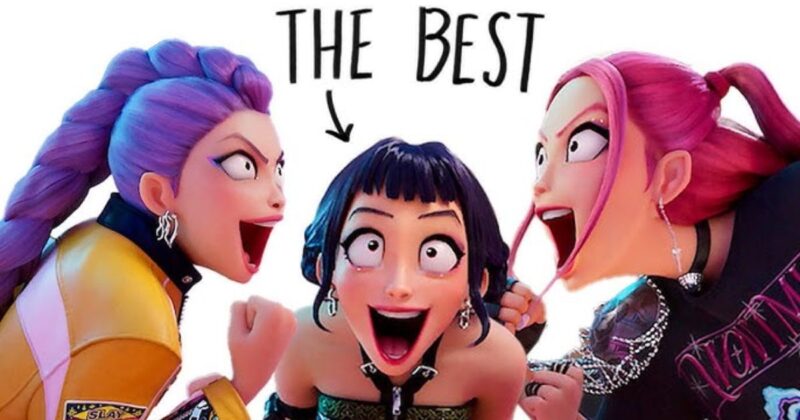
Best Demon Hunters from the KPop Demon Hunter Film, Credit: Youtube
The huge success of the film has led them to make the sequel and spin-off series. This is already happening and reports say that Netflix is considering to remake this in a live-action version. The success of the film has just started, fans are already demanding for its sequels. The story serves a powerful combination of compelling storytelling, fresh concept, and musical numbers.
The KPop Demon Hunters Shocks Netflix Viewers by Breaking Into Top 5 Most-Watched Movies, the number of viewers gave a massive success that led to its remake and spin-offs. The fanbase is increasing day-by-day along with the critics’ reviews. You can watch this animated film on Netflix.
Emma
Articles Published :
36
Emma Miller is an entertainment enthusiast who is focusing on crafting storytelling blogs across all genres. Her special focus is build up around superheroes, thrillers, & historical dramas and movies. Her experience of delivering sharp review analysis and interview podcasts is helping fans to get transparency about their favorite cinema.
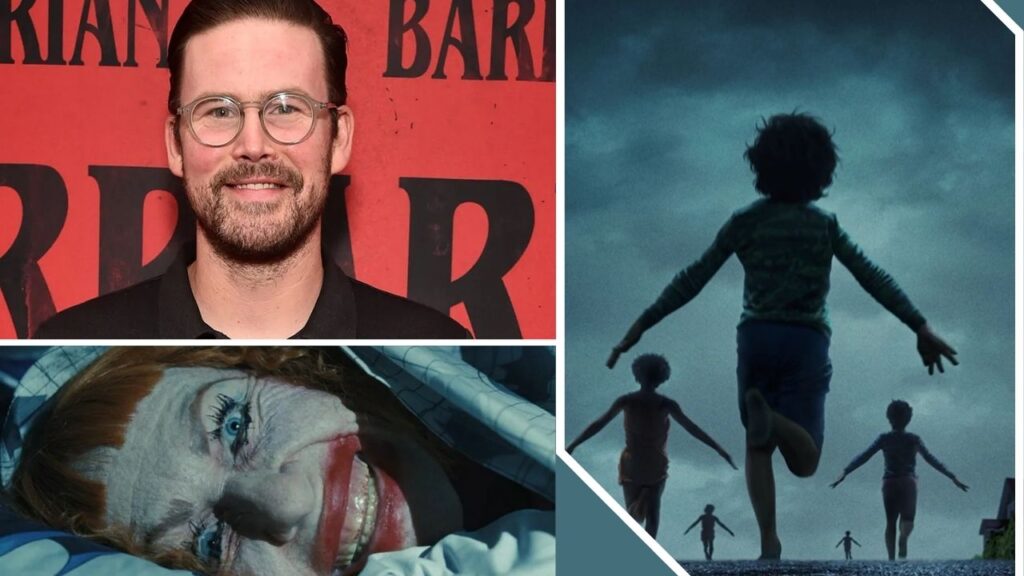
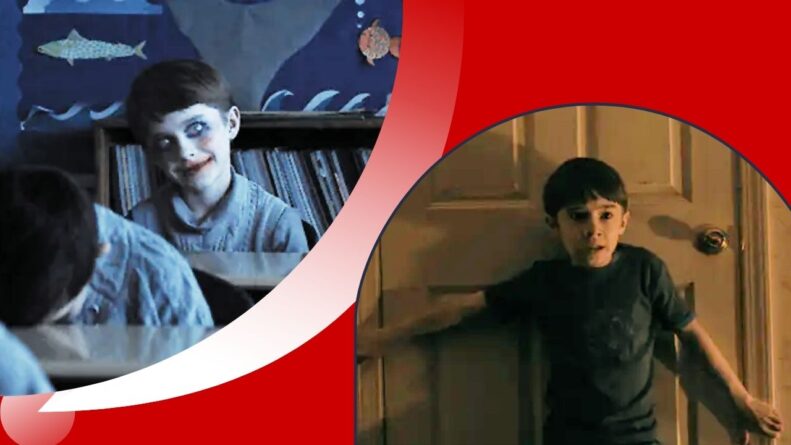
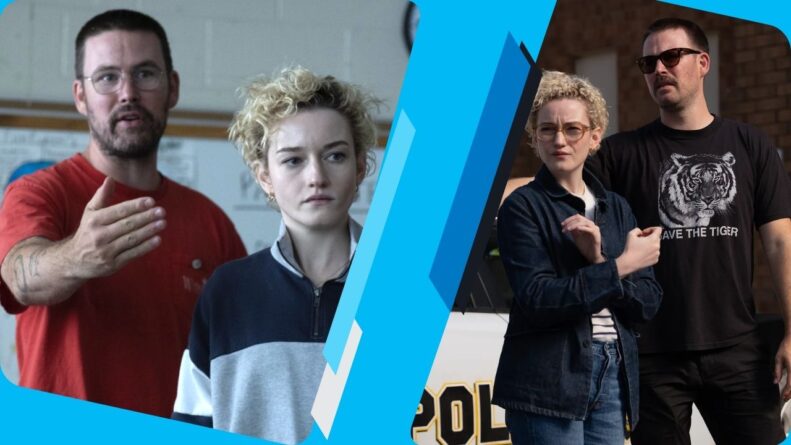
Zach Cregger’sWeapons Redefines Modern Horror, writer-director of the excellent first solo feature The Package, proves himself once again with Weapons in that it is one essential element that separates this film from the majority of horror movies and that is methodical, merciless dread building leading up to the shock moment. The critical consensus largely agrees that none of the film’s intensity is down to any cheap, jarring jump scares, but rather lies in the bravura skill of maintaining such high levels of tension for so long – a style that packs a real punch on screen.
The Jump Scare as a Thematic Release
Zach Cregger’s Weapons Redefines Modern Horror ability to slowly ratchet up tension has garnered him much acclaim. It’s psychological manipulation by way of infrastructure, rather than merely a stylistic maneuver. The jump scare, a device that’s often dismissed as cliche, is intentionally employed in Weapons. A “release of all the tension that has been ratcheted up to this point” is how analysis characterises shock, which is experienced as an earned narrative climax and not a cheap jolt. This careful timing makes the scare seem inevitable, thematically significant, and according to him forever tied to the technique of building up tension.
The film’s critical acclaim becoming evident in its high scores including a 96% rating from the critics on Rotten Tomatoes is naturally associated with the way such a cliché like the jump scare has been converted into an intellectual and emotional climax. The shock is completely justified because you need a long, often five-minute buildup before the scare, and that builds its thematic punch way beyond its passing visceral wallop.
Weapons owes much of its place in the vanguard of contemporary genre criticism to this method. This is a wildly satisfying antidote to the last 10 years of horror movies about grief and trauma, critics have lauded. Cregger channels the genre toward an externalized terror that is viscerally immediate and relevant in today’s world by focusing its horror apparatus on urgent, collective, and existential thematic drama, as opposed to simply resting on metaphorical grief.
The Mechanics of the Five-Minute Fear
Zach Cregger’s Weapons Redefines Modern Horror buildup is a deliberate act of mind games, using tools meant to train the audience to expect something non-stop. The director takes advantage of multiple fakeouts before the real scares, which are described as the warm up.
Zach Cregger’s Weapons Redefines Modern Horror, in particular, parallels the characters’ emotional vulnerability with this physical immersion. The camerawork emphasizes the isolation and paranoia of Justine. Following a harrowing and emotional monologue in which he is sorry for his failings as a dad, Archer then gets a jump scare. In this way, the camera work upholds the movie as a cerebral, meticulously rendered drama in which technical fear serves thematic purposes by mutating the shock of a conventional fright into a highly personal violation of an aspect of the character’s internal struggle.
The Thematic Weight of Weapons
The horror works because it stems from a mass psychological unraveling, which also offers an explanation for the movie’s endless sense of dread. Cregger’s eye is on the resulting disintegration and decay of the social order, how the town breaks apart and goes on witch hunts against suspects, including the teacher Justine Gandy. The complete isolation endured by Justine, with no community to back her up, offers a powerful exemplification of the film’s main thesis: isolation can drive people mad, and the communal response to trauma is where a second round of horror arises.
By frequently changing perspectives and depicting the menace as having an impact on several, diverse individuals, Cregger maintains the audience’s engagement with the trauma experienced by the town as a whole, allowing tension to be drawn out during the length of the movie. Terror is thus understood as a society-wide infectious disease, which is far more disconcerting than a regional monster.
Narrative Function of the Villain
The origin of the supernatural horror is none other than Aunt Gladys (Amy Madigan), who orchestrates the weaponization of the children. Amy Madigan’s performance has garnered critical acclaim, with some critics lobbying for award recognition. That’s partly because her performance is so effective that the villain isn’t just a monster, but a searing, shockingly tangible instrument for psychological torment.
Domestic terror Weapons gets an even better kind of shock because Zach Cregger purposefully creates and maintains an intense sense of dread until he wields the jump scare like a precision instrument. The film’s scare factor is born of its method, not its madness.
Weapons confirms Zach Cregger’s Weapons Redefines Modern Horror as a powerhouse voice in horror whose brilliance comes from his dedication to inserting deeply emotional relationships into terrifying survival and mystery narratives that makes the genre feel both immediate and intelligent. The film’s strong business and critical success, as a big-budget, original outing by a major studio, demonstrates that this intellectual, meticulously paced brand of horror is not only sustainable, but perhaps a major new template for top-notch, high-budget event horror pics going forward.
Alpana
Articles Published :
164
Alpana is Fandomfans Senior Editor across all genres of entertainment. She evolved in the media industry since a very long time, she manages the content strategy and editing of all the blogs. Her focus on story development, review analysis, and research is well-equipped that ensures every article meets the standards of accuracy and depth.
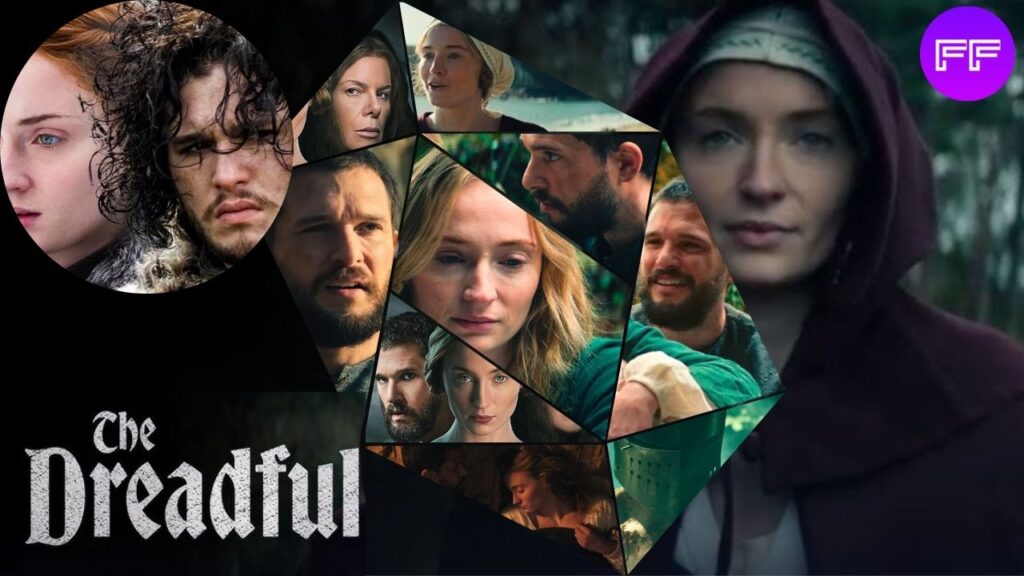
The Dreadful Movie in 2026 has witnessed a resurgence of the Gothic mode, with one of its leading exponents emerging as a project that promises to be as unsettling as it is historic. The Dreadful isn’t your typical horror flick; it’s an elegant meeting point between period drama and supernatural terror. Drawing on the immense cultural capital of its legendary leads, the film plunges into the murkier realms of human survival and moral complexity.
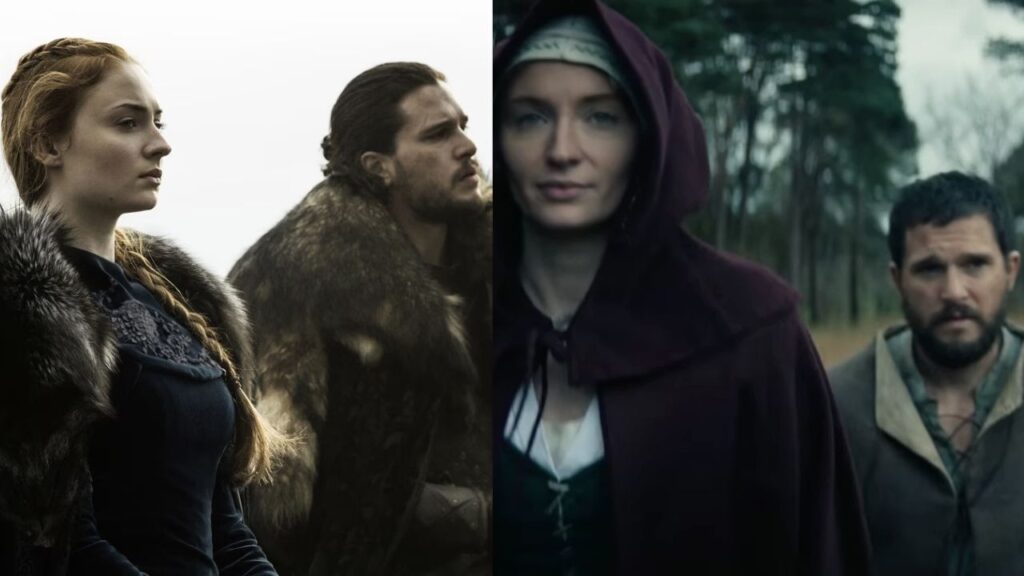
For fans of prestige television, the movie marks a pointed and bold next step for Sophie Turner and Kit Harington. Departing from the sprawling, high-fantasy politics of Westeros, they have swapped iron thrones for the claustrophobic, psychologically crushing domain of “misty forests and crushing dread.” This is a tale in which the mood is as leaden as the secrets its players harbour.
The Vision: From Japanese Masterpieces to English Soil
The metaphysical core of The Dreadful is based upon a wish to orient the themes of classic international cinema in the savage reality of English history. Writer-director Natasha Kermani is inspired by Kaneto Shindō ’s 1964 Japanese cult classic, Onibaba. In the process, she has created a storytelling model around a small, isolated community with its members’ interrelations just as deadly as the supernatural elements hiding in the forest.
This is in keeping with the “folk horror” motif, where the land becomes a sort of other foe. The film, meanwhile, is a groundbreaking achievement for independent horror, combining the art house virtues of auteur-directed filmmaking with the marketing muscle of Lionsgate. With Sophie Turner in the lead role and also producer, there is a definite sense of creative ownership that should keep the “emotional heart” of the film beating from start to finish.
Release Date & Availability
The Dreadful release is positioned to take advantage of the early 2026 market. The Dreadful release date is perfect to capitalize on the late-winter audience that enjoys moody thrillers, and wide-release is scheduled for February 20, 2026.
Territory
Release Date
Primary Platform
Format
United States
20/February/2026
Theaters & Digital
Wide / Day-and-Date
United Kingdom
20/February/2026
Theatrical
Wide (True Brit)
India
Q1 2026
Lionsgate Play
Streaming Premiere
Global Digital
20/February/2026
VOD / Amazon / Apple
Digital Purchase/Rent
A World of Roses and Regret: Genre, Theme & Setting
The Dreadful’s aesthetic is dominated by its 15th-century setting: the Wars of the Roses. This period of English history (1455–1487) was marked by violent civil war between two rival houses, the House of Lancaster and the House of York.
The Wars as a Thematic Catalyst
The Red Rose–White Rose rivalry is more than mere window dressing; it drives the characters to desperate acts. In a world where central authority has disintegrated, people such as Anne and Morwen are abandoning the edges of civilization.
Faction / Element
Historical Basis
Narrative Implication
House of Lancaster
Red Rose Symbolism
Associated with the “war” Anne’s husband attends.
House of York
White Rose Symbolism
Represents the broader political chaos.
Ostracized Living
Outskirts of Society
Heightens the vulnerability of the protagonists.
15th Century
Transition to Tudor Era
A time of deep superstition and radical change.
The Synthesis of Gothic and Folk Horror
From both sides of the conflict, the film adopts elevated perspectives. While the film is Gothic horror at its core—defined by crumbling homes and buried family secrets—it is also very much a work of folk horror. Director Natasha Kermani delves into fear, desire, and regret through a visceral medieval aesthetic. The “English countryside,” with its mud, rain, and cold nights, becomes a character in its own right. The supernatural elements are implied to arise from the land itself, and the “curse” may be read as a projection of the characters’ moral failings.
The Creative Powerhouse: Director & Crew
The Dreadful is, brilliantly, entirely in Natasha Kermani’s hands. Known for pushing genre boundaries in films such as Imitation Girl and Lucky, Kermani applies a layered “Three Keys” approach on set: forming a trusted team, drawing on her short-film experience, and turning to classical texts.
A Collaborative Framework
The production is a partnership between the independent studios Black Magic and Redwire Pictures. Sophie Turner’s role as a producer is particularly vital, signalling a shift toward more equitable power relations among lead performers.
Director / Writer: Natasha Kermani (the visionary behind the film’s transposition of Onibaba) Director of Photography: Julia Swain (capturing the film’s “mud and rain” aesthetic) Editor: Jeff Betancourt (shaping the film’s slow-burn suspense)
The Plot: When Men Walk Like Demons
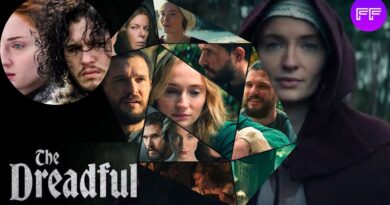
The story of The Dreadful is a brutal account of survival. We follow Anne (Sophie Turner), who lives in isolation in the countryside with her overbearing mother-in-law, Morwen (Marcia Gay Harden), as she waits for a husband taken by the wars.
This stasis is shattered by the arrival of Jago (Kit Harington), a figure from Anne’s past. He brings news of death while reviving erotic tensions—both sexual and homicidal—that imperil the household. As Jago infiltrates their lives, a “mysterious knight” emerges: the materialization of a curse that feeds on their sin.
Cast & Characters: A Powerhouse Trio
The Dreadful movie cast is small, yet the film’s triumph lies in this tiny ensemble, which somehow carries immense psychological weight.
Sophie Turner as Anne: the film’s emotional heart. Turner portrays a woman whose strength is forged through solitude in a cruel world.
Kit Harington as Jago: a figure of ambiguity. Harington is equal parts puppy-eyed vulnerability and latent darkness.
Marcia Gay Harden as Morwen: the ruthless mother-in-law. She grounds the supernatural in a very real human desperation.
The reunion everyone is talking about
The on-screen reunion of Turner and Harington is the film’s biggest marketing hook. Having portrayed siblings for ten years, their evolution into lovers has been described by the actors as both “weird” and “igniting.” This discomforting tension feeds directly into the movie’s atmosphere of dread, allowing the audience to viscerally sense the boundary-crossing.
Production Prowess: Technical Details
Shot on location amidst the craggy hills of Cornwall, the production embodies environmental naturalism. Cinematographer Julia Swain employs a visual language reminiscent of The Green Knight, emphasizing misty and eerie hues.
The supernatural elements are deliberately restrained, designed to feel earned rather than “cheap.” The film has received an MPA-R rating for “violence, gory images, and sexual references,” a rating crucial to presenting a medieval nightmare without compromise.
The participation of Lionsgate guarantees extensive coverage, with True Brit Entertainment concentrating on the horror legacy of the UK.
What are the fans saying? The response on places like Reddit is electric. Although some are uneasy with the transition from “sibling-to-lover,” it has ignited a viral discussion that goes far beyond horror. Industry Insiders say the film is likely to become a cult hit, a consistent moneymaker that confirms that Natasha Kermani is a force to be reckoned with.
Conclusion
The Dreadful Movie isn’t just a horror movie – it’s a celebration of the Gothic tradition. It asks us to confront the demons that arise from our own histories — all the while cloaked in the lovely, horrifying mists of 15th-century England.
Fandomfans is a platform where you can find all the latest details from movies review, webseries review, and television shows that are worth watching.
Alpana
Articles Published :
164
Alpana is Fandomfans Senior Editor across all genres of entertainment. She evolved in the media industry since a very long time, she manages the content strategy and editing of all the blogs. Her focus on story development, review analysis, and research is well-equipped that ensures every article meets the standards of accuracy and depth.