Avengers: Doomsday Costumes First Look Revealed
Avengers: Doomsday trailer reveals stunning new hero costumes, from Namor’s classic suit to King M’Baku and a comic-accurate Cyclops.
Published: January 12, 2026, 6:57 am

Avengers: Doomsday trailer reveals stunning new hero costumes, from Namor’s classic suit to King M’Baku and a comic-accurate Cyclops.

Marvel Studios just unleashed full chaos on the internet with the first official trailer for Avengers: Doomsday. While Robert Downey Jr. (now as the threatening Doctor Doom) has been quite the recent buzz with his return, this trailer also gave us something pretty much just as exciting: a full look at the new costumes our heroes will be wearing as they take on the multiverse’s biggest menace.
From comic-accurate throwbacks to subtle “King-sized” upgrades, here’s the breakdown of the five hero suits we’ve seen so far for the next Avengers epic.
In Black Panther: Wakanda Forever, Decán’s visual was heavily inspired by Mayan and Aztec design — and it was breathtaking. But now that it’s Doomsday, DC is going back to his comic book origins.

According to Screenrant, Namor was seen wearing his signature blue suit, which includes a high, distinctive collar that fans of the ’90s comics will instantly recognize. So it’s a striking turn, and one that indicates he’s really leaning into being a global (and maybe inter-dimensional) operator.
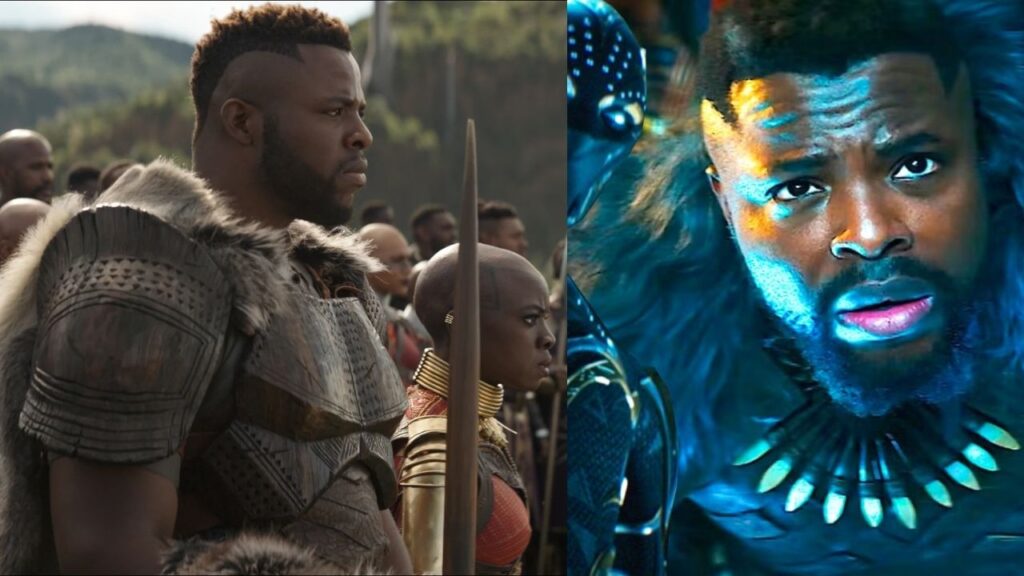
Since then M’Baku has ascended as king of Wakanda too, and his new gear screams a big old “Big King Energy.” No more just traditional Gorilla Tribe armor. In the new trailer, M’Baku wears:
“Shuri isn’t trying to fix what isn’t broken.” Her Black Panther suit remains largely the same as the one she debuted in Wakanda Forever, but some eagle-eyed fans spotted a handful of “tech-y” upgrades.
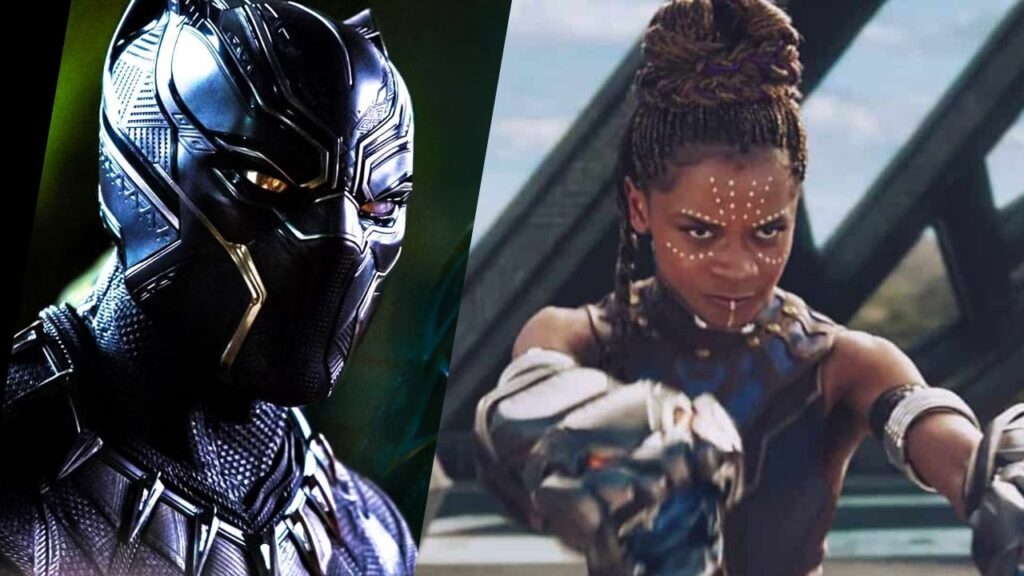
The suit has been updated with a few greenish hints and slightly different weaving patterns. Considering Shuri’s intelligence, these aren’t just stylistic choices — they’re probably new defensive abilities that will aid her against Doctor Doom.
Ebon Moss-Bachrach’s Ben Grimm (The Thing) got a short but significant cameo. Now fresh from the events of The Fantastic Four: First Steps, he’s donning the very same retro-futuristic team kit we first got a look at in his solo debut.

Visual continuity is looking good as the Fantastic Four at long last are introduced into the main MCU timeline.
Rounding out the group of five is Namora. Her costume is largely unchanged from the first time we see her, but her appearance with the Wakandans emphasizes one crucial plot point: that the surface/sea alliance is still very much in existence.
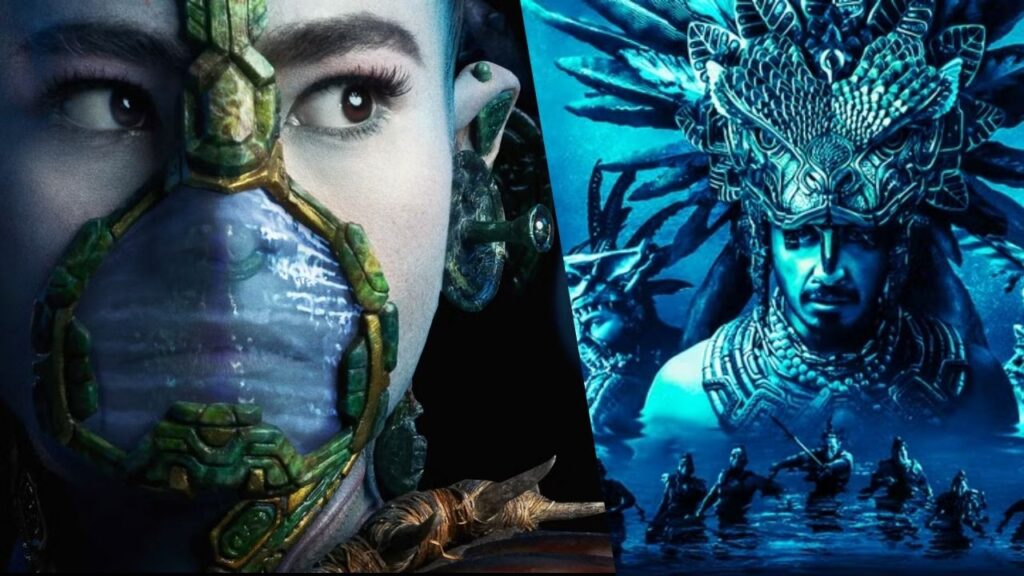
They need that solidarity if they’re even going to have a chance against Doom.
While the trailer had a lot of the Wakandans and extends to even more with the Fantastic Four, let’s not dismiss the brief, soul-shaking sighting of James Marsden’s Cyclops. He’s dressed in a bright yellow and blue costume that looks like it was pulled right out of a ’90s comic book cover. It looks like Avengers: Doomsday is finally serving up the “Uncanny” looks we’ve been waiting decades for.
Read More:- Michelle Randolph’s Big Break: From Landman Fan Favorite to Amazon MGM’s Holiday Rom-Com Lead
Marvel is being very smart here. They’re merging the grounded, cultural designs of the MCU with the vibrant, brash look of classic Marvel Comics. Whether it’s Namor’s iconic collar or M’Baku’s regal cape, the message is loud and clear: the heroes are leveling up, because they have to.
Which new suit do you like the best? Personally, having a comic-accurate Cyclops and a “King” M’Baku share the screen has us already anticipating 2026.
Stay connected with the Fandomfans to find updates from the Marvel movies and characters.

The next prequel to The Conjuring is coming from director Rodrigue Huarte, which will explore the origins of evil in the Conjuring universe.
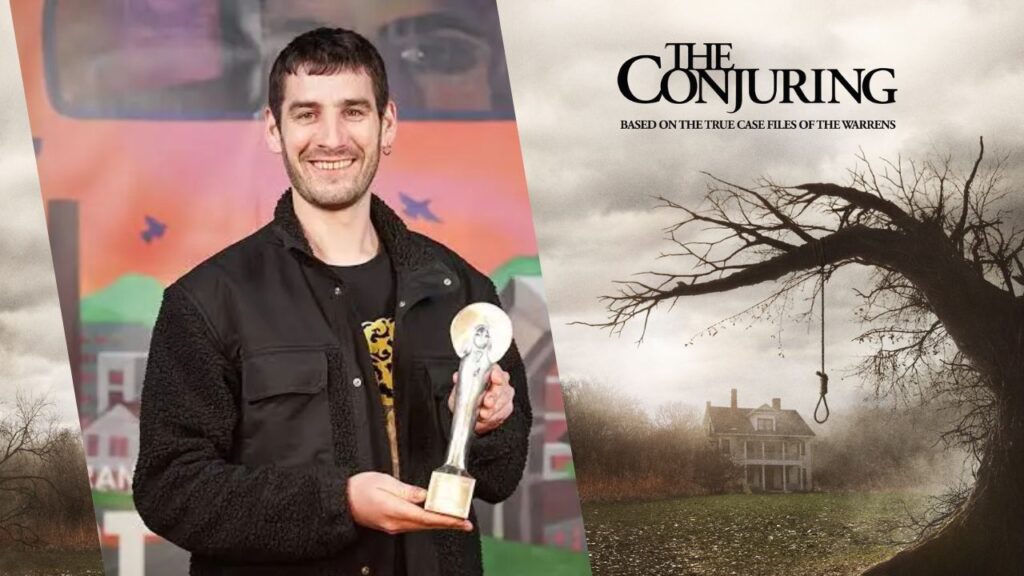
The horror realm which has captivated audiences for over a decade is nowhere near leaving. The Conjuring: Last Rites was set to be the final film in paranormal detectives Ed and Lorraine Warren’s arc, but the franchise’s immense financial success has breathed new life into the supernatural qua-machine. This time, a terrifying world from The Conjuring will be revealed in a bold new prequel.
For the fans of horror, it was news to shake the skies. A New Conjuring Universe Prequel Has Officially Risen from the New Line Cinema, via Borys Kit of The Hollywood Reporter. The green light came after The Conjuring: Last Rites smashed box office records around the world. The 2025 film grossed a staggering $84 million domestically and $194 million globally in its opening weekend, firmly establishing it as the horror genre’s highest-grossing film.
The franchise’s parent studio couldn’t say no to expanding after raking in nearly half a billion dollars at the worldwide box office. The largest question mark looming over the series had, in a sense, been answered by this financial success: Would The Conjuring series continue? The answer was a resounding “yes.”
Short film director and winner of several awards, Rodrigue Huart, is in talks to direct this untitled prequel. It is the first ever big studio feature film for Huart, a big jump from his praised horror short film work.

The Conjuring universe could definitely benefit from his unique creative perspective. This will mark the first creative turn for a different director since Annabelle Comes Home (2019) following a series of productions led by Michael Chaves.
Huart is connected to the wider Conjuring universe via a curious thread. Huart’s script for the modern day take on the much loved 1976 Spanish horror Who Can Kill a Child? Paramount Pictures picked up Huart’s screenplay for “Suffer Little Children,” an updated version of the popular 1976 Spanish horror Who Can Kill a Child? Huart met Walter Hamada, a veteran executive and producer in the horror genre, through this project.
Along with serving as executive producer on the biggest hits of the universe, including The Conjuring, Annabelle, The Nun, and multiple sequel entries, Hamada’s involvement with the franchise is that much more notable here. The choice to bring on the rising helmer for this major studio prequel may have been related to his continued partnership with Huart. This consider treating the established lore of the franchise prequel while also allowing Hamada to pursue creative decisions that lead to tried-and-true fear tactics might permit this business relationship.
The Conjuring: The Devil Made Me Do It, a Michael Chaves film that brought the Warren family storyline to a close, ended on a particularly strong note in the box office and storytelling sense. The ebb and flow of The film’s director, Chaves, has also made it clear that this was absolutely the end of the original saga, said that It is done. The title, Last Rites was intentionally chosen to signify the formal ending of a certain chapter.
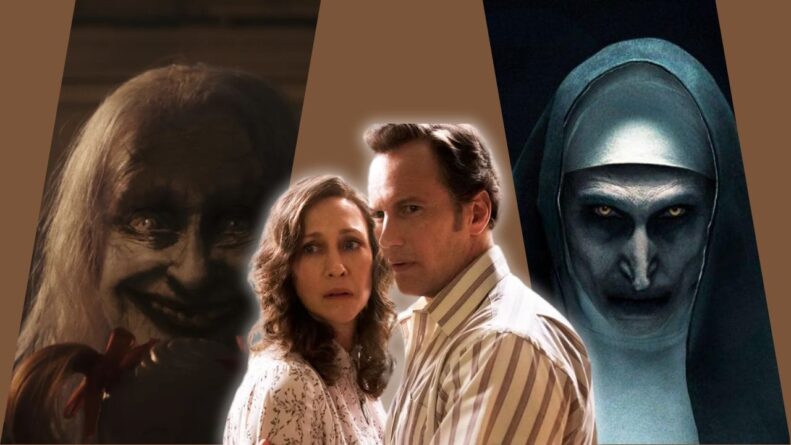
The Warrens’ story may be finished, but the world they lived in still has a lot of unexplored potential to explore, as the prequel announcement goes to show. Instead of direct sequels, the franchise has taken the form of prequels and spinoffs that explore its mythology by going back to the origins of its demonic entities.
The title of the prequel is yet unknown and the plot is currently under wraps. However, the project is expected to go back to the origins of the supernatural power that has plagued the Warren cases across the franchise’s history. Reports has it that the movie could be related to one of the greatest (and earliest) hauntings in the series.
If Rodrigue Huart is officially confirmed as director, it will be a new creative vision for the brand while still maintaining the unique fear that has always been the hallmark of The Conjuring. Combining found-footage style with digital narratives, he also has the potential to give horror aficionados a somewhat new angle on this beloved franchise that’s both frightening and futuristic.
A billion-dollar franchise isn’t finished freezing audiences in terror. It’s just getting ready to frighten them in new and surprising ways.
As The Conjuring universe moves into a new era with Rodrigue Huart at the helm, the franchise definitely has more terror in store for its audience. Last Rites was the emotional conclusion to the Warren saga, but this prequel is said to explore further into the terrifying source of evil that began everything. If Huart applies his iconic vision and storytelling skill to the material, fans will be in for a brand-new horror age that pays homage to the legacy of The Conjuring while reimagining its scares for a new generation. The haunting, it would seem, is still to come.

Paul Dano joins Javier Bardem and Penelope Cruz in Florian Zeller's new psychological thriller Bunker, which will be a major cinematic release in 2026.

Paul Dano has been the subject of some, not all of it boring Dolby-drama-based Hollywood chat heat. After Quentin Tarantino’s inflammatory comments about the actor last week, the industry came out in support of Dano, showing that sometimes the loudest voices are not everyone’s. Instead of retreating from the public eye, the lauded actor is going straight into something truly extraordinary: Oscar-winning director Florian Zeller’s next film, the psychological thriller Bunker.
It’s worth taking a moment to appreciate what this casting actually is. Zeller, whose credentials include the beloved play The Father (which won Hopkins the Oscar for Best Actor and earned Zeller himself one for Best Adapted Screenplay), is renowned for getting the best out of his performers.
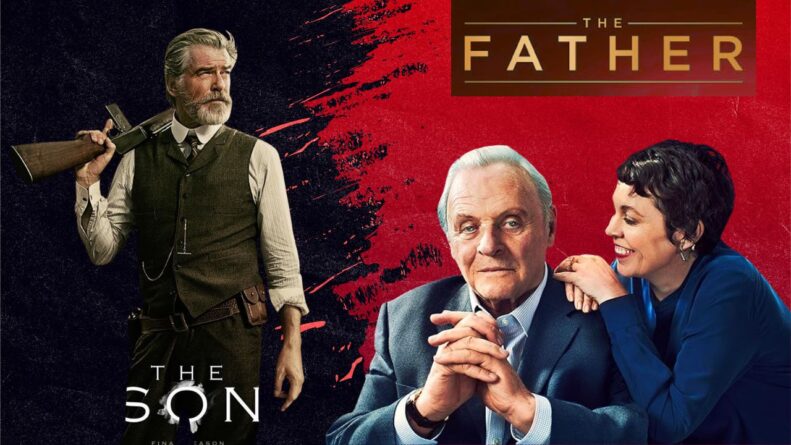
His second film, The Son, may have divided critics, but it still garnered Hugh Jackman a Golden Globe nomination. Now, with Bunker, Zeller is putting together what can only be described as a powerhouse ensemble.
The cast is a veritable who’s-who among Hollywood stars. Dano is teaming with Oscar-winning real life couple Javier Bardem and Penélope Cruz, whose on and off-screen chemistry is already legendary.

Stephen Graham, gritty, intense actor famous for his role in the television series “Justified,” and Patrick Schwarzenegger complete the cast. This is not some film being made under the radar — this is a prestige title that plans to make a splash in 2026 cinema.
Bunker follows an architect whose life and marriage are complicated when he takes on the design of a survival bunker for a wealthy tech tycoon. When this secretive building project starts to penetrate the family’s life, things begin to disintegrate. The premise alone indicates the psychological heights that Zeller has been known for.

This is a director who knows that genuine tension is not a byproduct of jump scares or external threats — it’s born when relationships break down under duress, in probing the ethical compromises we make and examining how fear informs our decisions.
Read More 👉 James Cameron Revealed About Avatar: Fire and Ash Scripting Details
The director was inspired by their real-life nearly seventeen year marriage and he’s created a narrative that addresses the challenges of long term relationships in an increasingly volatile world. That type of writing intentionality leads to more real, strong performances. When Zeller spoke about recruiting Dano to the project, his words were effusive.
“From Little Miss Sunshine to There Will Be Blood, Paul has never ceased to surprise me as an actor,”
–he said.
That’s not the kind of recommendation that is bandied about. This is a director who has directed some of the most acclaimed performances of recent film, and when he talks about working with Dano, he sounds genuinely excited.
“He has a remarkable singularity - something truly unique – and in that respect he is irreplaceable.”
—He also said
The film is now in its second week of production, shooting in Madrid, and London. Blue Morning Pictures and the Spanish company MOD Producciones are producing, with international sales by Film Nation Entertainment. Everything about the set-up indicates a film that’s being treated as a substantial artistic effort and not just another genre piece.
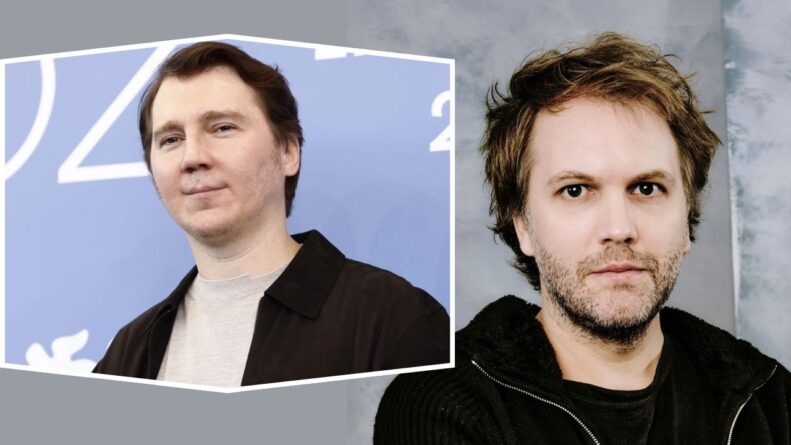
What that timing makes especially intriguing is how it positions Dano’s career going forward. Instead of being defined by recent controversy, he has attached himself immediately to an art house project and a director known for eliciting complex, nuanced performances. Take Tarantino’s assessment with a degree of salt if you want, but Dano is clearly in demand by the filmmakers who really matter.
As we approach 2026, Bunker is becoming another film to keep an eye on. With Zeller at the helm, a cast that strong, and a premise that insinuates genuine psychological depth, this very well could be the film that ignites discussions and the kind of performances that stick with audiences well beyond the credits.
Fandomfans provides every detail on the upcoming movies and projects of the industries that keeps you evolving with the entertainment.